
Best-Selling Press-On Nail Kit Trends a Custom Press on Nail Kit Manufacturer Can Help Retailers Launch
Best-selling press-on nail kits are moving beyond basic artificial nails toward complete, differentiated beauty solutions: ready-to-wear salon looks, short natural shapes, reusable High Quality sets, gel-effect finishes, children’s collections, press-on toenails, adhesive tabs, and giftable packaging. Retailers that want dependable margins should select trends according to customer use occasions, price architecture, shelf presentation, application convenience, fit accuracy, regulatory documentation, and replenishment speed. A qualified custom press on nail kit manufacturer can help transform these consumer signals into tested product lines by coordinating nail materials, shapes, sizing, decoration, adhesives, instructions, packaging, and quality control under one development program.
Retail-Ready Press-On Nail Trends Shaping Product Assortments
Salon effects in convenient at-home kits
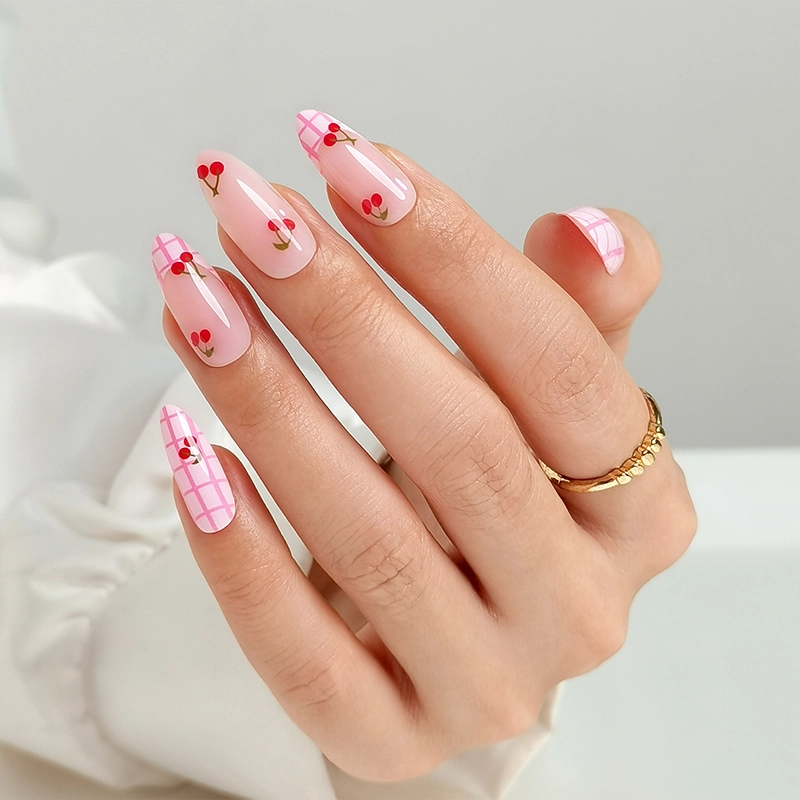
Consumers increasingly expect home manicure products to reproduce recognizable salon effects without appointment scheduling or extended curing routines. Retail-ready concepts include French tips, chrome accents, glazed finishes, cat-eye effects, aura gradients, marble details, metallic foils, pearl surfaces, and dimensional embellishments. The commercial opportunity is not simply to copy a visual trend; it is to package a complete experience with coordinated nail sizes, preparation accessories, application instructions, and a finish that photographs well for social commerce.
For buyers, the key development question is whether the decoration remains consistent across the full set. Fine lines, reflective powder, raised details, and multi-layer coatings require controlled application and inspection. A supplier should define color references, acceptable variation, coating thickness, adhesion performance, and packaging protection before mass production. These controls reduce customer complaints caused by chipped decoration, uneven gloss, or differences between the product image and the delivered set.
Short, natural, and work-friendly silhouettes
Long stiletto and coffin styles attract attention, but short round, short square, squoval, and medium almond shapes often support higher repeat use because they fit office environments, school settings, service jobs, and practical daily routines. A balanced assortment should include several lengths rather than treating one dramatic silhouette as a universal solution. Short designs also make a strong entry-price product because they are easier for first-time users to apply and less likely to interfere with typing or manual work.
Fit engineering is central to this segment. Retailers should request a transparent sizing chart, multiple nail widths, consistent curvature, and sufficient spare pieces in common sizes. The inner surface should sit securely against the natural nail without excessive pressure. Suppliers that can adjust dimensions by market, age group, or collection positioning give retailers more control over return rates and customer satisfaction than catalog-only vendors.
Reusable, adhesive-flexible, and occasion-based collections
Reusable kits appeal to customers who want a High Quality value proposition, while adhesive tabs serve quick events, travel, photoshoots, and users who prefer simpler removal. Liquid glue can provide stronger wear for customers seeking longer use, but it requires clearer application and removal guidance. A well-designed assortment can therefore offer a choice of gel nail tabs, nail glue, or sticker press on nails instead of forcing every customer into one wear profile.
Occasion-based merchandising creates additional purchase reasons. Bridal white, holiday metallic, festival artwork, vacation colors, graduation looks, and coordinated bridesmaid kits can be launched as limited collections. Buyers should confirm that the adhesive system, storage tray, and instructions match the intended wear period. Claims such as reusable, long-lasting, or damage-reducing should be supported by documented testing and clear conditions rather than vague marketing language.
How Buyers Should Evaluate a Private-Label Nail Kit Program
Product architecture, materials, and user safety
A retail kit is a system rather than a single nail tip. The product architecture may include artificial nail pieces, preparation wipes, a mini file, a cuticle stick, adhesive tabs, glue, storage packaging, and multilingual instructions. Each component affects cost, customer experience, shipping classification, and shelf life. Project owners should establish whether the nail body is ABS, soft gel, or another material; whether the finish includes a protective UV coating; and how the supplier controls odor, surface cleanliness, and edge quality.
Safety documentation should be reviewed before purchase orders are released. The U.S. Food and Drug Administration guidance on nail care products explains that cosmetic products and their ingredients must be safe under labeled or customary conditions of use, while companies remain responsible for product safety. For European distribution, buyers should also understand the obligations associated with REACH regulation and obtain current declarations for relevant materials and substances.
Certificates alone do not replace product-level due diligence. Buyers should match test reports to the actual factory, material, product code, and production date. Documentation should cover restricted substances, material safety, packaging inks where relevant, adhesive components, and labeling requirements for the destination market. It is also prudent to request batch traceability and a defined corrective-action process for quality deviations.
Commercial benchmarks for assortment and packaging
The strongest kit concepts connect a clear customer benefit with a manageable stock-keeping-unit structure. A retailer might begin with three lengths, four shapes, and several visual themes, but excessive variation can create slow-moving inventory and complicate forecasting. A tiered range is usually more practical: an accessible basic set, a trend-led decorated set, and a High Quality reusable or giftable set. The same tray or instruction format can be adapted across collections to reduce tooling and packaging complexity.
Packaging should communicate size, quantity, finish, application method, wear expectations, and included accessories at a glance. Window boxes support visual merchandising, while compact recyclable cartons can improve shipping efficiency. Buyers should evaluate package dimensions, tray stability, barcode placement, tamper evidence, language requirements, and resistance to crushing during e-commerce fulfillment. Attractive packaging cannot compensate for poor nail protection, so the insert must prevent pieces from shifting or rubbing during transport.
Production responsiveness and quality assurance
Sampling speed is important when social media trends can change within weeks, but rapid prototypes are valuable only when they represent scalable production. A reliable supplier should explain the route from design brief to digital artwork, physical sample, approval sample, pilot run, pre-shipment inspection, and replenishment. Quality checkpoints should cover nail dimensions, curvature, color, print registration, surface finish, accessory count, adhesive quantity, and packaging assembly.
Buyers should also examine minimum order quantities and small-batch flexibility. Low-volume testing allows a retailer to validate a design through online sales, selected stores, or influencer campaigns before committing to a broad rollout. Once demand is demonstrated, production capacity and raw material planning become important. The supplier should disclose realistic lead times, capacity allocation, holiday production constraints, carton configurations, and the process for handling repeat orders with consistent color and fit.
| Buyer evaluation area | Evidence to request | Retail impact |
|---|---|---|
| Fit and sizing | Size chart, sample set, dimensional inspection records | Improves application success and reduces returns |
| Adhesive system | Ingredient or material documentation, wear guidance, removal instructions | Aligns product claims with the intended use occasion |
| Decoration durability | Coating specifications, visual standards, batch inspection results | Protects shelf appeal and lowers defect complaints |
| Compliance readiness | ROHS, REACH, MSDS, and destination-market documentation where applicable | Supports responsible market entry and retailer review |
| Supply capability | Factory profile, capacity plan, sample lead time, production schedule | Enables seasonal launches and reliable replenishment |
The table provides a procurement framework rather than a universal pass-or-fail score. Requirements vary by country, channel, adhesive type, and product claims. Retailers should have their compliance or legal teams confirm the final labeling and market-entry obligations. Information from ISO 9001 quality management principles can also help buyers assess whether a supplier uses documented, repeatable processes rather than relying only on final inspection.
Why Xianxing Beauty Is Structured for Retailer Launches
OEM and ODM capacity for trend-led collections
Xianxing Beauty supports retailers, distributors, beauty brands, and project owners through OEM and ODM nail production. Founded in 2012, our company operates a 20,000-square-meter factory and produces up to 300,000 pieces of press-on nails daily. This scale supports both trend testing and larger replenishment programs, while our development pipeline launches more than 100 new products every month.
Our customization scope covers materials, sizes, designs, nail shapes, and packaging. This enables a retailer to create a coherent collection instead of combining unrelated catalog items. Product teams can specify short natural sets for everyday shoppers, salon false nails for professional-looking results, kids nails press on for age-appropriate gifting, fake toe nails for seasonal pedicure demand, and decorative collections for fashion-focused channels. The same development process can also incorporate gel nail tabs and sticker press on nails when convenience or temporary wear is central to the brief.
Fast sampling with practical small-scale customization
Retail launches often require evidence before a full purchase commitment. Our team provides nail samples within three days, allowing buyers to review fit, color, finish, packaging direction, and accessory configuration quickly. Orders can be completed within 7–14 days, subject to project specifications, approvals, order quantity, and production planning. This timing helps brands coordinate seasonal drops, marketplace listings, trade-show presentations, and limited online tests.
Small-scale customization is particularly valuable for retailers that need to validate several themes without carrying excessive inventory. A controlled pilot can compare shape preference, price acceptance, repeat purchase, and attachment rates for accessories. After the winning designs are identified, production can be expanded with a clearer demand signal and more efficient inventory planning.
Material performance, documentation, and product positioning
Xianxing Beauty’s press-on nail products are designed to be breathable and lightweight, with non-toxic and odorless characteristics and a UV coating intended to protect the surface, improve durability, and maintain visual appeal. Product claims should always be reviewed against the specific configuration and destination-market requirements, but these features provide a strong foundation for High Quality positioning and customer education.
Our products are supported by ROHS, REACH, and MSDS certifications or documentation, and are developed to meet applicable U.S. and EU global cosmetics standards. Buyers should still confirm the documents required for their exact market, label, adhesive system, and sales channel. A structured documentation review before artwork approval helps prevent late changes to packaging, claims, or customs files.
Launch Roadmap for a Profitable Press-On Nail Assortment
Translate customer demand into a focused brief
Begin with the target shopper, purchase occasion, retail price, expected wear period, and sales channel. A drugstore launch may prioritize short shapes, simple instructions, and compact packaging, while a beauty subscription box may favor trend-heavy artwork and collectible designs. Define the target customer’s likely nail widths and dexterity level before selecting the shape. The brief should also identify whether the kit is intended for adults, children, salon clients, travel users, or gift buyers.
Validate samples before committing to production
Sample evaluation should include application on different natural nail widths, edge comfort, curvature, finish consistency, adhesive handling, removal experience, and package durability. Record findings in an approval checklist, including exact color references, artwork tolerances, accessory counts, and carton specifications. Testing several users is more informative than relying on a single fit assessment. Retailers should keep an approved reference sample for comparison during bulk inspection and future replenishment.
Build a replenishment and content plan
Successful launches require more than factory output. Product pages should show the kit contents, sizing method, application steps, removal process, expected wear conditions, and close-up images of the finish. Retail staff and customer service teams need the same information so that questions about fit or adhesive use receive consistent answers. Sales data should be reviewed by shape, design, size demand, channel, and repeat purchase. Slow-moving designs can be retired while proven silhouettes receive deeper inventory and additional colorways.
Retailers seeking a dependable development partner should compare suppliers on more than unit price. Fit consistency, sample speed, documentation quality, small-order flexibility, packaging engineering, capacity, and communication discipline directly influence launch risk and total cost. With its combination of OEM and ODM expertise, broad customization, rapid sampling, certified documentation, and high daily output, Xianxing Beauty is positioned to help brands turn press on nails trends into differentiated, retail-ready collections.
Contact Xianxing Beauty at [email protected] or explore our press-on nail solutions to discuss a custom retail kit launch.
Frequently Asked Questions
What press-on nail kit trends are most suitable for retail launches?
Retail-friendly trends include salon-inspired French and chrome effects, short natural shapes, reusable premium sets, adhesive-tab kits, occasion-based collections, kids nails press on, and fake toe nails. The best choice depends on the target shopper, price point, wear occasion, and sales channel.
What should buyers request from a press-on nail supplier before placing an order?
Buyers should request a size chart, physical samples, material information, adhesive guidance, decoration specifications, packaging details, quality inspection procedures, factory capacity information, lead times, and applicable ROHS, REACH, MSDS, and destination-market documentation.
Can retailers test custom nail designs with small orders?
Yes. Small-scale customization can help retailers test several shapes, designs, materials, or packaging concepts before committing to a large rollout. A pilot program can reveal demand, price acceptance, fit preferences, and repeat-purchase potential.
How quickly can Xianxing Beauty provide samples and complete orders?
Xianxing Beauty states that nail samples can be provided within three days and orders can be completed within 7–14 days, subject to the approved specifications, order quantity, production schedule, and project requirements.
What types of press-on nail products can Xianxing Beauty customize?
Xianxing Beauty can customize press on nails, salon false nails, kids nails press on, fake toe nails, gel nail tabs, sticker press on nails, and related retail kits through adjustments to materials, sizes, nail shapes, designs, and packaging.
What certifications or documents should be reviewed for custom nail kits?
Buyers should review relevant ROHS, REACH, and MSDS documentation, along with product-specific safety and labeling information required in the destination market. Documentation should correspond to the actual product configuration and manufacturing source.




Copyright © 2025 - XIANXING BEAUTY All Rights Reserved. Sitemap
Facebook
YouTube
Instagram
LinkedIn