
What to Look for When Comparing Private Label Kids Press On Nails Suppliers
When comparing private label kids press on nails suppliers, buyers should evaluate more than catalog designs or unit price. A commercially reliable partner must demonstrate child-appropriate material selection, odor control, dimensional consistency, secure adhesive options, transparent compliance documentation, repeatable quality control, flexible customization, dependable lead times, and packaging suitable for the target market. The most effective procurement process compares the complete supply model: product safety, fit, decoration, testing, factory capacity, minimum order quantity, sampling speed, packaging execution, communication, and total landed cost. This approach helps retailers, distributors, salons, and emerging beauty brands reduce product risk while building a differentiated children’s nail collection.
How to Evaluate Children’s Press-On Nail Manufacturers
Assess materials, safety, and age-appropriate construction
Children’s nail products require a higher level of risk awareness because the end user may have smaller nail beds, more sensitive skin, and less consistent application technique than an adult consumer. A supplier should clearly identify the nail substrate, coating system, adhesive or gel tab composition, pigment approach, and packaging materials. Buyers should request technical documentation rather than accepting general claims such as “safe” or “non-toxic” without supporting evidence.
Material review should include odor after opening, surface smoothness, edge finishing, flexibility, break resistance, and the possibility of sharp fragments. The nail should be lightweight enough for comfortable wear and shaped so that it does not create unnecessary pressure on the natural nail. For younger users, adhesive tabs may be appropriate for temporary use, while liquid adhesive may be reserved for products with clear age guidance and application supervision. Packaging should also communicate that the product is not a toy, should not be swallowed, and requires adult supervision where appropriate.
Regulatory expectations vary by destination. Buyers selling into the European market should review applicable chemical restrictions under the European Union REACH Regulation. For products containing electrical or electronic components, the EU RoHS Directive may be relevant, although ordinary cosmetic nail products are generally outside its primary scope. In the United States, cosmetics and cosmetic accessories should be assessed against current guidance from the U.S. Food and Drug Administration, while product claims and labeling should be reviewed for the specific sales channel and jurisdiction.
Verify fit, sizing, and application performance
Fit is a commercial issue as well as a quality issue. A beautiful design will generate returns if the sizes do not accommodate the intended age group. Suppliers should provide a size chart, nail measurements, curvature information, and a complete assortment breakdown. Buyers should confirm whether the set includes multiple sizes for each finger, spare nails, short-length options, and shapes such as round, square, squoval, oval, or almond.
Sampling should test more than appearance. A practical evaluation includes application time, tab adhesion, removal behavior, edge lifting, comfort during normal hand movement, and performance across different natural nail widths. Buyers should also test the product after exposure to hand washing, mild household moisture, and normal friction. The purpose is not to promise unrealistic wear duration, but to determine whether the product performs consistently within the instructions printed on the package.
Examine decoration quality and child-friendly design control
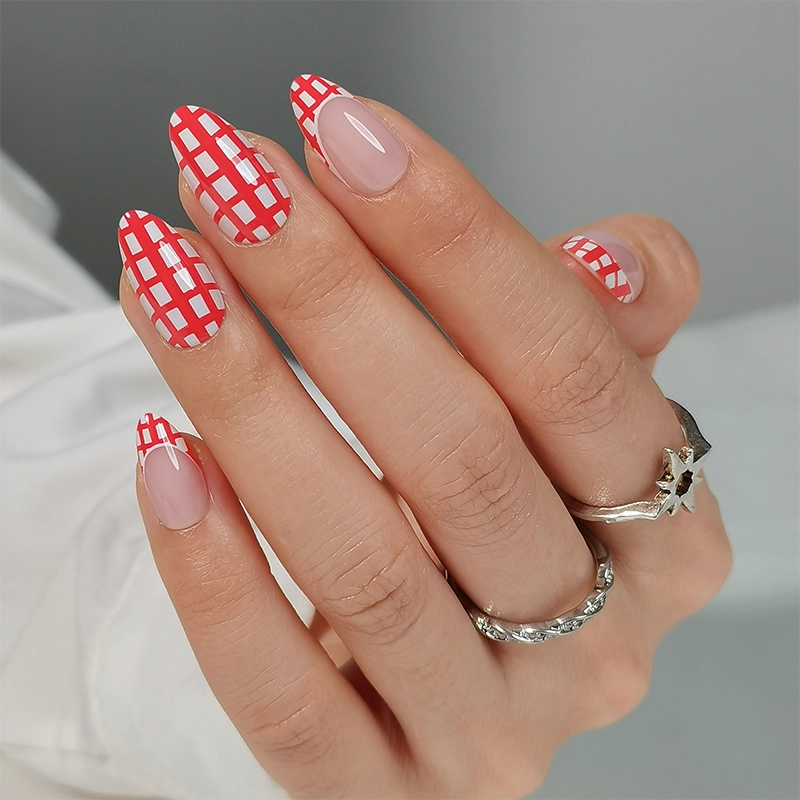
Children’s collections often depend on playful themes, bright colors, characters, glitter effects, seasonal graphics, and simple decorative elements. However, visual appeal must be balanced with production repeatability. Buyers should ask whether the supplier uses digital printing, water transfer, hand decoration, stamping, or layered coating, and whether the selected process can maintain color accuracy across repeat orders.
Decoration review should cover coating adhesion, scratch resistance, glitter containment, edge coverage, and color migration. Licensed character artwork requires documented intellectual property authorization; a factory should not encourage buyers to use unlicensed graphics merely because they are popular online. A reliable supplier can help convert trend references into original, legally safer themes such as animals, stars, fruit, school motifs, sports, or seasonal patterns.
Compare Supplier Capability, Documentation, and Commercial Reliability
Separate trading-company claims from factory evidence
A supplier comparison should identify who controls product engineering, raw material purchasing, inspection, printing, assembly, and final packing. A trading company may still be a useful sourcing partner, but buyers need to understand where production occurs and which organization is responsible for corrective action. Factory photographs alone are not sufficient evidence. Buyers should request a company profile, production address, quality-control workflow, sample approval procedure, and references or shipment records where commercially available.
Useful questions include whether the supplier can retain approved samples, whether incoming materials are inspected, how defective pieces are segregated, and how batch records are maintained. The strongest partners can explain how they manage color standards, mold or shape consistency, packaging artwork, barcode placement, carton labeling, and final quantity verification. These details directly affect replenishment accuracy and marketplace reviews.
Review certifications and test reports intelligently
Certificates should be checked for issuing organization, certificate holder, product scope, validity period, and whether the tested item matches the proposed production formula. An unrelated factory certificate or a document covering a different product should not be treated as proof of compliance. Buyers should request relevant declarations, safety data sheets for chemical components, and test reports for the actual nail, adhesive, coating, or packaging configuration.
For quality management context, buyers may use the principles described in ISO 9001 as a benchmark for documented processes, corrective action, and continual improvement. For cosmetic manufacturing operations, ISO 22716 Good Manufacturing Practices is a useful reference point, although the buyer should verify which standard page and certification scope apply to the supplier’s operation. Documentation does not replace physical inspection, but it provides evidence that the manufacturer understands traceability and controlled production.
Compare capacity, minimum orders, and replenishment speed
Production capacity should be matched to the buyer’s business model. A large retailer may prioritize monthly output, automated packing, and stable replenishment. A startup may need small-batch customization, low initial order quantities, and a supplier willing to develop several prototypes before committing to a large run. The lowest quoted minimum order is not automatically the best option if it comes with unstable quality, limited material choices, or expensive packaging setup fees.
Ask suppliers to separate sample lead time, artwork approval time, production time, inspection time, and shipping preparation. A realistic purchasing plan should also account for public holidays, raw material availability, port congestion, and approval delays. Written tolerance levels for color, quantity, dimensions, and decoration can prevent disagreements when a collection is reordered.
| Comparison point | Basic supplier response | Stronger procurement standard | Buyer evidence to request |
|---|---|---|---|
| Material information | General safety statement | Material and coating specifications matched to the product | Technical sheet, SDS where applicable, and sample review |
| Product fit | One standard size range | Age-relevant dimensions, multiple sizes, spare pieces, and clear shape data | Size chart, physical samples, and fit-test results |
| Compliance | Unverified certificate images | Current documents covering the actual product and factory scope | Test reports, declarations, certification scope, and dates |
| Customization | Catalog-only selection | Options for materials, shapes, colors, artwork, and packaging | Customization matrix, artwork template, and prototype process |
| Production | Unclear capacity and lead time | Defined sampling, manufacturing, inspection, and replenishment schedule | Production plan, order milestones, and quality agreement |
| Commercial risk | Unit price only | Total landed cost with setup, packaging, freight, inspection, and rework risk | Detailed quotation and approved pre-production sample |
Build a Profitable Sourcing Model for Children’s Nail Collections
Evaluate packaging, labeling, and retail readiness
Packaging is a central part of the product experience and must protect the nails during transport. Buyers should compare folding cards, rigid boxes, blister formats, pouches, and reusable cases according to shelf presentation, breakage risk, sustainability requirements, and shipping volume. The package should hold every nail securely without creating unnecessary empty space that increases freight cost.
Retail-ready artwork should include the product name, quantity, size information, application instructions, removal instructions, warnings, country-of-origin information where required, batch or lot identification when applicable, barcode, and responsible company details. Claims such as “breathable,” “long-lasting,” “non-toxic,” or “safe for children” should be used only when they can be substantiated and are appropriate for the destination market. Buyers should have legal or regulatory teams review final packaging before mass production.
Calculate total landed cost and expected return on investment
Unit price is only one part of the financial model. Total landed cost may include tooling, artwork preparation, sample charges, packaging, inspection, freight, duties, payment fees, warehousing, marketplace commissions, and potential replacement costs. A lower-cost product can become more expensive if its fit creates returns or if inconsistent decoration prevents a retailer from maintaining a complete collection.
Commercial evaluation should also consider sell-through potential. Distinctive themes, compact packaging, a clear application method, and age-appropriate sizing can improve shelf conversion. Buyers should compare gross margin under several scenarios, including a conservative first order, a successful replenishment, and a delayed shipment. A supplier that supports stable reorders and small-scale testing can reduce the risk of tying up capital in unproven designs.
Use a structured supplier scorecard
A scorecard makes supplier decisions more objective. Suggested categories include product safety and documentation at 25 percent, fit and application performance at 20 percent, manufacturing capability at 20 percent, customization and design support at 15 percent, lead time and communication at 10 percent, and total commercial value at 10 percent. The weighting can change according to the buyer’s channel, but every supplier should be assessed against the same criteria.
The approval process should move through written specifications, digital artwork approval, physical sampling, fit and application testing, packaging review, pre-production confirmation, final inspection, and post-launch feedback. This sequence reduces the chance that a buyer approves a visually attractive sample without validating production-critical details.
Why Xianxing Beauty Is a Practical OEM and ODM Partner
Manufacturing scale with flexible customization
Xianxing Beauty was founded in 2012 and operates as a China press-on nail manufacturer focused on OEM and ODM customized nail production. Our 20,000-square-meter factory produces up to 300,000 pieces of press-on nails daily, giving brand owners and distributors access to meaningful production capacity while maintaining a development pathway for smaller-scale projects.
Our team supports customization across materials, sizes, designs, nail shapes, and packaging. This flexibility is valuable for children’s collections because the program may require short lengths, smaller dimensions, rounded edges, playful artwork, color variations, and retail packaging that explains application and removal clearly. We launch more than 100 new products every month, helping buyers monitor trends without relying exclusively on generic catalog items.
Fast development and broad product coverage
Our sample timeline is designed to support faster product decisions, with nail samples provided within 3 days and orders generally completed within 7 to 14 days, subject to project specifications, approvals, order quantity, and logistics. Clear artwork files, confirmed dimensions, and prompt sample feedback help keep the schedule on track.
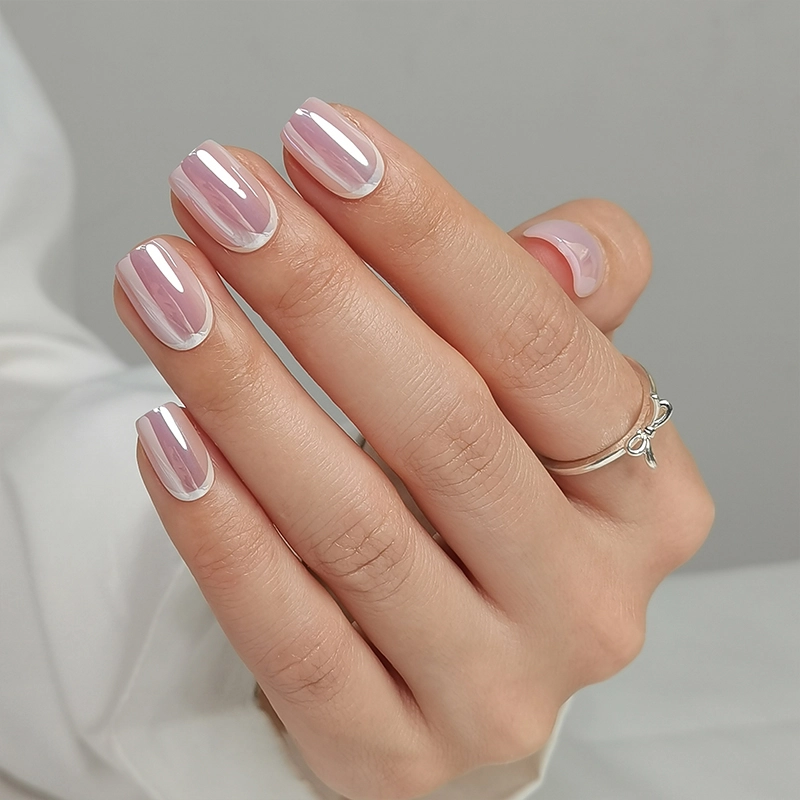
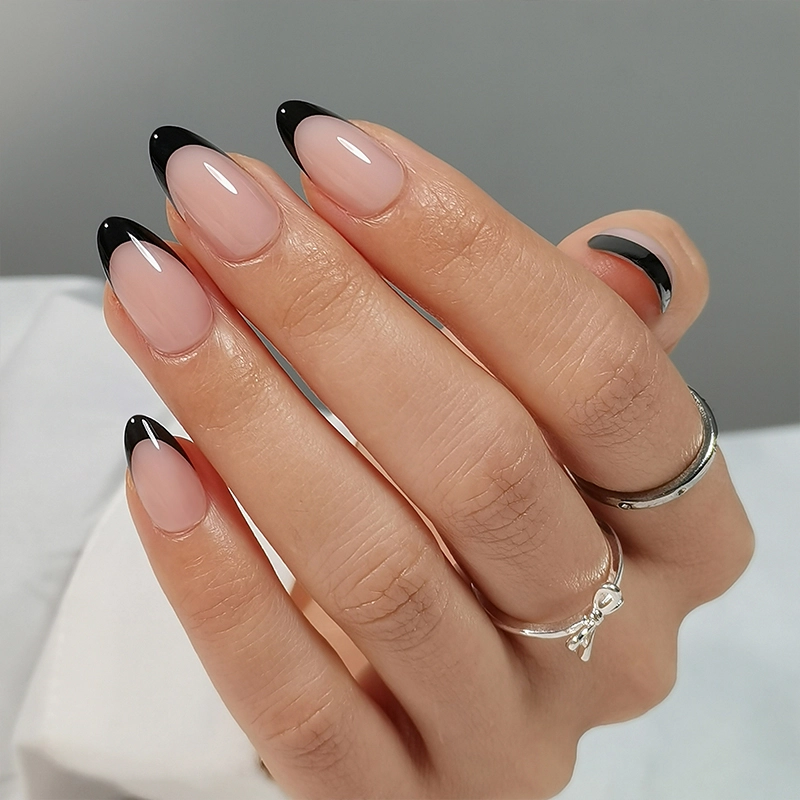
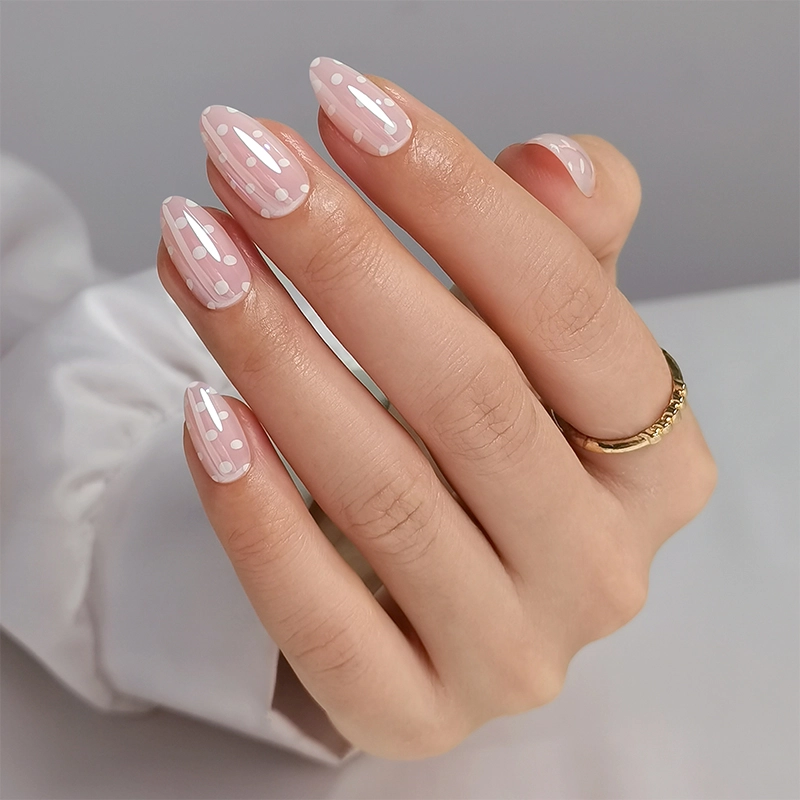
Our product range includes custom press-on nails, standard press-on nails, salon false nails, kids nails press on collections, fake toe nails, gel nail tabs, and sticker press-on nails. This range enables distributors and beauty brands to develop coordinated hand and toe products, temporary application options, seasonal collections, and private-label assortments under one manufacturing relationship.
Quality, comfort, and international compliance support
Our press-on nail products are designed to be breathable and lightweight, with non-toxic and odorless product characteristics and UV coating intended to improve durability and appearance. These attributes should still be evaluated against the buyer’s own specifications and target-market requirements, but they provide a strong foundation for comfort-focused product development.
Our products are supported by RoHS, REACH, and MSDS documentation and are positioned to meet relevant US and EU global cosmetics standards. Buyers should confirm the exact documentation required for each formula, adhesive, package, claim, and destination market before launch. Our manufacturing and development approach is built around consistent execution, practical customization, and long-term brand support, aligned with our vision of becoming the world’s leading press-on nails manufacturer.
For a supplier review, buyers can compare the proposed size chart, sample design, adhesive method, packaging concept, compliance documents, production schedule, and quotation as one integrated project. This provides a more accurate basis for decision-making than comparing price alone.
Frequently Asked Questions
What should buyers verify first when comparing children’s press-on nail suppliers?
Buyers should first verify material information, age-appropriate sizing, edge finishing, adhesive or gel tab options, compliance documentation, and the supplier’s ability to provide representative physical samples.
How can a buyer test whether a children’s nail set fits properly?
A buyer should review the supplier’s size chart and test physical samples across different natural nail widths, application time, comfort, edge lifting, removal behavior, and performance during normal hand washing and movement.
What compliance documents should a supplier provide?
The supplier should provide documentation relevant to the actual product and market, such as material specifications, safety data sheets for applicable chemical components, current test reports, declarations, and evidence related to REACH or other destination-market requirements.
Is a low minimum order quantity always the best choice?
No. A low minimum order can support market testing, but buyers should also assess quality consistency, customization limits, setup costs, packaging options, reorder stability, and total landed cost.
What customization options are important for a children’s nail collection?
Important options include smaller dimensions, short lengths, rounded or suitable shapes, multiple sizes, spare nails, playful original artwork, color variations, adhesive tabs, application instructions, and retail packaging customized to the target market.
What are Xianxing Beauty’s sample and production lead times?
Xianxing Beauty provides nail samples within 3 days, and orders are generally completed within 7 to 14 days, subject to project specifications, approvals, order quantity, and logistics.
What products can Xianxing Beauty manufacture for a private-label program?
Xianxing Beauty supports custom press-on nails, press-on nails, salon false nails, kids nails press on collections, fake toe nails, gel nail tabs, and sticker press-on nails, with customization available for materials, sizes, designs, shapes, and packaging.
Copyright © 2025 - XIANXING BEAUTY All Rights Reserved. Sitemap
Facebook
YouTube
Instagram
LinkedIn