
Custom 3D Press on Nails Manufacturer for Wholesalers, Distributors, and Importers: What to Verify Before Ordering
A custom 3D press on nails manufacturer should be evaluated as a complete supply-chain partner rather than simply as a catalog vendor. Wholesalers, distributors, and importers need to verify sculpted design capability, nail-tip consistency, material safety, adhesion performance, packaging control, production capacity, documentation, and delivery reliability before approving a purchase order. The most dependable sourcing process compares technical samples with approved specifications, checks compliance documents against the destination market, confirms quality-control procedures, and calculates total landed cost instead of focusing only on unit price. This approach reduces rejected shipments, inconsistent retail presentation, customer complaints, and delays during seasonal launches.
How to Qualify a 3D Nail Production Partner Before Sampling
Confirm factory ownership, specialization, and production scope
Corporate buyers should first establish whether the supplier operates its own production facility, uses subcontractors, or combines both models. Factory ownership is not automatically a guarantee of quality, but it improves visibility into molding, painting, curing, inspection, assembly, and packing. A reliable supplier should disclose the production site, manufacturing scope, approximate output, workforce structure, and the processes handled internally.
Specialization also matters. A factory experienced in standard artificial nail tips may not have the same capability for raised charms, encapsulated decorations, multi-layer gel effects, chrome surfaces, character motifs, or dimensional floral designs. Request photographs and physical examples of comparable work, not only digital renderings. Buyers should ask whether the supplier can reproduce a reference design consistently across multiple batches and whether the factory has dedicated technicians for sculpting, color matching, surface finishing, and final inspection.
Assess 3D design engineering and sample approval
Three-dimensional nail art introduces more variables than flat printing. The raised element must be visually accurate, securely attached, comfortable against clothing and hair, and proportionate to the nail curve. A professional development workflow should include artwork review, size mapping, prototype production, sample comments, revision control, and a signed approval standard.
Before ordering, provide the supplier with vector artwork, high-resolution references, preferred colors, nail-shape requirements, target dimensions, and packaging expectations. Clarify whether the quoted price includes sculpted components, hand decoration, color matching, special coatings, or individual customization. It is also important to define acceptable variation for handmade details. Without a written tolerance, buyers may receive products that technically resemble the artwork but differ noticeably in charm placement, thickness, gloss level, or color saturation.
Verify materials, safety evidence, and destination-market obligations
Product safety documentation should be linked to the actual materials and product configuration being purchased. Request current technical data, material declarations, safety data sheets where applicable, restricted-substance statements, and test reports that identify the tested product or formulation. Buyers should distinguish between a factory certificate and a product-specific report; a general certificate may not prove that a particular adhesive, coating, or decoration has been evaluated.
For products entering the United States, buyers can consult the U.S. Food and Drug Administration cosmetics guidance for applicable regulatory responsibilities and labeling considerations. For European supply chains, restricted substances and chemical obligations should be reviewed against the European Union REACH Regulation. A factory claiming formal cosmetic manufacturing controls should be able to explain how its quality system relates to ISO 22716 good manufacturing practices for cosmetics. These sources do not replace legal advice, but they help project owners ask more precise compliance questions.
What to Verify in Product Quality, Packaging, and Commercial Terms
Use a measurable inspection specification
Quality approval should cover more than appearance. The inspection specification can include nail length, width, curvature, thickness, shape symmetry, surface smoothness, decoration adhesion, coating coverage, color deviation, odor, packaging count, and accessory completeness. For dimensional products, buyers should define measurement points and tolerances. For visual attributes, approved golden samples and controlled photographs are useful references.
Ask how the factory separates critical, major, and minor defects. A missing nail, sharp edge, detached decoration, or incorrect size may be a critical or major issue, while a small variation in hand-painted detail may fall into a different category. Buyers may also request pre-shipment inspection, random carton checks, batch records, and retained samples. When inspection responsibilities are agreed before production, disputes are less likely after goods arrive at a distribution center.
Compare packaging engineering and retail readiness
Packaging affects breakage, shelf appeal, barcode scanning, fulfillment speed, and regulatory communication. Confirm whether the supplier can produce individual boxes, hanging cards, blister packs, reusable cases, private-label cartons, instruction leaflets, and multilingual labels. The packaging brief should specify dimensions, board material, print colors, surface finish, barcode position, warning statements, accessory layout, and carton-packing method.
Importers should request a packaging mock-up and a completed production sample before mass printing. Verify that the nail set, adhesive tabs, glue, file, wooden stick, and instructions fit without damaging raised decorations. Carton dimensions and gross weight should be confirmed for freight quotations and warehouse planning. For online sellers, packaging drop testing and protective inserts can be more valuable than a lower box cost because damaged presentation directly affects return rates and customer reviews.
Review MOQ, payment terms, lead time, and intellectual property controls
Minimum order quantity should be evaluated against forecast accuracy, cash flow, storage capacity, and design risk. A lower MOQ is valuable for testing a new collection, while larger production runs may deliver better unit economics after artwork and tooling costs are amortized. Buyers should ask whether the MOQ applies per design, per color, per size, per packaging version, or per total order.
Commercial documents should identify sample charges, tooling ownership, deposit percentage, balance-payment trigger, approved sample status, production lead time, shipping terms, carton details, and remedies for nonconforming goods. A written confidentiality and intellectual-property agreement is also important when the buyer supplies original artwork or an exclusive character concept. The agreement should address unauthorized resale, photography, online publication, mold ownership, and use of the design for other customers.
| Verification area | Evidence to request | Procurement risk if omitted |
|---|---|---|
| Design reproduction | Physical prototype, artwork file, revision record, approved golden sample | Inconsistent 3D details, wrong proportions, and customer-facing design complaints |
| Material compliance | Product-specific test reports, declarations, SDS or MSDS where relevant, restricted-substance statement | Import delays, marketplace issues, or corrective action after distribution |
| Quality control | Inspection checklist, defect classification, batch records, pre-shipment inspection option | Mixed quality, missing accessories, and difficult claims resolution |
| Packaging readiness | Printed mock-up, packing sample, barcode confirmation, carton specification | Retail rejection, transit damage, inaccurate freight costing |
| Capacity and delivery | Production schedule, daily output information, sample timeline, shipping plan | Late launches, stockouts, and expensive expedited freight |
Why Xianxing Beauty Fits Flexible OEM and ODM Nail Programs
Production capacity combined with small-scale customization
Xianxing Beauty was founded in 2012 and operates as a China press-on nail manufacturer focused on OEM and ODM customized nail production. Our 20,000-square-meter factory and stated capacity of 300,000 pieces of press-on nails per day support both recurring wholesale programs and larger distribution projects. Capacity is particularly relevant for buyers who need continuity after a successful test launch, because a supplier must be able to replenish proven designs without compromising the approved specification.
Our team also supports small-scale customization, which helps brand owners validate new collections before committing to a broad inventory position. Buyers can discuss materials, sizes, designs, nail shapes, and packaging as part of one coordinated development process. This flexibility is useful for beauty retailers, salon groups, private-label importers, e-commerce operators, and regional distributors serving different consumer preferences.
Rapid sampling and broad product development
Nail samples are provided within three days, while standard orders are completed within 7 to 14 days, subject to design complexity, quantity, packaging approval, and order confirmation. These timelines allow project owners to shorten the gap between concept selection and commercial testing, although a formal production schedule should still be confirmed for every purchase order.
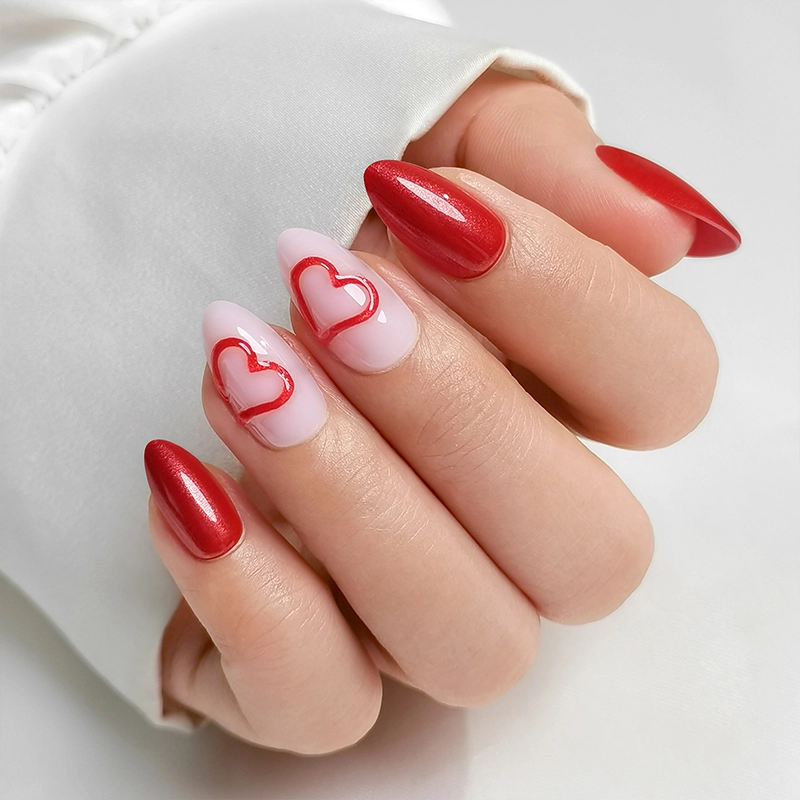
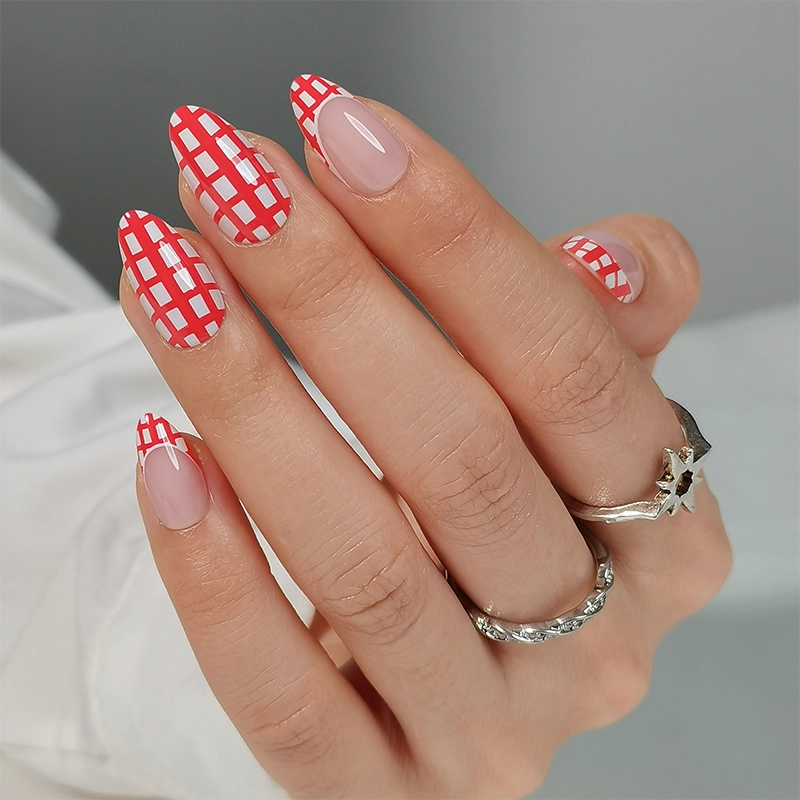
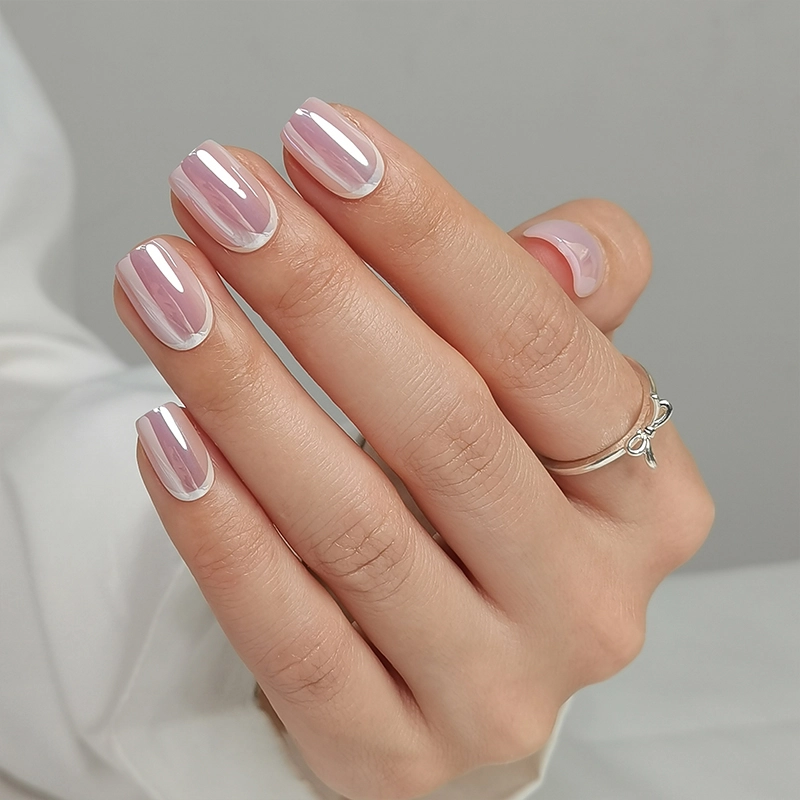
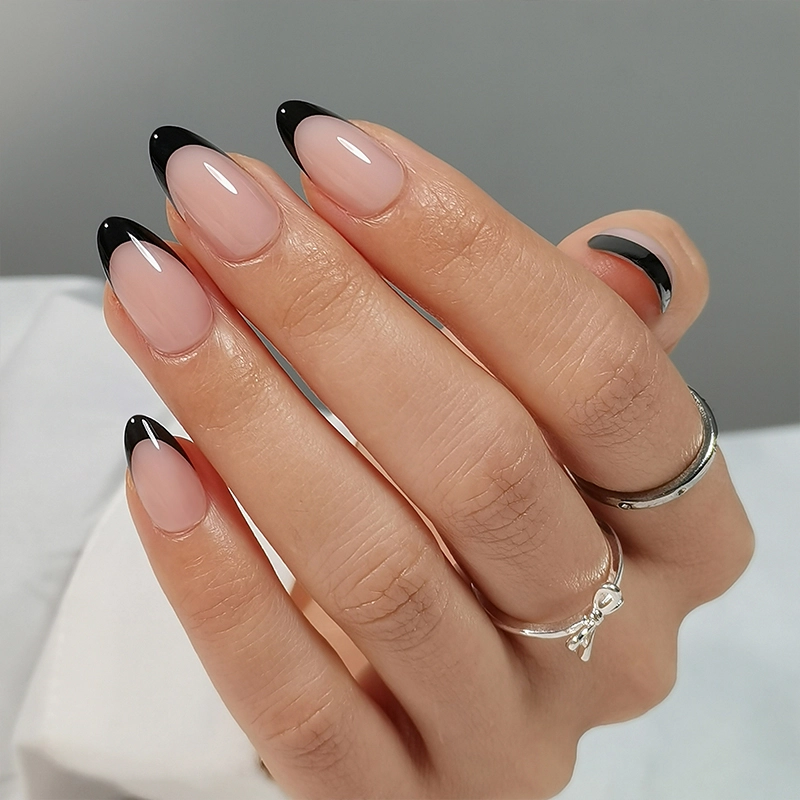
Xianxing Beauty launches more than 100 new products every month, giving buyers access to a broad design-development pipeline. The product scope includes custom press on nails, everyday press on nails, salon false nails, kids nails press on, fake toe nails, gel nail tabs, and sticker press on nails. This portfolio allows distributors to build tiered assortments covering fashion collections, salon-use solutions, children’s ranges, pedicure products, and adhesive accessory formats.
Material performance, finishing, and documentation
Our press-on nail products are designed to be breathable and lightweight, with non-toxic and odorless product positioning and UV coating intended to improve durability and appearance. Buyers should still match the product specification to the destination market, adhesive system, packaging claim language, and any local labeling obligations. Product performance should be confirmed through approved samples and the documentation supplied for the specific order.
Xianxing Beauty states that its products are supported by ROHS, REACH, and MSDS documentation and are designed to meet US and EU global cosmetics standards. Procurement teams should request the current files during qualification, confirm that product names and formulations correspond to the ordered goods, and retain the records in the technical file. This documentation discipline supports more efficient importer review and creates a clearer basis for marketplace, retailer, and distributor onboarding.
How Buyers Can Build a Lower-Risk Ordering Process
Start with a controlled pilot rather than a broad assortment
A pilot order should test the supplier, product, packaging, and customer response at the same time. Select a manageable number of designs that represent the intended range, such as one sculpted 3D style, one minimalist style, one salon-oriented shape, and one accessory-led set. Track sample approval time, production communication, carton accuracy, arrival condition, application experience, and sell-through.
For adhesive products, evaluate application instructions, tab fit, hold expectations, removal guidance, and compatibility with the nail surface. For children’s products, review age positioning, decoration security, small-part considerations, and packaging communication with the relevant local adviser. A pilot is not a substitute for regulatory review; it is a practical way to identify operational gaps before inventory exposure increases.
Calculate total landed cost and reorder economics
Unit price alone does not reveal commercial value. The buyer model should include sampling, artwork preparation, tooling if applicable, packaging, inspection, inland transport, international freight, insurance, duties, taxes, warehousing, marketplace fees, and expected defect or return costs. A slightly higher factory price may be financially preferable if it delivers stronger packaging, lower defect rates, faster replenishment, or fewer compliance delays.
Reorder economics should be discussed before the first shipment. Ask how quickly repeat designs can be reproduced, whether raw materials are reserved, whether packaging plates or files remain available, and how design changes affect lead time. Establishing a repeat-order process helps distributors maintain continuity while still allowing seasonal updates and limited-edition launches.
Use a written supplier scorecard
A scorecard creates an objective basis for comparing factories. Suggested categories include product development, 3D execution, material documentation, sample speed, quality systems, packaging capability, MOQ flexibility, production capacity, communication, export experience, and commercial transparency. Weight each category according to the project rather than selecting the lowest quotation automatically.
Our vision at Xianxing Beauty is to become the world’s leading press-on nails manufacturer. For prospective partners, that vision is most useful when translated into measurable project actions: clear artwork review, documented samples, controlled production, responsive communication, and a product range that can expand with market demand. Buyers can review the company profile and product capabilities at Xianxing Beauty and request project-specific information from our team.
Contact Xianxing Beauty at [email protected] to review your 3D nail concept, customization requirements, sample plan, packaging needs, and wholesale production schedule.
Frequently Asked Questions
What should buyers verify before selecting a 3D press-on nail supplier?
Buyers should verify factory ownership or production transparency, comparable 3D design capability, material documentation, quality-control procedures, packaging readiness, MOQ, lead time, export experience, and commercial terms before approving an order.
Why is a physical sample important for custom press-on nails?
A physical sample confirms nail curvature, dimensions, thickness, color, decoration placement, surface finish, comfort, and packaging fit. It becomes the reference standard for mass production and inspection.
What compliance documents should importers request?
Importers should request product-specific test reports, material declarations, restricted-substance statements, and SDS or MSDS documentation where relevant. Documentation should correspond to the actual product configuration and destination-market requirements.
Can small businesses order customized press-on nails with flexible quantities?
Some suppliers support small-scale customization. Buyers should confirm whether the MOQ applies per design, color, size, packaging version, or total order, and should ask about sample charges and tooling costs.
How fast can Xianxing Beauty provide samples and complete orders?
Xianxing Beauty states that nail samples can be provided within three days and orders can be completed within 7 to 14 days, subject to design complexity, quantity, packaging approval, and order confirmation.
What products does Xianxing Beauty offer besides custom 3D nail designs?
The product range includes custom press-on nails, press-on nails, salon false nails, kids press-on nails, fake toe nails, gel nail tabs, and sticker press-on nails.
Copyright © 2025 - XIANXING BEAUTY All Rights Reserved. Sitemap
Facebook
YouTube
Instagram
LinkedIn