
Logo, Finish, and Shape Customization Options for Nail Sticker Collections
Custom nail sticker collections give beauty brands and distributors ways to distinguish a product line through coordinated logo placement, surface finishes, and sticker shapes. The right specification balances visual impact with application ease, print consistency, packaging requirements, and the intended customer. Buyers should define the collection’s audience and product use before approving artwork, compare finish and shape options through physical samples, and confirm how quality checks will be documented. These steps help a supplier translate a brand concept into repeatable nail decals that complement press-on nails, salon false nails, kids’ nail products, fake toenails, gel nail tabs, or sticker press-on nails.
How to Plan Branding, Surface Effects, and Nail Decal Shapes
Logo placement and artwork readiness
A logo can appear as a small signature on selected decals, a repeating graphic within a collection, or a prominent motif that anchors a themed set. Placement should support the design rather than compete with it. On small nail surfaces, fine details, narrow lettering, and low-contrast colors can become difficult to distinguish after printing or application. Project teams should review artwork at its intended physical scale, not only on a monitor, and check that critical elements remain legible across the smallest decal size.
Before requesting a proof, brand owners should provide vector artwork where available, specify approved color references, identify any protected clear space around the logo, and state whether the design may be resized or recolored. Artwork ownership and permitted use should also be clear in the purchase agreement. The World Intellectual Property Organization’s trademark guidance provides general information about trademarks; it does not replace jurisdiction-specific legal advice. If a supplier will print a customer’s mark, the buyer should define authorization, file handling, and any restrictions on reuse.
Choosing a finish for the collection’s visual goal
Finish affects how a design looks under retail lighting and how it coordinates with other products. Gloss can make saturated colors appear vivid, while a matte appearance can create a softer, editorial effect. Metallic, holographic, glitter, or transparent effects may add contrast or dimension, but each can change how colors reproduce and how easily small details read. A clear or translucent element can blend with the nail, whereas an opaque backing may help artwork stand out against varied nail colors.
Buyers should specify which portions of a design receive a special effect, whether the effect is intended to cover the whole decal or selected details, and what visual variation is acceptable between production lots. Requesting samples on a range of nail colors can reveal contrast problems that a flat artwork proof will not show. Finish selection should also consider packaging: a reflective effect can look different through a glossy sleeve, and a dense design may be harder to inspect when decals are stacked or tightly arranged.
Shape, scale, and usable layout
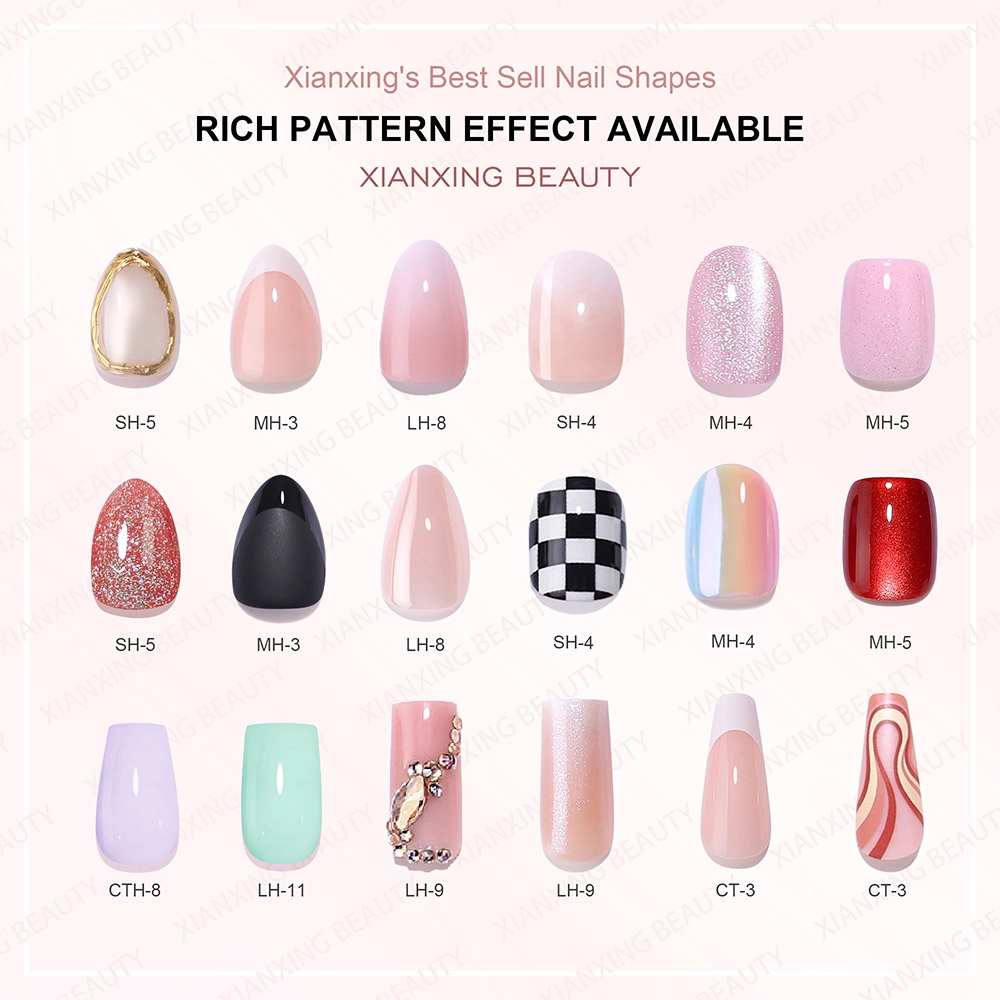
Sticker shapes can be designed around common nail contours, decorative motifs, lettering, or abstract forms. A collection may combine small accents with larger focal graphics, but the sheet layout needs enough separation for removal and application. Shape decisions should account for the intended user’s dexterity, the available nail area, and whether the product is designed for natural nails, press-on nails, or another surface. A shape that looks striking in a digital mock-up may prove awkward to lift or position when produced at its final size.
Ask the supplier to show the proposed sheet dimensions, decal count, spacing, and orientation. Confirm whether the user is expected to trim a decal, apply it directly, or use it as part of a layered design. For assortments intended for children or beginner users, clear visual instructions and manageable decal sizes can be as important as decorative variety. Product claims and age recommendations should be reviewed against the actual product design and applicable market requirements.
Compare Customization Choices Before Approving Production
Match the production approach to the design
Different print and finishing approaches suit different visual requirements. Buyers should avoid choosing a process based on a technique name alone; the practical decision is whether the supplier can reproduce the approved appearance at the required quantity and maintain consistent cutting, color, and presentation. The comparison below is qualitative: actual performance depends on the material, artwork, equipment, and supplier process, so sample approval remains essential.
| Customization choice | Common design purpose | Buyer review point |
|---|---|---|
| Standard printed color | Illustrations, patterns, and brand colors | Check color appearance at final size and across sample nail tones. |
| Metallic or reflective accent | Highlighting selected elements or creating a High Quality visual cue | Review the effect under different lighting and confirm detail readability. |
| Matte or gloss surface appearance | Setting a soft, understated, or high-shine collection style | Compare physical samples and inspect how packaging affects the appearance. |
| Custom contour or motif shape | Aligning decals with nail placement or a collection theme | Test spacing, lifting, placement, and the smallest intended size. |
| Transparent or opaque design areas | Blending with the nail or increasing artwork contrast | Check visibility on light and dark nail colors and on intended substrates. |
Use a sample process to reduce specification risk
A useful approval sequence moves from concept to artwork proof, physical sample, and documented production approval. The brief should identify target markets, intended users, product format, sheet size, preferred finish, logo treatment, packaging, order quantity, and delivery timing. It should also identify which elements are fixed and which can be adjusted if a sample reveals a practical issue. This prevents late-stage disagreement over whether a change is a correction or a new design request.
Inspect samples for print alignment, color consistency, clean edges, spacing, and ease of handling. Where decals will be paired with artificial nails or nail tabs, test the complete consumer experience rather than evaluating the sticker sheet in isolation. The sample review should record the approved version and any tolerances agreed with the supplier. Buyers can also ask how incoming materials, in-process checks, and final inspection are handled. For cosmetic manufacturing practices, ISO 22716 describes good manufacturing practices for cosmetics; its applicability depends on the product and supply-chain context, and it should not be treated as automatic certification of a particular sticker supplier.
Manage Compliance, Packaging, and Supplier Communication
Keep claims and product information aligned
Packaging and online listings should describe the product accurately, including what is included, how the decals are applied, and whether additional products are needed. Avoid claims about wear time, removability, skin compatibility, or safety unless they are supported for the specific product and intended use. Requirements can differ by market and product classification. The U.S. Food and Drug Administration’s nail care product information explains that nail products can raise ingredient and safety considerations; businesses should assess the relevant rules for the product and destination market rather than assume every nail accessory is regulated identically.
Packaging artwork needs its own review. Confirm the product name, quantity, instructions, warnings where applicable, language versions, barcode placement, and any required importer or responsible-party information for each destination. If a collection is sold as a kit with nail tabs or press-on nails, the contents and instructions should match the actual packout. Advertising statements should be supportable and consistent across packaging, product pages, and distributor materials. The Federal Trade Commission’s advertising guidance outlines U.S. principles for truthful, substantiated marketing; other jurisdictions may apply different requirements.
Set measurable expectations with the supplier
Supplier discussions are more productive when buyers separate creative preferences from acceptance criteria. A preference might be “a soft matte look”; an acceptance criterion might specify the approved physical reference sample and the permitted print or cutting variation. The purchase specification should identify artwork version control, sample sign-off, packaging format, inspection points, defect handling, and change-approval procedures. These controls help distributors plan launches and reduce the risk of inconsistent replenishment.
For repeat orders, retain approved artwork, color references, samples, and pack specifications in a controlled project file. If a design changes, confirm whether the update affects tooling, sheet layout, unit cost, or delivery schedule. Buyers should also establish a process for reporting defects with photographs, batch details, and order references. Clear records make it easier to investigate recurring issues and distinguish a manufacturing deviation from a change in artwork or materials.
Build a Coordinated Nail Product Portfolio
Connect sticker collections to adjacent product lines
For brand owners, a sticker collection can work as a standalone accessory or as part of a broader nail assortment. Coordinated graphics can link custom press-on nails, salon false nails, kids’ nail products, fake toenails, gel nail tabs, and sticker press-on nails under a common seasonal theme or brand identity. The portfolio strategy should consider how customers discover and use each format: some buyers seek a quick decorative accent, while others want a complete manicure look or an assortment suitable for gifting.
Our product range includes these related nail categories, giving buyers options to consider when planning a cross-category launch or a coordinated retail program. Product selection should still be based on the project brief, target customer, market requirements, and confirmed specifications. A supplier conversation is most useful when the buyer shares the intended assortment, expected order volumes, packaging needs, and launch timeline early enough for design and sampling decisions to be evaluated together.
Turn brand concepts into repeatable collection specifications
Our approach to a customization project can begin with a structured brief covering logo use, finish, shape, sheet organization, and intended product pairing. Buyers can use that brief to compare concepts, request samples, and document the approved design before production. For a collection that includes stickers alongside press-on nails or gel nail tabs, teams should verify compatibility and presentation across the complete assortment rather than relying on separate product images.
Because no single finish or shape suits every market, the strongest procurement decision is based on verified samples and clear acceptance criteria. Our team can discuss the available product categories and the information needed to assess a project, while buyers retain control of brand approvals, market-specific claims, and final packaging review. This practical division of responsibility supports a more predictable launch and makes future reorders easier to specify.
Contact our team to discuss a nail sticker collection or explore our press-on nail and related product options for your next assortment.
Frequently Asked Questions
What logo files should buyers provide for custom nail stickers?
Provide vector artwork where available, approved color references, logo clear-space requirements, and instructions about whether resizing or recoloring is allowed. Review the design at its final physical size to confirm that fine details and lettering remain legible.
Which finish is best for a nail sticker collection?
The right finish depends on the collection’s visual goal. Gloss can emphasize saturated colors, matte can create a softer look, and metallic, holographic, glitter, transparent, or opaque effects can add contrast or dimension. Compare physical samples under different lighting and on intended nail colors before approval.
How can buyers check whether custom nail sticker shapes will be easy to apply?
Review the proposed sheet dimensions, decal spacing, orientation, and final size, then test physical samples for lifting, handling, and placement. Consider the intended user, nail area, and whether the sticker will be used on natural nails, press-on nails, or another surface.
What should a buyer include in a nail sticker supplier brief?
Include target markets and users, product format, sheet size, artwork and logo requirements, preferred finish and shapes, packaging, order quantity, delivery timing, and which elements may be adjusted. Define sample approval and production acceptance criteria as well.
Can nail stickers be bundled with press-on nails or gel nail tabs?
Yes, a collection can be planned as a standalone accessory or coordinated with press-on nails, gel nail tabs, and other nail products. Buyers should test the complete consumer experience and ensure that kit contents, instructions, and packaging match the final assortment.
What should buyers inspect before approving production?
Inspect samples for print alignment, color consistency, clean edges, spacing, and ease of handling. Record the approved sample and confirm supplier checks, defect handling, artwork version control, and the process for approving changes.




Copyright © 2025 - XIANXING BEAUTY All Rights Reserved. Sitemap
Facebook
YouTube
Instagram
LinkedIn