
Custom Nail Stickers vs. Nail Wraps: Which Product Fits Your Brand Portfolio?
Custom nail stickers and nail wraps can both deliver branded nail art, but they are not interchangeable products: stickers generally add localized graphics or accents, while wraps are typically shaped adhesive films intended to cover most or all of a nail. For brand owners, the right format depends on the desired finish, application steps, target customer, price architecture, packaging needs, and how the item complements press-on nails or salon products. A practical selection process compares coverage, wear expectations, design flexibility, quality controls, and supplier documentation before committing to a launch.
How nail art decals and adhesive wraps differ in practice
Product construction and visual coverage
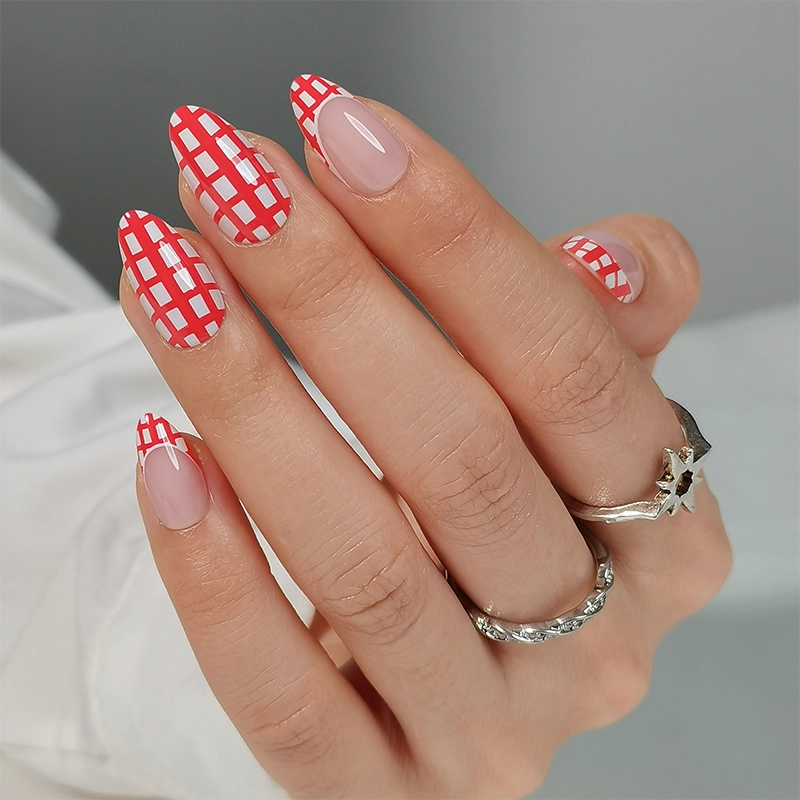
Nail stickers are commonly supplied as printed or embellished decals on a carrier sheet. A customer selects a motif, removes it from the backing, and places it on a natural nail, a press-on nail, or another compatible surface. Depending on the design, a sticker may cover a small area, create a French-tip effect, or provide a larger graphic. This makes the category useful for accent designs, seasonal motifs, logos, and coordinated sets where the base color remains visible.
Nail wraps are generally flexible, pre-decorated adhesive films shaped for nail surfaces. Many are designed to cover most of the nail plate, although cut, fit, thickness, and application instructions vary by product. Wraps can deliver a more continuous pattern or color effect without requiring the user to paint a detailed design. Buyers should not rely on category names alone: some suppliers use “stickers,” “wraps,” and “nail strips” differently, so a physical sample and technical specification are essential.
Application, finish, and customer effort
Stickers can be straightforward to apply, especially when the design is small and the carrier sheet allows clean placement. They may require a compatible base coat, top coat, or surface preparation to support the intended finish. Wraps typically require closer size matching, smoothing, trimming, and sometimes filing or sealing. These steps can create a polished result, but they also influence customer satisfaction and the amount of instruction required on the package.
Neither format guarantees a particular wear period. Adhesive formulation, nail preparation, water exposure, application technique, nail shape, and top-coat compatibility all influence performance. Avoid promising a fixed duration unless the supplier has substantiated it through testing under conditions relevant to the product’s directions. Product claims should be reviewed for the markets where the item will be sold; the U.S. FDA overview of nail care products explains how nail products fall within the cosmetics landscape and notes that intended use and claims can affect regulatory treatment.
Portfolio role and ideal use cases
Stickers can function as an accessible add-on: a low-commitment way to personalize a manicure, extend a licensed design collection, or offer consumers mix-and-match art. They can also support salon retail when customers want to add detail without purchasing a full set of decorated nails. Wraps are a stronger candidate when the product promise centers on an all-over print, coordinated nail set, or alternative to applying nail polish by hand.
For a brand already selling custom press on nails, the two formats can serve different purchase occasions. Stickers can help customers customize a plain press-on set, subject to surface compatibility testing, while wraps can create a separate self-application offer. A product portfolio is clearer when packaging explains whether the item is intended for natural nails, artificial nails, or both rather than leaving customers to infer compatibility.
Procurement comparison: evaluate the format against the launch brief
Side-by-side product and sourcing considerations
The comparison below describes common commercial formats, not a universal specification. Materials, adhesives, dimensions, and instructions vary by supplier, so buyers should confirm details using a sample, approved specification, and final packaging artwork.
| Decision factor | Custom nail stickers | Nail wraps | Buyer implication |
|---|---|---|---|
| Typical coverage | Localized motifs or partial coverage; full-nail designs may also be offered | Usually intended for broad or full-nail coverage | Match coverage to the visual concept and customer’s desired effort |
| Application focus | Placement of individual decals from a backing sheet | Selection, positioning, smoothing, and trimming of a shaped film | Test instructions with users who reflect the target audience |
| Design flexibility | Supports multiple small graphics or mix-and-match motifs on a sheet | Supports continuous patterns and coordinated surface designs | Choose artwork layouts that suit the format and its usable area |
| Fit sensitivity | Generally lower for small accents; placement still affects appearance | More dependent on matching film width and curve to nail shape | Review size range, shape options, and excess material handling |
| Packaging priorities | Protect the carrier sheet and make motifs easy to identify and remove | Protect the adhesive film and communicate fit and application steps | Check pack-out, instructions, storage conditions, and retail presentation |
| Quality checks | Print clarity, registration, sheet release, adhesive behavior, and finish | Print consistency, film integrity, adhesive behavior, fit, and removal | Set measurable acceptance criteria before production approval |
What to verify with a supplier before ordering
When evaluating a custom nail stickers manufacturer, buyers should request a clear product specification covering substrate, adhesive type or stated adhesive characteristics, dimensions, print method, finish, color tolerances, packaging, storage recommendations, and any stated use limitations. For wraps, also request the size assortment, shape profile, film construction, intended application steps, and guidance for trimming or removal. The point is not to collect technical terms for their own sake; it is to establish what the supplier is making and what the brand is permitted to claim.
Ask for samples from the intended production process, not only a digital rendering or a one-off artwork proof. Evaluate print legibility at actual retail scale, color consistency across designs, ease of removal from the carrier, residue, edge lifting, and the appearance after following the proposed instructions. If products will be applied over press-on nails, test that use separately and document the result. Compatibility should not be assumed merely because two products are both described as nail art.
Quality and compliance records should match the product and destination market. Cosmetics rules differ across jurisdictions, and intended use, ingredients, labeling, and claims can affect obligations. The European Union Cosmetics Regulation (EC) No 1223/2009 sets the principal framework for cosmetic products placed on the EU market. For cosmetic manufacturing practices, buyers can also review the scope of ISO 22716; a reference to a standard should be checked against the supplier’s actual certification or documented practices rather than treated as proof by itself.
Cost, packaging, and launch readiness
Unit price alone is an incomplete comparison. A buyer should assess the total landed cost, including artwork setup, sampling, tooling where applicable, pack components, instruction inserts, inspection, freight, duties, and expected product loss or returns. A sheet of decals may make it possible to present multiple designs in one pack, while a wrap assortment may require several sizes or more detailed instructions. These choices affect perceived value as well as the production quote.
Packaging is part of the product experience and risk control. Confirm that the pack protects the adhesive surface from contamination or damage during normal storage and distribution, and that the user can understand the application sequence without relying on an online tutorial. Include material and ingredient information where required by the destination market, and have qualified regulatory support review claims and labeling. The FDA cosmetics labeling guidance is a useful starting point for U.S.-market considerations, but it does not replace a market-specific compliance review.
Building a differentiated nail portfolio with the right supplier
Map product formats to customer segments
A balanced portfolio can connect nail art products with adjacent categories without forcing every item to serve the same customer need. Press on nails and salon false nails can answer demand for a complete ready-to-wear look, while stickers and wraps can offer decoration or a self-application format. Kids nails press on products may call for age-appropriate design, clear supervision and use instructions, and careful review of applicable safety and labeling requirements. Fake toe nails address a separate use occasion, while gel nail tabs can support an adhesive option for suitable press-on nail applications.
These categories should be positioned with accurate compatibility language. A sticker designed for a natural nail may not adhere or finish identically on a coated artificial nail. A gel nail tab intended for temporary attachment is not automatically interchangeable with a decal adhesive. Brand owners should keep directions specific to each product, define what accessories are included, and avoid bundling formats in ways that imply untested performance.
Use samples and quality gates to control launch risk
Our product planning approach should begin with a written brief: target customer, intended application surface, art style, retail price position, pack contents, destination markets, and the claims the brand wants to make. That brief gives a supplier a workable basis for sampling and reduces late-stage changes to artwork, sizing, or instructions. If the design is complex, approve a physical color and finish reference alongside the artwork proof so that production acceptance is not based on screen appearance alone.
Before mass production, establish quality gates for incoming materials, print and color review, adhesive behavior, packaging integrity, and finished-pack inspection. Record approved samples and acceptance criteria, then define how deviations will be handled. This process is especially valuable when a collection includes several designs, because a single acceptable sample does not establish consistent results across every artwork variation or production lot.
Position a supplier relationship around evidence
Our portfolio can include sticker press on nails, custom press on nails, salon false nails, kids nails press on, fake toe nails, and gel nail tabs alongside standalone nail art formats. The commercial advantage comes from making those products easy to understand as a coordinated range, not from claiming that one application method suits every consumer. Buyers can ask prospective suppliers to explain how they manage artwork approval, sample revisions, specification control, batch traceability where applicable, packaging checks, and issue resolution.
Because no company profile or named brand credentials were supplied for this article, supplier-specific certifications, factory capacity, technical achievements, and market reputation should be verified directly rather than assumed. A dependable sourcing decision is based on documented capabilities, representative samples, transparent communication, and a production agreement that clearly defines specifications and responsibilities. This evidence-led approach gives brand owners a stronger basis for repeat orders and more credible product claims.
Choose stickers when the strategy centers on customizable accents, design variety, or an easy add-on; choose wraps when full-surface coverage and a coordinated self-application look are central to the offer. When both address distinct customer needs, test them as separate SKUs and compare real sample performance, customer comprehension, and total landed economics before scaling. Contact our team to discuss product options or review the nail products best suited to your portfolio.
Frequently Asked Questions
What is the main difference between nail stickers and nail wraps?
Nail stickers generally add localized graphics or accents from a carrier sheet, while nail wraps are typically adhesive films intended to cover most or all of a nail. Product naming varies by supplier, so buyers should verify the sample and specification.
Are nail stickers or nail wraps easier for customers to apply?
Stickers can be straightforward to place, particularly for small motifs. Wraps usually require size selection, positioning, smoothing, and trimming. The actual effort depends on the product design and instructions, so brands should test application with representative users.
Can nail stickers be used on press-on nails?
They may be compatible with some press-on nail surfaces, but compatibility should be tested for the specific sticker, nail surface, and any top coat. Brands should not assume that a product intended for natural nails will perform identically on artificial nails.
What should buyers ask a nail art supplier before placing an order?
Request a product specification covering materials, adhesive characteristics, dimensions, printing, finish, packaging, storage, use limitations, and destination-market documentation. Review production-representative samples and agree on measurable acceptance criteria before mass production.
How should brands compare the cost of nail stickers and wraps?
Compare total landed cost rather than unit price alone. Include artwork setup, sampling, packaging, instructions, inspection, freight, duties, and potential product loss or returns, then assess those costs against the intended retail value and product experience.
What quality checks matter for custom nail stickers and wraps?
For stickers, review print clarity, registration, carrier-sheet release, adhesive behavior, and finish. For wraps, review print consistency, film integrity, adhesive behavior, fit, and removal. Both formats should be checked against an approved sample and written acceptance criteria.


Copyright © 2025 - XIANXING BEAUTY All Rights Reserved. Sitemap
Facebook
YouTube
Instagram
LinkedIn