
Kids Press on Nails Manufacturer Solutions for Distributors, Importers, and Wholesale Buyers
Distributors, importers, private-label brands, and wholesale buyers sourcing children’s press-on nails need more than attractive designs and competitive unit pricing. A dependable supply program must combine age-appropriate sizing, low-odor materials, secure packaging, consistent adhesion, documented quality control, export readiness, and reliable production capacity. The right children’s artificial nail supplier can help buyers develop safe-looking, lightweight, breathable, and commercially differentiated products while reducing sampling delays, compliance risks, inventory waste, and customer complaints. This guide explains how to evaluate a manufacturing partner, structure an OEM or ODM project, verify product documentation, and build a scalable assortment for retail, salon, e-commerce, party favor, and beauty-accessory channels.
How to Evaluate a Children’s Press-On Nail Production Partner
Define the product brief before requesting quotations
A clear product brief gives manufacturers the information required to quote accurately and prevents hidden changes during development. Buyers should specify the intended market, recommended age range, nail count per set, sizing system, nail shape, finish, decoration level, adhesive format, packaging style, target retail price, annual forecast, and required certifications. A children’s collection may use shorter lengths, rounded or soft-square shapes, low-profile tips, pastel colors, animal graphics, seasonal motifs, or school-friendly designs. These decisions affect material consumption, mold selection, print complexity, inspection standards, and packing labor.
Importers should also distinguish between a ready-made catalog item and a genuinely customized program. Catalog products may shorten development time but offer limited exclusivity. OEM production is suitable when the buyer supplies artwork, specifications, or packaging requirements. ODM development is more appropriate when the supplier contributes design concepts, assortment planning, structural packaging, or technical recommendations. Written approval samples should establish the reference standard for color, gloss, dimensions, decoration position, adhesive performance, and package contents.
Assess material, finish, and user-safety controls
Product safety begins with material traceability and controlled formulation. Buyers should request material specifications, batch records where applicable, safety data sheets for chemical components, and test documentation relevant to the destination market. The United States Food and Drug Administration explains that cosmetic products and ingredients generally must be safe under labeled or customary conditions of use, although cosmetics are not approved by the FDA before entering the market in the same way as drugs. Buyers can review the FDA cosmetics laws and regulations when planning U.S. distribution.
For European sales, project owners should assess applicable chemical obligations and restricted substances under the European Chemicals Agency REACH framework. REACH relevance depends on the product composition, supply chain role, and intended use, so a supplier’s declaration should be reviewed alongside independent testing when required. Buyers should avoid unsupported claims such as “chemical-free” or “completely risk-free.” More defensible commercial language includes non-toxic, odorless, lightweight, or breathable only when supported by the supplier’s product specifications and test records.
Verify manufacturing discipline and inspection methodology
Supplier evaluation should cover incoming material inspection, in-process checks, decoration verification, adhesive or tab review, final visual inspection, counting accuracy, carton drop protection, and lot identification. A factory that can explain its corrective-action process is usually better prepared to manage recurring wholesale programs than a trading intermediary that only forwards a quotation. Buyers should ask how defects are classified, what acceptance criteria are used, how approved samples are archived, and how production changes are communicated.
For cosmetic and personal-care supply chains, ISO 22716 Good Manufacturing Practices provides internationally recognized guidance for the production, control, storage, and shipment of cosmetic products. Press-on nails may be regulated differently from cosmetics depending on market positioning and claims, but the standard remains a useful reference for assessing process discipline, hygiene controls, documentation, and batch consistency.
Commercial Solutions for Distributors, Importers, and Wholesale Buyers
Build an assortment that supports different retail channels
A profitable assortment should be designed around channel behavior rather than decoration alone. Mass retail favors simple packaging, fast-moving colors, accessible pricing, and compact shelf footprints. Beauty e-commerce can support larger design collections, video-led application education, and limited-edition drops. Party stores may require themed bundles, while salons and beauty professionals may prefer dependable shapes, refillable displays, and consistent sizing across repeat orders.
Buyers can divide the range into entry, core, and High Quality tiers. Entry sets may contain simple sticker tabs and minimal decoration. Core sets can combine several sizes, printed artwork, and upgraded packaging. High Quality collections may use detailed art, glossy UV finishes, special shapes, multi-pack configurations, or coordinated fingernail and toenail products. This structure helps distributors protect margins without forcing every customer into the same price point.
Compare customization options with operational impact
| Procurement element | Standard catalog approach | OEM or ODM approach | Buyer consideration |
|---|---|---|---|
| Design | Pre-existing colors and graphics | Brand-specific artwork and collections | Customization improves differentiation but requires artwork approval and sampling |
| Dimensions | Fixed size and shape range | Selected sizes, lengths, and silhouettes | Shorter, rounded profiles may better suit children’s positioning |
| Packaging | Supplier’s standard card or box | Custom insert, barcode, language, and retail format | Packaging must match destination-market labeling and channel requirements |
| Adhesion system | Standard tabs or accessories | Configured tab quantity, instructions, and accessories | Application guidance should be clear and age-appropriate |
| Minimum order | Often tied to available stock | Depends on materials, printing, and production plan | Small-scale customization can reduce launch risk |
| Lead time | Potentially faster for stocked goods | Includes sampling, approvals, and production scheduling | A written timeline should separate sample and mass-production stages |
The table illustrates why the lowest quoted unit price is not always the lowest landed cost. A custom package that improves shelf conversion, a more suitable sizing system that reduces returns, or a documented inspection process that prevents a rejected shipment can create greater financial value than a small factory-price reduction. Total cost should include sampling, tooling if applicable, packaging setup, freight, customs, testing, rework, and inventory risk.
Control documentation, labeling, and import readiness
Importers should request a complete technical file before production approval. Typical documents may include a commercial invoice, packing list, product specification, material declaration, test reports, safety data sheets for relevant chemical components, certificates of origin when needed, and packaging artwork. The exact documentation depends on the product composition, claims, sales channel, and jurisdiction. Labels should be reviewed for manufacturer or responsible-party details, country-of-origin rules, net contents where applicable, warnings, application instructions, batch or lot information, and language requirements.
Children’s positioning requires especially careful marketing control. If the product is marketed as a toy, toy-safety obligations may apply in the destination market; if it is marketed as a beauty accessory, different rules may govern. The U.S. Consumer Product Safety Commission toy-safety guidance is a useful starting point for buyers assessing whether a product, package, or marketing claim could bring it within toy regulations. A compliance review should occur before artwork is finalized, not after goods are packed.
Xianxing Beauty Manufacturing Capabilities for Customized Kids Nail Programs
Scalable OEM and ODM production from a dedicated factory
Xianxing Beauty was founded in 2012 and operates as a China-based press-on nail manufacturer focused on OEM and ODM customized nail production. Our 20,000-square-meter factory is structured to support both development projects and repeat wholesale programs. With stated production capacity of up to 300,000 pieces of press-on nails daily, our team can support distributors that need dependable replenishment as well as brands launching seasonal or regional collections.
Our development pipeline introduces more than 100 new products each month, giving project owners access to a broad design foundation without limiting them to generic catalog selections. We support customization of materials, sizes, designs, nail shapes, packaging, and related product configurations. This flexibility is valuable for importers testing a new category, private-label operators building a differentiated identity, and distributors that need separate collections for retail chains, online stores, salons, or promotional campaigns.
Product options designed for commercial flexibility
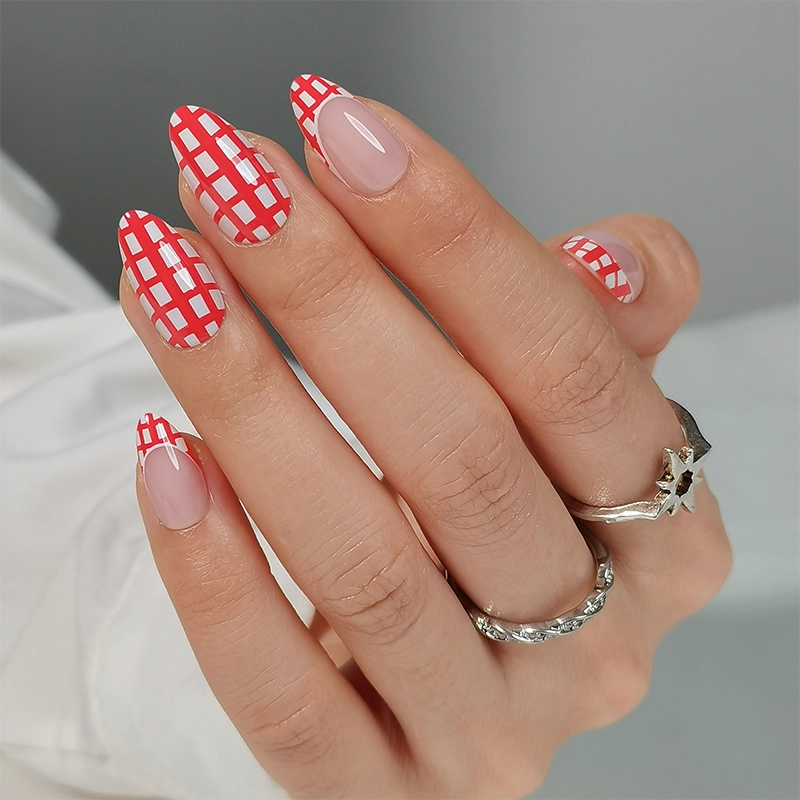
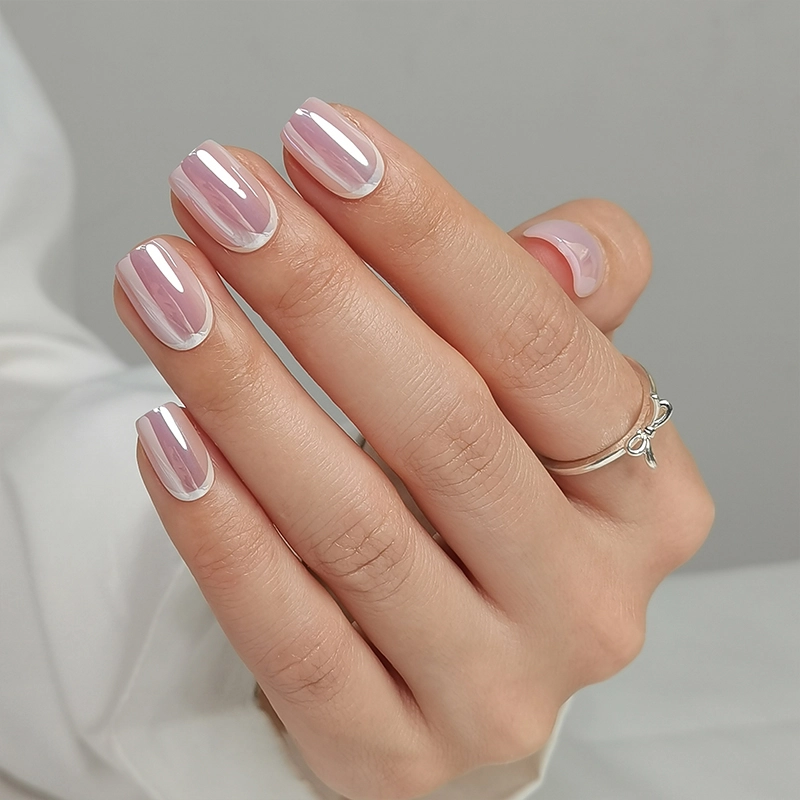
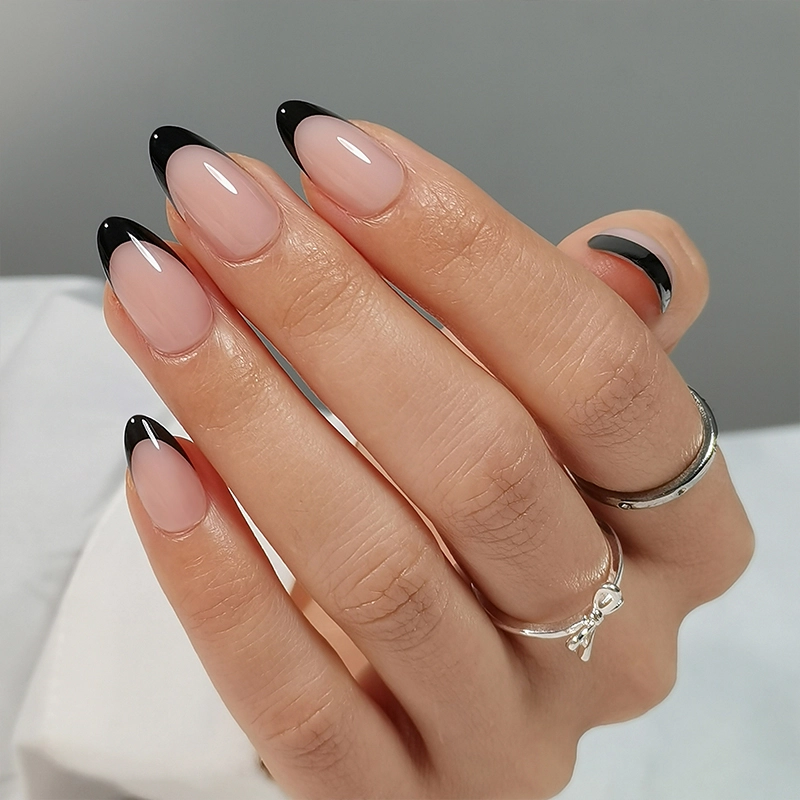
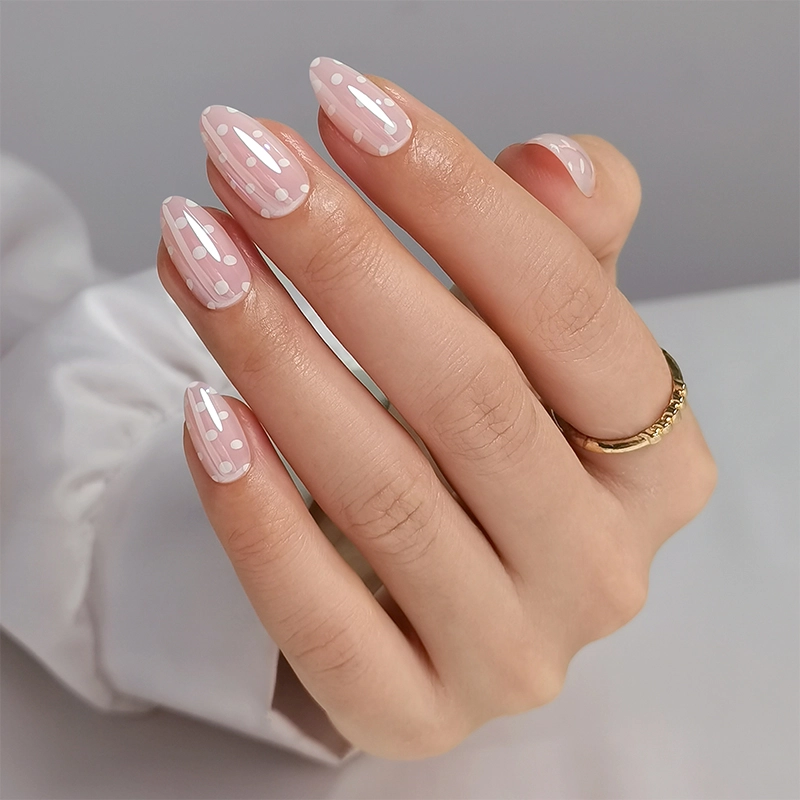
Our product portfolio includes custom press-on nails, everyday press-on nail sets, salon false nails, kids nails press on collections, fake toe nails, gel nail tabs, and sticker press on nails. These formats allow buyers to create coordinated product families rather than isolated SKUs. For example, a children’s assortment can combine short decorative fingernail sets with easy-application sticker tabs, while an expanded beauty range can add adult designs, salon-oriented false nails, and matching toenail products.
Our press-on nail products are described as breathable and lightweight, with non-toxic and odorless characteristics. UV coating is used to help protect the nail surface and support a more durable, attractive finish. These features can contribute to a stronger value proposition for buyers seeking comfortable wear, visual consistency, and improved resistance to everyday handling. All claims should still be matched to the approved specification, destination-market requirements, and final packaging language.
Fast sampling and structured order execution
Speed is important when distributors are working around retail calendars, influencer launches, school holidays, seasonal gifting, or trade-show deadlines. Xianxing Beauty provides nail samples within three days for suitable projects, allowing buyers to review shape, artwork, color, surface finish, and packaging direction before committing to larger production. Once specifications and approvals are complete, standard orders can be completed within 7–14 days, subject to order complexity, material availability, packaging requirements, and production scheduling.
For efficient execution, buyers should send vector artwork or high-resolution files, a target quantity, destination country, required delivery date, preferred nail dimensions, packaging details, and any compliance checklist at the beginning of the inquiry. Our team can then clarify feasibility, recommend suitable constructions, coordinate sample confirmation, and establish the production reference used for quality control. This approach reduces ambiguity between design approval and mass production.
How to Build a Lower-Risk Wholesale Buying Process
Use stage-gate approvals instead of one-step purchasing
A disciplined buying process should contain clear gates: supplier qualification, product brief confirmation, quotation review, sample approval, packaging proofing, pre-production confirmation, mass-production inspection, and shipment release. Each gate should have an owner and written acceptance criteria. This is particularly important when multiple parties are involved, such as a brand designer, sourcing agent, importer, compliance consultant, and retail customer.
Buyers should retain the approved sample, signed artwork, packaging proof, technical specifications, and final inspection record. If a later batch differs in color, curvature, print position, or accessory count, these records provide an objective basis for investigation. A supplier scorecard can track on-time delivery, defect rates, response time, documentation accuracy, sample-to-production consistency, and corrective-action performance.
Plan inventory around demand and replenishment data
Children’s designs can be highly seasonal, and novelty graphics may lose momentum quickly. Importers should avoid overcommitting to too many low-volume designs before measuring sell-through. A practical launch may use a controlled number of core shapes and packaging formats, then expand the strongest performers through colorways, themes, or coordinated sets. Flexible small-scale customization is valuable because it enables market testing without turning every experiment into a large inventory exposure.
Forecasting should account for production lead time, ocean or air freight, customs clearance, retailer booking windows, and safety stock. A supplier with stable capacity can support rolling purchase orders, but buyers should still share forecast updates early. Capacity planning is most effective when the factory understands expected monthly demand rather than receiving isolated urgent orders.
Partner with a supplier aligned with long-term growth
Xianxing Beauty’s stated vision is to become the world’s leading press-on nails manufacturer. Our focus is therefore not limited to one shipment; it includes product development, manufacturing consistency, customization support, and long-term cooperation with global buyers. Our products and documentation include ROHS, REACH, and MSDS certifications or records as applicable to the relevant product and project, and our team works toward meeting U.S. and European global cosmetics standards. Buyers should confirm the precise scope, validity, product coverage, and destination-market acceptance of every document before making regulatory claims.
For a distributor or importer, the most valuable supplier is one that combines design responsiveness, production scale, transparent communication, and evidence-based quality management. Xianxing Beauty’s factory capacity, monthly product development, rapid sample support, small-scale customization, and broad product portfolio create a practical foundation for testing and scaling children’s press-on nail programs. To discuss specifications, packaging, sample requirements, or wholesale planning, buyers can contact our team at [email protected] or visit Xianxing Beauty.
Contact Xianxing Beauty to develop a customized children’s press-on nail program or review suitable products for distribution and wholesale purchasing.
Frequently Asked Questions
What should buyers specify when sourcing children’s press-on nails?
Buyers should specify the intended market, recommended age range, nail count, sizing system, nail shape, finish, decoration, adhesive format, packaging style, target price, annual forecast, and required certifications.
What is the difference between OEM and ODM production for press-on nails?
OEM production is suitable when the buyer supplies artwork, specifications, or packaging requirements. ODM development is more appropriate when the supplier contributes design concepts, assortment planning, structural packaging, or technical recommendations.
What compliance documents should importers request?
Typical documents may include product specifications, material declarations, test reports, safety data sheets for relevant chemical components, certificates of origin when needed, packaging artwork, commercial invoices, packing lists, and lot or batch information. Exact requirements depend on the product and destination market.
How quickly can Xianxing Beauty provide samples and complete orders?
Xianxing Beauty states that nail samples can be provided within three days for suitable projects and that standard orders can be completed within 7–14 days after specifications and approvals are finalized, subject to project complexity, material availability, packaging requirements, and production scheduling.
What products can be included in a customized nail program?
The portfolio includes custom press-on nails, press-on nail sets, salon false nails, kids nails press on collections, fake toe nails, gel nail tabs, and sticker press on nails, with customization available for materials, sizes, designs, nail shapes, and packaging.
How can buyers reduce inventory risk when launching a new collection?
Buyers can start with a controlled number of core shapes and packaging formats, test demand through small-scale customization, measure sell-through, and expand successful designs through new colorways, themes, or coordinated sets.
Copyright © 2025 - XIANXING BEAUTY All Rights Reserved. Sitemap
Facebook
YouTube
Instagram
LinkedIn