OEM or ODM? Selecting the Right Kids Press on Nails Manufacturer for a Custom Collection
OEM and ODM are not interchangeable purchasing models when a brand is developing a children’s nail collection. OEM generally means the buyer supplies the concept, specifications, artwork, dimensions, and packaging requirements while the factory manufactures to those instructions. ODM means the supplier contributes ready-made designs, structural concepts, technical recommendations, or a complete product platform that can be adapted to the brand. For a children’s press-on range, the correct choice depends on the desired level of differentiation, regulatory risk, launch schedule, budget, minimum order quantity, and internal product-development capability. A reliable supplier should be able to explain which elements are customizable, validate material and adhesive performance, provide traceable quality records, and support a repeatable production program rather than only quote a low unit price.
Choosing Between Private-Label Manufacturing and Collaborative Nail Development
When an OEM program is the better fit
OEM is appropriate when a brand already owns a clear product brief. The brief may specify nail curvature, length, width range, shape, color palette, artwork, adhesive format, backing card, carton structure, age positioning, barcode requirements, and retail presentation. This model gives the project owner greater control over intellectual property and helps maintain consistency across seasonal collections. It is especially useful for established distributors, beauty retailers, character-license programs, and private-label operators with an in-house designer or packaging agency.
However, a specification-led project transfers more responsibility to the buyer. The brand must define tolerances, approve color standards, confirm the intended market, and identify which claims require substantiation. A professional production partner should challenge ambiguous requirements before tooling or mass production begins. For example, children’s products may need rounded edges, shorter lengths, easy removal instructions, secure but manageable adhesion, and packaging that avoids confusing the product with a toy or edible item. These decisions should be documented in an approved technical file.
When ODM accelerates a new collection
ODM is often more efficient for startups, general merchandise distributors, and retailers that need a commercially tested direction without building every design from zero. A capable development team can recommend popular shapes, coordinated color stories, age-appropriate motifs, transparent sizing systems, and practical packaging configurations. The buyer can then select, combine, and brand existing concepts while requesting changes to artwork, dimensions, materials, or accessories.
The main procurement risk is insufficient exclusivity. Buyers should ask whether a proposed pattern is standard, semi-exclusive, or fully exclusive; whether the same mold is sold to other customers; and how artwork ownership is handled. An ODM agreement should define approval rights, permitted territories, design confidentiality, revision rounds, sample ownership, and rules for discontinuing a design. ODM should not mean accepting a generic product without technical review.
A hybrid model often delivers the strongest commercial result
Many successful collections use a hybrid approach: the supplier provides an ODM base platform, while the brand applies OEM-level control to the most visible and sensitive components. A buyer may select an existing nail shape and sizing architecture, then commission exclusive artwork, customized packaging, branded application instructions, and a modified adhesive system. This reduces development time while preserving shelf differentiation.
The decision can be organized around five questions: Does the buyer possess final artwork and technical drawings? Is the launch date fixed? Is exclusivity commercially important? Can the buyer fund multiple sampling rounds? Does the supplier have qualified designers and engineers? If most answers favor speed and limited internal resources, ODM or hybrid development is practical. If brand identity, licensing, or proprietary geometry is central to the project, OEM control is usually more appropriate.
How to Audit a Children’s Press-On Nail Production Partner
Assess materials, fit, adhesion, and child-appropriate use
A children’s collection requires more than attractive artwork. Nail plates vary in width, curvature, and growth stage, so a supplier should offer a meaningful size range and explain how fit is checked. Lightweight construction, smooth edges, breathable design goals, low odor, and a removal process that minimizes unnecessary stress on the natural nail are important product attributes. Buyers should request material specifications for the nail body, coating, adhesive tabs or glue, ink, backing card, and packaging components.
Adhesive performance should be assessed under realistic conditions rather than through a single laboratory result. Testing can include application consistency, initial tack, wear duration, humidity exposure, temperature variation, residue after removal, and package aging. Claims such as non-toxic, odorless, or suitable for children should be supported by relevant documentation and carefully worded instructions. The FDA cosmetics laws and regulations provide a useful reference for understanding U.S. cosmetic responsibilities, although the exact classification of a nail product and its accessories should be reviewed for each market.
Verify quality systems and compliance documentation
Supplier qualification should cover the factory, not only a sample kit. Buyers should review incoming-material controls, batch identification, in-process inspection, final inspection, complaint handling, corrective action, and retention-sample procedures. A documented quality-management approach is more valuable than an unsupported statement that products are “High Quality.” The ISO 22716 guidance for cosmetic good manufacturing practices is a recognized reference for organized production, hygiene, quality control, storage, and distribution practices where applicable to the product category.
For international distribution, request current test reports and declarations rather than generic logos on a brochure. Depending on the product composition and destination, documentation may include REACH-related information, restricted-substance screening, RoHS evidence for applicable electrical components, safety data for chemical products, and migration or packaging assessments. The official European Union REACH Regulation is the appropriate primary source for chemical-substance obligations in the EU. If the collection is marketed as a toy or includes toy-like components, the intended use and age grading should be reviewed with a qualified compliance professional; the U.S. Consumer Product Safety Commission toy-safety resources explain why classification and testing responsibilities matter.
Compare capacity, lead time, and commercial flexibility
Capacity is not simply the largest number a factory can produce. The relevant question is whether the supplier can maintain quality during a small pilot, a promotional surge, and a repeat order. Ask how many production lines support nail forming, printing, coating, sorting, packaging, and inspection; whether critical processes are performed in-house; and how the factory manages peak-season allocation.
Small-scale customization can be strategically valuable because it reduces inventory exposure while allowing a retailer to test designs, price points, and sell-through. Confirm the minimum order quantity for each customized element, because a low finished-product MOQ may still hide high thresholds for molds, printed cartons, color matching, or special adhesive tabs. A clear quotation should separate sampling charges, tooling, packaging setup, testing, freight, duties, and replenishment pricing.
| Evaluation area | OEM-led project | ODM-led project | Buyer verification point |
|---|---|---|---|
| Design ownership | Primarily controlled by the buyer | Primarily contributed by the supplier | Confirm exclusivity, licensing, and usage rights in writing |
| Development speed | Usually slower because specifications start from zero | Usually faster when an existing platform is adaptable | Request a sample calendar with approval deadlines |
| Customization depth | High across dimensions, artwork, materials, and packaging | Moderate to high, depending on the supplier platform | List every customizable component and its MOQ |
| Internal buyer workload | Higher technical and creative workload | Lower at the concept stage, but still requires approvals | Assign responsibility for testing, claims, and artwork clearance |
| Commercial risk | Higher development investment, stronger differentiation | Lower initial development burden, greater similarity risk | Compare landed cost, forecast accuracy, and repeat-order terms |
Building a Reliable Custom Collection With Xianxing Beauty
Integrated OEM and ODM capability for different buyer profiles
Xianxing Beauty was founded in 2012 and specializes in OEM and ODM customized nail production for international brands, distributors, retailers, and project owners. Our team supports both specification-driven manufacturing and collaborative product development, allowing buyers to choose a fully custom route, an adapted catalog concept, or a hybrid collection. This structure helps new brands move from a market idea to a production-ready sample while giving established operators control over dimensions, designs, packaging, and collection architecture.
Our 20,000-square-meter factory produces up to 300,000 pieces of press-on nails daily, providing the capacity needed for retail programs, promotional campaigns, and repeat replenishment. At the same time, our process supports small-scale customization, which is useful for buyers testing several children’s designs before committing to a broad rollout. Custom options include materials, sizes, nail shapes, visual designs, and packaging. More than 100 new products are launched each month, giving buyers access to current design directions while preserving the option to create a distinctive private-label range.
Product engineering for comfort, appearance, and usability
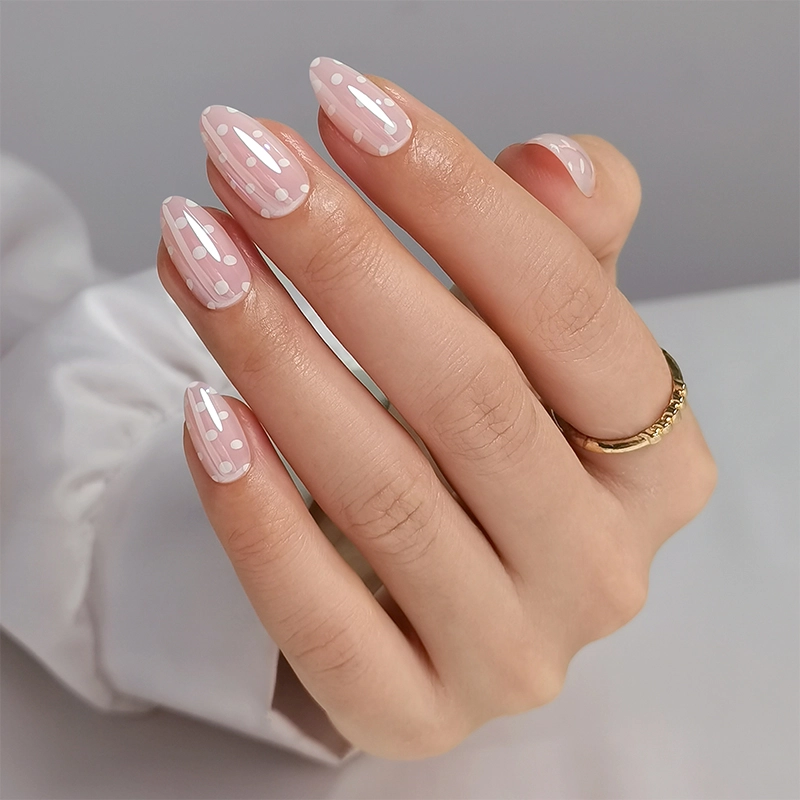
Our product portfolio includes custom press on nails, everyday press on nails, salon false nails, kids nails press on, fake toe nails, gel nail tabs, and sticker press on nails. For a children’s collection, our engineers can work with buyers on lightweight construction, practical sizing, rounded or shorter silhouettes, coordinated colors, and packaging instructions that make application and removal easier to understand. The appropriate adhesive solution depends on the intended wear period and use scenario, so buyers can evaluate gel tabs, sticker systems, or other approved configurations during sampling.
Our press-on nail products are designed to be breathable and lightweight, with non-toxic and odorless product goals supported by material selection and quality checks. UV coating helps protect the surface, improve visual finish, and enhance durability. These characteristics are commercially relevant because children’s ranges must balance appearance with comfort, ease of use, and parent confidence. Final claims, instructions, and age recommendations should always be approved according to the destination market and the product’s documented test results.
Fast sampling and documented export readiness
Sampling speed directly affects a seasonal launch, influencer campaign, school-holiday promotion, or retailer line review. Xianxing Beauty can provide nail samples within three days, enabling buyers to assess fit, color, surface finish, artwork scale, packaging presentation, and application components before mass production. Standard orders can be completed within 7–14 days, subject to approved specifications, quantity, packaging complexity, and production scheduling. A written production plan remains essential because calendar performance depends on timely artwork approval, deposit arrangements, material availability, and final inspection.
Our products are supported by ROHS, REACH, and MSDS documentation and are developed to meet applicable U.S. and EU global cosmetics standards. Buyers should match each document to the exact SKU, formulation, component, and destination rather than treating a factory-level certificate as automatic coverage for every product. Our quality and documentation process is intended to help procurement teams build a stronger compliance file, communicate requirements efficiently, and reduce avoidable delays at retail or customs review.
Procurement Checklist for Launching a Children’s Nail Line
What to include in the product brief
A purchase-ready brief should state the target age positioning, intended markets, nail length, shape, size count, material expectations, finish, artwork references, adhesive type, packaging dimensions, language requirements, barcode format, carton configuration, forecast quantity, and required delivery date. It should also distinguish mandatory requirements from preferences. This prevents a supplier from optimizing the wrong variable, such as reducing unit cost while compromising fit or packaging clarity.
Include a reference sample or dimensional drawing wherever possible. Color names alone are unreliable across screens and printing systems, so physical standards or approved color references are preferable. For licensed artwork, provide evidence of authorization and define who is responsible for prepress approval. For multilingual retail distribution, confirm translations for application, removal, storage, warnings, and disposal instructions before artwork is locked.
How to manage sampling and mass production approval
Use a staged approval process: concept confirmation, structural sample, decorated sample, packaging mock-up, pilot batch, and pre-shipment inspection. Each stage should record deviations, corrective actions, and the person authorized to approve changes. Buyers should retain an approved golden sample and require the supplier to compare mass production against that reference for dimensions, color, print alignment, coating, accessory count, and packaging integrity.
Commercial terms should address defective-product thresholds, replacement or credit procedures, late delivery, confidentiality, mold ownership, artwork protection, change notification, and batch traceability. These clauses are not signs of distrust; they are basic controls for protecting retail launch dates and customer experience. A supplier that responds clearly to these questions is more likely to support stable long-term procurement.
Measure total value, not only factory price
The lowest quotation may become the highest landed cost if it produces high defect rates, slow revisions, excess packaging waste, inconsistent sizing, or missed seasonal windows. Total value should include sampling efficiency, minimum order flexibility, yield, inspection cost, freight cube, documentation quality, replenishment speed, and the expected rate of repeat purchases. A differentiated children’s collection can also improve shelf visibility and reduce direct price comparison when the design system, packaging, and fit are cohesive.
For buyers seeking a partner aligned with a long-term industry vision, Xianxing Beauty’s stated goal is to become the world’s leading press on nails manufacturer. Our manufacturing scale, customized development capability, product breadth, rapid sampling, and compliance documentation are structured to support both pilot programs and larger commercial collections. Product specifications and project requirements can be reviewed through Xianxing Beauty before a formal quotation and sampling schedule are prepared.
Frequently Asked Questions
What is the difference between OEM and ODM for children’s press-on nails?
OEM means the buyer supplies the main concept and specifications while the factory manufactures to those instructions. ODM means the supplier contributes existing designs, technical concepts, or a product platform that can be adapted and branded. A hybrid model combines an ODM base with OEM-level control over artwork, packaging, dimensions, or adhesive components.
What documents should buyers request from a children’s nail supplier?
Buyers should request material specifications, relevant test reports, restricted-substance documentation, safety data where applicable, batch traceability information, quality-control procedures, and market-specific declarations. Xianxing Beauty supports products with ROHS, REACH, and MSDS documentation, while buyers should verify that each document matches the exact SKU and destination market.
Can a small brand order customized children’s press-on nails?
Yes, provided the supplier supports small-scale customization and defines the minimum order quantity for each customized element. Xianxing Beauty supports customization of materials, sizes, designs, nail shapes, and packaging, allowing brands to test a collection before scaling production.
How quickly can custom nail samples be produced?
Xianxing Beauty can provide nail samples within three days, subject to receiving complete artwork and technical requirements. The buyer should still allow time for review, revisions, packaging approval, and any required testing before mass production.
What should be tested before mass production begins?
Buyers should evaluate fit across the intended size range, edge smoothness, color accuracy, artwork alignment, coating durability, adhesive performance, removal behavior, package integrity, accessory count, instructions, and warning language. A pilot batch and approved golden sample can help control consistency during production.
Which products can be included in a custom press-on nail collection?
A collection may include custom press on nails, salon false nails, kids nails press on, fake toe nails, gel nail tabs, and sticker press on nails. The final assortment should reflect the target market, application method, intended wear period, packaging format, and documented product requirements.
Copyright © 2025 - XIANXING BEAUTY All Rights Reserved. Sitemap
Facebook
YouTube
Instagram
LinkedIn