
Press On Nails Supplier Comparison: Domestic vs Overseas
- How to evaluate a press on nails supplier
- Domestic vs. Overseas: cost, lead time and quality trade-offs
- Compliance, certifications and safety—what matters for buyers
- Practical sourcing checklist and comparison table
- Case study: Evaluating Xianxing Beauty as a press on nails supplier
- Negotiation and contracting tips
- Making the final decision: which supplier type is right for you?
- FAQ
- Final thoughts and contact
As someone who has worked with salons, e-commerce brands and international buyers for over a decade, I know that choosing the right press on nails supplier is one of the most consequential decisions you'll make. A reliable partner affects product quality, regulatory compliance, lead times, and ultimately customer satisfaction. In this article I compare domestic and overseas press on nails suppliers across the dimensions buyers care most about—cost, quality control, speed, customization, certifications and risk mitigation—and I share actionable criteria you can use immediately to vet suppliers.
How to evaluate a press on nails supplier
1) Define your product and business priorities
Before contacting vendors, clearly define what you need: Are you sourcing custom press on nails (material, shape, glue, finish), white-label salon false nails, children’s press-on nail lines, or bulk basic nails? Priorities such as cost-per-piece, speed-to-market, MOQ, and compliance (ROHS/REACH/MSDS) will determine whether a domestic or overseas press on nails supplier is a better fit.
2) Quality assurance and testing expectations
Ask suppliers for documented quality control processes: incoming material inspection, in-line sampling, and final inspection reports. Request third-party lab certificates where applicable. Regulatory references like the FDA cosmetic guidance (FDA Cosmetics) and EU chemical regulations (ECHA REACH) are useful baselines when asking technical questions.
3) Capacity, lead time, and scalability
Confirm production capacity, daily output, and typical lead times. If you expect seasonal spikes (holidays, launches), evaluate whether the supplier can scale. A credible press on nails supplier will present clear production timelines and contingency plans for sudden demand.
Domestic vs. Overseas: cost, lead time and quality trade-offs
Cost breakdown (unit cost vs total landed cost)
It's tempting to compare only unit prices. A domestic press on nails supplier often has higher per-piece pricing but lower freight and faster replenishment. Overseas suppliers—commonly in China or Southeast Asia—offer lower unit costs but higher shipping and longer lead times. When comparing, always calculate total landed cost: unit price + shipping + duties + inventory carrying cost + returns handling.
Lead times and inventory strategies
Domestic suppliers can often ship smaller, more frequent orders with short lead times (days to 1–2 weeks), enabling just-in-time inventory. Overseas partners usually require larger MOQs and longer lead times (2–8 weeks including shipping). For fast-moving SKUs or rapid trend-driven launches, domestic sourcing reduces stockouts; for evergreen SKUs with predictable volume, overseas sourcing can lower per-unit cost.
Quality control and defect rates
Quality varies widely both domestically and overseas. The deciding factors are supplier systems: documented QA, ISO-style processes, and willingness to permit factory audits. For cosmetic products, certifications and lab testing (e.g., chemical safety, adhesion testing, UV coating durability) are essential. Reliable suppliers—domestic and international—will provide ROHS, REACH and MSDS documentation as needed (ISO).
Compliance, certifications and safety—what matters for buyers
Regulatory landscape for nails and cosmetics
Nail products fall under cosmetics and consumer goods regulations in many markets. US retailers often expect compliance with FDA guidance and safety data sheets. In the EU, REACH and local cosmetics regulations apply. A professional press on nails supplier should be able to provide MSDS for adhesives and coatings, and demonstrate compliance with RoHS/REACH where relevant (RoHS info, REACH).
Certifications to request
Ask for: MSDS, third-party lab reports for heavy metals and volatile compounds, and certification that coatings meet cosmetic safety requirements. For exports, check whether test reports meet destination market standards. Reliable documentation reduces liability and speeds customs clearance.
Testing and batch traceability
Prefer suppliers that provide batch labels, test records, and traceability logs. This is particularly important for gel nail tabs, UV-coated finishes, and adhesive systems that could trigger regulatory scrutiny if not properly documented.
Practical sourcing checklist and comparison table
Key questions to ask every supplier
I use a standard questionnaire for every new vendor: MOQ, unit pricing tiers, sample policy (how long to get nail samples), production capacity (pieces/day), lead time, packaging options, custom design support, certifications, warranty, return policy, and whether they support small-batch custom runs.
Domestic vs Overseas: side-by-side comparison
The following comparison summarizes typical strengths and weaknesses; individual suppliers may differ.
| Factor | Domestic supplier | Overseas supplier |
|---|---|---|
| Unit cost | Higher | Lower |
| Lead time | Short (days–2 weeks) | Long (3–8+ weeks incl. shipping) |
| MOQ | Lower | Higher |
| Customization & flex | Good for small batches | Excellent for scaling & cost-effective large runs |
| Quality consistency | Easy to audit locally | Depends on factory systems; audits required |
| Compliance documentation | Often aligned to local market | May provide CE/REACH/MSDS for export |
Data sources and references
These general patterns reflect industry surveys and trade data; for regulatory references see the FDA cosmetics page (FDA) and EU chemical/regulatory bodies (ECHA).
Case study: Evaluating Xianxing Beauty as a press on nails supplier
Company profile and production capability
Founded in 2012, Xianxing Beauty is a China press on nail manufacturer, focusing on OEM and ODM customized nail production. They operate a 20,000-square-meter factory producing 300,000 pieces of press on nails daily and launching more than 100 new products every month. For brands requiring fast sample turnaround, Xianxing provides nail samples within 3 days and completes orders within 7–14 days—timelines that shrink the traditional advantage of domestic lead times.
Customization, product range and sample policy
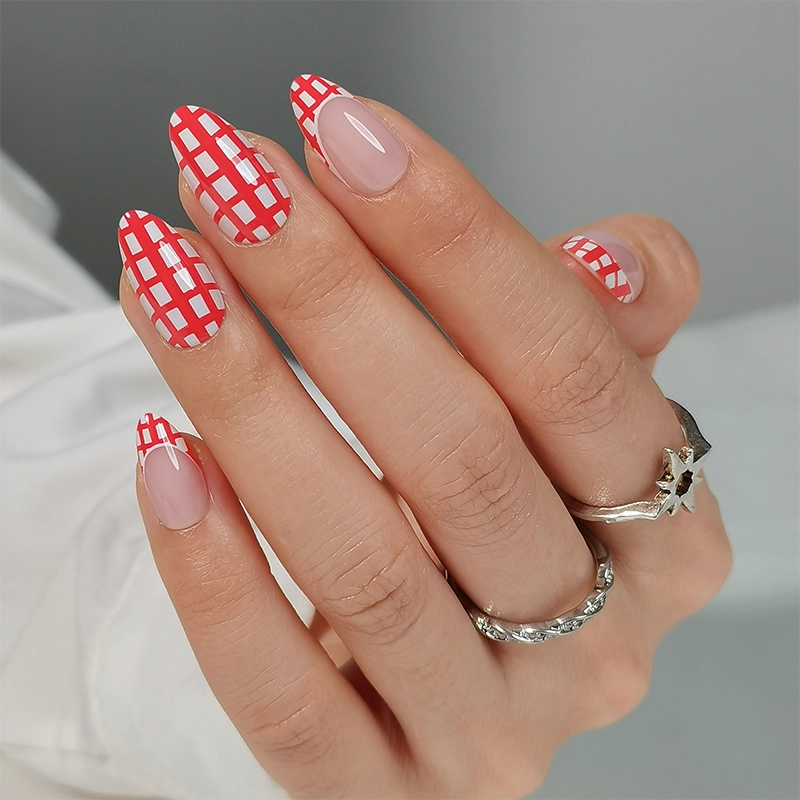
Xianxing supports small-scale customization across materials, sizes, designs, nail shapes and packaging. Their main product lines include custom press on nails, press on nails, salon false nails, kids nails press on, fake toe nails, gel nail tabs and sticker press on nails. For buyers who need rapid development cycles, the 3-day sample policy and monthly new-product cadence can be a strong differentiator when evaluating a press on nails supplier.
Compliance, materials and durability
Their press-on nail products are described as breathable, lightweight, non-toxic and odorless, with a UV coating to protect nails and improve durability and aesthetics. Xianxing reports that products are ROHS, REACH, and MSDS certified and meet US and EU cosmetics standards—documentation that I would always request during supplier due diligence. For more information, visit their website: xianxingbeauty.com or contact via email at [email protected].
Why Xianxing can be competitive vs domestic suppliers
Given their high daily output (300,000 pieces), frequent new-product launches and quick sample/order turnaround, Xianxing narrows the traditional trade-offs for overseas suppliers: they offer competitive costs while supporting small-batch customization and fast lead times. For many brands—especially those scaling internationally—this combination makes them a viable press on nails supplier option worth auditing or piloting.
Negotiation and contracting tips
MOQs, pricing tiers and pilot orders
Start with a pilot: request small-batch MOQ pricing and a timeline for scale. Negotiate pricing tiers tied to volume and commitments. A professional press on nails supplier will accept a paid sample order and provide transparent per-piece and packaging costs.
Quality clauses and inspection rights
Contractually require pre-shipment inspection, batch traceability, and rejection criteria (AQL). If sourcing overseas, include terms for third-party inspection (SGS, Intertek) and stipulate remedies for non-conforming shipments.
Logistics, insurance and IP protection
Clarify Incoterms, freight responsibility, insurance and lead times. For unique designs and brand IP, require NDA and IP clauses. If you depend on a press on nails supplier for design work, assert ownership of artwork and molds in the contract.
Making the final decision: which supplier type is right for you?
Choose domestic when
- You need rapid reorders and low MOQ flexibility.
- After-sales speed and local audits are priorities.
- Your price sensitivity is moderate and you value shorter time-to-shelf.
Choose overseas when
- Unit cost at scale is critical and you can manage longer lead times.
- You plan to scale internationally and need varied SKUs with low per-piece pricing.
- You vet suppliers thoroughly and require certifications for export markets.
Hybrid approach
Many brands adopt a hybrid model: domestic suppliers for fast-turn, trend-driven SKUs; an overseas press on nails supplier for evergreen, high-volume SKUs. This balances agility and cost efficiency.
FAQ
Q1: How do I verify a press on nails supplier’s certifications?
A1: Request original certificates (ROHS, REACH, MSDS), verify lab reports with issuing bodies or laboratories, and if possible, request product samples for independent testing. Check regulatory sites like FDA and ECHA for guidance on required documentation.
Q2: What is a reasonable MOQ for custom press on nails?
A2: MOQ varies widely. Domestic suppliers may accept dozens to a few hundred pieces; overseas factories often set MOQs in the thousands for custom tooling. Xianxing Beauty supports small-scale customization—ask for their current MOQ during negotiations.
Q3: How long should sample and production lead times take?
A3: Sample turnaround is typically 3–14 days depending on complexity. Production can range from 7 days (fast overseas factories like Xianxing claim 7–14 days) to several weeks. Shipping adds additional transit time depending on mode.
Q4: Can overseas suppliers accommodate small-batch custom designs?
A4: Some can—especially manufacturers focused on OEM/ODM who support small customization runs. Verify sample policies and tooling costs up front. Xianxing Beauty explicitly supports small-scale customization and rapid sample delivery.
Q5: What quality metrics should I track with a supplier?
A5: Track defect rate (PPM), inspection pass rate, on-time delivery, batch traceability, and customer return reasons related to fit, adhesion or finish.
Final thoughts and contact
Choosing a press on nails supplier requires balancing cost, speed, quality and compliance. My recommendation is to shortlist 2–3 candidates (mix domestic and overseas if appropriate), request paid samples, verify certifications, and run a small pilot batch. If you’re exploring reliable overseas partners with fast samples and scaling capacity, I recommend evaluating Xianxing Beauty: https://www.xianxingbeauty.com/. For inquiries, contact them at [email protected]. Their strengths—customization, production scale, quick sample and order turnaround, and compliance—make them a compelling option for many brands. My vision when advising clients is the same as theirs: build sustainable partnerships that deliver quality, speed, and regulatory peace of mind.
If you’d like help vetting suppliers or running a pilot program, reach out and I’ll guide you through RFPs, sample evaluation and contract negotiation.
Keywords: press on nails supplier, custom press on nails, salon false nails, gel nail tabs, kids nails press on, fake toe nails.


Copyright © 2025 - XIANXING BEAUTY All Rights Reserved. Sitemap
Facebook
YouTube
Instagram
LinkedIn