
Questions to Ask a Kids Press on Nails Manufacturer Before Signing a Supply Agreement
Before signing an agreement with a children’s press-on nail supplier, buyers should verify more than design quality and unit price. The supplier must demonstrate age-appropriate product development, non-toxic materials, reliable adhesion, documented quality controls, transparent regulatory support, repeatable production capacity, secure packaging, manageable minimum order quantities, and clearly defined commercial responsibilities. A professional evaluation should cover samples, testing records, factory controls, customization capability, lead times, defect remedies, intellectual property, shipping documents, and post-sale support. This guide explains the questions distributors, private-label brands, retailers, salons, and e-commerce operators should ask before committing to a long-term supply relationship, while also showing how Xianxing Beauty supports custom press on nails and related nail product programs.
How to Evaluate a Children’s Press-On Nail Supplier
Which age group and use case is the product designed for?
Age suitability should be established before artwork, tooling, or packaging is approved. A product intended for children may require different dimensions, edge profiles, adhesive strength, packaging warnings, and application instructions than a salon-oriented false nail set. Buyers should ask whether the supplier has defined a recommended age range and whether the product is intended for supervised use, short-term wear, costume use, gifting, or repeated application.
Request a complete product specification covering nail length, width range, curvature, thickness, shape, surface finish, adhesive system, removal method, and included accessories. Small sizes and rounded profiles may be more appropriate for younger users, but the final decision should be supported by product testing and the destination market’s rules. Packaging should not imply that children can apply or remove the nails without adult supervision unless that claim has been properly assessed.
What materials, coatings, and adhesives are used?
Material disclosure is a core procurement requirement. Ask for the composition of the artificial nail body, colorants, decorative elements, top coat, adhesive tabs, liquid glue if supplied, and packaging components that may contact the product. A supplier should explain whether the nails are breathable and lightweight, how odor is controlled, and whether the surface coating is designed to improve durability without creating unnecessary exposure concerns.
For products sold in the European market, buyers should examine the supplier’s support for applicable chemical obligations under the EU REACH framework. For United States distribution, cosmetic positioning, labeling, and marketing claims should be reviewed against relevant FDA cosmetics guidance, while recognizing that regulatory obligations can vary according to the product’s claims, ingredients, packaging, and intended use. Certificates should be current, traceable to the supplied materials, and relevant to the actual product rather than a generic factory statement.
How are safety and performance tested?
Do not accept the phrase “safe for children” without evidence. Ask for test methods, sample identification, test dates, laboratories, acceptance criteria, and corrective-action records. Useful evidence may include chemical screening, odor assessment, dimensional inspection, adhesion performance, coating durability, packaging integrity, and migration or restricted-substance testing where applicable.
Testing should reflect real use. A supplier can conduct application and removal trials using representative nail sizes, adhesive tabs, and target surfaces. Buyers should also ask how the manufacturer controls sharp edges, loose decorations, small detachable components, and packaging parts that could create foreseeable risks. General product-safety principles can be cross-checked through resources from ISO 8124-1, although applicability depends on whether the product is legally classified as a toy or another consumer product category.
Commercial, Compliance, and Quality Questions
Which certifications and technical documents will be supplied?
A supply agreement should identify every document required before mass production and before shipment. Depending on the destination market and buyer’s compliance program, the document package may include a material declaration, safety data sheet for relevant chemical products, restricted-substance report, certificate of analysis, batch record, packaging artwork approval, country-of-origin information, and inspection report.
Ask whether the supplier can provide RoHS, REACH, and MSDS-related documentation and whether those documents apply to the exact SKU, adhesive, coating, and packaging configuration. Buyers should also distinguish between a factory certificate, a third-party laboratory report, and a management-system certification. For manufacturing quality principles, ISO 22716 cosmetics good manufacturing practices offers useful reference points, but certification should never be assumed simply because a supplier produces beauty products.
What quality-control system governs production?
Ask the supplier to describe incoming-material inspection, first-article approval, in-process checks, final inspection, packing verification, and retention-sample procedures. A reliable factory should be able to define measurable limits for color variation, printing alignment, nail curvature, surface defects, missing accessories, adhesive quantity, carton labeling, and quantity variance.
The agreement should state the inspection standard, acceptable quality limit if used, sampling method, inspection timing, and response to nonconformities. Buyers should request photographs or reports from pre-shipment inspections and clarify whether an independent inspection company may be appointed. A practical quality plan also explains how corrective actions are documented, who pays for rework or replacement, and how recurring defects are prevented in later batches.
How are pricing, minimum order quantities, and payment terms structured?
Unit price alone does not show the real landed cost. Request a quotation that separates nail sets, adhesive tabs, liquid glue where applicable, inserts, boxes, bags, labels, custom molds, sampling, artwork preparation, inspection, and freight. Confirm whether the price changes with nail shape, number of sizes, printing colors, decorative elements, or packaging complexity.
Minimum order quantities should be reviewed by SKU, color, design, packaging format, and production material. Small-scale customization can reduce inventory risk for new brands, but buyers should confirm whether low-volume orders carry higher setup charges or longer lead times. Payment milestones should connect to verifiable events such as sample approval, production completion, inspection approval, and shipment release.
| Procurement area | Evidence to request | Contract point to define |
|---|---|---|
| Product safety | Material declaration, relevant test reports, age guidance, adhesive information | Responsibility for compliance and claim approval |
| Quality control | Inspection plan, defect classification, retention samples, corrective-action process | Acceptance criteria, replacement, refund, and rework terms |
| Production capacity | Factory profile, output data, equipment and workforce overview | Capacity reservation and delay-notification procedure |
| Customization | Approved drawings, color standards, packaging proofs, pre-production sample | Change-control and intellectual-property ownership |
| Logistics | Carton dimensions, packing list, labels, shipping documents | Incoterms, delivery point, insurance, and export responsibilities |
Operational Capability and Supply Agreement Due Diligence
Can the factory reproduce approved samples at scale?
Sample quality is only meaningful when it can be reproduced consistently. Ask whether the approved sample becomes a controlled master sample and whether production teams use documented specifications for color, shape, gloss, size assortment, decoration placement, and packaging. The agreement should prohibit unapproved substitutions of materials, adhesive systems, packaging components, or production sites.
For seasonal collections, request a realistic development calendar. It should include design confirmation, artwork approval, sample production, testing, pre-production approval, bulk manufacturing, final inspection, and dispatch. Buyers should also ask how quickly the supplier communicates a raw-material shortage, equipment problem, color mismatch, or capacity conflict.
What are the lead times and contingency arrangements?
Lead time should be divided into sampling, approval, production, inspection, and shipping rather than presented as one broad estimate. Confirm whether the stated period begins after deposit, artwork approval, sample approval, or receipt of all materials. A supplier with a strong production base should explain its peak-season capacity, backup sources for key materials, maintenance procedures, and escalation process for delayed orders.
Business continuity questions are particularly important for retailers planning promotions or school-holiday campaigns. Ask whether the supplier maintains safety stock, can split shipments, supports partial delivery, or offers expedited production at an additional cost. These details protect the buyer from stockouts that can cost more than a small difference in unit price.
How are branding, design ownership, and confidentiality protected?
Custom nail art, packaging artwork, character concepts, color palettes, and product names may represent substantial brand investment. The contract should specify that buyer-owned artwork remains the buyer’s property, define permitted use, restrict disclosure to subcontractors, and prohibit unauthorized resale of exclusive designs. If the supplier creates original artwork, the agreement should clarify whether rights are transferred, licensed, or retained.
Ask how digital files are stored, who may access them, and whether the factory can produce similar designs for another customer. A clear approval workflow reduces disputes over revisions and establishes which file version is legally binding for production.
Why Xianxing Beauty Is a Practical OEM and ODM Partner
Scalable production with flexible customization
Xianxing Beauty was founded in 2012 and operates a 20,000-square-meter factory dedicated to customized nail production. Our manufacturing capability reaches 300,000 pieces of press on nails daily, supporting distributors, private-label brands, retailers, salons, and online operators that require both development flexibility and commercial scale.
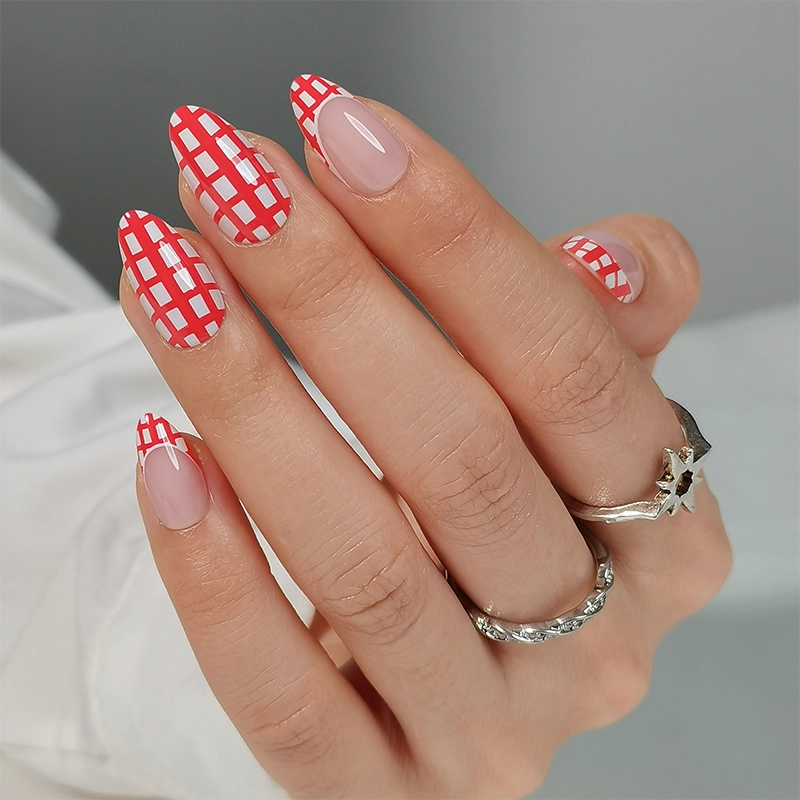
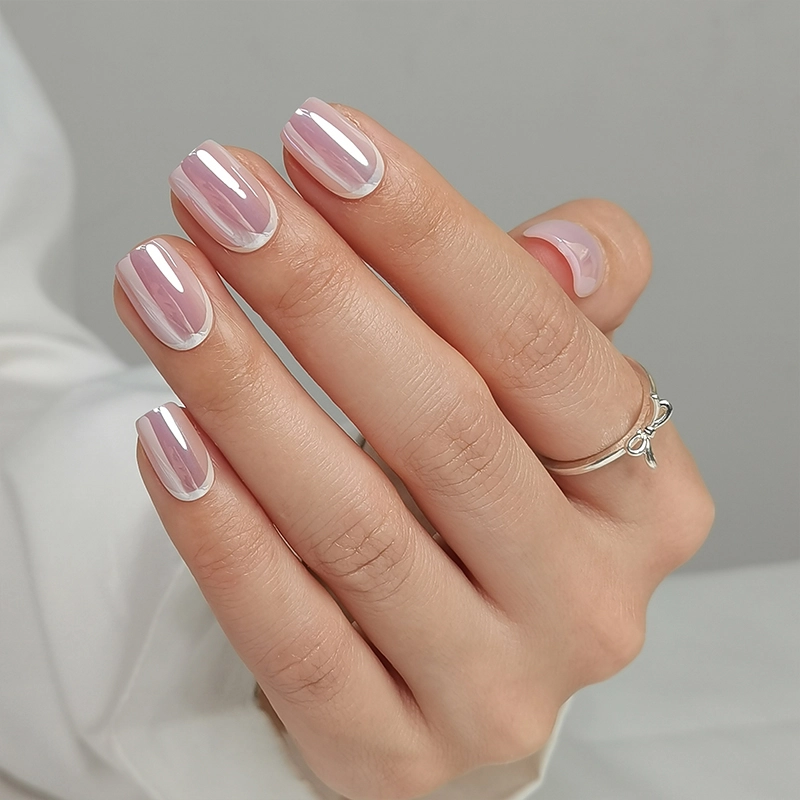
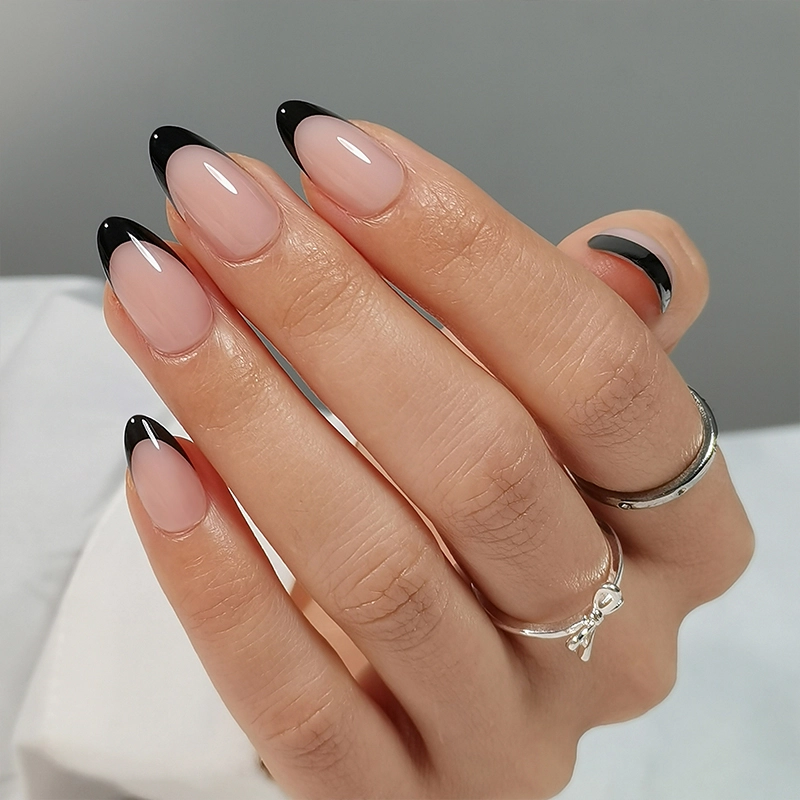
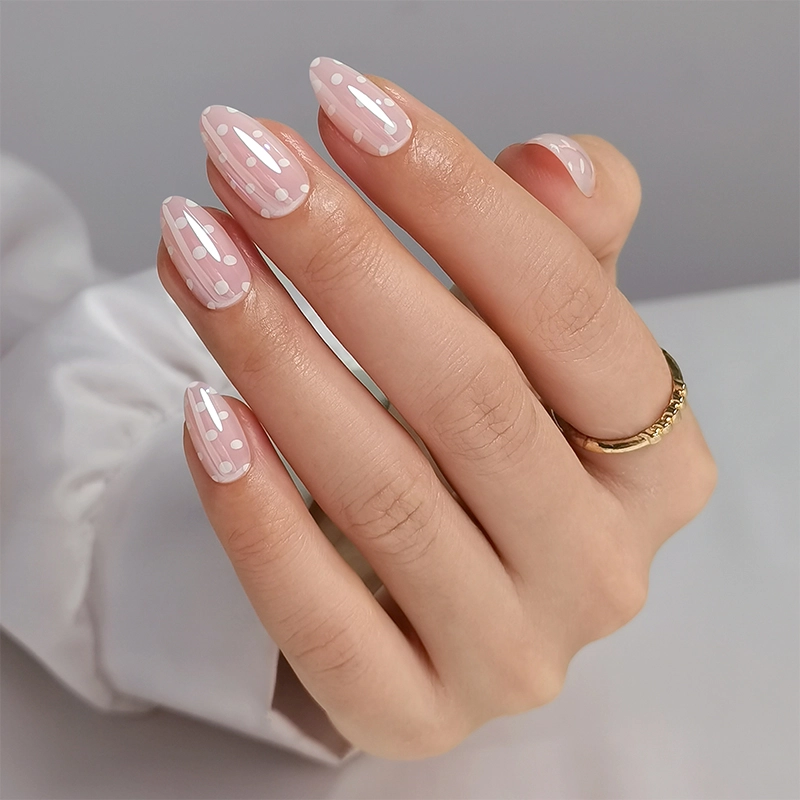
Our OEM and ODM programs support small-scale customization across materials, sizes, designs, nail shapes, and packaging. This flexibility helps emerging brands test collections without committing immediately to excessive inventory, while established buyers can develop coordinated ranges for different channels and regions. Our product portfolio includes custom press on nails, everyday press on nails, salon false nails, kids nails press on, fake toe nails, gel nail tabs, and sticker press on nails.
Fast sampling and controlled product development
Our team can provide nail samples within three days, giving project owners a faster opportunity to evaluate fit, shape, color, finish, packaging, and application experience before placing a bulk order. Fast sampling does not replace technical review; it creates an earlier checkpoint for confirming specifications and identifying changes before production.
We launch more than 100 new products every month, combining design development with the manufacturing resources required for repeatable output. For approved projects, orders can be completed within 7 to 14 days, subject to product complexity, customization scope, material availability, order quantity, and final approval timing. Buyers should confirm the exact schedule for their SKU during quotation and contract review.
Material documentation and product functionality
Our press-on nail products are designed to be breathable, lightweight, non-toxic, and odorless, with UV coating intended to help protect the nails and improve durability and appearance. We provide RoHS, REACH, and MSDS-related certification documentation, and our products are developed to meet applicable US and EU global cosmetics standards. As with every international purchase, the buyer remains responsible for reviewing destination-market requirements, product claims, labeling, and import obligations.
Quality documentation should be matched to the final configuration. Buyers can ask our team to confirm the nail material, coating, adhesive option, packaging components, test records, and artwork for each project. This approach supports a more reliable technical file and makes it easier for distributors to answer retailer or marketplace compliance requests.
What buyers should confirm with our team
Before signing, buyers can request a product brief, sample set, customization quotation, packaging proposal, production schedule, certification package, inspection plan, and commercial agreement. The discussion should cover the intended age group, target country, product claims, adhesive format, order volume, packaging language, shipping terms, defect policy, and intellectual-property requirements.
Our vision is to become the world’s leading press on nails manufacturer by combining design responsiveness, production capacity, product documentation, and long-term customer support. A structured pre-contract review allows both parties to confirm whether the proposed product, timeline, quality standard, and commercial model are suitable for the buyer’s market.
Final supplier-selection checklist
- Confirm the intended age range, supervision guidance, nail dimensions, and removal instructions.
- Review material composition, adhesive information, coatings, restricted-substance documentation, and test reports.
- Approve a controlled sample and written specification before bulk production.
- Define inspection standards, defect thresholds, corrective actions, replacement terms, and warranty responsibilities.
- Confirm MOQ, pricing components, payment milestones, lead time, Incoterms, carton data, and shipping documents.
- Protect artwork, packaging files, product concepts, and exclusive designs through written intellectual-property clauses.
- Verify production capacity, sampling speed, customization scope, and contingency planning.
- Match every marketing claim to available evidence and the rules of the destination market.
Frequently Asked Questions
What documents should buyers request from a children’s press-on nail supplier?
Buyers may request a material declaration, relevant test reports, restricted-substance documentation, certificate of analysis, safety data sheet for relevant chemical products, packaging artwork approval, inspection report, and country-of-origin information. Documentation should apply to the exact product configuration.
How can buyers verify whether the product is suitable for children?
Buyers should confirm the intended age range, supervision guidance, nail dimensions, edge profile, adhesive strength, removal method, packaging warnings, and the presence of loose or detachable components. The supplier should provide evidence supporting safety and performance claims rather than relying on an unsupported statement that the product is safe for children.
What quality terms should be included in the supply agreement?
The agreement should define the inspection standard, sampling method, acceptable quality limits if used, defect classifications, inspection timing, corrective-action process, replacement or refund obligations, and responsibility for rework and recurring defects.
Can Xianxing Beauty support small-scale customization?
Yes. Xianxing Beauty supports small-scale OEM and ODM customization involving materials, sizes, designs, nail shapes, and packaging, helping emerging and established brands develop differentiated collections with controlled inventory exposure.
How fast can Xianxing Beauty provide samples and complete orders?
Xianxing Beauty can provide nail samples within three days, and approved orders can be completed within 7 to 14 days, subject to product complexity, customization requirements, material availability, order quantity, and final approval timing.
Which press-on nail products does Xianxing Beauty offer?
The product range includes custom press on nails, everyday press on nails, salon false nails, kids nails press on, fake toe nails, gel nail tabs, and sticker press on nails.
Copyright © 2025 - XIANXING BEAUTY All Rights Reserved. Sitemap
Facebook
YouTube
Instagram
LinkedIn