
Sticker Press On Nails Wholesale Pricing: How MOQ, Design Complexity, and Packaging Affect Unit Cost
Wholesale unit cost for sticker press-on nails is shaped by order quantity, nail and adhesive specifications, artwork complexity, production steps, packaging, quality inspection, and shipping. A larger minimum order quantity (MOQ) can spread fixed setup costs across more sets, but it also increases inventory exposure; intricate finishes, custom sizes, and retail-ready packaging can raise the per-set price even at higher volumes. Buyers comparing suppliers should request an itemized quotation, confirm what is included, and assess landed cost, quality consistency, and replenishment flexibility—not simply the lowest quoted price.
What determines the wholesale cost of adhesive press-on nail sets?
A supplier’s quote combines variable production expenses with costs that do not rise in direct proportion to the number of sets. Variable expenses can include nail blanks, adhesive tabs, decoration, labor, and packaging components. Fixed or batch-level expenses may include artwork preparation, color matching, print setup, mold or tooling work, and production-line changeovers. Understanding which charges recur on every set and which are incurred once helps buyers compare proposals on an equivalent basis.
MOQ and the effect of production volume
MOQ is the smallest quantity a supplier will accept for a particular design, color, or order configuration. A low MOQ can be useful for testing a new collection, launching a limited edition, or validating demand across several designs. However, it may carry a higher unit price because setup, purchasing, and inspection costs are divided among fewer sellable sets. Larger runs can improve production efficiency and purchasing leverage, although the benefit depends on whether the order uses the same specifications and whether the supplier can schedule it efficiently.
Buyers should clarify whether MOQ applies per design, per color, per size assortment, or across the entire purchase order. A quotation for 1,000 sets across five artworks is not necessarily comparable to one for 1,000 sets of a single artwork. Ask for price breaks at realistic order quantities and confirm whether mixed designs can share a production run. A tiered quote can show the trade-off between unit savings and cash tied up in stock, but does not by itself establish the best order quantity.
Materials, sizing, and production requirements
The nail substrate, thickness, shape assortment, surface finish, and adhesive system all affect the bill of materials and production process. A standard assortment using existing nail blanks may require less setup than a project needing a proprietary shape, custom dimensions, or a newly developed color. Adhesive tabs also need clear specifications: quantity per kit, tab dimensions, release liners, and whether the pack includes application instructions or preparation accessories. Buyers should state the intended use and market so the supplier can identify relevant product and labeling considerations.
Press-on nail products and their components can fall under different regulatory frameworks depending on the product, claims, and destination market. For example, the U.S. Food and Drug Administration’s nail care products guidance explains how FDA oversight relates to nail products sold as cosmetics. It is not a substitute for product-specific regulatory review. Importers should confirm the applicable requirements for the complete kit, its claims, and its destination rather than assuming that every component is treated identically.
How design choices and order specifications change the quote
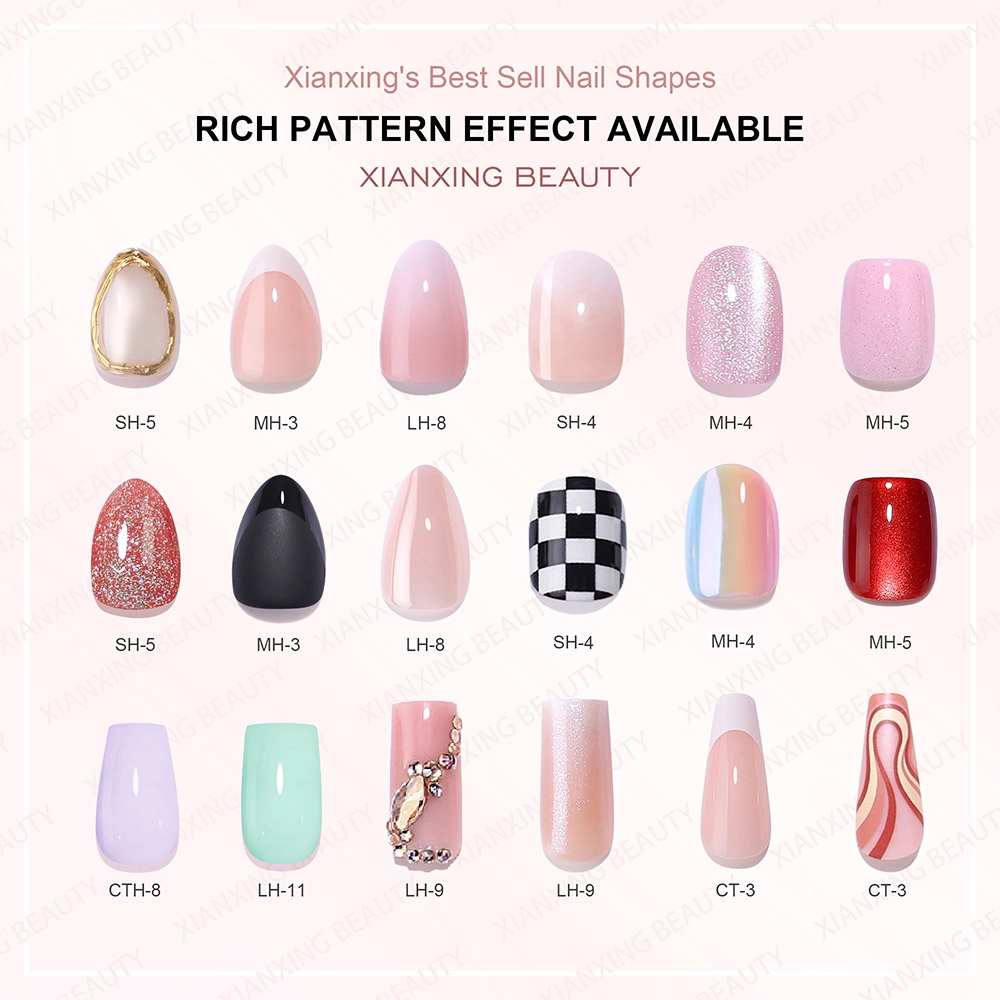
Artwork affects more than visual appeal. It can alter print time, decoration steps, inspection criteria, reject risk, and the number of production changes required. A simple, repeatable design may use a standard process, while layered effects or unusual finishes can require additional handling and sampling. To make quotes useful, buyers should provide final artwork or a clear design brief, identify the approved colors and finishes, and state which features are essential versus optional.
Decoration complexity, color, and custom tooling
Solid colors, uncomplicated patterns, and existing shapes are generally simpler to estimate than detailed artwork, multi-layer decoration, specialty effects, or designs that require new tooling. The actual cost impact depends on the supplier’s equipment and process, so a feature should not be assigned a universal surcharge without a supplier breakdown. Request confirmation of whether the price includes color matching, artwork adjustments, pre-production samples, and any one-time setup or tooling charge.
Use a signed or otherwise documented approval sample to lock down the design before mass production. The sample should represent the intended shape, color, finish, nail assortment, and packaging presentation. If the buyer changes artwork or specifications after approval, the supplier may need to revise setup, materials, and production scheduling. A change-control process—recording the revision, date, and approval—reduces disputes over whether a delivered batch matches the authorized version.
Packaging format, branding, and retail readiness
Packaging cost depends on the format and its components: for example, a basic bag or card differs from a printed box with a tray, insert, barcode, multilingual copy, or protective outer carton. Custom printing may introduce a minimum order for packaging materials that is separate from the nail-set MOQ. Buyers should establish whether packaging is supplied flat or assembled, whether the quote includes artwork setup, and whether the package protects the nail shapes and adhesive tabs during storage and shipping.
Packaging should be treated as part of product specification, not as an afterthought. Provide the target retail channel, required dimensions, language and labeling needs, barcode placement, and any retailer-specific presentation rules. Packaging dimensions and packed weight can also influence freight charges. Carriers may calculate charges using dimensional weight as well as actual weight; buyers can review the relevant method in the UPS guide to shipping dimensions and weight. A compact package can support more efficient shipping, but must still protect the product and meet the presentation brief.
Compare quote components, not just the headline price
The following comparison is a procurement framework, not a market price list. It describes typical cost behavior; actual prices depend on the supplier, destination, specifications, and order terms. Ask suppliers to mark each line item as included, excluded, one-time, or recurring.
| Cost driver | Lower-cost scenario | Higher-cost scenario | Buyer verification |
|---|---|---|---|
| Order quantity | Repeat run with a larger quantity of one approved design | Small run divided among many designs or colors | Confirm whether MOQ applies per style, color, or purchase order |
| Artwork and decoration | Existing shape and straightforward decoration | New tooling, multiple finishes, or detailed multi-step design | Separate setup, sampling, tooling, and recurring decoration charges |
| Packaging | Standard format with existing components | Custom printed box, insert, or multiple language versions | Check packaging MOQ, setup charges, assembly, and carton specifications |
| Quality requirements | Agreed standard checks and documented sample approval | Additional inspection, special sorting, or expanded reporting | Define acceptance criteria, inspection scope, and responsibility for rework |
| Freight and delivery | Compact, consolidated shipment with agreed delivery terms | Bulky packs, split shipments, or expedited transport | Compare freight basis, dimensional weight, duties, and delivery terms |
Build a reliable landed-cost and quality comparison
A low ex-factory quote can become an expensive purchase if it excludes packaging, inspection, freight, duties, or corrective work. Buyers should calculate a comparable landed cost using the same assumptions for every supplier: product price, one-time charges, packaging, freight, import charges where applicable, and expected costs associated with defects or delays. Keep assumptions visible rather than embedding them in a single blended number. For financial planning, model several realistic order sizes and replenishment schedules to understand both unit economics and inventory exposure.
Set inspection criteria before production begins
Quality expectations should be written into the purchase specification. Relevant checks may include shape and size consistency, adhesion-tab count, decoration appearance, package accuracy, and conformity to the approved sample. Buyers and suppliers should agree on the inspection method, sampling plan, defect categories, and disposition of nonconforming goods before production. ISO 2859-1 describes sampling procedures for inspection by attributes; whether and how a sampling standard is appropriate should be agreed for the order rather than assumed from its mention in a quotation.
Supplier quality systems also matter because repeat orders depend on controlled processes, traceable approvals, and corrective action. ISO 9001 sets out requirements for quality management systems, but a certificate alone does not guarantee that a particular product will meet the buyer’s specification. Verify the scope and validity of any claimed certification, review product samples, and align inspection records with the risks of the order.
Use a quote checklist to reduce procurement surprises
Send suppliers the same structured request for quotation so differences are easier to identify. Include the design files, target quantity by style, nail shape and assortment, finish requirements, adhesive-tab configuration, packaging drawings, labeling languages, destination market, target delivery window, and required documentation. Ask for sample lead time and production lead time separately. Request an explicit breakdown of setup charges, per-set costs, packaging, sampling, inspection, freight assumptions, payment terms, and quote validity.
Before approving a purchase order, confirm what happens when a sample fails, a component is unavailable, or a design change is requested. Agree on who pays for revised samples, whether substitutions require approval, and how production dates shift when approvals are delayed. This procurement discipline makes supplier comparisons more transparent and helps avoid costly misunderstandings after materials have been ordered.
Product planning and supplier fit for a growing nail assortment
Wholesale pricing is most useful when evaluated alongside assortment strategy. Brand owners may balance trend-led launches with dependable core styles, while distributors may prioritize SKU breadth and replenishment. A controlled pilot can test design acceptance and packaging performance before a larger commitment. For repeat orders, maintaining approved specifications and artwork files can reduce avoidable revisions, support consistent presentation, and make future quote comparisons more meaningful.
Match product formats to the customer and channel
Different customer groups may need different assortments and presentation. Adult salon false nails, custom press-on nails, kids’ nail sets, and fake toe nails can involve distinct shape, size, design, and packaging requirements. Gel nail tabs are a related accessory that buyers may evaluate as part of a kit or as a separate item. Specify the intended customer and use case clearly, and do not assume one nail assortment or adhesive configuration will suit every product line.
How our product scope supports sourcing discussions
Our relevant product scope includes custom press on nails, press on nails, salon false nails, kids nails press on, fake toe nails, gel nail tabs, and sticker press on nails. Buyers can use this range as a starting point for defining a coordinated assortment, then confirm availability, customization options, MOQ, sample process, and packaging specifications directly for the required project. Because no single design or pack format suits every market, our discussions should begin with the buyer’s artwork, target customer, quantity plan, and destination requirements rather than an assumed standard configuration.
When reviewing any supplier proposal, request evidence tied to the actual order: an approved sample, written specifications, an itemized quotation, and an agreed inspection plan. These records provide a practical basis for assessing product consistency and total cost without relying on broad claims about price or capability. Buyers can then weigh design ambition against MOQ, working capital, retail presentation, and replenishment needs.
Contact our team to discuss your target assortment, request product details, and compare specifications for a tailored press-on nail order.
Frequently Asked Questions
What factors affect the wholesale price of sticker press-on nails?
Key factors include order quantity, nail and adhesive specifications, design and decoration complexity, tooling or setup, packaging, inspection requirements, and freight. Buyers should compare itemized quotes and landed cost rather than the headline unit price alone.
Does a higher MOQ always mean a lower unit cost?
A larger order can spread setup and batch costs across more sets, but savings depend on the design mix, production efficiency, and supplier terms. A larger MOQ also ties up more inventory and working capital, so buyers should compare price breaks against demand and stock exposure.
Why do multiple designs affect the quote?
Different designs may require separate artwork preparation, color matching, setup, sampling, or production changes. Buyers should clarify whether the MOQ applies per design, color, size assortment, or total purchase order and ask which charges are one-time versus recurring.
What packaging details should buyers include in a request for quotation?
Specify the packaging format, dimensions, materials or components, printing, inserts, languages, barcode placement, assembly expectations, and retailer requirements. Confirm packaging MOQ and setup costs, and consider how packed dimensions and weight may affect freight.
How can buyers compare supplier quotes accurately?
Provide the same specifications and assumptions to each supplier, then compare product cost, one-time charges, packaging, inspection, freight, duties where applicable, lead times, and order terms. Written sample approval and agreed acceptance criteria help keep the comparison aligned with the required quality.
What quality checks should be agreed before production?
Define checks for shape and size consistency, decoration, adhesive-tab quantity, packaging accuracy, and conformity to the approved sample. Agree on the inspection method, sampling plan, defect categories, and corrective-action process before production starts.




Copyright © 2025 - XIANXING BEAUTY All Rights Reserved. Sitemap
Facebook
YouTube
Instagram
LinkedIn