
When to Change Your Kids Press on Nails Manufacturer: A Practical Supplier Performance Review
Changing a children’s press-on nail supplier is a strategic procurement decision, not simply a response to one late shipment or an isolated quality complaint. Brand owners, distributors, salons, retailers, and private-label operators should review product safety, dimensional consistency, material transparency, packaging accuracy, fulfillment performance, responsiveness, and total cost before deciding whether the existing partnership still supports growth. A reliable kids press on nails manufacturer should provide repeatable production, documented compliance, age-appropriate designs, dependable lead times, and a corrective-action process that protects both children and the buyer’s brand reputation. This review framework helps procurement teams distinguish a temporary operational issue from a structural supplier-performance problem and evaluate whether a new manufacturing partner can deliver safer, more scalable custom press on nails.
How to Recognize Supplier Replacement Signals in Children’s Nail Programs
Quality variation is a system problem, not merely a cosmetic defect
Children’s nail products require close control because small users are less tolerant of sharp edges, poor fit, strong odors, difficult removal, or accessories that are unsuitable for their age group. A buyer should track defect rates by batch rather than relying on general impressions. Useful categories include cracked tips, uneven curvature, inconsistent thickness, incomplete printing, weak adhesive performance, tab misalignment, missing sizes, and packaging damage. If the same defect appears across multiple purchase orders, the issue may indicate unstable raw materials, insufficient in-process inspection, inadequate tooling maintenance, or weak final quality control.
Supplier replacement becomes more defensible when corrective actions are informal, undocumented, or repeatedly ineffective. A professional production partner should identify root cause, contain affected inventory, define preventive action, and provide evidence that the fix has been verified in a subsequent lot. Buyers should also compare approved samples with mass-production goods. A sample that looks excellent but is not representative of the factory’s standard creates a serious qualification risk.
Safety and compliance gaps deserve immediate escalation
For children’s beauty accessories, material and chemical transparency should be treated as a qualification requirement. Product files should clearly identify the nail substrate, coatings, adhesive tabs or glue, printing inks, and packaging components. Buyers should request current test reports rather than accepting an undated certificate or a generic declaration covering unrelated products.
Regulatory expectations vary by destination and by how a product is marketed. In the United States, the U.S. Food and Drug Administration guidance on cosmetic products and ingredients is a useful starting point for understanding product responsibilities. For European sales, buyers should examine obligations connected with chemicals and restricted substances through the European Union REACH Regulation. If electrical or electronic components are included in a play set, the scope may differ and should be assessed separately. A supplier that cannot explain test scope, laboratory identity, report dates, or applicable markets presents a preventable commercial risk.
Delivery failures can damage retail economics
Lead time should be measured from purchase-order confirmation to goods-ready date, not from the day a supplier begins discussing production. Track promised versus actual completion, sample approval duration, change-order delays, carton readiness, inspection release, and export-document accuracy. A single delay may be caused by a material shortage or transportation disruption; a recurring pattern usually reflects capacity planning, production scheduling, or prioritization problems.
Late deliveries create more than freight costs. They can cause missed seasonal launches, empty retail shelves, lost promotional placement, emergency air shipments, and excess inventory when products arrive after demand has passed. Buyers should calculate the commercial effect of poor delivery performance across the full order cycle. When a supplier’s nominal unit price is low but its unreliability repeatedly creates downstream expense, a better-performing factory may provide a lower total landed cost.
A Practical Scorecard for Reviewing a Children’s Nail Supplier
Measure performance across quality, service, and commercial control
A quarterly supplier review should combine objective data with documented stakeholder feedback. The following scorecard is a practical internal model rather than a universal industry standard. Buyers can adjust the weightings according to sales channel, destination market, product complexity, and the age positioning of the collection.
| Review category | Suggested weight | Evidence to examine | Replacement warning signal |
|---|---|---|---|
| Product quality and fit | 30% | Incoming inspection, defect trend, approved sample comparison, fit tests | Recurring defects or no verified corrective action |
| Safety and documentation | 20% | Material declarations, test reports, SDS or MSDS where relevant, traceability | Expired, incomplete, or product-mismatched documents |
| Delivery reliability | 20% | Confirmed dates, actual completion, shipment records, shortage reports | Repeated missed commitments or unexplained delays |
| Communication and problem solving | 10% | Response time, action reports, escalation handling | Slow replies, unclear ownership, defensive responses |
| Customization and innovation | 10% | New molds, artwork control, packaging options, sampling speed | Limited development support or frequent specification errors |
| Cost and payment stability | 10% | Price history, tooling fees, freight impact, minimum order terms | Uncontrolled surcharges or poor total-cost transparency |
As a management rule, a supplier with a strong overall score should still be escalated if it fails a critical safety or legal requirement. Conversely, a moderate score may justify a formal improvement plan when the factory is transparent, responsive, and capable of correcting the problem. The decision should be based on risk severity, recurrence, and the supplier’s demonstrated ability to improve—not on score alone.
Use an evidence trail before making the switch
Before terminating an existing relationship, buyers should consolidate purchase orders, inspection reports, customer complaints, laboratory documents, delivery records, artwork approvals, and correspondence. This evidence supports an objective supplier business review and prevents internal teams from arguing from isolated incidents. It also improves the next sourcing project because the new partner can receive a precise quality standard rather than vague instructions such as “better finish” or “faster delivery.”
The review should include a product specification sheet covering nail dimensions, size range, curvature, edge finishing, coating, color tolerance, odor expectations, adhesive system, packaging language, warning statements, barcode requirements, carton configuration, and inspection criteria. For children’s collections, the brief should also define prohibited embellishments, age guidance, small-part considerations, and supervision messaging where applicable. A qualified supplier should ask for these details and identify any feasibility concerns before mass production.
Plan a controlled transition instead of an abrupt handover
When replacement is necessary, maintain a transition plan with clear gates: supplier prequalification, document review, sample approval, pilot order, independent inspection, packaging verification, and first commercial shipment. Dual sourcing may reduce disruption during a high-volume season, but it requires strict version control so that two factories do not produce visually similar products with different materials or instructions.
Buyers should protect intellectual property during the transition by controlling editable artwork, mold ownership records, packaging files, and approved color references. A written agreement should define confidentiality, defect handling, replacement terms, inspection rights, delivery obligations, and responsibility for nonconforming goods. The ISO 9001 quality management principles provide useful language for process control, documented information, customer focus, and continual improvement, even when certification is not mandatory for the product category.
What a Better Manufacturing Partner Should Deliver
Flexible OEM and ODM capability reduces launch friction
Children’s nail collections often require more variation than a standard catalog can provide. A retailer may need different nail shapes, smaller dimensions, soft-color palettes, licensed-style artwork, seasonal packaging, promotional bundles, or low-volume tests before committing to a larger order. A capable OEM and ODM supplier should support controlled changes to materials, sizes, designs, shapes, printed cards, boxes, blister formats, and accessory combinations without losing production consistency.
Sampling speed is also a commercial advantage. Fast prototypes allow brand teams to test fit, visual appeal, packaging hierarchy, and customer instructions before valuable selling time is lost. However, speed should not replace technical review. The strongest process combines rapid sampling with documented specifications, repeatable tooling, approval records, and a clear link between the approved sample and the production batch.
Xianxing Beauty supports scalable and small-batch programs
Our team at Xianxing Beauty provides a structured alternative for buyers reviewing their current nail production partner. Founded in 2012, Xianxing Beauty is a China-based press-on nail producer focused on OEM and ODM customized nail production. Our 20,000-square-meter factory produces up to 300,000 pieces of press-on nails daily, while our product development program launches more than 100 new products each month. This combination supports both established distributors requiring volume and emerging brands validating new collections through small-scale customization.
We support customization across materials, sizes, designs, nail shapes, and packaging. Samples can be provided within three days, and standard orders can be completed within 7–14 days, subject to specification confirmation, quantity, packaging complexity, and production scheduling. For a buyer replacing an underperforming supplier, these timeframes can help shorten the qualification cycle while preserving the approval steps needed for responsible procurement.
Product construction and documentation support buyer confidence
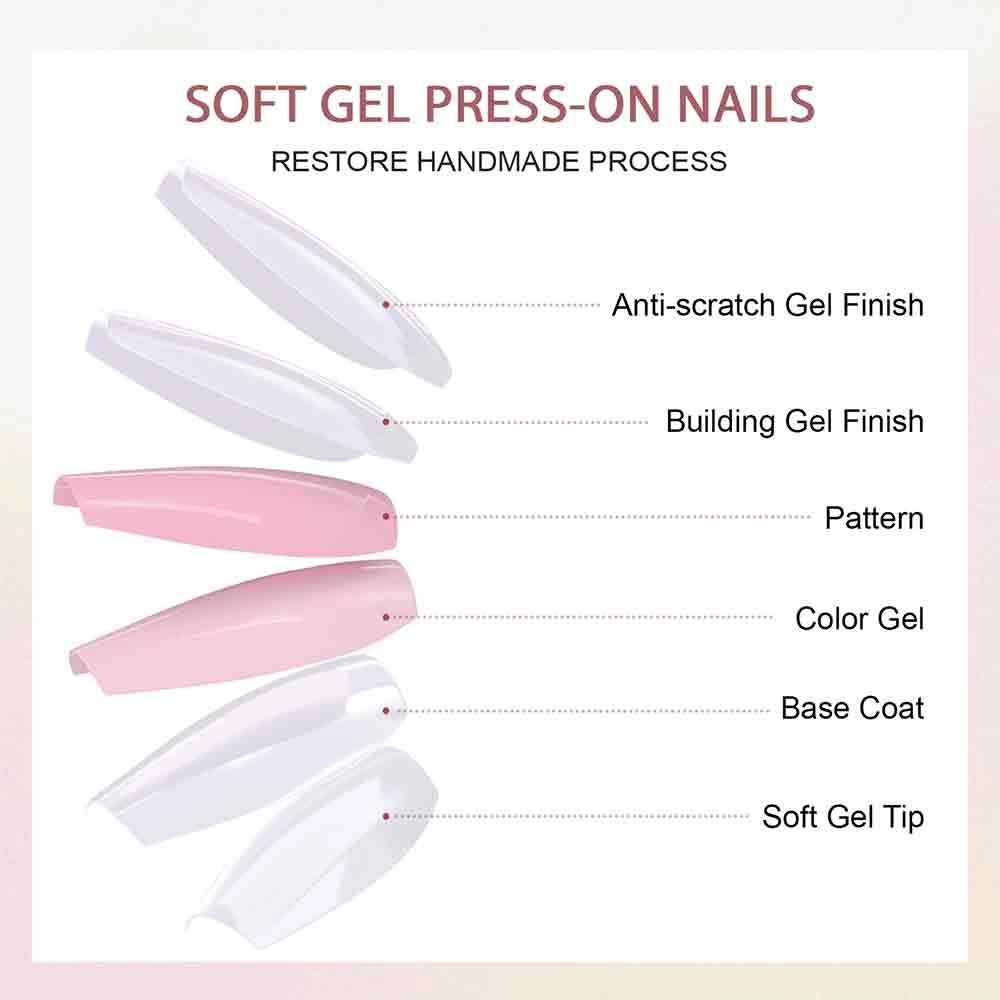
Our press-on nail products are designed to be lightweight and breathable, with non-toxic and odorless product characteristics supported by applicable material and production controls. UV coating is used to help protect the nail surface, improve durability, and maintain appearance. Available product programs include custom press on nails, standard press on nails, salon false nails, kids nails press on, fake toe nails, gel nail tabs, and sticker press on nails.
For international buyers, documentation is part of the product—not an afterthought. Xianxing Beauty products are supported by RoHS, REACH, and MSDS certifications or documentation as applicable to the product configuration, and are positioned to meet US and EU global cosmetics requirements. Buyers should still confirm the exact test scope, destination-market obligations, labeling, and final formula or accessory configuration for each purchase order. This disciplined verification protects both the manufacturer and the importing brand.
Our vision is to become the world’s leading press-on nails manufacturer by combining manufacturing capacity, product development, responsive customization, and consistent quality management. Buyers can review product options and supplier capabilities at Xianxing Beauty or request a project discussion based on target market, order volume, age positioning, packaging format, and launch schedule.
Decision Framework for Switching Suppliers with Confidence
Replace immediately when critical risk cannot be controlled
An immediate change should be considered when there is credible evidence of unsafe materials, falsified or materially misleading documentation, repeated shipment of nonconforming goods, unauthorized design substitution, refusal to support traceability, or a breakdown in financial and operational continuity. These situations can expose buyers to recalls, retailer penalties, reputational damage, and customer complaints. Cost savings should never justify keeping a supplier that cannot demonstrate basic product control.
Use a performance-improvement plan for recoverable issues
A 30-, 60-, or 90-day improvement plan may be appropriate when the issue is measurable and the supplier accepts accountability. The plan should identify the failure, owner, corrective action, deadline, verification method, and consequence of nonperformance. Examples include reducing edge defects below an agreed incoming-inspection limit, achieving a defined on-time delivery rate, submitting complete reports before shipment, or matching an approved color standard across consecutive lots.
The supplier relationship should be retained only when performance improves sustainably. One successful shipment does not prove that a process has been repaired. Buyers should review several consecutive production cycles, especially for seasonal products, customized packaging, and new materials. A supplier that communicates early, provides evidence, and learns from nonconformance may be more valuable than a factory that offers the lowest initial quote.
Align the final decision with growth strategy
The right manufacturing partner should support the brand’s next stage, not only solve today’s complaint. Consider forecast flexibility, minimum order quantities, replenishment speed, innovation capacity, geographic shipping needs, packaging localization, inspection access, and the supplier’s ability to manage more SKUs. A structured review makes the decision defensible to finance, operations, quality, and executive stakeholders.
Changing suppliers is justified when the existing partner repeatedly fails to protect product quality, compliance, service levels, or commercial reliability—and when documented improvement efforts do not produce durable results. A disciplined qualification process gives buyers a clearer path to safer children’s nail products, fewer operational surprises, and stronger long-term margins.
Frequently Asked Questions
When should a buyer replace a children’s press-on nail supplier?
Replacement should be considered when a supplier repeatedly fails quality, safety documentation, delivery, communication, or traceability requirements and documented corrective actions do not produce durable improvement. Immediate change is appropriate when there is credible evidence of unsafe materials, misleading documents, unauthorized substitutions, or refusal to support traceability.
What should be included in a supplier performance scorecard?
A practical scorecard can assess product quality and fit, safety and documentation, delivery reliability, communication and problem solving, customization and innovation, and cost or payment stability. The article suggests reviewing these categories with weighted evidence such as inspection reports, test documents, delivery records, and corrective-action reports.
How can buyers verify a new children’s nail manufacturing partner?
Buyers should review material information, current test reports, factory capabilities, approved samples, packaging files, inspection criteria, production capacity, lead times, and corrective-action procedures. A controlled qualification process should include sample approval, pilot production, independent inspection, packaging verification, and first-shipment review.
What lead time does Xianxing Beauty offer for samples and orders?
Xianxing Beauty can provide nail samples within three days, while standard orders can be completed within 7–14 days, subject to specification confirmation, order quantity, packaging complexity, and production scheduling.
What types of nail products can Xianxing Beauty customize?
Xianxing Beauty supports custom press on nails, standard press on nails, salon false nails, kids nails press on, fake toe nails, gel nail tabs, and sticker press on nails, with customization across materials, sizes, designs, shapes, and packaging.
Which compliance documents should buyers request for international nail programs?
Buyers should request current product-specific material and safety documentation, including applicable RoHS, REACH, and MSDS documentation, and should confirm destination-market labeling and regulatory requirements for the final product configuration.




Copyright © 2025 - XIANXING BEAUTY All Rights Reserved. Sitemap
Facebook
YouTube
Instagram
LinkedIn