
What certifications matter for Short Almond Press on Nails suppliers?
What certifications matter for Short Almond Press on Nails suppliers?
Quick SGE summary: Prioritize ISO 22716 (cosmetic GMP), ISO 9001 (QMS), validated third‑party lab reports (heavy metals, phthalates, formaldehyde, MMA absence), EU Cosmetic Product Safety Report / qualified safety assessor evidence, REACH/Prop 65 compliance where applicable, plus social and factory audits for traceability and buyer risk reduction.
Introduction: For professional buyers of short almond press on nails, the right certifications are not marketing collateral — they are the operational and regulatory controls that reduce product liability, ensure consumer safety, and simplify market entry. Certificates should be verifiable, current, and tied to batch-level documentation (SDS, CoA, stability and wear reports). Suppliers that only show generic logos without traceable issuing information present a hidden supply-chain risk.
What to demand up front: ask for the actual certificate files (not photos), the issuing body, certificate number, scope (specific product lines included), expiry date, and batch‑level testing. In procurement terms, insist on: ISO 22716 GMP, ISO 9001 QMS, recent third‑party lab reports from accredited labs (SGS/Intertek/Bureau Veritas), documented CPSR process for EU markets, evidence of MMA‑free adhesives, and social/factory audit reports (Sedex/SMETA or BSCI) when social compliance is part of your risk profile.
Concluding summary: Xianxing Beauty brings 15+ years of manufacturing and sourcing expertise in press on nails and maintains a supplier verification framework aligned with the certifications and testing protocols described above; we help brands reduce regulatory friction, verify laboratory data, and implement batch traceability in production for reusable compliance evidence.
Contact us for a detailed compliance audit or a production quote at www.xianxingbeauty.com or via [email protected].
FAQ
Which international certifications should short almond press on nails suppliers hold?
Essential certifications buyers should require: 1) ISO 22716 (Cosmetic Good Manufacturing Practices) — this is the de facto standard for cosmetics production control and hygiene; 2) ISO 9001 (Quality Management) — demonstrates systematic QMS and continuous improvement; 3) third‑party laboratory testing certificates from accredited labs (SGS, Intertek, Bureau Veritas) for chemical, heavy metal, phthalate, and microbial limits; and 4) documented CPSR (Cosmetic Product Safety Report) or evidence of a qualified safety assessor for sales into the EU. These items form the minimum technical backbone to demonstrate manufacturing control and product safety for short almond press on nails.
How do ISO certifications affect manufacturing of short almond press on nails?
ISO 22716 specifically governs cosmetic production practices — material control, personnel hygiene, traceability, and cleaning regimes; it reduces contamination and nonconformities in coatings, adhesives, and decorative finishes. ISO 9001 enforces systematic process control (documented procedures, corrective actions, supplier selection criteria) which reduces batch variation and defect rates. Practically, ISO 22716 will require your supplier to maintain ingredient and material traceability, stable production conditions and records (useful for recalls), while ISO 9001 ensures quality metrics are captured, reviewed, and improved — both significantly lower operational risk for buyers of press on nails.
Are cosmetic safety tests required for short almond press on nails materials?
Yes — product safety testing is required by market. In the EU, Regulation 1223/2009 mandates a Cosmetic Product Safety Report (CPSR) prepared by a qualified safety assessor. In practice buyers should require: 1) analytical tests for heavy metals (lead, cadmium, arsenic), phthalates screening (when plasticizers are present), and formaldehyde/formaldehyde releasers if used; 2) migration or extractables testing where relevant; 3) stability and accelerated ageing (discoloration, adhesion loss) and wear‑time testing; and 4) dermatological/biocompatibility evidence for adhesives — many suppliers adopt ISO 10993 cytotoxicity and sensitization tests for adhesives even if not strictly medical. Always request lab reports with method, limits, lab accreditation (e.g., ISO/IEC 17025), sample IDs and date.
What labelling and REACH compliance matters for press on nail suppliers?
Labelling and chemical compliance are critical: for EU sales, suppliers must ensure ingredient disclosure where applicable, keep a CPSR and Product Information File (PIF) and confirm substances comply with REACH. Although press on nails are finished cosmetic articles rather than chemical substances, components (paints, adhesives, plasticizers) can contain substances regulated under REACH — buyers should request REACH declarations on restricted substances and SVHC screening. For the U.S., check California Proposition 65 exposure warnings and ensure suppliers provide chemical declarations showing levels below required thresholds or clear warning guidance. Proper labelling, Safety Data Sheets (SDS), and CoAs are the operational proof you need when importing or placing goods on retail shelves.
Which environmental certifications reduce buyer risk for press on nails manufacturers?
Environmental and social certifications commonly used to reduce supply‑chain risk include ISO 14001 (environmental management), Sedex/SMETA or BSCI social audits (ethical labour practices), and documented chemical management systems (hazard inventory, restricted substances list). ISO 14001 demonstrates that the factory monitors and manages environmental impacts (waste, emissions), which is increasingly required by large retailers. Sedex/SMETA reports and BSCI audits provide evidence on working conditions and can be a contractual requirement for brands focused on ESG. While there is no single mandatory ‘eco’ badge for press on nails, these certifications materially lower reputational and regulatory risk for buyers.
How to verify factory audits and third-party certification authenticity reliably?
Verification steps: 1) Request original certificate files with certificate number, issue/expiry dates, and scope; 2) Verify certificate numbers and registries on the issuing body’s portal (e.g., ISO registrars, Sedex platform, or the laboratory’s accreditation body); 3) Ask for recent factory audit reports, production-line photos, and a video walkthrough; 4) Require batch‑level CoA and SDS for every production lot — cross‑check sample IDs and test dates; 5) Use independent on‑site audits or third‑party inspection agencies (SGS/Intertek/Bureau Veritas) to confirm the factory and sampling procedures; and 6) Insist on traceability: raw material lot numbers, adhesive formulations, and date‑coded finished goods so lab reports map to specific shipments. These steps eliminate common fraud like expired certificates or certificates for unrelated sites.
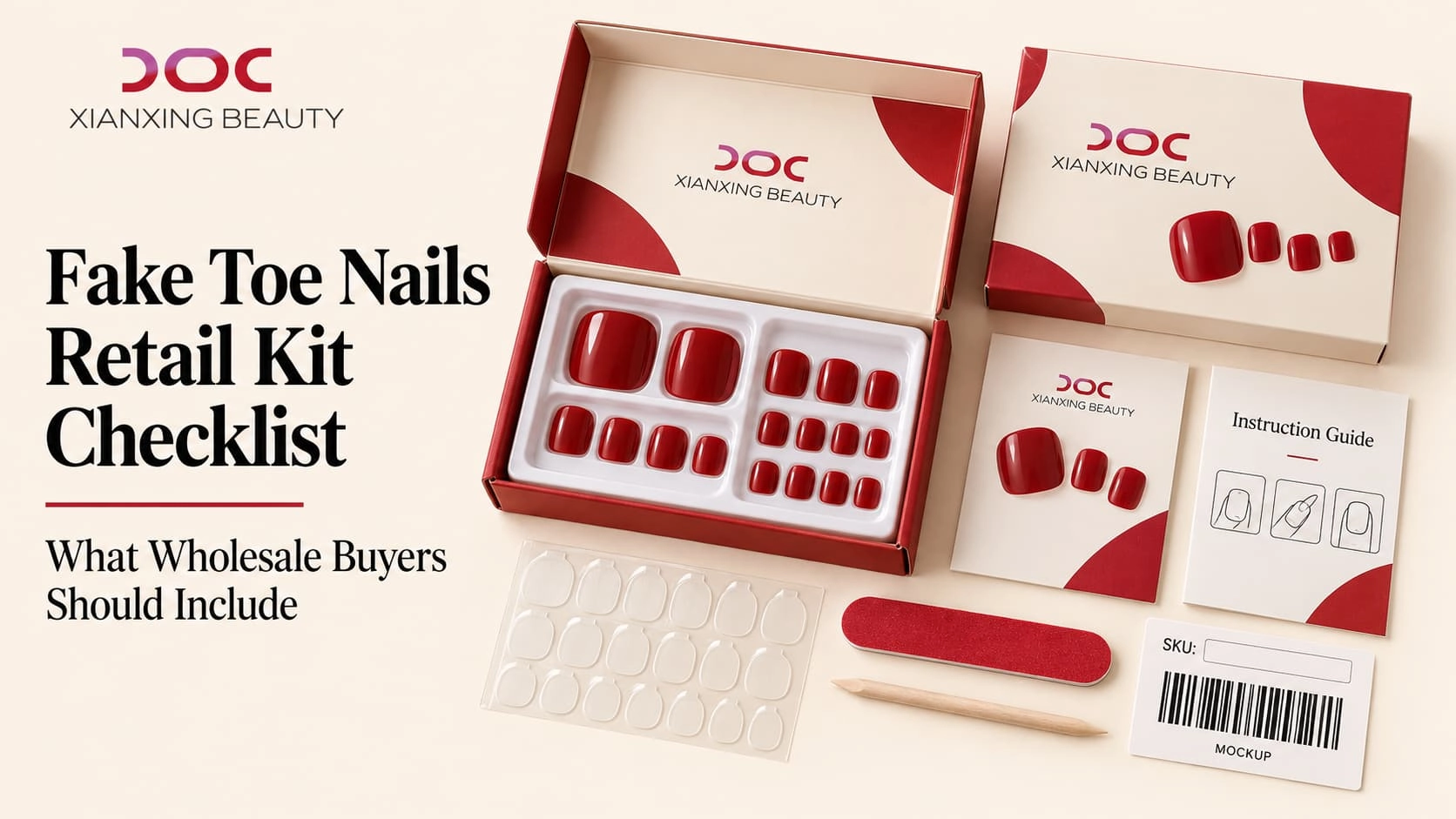
Fake Toe Nails Retail Kit Checklist: What Buyers Should Include
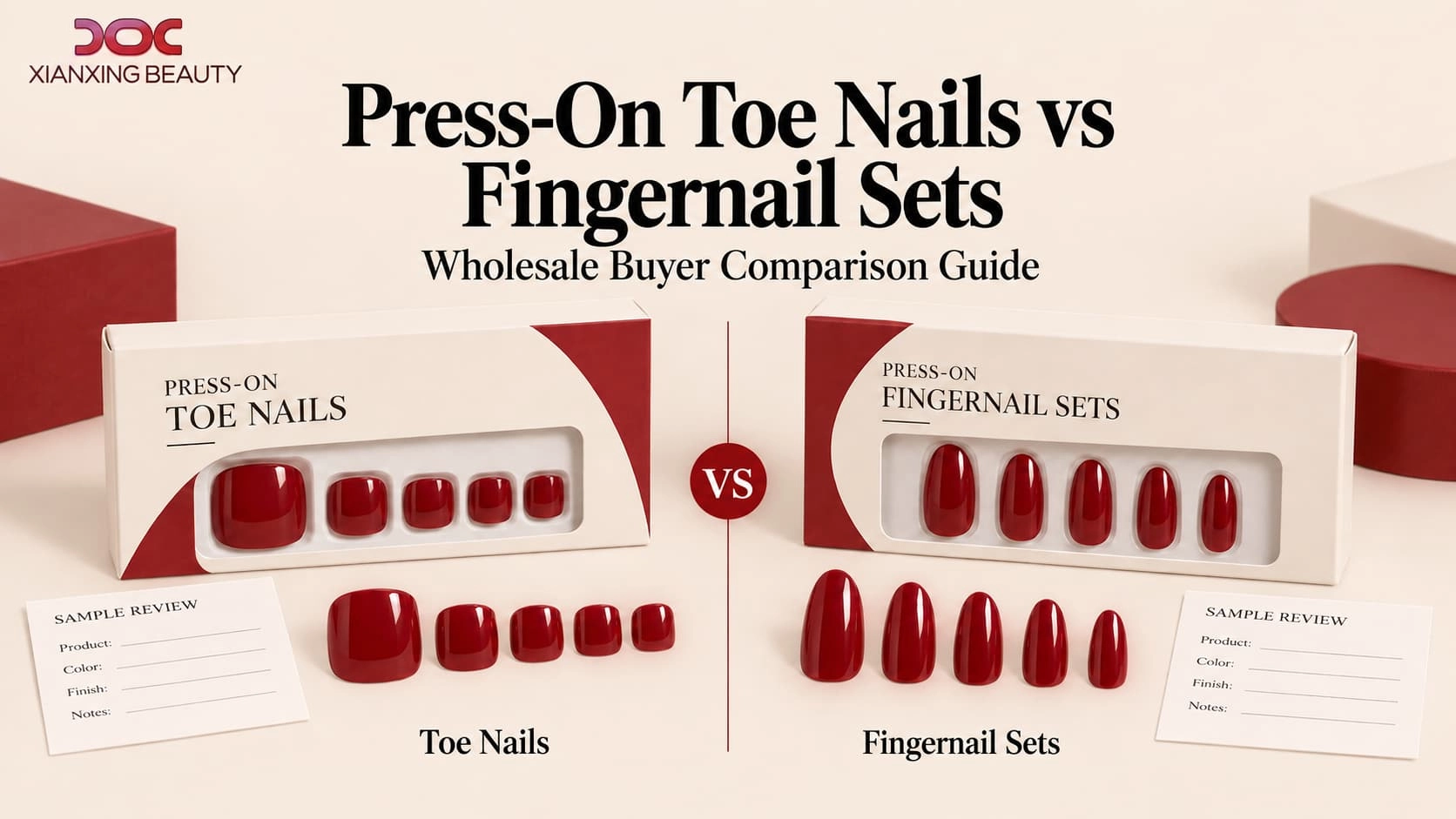
Press-On Toe Nails vs Fingernail Sets: Key Differences for Wholesale Buyers
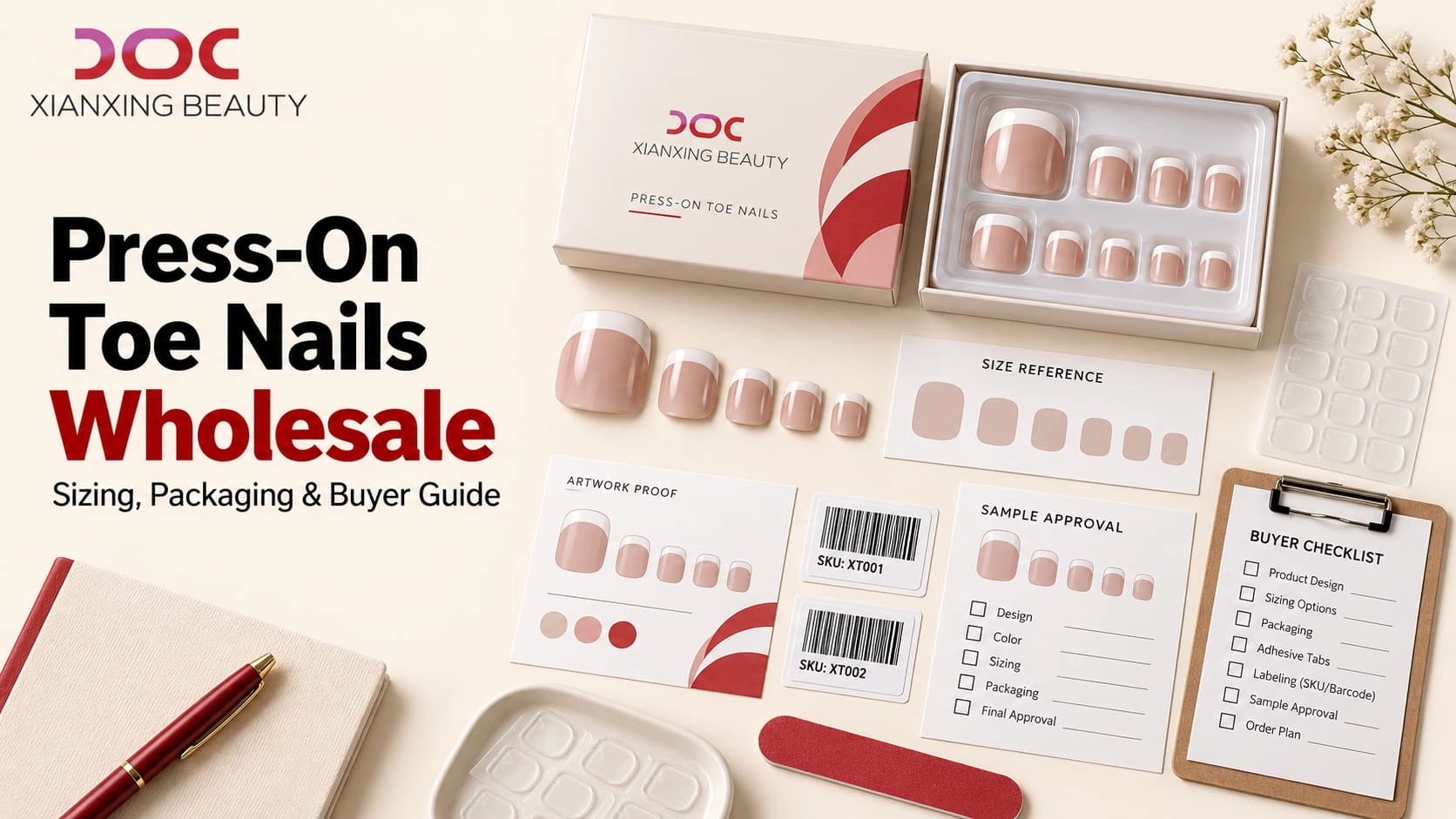
Press-On Toe Nails Wholesale: Sizing, Packaging and Buyer Guide
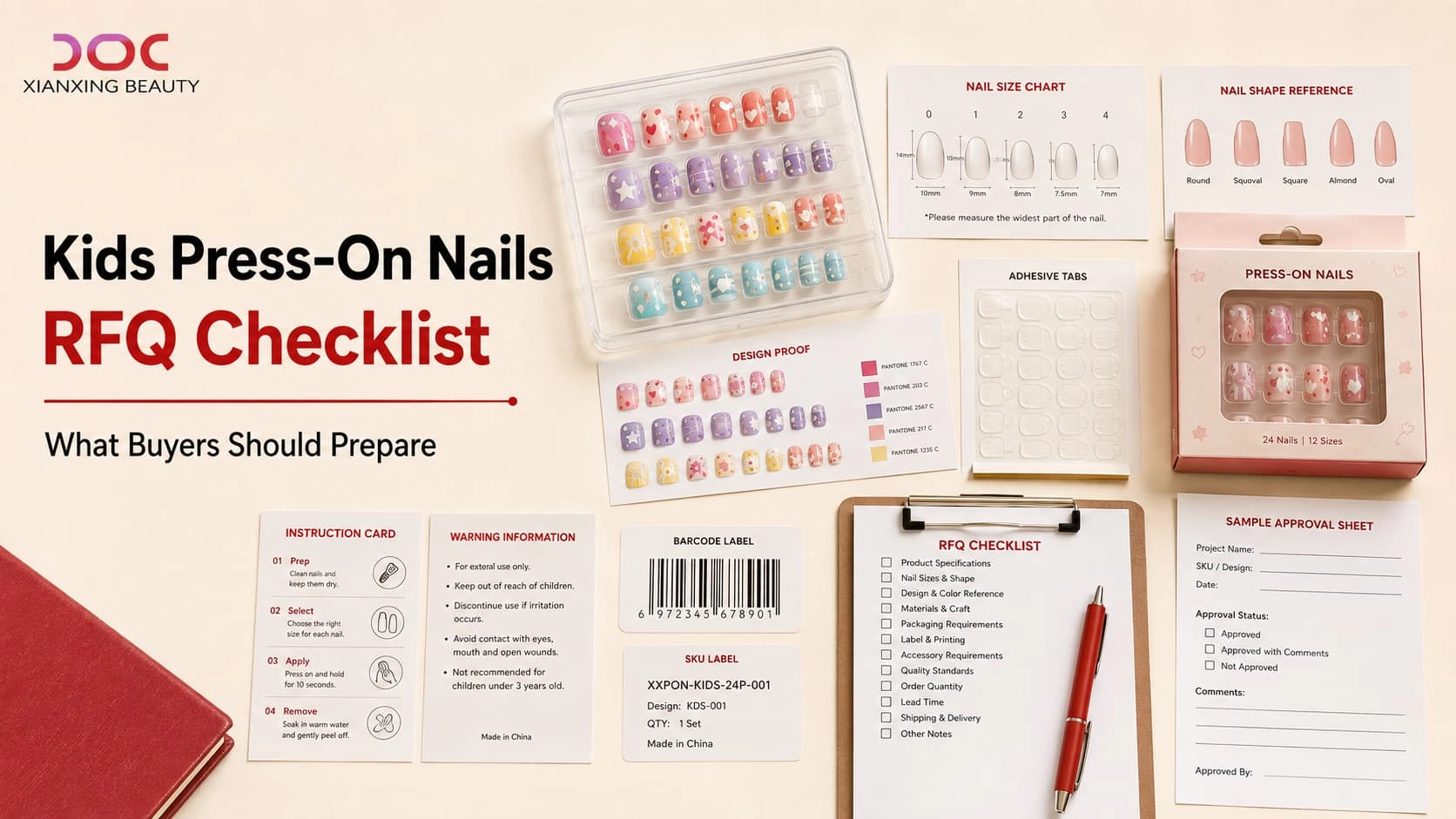
Kids Press-On Nails RFQ Checklist: What Buyers Should Prepare
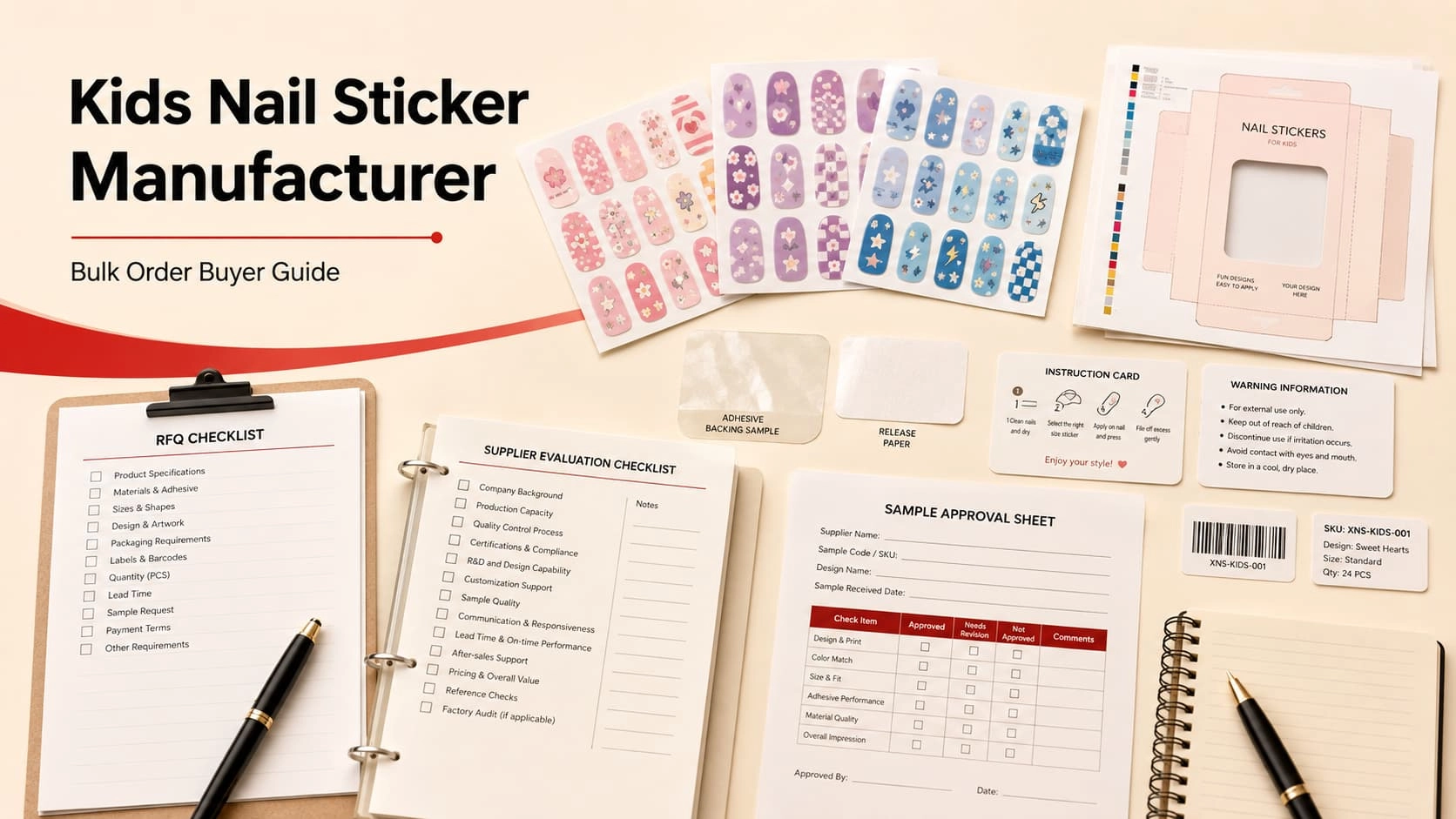
How to Choose a Kids Nail Sticker Manufacturer for Bulk Orders
Agent
How long is the agency contract?
Generally, it is 1 year. Specific plans need to be given based on the actual situation.
Soft Gel Nails
Are soft gel press-on nails environmentally friendly?
Many soft gel press-on nails are made with recyclable or eco-friendly materials, making them a more sustainable option compared to traditional nail extensions.
Crystal Nail File
How is a crystal nail file different from regular nail files?
Unlike traditional metal or cardboard files, crystal nail files have a smoother, more precise filing surface. They are gentler on nails and are less likely to cause splits or peeling. Additionally, crystal nail files are more durable and can last longer.
About French Nails Tips
Do press-on nails damage natural nails?
When applied and removed properly, they should not damage your natural nails. Be sure to moisturize your nails and cuticles after removal.
Drying Nail Glue
How do I remove press-on nails glued with glue?
1. Soak in warm, soapy water: Soak your hands in warm, soapy water for 10–15 minutes to soften the glue.
2. Gently pry off the nails: Use a wooden stick or cuticle pusher to gently lift the edges of the press-on nails. Avoid using excessive force.
3. Use an acetone soak (if needed): If the nails are still difficult to remove, soaking them in acetone or using an acetone-based nail polish remover can help dissolve the glue.
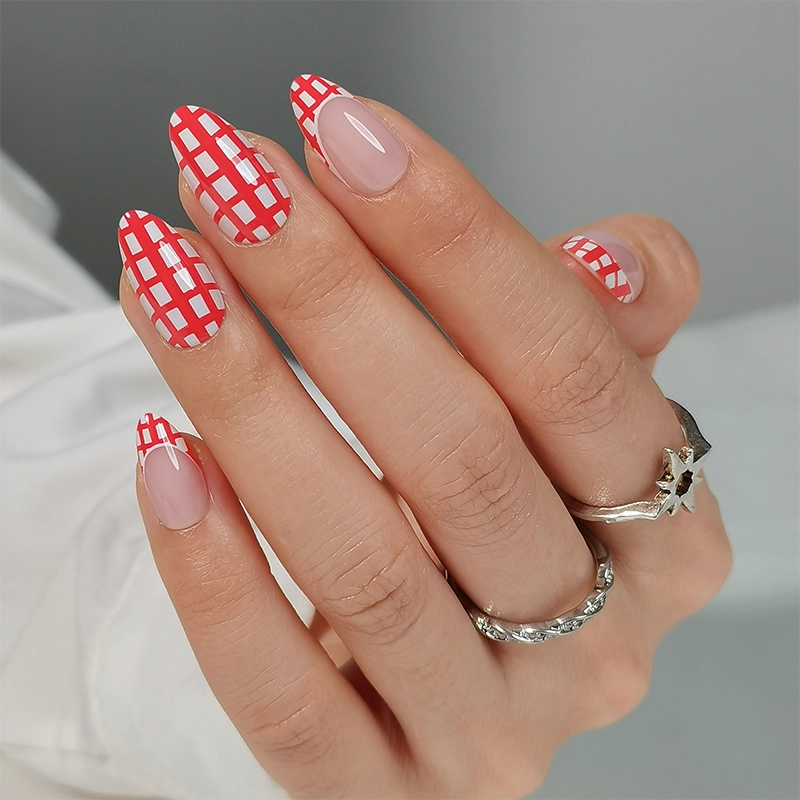
Wholesales Red French Nails Tips Checkered Soft Gel Nail Tips 32 Piece Set

Xianxing Beauty OEM/Wholesale Soft Gel Nail Tips - 32PCS Pink French Square Nails

Xianxing Beauty OEM/Wholesale Soft Gel Nail Tips – 32PCS Classic Black French Press On Nails

Custom Chrome Polka Dot Delight Soft Gel Nail Press On Suppliers
Contact us
If you have press on nails products or customization needs, please feel free to contact from
below or via the contact information provided, we'll get back to you promptly within 24 hours.
By clicking 'Send Inquiry Now' I agree to XIANXING BEAUTY processing my personal data.
To see how to withdraw your consent, how to control your personal data and how we process it, please see our Privacy Policy and Terms of use.
Copyright © 2025 - XIANXING BEAUTY All Rights Reserved. Sitemap
Facebook
YouTube
Instagram
LinkedIn