Beyond the Basics: How to Negotiate the Best Prices with Acrylic Press On Nails Manufacturers in 2026
- What Is an Acrylic Press On Nails Manufacturer and How Do They Set Prices?
- Quick Summary: Key Takeaways for B2B Sourcing
- Deconstructing the Bill of Materials (BOM) for Acrylic Nails
- Proven Negotiation Strategies for Better Manufacturer Pricing
- Bridging the Gap: Uncovering Hidden Fees Competitors Overlook
- Expert Tips & Common Mistakes in Supplier Negotiations
- Conclusion
- What is the standard MOQ for an acrylic press on nails manufacturer?
- Why are PMMA acrylic press on nails more expensive than ABS plastic?
- How can I lower the manufacturing costs of private label nails?
- Do press on nail manufacturers charge extra for custom packaging?
- What are tooling fees in custom nail manufacturing?
- How do I verify the quality of an acrylic press on nail supplier?
- Are OEM or ODM press on nails cheaper to produce?
- What certifications should a reliable nail manufacturer have?
The global beauty market is evolving rapidly, and by 2026, consumers demand more than just cheap, disposable artificial nails. They want salon-quality durability, intricate 3D designs, and flawless fits. For brand owners, delivering this level of quality while maintaining healthy profit margins is a delicate balancing act. Navigating the complexities of PMMA nail manufacturing costs is the single most crucial factor for brands aiming to scale. Whether you are launching a new boutique collection or optimizing an existing enterprise supply chain, understanding how overseas factories calculate their margins is your strongest leverage point. This comprehensive guide moves beyond basic sourcing advice, diving deep into the financial mechanics of nail production. By mastering these B2B negotiation tactics, you will learn how to secure premium materials, reduce overhead, and establish resilient, long-term supplier partnerships.
What Is an Acrylic Press On Nails Manufacturer and How Do They Set Prices?
An acrylic press on nails manufacturer is a specialized B2B facility that uses premium PMMA (polymethyl methacrylate) to produce durable, salon-quality artificial nails. Pricing is determined by material purity, injection molding complexity, customized 3D nail art, and Minimum Order Quantities (MOQ).
Understanding the foundation of how these factories operate is the first step in mastering your supply chain. Unlike standard injection molding plants that produce cheap commodities, specialized nail manufacturers operate in a highly regulated, precision-driven environment. The baseline cost of a press-on nail is not arbitrary; it is an exact calculation of machine time, resin weight, and skilled labor. When you ask for a quote, the supplier runs a complex calculation based on the specific features of your request.
- Material Purity and Sourcing: The core ingredient dictates the base price. As reported by Wikipedia, PMMA is a transparent thermoplastic prized for its exceptional impact resistance and biocompatibility. Because it mimics the strength and flexibility of natural nails far better than standard plastics, its raw commodity price is higher and subject to global chemical market fluctuations.
- Injection Molding Complexity: Producing a flawless C-Curve requires high-tonnage injection molding machines. The longer a nail stays in the mold to cool and harden (cycle time), the higher the machine cost per unit. Complex shapes, such as extreme stilettos or textured bases, require longer cycle times.
- Minimum Order Quantities (MOQ): Your order volume directly impacts the factory's efficiency. Setup times for mold changes and color mixing are static costs. When you order higher volumes, these static costs are distributed across more units, lowering your individual set price.
Quick Summary: Key Takeaways for B2B Sourcing
Wholesale acrylic nails B2B sourcing requires understanding the difference between a raw unit price and the total landed cost before negotiating. Strategic buyers use production models to leverage pre-existing molds, save on tooling fees, and maintain premium material grades.
For brand managers and procurement officers short on time, mastering the nuances of overseas nail manufacturing boils down to a few critical, non-negotiable principles. The factory landscape is highly competitive, and while many suppliers will promise the world, only a strategic approach will protect your bottom line.
- Understand Landed Cost vs. Unit Price: A factory might quote a remarkably low per-unit price, but this often excludes crucial elements like inner blister trays, adhesive tabs, and freight forwarding fees. Always negotiate based on the total landed cost to avoid margin erosion.
- Leverage OEM vs. ODM Production: Original Design Manufacturing (ODM) allows you to use the factory's pre-existing catalog of nail shapes. This completely bypasses the need for expensive custom mold creation. If you must have a proprietary shape (OEM), be prepared to negotiate the initial setup costs strategically.
- Never Sacrifice Material Quality: It is tempting to shave a few cents off your unit price by accepting a lower material grade. However, substituting premium acrylic for standard ABS plastic leads to brittle nails, poor customer reviews, and high return rates. Negotiate on volume, packaging, and logistics, but hold a firm line on PMMA purity.
Deconstructing the Bill of Materials (BOM) for Acrylic Nails
The Bill of Materials (BOM) is a comprehensive manufacturing ledger detailing the cost of raw resins, production labor, and compliance overhead required for your nails. It provides full transparency into standard injection molding processes and rigorous quality control testing expenses.
If you are negotiating without a BOM, you are negotiating blind. A professional factory will, upon request, provide a transparent breakdown of where your money is going. This document is your ultimate tool for spotting inflated margins and identifying areas where you can trim costs collaboratively with your supplier.
- Raw Material Fluctuations: The BOM will separate the cost of the raw PMMA pellets from the colorants and UV topcoats. By understanding the current market rate for these chemical resins, you can recognize if a supplier is artificially inflating base material costs.
- Production and Labor Methodology: The shift from standard single-color injection molding to complex, hand-painted, or machine-printed 3D designs drastically alters the labor column of your BOM. Hand-painted designs require a massive workforce and high QA oversight, which will be heavily reflected in the labor costs.
- Compliance and QA Overheads: Reputable factories bake the cost of regulatory compliance into their overhead. Ensuring safety and hygiene requires strict adherence to international frameworks like ISO 22716. As reported by DQS Global, this standard establishes Good Manufacturing Practices (GMP) for cosmetics, ensuring consistent quality and minimizing safety risks. While this adds to the BOM, it is a non-negotiable expense for any brand selling in Western markets.
Proven Negotiation Strategies for Better Manufacturer Pricing
Optimal manufacturer pricing is achieved through structured purchasing agreements rather than simple haggling. By leveraging tiered volume commitments, amortizing initial setup expenses, and locking in annual material rates, brands can significantly lower costs without sacrificing inventory flexibility.
The most successful B2B buyers do not treat their suppliers as adversaries; they treat them as financial partners. Instead of demanding an arbitrary 10% discount, utilize advanced procurement strategies that benefit both your cash flow and the factory's production schedule.
- Tiered Volume Strategy: Navigating private label nail suppliers MOQ can be daunting for growing brands. Instead of placing one massive order that ties up all your capital, negotiate a tiered contract. Commit to a high annual volume (e.g., 50,000 units) to secure the lowest pricing tier, but schedule the production and delivery in quarterly batches. The factory gets guaranteed long-term business, and you get enterprise-level pricing with staggered cash outflows.
- Tooling Fee Amortization: If you are developing proprietary nail shapes, the upfront cost for metal injection molds can be prohibitive. Instead of paying this in a lump sum, negotiate to amortize the cost across your first 20,000 units. This adds a fraction of a cent to your early units but preserves your initial launch capital.
- The 'Blanket Order' Technique: Material inflation is a constant threat. A blanket order involves locking in the current price of PMMA resin for the entire year. The factory purchases the raw materials at today's rate and holds them for your future production runs, shielding your brand from unexpected mid-year price hikes.
Bridging the Gap: Uncovering Hidden Fees Competitors Overlook
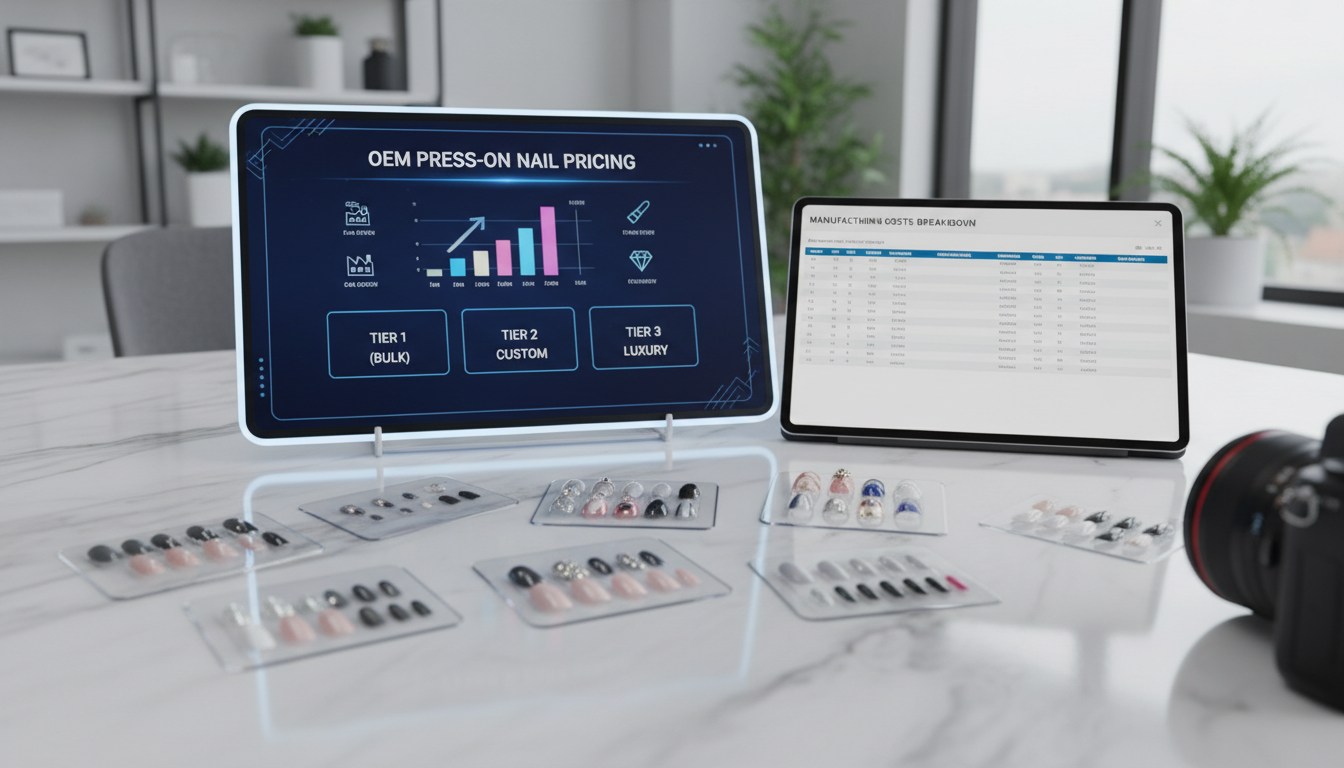
Hidden manufacturing fees are unquoted secondary expenses that artificially inflate your final production invoice. These invisible costs typically emerge during the prototyping phase, defect allowances, custom packaging development, and late-stage sample revisions, severely impacting your profit margins.
The most dangerous part of a factory quotation is what is not written on the page. Many brand owners celebrate securing a low unit price, only to watch their margins vanish under a mountain of unexpected surcharges during the final invoicing phase.
- Defect Rate Allowances: In mass manufacturing, a 1-3% defect rate is standard. However, who pays for these defective units? Ensure your contract explicitly states that the factory will either provide a credit chargeback or produce free replacement units for any batch that fails to meet your specified C-Curve, thickness, or finish requirements.
- Prototyping and Revisions: Getting a custom design perfectly right often takes multiple iterations. Factories frequently charge exorbitant fees for each round of pre-production sampling. To prevent escalating development costs, cap these fees upfront by negotiating a flat rate that includes up to three rounds of sample revisions. This is especially crucial when navigating custom nail mold tooling fees.
- Packaging Tariffs: A nail factory specializes in plastic injection, not paper printing. When they quote you for custom-branded retail boxes, they are outsourcing that work to a third-party printer and adding a markup. You can often uncover massive savings by separating the cost of the bare nails from the packaging, and sourcing your own localized printing solutions or specialized packaging vendors.
Expert Tips & Common Mistakes in Supplier Negotiations
The most common mistake in supplier negotiations is fixating exclusively on the lowest per-unit price, which often results in suppliers secretly substituting premium PMMA for cheap ABS plastic. Successful brands prioritize total value, transparent documentation, and strict delivery agreements.
Entering negotiations with an overseas factory requires a blend of firm boundaries and industry knowledge. When you act like an experienced buyer, factories are far less likely to attempt bait-and-switch tactics or deprioritize your production runs.
- Common Mistake: The Price Trap: When a brand aggressively pushes a factory below their acceptable profit margin, the factory will not simply accept the loss. Instead, they will quietly cut corners to recoup the difference. This most commonly manifests as blending recycled plastics into the virgin resin, resulting in nails that crack under pressure.
- Expert Tip: Demand Independent Verification: Never take a supplier's word on material purity. Always request a detailed BOM and insist on independent material testing certificates before finalizing your pricing. Showing the factory that you require third-party verification immediately establishes your brand as a high-tier, serious client. This is the cornerstone of securing reliable OEM press on nail pricing.
- Expert Tip: Establish Strict SLAs: A great price is useless if your inventory arrives two months late and you miss the holiday sales rush. Establish Service Level Agreements (SLAs) within your contract that tie late-delivery penalties directly to your final invoice payout. If the factory misses the deadline, your final payment is automatically reduced by a predetermined percentage.
Conclusion
Negotiating with an acrylic press on nails manufacturer requires moving beyond basic haggling to deeply understand raw materials, molds, and production scaling. By focusing on total value, material integrity, and long-term partnerships, brands can secure the most competitive pricing without compromising on salon-grade quality. Establishing trust, requiring transparent documentation, and utilizing structured purchasing techniques will ensure your supply chain remains robust and profitable. Contact us today to optimize your wholesale acrylic nails B2B sourcing strategy and secure the best manufacturing prices.
What is the standard MOQ for an acrylic press on nails manufacturer?
Standard MOQs (Minimum Order Quantities) typically range from 1,000 to 3,000 sets per design. However, many manufacturers offer lower MOQs (e.g., 500 sets) for ODM products where custom molds are not required.
Why are PMMA acrylic press on nails more expensive than ABS plastic?
PMMA (polymethyl methacrylate) is structurally stronger, more flexible, and mimics the look of salon acrylics better than rigid ABS plastic. The raw material cost and the precise injection molding required for PMMA drive the higher price point.
How can I lower the manufacturing costs of private label nails?
You can lower costs by using pre-existing molds (ODM) rather than designing custom shapes (OEM). Additionally, simplifying the retail packaging and increasing your order volume will significantly reduce the per-unit cost.
Do press on nail manufacturers charge extra for custom packaging?
Yes, custom-branded boxes, inner trays, and specialized adhesive tabs (like UV glue or double-sided jelly stickers) are usually quoted separately. You can negotiate bundled pricing if you order packaging and nails simultaneously.
What are tooling fees in custom nail manufacturing?
Tooling fees refer to the cost of creating a master metal mold used in the injection molding process to create your specific nail shape and length. These fees are typically a one-time setup cost ranging from $500 to $2,000 depending on complexity.
How do I verify the quality of an acrylic press on nail supplier?
Always order a prototype or sample batch before committing to a large run. Check for C-Curve consistency, material thickness (ideally 0.8–1.2mm), edge smoothness, and request compliance certificates like MSDS and ISO.
Are OEM or ODM press on nails cheaper to produce?
ODM (Original Design Manufacturing) is generally cheaper because you select from the manufacturer's existing catalog of shapes and designs. OEM (Original Equipment Manufacturing) involves custom molds and proprietary designs, which carry higher initial R&D and tooling costs.
What certifications should a reliable nail manufacturer have?
A reputable manufacturer should hold ISO 22716 (GMP for Cosmetics) to ensure clean production. They should also provide REACH compliance for the European market and an MSDS (Material Safety Data Sheet) for the nail materials and adhesives.
Best Fake Nails: Your Ultimate Guide - Xianxing Beauty
Fake Nails Names: Your Guide - Xianxing Beauty
Custom Press On Nails: Materials, Adhesives, and Safety
How Much Does a Press-On Nail Business Make in France? A Practical Revenue Guide
About French Nails Tips
Are they suitable for all nail sizes?
Most sets come with multiple sizes to fit a variety of nail widths. Check the package for sizing options.
Soft Gel Nails
Are soft gel press-on nails reusable?
Yes, depending on how they are applied and removed, soft gel press-on nails can often be reused. Proper care during removal helps preserve their shape and quality for multiple uses.
About Toe Nails
Can I wear toe press-on nails with regular shoes?
Yes, but you may want to avoid shoes that put too much pressure on your toes (like tight or high-heeled shoes), as this could cause the press-on nails to lift or fall off.
Open-toed shoes are ideal for showing off your press-on nails, but you can also wear them under closed shoes if you’re careful about how they fit.
About chrome Nails
How do I remove chrome press-on nails?
Soak your nails in warm soapy water or acetone for 10–15 minutes.
Gently lift the edges with a cuticle stick.
Avoid pulling or forcing them off to prevent damage.
Nail file
What is the best type of nail file for my nails?
It depends on your nail type and personal preference. For example:
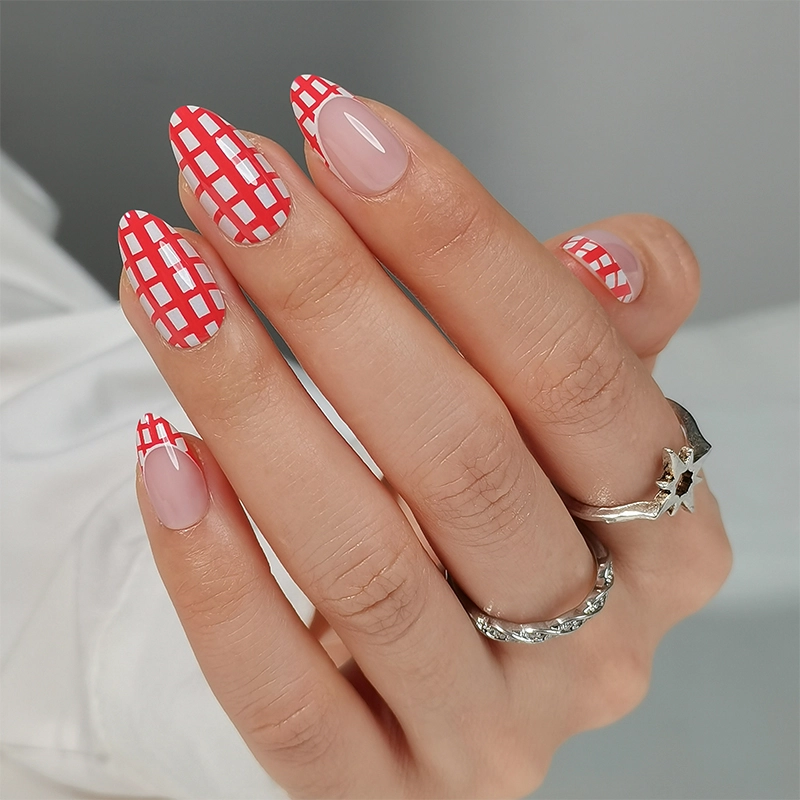
Wholesales Red French Nails Tips Checkered Soft Gel Nail Tips 32 Piece Set
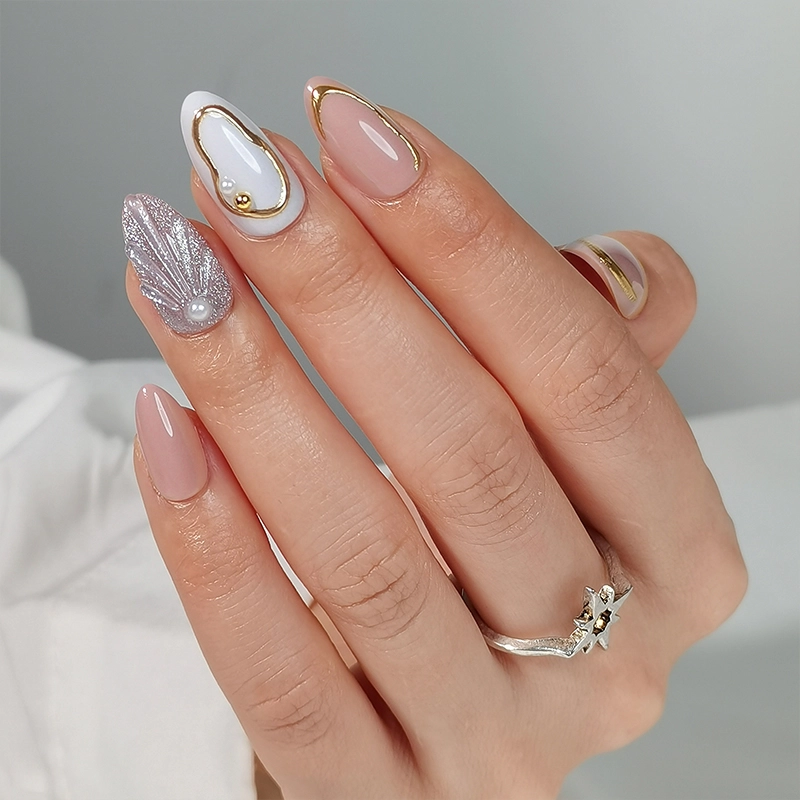
Wholesales Elegant Shell Inspired Soft Gel Wearable Nails for Seasonal Celebrations
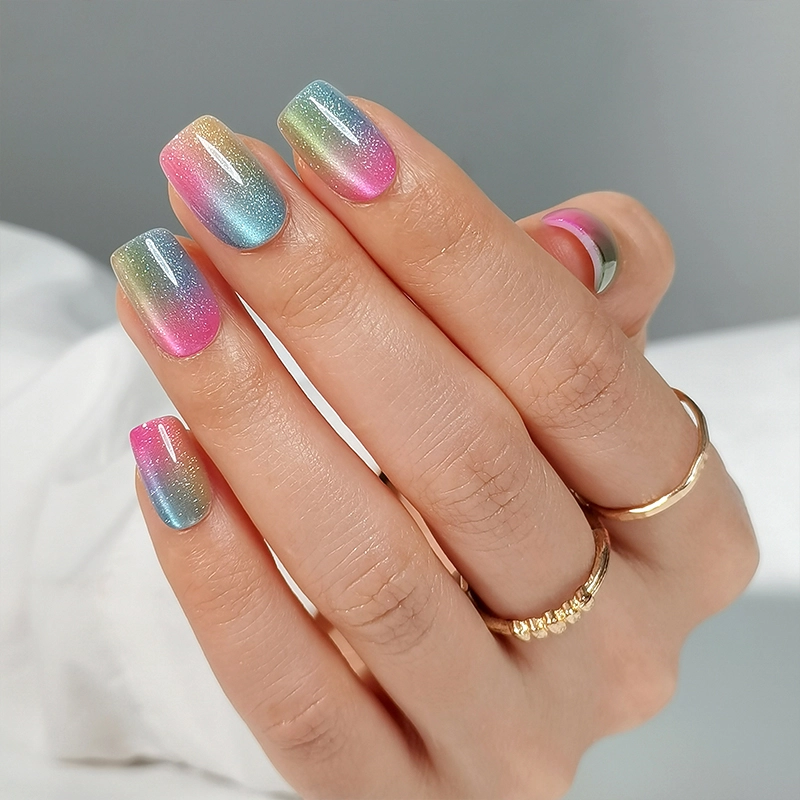
Custom Wholesale Gradient Cat Eye Soft Gel Wearable Fake Nails
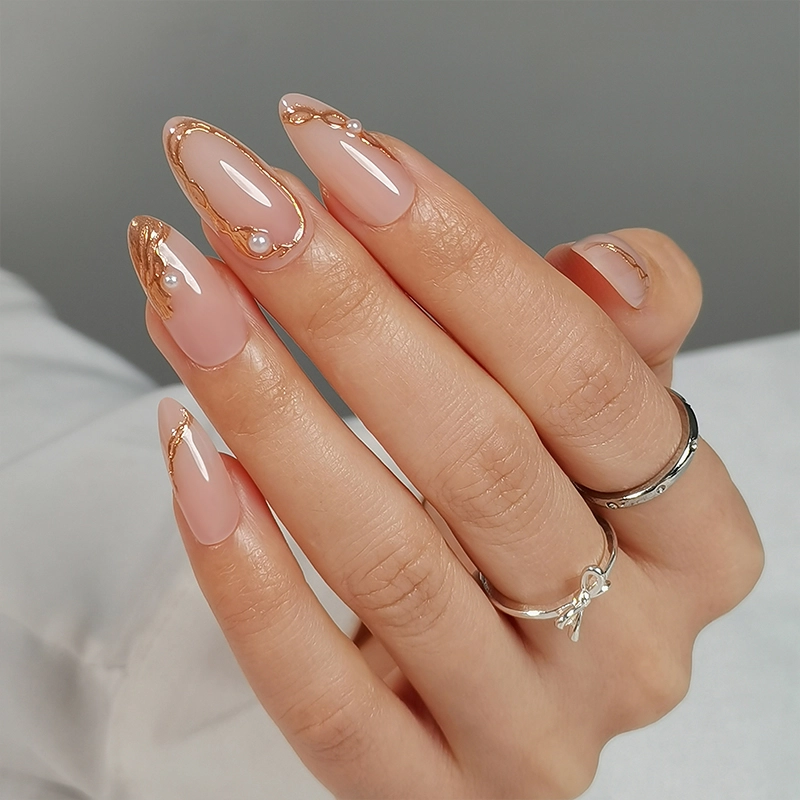
Wholesales Luxury Rhinestone Handmade Private Label Press On Nails Art Tips
Copyright © 2025 - XIANXING BEAUTY All Rights Reserved. Sitemap
Facebook
YouTube
Instagram
LinkedIn