
Color Matching and Print Techniques for Custom Nails
- Mastering Color and Print for Bespoke Press-On Nails
- Understanding color theory for custom press on nails
- Practical color-matching workflow
- Tools and metrics to validate color
- Print Techniques: From Digitally Printed Art to Hand-Finished Details
- Overview of main print techniques
- Comparative table of print methods
- Choosing finishes and coatings
- Quality Control, Materials and Durability Considerations
- Material selection and implications for printing
- Testing for wear and safety
- Data-driven QC checklist
- Supply Chain & Customization at Scale: OEM/ODM Best Practices
- Order workflow for custom press on nails
- Xianxing Beauty: capabilities, certifications and timelines
- How Xianxing’s offering reduces time-to-market
- Packaging, labeling and logistics considerations
- Implementation Tips: From Prototype to Production
- Prototyping and iteration
- Cost vs. quality trade-offs
- Design for manufacturing (DFM) considerations
- FAQ
- 1. How accurate can color matching be for custom press on nails?
- 2. Which printing method gives the most photo-realistic results?
- 3. Can I get small-batch customization without high minimums?
- 4. Are press-on nail materials safe and compliant for international sales?
- 5. How should I test durability before a full production run?
- 6. What packaging should I choose to preserve printed finishes?
- References
Mastering Color and Print for Bespoke Press-On Nails
Understanding color theory for custom press on nails
Color matching starts with a clear brief: target market, skin tone range, seasonal palette, and brand identity. For sellers of custom press on nails, translating a Pantone or brand color into a durable nail finish requires understanding hue, chroma (saturation), and value (lightness). Consider contrast with common skin tones and how finishes (matte, gloss, shimmer) alter perceived color under retail lighting. Using standardized color references (Pantone Fashion + Home or an ICC profile) reduces rework when producing thousands of nail sets.
Practical color-matching workflow
A reliable workflow for color accuracy should include: initial color swatches (digital + physical), spectral measurements (if available), proofing on the exact substrate (nail material), and test curing. For custom press on nails, always proof on the same nail base (ABS, acrylic, or resin) because substrate absorption and texture change the final appearance. Maintain a color library for repeat orders and store digital files with embedded ICC profiles. This reduces mismatches when working with different print houses or factories.
Tools and metrics to validate color
Affordable tools—colorimeters and spectrophotometers—provide Delta E (ΔE) values that quantify color difference. Aim for ΔE < 2 for High Quality retail products; ΔE < 3 is acceptable for many fashion-oriented lines. Record measurement conditions (D65 light, 2° observer) to keep results repeatable. For designers, simple physical swatches or press-on samples remain essential because human perception still drives purchasing decisions for nails.
Print Techniques: From Digitally Printed Art to Hand-Finished Details
Overview of main print techniques
There are three commonly used print approaches for custom press on nails: digital UV printing, water-transfer (decals/hydro), and pad printing. Each has trade-offs in color fidelity, speed, texture, and per-unit cost. Many OEM/ODM manufacturers combine printing with hand-finishing—adding foils, rhinestones, or topcoats—to increase perceived value while keeping production efficient.
Comparative table of print methods
| Technique | Color Fidelity | Durability | Best Use | Typical Cost per Unit |
|---|---|---|---|---|
| UV Digital Printing | High (photographic) | High with UV topcoat | Photo prints, gradients, small-batch custom art | Moderate–High |
| Hydro / Water-Transfer Decals | Good (dependent on decal quality) | Moderate; improved with sealing | Intricate patterns, marbling effects | Low–Moderate |
| Pad Printing | Good for spot colors/logos | High for solids | Simple logos, repeated motifs at scale | Low |
Choosing finishes and coatings
A UV-curable topcoat improves scratch resistance, chemical resistance, and gloss stability. Matte topcoats are popular for certain trends but may show wear differently. For custom press on nails, a dual-cure approach (printed image + UV gel topcoat) often provides the best durability without adding significant thickness. Ensure topcoats are compatible with the printed inks to avoid smudging or chemical interaction.
Quality Control, Materials and Durability Considerations
Material selection and implications for printing
Common substrates include ABS plastic, acrylic, and flexible resin blends. ABS offers rigidity and glossy finishes; flexible resins are more comfortable and better for long-set designs (like kids' nails). The substrate affects ink adhesion and color perception. Prioritize substrates with consistent surface energy to ensure ink wetting; surface treatments (plasma or flame) may be required before printing for high-volume runs.
Testing for wear and safety
Durability testing should cover adhesion (tape test), abrasion resistance (Taber or simulated wear), and chemical resistance (cleaners, acetone exposure). Safety testing must include material safety data (MSDS), and regulatory compliance—ROHS and REACH restrict hazardous substances; cosmetics standards apply where adhesives or coatings contact skin. For sellers of custom press on nails, keeping certificates on file (ROHS, REACH, MSDS) builds trust with retailers and B2B buyers.
Data-driven QC checklist
A concise QC checklist for each production batch: visual color swatch match (ΔE), adhesion tape-test pass rate, abrasion wear hours, curing completeness (no tack), and packaging inspection (size and labeling). Document each metric for traceability and continuous improvement.
Supply Chain & Customization at Scale: OEM/ODM Best Practices
Order workflow for custom press on nails
An efficient OEM/ODM workflow minimizes lead time while maintaining quality: concept brief → digital mockup → physical sample → pilot run → final production → QC → shipping. For brands requiring small-batch customization, modular production lines and quick tooling are essential. Integrating a reliable supplier that offers fast samples reduces time-to-market for trend-driven launches.
Xianxing Beauty: capabilities, certifications and timelines
Founded in 2012, Xianxing Beauty is a China press on nail manufacturer, focusing on OEM and ODM customized nail production, with a 20,000-square-meter factory, producing 300,000 pieces of press on nails daily, launching more than 100 new products every month, and supporting small-scale customization, including materials, sizes, designs, nail shapes, packaging, etc. Nail samples are provided within 3 days, and orders are completed within 7-14 days. Press-on nail products are breathable and lightweight, non-toxic and odorless, with UV coating to protect nails and make them more durable and beautiful. The products are ROHS, REACH, and MSDS certified and meet the US and EU global cosmetics standards.
| Capability | Detail |
|---|---|
| Factory Size | 20,000 m² |
| Daily Output | 300,000 pieces |
| New SKUs/Month | >100 |
| Sample Lead Time | 3 days |
| Order Lead Time | 7–14 days |
| Certifications | ROHS, REACH, MSDS (meets US & EU cosmetics standards) |
How Xianxing’s offering reduces time-to-market
For brands and retailers seeking custom press on nails, Xianxing’s combination of rapid sampling (3 days), broad SKU development, and mid-to-high volume daily capacity allows quick validation of trends and fast replenishment. Their ability to process small-scale customization (materials, sizes, designs, shapes, packaging) is especially valuable for niche or seasonal collections. The manufacturer’s stated certifications and UV-coated finishes address both regulatory and consumer durability concerns.
Packaging, labeling and logistics considerations
Packaging design should protect printed surfaces and preserve color accuracy. Use neutral inner liners to avoid color bleed, and include sample swatches on outer packaging for retail. For international shipments, ensure labeling meets destination-country cosmetics and consumer information rules. Work with logistics partners that understand fragile, small-item handling to minimize transit damage and returns.
Implementation Tips: From Prototype to Production
Prototyping and iteration
Start with a small print run or sample set to validate color and adhesion. Iterate quickly: adjust ink density, curing time, and topcoat thickness. Keep a versioned spec file (materials, print settings, cure time, topcoat brand) for each SKU so production teams can replicate results.
Cost vs. quality trade-offs
Understand where to invest: for photographic or high-detail art, invest in UV digital printing and better topcoats. For simple logos or solid colors at high volumes, pad printing or pre-colored substrates lower per-unit cost. For limited-edition or seasonal launches, small-batch digital printing offers flexibility despite higher unit cost.
Design for manufacturing (DFM) considerations
Keep designs within printable color gamut, avoid very fine text or extreme gradients on tiny nail canvases, and allow margins for edge wrap. Indicate recommended finish (matte/gloss) at design handoff to ensure the printed intent matches the final product appearance.
FAQ
1. How accurate can color matching be for custom press on nails?
With proper color management, spectrophotometer measurements, and substrate-aware proofing, ΔE values under 2 are achievable—meaning near-indistinguishable color matches for most observers. Always verify with physical samples because lighting and substrate change perception.
2. Which printing method gives the most photo-realistic results?
UV digital printing provides the highest photo realism and gradient fidelity. It pairs best with a compatible UV-curable topcoat to ensure durability on custom press on nails.
3. Can I get small-batch customization without high minimums?
Yes—many modern OEM/ODM suppliers (including Xianxing Beauty) support small-scale customization, offering fast sample turnaround (as little as 3 days) and short order lead times (7–14 days).
4. Are press-on nail materials safe and compliant for international sales?
Look for suppliers that provide ROHS, REACH, and MSDS documentation and confirm that adhesives/topcoats meet regional cosmetics regulations (e.g., FDA guidance for cosmetics in the U.S., EU cosmetics regulation). Proper documentation supports cross-border sales and retail partnerships.
5. How should I test durability before a full production run?
Run a pilot batch with adhesion tape tests, simulated wear (abrasion), chemical exposure (cleaners, acetone), and real-world user trials. Adjust curing, topcoat, or substrate as needed before scaling up.
6. What packaging should I choose to preserve printed finishes?
Use protective inner liners, rigid packaging to prevent flexing, and include a printed swatch or color label on the outside. For retailers, include barcode and SKU labeling that matches your inventory system.
If you want to discuss custom press on nails, request samples, or explore OEM/ODM options, contact Xianxing Beauty or visit their website to view products and request a quote.
Contact & CTA: For product inquiries, samples within 3 days, or to start a custom order, visit https://www.xianxingbeauty.com/ or contact their sales team through the site to get a production quote and timeline.
References
- European Chemicals Agency (ECHA) — REACH information. https://echa.europa.eu/regulations/reach (retrieved 2026-01-05)
- European Commission — RoHS Directive. https://ec.europa.eu/environment/waste/rohs_eee/index_en.htm (retrieved 2026-01-05)
- U.S. Food & Drug Administration — Cosmetics. https://www.fda.gov/cosmetics (retrieved 2026-01-05)
- International Color Consortium (ICC) — color management resources. https://www.color.org (retrieved 2026-01-05)
- Xianxing Beauty official site — company and product information. https://www.xianxingbeauty.com/ (retrieved 2026-01-05)
- Industry market overview (example reference): Grand View Research — Nail care products market reports. https://www.grandviewresearch.com/industry-analysis/nail-care-products-market (retrieved 2026-01-05)
- Color measurement standards: CIE D65 and ΔE basics — CIE and colorimetry resources. https://cie.co.at/ (retrieved 2026-01-05)
Negotiating Contracts with Press On Nails Suppliers
Long-Lasting Press-On Nails: Tips & Tricks | Xianxing Beauty
How to Match Press-On Nails to Your Outfit
Ultimate Guide to Buying Wholesale Press On Nails
Agent
Being Xianxing’s nail agent has any rights? Can it develop lower-level agents?
Different levels of agents have different policies, and we strongly support our agents in developing lower-level agents.
About 3D Nails
How do I apply 3D press on nails?
Clean and prep your natural nails. Select the correct size of press on nail and gently press it onto your nail starting from the cuticle end and pressing firmly towards the tip.
About fashion printing
Can I trim or file the nails?
Yes, most press-on nails can be trimmed and filed to your desired shape and length.
About chrome Nails
Will the chrome finish fade or chip?
High-quality chrome press-ons are designed to resist chipping and fading. However, avoid harsh chemicals and prolonged water exposure to maintain the metallic shine.
About shipping logistics
Is express delivery available?
Yes, we offer express delivery options. You can select from standard or expedited shipping services to match your needs.
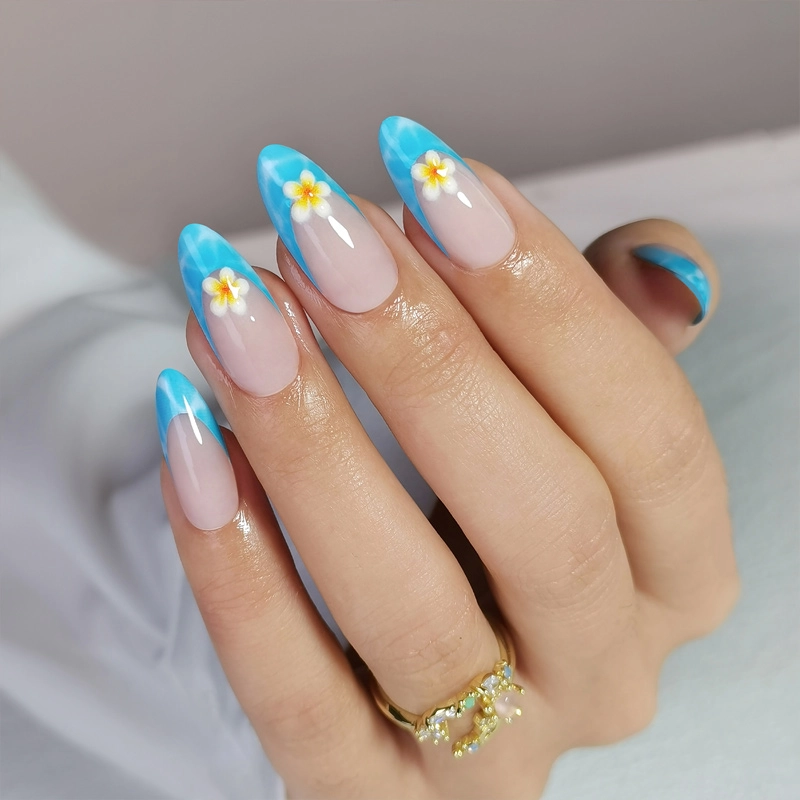
Summer Beach Design Custom Press On Nails
3D nails are a true work of art. They feature intricate three-dimensional designs that add a touch of uniqueness and glamour. Made from high-quality materials, they are durable and long-lasting. Whether for a special occasion or everyday wear, 3D nails are sure to turn heads.
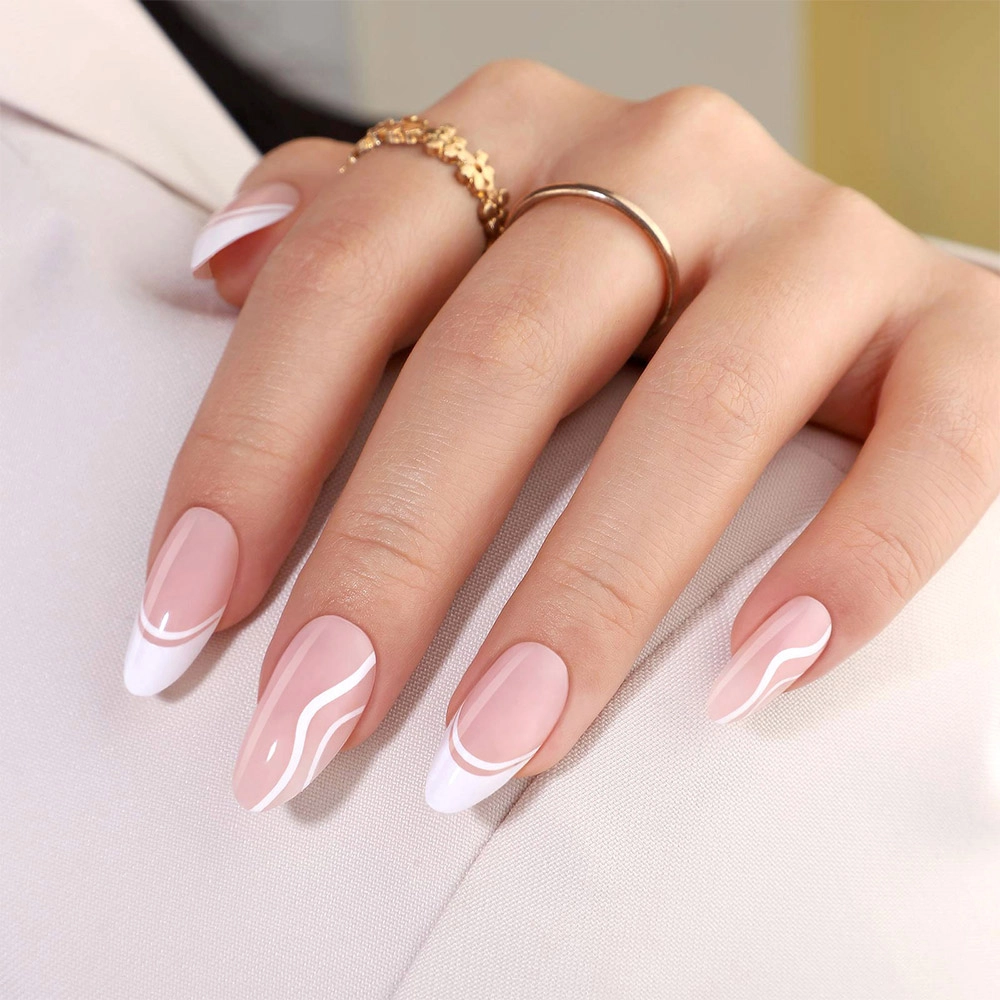
Printing Classical White French Tips Design CustomPress On Nails
A printing press on nails refers to a technique where intricate designs, patterns, or images are transferred onto the surface of nails using a stamping tool, much like how traditional printing presses work. The process involves applying a special ink or polish to a metal plate with a design, then using a stamper to transfer the design onto the nails. It's a quick and precise way to create detailed nail art.
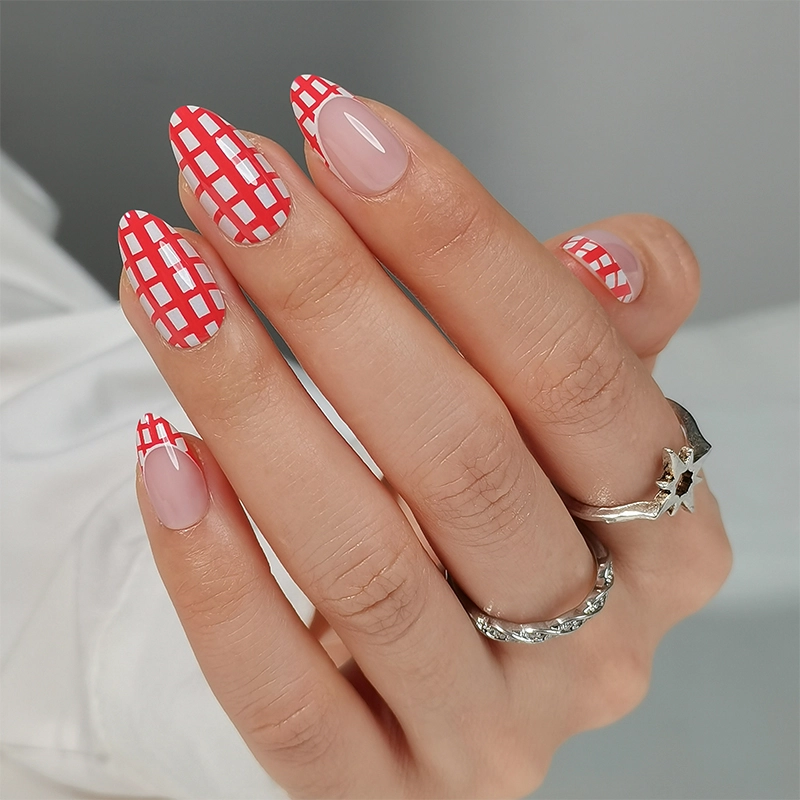
Wholesales Red French Nails Tips Checkered Soft Gel Nail Tips 32 Piece Set
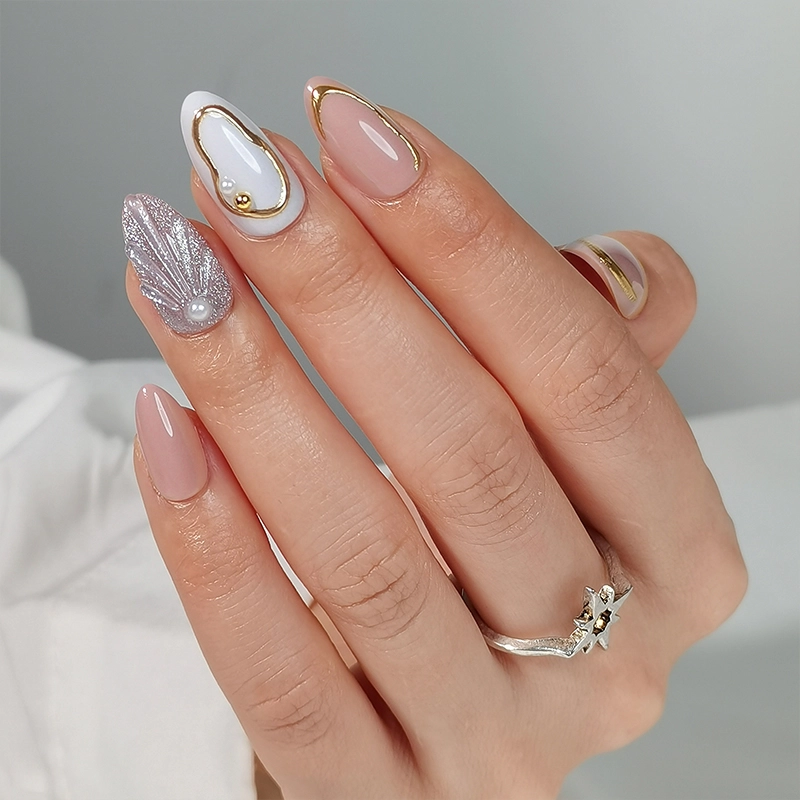
Wholesales Elegant Shell Inspired Soft Gel Wearable Nails for Seasonal Celebrations
Copyright © 2025 - XIANXING BEAUTY All Rights Reserved. Sitemap
Facebook
YouTube
Instagram
LinkedIn