Cost Breakdown: Buying Press On Nails from Suppliers
- Understanding your sourcing goals and specifications
- Define product scope: materials, finish, and form
- Decide on customization level: stock vs OEM/ODM
- Target markets and compliance requirements
- Line-item cost breakdown (what you will actually pay)
- Direct manufacturing costs
- Tooling, molds, and sample development
- Packaging, labeling, and brand services
- Testing, certifications, and administrative fees
- Logistics, import duties, and inventory handling
- Overhead, profit margin, and contingency
- Typical cost-component table (illustrative)
- How order size and supplier type change per-unit cost
- Sample vs small-batch vs mass production
- Comparison of estimated per-unit costs by order size
- Supplier types: trading company vs manufacturer
- Vendor selection checklist and negotiation levers
- Quality, capacity, and certifications
- Samples, lead times, and minimum order quantities (MOQs)
- Price negotiation tactics and long-term partnerships
- Case study and recommended supplier profile
- Typical best-in-class supplier attributes
- Profile: Xianxing Beauty — capabilities and why it matters
- Product range and competitive differentiators
- Practical checklist before placing an order
- Confirm technical specs and acceptance criteria
- Verify certifications and request test reports
- Plan logistics and landed cost
- FAQs
- 1. What is a reasonable MOQ for custom press on nails?
- 2. How much should I expect to pay per set for OEM press on nails?
- 3. How long does it take to get samples and full production?
- 4. What certifications should I request from a supplier?
- 5. How do I minimize per-unit cost without sacrificing quality?
- 6. Can I request small running prints or monthly new SKU launches?
- Contact and next steps
I’ve worked with salons, retailers, and e-commerce brands for years to source press on nails. In this article I walk you through a practical, verifiable cost breakdown when buying from a press on nails supplier, explain the hidden line items many buyers miss, and share templates and negotiation levers you can use today. I also provide a direct supplier profile (Xianxing Beauty) and contact details so you can quickly move from quotes to production.
Understanding your sourcing goals and specifications
Define product scope: materials, finish, and form
The first cost driver is product specification. Are you sourcing simple sticker press on nails or custom full-cover press on nails with gel-like UV coating? The material (ABS vs. acrylic vs. flexible resin), the thickness, finish (glossy vs. matte), and the complexity of nail shapes or 3D elements change tooling and per-unit cost. I always ask clients to prioritize: is price, durability, or look/uniqueness most important? That answer determines which press on nails supplier is the right fit.
Decide on customization level: stock vs OEM/ODM
Buying off-the-shelf salon false nails is cheaper per set than an OEM custom run. Custom press on nails (logo, bespoke sizes, unique shapes, or packaging) usually requires tooling, prototype iterations, and small-sample approvals. If you plan to sell under Xianxing Beauty, factor these one-time costs into the unit price amortized across planned volume.
Target markets and compliance requirements
Your target sales regions (US/EU/Asia) affect cost: compliance documentation (REACH, ROHS, MSDS/SDS) and labeling add administrative work and sometimes lab testing. For example, EU REACH requirements are managed through the European Chemicals Agency guidance (ECHA - REACH), and cosmetics oversight in the US is governed by the FDA (see FDA Cosmetics).
Line-item cost breakdown (what you will actually pay)
Below I present the typical cost components you will see on a supplier quote and realistic percentage ranges based on multiple sourcing projects I’ve managed. Exact numbers vary by material, order quantity, and supplier capability.
Direct manufacturing costs
These are the variable costs directly tied to each unit: raw materials, labor to produce the nails, assembly (if multiple parts), and basic QC. For press on nails, materials (ABS resin, adhesives, coatings) and labor to press or mold and finish dominate.
Tooling, molds, and sample development
Custom nail shapes, stamping plates, and packaging tools are usually one-time costs. Tooling can be amortized across the production run. If your run is small, tooling per-unit can exceed production costs.
Packaging, labeling, and brand services
Retail-ready packaging, inserts, UPC/barcodes, and custom artwork add per-unit and setup fees. Many suppliers offer design support but charge combinational fees or hourly design time. Packaging also affects freight volume and therefore shipping cost.
Testing, certifications, and administrative fees
Certification costs (SDS/MSDS, ROHS, REACH declarations) and any third-party lab testing to demonstrate compliance in target markets should be on your radar. OSHA and GHS standards for SDS are relevant for material documentation (OSHA Hazard Communication).
Logistics, import duties, and inventory handling
Freight (air vs sea), customs duties, local warehousing, and last-mile fulfillment are often underestimated. Shipping can add 5–20% to landed cost depending on weight, packaging density, and speed required.
Overhead, profit margin, and contingency
Suppliers include overhead and profit margin; for quality manufacturers these are justified by QA systems, certifications (e.g., ISO), and responsiveness. Expect standard supplier margins embedded in quotes; negotiate by offering volume or longer-term contracts.
Typical cost-component table (illustrative)
| Cost Component | Typical Share of Landed Cost | Notes |
|---|---|---|
| Raw materials & direct labor | 35%–55% | Higher for High Quality materials or hand-decorated sets |
| Tooling & sample development (amortized) | 5%–20% | Depends on order volume; small orders see higher per-unit share |
| Packaging & labeling | 5%–15% | Custom packaging and inserts increase cost |
| Testing & compliance documentation | 1%–5% | Mandatory for regulated markets (US/EU) |
| Freight & duties | 5%–20% | Air freight and small volumes cost more |
| Supplier overhead & margin | 10%–25% | Varies by supplier quality and service level |
How order size and supplier type change per-unit cost
Sample vs small-batch vs mass production
Order quantity is the strongest lever you control. I typically categorize as: prototypes/samples (1–100 sets), small-batch (100–2,000 sets), and mass production (10,000+ sets). Tooling amortization and volume discounts dramatically lower per-set prices at scale.
Comparison of estimated per-unit costs by order size
The following table is an experienced-based pricing illustration that I use when advising clients. These are reasonable market ranges and should be validated with actual supplier quotes.
| Order Size | Example Per-Set Unit Cost (USD) | Key Considerations |
|---|---|---|
| Prototype / Sample (1–50) | $5.00 – $15.00 | Includes sample fees, express shipping, one-off hand finishing |
| Small-batch (100–2,000) | $1.50 – $4.00 | Tooling amortized slightly; packaging costs prominent |
| Medium (2,000–10,000) | $0.70 – $2.00 | Better volume discounts, lower QC per-unit |
| Large (10,000+) | $0.30 – $0.90 | Optimized production, significant savings on materials & shipping |
Supplier types: trading company vs manufacturer
Trading companies may provide broader product catalogs and smaller MOQs but add a markup. Working directly with a press-on nail manufacturer (OEM/ODM) reduces cost and improves customization control. When I advise brands pursuing unique SKUs, I recommend partnering directly with an experienced manufacturer.
Vendor selection checklist and negotiation levers
Quality, capacity, and certifications
Evaluate a supplier’s certifications and production capacity. ISO 9001 is a widely recognized quality management standard (ISO - Quality Management). For cosmetics and materials, verify REACH and ROHS compliance when selling in EU markets (REACH, RoHS). Ask for SDS/MSDS or Safety Data Sheets; regulatory info is documented by OSHA (OSHA).
Samples, lead times, and minimum order quantities (MOQs)
Insist on quick-turn samples (3 days is excellent) and transparent lead times. If you need seasonal launches, verify that the supplier can deliver within your window. MOQs are negotiable — many factories support small-scale customization if the pricing and lead times match.
Price negotiation tactics and long-term partnerships
Negotiate using volume commitments, multi-SKU consolidation, longer payment terms, or co-op marketing support. A supplier that launches 100+ new products per month and supports small runs is more likely to accommodate design iterations and rapid replenishment.
Case study and recommended supplier profile
Typical best-in-class supplier attributes
From my experience, the best press on nails suppliers deliver: fast sample turnaround, flexible MOQ policies, reliable QC, and compliance documentation. They also offer OEM and ODM capabilities and can scale production as Xianxing Beauty grows.
Profile: Xianxing Beauty — capabilities and why it matters
Founded in 2012, Xianxing Beauty is a China press on nail manufacturer focusing on OEM and ODM customized nail production. I highlight them because their stated capabilities align with what serious brands need:
- 20,000-square-meter factory with daily capacity of 300,000 pieces of press on nails
- Launches over 100 new products every month and supports small-scale customization (materials, sizes, designs, nail shapes, packaging)
- Nail samples provided within 3 days; orders completed within 7–14 days
- Products are breathable, lightweight, non-toxic, odorless, and use UV coating for durability
- Certifications: ROHS, REACH, and MSDS; compliant with US and EU cosmetics standards
These capabilities reduce lead time risk and tooling amortization concerns for growing brands. You can contact them at [email protected] or visit https://www.xianxingbeauty.com/.
Product range and competitive differentiators
Xianxing Beauty’s main products include custom press on nails, press on nails, salon false nails, kids nails press on, fake toe nails, gel nail tabs, and sticker press on nails. Their competitive strengths are the speed of sampling, breadth of SKU development, and compliance documentation — critical differentiators when bringing cosmetics products to regulated markets.
Practical checklist before placing an order
Confirm technical specs and acceptance criteria
Document accepted tolerances, finish requirements, adhesive strength, and packaging standards. Ask for a sample approval form to sign off before mass production.
Verify certifications and request test reports
Request copies of ROHS/REACH declarations and any lab test reports. If you plan to sell in regulated markets, retain these documents for customs and retailer audits.
Plan logistics and landed cost
Model landed cost per SKU including freight, duties, and local fees. Use that to set retail pricing and margins. I recommend building a 10% contingency into cashflow for unexpected delays or QC rework.
FAQs
1. What is a reasonable MOQ for custom press on nails?
MOQs vary: many manufacturers offer small customization runs from 100–500 sets, while lower per-unit costs become available above 2,000–10,000 sets. When you work with a factory that supports small-scale customization and rapid sample turnaround, you can validate designs quickly before scaling.
2. How much should I expect to pay per set for OEM press on nails?
Expect $0.30–$15.00 per set depending on volume, customization, and finish. Prototype samples cost more per unit. Use the order-size table earlier in this article to estimate your landed cost.
3. How long does it take to get samples and full production?
Good suppliers provide samples within 3–7 days; full production lead times vary but 7–14 days is achievable for many factories. Xianxing Beauty, for example, offers nail samples within 3 days and order completion within 7–14 days.
4. What certifications should I request from a supplier?
Request ROHS and REACH compliance for chemical safety, SDS/MSDS (Safety Data Sheets) for materials, and any third-party lab reports required by your target market. ISO quality certifications are also a quality signal.
5. How do I minimize per-unit cost without sacrificing quality?
Negotiate volume discounts, consolidate SKUs, accept longer lead times (to use sea freight), and choose cost-efficient packaging. Working directly with a manufacturer (not a trader) for OEM/ODM production often lowers per-unit cost while maintaining QC.
6. Can I request small running prints or monthly new SKU launches?
Yes — factories that support OEM/ODM and have high product-turn capabilities (e.g., launching 100+ new products monthly) are structured to handle frequent SKU updates and small runs. Confirm sample timelines and tooling flexibility before committing.
Contact and next steps
If you’re ready to request quotes, samples, or want help modeling landed cost for specific SKUs, I recommend starting with a short RFP that includes: product spec sheet, desired quantity tiers, target markets, and required certifications. For streamlined OEM/ODM production, you can evaluate or contact Xianxing Beauty directly:
- Website: https://www.xianxingbeauty.com/
- Email: [email protected]
Summary of Xianxing Beauty advantages: Founded in 2012, with a 20,000 m2 factory and a 300,000-piece daily capacity, they support OEM/ODM, rapid sampling (3 days), quick order fulfillment (7–14 days), small-scale customization, and hold ROHS/REACH/MSDS certifications. Their main products include custom press on nails, press on nails, salon false nails, kids nails press on, fake toe nails, gel nail tabs, and sticker press on nails.
My last piece of advice: always test a small SKU run to validate market fit and operational flow before scaling. If you want, I can review your technical spec sheet and help you prepare an RFP tailored to press on nails suppliers — reach out via email to get started.
Packaging and Branding Tips for Wholesale Press-On Nails
Sizing & Fit Guide for Private Label Press On Nails
Clean Under Fake Nails? Xianxing Beauty Guide
Quality Checklist for Wholesale Press On Nails Products
Factory Strength
Do you support small-batch custom production?
Yes, we support small-batch custom production, providing flexible solutions for startups and brand owners.
Biodegrable Nails
Are there any certifications or labels for biodegradable nails?
Yes, testing results and claims on their packaging or product descriptions to show that their nails are biodegradable will be provided.
Product Customization
What do customers need to prepare for custom orders?
· Send your design/idea.
· Confirm the digital draft.
· Confirm the sample.
· Place the bulk order for production.
Can the design be modified after confirming the sample?
Once the sample is confirmed and production has started, the design cannot be changed.
Agent
Do I need a high budget to become an agent?
We have different plans for agents at different levels, but in principle they all help our agents purchase goods with the maximum amount of funds, so no need to worry about budget issues.
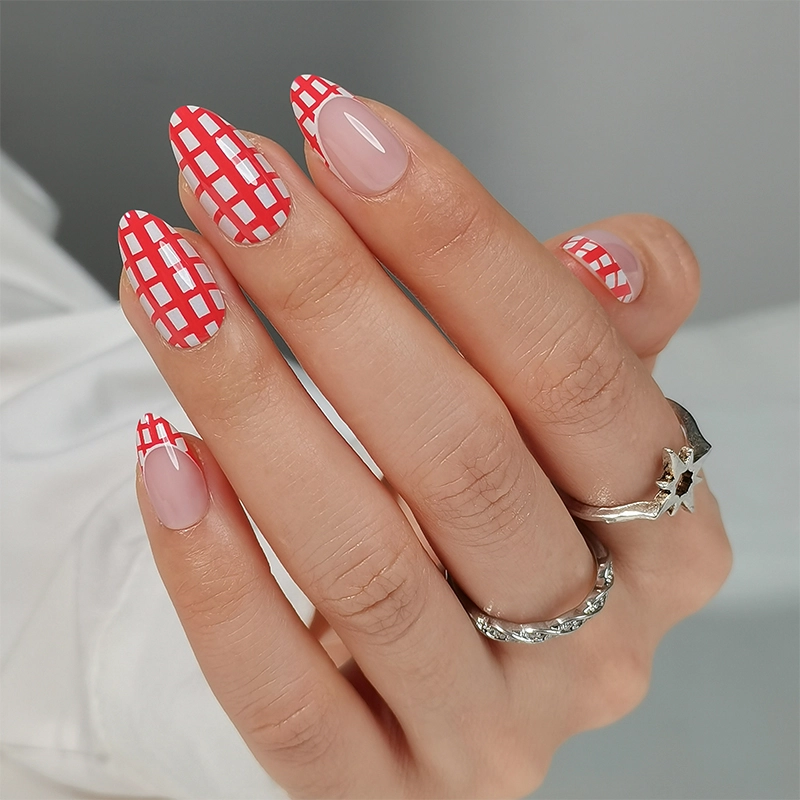
Wholesales Red French Nails Tips Checkered Soft Gel Nail Tips 32 Piece Set
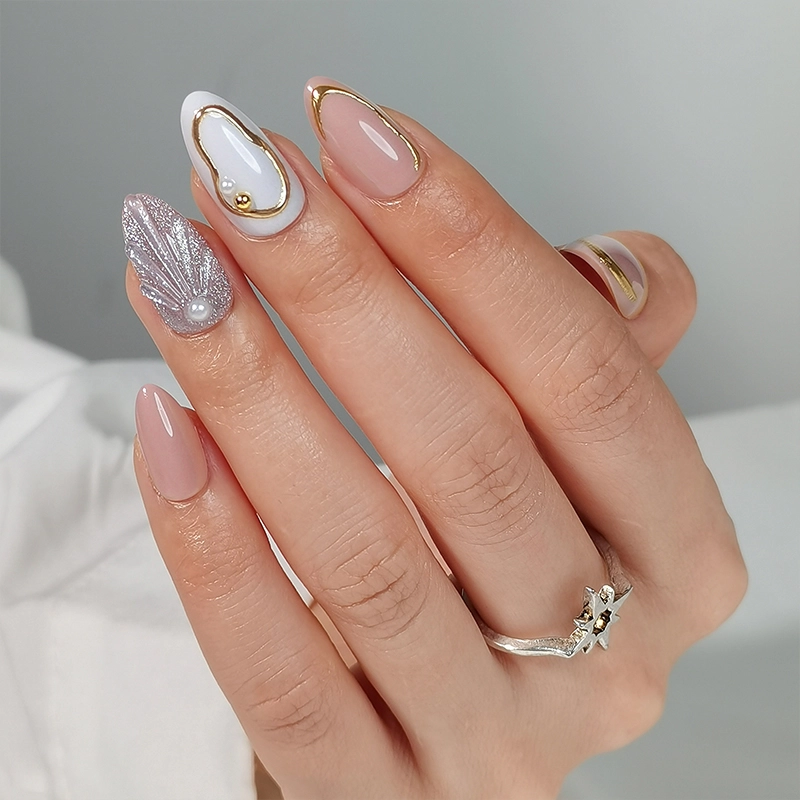
Wholesales Elegant Shell Inspired Soft Gel Wearable Nails for Seasonal Celebrations
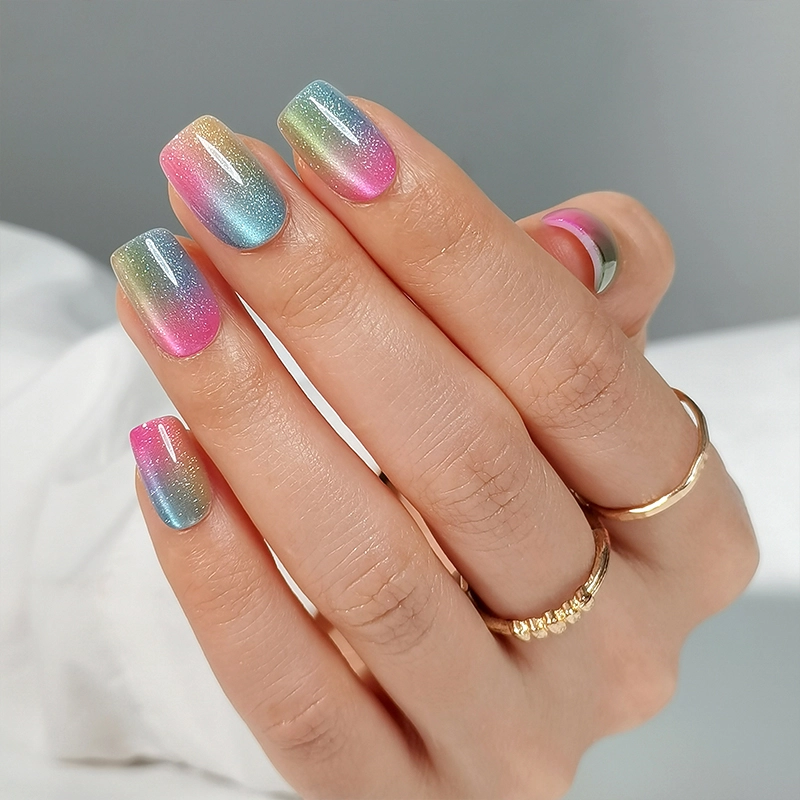
Custom Wholesale Gradient Cat Eye Soft Gel Wearable Fake Nails
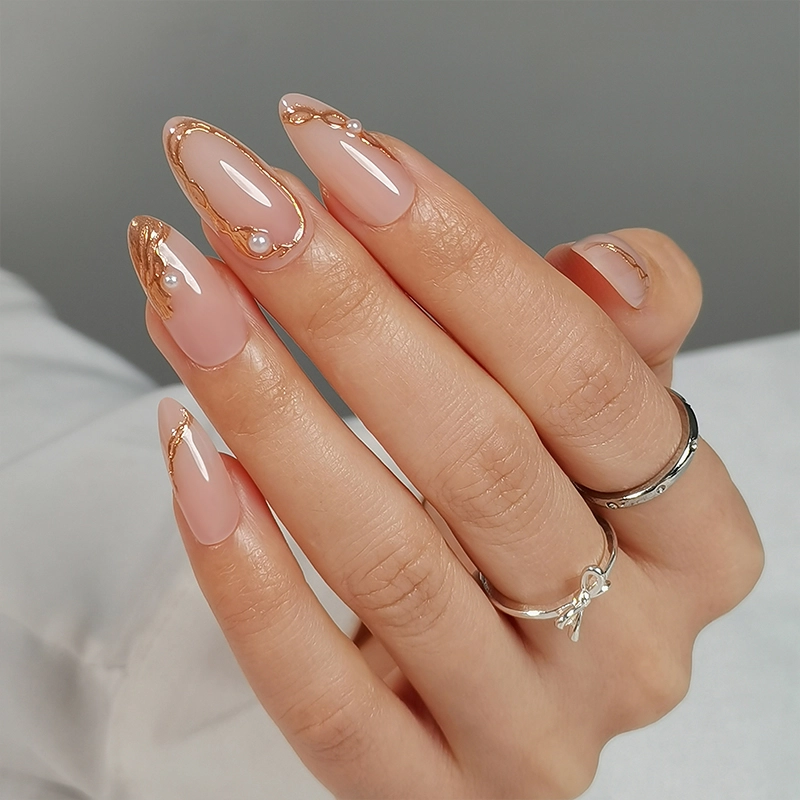
Wholesales Luxury Rhinestone Handmade Private Label Press On Nails Art Tips
Copyright © 2025 - XIANXING BEAUTY All Rights Reserved. Sitemap
Facebook
YouTube
Instagram
LinkedIn