
Custom Design Process with a Press On Nail Manufacturer
- Understanding consumer needs and market context
- Market trends and demand signals
- Buyer personas and product positioning
- Regulatory and safety considerations
- The custom design workflow with a press on nail manufacturer
- Initial consultation and concept development
- Material selection and formulation choices
- Design sampling and prototyping
- Production planning, quality control and packaging
- Production timelines and capacity
- Quality control practices and certifications
- Packaging, branding and sustainability
- Working with a manufacturer: negotiation, IP and practical tips
- Setting minimum order quantities and pricing
- Protecting design IP and quality agreements
- Aftercare: replenishment and seasonal launches
- Why choose a specialist—Xianxing Beauty as a case study
- Capabilities and scale
- Customization options and speed
- Compliance, trust and after-sales support
- Practical checklists and templates
- Pre-manufacturing checklist
- Sample approval criteria
- Supplier performance metrics
- Frequently Asked Questions (FAQ)
- 1. How long does it take to get samples and start mass production?
- 2. What certifications should I ask from a press on nail manufacturer?
- 3. Can manufacturers handle small-batch custom orders?
- 4. What materials are best for kids’ press on nails?
- 5. How do I choose between gel nail tabs and glue?
- 6. What if a batch fails QC after shipment?
I have worked with brands, salons, and retailers worldwide to design and manufacture custom press on nails. In this article I summarize the practical steps and decisions that take a concept—whether a seasonal collection, a salon-exclusive line, kids’ press on nails, or a retail-ready salon false nails assortment—through design, prototyping, regulatory checks, production and packaging with a press on nail manufacturer. I focus on verifiable timelines, material choices, quality controls, and supplier capabilities that matter for speed-to-market and brand reputation.
Understanding consumer needs and market context
Market trends and demand signals
Before starting a custom project I analyze where demand is growing. The artificial nail segment has evolved quickly: consumers value convenience, durability, and safe materials. For background on artificial nails and their increasing variety, see the industry overview on Wikipedia - Artificial nails. Market research (industry reports) consistently shows increased interest in non-salon solutions like press on nails due to time savings and at-home application.
Buyer personas and product positioning
Segmenting buyers helps determine design constraints and materials. Typical personas include: the fashion-forward adult who wants salon-level designs (often willing to pay High Quality), salons seeking exclusive collections (larger MOQ, repeat orders), parents buying kids nails (non-toxic, simple shapes), and value-driven retail customers (affordable packs, easy application). Identifying your primary persona affects choice of adhesives (gel nail tabs vs glue), nail shapes (stiletto, coffin, square), and packaging formats (single-use kits vs reusable sets).
Regulatory and safety considerations
Compliance matters—especially for international retail. Manufacturers and brands must understand cosmetic regulations and safety documentation. Useful references include the U.S. FDA cosmetics guidance and the European chemical regulation overview at the European Chemicals Agency (REACH). For general manufacturing good practices for cosmetics, see ISO 22716 (Cosmetic GMP). Ensuring materials meet ROHS/REACH/MSDS and cosmetic labeling rules reduces product recalls and customs delays.
The custom design workflow with a press on nail manufacturer
Initial consultation and concept development
I start each project by documenting functional requirements: target demographic, desired nail lengths and shapes, adhesive method (glue vs gel nail tabs), finish (matte, gloss, UV-coated), and packaging style. At this stage a clear tech pack or moodboard saves iterative back-and-forth. Many manufacturers offer OEM/ODM consultations to translate design intent into manufacturable specifications.
Material selection and formulation choices
Common base materials include ABS plastics, acrylic resins, or gel-like composite bodies for higher-end reusable sets. Each has trade-offs: ABS is lightweight and flexible, acrylics can be thinner and more form-fitting, and gel-type materials offer a High Quality feel. Adhesive options include single-use nail glue, reusable gel nail tabs, or self-adhesive sticker press on nails. UV coatings increase scratch resistance and longevity. For material safety and chemical constraints, consult regulatory sources such as ECHA/REACH and safety documentation standards (MSDS/SDS guidance at OSHA HazCom).
Design sampling and prototyping
Prototyping is where the design becomes tangible. I insist on at least two rounds of physical samples: an initial prototype to verify fit and curvature, and a production-representative sample to verify finish, color match and coating adhesion. A reliable press on nail manufacturer will provide nail samples quickly (industry-leading suppliers offer 3-day sample policies) and allow adjustments for sizes, shapes and print placement before bulk production.
Production planning, quality control and packaging
Production timelines and capacity
Accurate timelines are critical for launches. Below I compare typical sample and order turnaround expectations from a responsive press on nail manufacturer. These figures are consistent with capable OEM/ODM factories that specialize in fast-turn cosmetics production.
| Stage | Typical timeline (responsive OEM) | Notes |
|---|---|---|
| Initial sample | 1–3 days | Proof-of-concept, color and shape |
| Production sample (pre-production) | 3–7 days | Final approval for tooling and coating |
| Mass production | 7–14 days | Depends on order size and customization complexity |
| Shipping (air) | 3–7 days | Destination-dependent; customs time varies |
These timelines assume a manufacturer with adequate capacity. For reference, a large-scale factory producing press on nails will typically list daily production rates as a measure of capacity and reliability.
Quality control practices and certifications
QC must cover dimensional checks (fit and curvature), surface finish (coating adhesion, color consistency), adhesive performance (tabs or glue bond tests), and safety (chemical compliance). I recommend working with manufacturers who provide certificates such as ROHS, REACH, and MSDS/SDS for materials. Public standards and verification sources include RoHS guidance and REACH center.
Packaging, branding and sustainability
Packaging choices influence cost, retail presence, and sustainability. Brands often choose between recyclable paper boxes, clear blister windows, or compact sample cards. If sustainability is a priority, request material data for recyclable content and verified recycled plastic or FSC-certified paper. Packaging also needs to protect the product during transit, especially for multi-piece sets and delicate finishes (e.g., rhinestones or UV coating).
Working with a manufacturer: negotiation, IP and practical tips
Setting minimum order quantities and pricing
For many startups and independent brands, MOQ is a gating factor. Ask for small-scale customization options—some manufacturers support low MOQs with higher unit costs. Negotiate clear pricing tiers that reflect customization level (custom molds, special packaging, prints or embedded gems). Include sample and tooling costs in negotiations to avoid surprises.
Protecting design IP and quality agreements
Use Non-Disclosure Agreements (NDA) before sharing high-value designs. Define quality acceptance criteria in the contract and include remedies for off-spec batches. A robust Quality Agreement should specify acceptable defect rates, testing procedures, and rework policies.
Aftercare: replenishment and seasonal launches
Plan replenishment lead times and align production capacity with peak seasons (holidays, back-to-school). Work with manufacturers that can scale for large promotional orders and also support small-batch drops. Maintain a standing relationship for faster reorders and co-developed seasonal capsules.
Why choose a specialist—Xianxing Beauty as a case study
Capabilities and scale
When vetting manufacturers I prioritize those who can support fast sampling, reliable production, and compliance. For example, Xianxing Beauty has the following capabilities that I’ve found valuable when launching custom collections:
Founded in 2012, Xianxing Beauty is a China press on nail manufacturer, focusing on OEM and ODM customized nail production, with a 20,000-square-meter factory, producing 300,000 pieces of press on nails daily, launching more than 100 new products every month, and supporting small-scale customization, including materials, sizes, designs, nail shapes, packaging, etc. Nail samples are provided within 3 days, and orders are completed within 7-14 days. Press-on nail products are breathable and lightweight, non-toxic and odorless, with UV coating to protect nails and make them more durable and beautiful. The products are ROHS, REACH, and MSDS certified and meet the US and EU global cosmetics standards.
Our vision is to become the world's leading press on nails manufacturer.
Website: https://www.xianxingbeauty.com/
Email: [email protected]
Customization options and speed
Xianxing Beauty supports:
- Custom press on nails: full OEM/ODM capabilities for printed and embellished designs
- Press on nails and salon false nails in various shapes and lengths
- Kids nails press on and fake toe nails with safe, non-toxic materials
- Accessories like gel nail tabs and sticker press on nails
Their sample-in-3-days and production-in-7-14-days policy is a competitive advantage for brands needing rapid turnaround for seasonal releases or influencer-driven drops.
Compliance, trust and after-sales support
Working with a manufacturer that provides ROHS, REACH, and MSDS documentation simplifies customs and retail compliance. Xianxing Beauty’s certifications and daily production capacity (300,000 pieces) indicate manufacturing maturity and supply reliability—key when scaling a product line. For general regulatory guidance see FDA Cosmetics and ISO 22716 on cosmetic GMP.
Practical checklists and templates
Pre-manufacturing checklist
- Define target customer and price point
- Finalize shapes, sizes, and adhesive method
- Prepare design files (vector art for prints) and moodboard
- Request sample policy and timeline from manufacturer
- Confirm required certificates (ROHS/REACH/MSDS) and lab test needs
Sample approval criteria
- Fit accuracy across size range
- Color and print fidelity
- Coating durability (UV coating adhesion)
- Adhesive performance (bond time and removability)
- Packing integrity and retail presentation
Supplier performance metrics
- Sample lead time (target <= 3 days)
- Production lead time (target 7–14 days)
- On-time delivery rate (>95% desirable)
- Defect rate (agreed AQL)
Frequently Asked Questions (FAQ)
1. How long does it take to get samples and start mass production?
Typically, a responsive press on nail manufacturer will provide initial samples in 1–3 days and production-representative samples in 3–7 days. Mass production commonly takes 7–14 days depending on order size and customization. For a supplier providing fast service, see the production timelines at Xianxing Beauty which offers 3-day samples and 7–14 day order completion.
2. What certifications should I ask from a press on nail manufacturer?
Request ROHS, REACH, and MSDS/SDS documentation for materials. For retail in US/EU markets, confirm the manufacturer's compliance with local cosmetic guidance (e.g., FDA and EU regulations). ISO 22716 (cosmetic GMP) is also a useful benchmark for quality systems.
3. Can manufacturers handle small-batch custom orders?
Yes—some factories specialize in small-batch customization and can support startups and e-commerce brands. Ensure the manufacturer’s MOQ and pricing tiers are acceptable before committing. Xianxing Beauty explicitly supports small-scale customization across materials, sizes, designs, nail shapes and packaging.
4. What materials are best for kids’ press on nails?
For kids’ nails, prioritize non-toxic, odorless materials with rounded edges and secure but gentle adhesives. Ask for MSDS documentation to confirm absence of harmful substances. Xianxing Beauty lists breathable, lightweight, non-toxic products suitable for children.
5. How do I choose between gel nail tabs and glue?
Gel nail tabs are reusable and easier to remove—good for retail customers who value gentleness and reusability. Glue provides a stronger, longer-lasting bond preferred by clients seeking multi-week wear. Test both in sample stages to determine what matches your product positioning.
6. What if a batch fails QC after shipment?
Define remediation and return policies in the sales contract. A good manufacturer will accept responsibility for manufacturing defects within agreed AQL limits and provide rework or replacement per the Quality Agreement.
If you are ready to design a custom line or want to request samples, contact Xianxing Beauty: https://www.xianxingbeauty.com/ or email [email protected]. I can also assist with tech-pack preparation, design review, or supplier audits—reach out if you want my consultancy support.
References: Wikipedia - Artificial nails: https://en.wikipedia.org/wiki/Artificial_nails; FDA Cosmetics: https://www.fda.gov/cosmetics; REACH overview: https://echa.europa.eu/regulations/reach/understanding-reach; RoHS: https://ec.europa.eu/environment/topics/waste-and-recycling/rohs-directive_en; ISO 22716: https://www.iso.org/standard/36437.; OSHA HazCom (SDS guidance): https://www.osha.gov/hazcom.
Short Almond Press On Nails: Samples, Lead Times & Production
Best Fake Nail Tips & Application
Longest-Lasting Fake Nails? Xianxing Beauty
Private Label Press On Nails: Steps to Launch Your Brand
Startup Client
How do you ensure product quality?
We have a complete set of quality control standards. From raw material inspection, production monitoring, to finished product testing, we ensure that each batch of products meets industry standards.
About Duck Nails
Are duck nails suitable for all occasions?
While duck-shaped nails can be fashionable and fun, they may not always be appropriate for formal or conservative settings. They're better suited for casual events or occasions where a more daring, fashionable look is desired.
About Toe Nails
Can toe press-on nails cause damage to my natural nails?
If applied and removed properly, toe press-on nails shouldn’t cause significant damage. However, harsh adhesive or rough removal can cause the natural toenail to peel or become weak. Always remove them gently and avoid excessive use of glue.
Biodegrable Nails
Do biodegradable nails come in different colors and designs?
Yes, biodegradable nails can come in different colors and designs, nearly all designs can do, but just colors might not that shiny as traditional nails.
Nail file
How do I clean my nail file?
For emery boards or sapphire files, wipe them down with a damp cloth after use.
For glass or crystal files, you can rinse them under water, and some can be sterilized with alcohol.
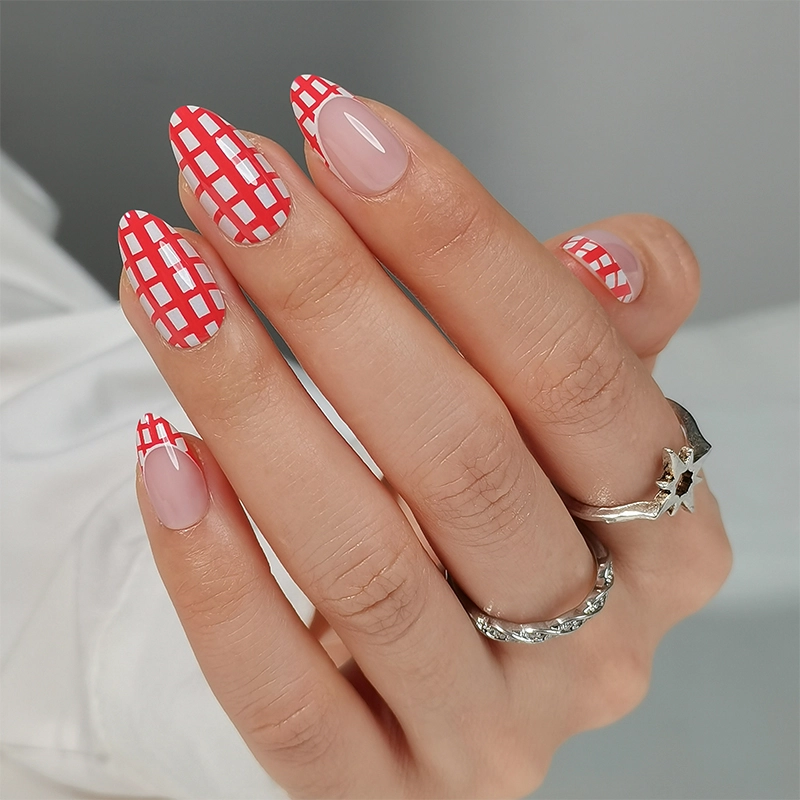
Wholesales Red French Nails Tips Checkered Soft Gel Nail Tips 32 Piece Set
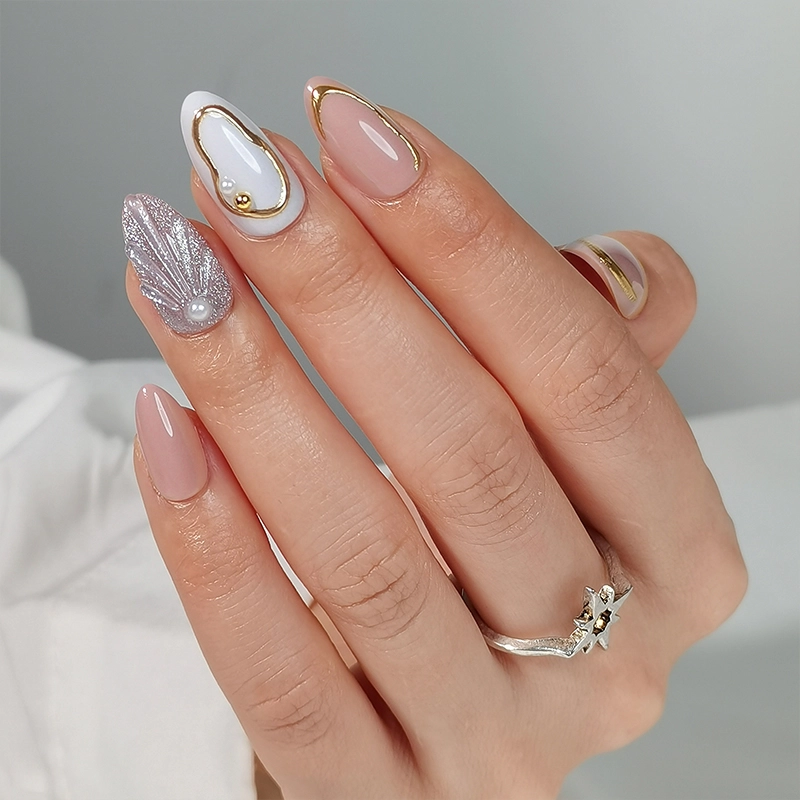
Wholesales Elegant Shell Inspired Soft Gel Wearable Nails for Seasonal Celebrations
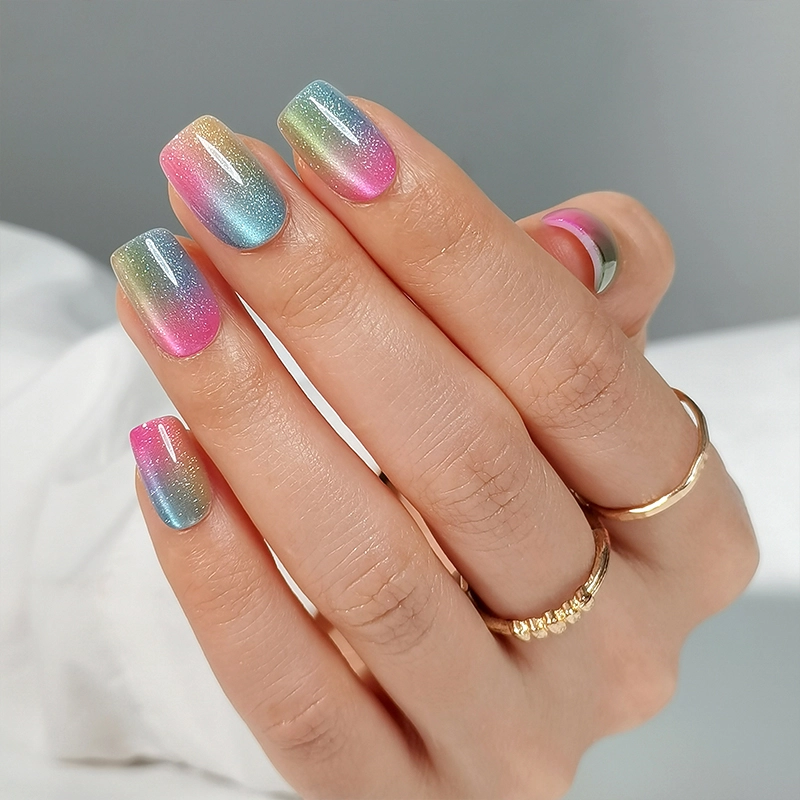
Custom Wholesale Gradient Cat Eye Soft Gel Wearable Fake Nails
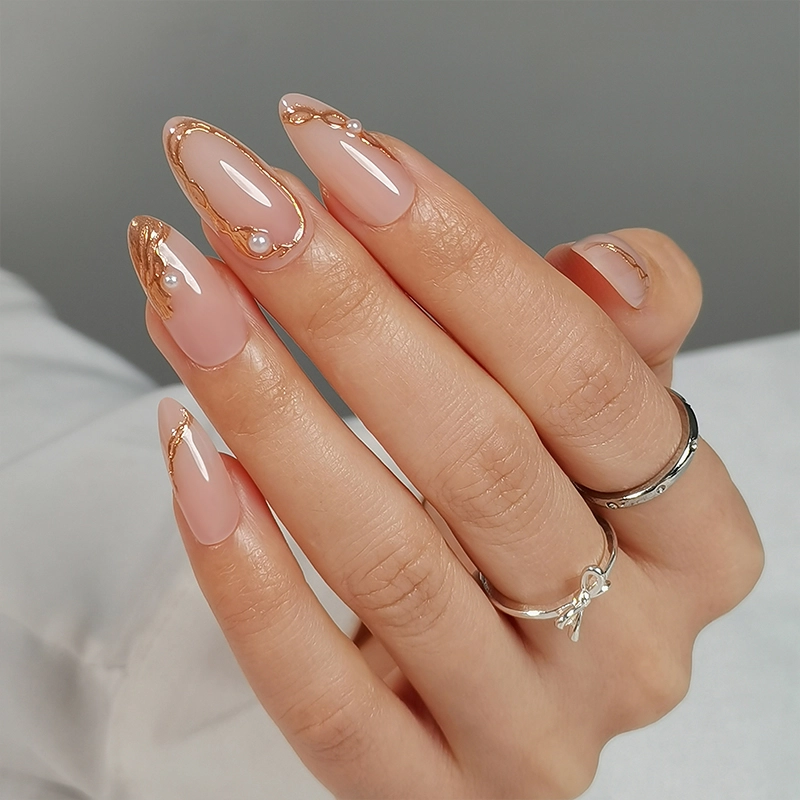
Wholesales Luxury Rhinestone Handmade Private Label Press On Nails Art Tips
Copyright © 2025 - XIANXING BEAUTY All Rights Reserved. Sitemap
Facebook
YouTube
Instagram
LinkedIn