
Custom Mold Making and Tooling for Unique Nail Shapes
- Why Mold Design Matters in Nail Manufacturing
- Functionality: fit, comfort, and wear time
- Production efficiency and consistency
- Materials and Methods for Custom Mold Making
- Common tooling materials and trade-offs
- Manufacturing methods: thermoforming, injection molding, and vacuum forming
- Design Considerations for Unique Nail Shapes
- Size gradation, curvature, and ergonomics
- Surface texture, decoration, and coating compatibility
- Tooling Workflow: From Concept to Production
- Step 1 — Prototyping and validation
- Step 2 — Final tooling and process validation
- Quality Control, Certifications, and Safety
- Quality control checkpoints
- Regulatory and safety standards
- Cost, Lead Time, and Scalability Considerations
- Cost drivers breakdown
- Lead times and rapid turnaround strategies
- Comparing Production Approaches: In-house vs. Contract Manufacturer
- Key differences and when to choose which
- Comparison table
- Case Study: Implementing Unique Shapes with Minimal Lead Time
- Approach and outcomes
- Lessons learned
- How Xianxing Beauty Supports Custom Press On Nails (OEM/ODM)
- Company overview and capabilities
- Product range and unique advantages
- Practical Checklist for Brands Creating Custom Press On Nails
- Pre-development
- Development and production
- Frequently Asked Questions (FAQ)
- 1. How long does it take to get a custom mold made for press-on nails?
- 2. What is the minimum order quantity (MOQ) for custom press on nails?
- 3. Which materials are safest and compliant for press-on nails?
- 4. Can I have my logo and custom packaging for press-on nails?
- 5. How do manufacturers control fit variability across sizes?
- 6. Are UV coatings necessary, and what do they do?
- Contact and Next Steps
- References
Why Mold Design Matters in Nail Manufacturing
Functionality: fit, comfort, and wear time
Custom press on nails begin with a mold that accurately reproduces the intended curvature, length, and cuticle-to-free-edge geometry. A well-designed mold ensures consistent fit across sizes, minimizes lifting, and supports the intended adhesion method (glue, gel tabs, or stickers). For brands that promise long wear times, controlled thickness and consistent surface finish created by precise tooling are mandatory.
Production efficiency and consistency
The tooling strategy directly affects cycle time, yield, and defect rates. Injection-molded or thermoformed tooling with multiple cavities can scale production; but poor gating, cooling, or draft design increases stuck parts and rejects. Investing in high-quality tooling reduces downstream finishing, saving labor and time per unit—crucial when producing thousands of sets daily.
Materials and Methods for Custom Mold Making
Common tooling materials and trade-offs
Tooling and molds for press-on nails commonly use three categories of materials: metals (aluminum or steel), engineered plastics (POM, acrylic), and silicone for prototyping. Each has trade-offs:
| Material | Advantages | Limitations |
|---|---|---|
| Aluminum (CNC) | Good thermal conductivity, durable, relatively fast to machine | Higher upfront cost than plastics; may require surface treatment for fine texture |
| Steel (EDM/CNC) | Highest durability, excellent for very large runs and fine detail | High cost and longer lead time |
| Silicone (prototypes) | Low cost, fast turnaround, excellent for form testing | Not durable for mass production |
| Engineered plastics | Lower cost tooling for small to medium runs | Less dimensional stability over time |
Choosing the right material depends on expected volume, budget, and the surface fidelity required for decorative finishes or UV coatings.
Manufacturing methods: thermoforming, injection molding, and vacuum forming
Thermoforming and vacuum forming are commonly used for flexible sheets and can be cost-effective for certain designs. Injection molding is preferred for high-volume, high-precision production because it supports complex geometries, multi-cavity molds, and repeatable thickness control. Understanding resin shrinkage, gate placement, and cooling channels is essential to prevent warping and to maintain consistent curvature.
Design Considerations for Unique Nail Shapes
Size gradation, curvature, and ergonomics
Designers must map out 10–24 sizes per SKU depending on the market (many brands offer 10–12 standard sizes). Custom sizing grids should be validated on biometric data—average nail bed widths by demographic—to improve fit and reduce returns. Curvature (base curve) should balance natural nail anatomy with intended visual effect; too flat or too curved affects adhesion.
Surface texture, decoration, and coating compatibility
Surface finish in the mold impacts how well decorations (glitter, foils) and UV topcoats adhere. Molds must be specified with the correct Ra surface roughness. For example, a slightly matte surface may hold lacquer better, while ultra-smooth surfaces produce glass-like shines but may reduce mechanical adhesion for gel tabs.
Tooling Workflow: From Concept to Production
Step 1 — Prototyping and validation
Start with rapid prototyping using SLA 3D-printed masters or silicone molds to validate shape, fit, and thickness. Fit tests should include a sample group representing target demographic nail shapes. Iterations at this stage avoid costly revisions in metal tooling.
Step 2 — Final tooling and process validation
Once prototypes are approved, invest in production tooling (CNC aluminum or steel). Validate cycle times, cooling efficiency, and ejector systems. Establish first-article inspection (FAI) criteria: dimensional tolerances, surface finish, and adhesion test results. Run pilot batches to confirm paint/foil/UV topcoat adhesion, and perform wear simulations (e.g., abrasion, bending) to estimate field durability.
Quality Control, Certifications, and Safety
Quality control checkpoints
Implement QC at mold approval, incoming material inspection, in-line production checks (thickness, curvature, surface defects), and final inspection (packaging, labeling). A statistical process control (SPC) approach helps detect drift early. Document retention helps with traceability when handling recalls or customer complaints.
Regulatory and safety standards
Press-on nail materials must comply with global cosmetics and chemical safety regulations where sold. Commonly referenced standards and certifications include REACH and RoHS for restricted substances, MSDS documentation for safety data, and adherence to cosmetic ingredient regulations in target markets (US FDA guidance, EU Cosmetics Regulation). Listing these certifications on product pages builds trust and can be essential for retail partnerships.
Cost, Lead Time, and Scalability Considerations
Cost drivers breakdown
Major cost factors include tooling (initial), per-unit materials, labor (hand-finishing and decoration), packaging, and regulatory testing. Smaller runs benefit from plastic or temporary tools; scalable brands invest in steel molds to reduce per-unit costs over high volumes.
Lead times and rapid turnaround strategies
Typical lead times: prototypes (3 days–2 weeks), aluminum tooling (2–6 weeks), steel tooling (4–12 weeks) depending on complexity. Manufacturers that support small-batch customization and fast sampling can accelerate market testing. Design-for-manufacturability (DFM) reduces iteration count and compresses the development schedule.
Comparing Production Approaches: In-house vs. Contract Manufacturer
Key differences and when to choose which
In-house production offers maximum control over IP, tooling, and QC, but requires capital for molds and equipment. Contract manufacturers provide expertise, scale, and often faster setup for brands with limited capital. For many brands, a hybrid approach—owning some tooling designs while outsourcing high-volume runs—is practical.
Comparison table
| Aspect | In-house | Contract Manufacturer |
|---|---|---|
| Upfront investment | High (tooling, equipment) | Low to medium (lead times & MOQ dependent) |
| Scalability | Limited unless high investment | High (multiple lines, multi-cavity molds) |
| Control over IP | High | Variable—requires strong NDA and contracts |
| Speed to market | Medium | Often faster for small runs if partner supports rapid sampling |
Case Study: Implementing Unique Shapes with Minimal Lead Time
Approach and outcomes
A boutique brand wanted an almond-plus-sculpt shape with embedded metallic flakes and a tapered base curve for longer wear. Using 3D scanning of sample nails and SLA prototyping, the manufacturer validated fit across 12 sizes within 5 days. Rapid aluminum tooling with two cavities enabled a pilot run of 5,000 sets within three weeks. Iterative surface texture adjustments improved topcoat adhesion and reduced post-production trimming by 30%.
Lessons learned
Key takeaways: validate on human subjects early; specify surface finish tolerances in tooling; and plan finish processes concurrently with tool design to minimize rework.
How Xianxing Beauty Supports Custom Press On Nails (OEM/ODM)
Company overview and capabilities
Founded in 2012, Xianxing Beauty is a China press on nail manufacturer, focusing on OEM and ODM customized nail production, with a 20,000-square-meter factory, producing 300,000 pieces of press on nails daily, launching more than 100 new products every month, and supporting small-scale customization, including materials, sizes, designs, nail shapes, packaging, etc. Nail samples are provided within 3 days, and orders are completed within 7-14 days. Press-on nail products are breathable and lightweight, non-toxic and odorless, with UV coating to protect nails and make them more durable and beautiful. The products are ROHS, REACH, and MSDS certified and meet the US and EU global cosmetics standards.
Our vision is to become the world's leading press on nails manufacturer. Our website is https://www.xianxingbeauty.com/.
Product range and unique advantages
Xianxing Beauty specializes in custom press on nails and related products including Press on nails, salon false nails, kids nails press on, fake toe nails, gel nail tabs, and sticker press on nails. Competitive advantages include:
- Fast sample turnaround (within 3 days) and short order completion (7–14 days).
- High daily output (300,000 pieces/day) enabling rapid scaling for launches.
- Comprehensive customization across materials, sizes, designs, shapes, and packaging—suitable for brands testing small-batch SKUs.
- Certifications (ROHS, REACH, MSDS) and compliance with US and EU cosmetics standards, supporting global retail channels.
- Product features: breathable, lightweight, non-toxic, UV-coated for durability.
Practical Checklist for Brands Creating Custom Press On Nails
Pre-development
- Define target customer and sizing matrix.
- Decide on adhesion method (glue, tabs, or stickers) and test compatibility with your finishes.
- Set performance targets: wear time, flexibility, and topcoat durability.
Development and production
- Prototype (3–7 days) and run human fit tests.
- Select tooling material based on expected volume.
- Specify QC metrics and packaging requirements before mass production.
Frequently Asked Questions (FAQ)
1. How long does it take to get a custom mold made for press-on nails?
Prototype molds or 3D-printed masters can be ready in 3–7 days. Aluminum production molds commonly take 2–6 weeks, while steel molds can require 4–12 weeks depending on complexity. Using manufacturers that offer rapid sampling (e.g., 3-day samples) shortens development cycles.
2. What is the minimum order quantity (MOQ) for custom press on nails?
MOQ varies by manufacturer and tooling approach. Some suppliers support small-batch customization with low MOQs, especially if using temporary or plastic tooling. High-volume runs typically leverage metal molds with higher MOQ but lower per-unit cost.
3. Which materials are safest and compliant for press-on nails?
Choose materials that meet REACH and RoHS restrictions and provide MSDS documentation. Many manufacturers use ABS-like polymers or nail-grade acrylics that are non-toxic and odorless when processed correctly. Verify certifications for target markets (US, EU) before scaling.
4. Can I have my logo and custom packaging for press-on nails?
Yes. OEM/ODM manufacturers commonly support custom branding, labeling, and packaging. Early engagement with the manufacturer ensures packaging dimensions and insert cards match the nail tray and reduce packing errors.
5. How do manufacturers control fit variability across sizes?
Manufacturers use a sizing grid and biometric references, validate molds on human subjects, and often iterate multiple prototypes to align base curves and widths. Statistical process control during production helps maintain dimensional consistency.
6. Are UV coatings necessary, and what do they do?
UV coatings protect surface decoration, increase scratch resistance, and add gloss without increasing thickness significantly. They also help seal embedded decorations like foils or glitter and can improve wear time.
Contact and Next Steps
If you're ready to develop custom press on nails or want to discuss tooling options, contact Xianxing Beauty for a consultation or request samples at https://www.xianxingbeauty.com/. Their capabilities in fast sampling, broad customization, and global-compliant materials make them a practical partner for both emerging and established brands.
References
- Grand View Research — Nail Care Market Size, Share & Trends Analysis Report. https://www.grandviewresearch.com/industry-analysis/nail-care-market (accessed 2025-01-05).
- European Commission — Cosmetics: https://ec.europa.eu/growth/sectors/cosmetics/ (accessed 2024-11-15).
- ECHA — REACH Regulation: https://echa.europa.eu/regulations/reach (accessed 2024-11-15).
- European Commission — RoHS: https://ec.europa.eu/environment/waste/rohs_eee/index_en.htm (accessed 2024-11-15).
- OSHA — Hazard Communication Standard (MSDS/Hazard Communication): https://www.osha.gov/hazcom (accessed 2024-11-15).
- Xianxing Beauty — Company website: https://www.xianxingbeauty.com/ (accessed 2026-01-08).
Sample Policy: How to Approve Custom Nail Designs Fast
Private Label Press On Nails: Branding & Labeling Tips
How Much Does a Press On Nail Business Make in United States? — Complete Revenue Guide
How Much Are Press on Nails in Los Angeles? Pricing and Trends for 2025
Startup Client
Can you assist with designing brand logos and packaging?
Yes, we have an experienced design team. After order confirmation, we can provide free design services based on your requirements, helping you create a market-ready brand image and offering professional design suggestions.
Wholesaler Distributor
What is the minimum order quantity?
The minimum order quantity of different products will vary. Generally speaking, we will determine a reasonable minimum order quantity according to the product type and production requirements. In the cooperation negotiation, we can adjust according to your actual situation.
Soft Gel Nails
Why should I choose soft gel press-on nails over acrylic or traditional gel nails?
Soft gel press-on nails are:
· Quick and easy to apply and remove.
· Less damaging to natural nails.
· More affordable than salon treatments.
· Available in diverse styles for instant, salon-quality results at home.
Nail file
What are the different types of nail files?
There are several types of nail files, including:
Emery boards: Made of paper or cardboard covered with abrasive material.
Glass files: Smooth and gentle, they are durable and easy to clean.
Metal files: Typically made from stainless steel, these are durable but can be harsh on nails.
Crystal files: Similar to glass files, but made from a harder, finer material.
Sapphire files: Made of synthetic sapphire crystals, these are effective for both shaping and smoothing nails.
Factory Strength
What customization services do you offer?
We offer OEM/ODM services, including product design, packaging, size, shape, and full customization.
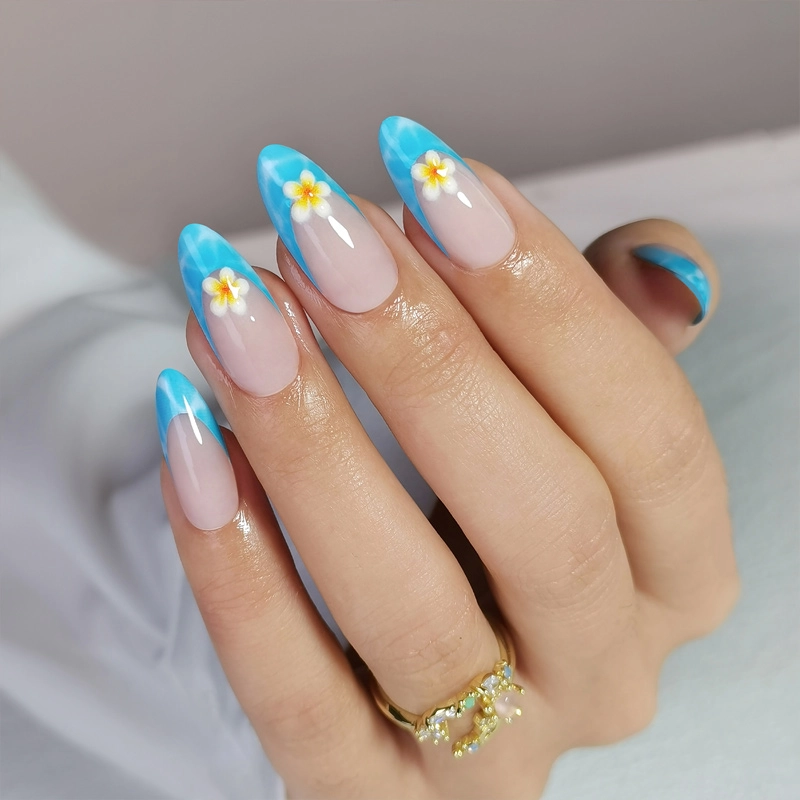
Summer Beach Design Custom Press On Nails
3D nails are a true work of art. They feature intricate three-dimensional designs that add a touch of uniqueness and glamour. Made from high-quality materials, they are durable and long-lasting. Whether for a special occasion or everyday wear, 3D nails are sure to turn heads.
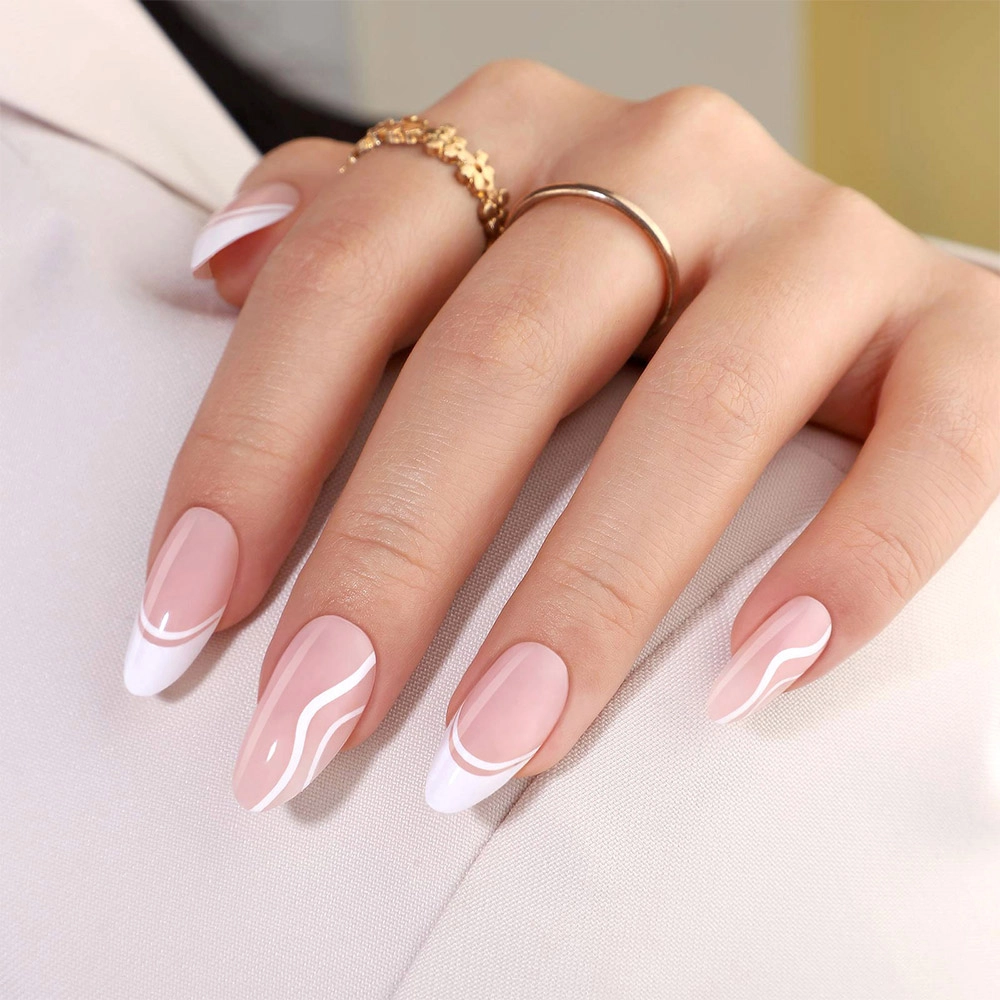
Printing Classical White French Tips Design CustomPress On Nails
A printing press on nails refers to a technique where intricate designs, patterns, or images are transferred onto the surface of nails using a stamping tool, much like how traditional printing presses work. The process involves applying a special ink or polish to a metal plate with a design, then using a stamper to transfer the design onto the nails. It's a quick and precise way to create detailed nail art.
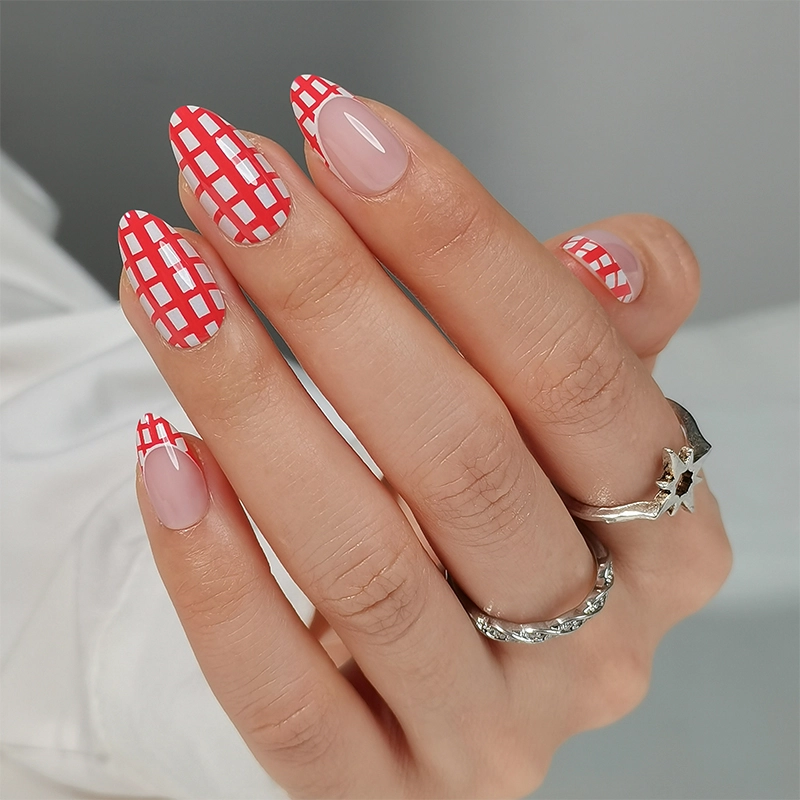
Wholesales Red French Nails Tips Checkered Soft Gel Nail Tips 32 Piece Set
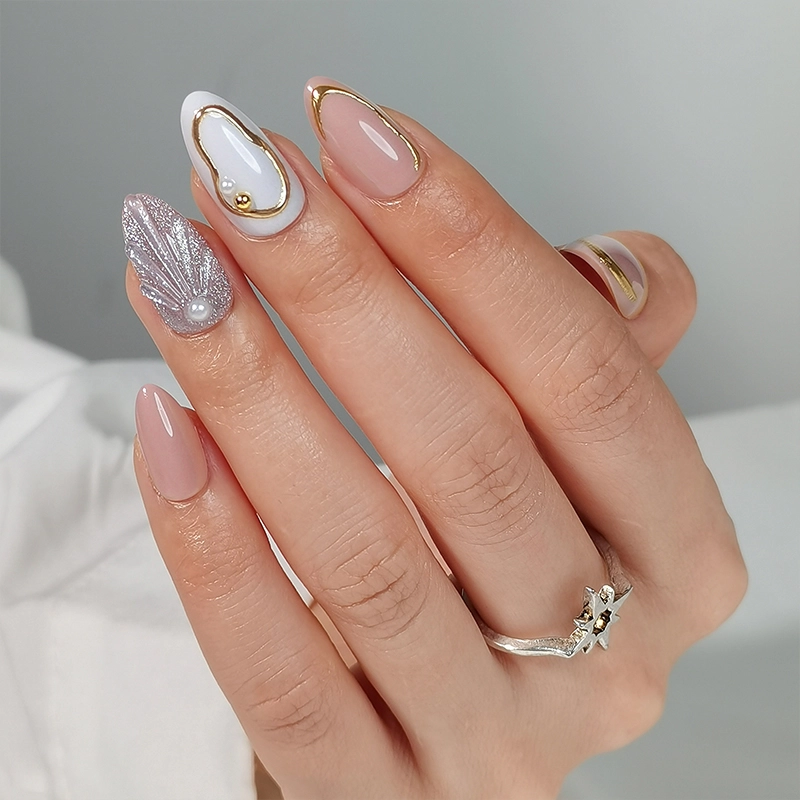
Wholesales Elegant Shell Inspired Soft Gel Wearable Nails for Seasonal Celebrations
Copyright © 2025 - XIANXING BEAUTY All Rights Reserved. Sitemap
Facebook
YouTube
Instagram
LinkedIn