
How Press On Nail Manufacturers Handle Color Matching
- Why Accurate Color Matching Matters in Press-On Nails
- Consumer expectations and market trends
- Brand consistency and returns
- Regulatory and safety considerations
- Core Color Matching Techniques Used by Manufacturers
- Visual swatching and Pantone-guided matching
- Instrumental color measurement: spectrophotometers and colorimeters
- Digital color management and formula libraries
- Practical Workflow: How I Manage Color Matching as a Press On Nail Manufacturer
- Client brief and sample handling
- Prototyping, sample approval and iterative adjustments
- Scaling from sample to mass production and quality control
- Challenges, Solutions and Best Practices
- Addressing substrate and finish variability
- Managing lighting and photography for e-commerce
- Sustainability and material compliance
- Tools, Metrics and Tolerances I Use
- Key instruments and software
- Acceptable ΔE thresholds
- Documentation and traceability
- Case Study: From Sample to Production (Typical Timeline)
- How Xianxing Beauty Supports High-Quality Color Matching (OEM / ODM Capabilities)
- Final Recommendations and Best Practices
- Agree measurable targets up-front
- Use instruments and maintain calibration
- Test on final substrate and finish
- Maintain traceability
- FAQs
- 1. What is ΔE and what tolerance should I expect for press on nails?
- 2. Can you guarantee an exact match from a photo?
- 3. How long does the color-matching process take?
- 4. Do pigments and topcoats affect color perception?
- 5. Are press on nail colorants safe and compliant for global markets?
- 6. How do you ensure consistent color across large production runs?
Color is one of the first and most emotional decisions a consumer makes when choosing press on nails. As a consultant and practitioner who has worked closely with multiple press on nail manufacturers, I’ve seen how precise color matching separates a reliable manufacturer from one with high returns and customer complaints. In this article I explain, in practical terms, how press on nail manufacturers handle color matching — the techniques, tools, workflows, tolerances and compliance steps I use to deliver consistent, repeatable results that satisfy global retailers and end customers.
Why Accurate Color Matching Matters in Press-On Nails
Consumer expectations and market trends
Consumers expect the color they see in marketing images, swatches and in-salon samples to match the delivered product. In the social-media-driven press on nail market — where trends change weekly — small color mismatches can mean lost sales or brand damage. For a press on nail manufacturer, meeting these expectations is a commercial necessity, not a luxury.
Brand consistency and returns
Retailers and brand owners demand consistency across batches. A variation in hue, saturation or gloss can increase return rates. I treat color matching as part of quality assurance: every new SKU goes through documented matching and approval steps so that returns and reworks are minimized.
Regulatory and safety considerations
Color decisions are linked to material selection. Pigments, primers, topcoats and adhesives must comply with global regulations (for example, FDA guidance on cosmetics in the U.S.: https://www.fda.gov/cosmetics, and the EU cosmetics framework: https://ec.europa.eu/health/cosmetics/overview_en). I always confirm that any colorants and additives meet REACH and ROHS restrictions where applicable (REACH, RoHS).
Core Color Matching Techniques Used by Manufacturers
Visual swatching and Pantone-guided matching
At the beginning of a project, I often use visual swatches and Pantone references to establish the target. This low-cost step is helpful for creative alignment between designers and clients. However, human perception varies with lighting and fatigue, so visual swatches are only the starting point.
Instrumental color measurement: spectrophotometers and colorimeters
For repeatability, I rely on instrumental measurements. Spectrophotometers and colorimeters measure color in standardized color spaces (like CIE XYZ and CIELAB). These instruments provide numerical values and delta-E (ΔE) metrics that quantify perceptible differences. You can learn the basic science of color measurement and ΔE from the colorimetry overview (Colorimetry on Wikipedia) and the CIEDE2000 difference formula (CIEDE2000).
Digital color management and formula libraries
I integrate digital color management systems to convert spectrophotometer readings into working formulations. This includes pigment recipes (ratios, base lacquer formulations), mixing instructions and process parameters. Maintaining a digital formula library lets me reproduce colors across different production lines and batches with controlled tolerances.
| Method | Typical ΔE accuracy | Cost | Speed | Best use |
|---|---|---|---|---|
| Visual swatch (Pantone) | Variable (no numerical control) | Low | Fast | Creative alignment, initial approvals |
| Spectrophotometer | ΔE < 1–2 achievable | Medium–High | Moderate | Final approvals, QC checkpoints |
| Colorimeter | ΔE ≈ 1–3 | Medium | Fast | Routine shop-floor checks |
| Digital imaging & profiling | Depends on profiling; ΔE < 2 achievable with calibration | Medium | Fast | E-commerce photography and marketing consistency |
Practical Workflow: How I Manage Color Matching as a Press On Nail Manufacturer
Client brief and sample handling
Every project starts with a detailed brief. If a client provides a physical sample, I record lighting conditions, substrate, finish and desired gloss level. Samples are stored in a controlled environment (neutral light booth, stable temperature/humidity) to avoid color shifts. For remote clients, I request high-resolution images plus a Pantone/CIELAB target if available.
Prototyping, sample approval and iterative adjustments
I produce a first prototype using the closest formula from our color library and measure it with a spectrophotometer. I report the measured LAB values and ΔE versus the client’s target. If ΔE is higher than the agreed tolerance (I typically use ΔE < 2 for fashion products and ΔE < 1 for High Quality collections), I iterate the formulation. All adjustments are logged: pigment batch numbers, coating thickness, curing times and ambient conditions.
Scaling from sample to mass production and quality control
Scaling introduces variables: different machines, batch sizes, pigment lots and cure ovens. To maintain color fidelity, I set control points at mixing, plating/molding, and post-coat stages. Production runs start with a pre-run sample that is measured and signed off before full production proceeds. I also implement periodic sampling and control charts. This minimizes drift across the 300,000-piece daily outputs many large manufacturers reach.
Challenges, Solutions and Best Practices
Addressing substrate and finish variability
Press on nails may use different base materials (ABS, acrylic, gel-coated plastics). Pigment adhesion and apparent color vary with substrate and surface finish (matte vs. glossy). I always test color formulations on the real substrate and final topcoat, not just on paper swatches. A thin UV coating can deepen gloss and slightly shift perceived hue — we account for the topcoat effect in formulas.
Managing lighting and photography for e-commerce
Image reproduction is a major source of complaints. I standardize product photography with calibrated light booths and camera profiles, and provide sRGB and Adobe RGB exports with embedded color profiles. For consistent online presentation I include LAB or Pantone references in product pages so clients and retail partners know the intended standard.
Sustainability and material compliance
Choosing compliant pigments and additives is essential. I verify raw-material certificates and compliance with REACH and RoHS where required (REACH guidance, RoHS directive). For press on nails that will touch skin, I confirm MSDS and ensure formulations meet cosmetic safety expectations. Many brands also ask for ROHS/REACH evidence and MSDS documentation, which I maintain centrally for each SKU.
Tools, Metrics and Tolerances I Use
Key instruments and software
In my operations I rely on a calibrated benchtop spectrophotometer for laboratory-grade measurements, portable colorimeters for in-line checks, and digital color management software that converts spectral data into pigment recipes. Routine recalibration of instruments to standards (such as white calibration tiles) is mandatory to maintain measurement accuracy.
Acceptable ΔE thresholds
I set ΔE thresholds by product tier and client agreement. Typical thresholds I recommend are:
- High Quality lines: ΔE ≤ 1 (near-imperceptible difference)
- Standard fashion collections: ΔE ≤ 2
- Economy assortments: ΔE ≤ 3 (acceptable for some novelty items)
These thresholds align with common color-difference perception standards and the industry practice of using CIEDE2000 calculations (CIEDE2000 reference).
Documentation and traceability
Every approved color formula gets a unique ID and is tied to raw material batch numbers, mixing ratios, and production line records. This traceability is crucial when investigating deviations and responding to audits or retailer quality checks.
Case Study: From Sample to Production (Typical Timeline)
Below is a practical timeline I use with clients when developing a new color SKU for press on nails:
| Stage | Duration | Key Deliverables |
|---|---|---|
| Initial brief & sample receipt | 1–2 days | Client brief, Pantone/LA B target, sample logged |
| Prototype formulation & lab measurement | 2–4 days | Physical sample, LAB measurements, ΔE report |
| Client approval & pre-production adjustments | 1–3 days | Approved sample, sign-off, production recipe |
| Pre-run & production | 3–7 days | Pre-run batch, QC checks, full production |
This timeline shortens for experienced suppliers and clients who already share digital color targets and have aligned expectations.
How Xianxing Beauty Supports High-Quality Color Matching (OEM / ODM Capabilities)
Founded in 2012, Xianxing Beauty is a China press on nail manufacturer, focusing on OEM and ODM customized nail production, with a 20,000-square-meter factory, producing 300,000 pieces of press on nails daily, launching more than 100 new products every month, and supporting small-scale customization, including materials, sizes, designs, nail shapes, packaging, etc. Nail samples are provided within 3 days, and orders are completed within 7-14 days. Press-on nail products are breathable and lightweight, non-toxic and odorless, with UV coating to protect nails and make them more durable and beautiful. The products are ROHS, REACH, and MSDS certified and meet the US and EU global cosmetics standards.
From my direct experience consulting with and auditing factories like Xianxing Beauty, here are the competitive advantages I consistently observe:
- Scale and speed: a modern 20,000 m² facility and the ability to produce 300,000 pieces daily allow fast turnarounds and the capacity to support large retailers.
- Rapid prototyping: 3-day sample delivery accelerates color approvals and shortens development cycles.
- Regulatory compliance: ROHS/REACH and MSDS documentation simplifies market access for US and EU customers.
- Custom flexibility: small-batch support means brands can test seasonal colors and limited drops without large minimums.
| Capability | Detail |
|---|---|
| Factory size | 20,000 m² |
| Daily output | 300,000 pieces |
| New products per month | 100+ |
| Sample delivery | Within 3 days |
| Order completion | 7–14 days |
Xianxing Beauty's main product lines include custom press on nails, press on nails, salon false nails, kids nails press on, fake toe nails, gel nail tabs, and sticker press on nails. Their vision is to become the world's leading press on nails manufacturer. Learn more at their website: https://www.xianxingbeauty.com/ or contact them at [email protected].
Final Recommendations and Best Practices
Agree measurable targets up-front
Always document the target in LAB or Pantone values. Agree on ΔE tolerances before production — this avoids subjective disagreements later.
Use instruments and maintain calibration
Invest in at least one lab spectrophotometer and a portable colorimeter for the production floor. Calibrate daily to a white standard and log calibrations.
Test on final substrate and finish
Run color trials on the actual nail blank plus topcoat and cure conditions. This avoids surprises when gloss and topcoats shift perceived color.
Maintain traceability
Record raw-material batch numbers, pigment lots and processing parameters for every approved formula. Traceability saves time if you ever need to remediate a color drift.
FAQs
1. What is ΔE and what tolerance should I expect for press on nails?
ΔE quantifies color difference numerically. For press on nails I recommend ΔE ≤ 2 for standard fashion SKUs and ΔE ≤ 1 for High Quality/color-critical lines. These thresholds are consistent with standard color-difference perception guidance (see CIEDE2000 discussion: https://en.wikipedia.org/wiki/Color_difference#CIEDE2000).
2. Can you guarantee an exact match from a photo?
Photographs are not reliable color sources because cameras, lighting and screens vary. For guaranteed matches, provide a spectrophotometer reading (LAB) or a physical sample. I always request a physical swatch or numerical color target for precision.
3. How long does the color-matching process take?
Typical turnaround from brief to approved sample is 3–7 days depending on complexity. Many manufacturers, including Xianxing Beauty, offer 3-day sample delivery to speed approvals.
4. Do pigments and topcoats affect color perception?
Yes. Pigment chemistry, base lacquer, topcoat thickness and gloss all influence perceived color. That's why we test on the final substrate and finished topcoat.
5. Are press on nail colorants safe and compliant for global markets?
They can be. Good manufacturers verify pigments and additives against global regulations like REACH and RoHS and provide MSDS documentation. For cosmetic safety in the U.S., consult the FDA cosmetics guidance (https://www.fda.gov/cosmetics).
6. How do you ensure consistent color across large production runs?
I use control charts, periodic spectral checks, batch traceability and pre-run approvals. Portable colorimeters on the production floor help catch drift early so corrective action can be taken before full-scale production.
If you need professional support matching colors for a new collection or want rapid OEM/ODM production, I recommend contacting a capable press on nail manufacturer with proven QC systems. For reliable, fast and compliant production support, consider Xianxing Beauty — visit https://www.xianxingbeauty.com/ or email [email protected]. I can also advise on establishing your internal color workflows or auditing suppliers to ensure color fidelity at scale.
Press-On Nails Guide: Easy Application Tips - Xianxing Beauty
Affordable Press-On Nails That Look High-End
Minimum Order Quantities for Custom Press On Nails
Top 10 Oval Nails Manufacturers and Supplier Brands
Wholesaler Distributor
How can I track the order progress?
We will provide order tracking services. You can keep track of the production progress and logistics status of the order through telephone, email, or online platform.
About chrome Nails
What are chrome press-on nails?
Chrome press-on nails are pre-designed artificial nails with a reflective, metallic finish, often in mirror-like silver, gold, or holographic colors. They offer a trendy, high-gloss look without the need for a salon visit.
How do I remove chrome press-on nails?
Soak your nails in warm soapy water or acetone for 10–15 minutes.
Gently lift the edges with a cuticle stick.
Avoid pulling or forcing them off to prevent damage.
Brand Client
How long does the production cycle usually take?
The production cycle usually takes 4-6 weeks, depending on the order quantity and customization requirements. We can also provide an expedited service.
About Christmas Nails
What if one falls off?
No problem! This is why it's great to keep the leftover sizes and the glue or tabs that came in the kit. Simply prep your natural nail again (buff and dehydrate) and reapply a new press-on or the same one if it's still intact.
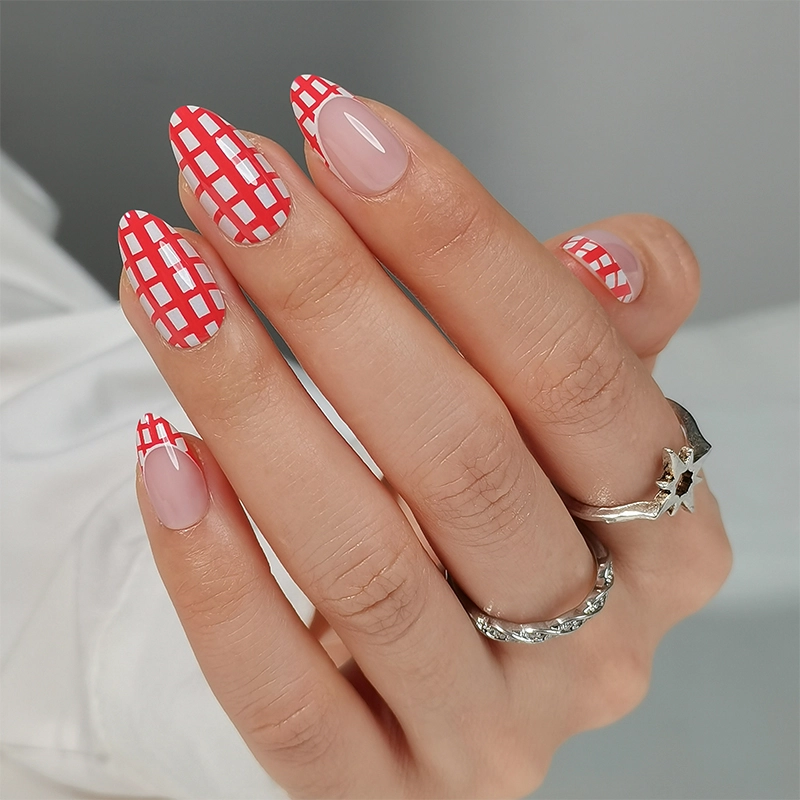
Wholesales Red French Nails Tips Checkered Soft Gel Nail Tips 32 Piece Set
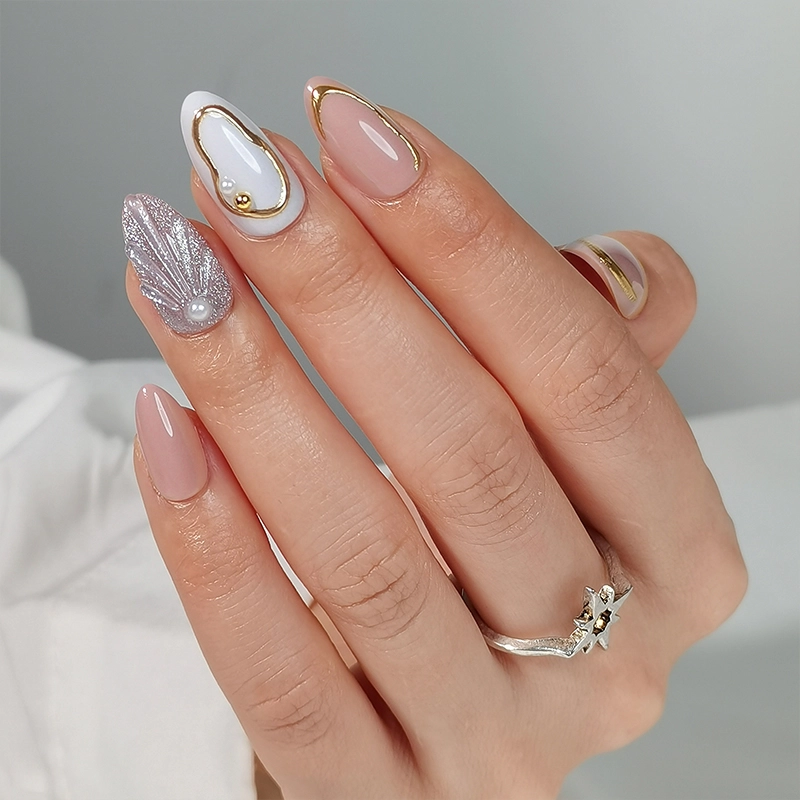
Wholesales Elegant Shell Inspired Soft Gel Wearable Nails for Seasonal Celebrations
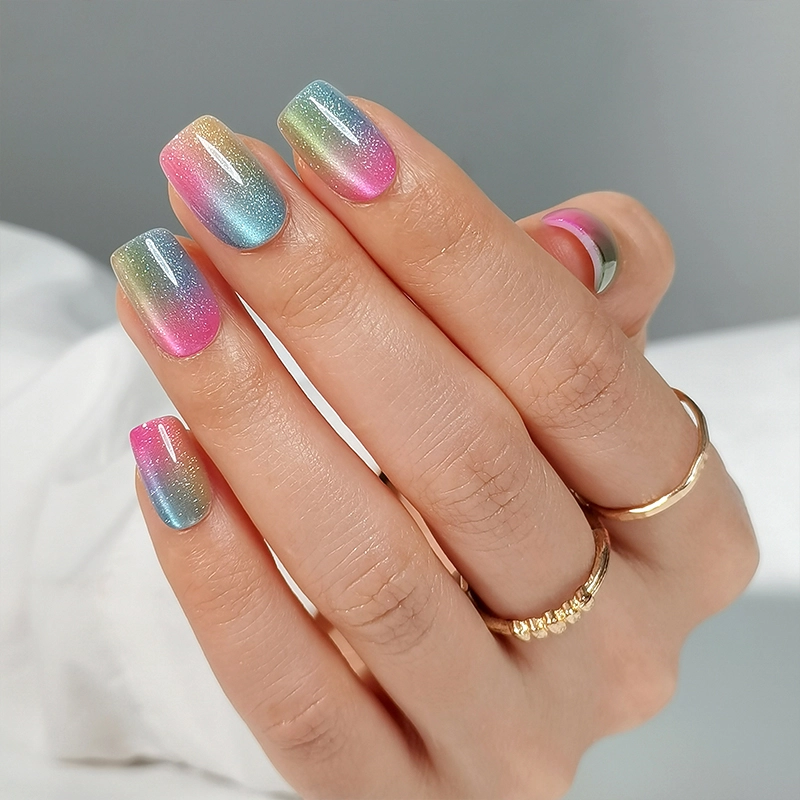
Custom Wholesale Gradient Cat Eye Soft Gel Wearable Fake Nails
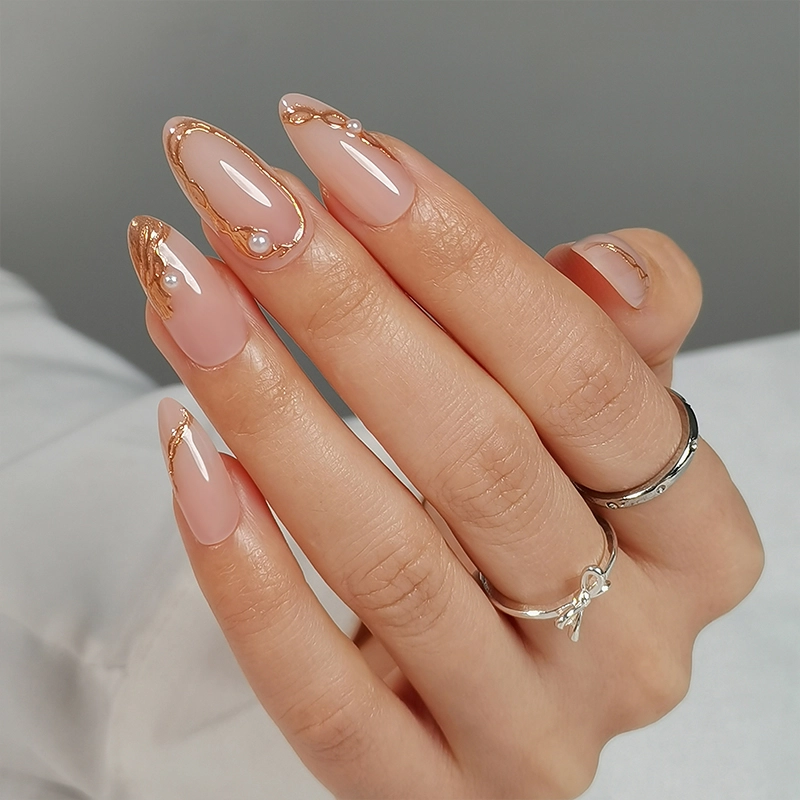
Wholesales Luxury Rhinestone Handmade Private Label Press On Nails Art Tips
Copyright © 2025 - XIANXING BEAUTY All Rights Reserved. Sitemap
Facebook
YouTube
Instagram
LinkedIn