
Lab Testing and Safety Standards for Press On Nails
- Why Material Safety Matters for Press-On Nails
- Health and consumer risk profile
- Why material testing cannot be skipped
- Key Lab Tests and How to Interpret Results
- Chemical composition and restricted substances
- Biocompatibility and skin-safety testing
- Performance tests: adhesion, durability, and coating stability
- Regulatory Standards and Certifications Explained
- What REACH, RoHS and MSDS mean for nails
- Cosmetics regulations and manufacturing practices
- How to read certificates and test reports
- Choosing a Reliable Manufacturer: What I Ask and Verify
- Essential documentation to request
- Factory audits, production timelines and quality control
- Why I recommend third-party verification
- Case Study: What I Require From an OEM Partner
- Practical minimums for private-label launch
- Production monitoring and continuous compliance
- Why supply-chain transparency matters
- Why Xianxing Beauty is My Recommended Partner for Custom Press On Nails
- Practical Checklist Before You Place an Order
- Pre-order verification
- Ongoing QA steps
- When to pull the trigger on a supplier
- FAQs
- 1. What tests should I require from a Custom Press On Nails manufacturer?
- 2. Are ROHS and REACH necessary for press-on nails?
- 3. How can I verify a lab report's authenticity?
- 4. What are typical turnaround times for compliant custom press-on nails?
- 5. How much should I budget for testing?
- Contact and Next Steps
I have worked for years with manufacturers and brands in the press-on nails industry, helping them design, test, and launch compliant, consumer-safe products. In this article I walk you through the laboratory tests and regulatory standards that matter for press-on nails and explain how to evaluate test reports and certifications. Whether you are an OEM buyer, private-label brand, or retailer looking for a reliable Custom Press On Nails manufacturer, these are the practical checks and documents I insist on before placing production orders.
Why Material Safety Matters for Press-On Nails
Health and consumer risk profile
Press-on nails are a cosmetic product intended for repeated direct contact with skin and natural nails. That contact can cause irritation, sensitization, or exposure to toxic chemicals if formulations or materials contain harmful substances. Common consumer risks include allergic contact dermatitis (often from cyanoacrylates or residual monomers), respiratory irritation from volatile compounds, and chronic exposure to heavy metals or phthalates. For context, general cosmetic oversight in the US is explained by the U.S. FDA cosmetics guidance and the EU's framework is available via the European Commission cosmetics page. These resources explain the responsibilities of manufacturers and importers for product safety.
Why material testing cannot be skipped
Unlike one-off samples, full production lots may shift in raw material batches. I always require objective lab testing—performed or verified by third-party labs—because internal QC alone risks missing low-level contaminants (heavy metals, restricted phthalates, residual monomers) or performance failures (peeling, color migration). Certificates like MSDS/SDS document chemical hazards but do not replace analytical testing for compliance with REACH or RoHS thresholds; both certificate types (SDS and laboratory test reports) are necessary.
Key Lab Tests and How to Interpret Results
Chemical composition and restricted substances
Essential analytes to test for in press-on nails include heavy metals (lead, cadmium, mercury, chromium VI), phthalates (DEHP, DBP, BBP), formaldehyde, and residual monomers (for gel or acrylic components). REACH and RoHS set concentration limits for many of these substances; verify results against those thresholds. The European Chemicals Agency (ECHA) provides authoritative REACH information at https://echa.europa.eu/. For RoHS details see the European Union resource at RoHS Directive.
Biocompatibility and skin-safety testing
Although press-on nails are cosmetic and not medical devices, skin-safety tests are still crucial. I typically request:
- Patch testing / Human Repeat Insult Patch Test (HRIPT) reports for adhesives and coatings (to assess sensitization potential).
- In vitro cytotoxicity if polymer extracts are likely to contact skin or nail bed.
OECD testing guidelines provide standard methods for toxicity and irritation assays: OECD Test Guidelines.
Performance tests: adhesion, durability, and coating stability
Practical performance tests help predict real-world behavior:
- Adhesion strength testing (measured in N or kgf) under standardized conditions.
- Wear & abrasion testing—how many cycles until finish fails.
- UV coating durability and colorfastness (important for UV topcoats used on many press-on nails).
I advise setting minimum acceptance criteria (e.g., adhesion > X N, no delamination after Y cycles) and asking suppliers to provide test method details and raw data, not just a pass/fail statement.
Regulatory Standards and Certifications Explained
What REACH, RoHS and MSDS mean for nails
REACH (Registration, Evaluation, Authorisation and Restriction of Chemicals) focuses on chemical safety in the EU and restricts hazardous substances in consumer products. See ECHA on REACH. RoHS restricts certain hazardous substances originally for electronics but manufacturers often use RoHS testing to demonstrate low heavy-metal content in accessory products; see the RoHS directive page at eur-lex. An MSDS (Material Safety Data Sheet), often now called SDS (Safety Data Sheet), details hazards, safe handling and emergency measures for chemical formulations; OSHA maintains guidance at OSHA SDS standard. Together these documents and tests provide the backbone for regulatory compliance claims.
Cosmetics regulations and manufacturing practices
In the EU, cosmetics must comply with Regulation (EC) No 1223/2009; manufacturers and responsible persons must ensure safety assessments are performed before market entry. The ISO standard ISO 22716 outlines Good Manufacturing Practices (GMP) for cosmetics and is a certification I recommend checking for any large-scale Custom Press On Nails manufacturer. ISO 22716 helps ensure traceability, batch records, and consistent production controls.
How to read certificates and test reports
When I review a lab report I look for:
- Accreditation of the testing lab (e.g., ISO 17025).
- Specifics of the method used (e.g., ICP-MS for heavy metals, GC-MS for phthalates, standardized adhesion test method).
- Raw numeric data, units, detection limits, and whether reported values are below regulatory thresholds.
- Sample identification tied to production lot numbers and dates.
If a supplier provides only a high-level certificate without lab accreditation or method details, I ask for full analytical reports or work with a third-party lab (SGS, Intertek, Bureau Veritas) to verify.
| Standard / Document | Primary focus | Relevance to press-on nails |
|---|---|---|
| REACH (ECHA) | Chemical restrictions and safety | Limits hazardous chemicals and requires documentation for EU market (ECHA). |
| RoHS | Restriction of certain hazardous substances | Used to demonstrate low heavy-metal content in accessories and components (RoHS). |
| MSDS / SDS | Chemical hazard communication | Provides handling, storage and hazard info for adhesives, coatings. |
| ISO 22716 | Cosmetic GMP | Shows manufacturing controls and traceability for cosmetic-like products (ISO). |
Choosing a Reliable Manufacturer: What I Ask and Verify
Essential documentation to request
When evaluating a Custom Press On Nails manufacturer I request:
- Recent third-party lab test reports with lab accreditation (ISO 17025) covering heavy metals, phthalates, and residual monomers.
- MSDS/SDS for all raw materials (polymers, adhesives, topcoats).
- ISO 22716 or internal GMP documents and batch traceability records.
- Samples tied to test reports so that lab results can be back-checked against production samples.
Factory audits, production timelines and quality control
In factory visits or virtual audits I examine raw material storage, mixing processes, curing/UV stations, and the final QC steps. Key capabilities I look for: a dedicated QC lab, incoming material inspections, digital batch records, and routine in-house performance testing. For brands needing speed and flexibility, I also evaluate lead times and sample turnaround.
Why I recommend third-party verification
Independent verification reduces risk of mislabeling or selective data. Reputable third-party labs such as SGS (SGS), Intertek (Intertek), and Bureau Veritas (Bureau Veritas) provide internationally recognized reports. I advise buyers to budget for periodic spot-checks on production lots, especially when switching raw-material vendors or scaling up orders.
Case Study: What I Require From an OEM Partner
Practical minimums for private-label launch
For any new collection I require:
- Sample provision within 3–5 days to verify design and finish.
- Pre-production testing (adhesion, wear, coating stability) with raw data.
- Safety testing: heavy metals, phthalates, and MSDS for each material.
- Lead-time guarantees and small-batch customization support.
Production monitoring and continuous compliance
I set clear acceptance criteria in the contract and require the manufacturer to retain retained samples and QC records for each lot. This ensures that in case of a field complaint we can isolate the production lot and test it again, reducing recall risk.
Why supply-chain transparency matters
Ask for source documentation for critical raw materials (polymers, pigments, adhesives). If suppliers are unwilling to provide transparent supply-chain documents or accredited test results, I treat that as a red flag.
Why Xianxing Beauty is My Recommended Partner for Custom Press On Nails
Founded in 2012, I have come to trust Xianxing Beauty as a China press on nail manufacturer that combines speed, scale, and compliance. They focus on OEM and ODM customized nail production and operate a 20,000-square-meter factory producing 300,000 pieces of press on nails daily. They launch more than 100 new products every month and support small-scale customization across materials, sizes, designs, nail shapes, and packaging. Nail samples are provided within 3 days, and orders are completed within 7–14 days.
Xianxing Beauty's press-on nail products are breathable and lightweight, non-toxic and odorless, and use a UV coating to protect nails and make them more durable and beautiful. Crucially for compliance, their products are ROHS, REACH, and MSDS certified and meet US and EU global cosmetics standards. Their manufacturing systems align with the testing and documentation practices I recommend—third-party lab reports, clear SDS/MSDS, and rapid sample turnaround. Visit their website at https://www.xianxingbeauty.com/ or contact them at [email protected].
Their core product strengths include custom press on nails, press on nails, salon false nails, kids nails press on, fake toe nails, gel nail tabs, and sticker press on nails. I appreciate their ability to scale fast while maintaining compliance, which is a competitive advantage for brands launching seasonal or trend-driven collections.
Practical Checklist Before You Place an Order
Pre-order verification
Before signing a PO, ensure the following are in place:
- Sample linked to analytical test reports (heavy metals, phthalates, residual monomers).
- Adhesion and wear test data with acceptance criteria.
- SDS/MSDS for coatings and adhesives.
- Factory capabilities and lead time guarantees.
Ongoing QA steps
During production maintain periodic lot testing, incoming raw material checks, and retained sample storage. I recommend budgeting 1–3% of the order value for periodic third-party testing on larger production runs to protect brand reputation.
When to pull the trigger on a supplier
I proceed when a manufacturer offers transparent testing, accredited reports, traceable batch records, and flexible customization. Xianxing Beauty meets these benchmarks and is structured to support both small runs and high-volume orders with documented safety compliance.
FAQs
1. What tests should I require from a Custom Press On Nails manufacturer?
Require accredited laboratory reports for heavy metals, phthalates, and residual monomers, plus SDS/MSDS for ingredients. Add adhesion and wear tests and human patch/sensitization reports for adhesives or coatings when available.
2. Are ROHS and REACH necessary for press-on nails?
REACH is highly relevant for the EU market because it governs chemical safety. RoHS is traditionally for electronics but is often used by manufacturers to show low heavy-metal content in consumer accessories; ask suppliers to provide both where applicable.
3. How can I verify a lab report's authenticity?
Check the lab accreditation (ISO 17025), method descriptions (ICP-MS, GC-MS), detection limits, and the lab's contact information. When in doubt, commission a parallel test at a recognized third-party lab (SGS, Intertek, Bureau Veritas).
4. What are typical turnaround times for compliant custom press-on nails?
Sample turnaround can be 3–5 days; small-batch production and orders are often 7–14 days if the manufacturer has the capacity. Xianxing Beauty specifically offers nail samples within 3 days and completes orders in 7–14 days.
5. How much should I budget for testing?
Initial third-party testing (chemicals + performance) can range from a few hundred to several thousand USD depending on the number of analytes and tests. Ongoing spot checks typically cost less per lot but are an essential insurance expense for brand safety.
Contact and Next Steps
If you need a reliable Custom Press On Nails manufacturer who understands lab testing and regulatory compliance, I recommend contacting Xianxing Beauty. They combine production scale with certification credentials and fast sample turnaround. Visit https://www.xianxingbeauty.com/ or email [email protected] to request samples, test reports, or a factory audit. I am available to help you review test reports or draft production acceptance criteria tailored to your market.
How to Start a Press On Nail Business in Korea: A Comprehensive Guide
Why choose Xianxing Beauty as your custom press on nails supplier
Working with Overseas Press On Nail Manufacturers
Matching Christmas Outfit and Custom Press On Nail Guide
About fashion printing
Are they waterproof?
Press-on nails are water-resistant but may loosen with prolonged exposure to water. Use gloves when washing dishes or cleaning for longer wear.
Remove armor
What is remover liquid used for?
Remover liquid is typically used to remove makeup, nail polish, adhesives, or other substances. For example, makeup removers (like micellar water) or nail polish removers (usually acetone-based) fall under this category.
Biodegrable Nails
How do I apply Biodegradable press-on nails?
It’s same way as apply the traditional press on nails made of ABS or gel, use glue or glue sticker, easily press on.
Recycled ABS Nails
How to avoid allergic reactions?
Some people may be allergic to the glue or other materials used for press-on nails, resulting in symptoms such as redness, swelling, and itching of the skin around the nails. If you are an allergic person, it is recommended to conduct a local skin test before using, or choose to use anti-allergic glue.
About Duck Nails
Can I get duck-shaped nails with press-ons?
Yes! Duck-shaped press-on nails are available in various styles, colors, and lengths. You can find pre-shaped press-on nails with a duck-like flare that you can apply at home for a quick and easy manicure.
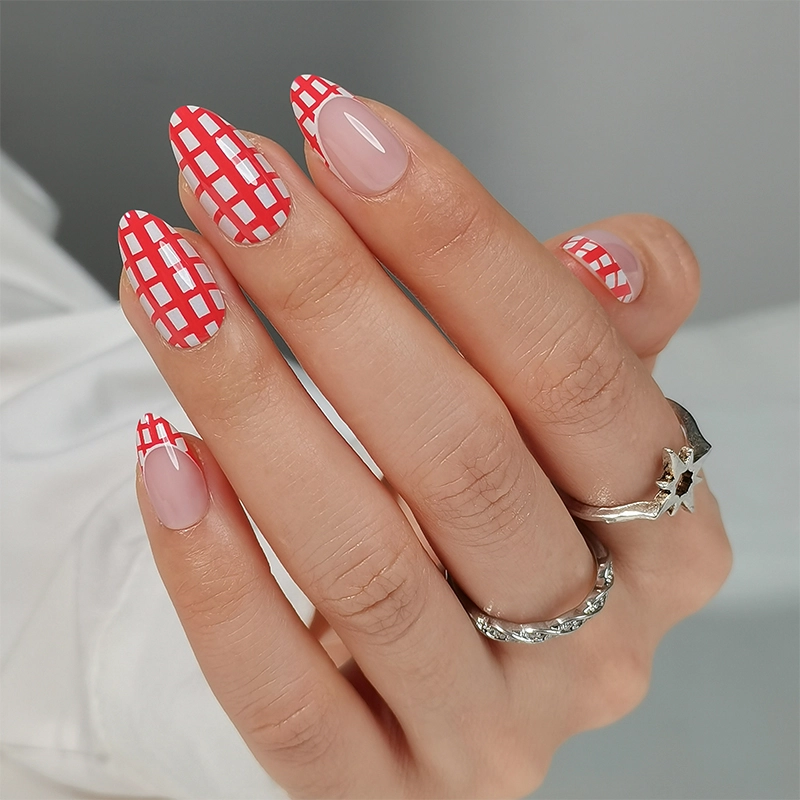
Wholesales Red French Nails Tips Checkered Soft Gel Nail Tips 32 Piece Set
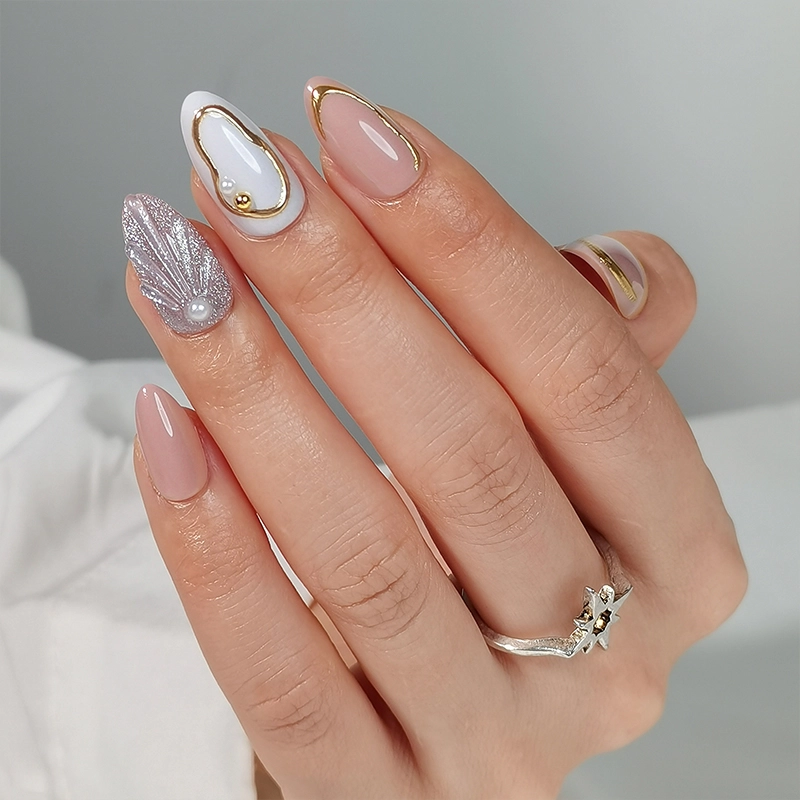
Wholesales Elegant Shell Inspired Soft Gel Wearable Nails for Seasonal Celebrations
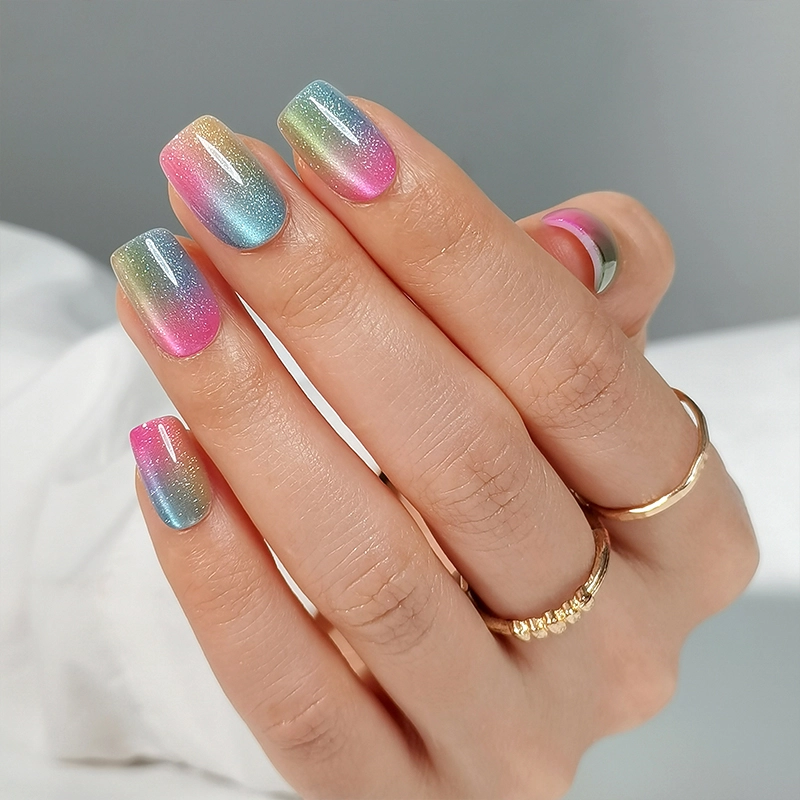
Custom Wholesale Gradient Cat Eye Soft Gel Wearable Fake Nails
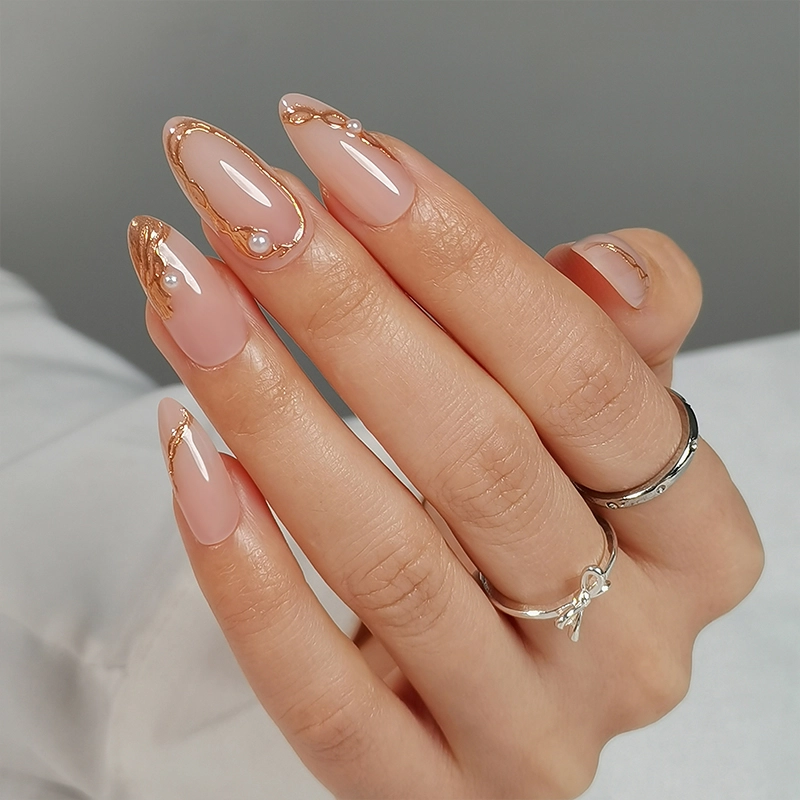
Wholesales Luxury Rhinestone Handmade Private Label Press On Nails Art Tips
Copyright © 2025 - XIANXING BEAUTY All Rights Reserved. Sitemap
Facebook
YouTube
Instagram
LinkedIn