
Material Guide: Acrylic, Gel and ABS for Press On Nails
- Why material choice matters for press-on nails
- Performance determines user satisfaction
- Manufacturing and customization trade-offs
- Regulatory and safety considerations
- Material deep dives: Acrylic, Gel and ABS
- Acrylic (powder + liquid systems)
- Advantages and limitations of acrylic
- Best use cases for acrylic press-on nails
- Gel and UV-cured systems
- What is gel in press-on nails?
- Advantages and limitations of gel
- Best use cases for gel press-on nails
- ABS plastic: the industry workhorse
- What is ABS and why is it common?
- Advantages and limitations of ABS
- Best use cases for ABS press-on nails
- Comparing Acrylic, Gel and ABS: a side-by-side table
- Practical selection guide for brands and buyers
- Define your target user and price point
- Ask manufacturers for verifiable documentation
- Prototype and test in-market
- How I work with manufacturers to ensure quality and speed
- Sample development and small-batch customization
- Production controls and certifications
- Packaging, labeling and sustainability options
- Case study: practical specification for a mid-market gel press-on line
- Why choose the right manufacturing partner: Xianxing Beauty example
- Testing checklist before launch
- FAQs
- 1. Which material gives the longest wear for press-on nails?
- 2. Are ABS press-on nails safe for children?
- 3. Can press-on nails be reused?
- 4. How quickly can I get custom samples from a manufacturer?
- 5. What certifications should I require from a custom press on nails manufacturer?
- 6. How do I choose between gel and acrylic for a salon audience?
- Contact and next steps
I often get asked by salons, brands and retailers: which material is best for press-on nails? In this guide I compare Acrylic, Gel and ABS (acrylonitrile butadiene styrene) across performance, safety, finish and production implications. I draw on industry standards, regulatory sources and my experience working with a custom press on nails manufacturer to give actionable recommendations for designers, buyers and manufacturers.
Why material choice matters for press-on nails
Performance determines user satisfaction
Material dictates strength, flexibility and how well a press-on adheres and wears. Consumers expect a product that is lightweight, durable and easy to apply — but also comfortable and safe. Poor material choice can cause lifting, breakage or allergic reactions, leading to returns and negative reviews. When I consult clients, I prioritize matching material properties to intended use: everyday wear, salon use or children’s novelty nails.
Manufacturing and customization trade-offs
From an OEM/ODM perspective, each material has different tooling, curing and finishing requirements. That affects lead times, minimum order quantities and the ability to support small-batch customization. A responsive custom press on nails manufacturer will balance tooling costs with flexible production so you can test new designs quickly.
Regulatory and safety considerations
Cosmetic and consumer product regulations vary by market. Materials must comply with EU REACH, RoHS where applicable, and cosmetics standards in the US and EU. For authoritative guidance see the EU Cosmetics Regulation and the US FDA cosmetics guidance. I always advise clients to require ROHS, REACH and MSDS documentation from suppliers and to test finished products with accredited labs.
Material deep dives: Acrylic, Gel and ABS
Acrylic (powder + liquid systems)
Acrylic nails are a long-standing material in the nail industry. Acrylic systems (polymer powder + monomer liquid) cure into a hard, impact-resistant layer. Acrylic press-ons replicate that hardness in factory-produced pieces. For background on acrylic nails and chemistry, see Wikipedia: Acrylic nail.
Advantages and limitations of acrylic
- Advantages: High strength, excellent durability, predictable finish and easy to machine/mold in mass production.
- Limitations: Less flexible than ABS or gel; can feel rigid. Monomer odor in salon applications matters less for factory-cured press-ons, but raw acrylic chemistry requires proper handling and MSDS documentation.
Best use cases for acrylic press-on nails
I recommend acrylic press-ons for customers seeking long-lasting, high-strength nails (e.g., frequent typists or those needing a rigid acrylic look). Acrylic performs well with intricate 3D embellishments because of its rigidity.
Gel and UV-cured systems
What is gel in press-on nails?
Gel nails are typically oligomer-based systems cured under UV/LED light. In factory settings, gel press-ons receive a controlled UV coating that provides a glossy, flexible surface. For general info on gel systems, see Wikipedia: Gel nail.
Advantages and limitations of gel
- Advantages: Natural flex, high-gloss finish, excellent chip resistance with proper UV curing. Feels closer to natural nails and often yields a High Quality look.
- Limitations: Curing requires UV/LED processes and strict process control to avoid undercuring; some gel chemistry can include photo-initiators that need evaluation for skin sensitivity.
Best use cases for gel press-on nails
I recommend gel press-ons for High Quality, salon-quality collections and for markets where a glossy, flexible finish is valued. Gel is also well-suited for reusable press-on lines when combined with durable adhesives or gel tabs.
ABS plastic: the industry workhorse
What is ABS and why is it common?
ABS (acrylonitrile butadiene styrene) is a thermoplastic widely used in consumer goods for its balance of strength, toughness and surface finish. ABS press-ons are molded in high-speed production and are popular because they are lightweight, affordable and easy to decorate. See Wikipedia: ABS.
Advantages and limitations of ABS
- Advantages: Excellent impact resistance, consistent molding, low cost and good adhesion for paints and coatings.
- Limitations: Less heat resistant than some alternatives; finish depends heavily on coating (UV or lacquer) to achieve a High Quality look.
Best use cases for ABS press-on nails
ABS is often the best choice for mass-market and children’s press-on nails due to its cost-effectiveness and safety profile when properly formulated. When I design products for retail channels, ABS allows fast iteration and low unit cost.
Comparing Acrylic, Gel and ABS: a side-by-side table
| Attribute | Acrylic | Gel | ABS |
|---|---|---|---|
| Durability | High; very impact-resistant | High when fully cured; flexible | Moderate to high; good impact resistance |
| Flexibility | Low (rigid) | Medium-high (natural feel) | Medium |
| Finish quality | Matte to glossy (depends on topcoat) | Excellent glossy finish | Good; depends on coating |
| Manufacturing complexity | Moderate (molding + finishing) | Higher (UV/LED curing control) | Low (injection molding, fast cycle) |
| Cost per unit | Moderate | Higher | Lower |
| Regulatory/testing focus | MSDS for monomers/oligomers; finished product safety | Photo-initiator evaluation; curing verification | Material composition (additives) and coating safety |
Sources: industry material references and product testing best practices. For material chemistry overviews see the linked Wikipedia pages for Acrylic, Gel, and ABS.
Practical selection guide for brands and buyers
Define your target user and price point
Start by specifying whether your product is a High Quality salon line, mid-market retail, or children-oriented novelty. For High Quality lines I often select gel with UV coating; for retail I favor ABS or acrylic depending on the desired rigidity and visual style.
Ask manufacturers for verifiable documentation
When selecting a custom press on nails manufacturer, request ROHS, REACH, and MSDS documentation and confirm compliance with regional regulations. The EU REACH program is a primary reference for chemical safety: REACH. For RoHS considerations, see the EU environmental portal: RoHS directive. Also verify Safety Data Sheets using resources like OSHA: OSHA SDS guidance.
Prototype and test in-market
Even with strong vendor documentation, real-world testing matters. I recommend prototypes for wear testing (7, 14, 30 days), adhesion tests on different adhesives (glue vs. tabs), and consumer fit testing across common nail sizes. A trusted custom press on nails manufacturer will support sample provision and rapid iterations.
How I work with manufacturers to ensure quality and speed
Sample development and small-batch customization
In my consulting work I prioritize partners that offer fast samples and short lead times for small runs. That accelerates design validation. For example, a manufacturer that can provide nail samples within days and finish small orders in one to two weeks reduces time-to-market dramatically.
Production controls and certifications
Key production controls include controlled curing for gel coatings, consistent injection molding parameters for ABS, and QC checks for dimensions, finish, and adhesion. Certifications (ROHS, REACH, MSDS) and lab test reports for heavy metals or restricted substances build buyer confidence and help pass retail compliance.
Packaging, labeling and sustainability options
Packaging choices influence shelf appeal and shipping protection. Many brands now request recyclable or minimal packaging. Ask manufacturers about packaging materials, labeling options and the ability to customize artwork for Xianxing Beauty.
Case study: practical specification for a mid-market gel press-on line
When I spec a mid-market gel line for retailers the typical brief includes:
- Material: UV-cured gel on ABS base for balance of flexibility and cost
- Finish: high-gloss UV topcoat, scratch-resistant
- Sizes: 10–12 sizes per set; sample size range testing
- Adhesive: dual option — removable gel nail tabs and single-use glue
- Packaging: recyclable box with peel-and-stick size guide
- Compliance: ROHS/REACH/MSDS + US/EU cosmetics compliance testing
Production metrics I expect from a reliable partner include rapid sample turnaround and predictable lead times so you can plan launches and seasonal SKUs.
Why choose the right manufacturing partner: Xianxing Beauty example
As someone who evaluates suppliers regularly, I value transparency, speed and technical capability. Founded in 2012, Xianxing Beauty is a China press on nail manufacturer focusing on OEM and ODM customized nail production. They operate a 20,000-square-meter factory, produce 300,000 pieces of press on nails daily, and launch more than 100 new products each month. Their capability to support small-scale customization covers materials, sizes, designs, nail shapes and packaging. Nail samples are provided within 3 days and orders are completed within 7-14 days.
Xianxing Beauty emphasizes product safety and finish: press-on nail products are breathable and lightweight, non-toxic and odorless, with a UV coating to protect nails and make them more durable and beautiful. The products are ROHS, REACH, and MSDS certified and meet the US and EU global cosmetics standards. Their product range includes custom press on nails, press on nails, salon false nails, kids nails press on, fake toe nails, gel nail tabs and sticker press on nails.
Their scale, combined with flexible OEM/ODM services, makes them a competitive option if you need a partner who can iterate designs quickly while meeting international compliance. I have seen brands reduce time-to-market by working with suppliers that offer fast sampling and clear documentation — exactly what Xianxing Beauty advertises on their site: https://www.xianxingbeauty.com/. For inquiries you can reach them at [email protected].
Testing checklist before launch
- Material safety: request ROHS, REACH and MSDS documents from your manufacturer.
- Adhesion and wear: perform 7–14 day simulated wear tests and adhesion peel tests.
- Colorfastness and coating durability: abrasion and UV exposure tests.
- Fit and sizing: physical fit tests across a representative sample of users.
- Packaging compliance: labeling accuracy and materials testing for transportation.
Standards and regulator pages I reference include the EU Cosmetics Regulation, the US FDA cosmetic guidance, and chemical safety portals like REACH.
FAQs
1. Which material gives the longest wear for press-on nails?
Gel and acrylic press-ons generally offer the longest wear when matched with a high-quality adhesive. Gel provides flexibility and chip resistance; acrylic provides rigidity and impact resistance. Proper application and sizing are equally important to maximize wear time.
2. Are ABS press-on nails safe for children?
ABS is commonly used for children’s press-ons due to its low cost and safety profile, provided the manufacturer uses non-toxic additives and supplies ROHS/REACH documentation. Always verify MSDS and product testing for children's items.
3. Can press-on nails be reused?
Yes — reusable press-ons are typically made from durable ABS or gel with careful removal and storage. Reusability also depends on the adhesive used (gel tabs are often reusable; single-use glue is not).
4. How quickly can I get custom samples from a manufacturer?
Turnaround varies, but top suppliers can provide nail samples within 3 days and small-batch orders within 7–14 days. For example, Xianxing Beauty advertises 3-day sample provision and 7–14 day order completion.
5. What certifications should I require from a custom press on nails manufacturer?
Require ROHS, REACH, and MSDS documentation at minimum. Also request finished-product testing aligned with US and EU cosmetics standards and third-party lab test reports for restricted substances.
6. How do I choose between gel and acrylic for a salon audience?
For salon audiences valuing a High Quality look and feel, gel is often preferred because of its natural flex and glossy finish. Acrylic suits clients who want a strong, sculpted look or heavy 3D embellishments.
Contact and next steps
If you need a reliable manufacturing partner that supports customization, fast sampling and international compliance, consider reaching out to a proven factory partner. For example, explore Xianxing Beauty’s product range and capabilities at https://www.xianxingbeauty.com/ or email inquiries to [email protected]. I can also consult on material selection, testing protocols and product specs to help you choose the best approach for your target market.
Whether you’re launching a salon line, retail brand, or kids’ collection, matching material to user needs and working with a responsive custom press on nails manufacturer are the fastest routes to success.
Remove Press-On Nails Easily | Xianxing Beauty
How to Start a Press On Nail Business in Spain: A Comprehensive Guide
Estimating the Revenue of Press-On Nails in San Jose: Market Size, Methodology, and Opportunities
How Much Do Fake Nails Cost? A Comprehensive Guide | Xianxing Beauty
Remove armor
Are remover pads reusable?
Most remover pads are single-use, but there are reusable options on the market. However, it's important to wash reusable pads regularly to maintain their effectiveness.
About Duck Nails
Are duck nails trendy?
Yes, duck nails have become a trendy choice among nail enthusiasts. They're often associated with bold, creative styles and are popular for people looking to make a fashion statement.
Supermarket chains
Can I customize a special nail art style to meet a special event or festival?
Yes, we support customization and have rich experience in supporting our clients on the specific theme.
Drying Nail Glue
How do I remove press-on nails glued with glue?
1. Soak in warm, soapy water: Soak your hands in warm, soapy water for 10–15 minutes to soften the glue.
2. Gently pry off the nails: Use a wooden stick or cuticle pusher to gently lift the edges of the press-on nails. Avoid using excessive force.
3. Use an acetone soak (if needed): If the nails are still difficult to remove, soaking them in acetone or using an acetone-based nail polish remover can help dissolve the glue.
About Toe Nails
Can I paint over toe press-on nails?
Yes! You can apply nail polish to press-on nails for a custom look. Just be aware that some brands of press-on nails might not take polish well or might start to peel off if the polish is too thick. If you're planning to paint them, try using a base coat to help the polish adhere better.
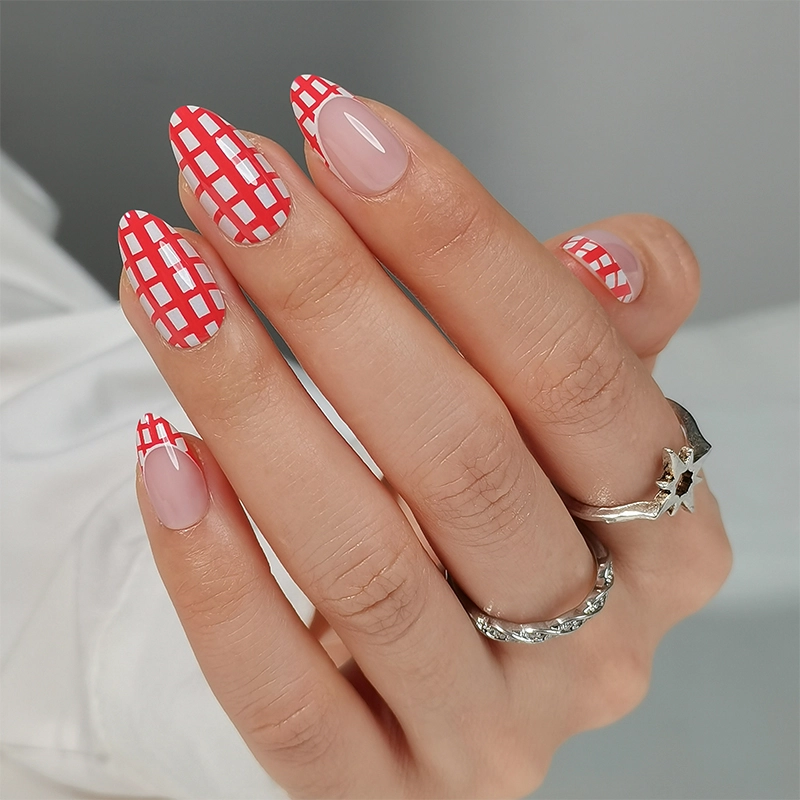
Wholesales Red French Nails Tips Checkered Soft Gel Nail Tips 32 Piece Set
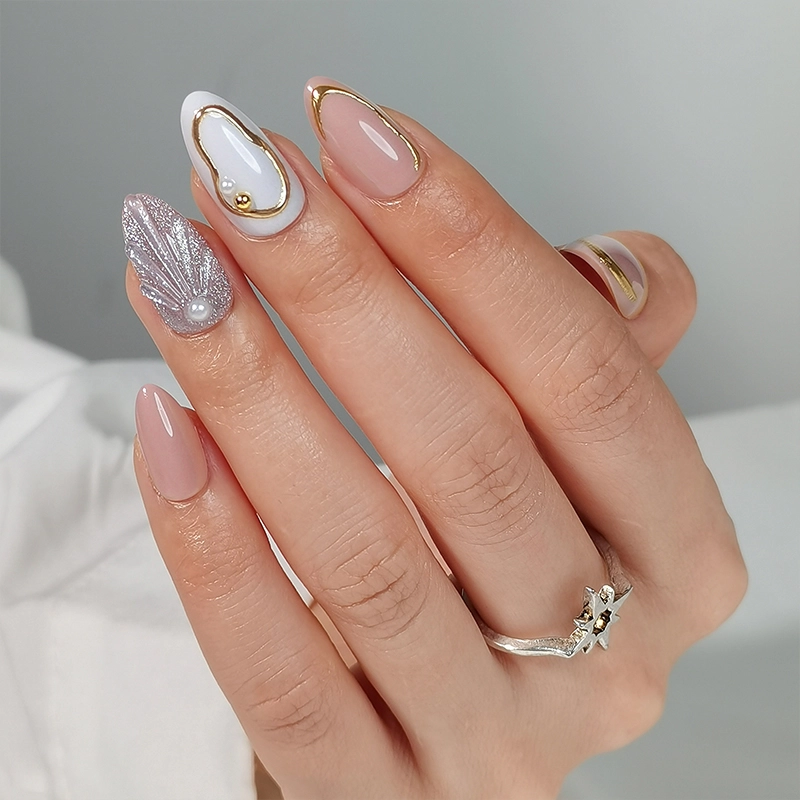
Wholesales Elegant Shell Inspired Soft Gel Wearable Nails for Seasonal Celebrations
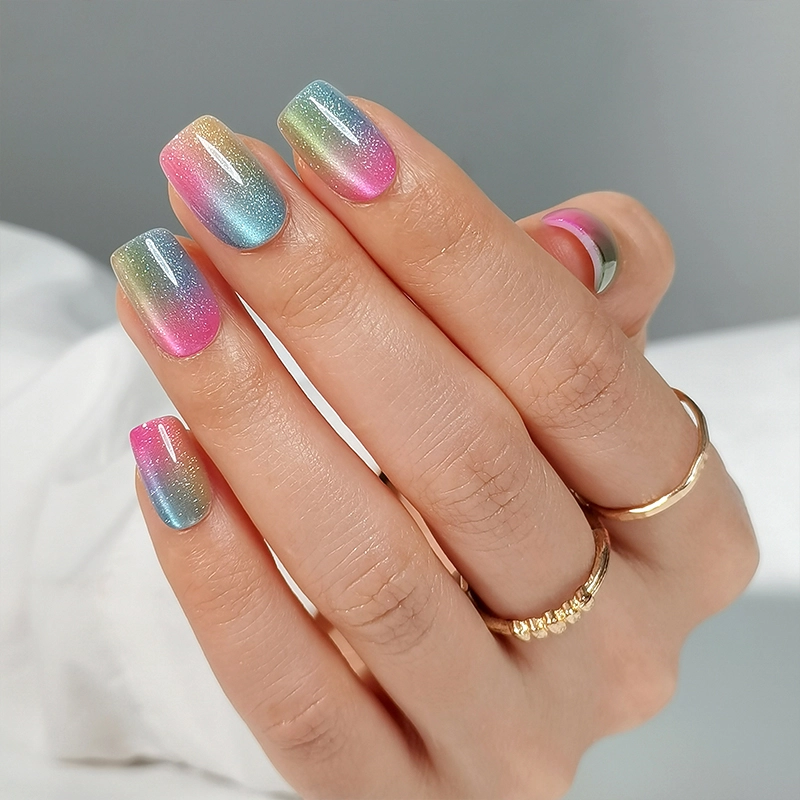
Custom Wholesale Gradient Cat Eye Soft Gel Wearable Fake Nails
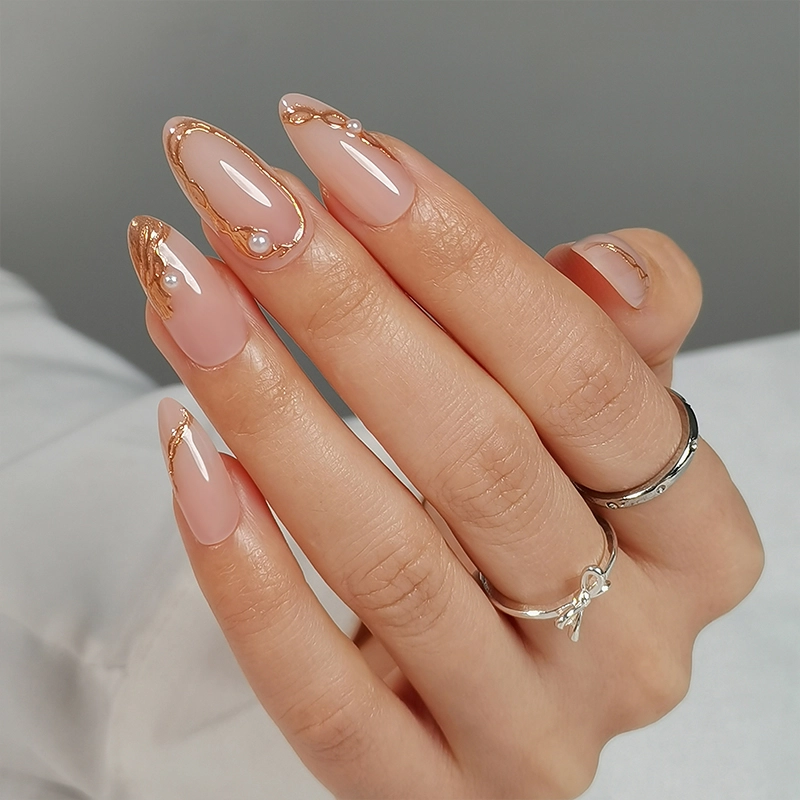
Wholesales Luxury Rhinestone Handmade Private Label Press On Nails Art Tips
Copyright © 2025 - XIANXING BEAUTY All Rights Reserved. Sitemap
Facebook
YouTube
Instagram
LinkedIn