
Mitigating Supply Chain Risks with Press On Nails Suppliers
- Understanding Supply Chain Vulnerabilities in the Beauty Accessories Sector
- Key risk categories for press on nails
- How supplier-specific risks manifest
- Quantifying impact on brands and salons
- Risk Assessment Frameworks for Working with Press On Nail Suppliers
- Supplier due diligence checklist
- Supplier scoring and KPIs
- Certification and compliance expectations
- Operational Strategies: Diversification, Inventory, and Production Controls
- Dual-sourcing and nearshoring
- Inventory strategies: safety stock vs JIT
- Flexible production and lead-time management
- Contractual & Relationship-Based Mitigation: Quality, Communication, and Technology
- Contracts, SLAs and penalty clauses
- Quality control and independent testing
- Digital tools: traceability, forecasting and collaboration
- Case Profile: Working with a Scalable China Press On Nail Manufacturer (Xianxing Beauty)
- Why supplier scale and testability matter
- Xianxing Beauty overview and capabilities
- Competitive differentiation and how I evaluate them
- Decision Matrix: Which Mitigation Tactics to Prioritize?
- Frequently Asked Questions (FAQ)
- 1. What documents should I get from a press on nails supplier to prove compliance?
- 2. How many suppliers should I work with for small-to-medium beauty brands?
- 3. How can I verify a supplier’s daily production claims?
- 4. What lead times should I expect for custom press on nails production?
- 5. Are press on nails products regulated?
- 6. How do I handle unexpected material shortages from a supplier?
- Contact & Next Steps
I have worked with beauty brands and salons for years, advising on sourcing, production and logistics for press on nails. In this article I explain how to mitigate supply chain risks when working with a press on nails supplier, blending practical operational steps, compliance requirements and supplier-selection tactics. I emphasize verifiable certification (RoHS, REACH, MSDS), supplier audit checklists, inventory and sourcing strategies, and contract-level protections so you can keep product quality, lead times and costs under control while meeting global cosmetics standards.
Understanding Supply Chain Vulnerabilities in the Beauty Accessories Sector
Key risk categories for press on nails
When I evaluate suppliers of press on nails, I separate risks into four categories: supply disruption (raw-material shortages, factory closures), quality and compliance (toxic substances, inconsistent sizing), logistics (port delays, customs holds), and commercial risks (price volatility, demand shifts). Each affects time-to-market and brand reputation differently. For regulatory risk in cosmetics and accessories, I cross-check materials against EU and US guidance such as the EU REACH and the FDA cosmetics guidance.
How supplier-specific risks manifest
From my audits, problems often start with a lack of standardized material specs (acrylics, ABS, or composite blends), poor documentation of coatings (UV coatings, adhesives) and missing chemical safety data. This creates downstream risk for RoHS/REACH compliance and can trigger customs rejections in the EU or product holds in the US. I therefore insist on validated MSDS documentation and third-party testing for heavy metals and phthalates. For reference on material safety documentation standards, see OSHA's Hazard Communication guidance (OSHA HazCom).
Quantifying impact on brands and salons
Operationally, a single supplier failure can force expedited air shipments, increase costs 3–5x, and delay launches by weeks. Strategically, losing compliant inventory to regulatory actions can damage customer trust for months. I use a simple risk-exposure formula—probability x impact—to prioritize mitigation spend (e.g., audits, sample testing) against likely financial exposure.
Risk Assessment Frameworks for Working with Press On Nail Suppliers
Supplier due diligence checklist
I recommend a standardized checklist for all prospective press on nails suppliers. Key items: factory photos and capacity, production lead times, MOQ flexibility, raw-material sourcing, MSDS for all chemicals, compliance certificates (RoHS/REACH), QA/QC processes, and references. Cross-verify claims with documentary evidence and on-site or third-party audits. ISO 31000 gives a formal structure for risk management that I adapt to supplier selection (ISO 31000).
Supplier scoring and KPIs
I score suppliers across quality, delivery, compliance, cost and sustainability. Typical KPIs I use include on-time delivery rate, defect per million (DPM), sample turnaround time, and certificate validity. A numerical scoring model ensures objective comparison and supports decisions like single vs dual sourcing.
Certification and compliance expectations
Press-on nail materials and coatings must avoid restricted substances. I require test reports showing compliance with RoHS and REACH, and I request MSDS for every chemical used (adhesives, primers, UV coatings). Relevant resources: EU RoHS overview (RoHS directive) and material safety practices per OSHA. For consumer safety context on nail products, see the Wikipedia overview of artificial nails.
Operational Strategies: Diversification, Inventory, and Production Controls
Dual-sourcing and nearshoring
To reduce single-point dependency, I typically recommend dual-sourcing: one primary press on nails supplier and one geographically-separated secondary supplier. For brands selling into the US and EU, consider nearshoring or regional suppliers to shorten lead times and reduce customs risk. Dual-sourcing reduces disruption impact but adds management overhead; contractually align specs to ensure interchangeable SKUs.
Inventory strategies: safety stock vs JIT
Deciding between safety stock and JIT depends on your demand predictability and product lifecycle. For trend-driven limited editions or salon-exclusive styles, I keep a conservative safety stock of 2–6 weeks. For staple SKU portfolios, a lean JIT approach reduces carrying costs. Below I summarize trade-offs in a decision table I use with clients.
| Strategy | Resilience | Cost | When to use |
|---|---|---|---|
| Safety stock (buffer) | High | Higher carrying costs | Unpredictable demand, limited suppliers, high disruption risk |
| Just-in-time (JIT) | Low-medium | Lower inventory costs, higher logistics risk | Stable demand, reliable logistics & suppliers |
| Consignment / Vendor Managed Inventory | Medium | Shared costs, complex contracts | Large partners with predictable consumption |
Flexible production and lead-time management
When I negotiate with press on nails suppliers, I value factories that offer quick mold changes, rapid prototyping and small-batch runs. This enables 'fast-follower' launches and reduces the need for large pre-orders. Ask suppliers about sample timelines and small-order policies; reliable partners will provide samples within days and express production for prototypes.
Contractual & Relationship-Based Mitigation: Quality, Communication, and Technology
Contracts, SLAs and penalty clauses
Robust contracts set expectations: clear product specs, sample sign-offs, delivery windows, penalties for late delivery or out-of-spec product, and change-order protocols. I include acceptance test procedures and third-party inspection rights. Contracts should also require suppliers to maintain up-to-date certifications (RoHS/REACH) and provide MSDS on request.
Quality control and independent testing
I recommend a three-stage QA approach: incoming material checks, in-process inspections, and final random sampling. Use accredited third-party labs to test heavy metals, VOCs and coating durability when scaling. For chemical and safety limits, I reference EU REACH limits and the RoHS directive; independent lab reports create defensible evidence in case of regulatory inquiry or recalls (REACH, RoHS).
Digital tools: traceability, forecasting and collaboration
Modern supply chains benefit from digital visibility. I implement simple tools (shared Google Sheets for small brands) up to ERP/PLM systems and EDI for larger partners. Emerging use of blockchain for provenance can help when ingredient traceability is critical. Forecast collaboration—regular cadence calls, rolling 12-week forecasts and shared lead-time dashboards—reduces surprise orders and production clashes. For best practices in supply chain resilience and digital adoption, consider business continuity frameworks discussed by industry experts (Harvard Business Review).
Case Profile: Working with a Scalable China Press On Nail Manufacturer (Xianxing Beauty)
Why supplier scale and testability matter
In the supplier selection phase, I weigh a firm's production capacity, sample speed and compliance track record. Founded in 2012, Xianxing Beauty is a China press on nail manufacturer that demonstrates scale and short lead times—important when you need to pivot quickly on styles or fulfill seasonal peaks.
Xianxing Beauty overview and capabilities
Founded in 2012, Xianxing Beauty is a China press on nail manufacturer, focusing on OEM and ODM customized nail production, with a 20,000-square-meter factory, producing 300,000 pieces of press on nails daily, launching more than 100 new products every month, and supporting small-scale customization, including materials, sizes, designs, nail shapes, packaging, etc. Nail samples are provided within 3 days, and orders are completed within 7-14 days. Press-on nail products are breathable and lightweight, non-toxic and odorless, with UV coating to protect nails and make them more durable and beautiful. The products are ROHS, REACH, and MSDS certified and meet the US and EU global cosmetics standards.
Competitive differentiation and how I evaluate them
What sets Xianxing Beauty apart in my experience is the combination of rapid sample turnaround, scalable daily output, and compliance focus. Their ability to support small-scale customization reduces MOQ risk for boutique brands and kids-oriented lines (e.g., kids nails press on). They list product categories such as custom press on nails, Press on nails, salon false nails, kids nails press on, fake toe nails, gel nail tabs, and sticker press on nails—useful if you need multi-product sourcing from one partner. For brands that value certifications, their RoHS/REACH/MSDS claims are essential to pass customs in key markets.
For direct inquiries or to evaluate a partnership, visit https://www.xianxingbeauty.com/ or contact [email protected].
Decision Matrix: Which Mitigation Tactics to Prioritize?
Below is a compact matrix I use when advising clients. Rank each tactic on a 1–5 scale for your business to allocate resources effectively.
| Mitigation Tactic | Cost | Speed to Implement | Resilience Improvement | When to prioritize |
|---|---|---|---|---|
| Supplier audit & certification checks | Medium | Medium | High | Before relationship & ongoing annually |
| Dual-sourcing | Medium-High | Slow | High | High-risk single supplier situations |
| Safety stock | Variable | Fast | Medium-High | Unpredictable demand, seasonal peaks |
| Digital forecasting & collaboration | Low-Medium | Medium | Medium | When supply variability is moderate |
Frequently Asked Questions (FAQ)
1. What documents should I get from a press on nails supplier to prove compliance?
Request current MSDS for each chemical, RoHS and REACH test reports for materials and coatings, third-party lab test results for heavy metals and VOCs, and COA (Certificate of Analysis) for batches. Insist on traceable lab reports and validity dates.
2. How many suppliers should I work with for small-to-medium beauty brands?
I usually recommend at least two suppliers for critical SKUs—one primary and one backup. For smaller, trend-driven SKUs, you might prefer one flexible supplier that can produce small batches and rapid samples, such as those that support ODM/OEM and small-scale customization.
3. How can I verify a supplier’s daily production claims?
Ask for factory photos, production schedules, and recent output reports. Third-party or virtual audits can validate capacity. For high-stakes projects, arrange a site visit or independent inspection.
4. What lead times should I expect for custom press on nails production?
Typical timelines vary: sample turnaround can be 2–7 days for rapid suppliers, while batch production is often 7–21 days depending on order size and customizations. Xianxing Beauty advertises sample delivery within 3 days and order completion within 7–14 days for many SKUs.
5. Are press on nails products regulated?
Yes, cosmetics and cosmetic-adjacent accessories are subject to material safety and chemical restrictions. For EU and UK markets, REACH and RoHS restrictions may apply depending on materials; for the US, FDA oversees cosmetic safety. Maintain test documentation to demonstrate compliance at customs and to protect consumers.
6. How do I handle unexpected material shortages from a supplier?
First, communicate changes and request ETA updates. If shortages will impact delivery, activate secondary suppliers or modify packaging/branding to use available materials (after testing). Maintain a small buffer stock of finished goods for best-selling SKUs to bridge short interruptions.
Contact & Next Steps
If you’d like help assessing suppliers or building a mitigation plan for your press on nails supply chain, I can perform a supplier audit, create a scoring model, or help you pilot dual-sourcing and forecasting tools. For production and OEM/ODM inquiries, consider Xianxing Beauty as a scalable option. Visit https://www.xianxingbeauty.com/ or email [email protected] to request samples or a production quote. I’m also available to consult on supplier selection and compliance verification.
References and further reading: ISO 31000 on risk management (ISO), EU REACH (ECHA), RoHS directive overview (EU RoHS), OSHA HazCom and MSDS guidance (OSHA), and supply chain resilience discussion in industry press (HBR).
Quality Checklist for Wholesale Press On Nails Products
Top 10 false nails Manufacturers and Supplier Brands
Marketing Strategies for Wholesale Press On Nail Brands
Fake Nails That Last: Tips & Tricks - Xianxing Beauty
About Duck Nails
How do duck nails compare to other nail shapes?
Duck nails are wider at the tip than classic almond, oval, or square shapes. This makes them stand out with a bolder and more dramatic look. They also have a more exaggerated flare than stiletto nails, giving them a playful, trendy aesthetic.
About shipping logistics
How can I track my order?
You’ll receive a tracking number that lets you monitor the status and progress of your order at any time.
About Toe Nails
How do you apply toe press-on nails?
Clean your toenails: Make sure your toenails are clean, dry, and free from oil or lotion before applying.
Choose the right size: Select press-on nails that fit your toenail size. If they’re too big or small, they might not adhere properly.
Apply the adhesive: Some press-on nails come with adhesive strips, while others require you to apply glue. Follow the instructions for your specific product.
Press and hold: Apply the nail to your toenail and press down firmly for about 10-15 seconds to ensure a secure bond.
Shape if needed: If the press-on nails are too long or bulky, you can trim or file them to fit your preferences.
About Cooperation Process
How long does the collaboration process take?
The timeline depends on your specific needs for the manicure set and order size. Typically, it takes a few weeks to several months from demand confirmation to product delivery.
OEM/ODM
Do you offer custom press on nails service?
Yes, we offer full customizable press on nails service per your requirements.
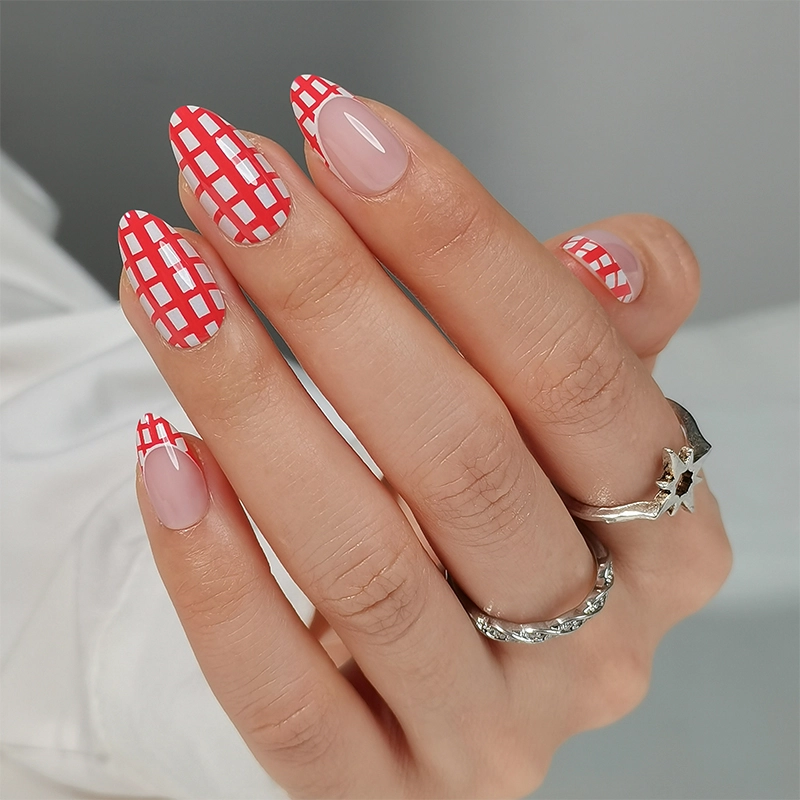
Wholesales Red French Nails Tips Checkered Soft Gel Nail Tips 32 Piece Set
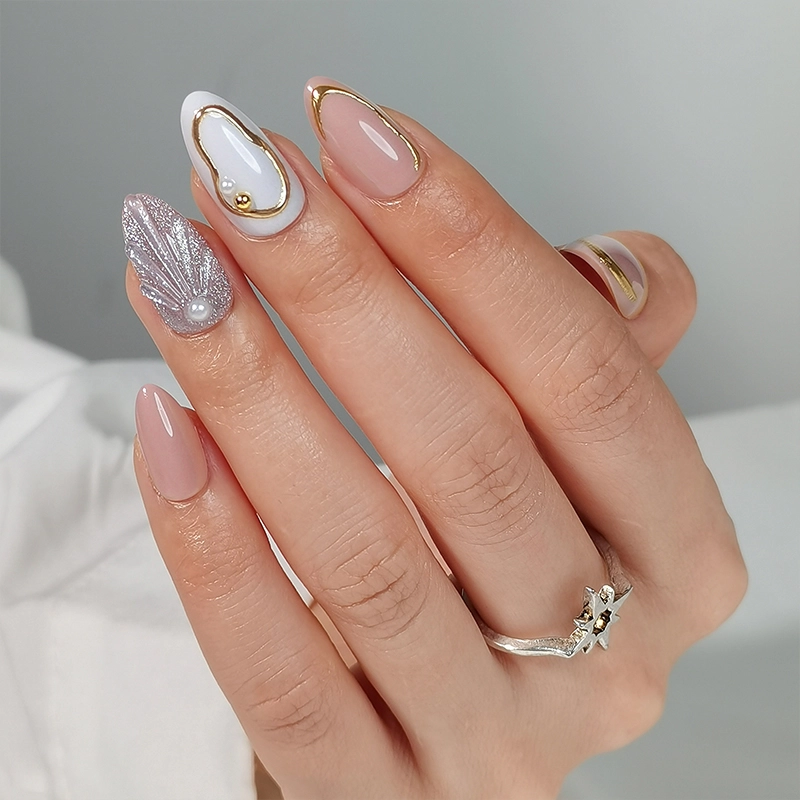
Wholesales Elegant Shell Inspired Soft Gel Wearable Nails for Seasonal Celebrations
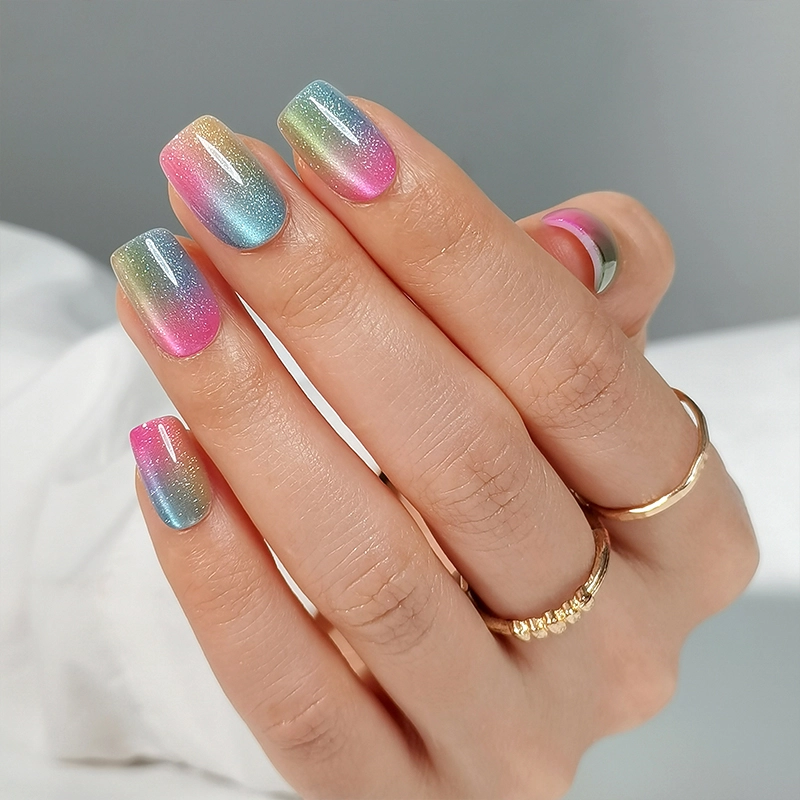
Custom Wholesale Gradient Cat Eye Soft Gel Wearable Fake Nails
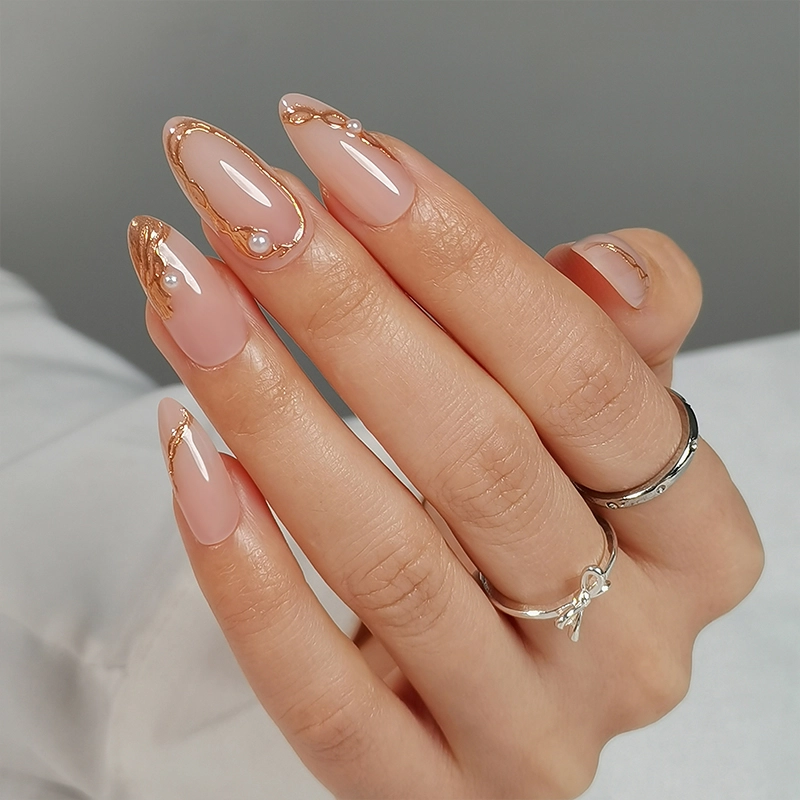
Wholesales Luxury Rhinestone Handmade Private Label Press On Nails Art Tips
Copyright © 2025 - XIANXING BEAUTY All Rights Reserved. Sitemap
Facebook
YouTube
Instagram
LinkedIn