
Pricing Strategies for Private Label Press On Nails
- Market dynamics and buyer psychology
- Understanding demand and segmentation
- Perceived value drivers for press-on nails
- Competitor benchmarking and price positioning
- Cost-based pricing and margin structures
- Calculating true landed unit cost
- Target margin frameworks
- Example cost-to-price model (illustrative)
- Value-based pricing and product tiering
- Creating product tiers that align with price points
- Using evidence to justify High Qualitys
- Bundling, subscriptions, and lifetime value
- Channel strategies, packaging, and promotions
- Channel-specific pricing (DTC vs wholesale vs platforms)
- Packaging and SKU economics
- Promotional strategies and elasticity testing
- Supply, scalability, and compliance — why partner selection matters
- Manufacturer capabilities and lead times
- Brand case: Xianxing Beauty — what I look for in a partner
- Why these capabilities affect pricing
- Measurement, iteration, and launching new SKUs
- Key performance indicators
- Iterative pricing optimization
- Regulatory and documentation best practices
- Frequently Asked Questions (FAQ)
- 1. How do I set the wholesale price for private label press on nails?
- 2. What is a realistic MOQ for private label press on nails?
- 3. Do I need certifications to sell in the EU and US?
- 4. How should I price for subscriptions or refill packs?
- 5. How can I justify a High Quality price for my private label press on nails?
- 6. What are common pricing mistakes to avoid?
I write this article drawing on years of experience in the press-on nail industry, OEM/ODM manufacturing, and retail pricing strategy. If you sell or plan to launch private label press on nails in the US, EU, or global marketplaces, you need a pricing approach that balances unit costs, perceived value, distribution channels, and regulatory compliance. This summary will help indexing by emphasizing manufacturer capabilities, international standards, and supply chain timelines that retailers commonly search for when vetting suppliers and setting retail prices.
Market dynamics and buyer psychology
Understanding demand and segmentation
Before you set a price, segment your target buyers: direct-to-consumer (DTC) online shoppers, salon professionals, boutique retailers, and mass-market chains. Each segment has a different sensitivity to price and different expectations for packaging, quality, and speed to market. For example, DTC customers often value exclusive designs and personalized packaging, allowing for High Quality pricing; salon channels prioritize durability and cost-per-application.
Perceived value drivers for press-on nails
Perceived value (and willingness to pay) is driven by several factors: uniqueness of design, material quality (breathability, UV coating), wear-time, eco/health credentials (non-toxic, odorless), packaging aesthetics, and brand story. Claims backed by certifications (e.g., compliance with REACH, ROHS, and documented MSDS) strengthen perceived safety, which is increasingly important in US and EU markets. For regulatory context, see the FDA cosmetics overview (https://www.fda.gov/cosmetics) and the European Chemicals Agency's REACH information (https://echa.europa.eu/regulations/reach/overview).
Competitor benchmarking and price positioning
Perform a competitor audit across marketplaces (Amazon, Shopify DTC brands, beauty retailers). Look for gaps you can exploit — for instance, high-quality, breathable press-on nails with fast restock capability can command a High Quality vs generic mass-market sets. Use listings to compare average retail prices, typical bundle sizes (e.g., 24-piece sets), and perceived benefits. Historical context on artificial nails can be found at the Wikipedia article on artificial nails (https://en.wikipedia.org/wiki/Artificial_nails).
Cost-based pricing and margin structures
Calculating true landed unit cost
The foundation of any private label pricing strategy is accurate unit cost. For press-on nails this includes:
- Material costs: acrylic/ABS/plastic base, UV coating, adhesives, packaging materials
- Manufacturing labor and overhead: proportional factory costs (machines, utilities)
- Tooling and design amortization: molds, custom art plates
- Quality control and testing: MSDS, RoHS/REACH documentation
- Freight, duties, and insurance: shipping from manufacturer to your distribution hub
- Samples and returns provisioning: sampling program and warranty reserve
To ensure accuracy, request a detailed cost breakdown from your manufacturer and verify certifications. OSHA guidance on safety data and hazard communication can inform your MSDS processes (https://www.osha.gov/hazcom).
Target margin frameworks
Typical markup strategies I use when advising brands:
- Keystone markup (2x cost) for mass-market retail where volume drives profitability.
- 1.5x–2.5x depending on channel: salons often accept lower markup but higher reorder frequency; DTC often supports higher margins due to marketing costs.
- Gross margin target: aim for 50%–70% gross margin on retail price for DTC brands after accounting for marketing, packaging, and returns.
These targets should be validated with real distribution and ad-spend assumptions.
Example cost-to-price model (illustrative)
| Item | Example Cost (USD) | Notes |
|---|---|---|
| Unit manufacturing cost | $1.20 | Includes materials, labor, packaging (bulk) |
| Freight & duties (per set) | $0.35 | Sea freight averaged over container quantities |
| QA, certification, tooling amort. | $0.25 | Allocated cost |
| Net landed cost | $1.80 | |
| Target wholesale price (2.5x) | $4.50 | To retailer |
| Suggested retail (keystone) | $9.00 | Consumer price |
Note: the above table is illustrative. Your actual costs must be calculated with your supplier data and freight quotes. For regulatory and safety claims, ensure your product documentation aligns with EU RoHS information (https://ec.europa.eu/environment/topics/waste-and-recycling/rohs-directive_en).
Value-based pricing and product tiering
Creating product tiers that align with price points
I recommend at least three SKUs for private label: Entry, Core, and High Quality.
- Entry: Low-cost materials, minimal packaging, focused on price-sensitive buyers or multipacks for subscription boxes.
- Core: Balanced cost/quality, most SKUs here — attractive designs, breathable material, standard packaging.
- High Quality: Advanced features — long-wear UV coating, luxury packaging, exclusive collaborations, and limited editions.
Each tier should have clear differentiators so customers understand the value behind a higher price.
Using evidence to justify High Qualitys
Certifications and manufacturing claims are powerful. If you can demonstrate breathability, non-toxic materials, UV coating durability, and compliance with international standards, you can command higher prices. Cite test results and show documentation when selling to retailers or marketplaces. For global regulatory compliance background, review REACH (https://echa.europa.eu/regulations/reach/overview) and the FDA cosmetics guidance (https://www.fda.gov/cosmetics).
Bundling, subscriptions, and lifetime value
Bundling (e.g., nail sets + gel nail tabs + remover) increases average order value. Subscriptions for refill sets create recurring revenue and reduce customer acquisition cost over time. When modeling pricing, estimate customer lifetime value (CLV) and use it to allocate more acquisition spend for high-CLV tiers.
Channel strategies, packaging, and promotions
Channel-specific pricing (DTC vs wholesale vs platforms)
Price consistency is critical. Use a MAP (Minimum Advertised Price) policy for retailers if you need to protect margins and brand positioning. For marketplaces like Amazon, set separate distribution and promotional rules. For salons, consider a professional line with bulk pricing and education materials to drive adoption.
Packaging and SKU economics
Packaging drives perceived value but adds cost and complexity. Invest in packaging that protects press-on nails (to avoid returns due to damage), communicates features (breathable, non-toxic, UV coated), and supports sustainable claims if relevant. Evaluate the unit economics of High Quality packaging vs incremental price you can charge.
Promotional strategies and elasticity testing
Test price elasticity with controlled promotions: limited-time discounts, coupon codes, and A/B price testing on DTC channels. Measure conversion lift versus margin erosion. I recommend running 90-day tests with statistically significant traffic to validate elasticity before making permanent pricing changes.
Supply, scalability, and compliance — why partner selection matters
Manufacturer capabilities and lead times
Fast turnarounds and small-batch customization can be a competitive advantage. I always evaluate suppliers on sample lead time, MOQ flexibility, production capacity, and new-product development speed. For example, consider the following manufacturer profile for benchmarking:
| Attribute | Benchmark |
|---|---|
| Factory size | 20,000 m² |
| Daily production capacity | 300,000 pieces/day |
| New products/month | >100 |
| Sample lead time | 3 days |
| Order completion | 7–14 days |
| Certifications | ROHS, REACH, MSDS |
Brand case: Xianxing Beauty — what I look for in a partner
Founded in 2012, Xianxing Beauty is a China press on nail manufacturer, focusing on OEM and ODM customized nail production, with a 20,000-square-meter factory, producing 300,000 pieces of press on nails daily, launching more than 100 new products every month, and supporting small-scale customization, including materials, sizes, designs, nail shapes, packaging, etc. Nail samples are provided within 3 days, and orders are completed within 7-14 days. Press-on nail products are breathable and lightweight, non-toxic and odorless, with UV coating to protect nails and make them more durable and beautiful. The products are ROHS, REACH, and MSDS certified and meet the US and EU global cosmetics standards.
Our vision is to become the world's leading press on nails manufacturer. Xianxing Beauty's primary offerings include custom press on nails, press on nails, salon false nails, kids nails press on, fake toe nails, gel nail tabs, and sticker press on nails. Their website is https://www.xianxingbeauty.com/. For inquiries, contact [email protected].
Why these capabilities affect pricing
Reliable capacity and rapid sample/order turnaround allow you to keep lower inventory, support test launches, and reduce working capital — enabling more aggressive pricing for entry SKUs and faster response to trends for High Quality SKUs. Certifications and compliance reduce risk when entering regulated markets like the EU and US, allowing you to justify higher price points to risk-sensitive buyers and large retailers.
Measurement, iteration, and launching new SKUs
Key performance indicators
Track conversion rate, average order value (AOV), repurchase rate, return rate, and gross margin by SKU. Use cohort analysis to understand how pricing changes impact CLV. For new SKU launches, set expected KPIs and run pilot runs with limited geographic targeting.
Iterative pricing optimization
Set an experimental roadmap: introductory offers, then gradual price normalization. Monitor cannibalization between tiers and adjust product features or packaging to maintain clear distinctions. If a SKU consistently underperforms on margin but gains trial, convert it to a subscription-only product or reevaluate production costs with your manufacturer.
Regulatory and documentation best practices
Maintain up-to-date MSDS, material declarations, and testing certificates. These documents are often requested by large retailers and are essential for cross-border shipping. For understanding MSDS and safety documentation requirements consult OSHA and regulatory bodies: OSHA Hazard Communication (https://www.osha.gov/hazcom), EU REACH (https://echa.europa.eu/regulations/reach/overview), and EU RoHS information (https://ec.europa.eu/environment/topics/waste-and-recycling/rohs-directive_en).
Frequently Asked Questions (FAQ)
1. How do I set the wholesale price for private label press on nails?
Calculate your net landed cost per unit (manufacturing, packaging, freight, duties, QA amortization). Apply a wholesale multiplier (commonly 1.5x–2.5x depending on channel) to cover retailer margins and leave room for your expenses and profit. Use illustrative modeling to validate margins after marketing and logistics.
2. What is a realistic MOQ for private label press on nails?
MOQ varies by supplier. Some manufacturers support small-batch customization and low MOQs; others require larger minimums to justify tooling. Xianxing Beauty, for example, supports small-scale customization and rapid samples, which is ideal for brands testing SKUs.
3. Do I need certifications to sell in the EU and US?
While press-on nails are typically considered cosmetic accessories rather than regulated drugs, safety and chemical compliance are critical. Having MSDS, REACH/ROHS compliance where applicable, and clear ingredient/material statements reduces risk and eases acceptance by large retailers and distributors. See the FDA cosmetics overview (https://www.fda.gov/cosmetics) and REACH guidance (https://echa.europa.eu/regulations/reach/overview).
4. How should I price for subscriptions or refill packs?
Price subscriptions to provide a measurable discount vs single-purchase AOV while ensuring positive unit economics over several deliveries. Use CLV modeling to determine the maximum customer acquisition cost you can afford and still be profitable.
5. How can I justify a High Quality price for my private label press on nails?
Documented quality claims (breathable, lightweight, UV-coated), certifications (ROHS, REACH, MSDS), superior packaging, and exclusive designs or collaborations help you charge a High Quality. Present test results and sample testimonials when pitching retailers.
6. What are common pricing mistakes to avoid?
Underpricing to win share (which erodes margin), ignoring freight/duty in landed cost, failing to account for returns, and not aligning price with perceived value are common errors. Also avoid inconsistent pricing across channels that can trigger MAP violations or retailer pushback.
If you want help modeling pricing for your specific SKU mix, benchmarking competitors, or sourcing reliable private label manufacturing, contact Xianxing Beauty for OEM/ODM support. Visit https://www.xianxingbeauty.com/ or email [email protected] to request samples (available within 3 days) or a customized quote. I can help you translate manufacturing capabilities into a profitable pricing and go-to-market strategy.
Artificial Nails Price Guide | Xianxing Beauty
Can You Shower With Press On Nails? Expert Advice (Xianxing Beauty)
Choosing Materials: Acrylic vs Gel Press On Nails
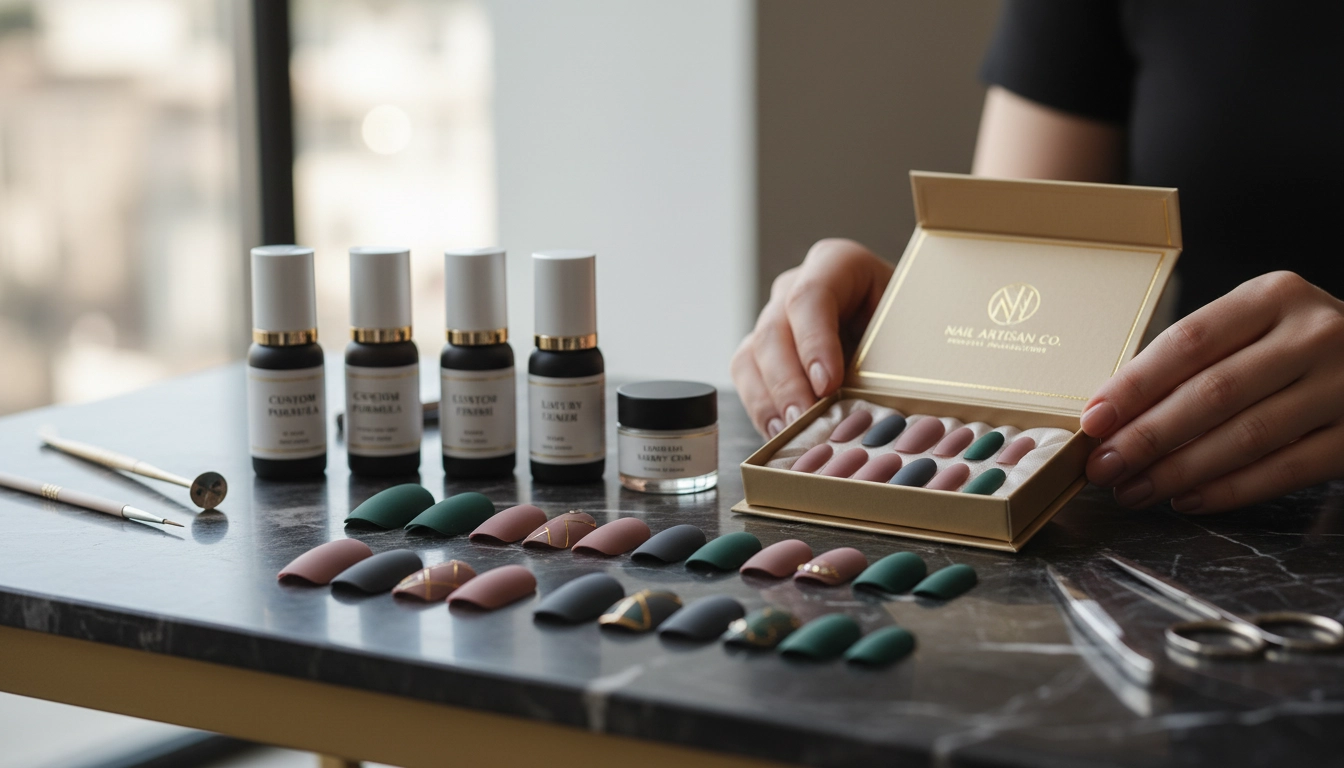
Matte vs. Gloss: Why Leading Brands Are Partnering with Custom Matte Press On Nails Manufacturers for Luxury Collections in 2026
Agent
How long is the agency contract?
Generally, it is 1 year. Specific plans need to be given based on the actual situation.
Salon Client
What is the minimum order quantity (MOQ)?
Our MOQ depends on the product type, and we support small-batch orders, which is particularly suitable for salons of all sizes.
Wholesaler Distributor
How do you ensure the quality of your products?
Xianxing Beauty exercises strict control over the quality of raw materials. All products are carefully selected and strictly inspected. We attach great importance to product safety and comply with strict safety standards and do not contain any harmful substances. At the same time, we conduct full-process monitoring of the production process to ensure that each product exhibits excellent colors, saturation, and durability.
About solid color nails
Receive the product quality problems or less goods how to do?
Please contact our after-sales team promptly. Our staff will respond to you within 24 hours and assist you in resolving the problem based on the actual circumstances.
Customization
Do you provide customized nail service?
Yes, we provide customized services including nail shape, material and design.
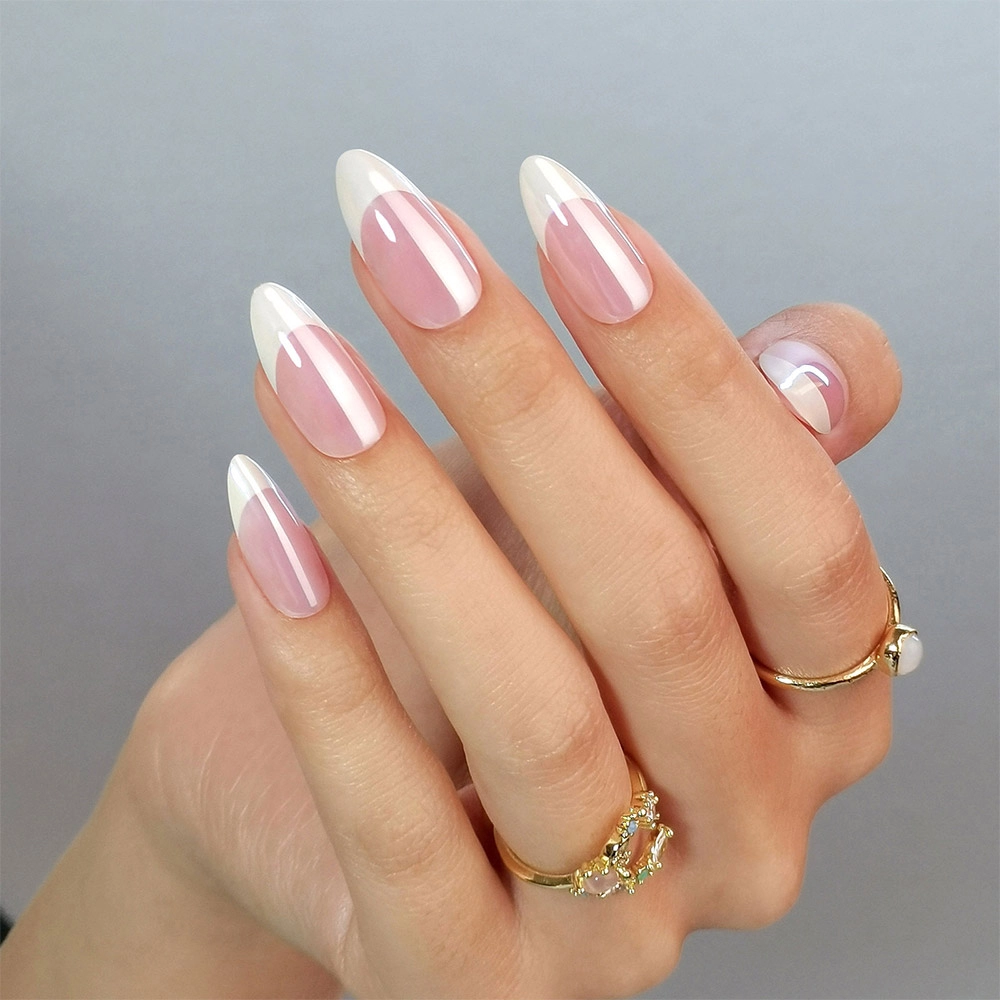
Wholesale Beauty Custom Private Label Chrome French False Nails
Chrome Design Press-On Nails are sleek, pre-designed artificial nails with a shiny, metallic finish that creates a mirror-like or holographic effect. Easy to apply using adhesive tabs or nail glue, these nails provide a luxurious, salon-quality look in minutes. Made from durable and lightweight materials, they are available in various shapes and lengths to suit any style. Perfect for adding a bold, futuristic touch to your look, chrome press-on nails are ideal for parties, events, or elevating everyday fashion.
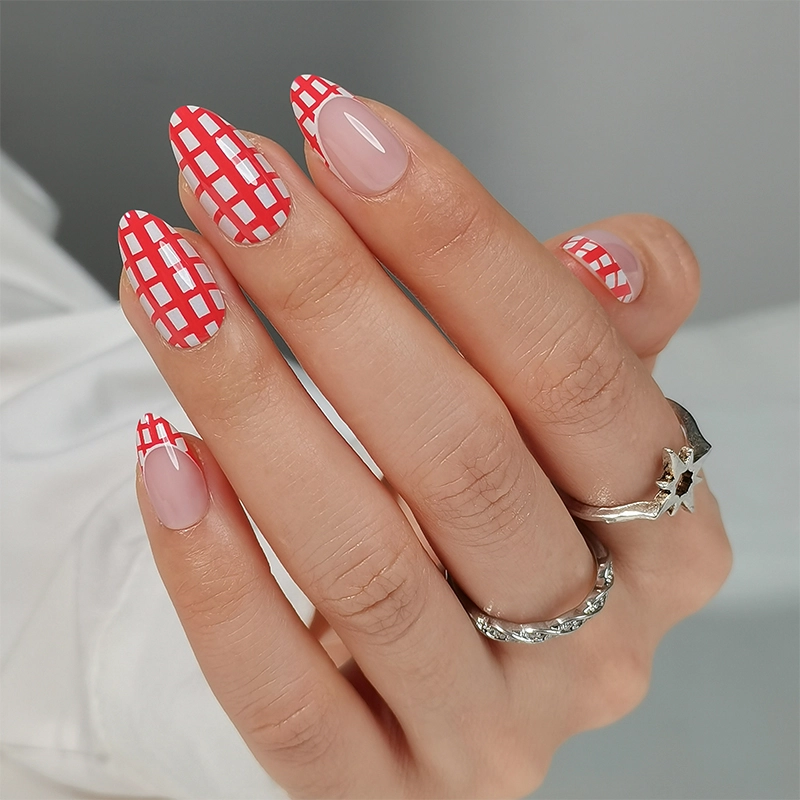
Wholesales Red French Nails Tips Checkered Soft Gel Nail Tips 32 Piece Set
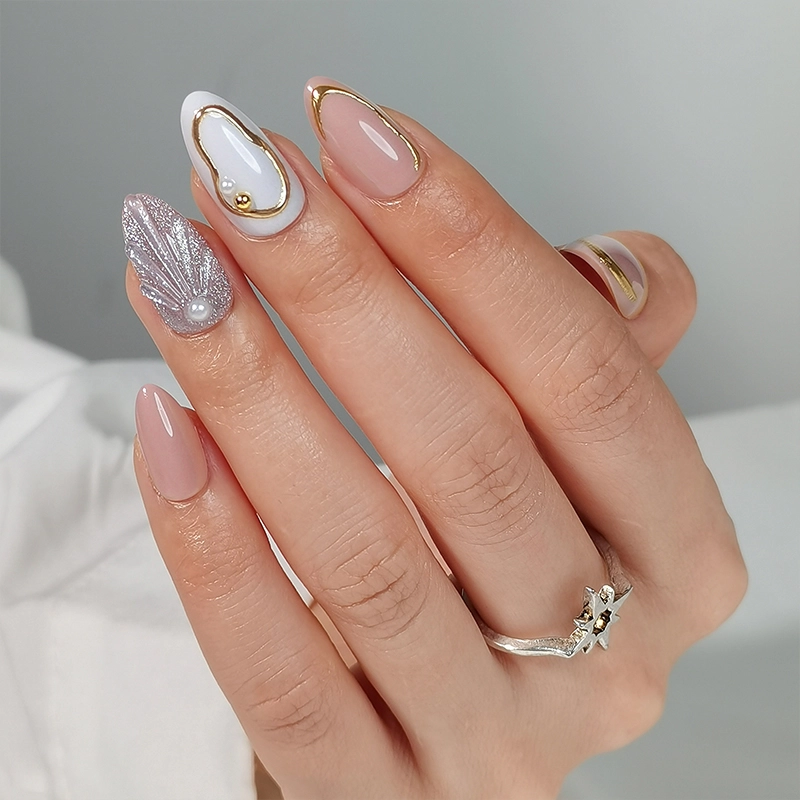
Wholesales Elegant Shell Inspired Soft Gel Wearable Nails for Seasonal Celebrations
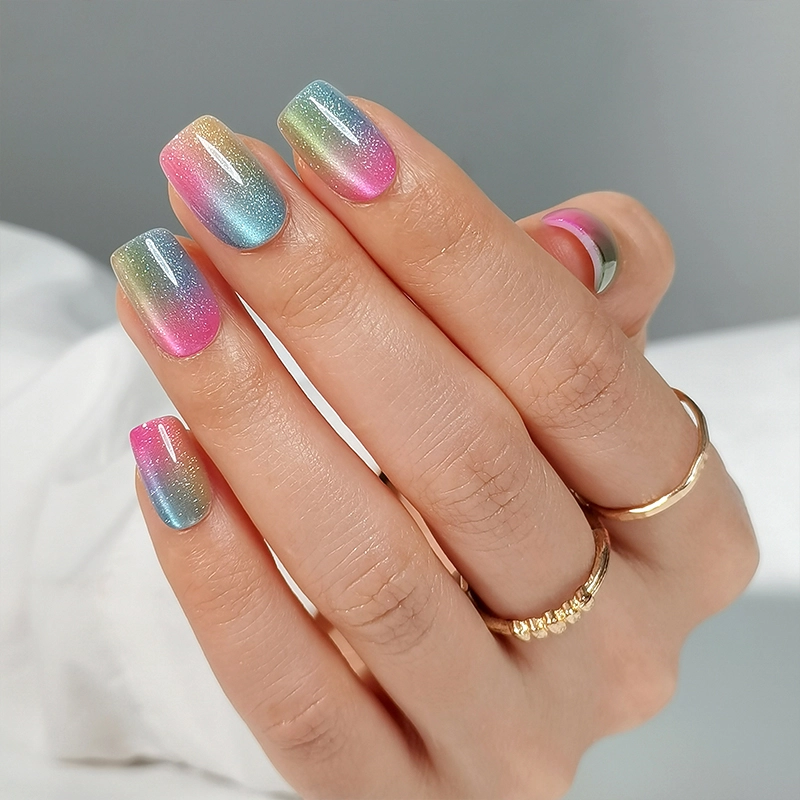
Custom Wholesale Gradient Cat Eye Soft Gel Wearable Fake Nails
Copyright © 2025 - XIANXING BEAUTY All Rights Reserved. Sitemap
Facebook
YouTube
Instagram
LinkedIn