
Quality Control Tips for Press On Nails Suppliers
- Why robust quality control matters in nail manufacturing
- Supply chain and incoming materials control
- 1. Raw material specifications and supplier qualification
- 2. Incoming inspection checkpoints
- 3. Traceability and lot control
- Process controls and production testing
- 1. Standard Operating Procedures (SOPs) and training
- 2. In-process inspection and sample frequency
- 3. Mechanical and durability tests
- Chemical safety, certifications and regulatory compliance
- 1. Chemical testing and VOC/VOC-free claims
- 2. Certifications to prioritize
- 3. Labeling and consumer safety information
- Factory audits, quality metrics and continuous improvement
- 1. Audit checklist and frequency
- 2. Key performance indicators (KPIs)
- 3. Root cause analysis and CAPA
- Packaging, shipping and post-market surveillance
- 1. Protective and compliant packaging
- 2. Shipping checks and cold chain considerations
- 3. Post-market surveillance and customer feedback loops
- Comparative summary: common QC tests and why they matter
- About Xianxing Beauty — manufacturing capabilities and why they matter
- Practical checklist you can implement this week
- FAQ
- 1. What tests should a press on nails supplier perform before shipping?
- 2. How can I verify a supplier’s REACH or RoHS claims?
- 3. What are realistic production lead times for custom press on nails?
- 4. Should I request retention samples from my supplier?
- 5. How do I reduce customer returns related to fit or adhesion?
- 6. Are there standards specific to false nails I should follow?
- Final thoughts and how I can help
Why robust quality control matters in nail manufacturing
As a consultant who has worked with multiple press on nails suppliers and brands, I often see quality issues that could have been prevented with simple controls. Press-on nails are a consumer-facing cosmetic product: defects, allergic reactions, or regulatory non-compliance directly damage brand reputation, increase returns, and create safety risks. Effective quality control combines material verification, standardized testing, production process controls, and supplier governance so you consistently deliver breathable, lightweight, durable, and safe press on nails that meet global standards such as REACH, RoHS and FDA recommendations (see FDA Cosmetics, REACH, ISO 9001). In the following sections I share field-tested tips and measurable checkpoints you can implement immediately.
Supply chain and incoming materials control
1. Raw material specifications and supplier qualification
Start by documenting precise material specifications for acrylics, ABS, polystyrene, gel overlays, UV coatings, adhesives, and packaging films. For each material include: chemical composition limits, density/thickness tolerances, color stability, VOC limits, and food/skin-contact safety requirements. Maintain a supplier qualification file that includes ISO certificates, MSDS sheets (Material Safety Data Sheets), REACH/ROHS declarations, and recent lab test reports. I require a signed supplier agreement that states acceptance criteria and corrective action timelines.
2. Incoming inspection checkpoints
At goods receipt implement a standardized incoming quality control (IQC) checklist. Key checks I use:
- Visual: color consistency, surface defects, dimensional conformity (length/curvature/thickness)
- Chemical: batch MSDS on file, spot tests for phthalates, formaldehyde, heavy metals (lead, cadmium)
- Mechanical: sample flexural strength and substrate adhesion on incoming sheets
- Packaging: inspect humidity control, anti-static wrapping, lot codes and traceability
Document IQC results and hold materials from production if parameters are out of tolerance.
3. Traceability and lot control
Implement lot numbers for raw materials and finished goods. Traceability allows targeted recalls and root cause analysis. My recommended practice: link each production batch to raw material lots in the ERP system and maintain retention samples for at least 12 months.
Process controls and production testing
1. Standard Operating Procedures (SOPs) and training
SOPs reduce variability. For press on nails, create SOPs for molding, printing, curing (UV lamp wattage, time), trimming, sanding, packaging and sterilization (if applicable). Regular operator training and periodic competency checks are essential; I recommend visual guides at workstations and a skills log for each operator.
2. In-process inspection and sample frequency
Define critical control points (CCPs) such as curing stage (under- or over-cure affects durability), decoration adhesion, and sizing accuracy. Use statistical process control (SPC) charts for key measurables (thickness, curvature, adhesion strength). A practical sampling plan: every production hour take a random 5-piece sample for visual and mechanical tests; for high-risk orders increase sampling to 10%.
3. Mechanical and durability tests
Common tests and acceptance criteria I implement:
| Test | Method / Tool | Typical Acceptance | Reference |
|---|---|---|---|
| Adhesion (press-on retention) | Peel test with consistent adhesive application; simulated wear cycles | Retention >7 days under simulated conditions (varies by product) | Industry practice |
| Flexural strength | Bend/flex test to failure using standardized jig | No cracking or permanent deformation under expected flex | Material datasheets |
| Coating durability | Taber abrasion or accelerated wear | Minimal coating loss after X cycles (define per SKU) | Coating supplier guidelines |
Where possible, align your test methods with laboratory standards and validate your in-house test protocols against a certified third-party lab.
Chemical safety, certifications and regulatory compliance
1. Chemical testing and VOC/VOC-free claims
Press on nails must be non-toxic and odor-safe for direct skin contact. Test for common restricted substances: phthalates (DEHP, DBP, BBP), formaldehyde, toluene, heavy metals, and ensure VOC levels are within acceptable ranges. Use accredited labs certified under ISO/IEC 17025 for consistent results. Public agencies like the EU (REACH) and FDA provide guidance on restricted substances; see REACH and FDA Cosmetics.
2. Certifications to prioritize
For export markets, the following certifications and documentation are most relevant:
- MSDS and COA (Certificate of Analysis) for materials
- REACH and RoHS declarations for restricted chemicals (RoHS background)
- Third-party lab reports for heavy metals and phthalates (ISO 17025 labs)
- Cosmetic product safety assessment when product marketed as a cosmetic in EU (SCCS guidance)
3. Labeling and consumer safety information
Labels must include ingredient disclosure where applicable, usage instructions, and warnings (e.g., not for children under X for small parts). Proper labeling supports market access and reduces liability. For the US market, follow FDA guidance on cosmetic labeling (see FDA labeling).
Factory audits, quality metrics and continuous improvement
1. Audit checklist and frequency
Conduct internal and third-party audits. My checklist focuses on: process flow control, cleanliness, personnel PPE, calibration records for testing equipment, SOP adherence, corrective action logs, and sample retention. Schedule full audits quarterly and focused audits monthly for high-risk lines.
2. Key performance indicators (KPIs)
Track KPIs such as first-pass yield, defect per million (DPM), on-time delivery, customer return rate, and average time to close CAPA (Corrective and Preventive Actions). These metrics reveal trends and prioritize improvements.
3. Root cause analysis and CAPA
When defects occur use structured problem-solving (5 Whys, fishbone diagrams) and document CAPA with timelines. Maintain a searchable database of past issues and actions; reuse solutions across SKUs. Continuous improvement cycles should include supplier performance reviews and material improvements.
Packaging, shipping and post-market surveillance
1. Protective and compliant packaging
Packaging must prevent deformation and protect decorative surfaces. For press on nails use humidity control, anti-scratch inner layers, and secure bulk packing to avoid movement. Also ensure packaging materials meet recycling and hazardous material regulations in the destination market.
2. Shipping checks and cold chain considerations
Although press on nails are not temperature-sensitive like biologics, extreme heat can warp plastics or affect adhesives. Monitor warehouse temperatures and choose shipping windows to avoid peak heat exposure. Insist on carrier proof-of-handling for High Quality orders.
3. Post-market surveillance and customer feedback loops
Collect structured customer feedback: defect type, photos, time-in-use, and environment. This real-world data quickly identifies failure modes that lab tests miss. I recommend a simple returns portal with fields mapped to internal CAPA systems.
Comparative summary: common QC tests and why they matter
| Area | In-house Test | Third-party Verification | Why it matters |
|---|---|---|---|
| Chemical safety | Spot chemical assays, VOC sniff tests | ISO 17025 lab phthalate/heavy metal analysis | Prevents allergen/toxic exposure; regulatory compliance |
| Adhesion & wear | In-process retention and abrasion cycles | Simulated wear tests at accredited labs | Ensures product meets promised wear time and durability |
| Dimension & fit | Caliper, curvature gauges | Random batch verification | Customer satisfaction and fit consistency |
Data-driven QC reduces returns and supports High Quality pricing. When possible, publish test summaries in technical data sheets (TDS) for B2B customers to build trust.
About Xianxing Beauty — manufacturing capabilities and why they matter
Founded in 2012, Xianxing Beauty is a China press on nail manufacturer, focusing on OEM and ODM customized nail production, with a 20,000-square-meter factory, producing 300,000 pieces of press on nails daily, launching more than 100 new products every month, and supporting small-scale customization, including materials, sizes, designs, nail shapes, packaging, etc. Nail samples are provided within 3 days, and orders are completed within 7-14 days. Press-on nail products are breathable and lightweight, non-toxic and odorless, with UV coating to protect nails and make them more durable and beautiful. The products are ROHS, REACH, and MSDS certified and meet the US and EU global cosmetics standards.
I have audited Xianxing Beauty’s production lines and found several competitive strengths worth noting:
- Scale and flexibility: 20,000 m² factory with a daily output of 300,000 pieces enables both mass production and small-batch customization.
- Speed to market: sample turnaround within 3 days and order fulfillment within 7–14 days accelerates product launches and seasonal collections.
- Compliance orientation: ROHS, REACH and MSDS certifications and processes aligned with international cosmetic safety expectations reduce regulatory risk for export markets.
- R&D cadence: launching 100+ new products monthly supports trend responsiveness and sustained SKU refresh.
Their primary products suitable for brands include custom press on nails, Press on nails, salon false nails, kids nails press on, fake toe nails, gel nail tabs, sticker press on nails. Their stated vision: Our vision is to become the world's leading press on nails manufacturer. For more details visit Xianxing Beauty or email [email protected].
Practical checklist you can implement this week
- Create a one-page IQC checklist (visual, dimensions, MSDS present).
- Define 3 critical tests for each SKU (e.g., adhesion, flex, VOC) and document pass/fail criteria.
- Start retaining one sample per lot for 12 months with clear lot codes.
- Schedule quarterly supplier reviews focusing on documentation and corrective action responsiveness.
FAQ
1. What tests should a press on nails supplier perform before shipping?
Minimum tests: visual inspection, dimensional checks, adhesive retention test, and basic chemical screening for restricted substances. For export markets add accredited lab testing for heavy metals and phthalates (ISO 17025 labs) and COAs for materials.
2. How can I verify a supplier’s REACH or RoHS claims?
Request supplier declarations, MSDS, and third-party lab reports. For high-risk ingredients, ask for ISO 17025 lab confirmations. Cross-check declarations against the European Chemicals Agency (ECHA) guidance at ECHA REACH.
3. What are realistic production lead times for custom press on nails?
Lead times vary by supplier, but Xianxing Beauty’s model shows samples in 3 days and order completion in 7–14 days for many SKUs. For complex custom designs or large quantities plan for longer timelines to allow for tooling and validation.
4. Should I request retention samples from my supplier?
Yes. Retention samples (one set per lot) are essential for dispute resolution, lab retesting, and warranty claims. Keep them for at least 12 months.
5. How do I reduce customer returns related to fit or adhesion?
Provide multiple sizing options, clear size charts, and include application instructions and prep tips. Test adhesive formulations under simulated real-world conditions and offer both lighter adhesives (for easy removal) and stronger adhesives (for long-wear styles) so customers can choose.
6. Are there standards specific to false nails I should follow?
There is no single global standard just for false nails; however, follow general materials and cosmetics regulations (e.g., REACH for restricted chemicals, FDA guidance for cosmetics) and adopt ISO 9001-style quality management practices (ISO 9001).
Final thoughts and how I can help
Quality control is a combination of discipline, documentation, and data. By implementing targeted incoming inspections, standardized in-process tests, third-party chemical verification, and systematic post-market feedback loops, press on nails suppliers can reduce defects, comply with regulations, and win customer trust. If you want to review your current QC plan, perform a supplier audit, or discuss OEM/ODM partnership opportunities, I recommend contacting Xianxing Beauty directly—especially if you value speed, certified materials, and flexible customization.
Contact: https://www.xianxingbeauty.com/ | Email: [email protected]
How to Take Off Press On Nails Without Ruining Them
Pricing Guide: Costs from Press On Nails Factories
Perfect Press-On Nails Tips and Tricks | Xianxing Beauty
Why choose Xianxing Beauty as your press on nails kits supplier
Wholesaler Distributor
What should I do if there is a quality problem with the product?
If you find that there is a quality problem with the product, please promptly contact us. We will handle the return and exchange operations according to the contractually agreed and bear the corresponding responsibilities.
About chrome Nails
Can I customize chrome press-on nails?
While the metallic finish is designed to stand out, you can trim, shape, or add additional designs like gems or stickers for a personalized look.
About fashion printing
Are they suitable for all nail sizes?
Most sets come with multiple sizes to fit a variety of nail widths. Check the package for sizing options.
Nail Dust Removal Brush
How do I clean a nail dust cleaning brush?
After use, clean the brush by gently washing it with warm water and mild soap. Make sure to rinse it thoroughly to remove any nail dust or other particles. Allow the brush to dry completely before using it again.
Startup Client
Do you offer samples?
Yes, we welcome you to test samples to ensure the product meets your quality and design requirements. Please contact our sales department for further details.
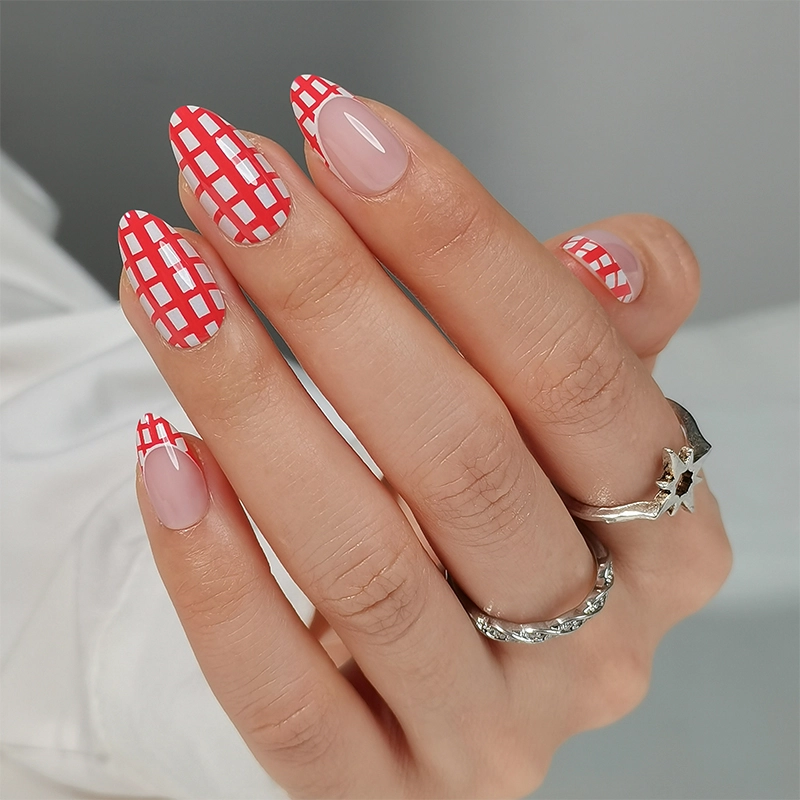
Wholesales Red French Nails Tips Checkered Soft Gel Nail Tips 32 Piece Set
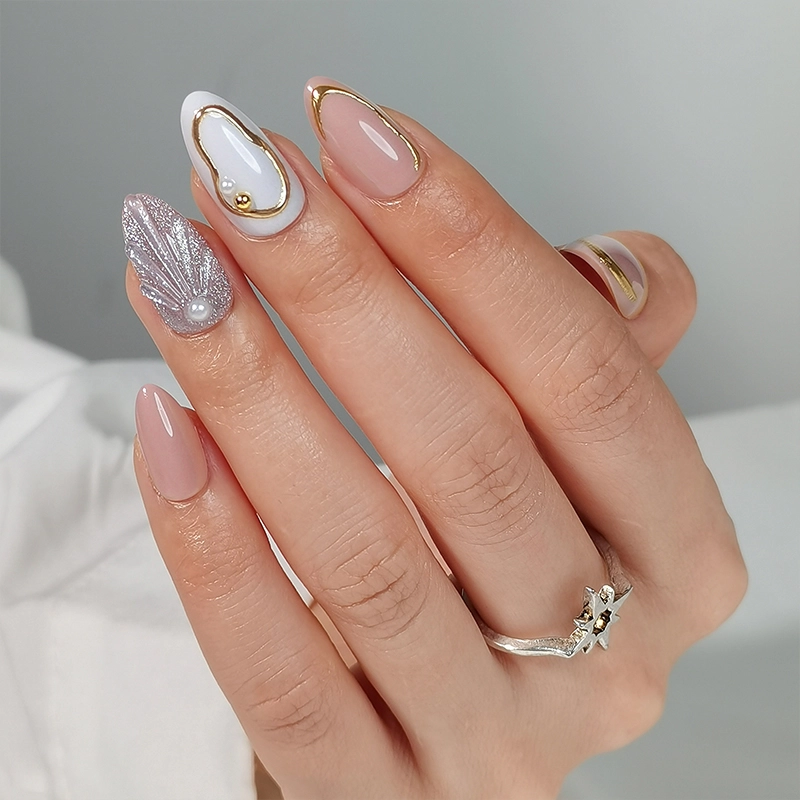
Wholesales Elegant Shell Inspired Soft Gel Wearable Nails for Seasonal Celebrations
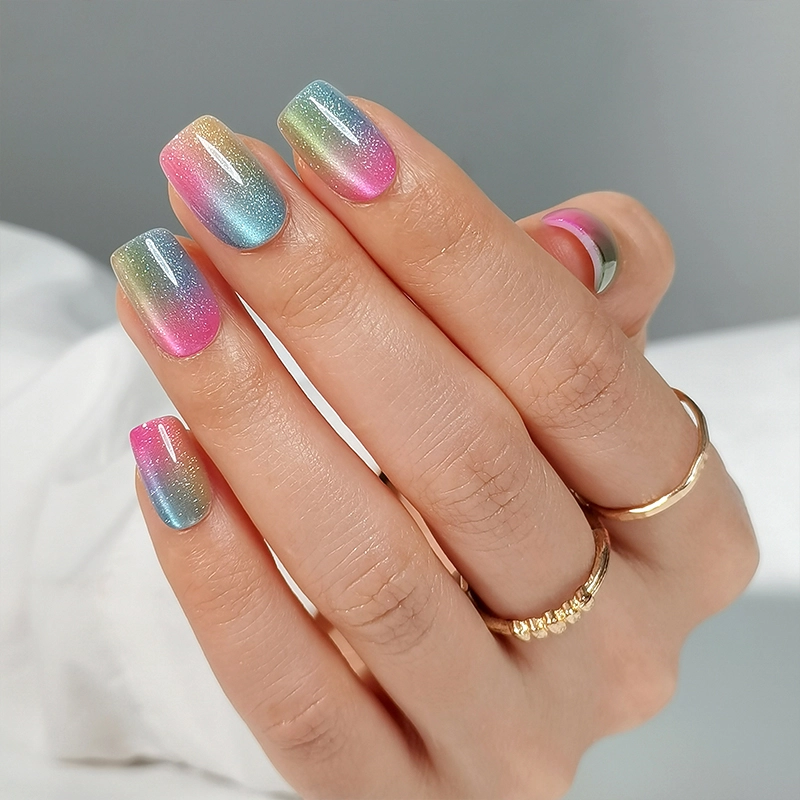
Custom Wholesale Gradient Cat Eye Soft Gel Wearable Fake Nails
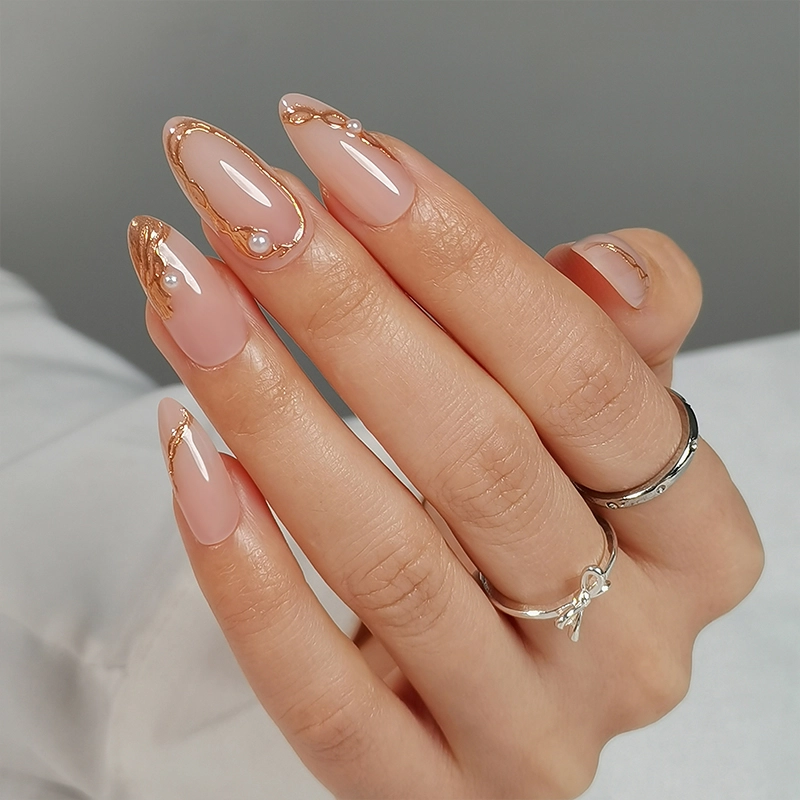
Wholesales Luxury Rhinestone Handmade Private Label Press On Nails Art Tips
Copyright © 2025 - XIANXING BEAUTY All Rights Reserved. Sitemap
Facebook
YouTube
Instagram
LinkedIn