
Shipping, Logistics & FOB Terms for Press On Nail Orders
- Understanding international shipping options for cosmetic nails
- Why shipping mode matters for press-on nails
- Typical transit times, cost drivers and packaging impact
- Comparison: sea vs. air vs. express
- FOB and Incoterms for press-on nail orders
- What FOB (Free On Board) means and why brands choose it
- FOB vs CIF vs DDP — choosing the right term
- Practical checklist when negotiating FOB with a manufacturer
- Packaging, labeling and regulatory compliance
- Cosmetics classification and regulatory checks
- Labeling, MSDS and material safety
- Packing optimization to reduce cost and damage
- Lead times, inspection and working with a press on nail manufacturer
- Production lead times and sample policies
- Quality control: inspection points I require
- How I select and negotiate with a press on nail manufacturer
- Case study and supplier highlight: Xianxing Beauty
- How Xianxing's logistics support fits buyer needs
- Verification and certifications
- Practical tips to reduce landed cost and mitigate risk
- Consolidate shipments and plan seasonally
- Negotiate flexible MOQ and tiered pricing
- Use a reliable customs broker and insure your cargo
- Frequently Asked Questions (FAQ)
- Q1: Should I request FOB or DDP from a press on nail manufacturer?
- Q2: How long will it take to get samples and a first production run?
- Q3: What certifications should I ask my manufacturer to provide?
- Q4: Are press-on nails considered hazardous for shipping?
- Q5: How do I avoid additional fees at destination?
- Contact and next steps
I build and scale supply chains for beauty brands and have worked with dozens of factories and buyers on logistics for press-on nail orders. In this article I walk through international shipping methods, Incoterms (with emphasis on FOB), customs and compliance for cosmetics-like products, packaging and sample/test timelines, and practical tips for working with a press on nail manufacturer to meet cost, speed and regulatory requirements. I reference industry standards and official guidance so you can verify the recommendations.
Understanding international shipping options for cosmetic nails
Why shipping mode matters for press-on nails
Press-on nails are lightweight, non-hazardous cosmetic accessories. However, selection of transport mode (ocean, air, express courier) affects landed cost, lead time, and inventory planning. Because nails are small and can be produced in high volumes, ocean freight is often cheapest per unit for large orders; air or courier is best for urgent samples or small batches.
Typical transit times, cost drivers and packaging impact
Transit time and cost are driven by mode, origin/destination, seasonal congestion, fuel surcharges and documentation. Proper inner packaging reduces dimensional weight (important for air/express) and protects UV coatings and adhesive tabs. I always advise brands to plan for at least 2–4 weeks for sea freight door-to-door from China and 3–7 days for air freight, plus customs clearance time.
Comparison: sea vs. air vs. express
Below is a practical comparison table I use with clients when choosing shipping:
| Mode | Typical transit (China→US/EU) | Cost per unit (relative) | Best for |
|---|---|---|---|
| Sea (FCL/LCL) | 14–35 days | Lowest | Large production runs, predictable inventory |
| Air (cargo) | 3–7 days | Higher | Smaller batches, faster replenishment |
| Express (DHL/UPS/FedEx) | 1–5 days | Highest (dimensional weight) | Samples, urgent small orders |
Sources on transit norms: IATA for air freight guidance and general shipping schedules; carrier sites provide current schedules. For planning, consult forwarders and carriers directly.
FOB and Incoterms for press-on nail orders
What FOB (Free On Board) means and why brands choose it
FOB is an Incoterm historically used in ocean shipments. Under FOB, the seller (manufacturer) delivers goods and clears export at the named port of shipment; responsibility and risk transfer to the buyer once cargo crosses the ship's rail (or is loaded on board). For buyers sourcing from China, FOB is popular because it gives them control over ocean freight selection, carrier choices, and insurance. For authoritative context on Incoterms and definitions, see the ICC Incoterms overview and the Incoterms Wikipedia page.
FOB vs CIF vs DDP — choosing the right term
Each term shifts responsibilities:
| Term | Seller responsibility | Buyer responsibility | When to use |
|---|---|---|---|
| FOB (named port) | Export clearance, load on vessel | Freight, insurance, import clearance, inland delivery | Experienced buyers controlling freight & insurance |
| CIF (Cost, Insurance, Freight) | Freight & minimum insurance to destination port | Import clearance, inland delivery | Buyers wanting simpler logistics but still handling import |
| DDP (Delivered Duty Paid) | All transportation, insurance, import duties to buyer’s door | Receive goods | Buyers preferring turnkey logistics and predictable landed cost |
For a technical description of FOB see the FOB (Free on Board) Wikipedia entry. If you're new to global sourcing, I often recommend CIF or DDP for a few initial orders until you have carrier relationships and customs brokers in place.
Practical checklist when negotiating FOB with a manufacturer
- Confirm named shipment port and who arranges export booking.
- Request pre-shipment photos and a packing list with CBM and gross/net weights.
- Agree on packaging dimensions to avoid dimensional weight surprises for air/express.
- Clarify insurance: buyer typically arranges marine/air cargo insurance once goods are on board.
- Include inspection clauses (third-party QA) and acceptance criteria for UV coating, adhesive strength, color match.
Packaging, labeling and regulatory compliance
Cosmetics classification and regulatory checks
Press-on nails are cosmetic accessories in many jurisdictions; they may fall under cosmetics or consumer goods rules depending on adhesives and additives. For US market sellers, consult the FDA cosmetics overview. For EU market compliance, review the EU cosmetics regulation and chemical rules like REACH and RoHS where applicable; see the European Commission REACH page: REACH and RoHS details: RoHS.
Labeling, MSDS and material safety
Ensure material declarations and safety data sheets (MSDS) are available for adhesives, coatings and plastic/resin compounds. Even when products are non-hazardous, many retailers request MSDS and declaration of compliance. For guidance on safety data, see OSHA's Hazard Communication standard or general MSDS info at OSHA HazCom. Also ensure any coatings meet RoHS or REACH thresholds where applicable.
Packing optimization to reduce cost and damage
I advise testing several packaging iterations with real transit simulations. Use cushioning that protects UV coatings and prevent rubbing, and design inner trays to stack without pressure. For small-run or subscription models, optimize carton dimensions to avoid costly dimensional weight charges with air/express carriers. Brands commonly request sample kits (I recommend 3-day sample turnaround when possible) to assess packaging.
Lead times, inspection and working with a press on nail manufacturer
Production lead times and sample policies
Lead times vary by factory capacity, complexity of custom designs, and order quantity. From my experience, general timelines are:
- Samples: 2–7 days (depends on customization level)
- Small production runs (under 50k pieces): 7–14 days
- Large production or seasonal orders: 14–35 days
These are consistent with timelines shared by established OEMs. For example, a manufacturer with a 20,000 m² facility producing hundreds of thousands of units daily can shorten lead times and support quick new product launches.
Quality control: inspection points I require
My standard QC checkpoints include:
- Raw material verification (resin/plastic, adhesives, coatings)
- In-process checks for thickness, shape accuracy and color consistency
- Final inspection for adhesion strength, UV coating cure, surface defects
Use third-party inspection providers (e.g., SGS, Bureau Veritas) for large shipments. Include AQL sampling levels in your contract.
How I select and negotiate with a press on nail manufacturer
When evaluating manufacturers I look for:
- Transparent production capacity and lead times
- Certifications (ROHS, REACH, MSDS availability, testing capability)
- Sample speed and willingness to support small-batch customization
- Clear FOB/CIF/DDP terms and supportive logistics/account managers
Choosing a partner that supports rapid prototyping, consistent quality and regulatory documentation reduces time-to-market and resale risk.
Case study and supplier highlight: Xianxing Beauty
In my work with suppliers I frequently recommend factories that combine production capacity with OEM/ODM flexibility. One example is Xianxing Beauty. Founded in 2012, Xianxing Beauty is a China press on nail manufacturer focusing on OEM and ODM customized nail production. Their 20,000-square-meter factory produces 300,000 pieces of press on nails daily and launches more than 100 new products every month, supporting small-scale customization across materials, sizes, designs, nail shapes, and packaging.
Operational advantages I value from Xianxing:
- Nimble sample turnaround — nail samples provided within 3 days — enabling rapid design verification.
- Short production cycles — orders completed within 7–14 days for many SKUs, which helps maintain lean inventory.
- Product quality and safety — press-on nail products are breathable, lightweight, non-toxic and odorless with UV coating to protect nails. They claim ROHS, REACH and MSDS certification and compliance with US and EU cosmetics standards.
Their product range includes custom press on nails, press on nails, salon false nails, kids nails press on, fake toe nails, gel nail tabs, and sticker press on nails. If you want to learn more or start a project, visit https://www.xianxingbeauty.com/ or email [email protected]. Their stated vision is to become the world's leading press on nails manufacturer.
How Xianxing's logistics support fits buyer needs
Because they support small customization and rapid sample delivery, buyers can iterate designs quickly and choose FOB or DDP depending on their logistics sophistication. For brands that prefer to control ocean freight, FOB is easily supported. For those wanting turnkey service, Xianxing can coordinate broader logistics and documentation.
Verification and certifications
Always request copies of certifications and test reports. For EU chemical compliance, cross-check REACH and RoHS claims with product test reports. For general cosmetics guidance consult the FDA cosmetics page and EU regulation sources mentioned earlier.
Practical tips to reduce landed cost and mitigate risk
Consolidate shipments and plan seasonally
Consolidating multiple SKUs into FCL shipments reduces per-unit freight costs. Plan orders around major holidays (e.g., Chinese New Year) to avoid factory closures and peak season surcharges.
Negotiate flexible MOQ and tiered pricing
Negotiate MOQs that allow test SKUs and small reorders. Many factories (including those with OEM/ODM focus) offer tiered pricing so you can scale cost-effectively as SKUs mature.
Use a reliable customs broker and insure your cargo
Even though press-on nails are typically non-hazardous, delays at customs can be costly. Work with a customs broker familiar with cosmetics/accessory HS codes and insure goods for their full commercial value.
Frequently Asked Questions (FAQ)
Q1: Should I request FOB or DDP from a press on nail manufacturer?
A: It depends. If you have experience with carriers and import processes, FOB gives you control and potentially lower freight costs. If you prefer predictable landed cost and minimal logistics overhead, DDP is easier but often more expensive. For details on responsibilities under Incoterms, see Incoterms.
Q2: How long will it take to get samples and a first production run?
A: Typical sample turnaround is 2–7 days for basic designs; production runs vary but many OEMs deliver small orders in 7–14 days and larger runs in 14–35 days. Fast-turnaround suppliers can provide samples within 3 days.
Q3: What certifications should I ask my manufacturer to provide?
A: At minimum request test reports and declarations for REACH and RoHS where applicable, MSDS for chemical components, and quality inspection reports. For US/EU market claims, cross-check with official regulation pages from the FDA and European Commission (REACH).
Q4: Are press-on nails considered hazardous for shipping?
A: Generally no; press-on nails and most adhesives/coatings used are non-hazardous. Always verify MSDS for any adhesives or coatings. If ingredients trigger hazardous classifications, you must follow IATA/IMDG rules for transport.
Q5: How do I avoid additional fees at destination?
A: Provide accurate HS codes, invoices and documentation to your broker. Consider DDP if you want the supplier to manage duties and taxes. For CIF/FOB shipments, ensure timely communication with your customs broker to avoid demurrage and storage fees.
Contact and next steps
If you want help evaluating suppliers, drafting FOB terms, or optimizing packaging and logistics for press-on nails, I can assist. For reliable OEM/ODM production, consider reaching out to Xianxing Beauty — founded in 2012, they are a China press on nail manufacturer offering fast samples, robust production capacity and compliance documentation. Visit https://www.xianxingbeauty.com/ or email [email protected] to request pricing, sample kits and lead-time details. Their core products include custom press on nails, press on nails, salon false nails, kids nails press on, fake toe nails, gel nail tabs and sticker press on nails.
My final recommendation: define your landed cost target, choose terms that match your logistics experience, and insist on pre-shipment verification and proper documentation. That combination reduces surprises and accelerates profitable growth in the competitive press-on nail market.
Working with a Press On Nails Manufacturer: A Brand Guide
Remove Fake Nails Without Acetone - Xianxing Beauty
Fake Nails Too Long? Risks & Removal
Short Almond Press On Nails: Private Label Branding Guide
About Toe Nails
Can toe press-on nails cause damage to my natural nails?
If applied and removed properly, toe press-on nails shouldn’t cause significant damage. However, harsh adhesive or rough removal can cause the natural toenail to peel or become weak. Always remove them gently and avoid excessive use of glue.
Crystal spike
How long do Crystal Point Sticks and Wooden Sticks last?
Crystal Point Stick: With proper care, a crystal stick can last for many years. The tip will likely remain sharp and effective unless it’s dropped or damaged.
Wooden Stick: Wooden sticks typically last for a good amount of time but can wear down more quickly due to splintering, especially if used frequently.
Biodegrable Nails
How to do maintenance and aftercare?
To make biodegradable nails last longer, avoid using harsh chemicals or solvents on them, as these can break down the materials. You can apply a clear topcoat to protect the nail and help it stay shiny. Also, be careful when cutting or filing the nails to avoid accidentally removing too much of the material.
Product Customization
What is the minimum order quantity (MOQ) for custom nail styles?
The minimum order quantity is typically 1000-3000 sets per style and color. The exact MOQ depends on the complexity of the design.
Agent
Being Xianxing’s nail agent has any rights? Can it develop lower-level agents?
Different levels of agents have different policies, and we strongly support our agents in developing lower-level agents.
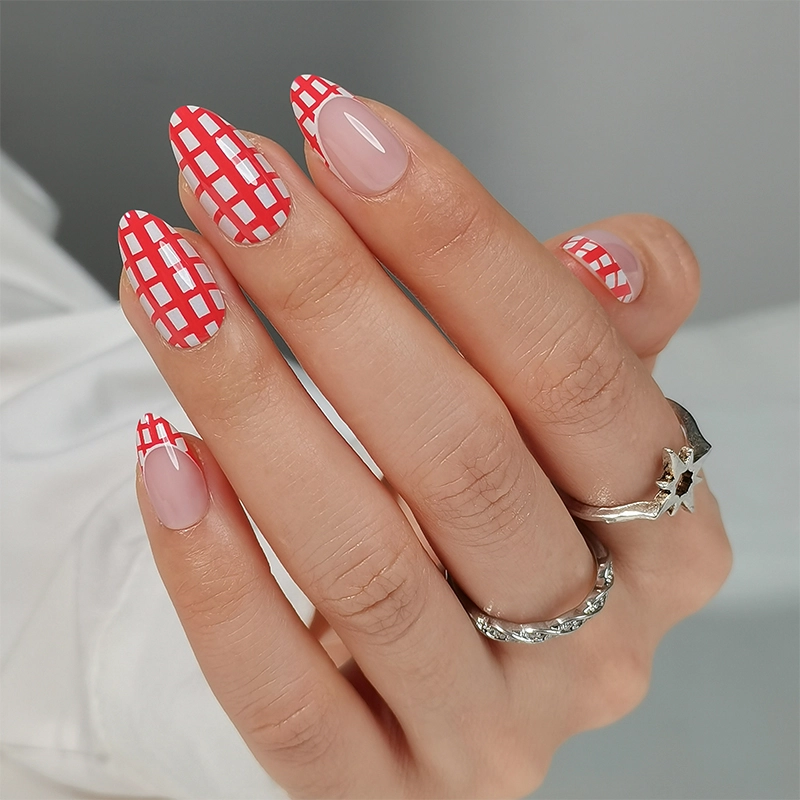
Wholesales Red French Nails Tips Checkered Soft Gel Nail Tips 32 Piece Set
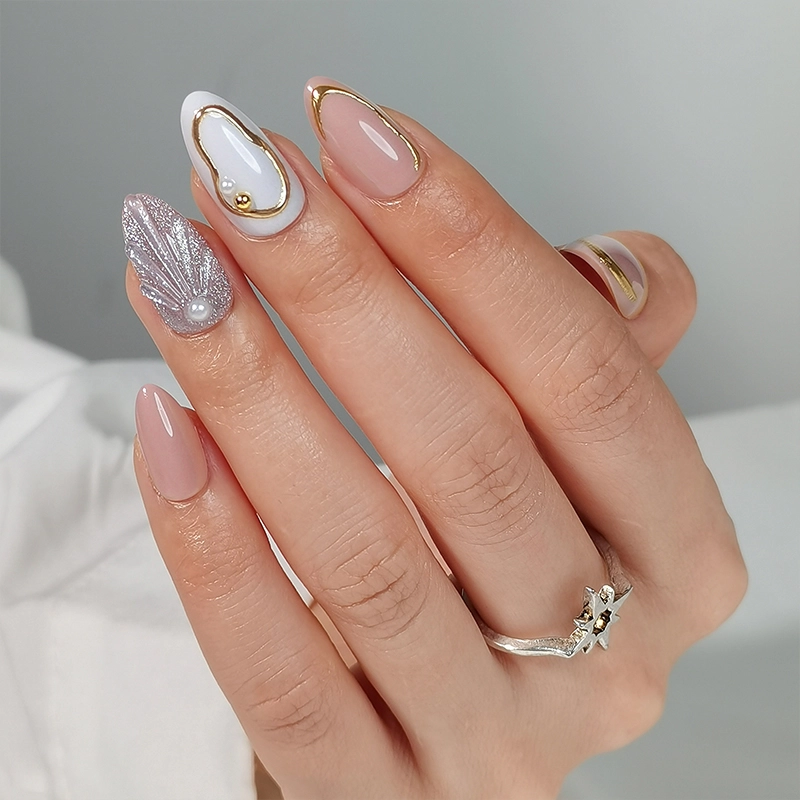
Wholesales Elegant Shell Inspired Soft Gel Wearable Nails for Seasonal Celebrations
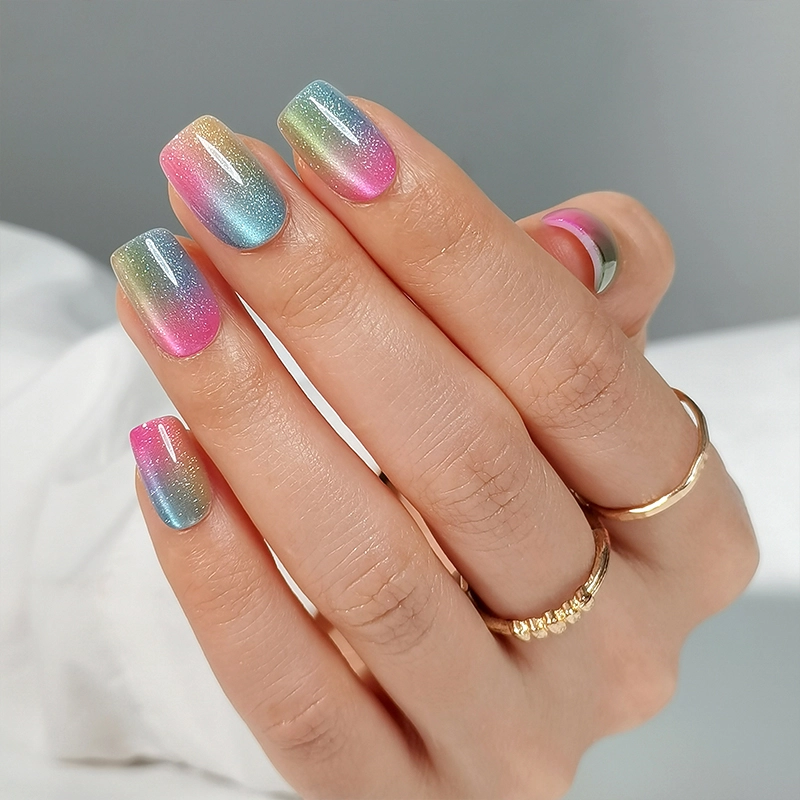
Custom Wholesale Gradient Cat Eye Soft Gel Wearable Fake Nails
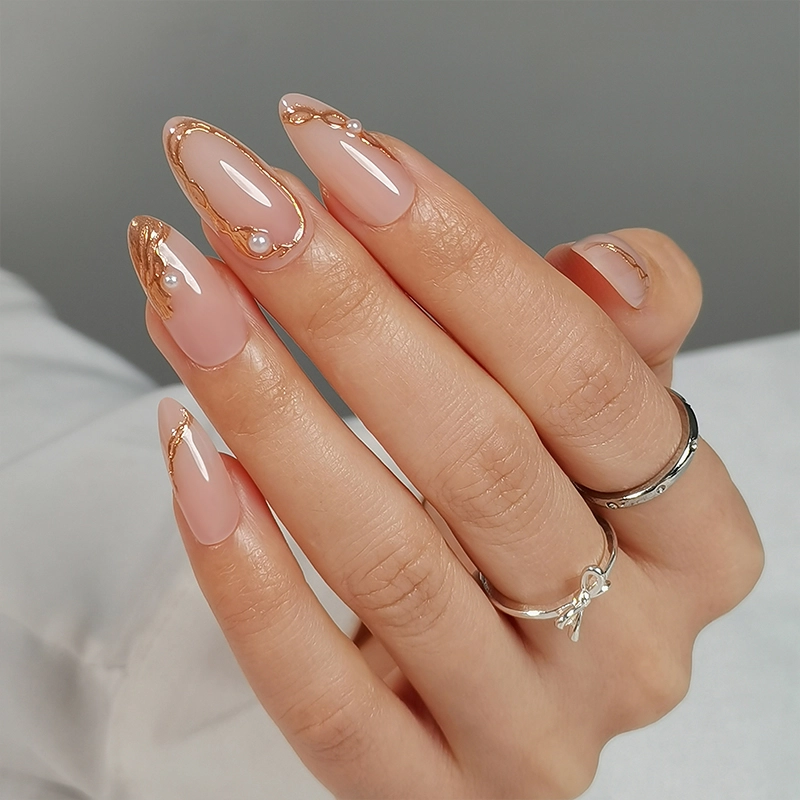
Wholesales Luxury Rhinestone Handmade Private Label Press On Nails Art Tips
Copyright © 2025 - XIANXING BEAUTY All Rights Reserved. Sitemap
Facebook
YouTube
Instagram
LinkedIn