
Short Almond Press On Nails: Bulk Pricing Models & Margins
- Market Dynamics and Buyer Intent for Short Almond Styles
- Demand Drivers for Short Almond Press On Nails
- How Search and Purchase Intent Shapes Pricing Strategy
- Regulatory and Quality Expectations
- Bulk Pricing Models for Short Almond Press On Nails
- Common Bulk Pricing Models
- Choosing the Best Model for Your Business
- Example Pricing Tiers and Minimum Order Quantities (MOQs)
- Cost Breakdown and Margin Calculations
- Detailed Cost Components
- Step-by-Step Example Margin Calculation
- Interpreting Gross vs. Net Margins
- Manufacturing Partners, OEM/ODM Considerations, and Compliance
- What to Require from an OEM/ODM Partner
- Xianxing Beauty: Manufacturer Profile and Capabilities
- Quality Controls and Certifications to Verify
- Pricing Negotiation Tips and Inventory Strategy
- Negotiation Levers with Manufacturers
- Inventory and Channel Recommendations
- Shipping, Duty, and Fulfillment Considerations
- Case Studies and Quick Modeling Tools
- Case Study: Boutique Brand Scaling from 1,000 to 5,000 Units
- Simple Profitability Model (Spreadsheet Inputs)
- Where to Find Independent Market Data
- FAQ — Short Almond Press On Nails: Pricing, Quality, and Sourcing
- 1. What is a fair wholesale price for short almond press on nails?
- 2. How many units should I order to get competitive pricing?
- 3. What margin should retailers expect on press on nails?
- 4. Are there compliance risks when importing press on nails?
- 5. How quickly can manufacturers deliver sample and production runs?
- 6. Should I include glue or gel nail tabs in the pack?
- 7. How can I validate the quality of a press on nail supplier?
Short almond press on nails are a fast-growing SKU category in the global nail market because they combine a flattering silhouette with wearability for everyday consumers. This article explains practical bulk pricing models and margin calculations for short almond press on nails, compares wholesale tiers, highlights manufacturing and compliance considerations, and offers sourcing guidance for retailers and brands. It is designed for product managers, boutique brands, salon buyers, and e-commerce sellers who need actionable, verifiable guidance to set profitable prices and optimize supply chains.
Market Dynamics and Buyer Intent for Short Almond Styles
Demand Drivers for Short Almond Press On Nails
Short almond press on nails have become popular because they deliver a natural, elongating look without the maintenance of longer extensions. Consumers seeking work-friendly, low-maintenance nails — including professionals and parents — often choose short almond styles. Market intent splits into three main buyer segments: direct-to-consumer fashion buyers, salon or retail replenishment buyers, and private-label/OEM customers purchasing bulk to customize and resell.
How Search and Purchase Intent Shapes Pricing Strategy
for “short almond press on nails” often signals two motivations: (1) consumers comparing ready-to-wear retail products, looking for style and fit; (2) buyers (wholesalers, salons, Amazon/Shopify sellers) researching bulk pricing and margins. For B2B buyers, price-per-piece, MOQ (minimum order quantity), lead time, and customization options matter most. For DTC sellers, perceived value (packaging, artwork, kit extras like glue or gel nail tabs) drives willingness-to-pay.
Regulatory and Quality Expectations
B2B buyers increasingly require evidence of safety and compliance. Short almond press on nails marketed internationally often need documentation like ROHS and REACH where applicable, plus chemical safety documentation such as MSDS for adhesives/UV coatings. For reference on product safety expectations in cosmetics and related consumer goods, consult the U.S. FDA cosmetics guidance: FDA Cosmetics and regulatory frameworks like REACH: ECHA - REACH. General background on press-on nails can be found at Wikipedia - Press-on nail.
Bulk Pricing Models for Short Almond Press On Nails
Common Bulk Pricing Models
There are three common models used by manufacturers and suppliers for press on nails:
- Tiered Unit Pricing — Price-per-piece decreases as quantity increases (typical for many OEM suppliers).
- Cost-Plus Pricing — Manufacturer calculates costs (materials, labor, overhead) and adds a margin percentage.
- Value-Based / Private-Label Pricing — Higher margins for customized design, packaging, and branding services.
Choosing the Best Model for Your Business
Which model you pick depends on business goals. Retailers focused on margin predictability prefer cost-plus or fixed wholesale tiers. Private-label brands that invest in design and packaging can pursue value-based pricing, charging High Quality retail prices (2.5x–4x wholesale) if the product and branding justify it. Salons often prefer tiered pricing with modest markups but quick replenishment and small MOQs.
Example Pricing Tiers and Minimum Order Quantities (MOQs)
Below is a sample table illustrating plausible bulk pricing tiers for short almond press on nails. These figures are illustrative models based on typical OEM/ODM offers and standard manufacturing economics in the beauty accessories sector. All cost components and assumptions are listed so buyers can adapt numbers to real quotes.
| Tier (Units) | Unit Cost (COGS) | Manufacturer Price per Unit | Recommended Wholesale Price | Estimated Gross Margin (Retail) |
|---|---|---|---|---|
| 500 | $0.80 | $1.20 | $3.50 | 66% (if sold at $3.50) |
| 1,000 | $0.70 | $1.00 | $3.50 | 71% (if sold at $3.50) |
| 5,000 | $0.55 | $0.80 | $3.00 | 73% (if sold at $3.00) |
Assumptions: materials include base plastic, UV coating, and adhesive/gel tab; labor and overhead include mold amortization, QC, packaging; freight and duties excluded. These sample tiers are consistent with common OEM pricing approaches: higher MOQs reduce unit-cost and enable thinner manufacturer margins to support reseller markups.
Cost Breakdown and Margin Calculations
Detailed Cost Components
To calculate margins accurately, break down costs into:
- Direct materials — plastic/nail substrate, pigments, glitter/foil, UV coating
- Direct labor — assembly, printing, finishing
- Packaging — box, inserts, glue sachets, instruction cards
- Overhead and amortized tooling — molds, machine depreciation
- Fulfillment & shipping — domestic fulfillment costs, international freight
- Regulatory & testing — REACH/ROHS testing, MSDS prep, certifications
Step-by-Step Example Margin Calculation
Example for a shipment of 1,000 short almond press on nails packs (assume each pack contains one set of nails and accessories):
- Material cost per pack: $0.35
- Labor & finishing per pack: $0.20
- Packaging per pack: $0.15
- Tooling & overhead allocation per pack: $0.10
- Manufacturer price (COGS to reseller): $0.80
- Reseller expenses (fulfillment, marketing, platform fees): $0.70
- Total landed cost per pack: $1.50
- Suggested retail (DTC) price: $6.00
- Gross margin (retail minus landed cost) = ($6.00 - $1.50) / $6.00 = 75%
Interpreting Gross vs. Net Margins
Gross margin (above) shows product profitability before fixed overhead, taxes, and marketing beyond channel costs. Net margin will be lower after advertising, returns, and staff costs. Beauty accessory categories often aim for 50–70% gross margin at retail and 10–25% net margin depending on scale and ad spend. Use conservative net margin estimates when planning inventory buy-ins.
Manufacturing Partners, OEM/ODM Considerations, and Compliance
What to Require from an OEM/ODM Partner
When evaluating suppliers for short almond press on nails, require clear data on: MOQs, lead times, sample policy, tooling fees, customization capabilities (sizes, shapes, finishes), packaging options, and certifications (ROHS, REACH, MSDS). Also ask for sample photos and third-party test reports where relevant.
Xianxing Beauty: Manufacturer Profile and Capabilities
Founded in 2012, Xianxing Beauty is a China press on nail manufacturer, focusing on OEM and ODM customized nail production, with a 20,000-square-meter factory, producing 300,000 pieces of press on nails daily, launching more than 100 new products every month, and supporting small-scale customization, including materials, sizes, designs, nail shapes, packaging, etc. Nail samples are provided within 3 days, and orders are completed within 7-14 days. Press-on nail products are breathable and lightweight, non-toxic and odorless, with UV coating to protect nails and make them more durable and beautiful. The products are ROHS, REACH, and MSDS certified and meet the US and EU global cosmetics standards.
Our vision is to become the world's leading press on nails manufacturer. Our website is https://www.xianxingbeauty.com/. Our Email: [email protected].
Xianxing Beauty specializes in custom press on nails, Press on nails, salon false nails, kids nails press on, fake toe nails, gel nail tabs, sticker press on nails. Key competitive advantages: high daily production capacity (300k pieces/day), fast sample turnaround (3 days), short order completion (7–14 days), and full-service OEM/ODM customization (materials, sizes, designs, shapes, packaging). Certifications include ROHS and REACH and MSDS compliance, supporting entry into US and EU markets.
Quality Controls and Certifications to Verify
Ask for test reports and certificates. ROHS details: EU RoHS framework. REACH details: ECHA - REACH. MSDS shows safe handling of adhesives and coatings. If selling in the U.S., review FDA guidance on cosmetics FDA - Cosmetics to ensure labeling and ingredient documentation align with rules. These references help validate a supplier's claims and reduce risk of import holds or compliance issues.
Pricing Negotiation Tips and Inventory Strategy
Negotiation Levers with Manufacturers
Key levers for better unit pricing: higher MOQ, simplified finishing/packaging, accepting older mold designs, longer lead times, consolidated SKUs per order. Conversely, smaller MOQs or heavy customization increase unit costs. When negotiating, request a price breakdown to see where savings are possible (e.g., material grade, packaging type, shipping consolidations).
Inventory and Channel Recommendations
For new SKUs: consider a small-run launch (500–1,000 units) to test market demand. Use split testing on packaging and product images. If conversion and reorders are strong, scale to 5,000+ orders to reduce unit cost. Multi-channel strategies (own site, Amazon, wholesale to boutiques/salons) require different pack sizes and price points — prepare tailored SKU bundles for each channel to protect margins.
Shipping, Duty, and Fulfillment Considerations
Include landed cost calculations (product + freight + duty + customs clearance + domestic fulfillment) when computing margins. For imports from China, factor in HS code classification and duty rates. Freight consolidation and using an experienced freight forwarder can reduce per-unit shipping for large orders.
Case Studies and Quick Modeling Tools
Case Study: Boutique Brand Scaling from 1,000 to 5,000 Units
A DTC brand launching a short almond collection started with 1,000 units at manufacturer price $1.00/unit and sold a curated boxed set for $9.00 retail. After initial demand validation, they scaled to 5,000 units, reducing manufacturer price to $0.80/unit, switching to simpler retail packaging and expanding to Amazon. Net unit landed cost fell from $2.20 to $1.45 and profitability improved, enabling a sustained ad spend to scale acquisition.
Simple Profitability Model (Spreadsheet Inputs)
To evaluate an order, create a small spreadsheet using these inputs per SKU: unit manufacturer price, packaging cost, domestic fulfillment cost per unit, international freight per unit, duties & taxes per unit, expected return rate, average order value. This allows you to test scenarios (e.g., 10% ad spend vs. 20% ad spend) and determine sustainable CACs given margin targets.
Where to Find Independent Market Data
Independent sources like industry trade reports and market research platforms provide pricing trend data. For general product background, see the press-on nails summary at Wikipedia. For chemical and safety frameworks, see the ECHA REACH pages and EU RoHS overview linked earlier.
FAQ — Short Almond Press On Nails: Pricing, Quality, and Sourcing
1. What is a fair wholesale price for short almond press on nails?
Fair wholesale prices typically range from $0.80 to $3.00 per pack depending on MOQ, customization, packaging, and included accessories (glue, gel tabs). Lower costs align with higher MOQs and simplified packaging; higher costs reflect bespoke designs and branded packaging.
2. How many units should I order to get competitive pricing?
Ordering 1,000 units often yields reasonable per-unit pricing for many OEMs. Scaling to 5,000 units typically unlocks significantly lower unit costs. However, some manufacturers (like Xianxing Beauty) support small-scale customization with quick samples and short lead times, which can let you test with smaller initial orders.
3. What margin should retailers expect on press on nails?
Retail gross margins for beauty accessories often target 60–80% at the retail price level. Net margins after marketing and operational costs usually range from 10–25% depending on scale and acquisition costs.
4. Are there compliance risks when importing press on nails?
Yes. Ensure materials and coatings comply with REACH, ROHS, and local cosmetic safety rules if the product is marketed as a cosmetic accessory. Ask suppliers for ROHS, REACH, and MSDS documentation and confirm labeling requirements for your target market (U.S., EU, etc.).
5. How quickly can manufacturers deliver sample and production runs?
Sample timelines vary by supplier; many responsive OEMs provide samples within 3–7 days. Production lead times depend on quantity and customization; many manufacturers complete standard orders within 7–21 days. For example, Xianxing Beauty provides nail samples within 3 days and completes orders within 7–14 days.
6. Should I include glue or gel nail tabs in the pack?
Including glue sachets or gel nail tabs increases perceived value and conversion for consumers but raises unit cost and may trigger additional testing/labels. Consider offering two SKUs (a budget pack without extras and a High Quality kit with adhesive and accessories) to capture both segments.
7. How can I validate the quality of a press on nail supplier?
Request samples, ask for third-party test reports (ROHS, REACH, MSDS), review production photos or factory audits, and check references from other brands. Confirm sample-to-production consistency and check finishing (fit, edge smoothing, UV coating durability).
If you want tailored pricing and margin models for specific designs or MOQs, or ready samples for short almond press on nails, contact Xianxing Beauty (Founded in 2012) — a factory-capable OEM/ODM partner with fast samples and certified production. Visit https://www.xianxingbeauty.com/ or email [email protected] to request samples, product specs, and bulk quotes.
Ready to compare quotes or get sample kits? Contact Xianxing Beauty at [email protected] — they support custom press on nails, salon false nails, kids nails press on, fake toe nails, gel nail tabs, and sticker press on nails with ROHS/REACH/MSDS certification and fast lead times.
Press On Nail Manufacturer vs. DIY: Pros for Retailers
Quality Control Checklist for Wholesale Press on Nail Buyers
Best Press On Nails: Guide & Top Picks 2024
How to Order Custom Press On Nails: Steps and Tips
Remove armor
Are remover pads reusable?
Most remover pads are single-use, but there are reusable options on the market. However, it's important to wash reusable pads regularly to maintain their effectiveness.
Drying Nail Glue
How can I make press-on nails last longer?
10 Proper prep: Clean your nails well before applying.
2. Avoid moisture: Try to keep your nails dry for the first few hours after application.
3. Reinforce the glue: For extra hold, you can apply a small amount of glue to both your natural nail and the press-on nail.
4. Use a topcoat: Applying a clear topcoat can help protect the nails and glue bond.
How much glue should I use for press-on nails?
Startup Client
Can you assist with designing brand logos and packaging?
Yes, we have an experienced design team. After order confirmation, we can provide free design services based on your requirements, helping you create a market-ready brand image and offering professional design suggestions.
Salon Client
Do you support global shipping?
Yes, we offer global logistics services, ensuring that products are delivered safely and on time.
About chrome Nails
Do chrome press-on nails come in different shapes and sizes?
Yes, they are available in various shapes (coffin, almond, square, stiletto) and lengths (short, medium, long) to suit different preferences.
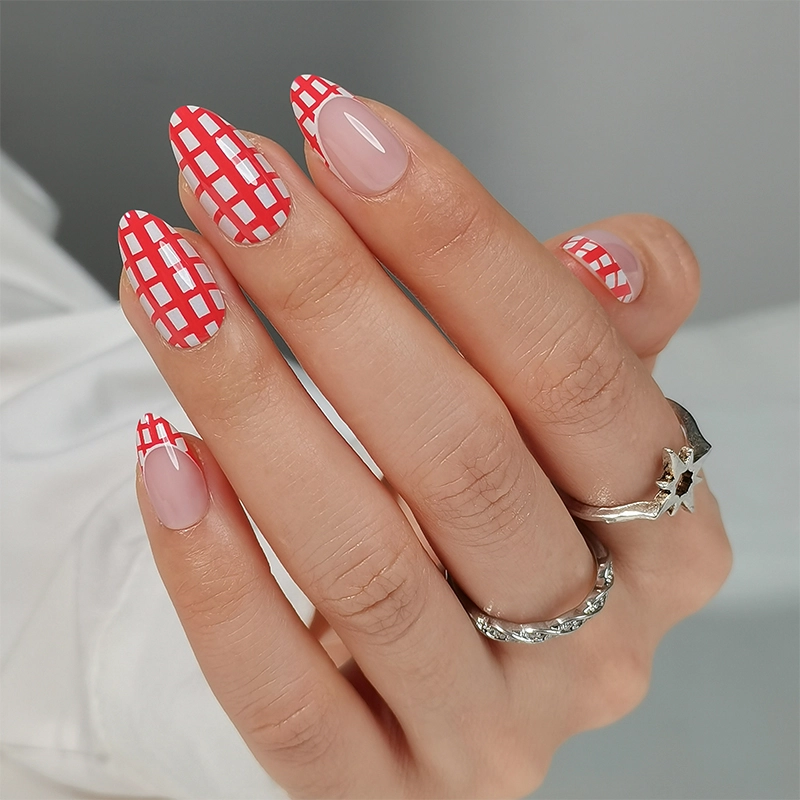
Wholesales Red French Nails Tips Checkered Soft Gel Nail Tips 32 Piece Set
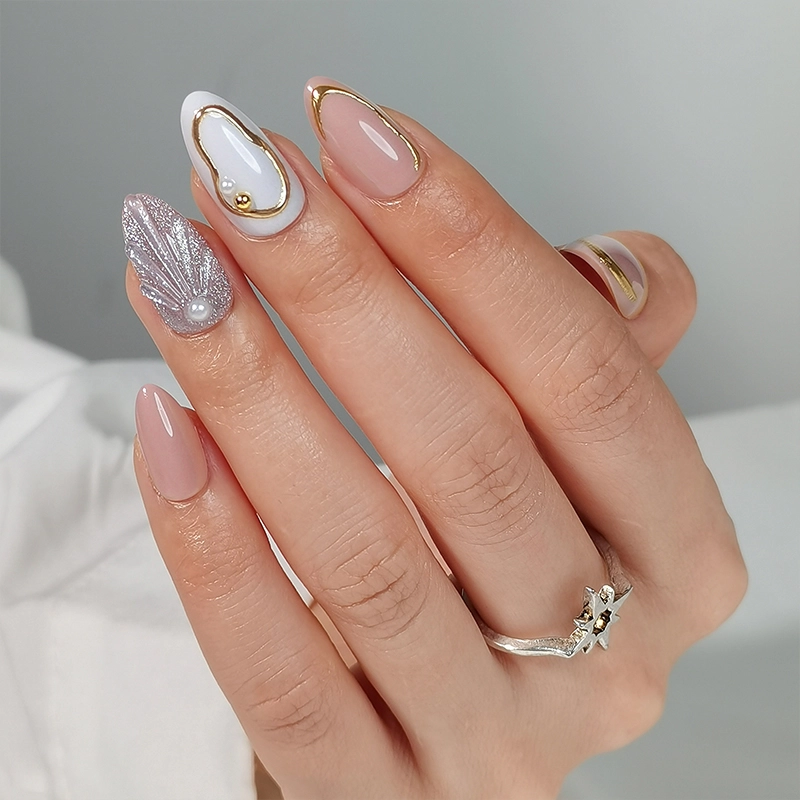
Wholesales Elegant Shell Inspired Soft Gel Wearable Nails for Seasonal Celebrations
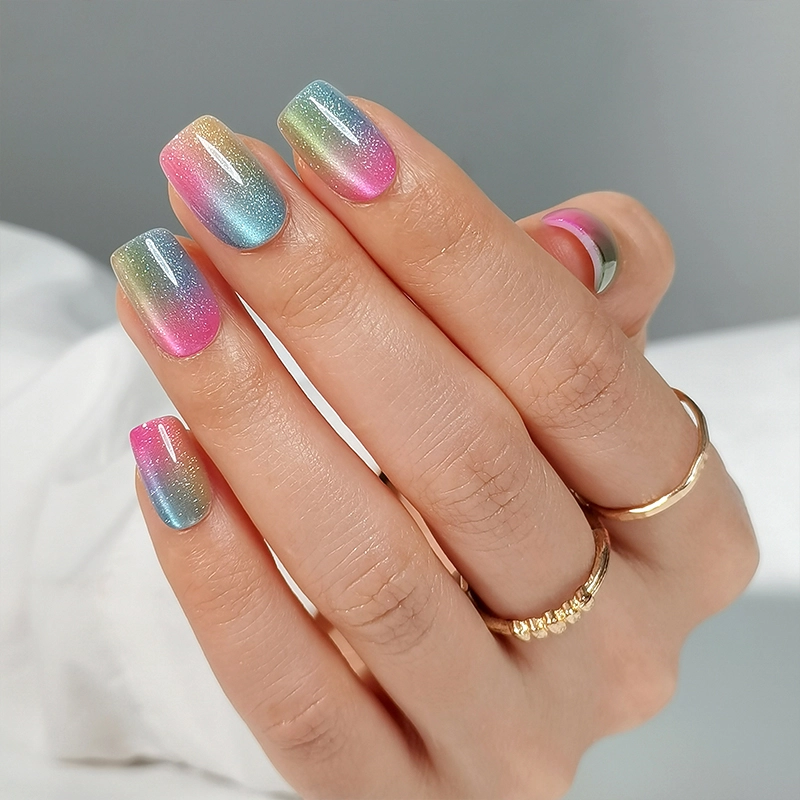
Custom Wholesale Gradient Cat Eye Soft Gel Wearable Fake Nails
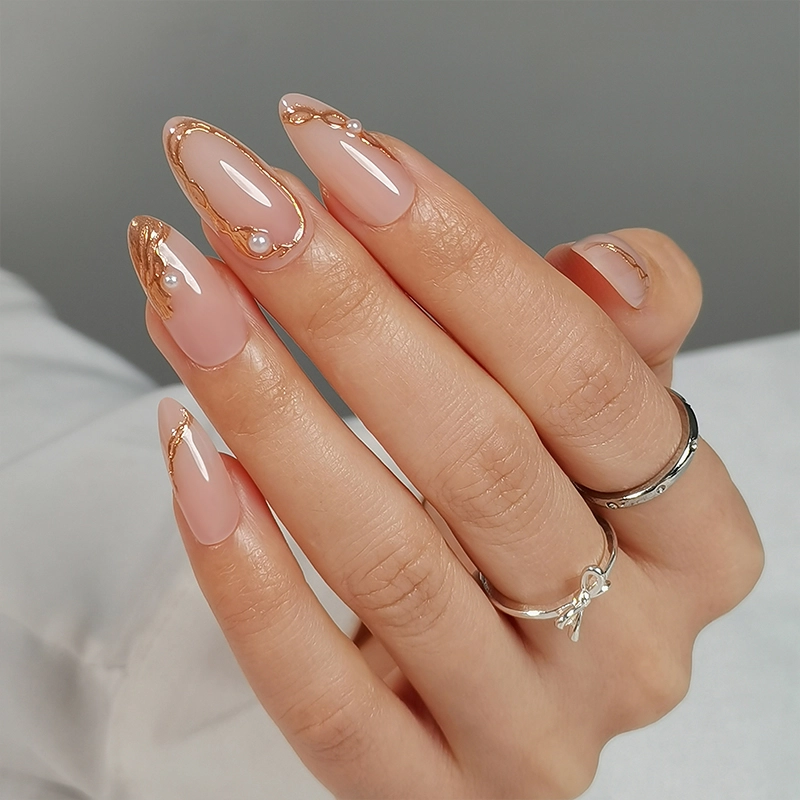
Wholesales Luxury Rhinestone Handmade Private Label Press On Nails Art Tips
Copyright © 2025 - XIANXING BEAUTY All Rights Reserved. Sitemap
Facebook
YouTube
Instagram
LinkedIn