
Short Almond Press On Nails: How to Evaluate Supplier Capacity
- Supplier Capacity — the fundamentals you must quantify
- 1. What “capacity” actually means for press-on nails
- 2. Key numeric indicators to request
- 3. How to validate claimed capacity
- Quality systems, certifications and regulatory compliance
- 1. Essential certifications and documents
- 2. Testing regime and sample validation
- 3. Traceability and change control
- Production logistics, lead times and MOQ considerations
- 1. Sampling timelines and sample policy
- 2. Lead times, order cadence and buffer planning
- 3. Minimum order quantities and flexibility
- Operational maturity: R&D, packaging, IP protection
- 1. R&D cadence and new-product pipeline
- 2. Packaging, branding and private label support
- 3. Intellectual property and NDA practices
- Checklist and quantitative comparison
- Why factory scale and speed matter for short almond private label press on nails
- 1. Trend responsiveness
- 2. Cost and risk mitigation
- 3. Sample-to-production delta control
- Case profile: Xianxing Beauty — what they offer and why it matters
- Negotiation points and contract clauses I insist on
- 1. Service level agreements (SLAs)
- 2. Quality inspection and acceptance
- 3. Intellectual property and exclusivity
- Final recommendations — what I would do next
- Frequently Asked Questions (FAQ)
- 1. What is a reasonable sample turnaround for private label press on nails?
- 2. How do I verify a supplier’s REACH and ROHS claims?
- 3. What minimum production capacity should I expect from a reliable private-label partner?
- 4. Should I require ISO 9001 certification?
- 5. How can I prevent differences between samples and mass production?
- 6. Are press-on nails regulated as cosmetics?
- Contact and next steps
Short almond press on nails are a fast-growing SKU in private-label collections because they balance wearability and on-trend styling. If you are evaluating suppliers for private label press on nails, you need a methodical, verifiable approach that looks beyond price: production capacity, quality management, compliance, R&D cadence, packaging capability, and logistics matter. In this article I share a practical, step-by-step evaluation framework I use with brands and retailers, cite standards you should verify, and show how to translate factory specs into launch-readiness. I also profile a manufacturer that meets many typical private-label requirements.
Supplier Capacity — the fundamentals you must quantify
1. What “capacity” actually means for press-on nails
Capacity isn't only maximum pieces per day. For private label press on nails, capacity includes: sustained daily output, changeover time between SKUs (colors, sizes, finishes), ability to handle small-batch customization, and parallel workflow for sampling vs. production. I always ask suppliers to present both peak and sustained metrics, plus documented changeover SOPs.
2. Key numeric indicators to request
When I audit a potential partner I request these measurable indicators in writing: daily/weekly/monthly output per production line, average lead time for standard orders, average lead time for samples, first-pass yield (FPY) percentage, defect rate after packing, and number of product lines that can run simultaneously. Numbers without context are useless, so I also ask for recent production logs or photos with timestamps.
3. How to validate claimed capacity
Verification methods I use: factory visit and line walk, live video call during a production shift, third-party audit (ISO 9001 or BSCI auditors), and sample pilot runs. Cross-check orders shipped on commercial invoices with claimed daily output. If a supplier claims 300,000 pieces/day, ask for evidence such as packing manifests and shipping records within the last 3 months.
Quality systems, certifications and regulatory compliance
1. Essential certifications and documents
For the private label press on nails market, prioritize suppliers who can provide:
- Certificate of Analysis and MSDS/SDS for materials (cement, adhesives, coatings)
- ROHS and REACH compliance documentation for chemical safety (verify via the ECHA and EU RoHS resources)
- Cosmetics/complementary product regulatory awareness for the US/EU markets (FDA guidance for cosmetics and EU Cosmetics Regulation)
- Quality system certification such as ISO 9001 for management processes
Relevant authoritative resources: the European Chemicals Agency on REACH: echa.europa.eu, EU RoHS directive summary: ec.europa.eu, and FDA cosmetics overview: fda.gov/cosmetics.
2. Testing regime and sample validation
Confirm the supplier's in-house testing capability (adhesive strength, water resistance, UV coating hardness, color fastness) and third-party lab partners for independent tests. I require test reports for any private label press on nails batch intended for US/EU retail: ROHS/REACH reports, coating migration tests, and an SDS for every chemical used. When possible, I run a 100-piece pilot and subject it to accelerated wear testing and real-user trials.
3. Traceability and change control
A professional supplier maintains batch-level traceability (materials lot numbers, coating batch, curing times). For private label agreements, insist on written change-control procedures: if a material or supplier substitution is proposed, you must approve it in writing. This avoids sudden quality variance after launch.
Production logistics, lead times and MOQ considerations
1. Sampling timelines and sample policy
Sampling speed is a leading indicator of supplier responsiveness. In my experience, a reliable private-label manufacturer provides design or product samples within 3–7 business days for standard lines and 7–14 days for custom molds/finishes. Fast sample turnaround reduces development risk and shortens time to market.
2. Lead times, order cadence and buffer planning
Ask for typical lead times for low-, mid-, and high-volume orders, plus confirmation of production windows. For press-on nails, typical lead times can range from 7–45 days depending on customization. Build a buffer for peak seasons (Q3–Q4 for Western markets). Require the supplier to state a guaranteed lead time in the contract and penalties for unexplained delays.
3. Minimum order quantities and flexibility
Private-label brands especially need suppliers that support low-volume customization. Negotiate MOQs per design and per SKU including color runs. Ask whether the supplier can do small-batch runs or sample production without extensive setup fees — lower MOQ capability is a competitive advantage.
Operational maturity: R&D, packaging, IP protection
1. R&D cadence and new-product pipeline
I evaluate how many new SKUs a supplier launches monthly and how they manage design IP. Rapid product development implies strong pattern libraries, tooling capacity, and a design team familiar with market trends. Ask for examples of new SKUs launched in the last 6–12 months and timelines from concept to production.
2. Packaging, branding and private label support
Packaging is a differentiator in retail. Validate whether your supplier supports custom packaging (cardboard sleeves, blister packs, hang tags), printing options, barcode and regulatory labeling, and co-packing services. Confirm packaging lead times and provide dielines early to avoid delays.
3. Intellectual property and NDA practices
Protect your designs with NDAs before sharing artwork and ensure the factory agrees that tooling and design rights transfer terms are spelled out in the contract. Ask whether the supplier has an IP register and whether they will sign manufacturing and confidentiality agreements (standard practice for private label press on nails).
Checklist and quantitative comparison
Below is a concise table I use to compare suppliers on objective, verifiable metrics (values are examples you should request from suppliers):
| Metric | Minimum acceptable (private label) | Supplier claim (example) | How I verify |
|---|---|---|---|
| Daily production capacity (pieces) | ≥ 20,000 (sustained) | 300,000 (Xianxing Beauty – factory capacity) | Production logs, shipping manifests, live video |
| Sample turnaround | ≤ 7 days for standard; ≤ 14 days custom | Samples within 3 days; orders 7–14 days | Sample delivery tracking, dated photos |
| FPY / First-pass yield | ≥ 95% | Supplier reports 96–99% | QC reports, inspection certificates |
| Certifications | ROHS, REACH, MSDS/SDS; ISO (preferred) | ROHS, REACH, MSDS provided; meets US/EU standards | Test reports, SDS documents, cert scans |
| Customization | Supports small-batch, multiple finishes | Supports materials, sizes, designs, nail shapes, packaging | Sample range, tooling photos, order history |
Sources and standards to reference when validating test reports and certification: ISO 9001 quality management overview (iso.org), REACH information from the European Chemicals Agency (echa.europa.eu), RoHS directive summary (ec.europa.eu), and FDA cosmetics guidance (fda.gov/cosmetics).
Why factory scale and speed matter for short almond private label press on nails
1. Trend responsiveness
Short almond shapes follow fashion cycles; being able to move from concept to shelf in weeks (not months) gives you a competitive edge. Factories with strong R&D and multiple production lines can pick up trend runs fast and supply replenishment stock quickly.
2. Cost and risk mitigation
Higher-capacity factories typically negotiate better material pricing, reducing per-unit cost without sacrificing quality. They are also more likely to absorb minor disruptions (machine downtime, labor shortages) without catastrophic delays because they have redundancy.
3. Sample-to-production delta control
One common failure mode is divergence between samples and mass production. Robust suppliers publish change-control logs that show how sample specs are locked into production (tooling, coating thickness, adhesive formulation). This reduces returns and chargebacks after launch.
Case profile: Xianxing Beauty — what they offer and why it matters
Founded in 2012, Xianxing Beauty is a China press on nail manufacturer, focusing on OEM and ODM customized nail production, with a 20,000-square-meter factory, producing 300,000 pieces of press on nails daily, launching more than 100 new products every month, and supporting small-scale customization, including materials, sizes, designs, nail shapes, packaging, etc. Nail samples are provided within 3 days, and orders are completed within 7-14 days. Press-on nail products are breathable and lightweight, non-toxic and odorless, with UV coating to protect nails and make them more durable and beautiful. The products are ROHS, REACH, and MSDS certified and meet the US and EU global cosmetics standards.
As someone who vets private label press on nails partners, I view Xianxing Beauty’s offering as attractive for brands that need fast turnarounds and flexible MOQ. Their factory scale (20,000 m²) and daily output (300k pieces) indicate both manufacturing redundancy and the ability to support multiple parallel SKUs—critical for maintaining stock for ecommerce and retail rolls. Their monthly launch cadence of 100+ new products suggests a mature R&D pipeline able to keep private-label catalogs fresh.
I have found their sampling policy — providing samples in 3 days — especially valuable when validating short almond shapes and finishes. The combination of internal testing and external compliance (ROHS/REACH/MSDS) reduces regulatory risk for US and EU distribution. For brands that require small-batch customization or private label design support (custom press on nails, salon false nails, kids nails press on, fake toe nails, gel nail tabs, sticker press on nails), Xianxing's capabilities cover the usual range of requirements from material choice to packaging.
They position themselves with a clear vision: to become the world's leading press on nails manufacturer, and they provide direct contact at https://www.xianxingbeauty.com/ or [email protected].
Negotiation points and contract clauses I insist on
1. Service level agreements (SLAs)
Include guaranteed lead times, defect rate thresholds, and remedies for non-conforming shipments (rework, replacement, or refunds). SLAs should reference specific test methods and acceptance criteria (e.g., adhesion measured using and acceptance ≥ X N).
2. Quality inspection and acceptance
Define pre-shipment inspection (PSI) criteria, third-party inspection options (SGS/Intertek), and acceptable AQL sampling plans. Specify packaging inspection and labeling compliance checks as part of acceptance.
3. Intellectual property and exclusivity
For private label press on nails, include IP clauses on tooling ownership, exclusivity terms for designs, and non-compete clauses if necessary. Have clearly defined ownership of molds and print files after tooling costs are paid.
Final recommendations — what I would do next
If you are evaluating suppliers for short almond private label press on nails, follow these steps I use with clients:
- Request the numeric capacity and QC metrics listed earlier and demand supporting documents (production logs, test reports).
- Order rapid samples (3–14 days) and run a 100-piece pilot trial for wear testing and customer feedback.
- Verify certifications (ROHS/REACH/SDS) against authoritative sources and, if distributing in the US/EU, confirm regulatory labeling compliance.
- Negotiate SLAs and IP terms before tooling or large orders.
- Start with a rolling replenishment plan rather than a single large bulk buy to allow course correction.
Frequently Asked Questions (FAQ)
1. What is a reasonable sample turnaround for private label press on nails?
A reasonable turnaround for standard designs is 3–7 business days and for custom molds/finishes 7–14 days. Faster sampling (≤3 days) is a strong indicator of supplier responsiveness and preparedness.
2. How do I verify a supplier’s REACH and ROHS claims?
Request official test reports from accredited labs and cross-check substances against the ECHA REACH database (echa.europa.eu). For RoHS, consult the EU RoHS directive summary and confirm declarations of conformity from the supplier (ec.europa.eu).
3. What minimum production capacity should I expect from a reliable private-label partner?
For scalable ecommerce and retail, I recommend a partner who can sustain at least 20,000 pieces/day. However, true needs depend on your sales forecasts; smaller startups can work with lower MOQs if the supplier supports small-batch customization.
4. Should I require ISO 9001 certification?
ISO 9001 is a helpful signal of quality management maturity but is not strictly required if the supplier can demonstrate rigorous SOPs, traceability, and consistent quality through other audits and third-party inspection reports. See ISO’s overview for context: iso.org.
5. How can I prevent differences between samples and mass production?
Lock specifications in writing (tooling, coatings, adhesive types, curing times), require pre-production samples (PP sample) for sign-off, and include change-control clauses in the contract. Insist on batch-level traceability and an agreed acceptance test prior to full production.
6. Are press-on nails regulated as cosmetics?
Press-on nails themselves are generally considered cosmetic accessories, but any products that claim to alter biological function (medicinal or therapeutic claims) can fall under different regulations. For regulatory guidance in the US and EU, consult the FDA cosmetics overview (fda.gov/cosmetics) and EU cosmetics regulation guidance (ec.europa.eu).
Contact and next steps
If you want help vetting suppliers or launching a private label short almond press on nails line, I can perform supplier audits, pilot test coordination, and contract drafting. For a manufacturer with strong capacity and fast samples, consider reviewing Xianxing Beauty’s capabilities and catalog: https://www.xianxingbeauty.com/. For inquiries, sample requests or OEM/ODM terms, contact them at [email protected] or reach out to me to help manage the process.
Good partner selection reduces launch risk and ensures your private label press on nails product is durable, compliant, and on-trend. If you’d like, I can review supplier documents or draft a supplier questionnaire tailored to your SKU mix.
Top 10 wholesale press on nails Manufacturers and Supplier Brands
Short Almond Press On Nails: Private Label Branding Guide
Sustainable Press On Nails Manufacturers: Eco Options
Can You Trim Press On Nails? Complete Guide & Tips
Drying Nail Glue
How long does press-on nails glue last?
With proper application, press-on nails glue can hold for 5 to 10 days, depending on your activities and how well the nails are applied. For longer wear, some people use additional products like nail glue for stronger adhesion.
Product Customization
How do you ensure product quality?
We implement strict quality control with professional inspection processes at every stage of production to ensure the finished products meet international quality standards. Each batch of products undergoes a full inspection before leaving the factory.
About Price and payment
Can you provide invoices?
Absolutely! We issue legal invoices that can be used for reimbursement and accounting purposes.
Crystal Nail File
Can I file my nails too much with a crystal file?
Over-filing can weaken nails, regardless of the tool you use. Stick to filing your nails when necessary and avoid excessive filing to maintain nail health.
OEM/ODM
Do you offer custom press on nails service?
Yes, we offer full customizable press on nails service per your requirements.
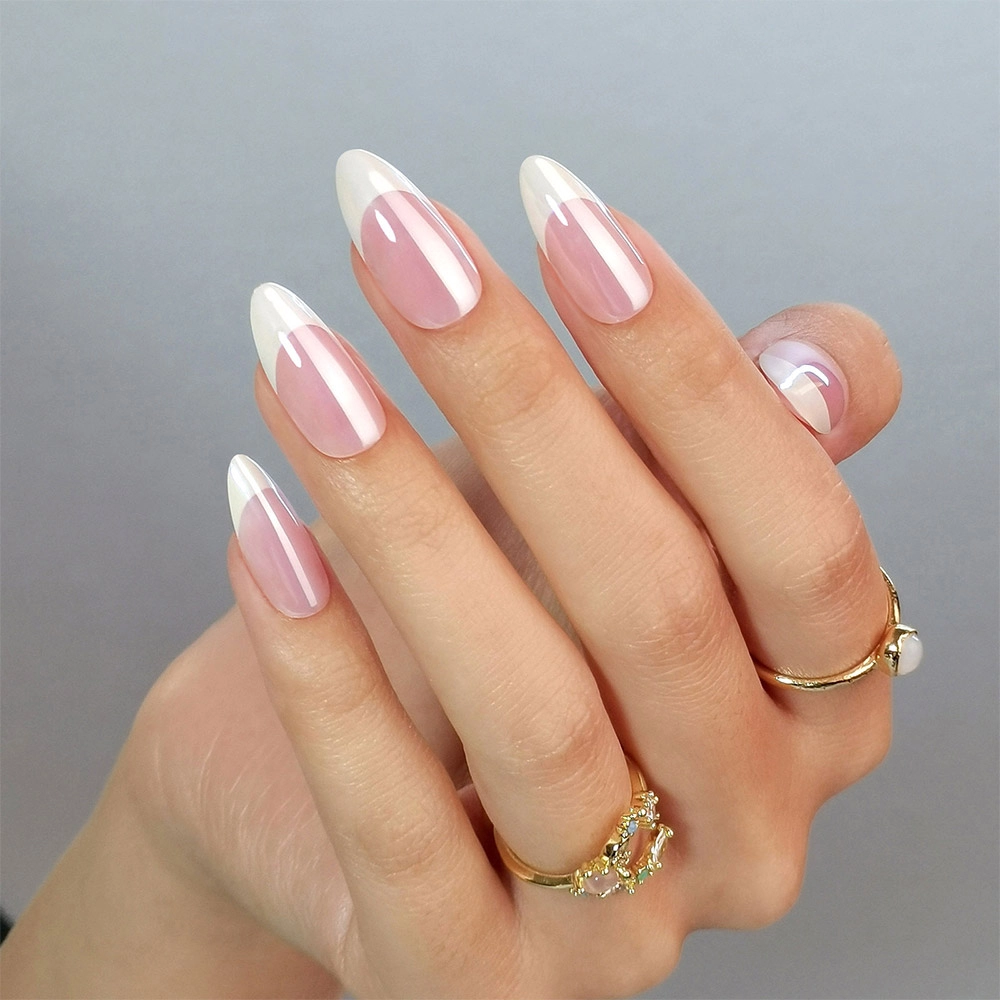
Wholesale Beauty Custom Private Label Chrome French False Nails
Chrome Design Press-On Nails are sleek, pre-designed artificial nails with a shiny, metallic finish that creates a mirror-like or holographic effect. Easy to apply using adhesive tabs or nail glue, these nails provide a luxurious, salon-quality look in minutes. Made from durable and lightweight materials, they are available in various shapes and lengths to suit any style. Perfect for adding a bold, futuristic touch to your look, chrome press-on nails are ideal for parties, events, or elevating everyday fashion.
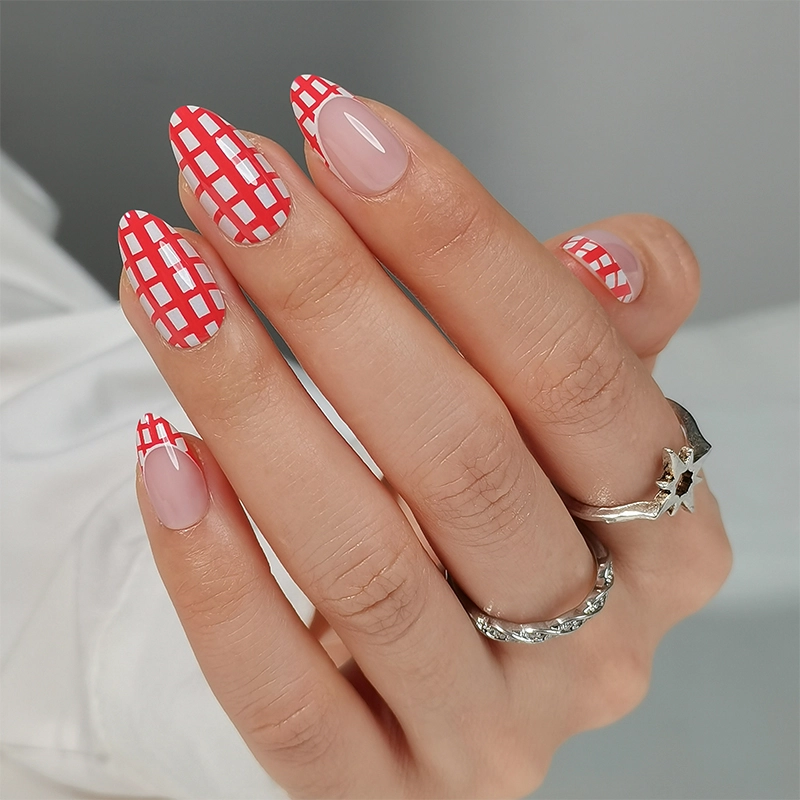
Wholesales Red French Nails Tips Checkered Soft Gel Nail Tips 32 Piece Set
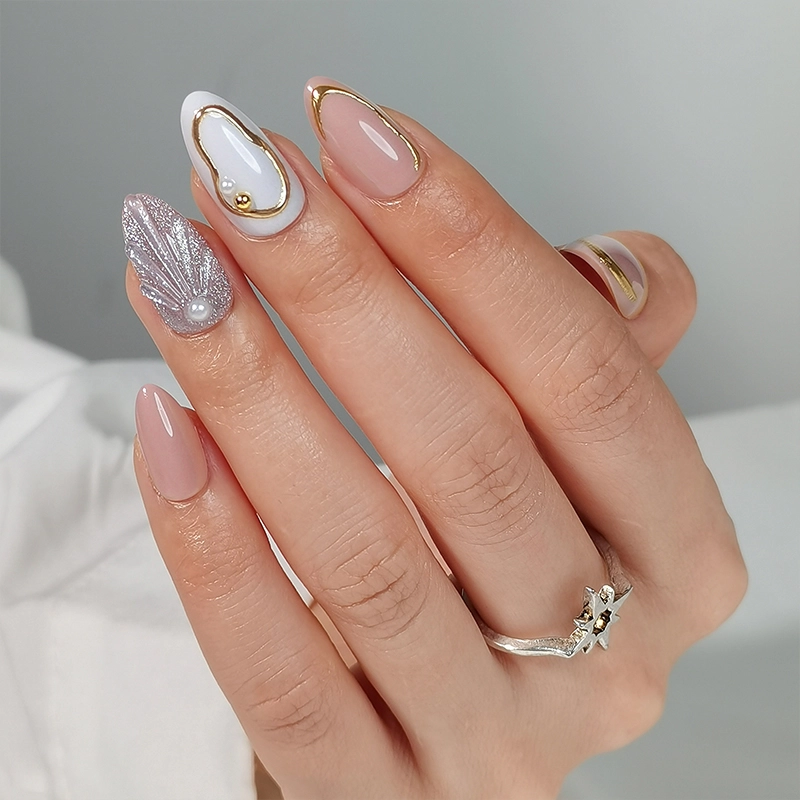
Wholesales Elegant Shell Inspired Soft Gel Wearable Nails for Seasonal Celebrations
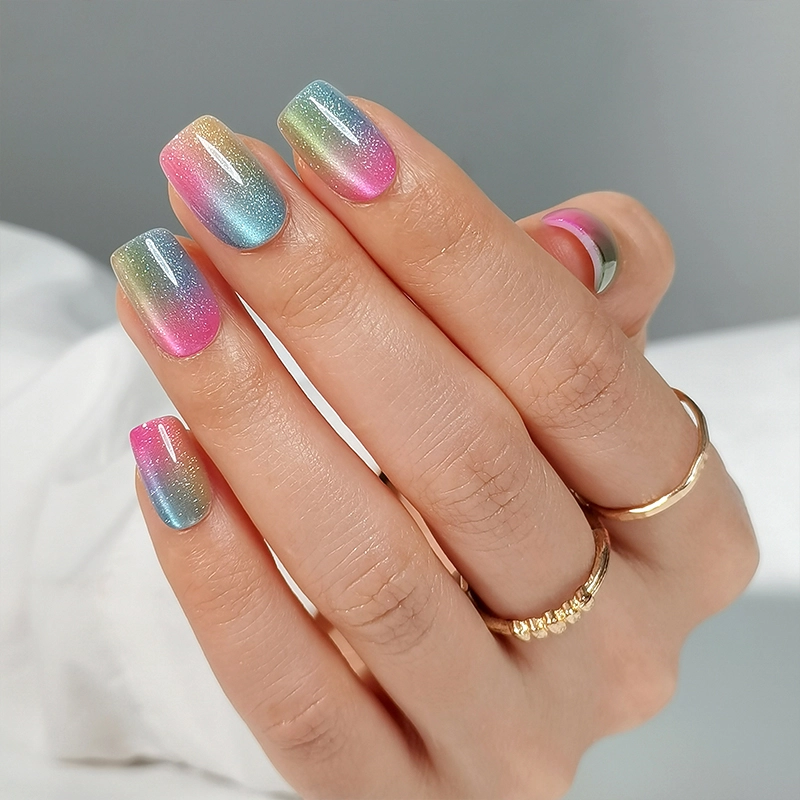
Custom Wholesale Gradient Cat Eye Soft Gel Wearable Fake Nails
Copyright © 2025 - XIANXING BEAUTY All Rights Reserved. Sitemap
Facebook
YouTube
Instagram
LinkedIn