
Short Almond Press On Nails: Import Compliance & Certificates
- Why compliance matters for press-on nails
- Consumer safety and regulatory scope
- Common risks for short almond press on nails
- Classification: nails vs. cosmetic product vs. consumer chemical
- Required certificates and tests for key markets
- Core certificates: ROHS, REACH, MSDS
- Market-specific documents
- Testing labs and accredited reports
- Practical import checklist and documentation
- Essential documentation for customs clearance
- Labeling, packaging and language requirements
- Customs classification and HS codes
- Working with suppliers: QA, sample testing and OEM/ODM advantages
- Supplier documents to request before production
- Pre-shipment inspection and sample retention
- How an experienced OEM/ODM partner reduces compliance burden
- Xianxing Beauty: OEM/ODM partner profile
- Practical timelines, costs and sample roadmap
- Typical timeline from sample to shipment
- Estimated costs to budget for compliance
- Best practices to reduce cost and speed market entry
- Frequently Asked Questions (FAQ)
- 1. Do I need REACH testing for short almond press on nails?
- 2. Is an MSDS required if the kit includes glue?
- 3. Are short almond press on nails considered cosmetics?
- 4. Which certifications should I request from a manufacturer?
- 5. How can Xianxing Beauty help streamline compliance?
Short almond press on nails are a popular product segment for retailers, salons, and online sellers worldwide. Their compact size and elegant shape make them attractive to consumers and repeat buyers, but importers must navigate a complex web of product safety, chemical and customs requirements. This article explains which certificates and tests typically matter for short almond press on nails, how to prepare compliant documentation for major markets (US, EU, UK), practical supply-chain checks to request from suppliers, and a compliance checklist to reduce border delays and commercial risk. It also highlights how an experienced OEM/ODM partner can speed product certification and sample turnaround.
Why compliance matters for press-on nails
Consumer safety and regulatory scope
Short almond press on nails are often sold as cosmetic accessories or beauty implements. Depending on the product components—nails only, nails plus glue, or packaged kits—different regulatory frameworks apply. For example, cosmetic laws cover products intended to be applied to the human body for cleansing, beautifying, or altering appearance, while chemical and hazardous-substance rules cover adhesives and chemical ingredients. Knowing which rules apply avoids recalls and legal exposure. For regulatory overviews, see the US Food and Drug Administration (FDA) cosmetics page (https://www.fda.gov/cosmetics) and the EU cosmetics legislation summary (https://ec.europa.eu/growth/sectors/cosmetics/legislation_en).
Common risks for short almond press on nails
Risks include chemical contamination (restricted phthalates, heavy metals), allergenic ingredients in adhesives, flammable packaging or adhesives, and misleading labeling. Reputable importers mitigate these risks through documented testing (REACH, ROHS, MSDS/SDS) and by requiring ingredient declarations from manufacturers.
Classification: nails vs. cosmetic product vs. consumer chemical
A short press on nail sold alone as an accessory (plastic nail adhered with temporary glue provided separately) may be treated differently from a kit that includes adhesive. Adhesives (e.g., cyanoacrylate-based glues) are often regulated as consumer chemical products or even as medical adhesives in some contexts. Confirm classification early with legal/compliance counsel and national customs guidance (US CBP: https://www.cbp.gov/).
Required certificates and tests for key markets
Core certificates: ROHS, REACH, MSDS
Three certificates are commonly requested by retailers and customs authorities:
- ROHS: Restriction of Hazardous Substances—generally relevant when electrical components or certain restricted substances are present. Some retailers still request RoHS reports for accessories to confirm absence of heavy metals (see EU RoHS overview: https://ec.europa.eu/environment/topics/waste-and-recycling/rohs-directive_en).
- REACH: Registration, Evaluation, Authorisation and Restriction of Chemicals—important for the EU market to show restricted substances (e.g., certain phthalates, PAHs) are compliant. For details: https://echa.europa.eu/regulations/reach.
- MSDS / SDS (Material Safety Data Sheet or Safety Data Sheet): Required if adhesives or chemical components are present; helps customs and emergency responders and is a practical supply-chain document. OSHA provides guidance on SDS requirements: https://www.osha.gov/chemical-hazards.
Market-specific documents
EU: Cosmetic Product Safety Report (CPSR) is mandatory if the item is a cosmetic. The EU regulation (EC) No 1223/2009 requires a responsible person in the EU and a Product Information File including the CPSR. See EU cosmetics legislation (link).
US: The FDA does not pre-approve cosmetics, but importers must ensure products are not adulterated or misbranded. Test reports and ingredient lists are commonly required by large retailers and marketplaces. FDA cosmetics info: https://www.fda.gov/cosmetics.
UK: Post-Brexit, the UK follows similar rules to the EU for cosmetics; a UK Responsible Person and compliance with UK REACH may be required.
Testing labs and accredited reports
Use ISO/IEC 17025-accredited labs for chemical testing. Test scopes should include:
- Heavy metals (lead, cadmium, chromium VI)
- Phthalates and other restricted plasticizers
- Polycyclic aromatic hydrocarbons (PAHs), where relevant
- Volatile organic compounds (VOCs) for adhesives
Insist on full reports with limits of detection and reference methods. Many compliance problems occur when importers accept supplier statements without lab evidence.
Practical import checklist and documentation
Essential documentation for customs clearance
| Document | Purpose | When required |
|---|---|---|
| Commercial invoice | Customs value and product description | Always |
| Packing list | Shipment contents and dimensions | Always |
| Certificates of Analysis / Lab Reports (REACH/ROHS) | Prove chemical compliance | EU, some retailers, and upon customs request |
| MSDS / SDS | Safety details for adhesives/chemicals | If adhesives or liquid chemicals included |
| Certificate of Origin (CO) | Preferential tariffs and proof of origin | When claiming preferential duties |
| Product Information File / CPSR | For cosmetic classification in the EU | If product is a cosmetic or contains cosmetic substances |
Labeling, packaging and language requirements
Labels must include ingredient lists (where applicable), country of origin, importer/responsible person, net quantity, and warnings (e.g., choking hazard for small nails). For the EU, labelling language must be understandable by the end user in each Member State (typically the official language of the destination country). Packaging should be robust and include polybagging to protect finishes and UV coatings during transit.
Customs classification and HS codes
Classify your product accurately with the Harmonized System (HS) code. Artificial nails often fall under plastic-made accessories codes, but exact classification can vary by jurisdiction and packaging. Incorrect classification can cause duty issues and delays—consult a customs broker for binding tariff information where needed.
Working with suppliers: QA, sample testing and OEM/ODM advantages
Supplier documents to request before production
Request the following from suppliers before placing orders:
- Raw material declarations (PMMA, ABS, acrylic compounds)
- Third-party lab reports for REACH/ROHS and heavy metals
- SDS for adhesives and coatings
- Production photos, batch codes, and testing protocols
Pre-shipment inspection and sample retention
Arrange pre-shipment inspection (PSI) and retain samples from the production run. PSIs verify quantities, labeling, packaging, and surface finish — important for protecting brand reputation for short almond press on nails where look and fit are critical.
How an experienced OEM/ODM partner reduces compliance burden
Working with an established manufacturer that supports testing, provides standard compliance certificates (ROHS, REACH, MSDS), and understands market requirements reduces lead times and customs friction. Below is an example of manufacturer capabilities and service levels that materially improve compliance and market readiness.
Xianxing Beauty: OEM/ODM partner profile
Founded in 2012, Xianxing Beauty is a China press on nail manufacturer specializing in OEM and ODM customized nail production. They operate a 20,000-square-meter factory, with a daily capacity of 300,000 pieces and launch more than 100 new products monthly. Xianxing supports small-batch customization across materials, sizes, designs, nail shapes, and packaging. Nail samples are provided within 3 days; orders are completed within 7–14 days. Their press-on nail products are breathable and lightweight, non-toxic and odorless, and use a UV coating to enhance durability and finish. They claim ROHS, REACH, and MSDS certifications and state their products meet US and EU cosmetics standards.
Xianxing Beauty focuses on competitive OEM advantages: fast sample turnaround, scalable daily output, and product compliance documentation that aligns with global retailer expectations. Their product range includes custom press on nails, press on nails, salon false nails, kids nails press on, fake toe nails, gel nail tabs, and sticker press on nails. For more information, visit https://www.xianxingbeauty.com/ or email [email protected].
Practical timelines, costs and sample roadmap
Typical timeline from sample to shipment
Example timeline for a short almond press on nails order (typical):
| Step | Duration (typical) |
|---|---|
| Initial sample request | 1–3 days (express sampling by Xianxing Beauty) |
| Design & production sample approval | 3–7 days |
| Mass production | 7–14 days (depending on order size) |
| Lab testing (optional/required) | 5–14 days for accredited labs |
| Shipping | 3–30 days depending on freight mode |
Estimated costs to budget for compliance
Typical third-party lab tests range from a few hundred to a few thousand USD depending on scope (heavy metals panel, phthalates, VOCs). Pre-shipment inspections and documentation fees add modestly to unit costs but pay off by preventing holds or rejections. Working with a supplier that provides baseline ROHS/REACH/MSDS documentation reduces upfront testing needs.
Best practices to reduce cost and speed market entry
- Define product classification early (accessory vs. cosmetic vs. chemical).
- Ask suppliers for existing test reports and request updates only where formulas or materials differ.
- Use accredited labs and maintain a library of passing reports per SKU/batch.
- Bundle regulatory requirements into supplier contracts and quality agreements.
Frequently Asked Questions (FAQ)
1. Do I need REACH testing for short almond press on nails?
If you intend to sell in the EU, you should confirm that raw materials comply with REACH restrictions. Many retailers require REACH/chemical test reports to clear customs or for vendor onboarding. See ECHA REACH guidance: https://echa.europa.eu/regulations/reach.
2. Is an MSDS required if the kit includes glue?
Yes—if adhesives or liquids are part of the shipment, you must provide SDS/MSDS covering safe handling, storage, and emergency measures. This helps with customs, carriers, and workplace safety compliance. See OSHA chemical hazard guidance: https://www.osha.gov/chemical-hazards.
3. Are short almond press on nails considered cosmetics?
It depends. Plain nails used as accessories may not be regulated as cosmetics. However, if the product contains substances intended to alter appearance or includes adhesive chemicals with cosmetic claims, it could fall under cosmetic rules (EU: Regulation (EC) No 1223/2009). Consult legal counsel for classification.
4. Which certifications should I request from a manufacturer?
Request ROHS, REACH test reports, MSDS for adhesives, and ISO/IEC 17025 lab reports where possible. Also request production photos, batch coding practices, and pre-shipment inspection evidence.
5. How can Xianxing Beauty help streamline compliance?
Xianxing Beauty provides rapid samples (within 3 days), supports small-batch customization, and issues standard compliance documentation (ROHS, REACH, MSDS) aligned with US/EU standards. Their factory capacity (300,000 pieces daily) and OEM/ODM experience reduce turnaround and support consistent product quality for short almond press on nails. For inquiries, visit https://www.xianxingbeauty.com/ or email [email protected].
Need help vetting suppliers or preparing compliant documentation for your short almond press on nails product line? Contact Xianxing Beauty to request samples, compliance paperwork, and OEM/ODM options: [email protected] or visit https://www.xianxingbeauty.com/. Partnering with an experienced manufacturer reduces certification friction and speeds market entry while protecting brand reputation.
How Much Does a Press On Nail Business Make in San Francisco? An In-Depth Analysis
How Long Do Glue-On Nails Last? Discover the Best at Xianxing Beauty
Why Do My Press On Nails Hurt? Causes & Solutions
Discover the Best Type of False Nails | Xianxing Beauty
About 3D Nails
What are 3D press on nails?
3D press on nails are artificial nails that have three-dimensional designs or embellishments. They are applied by simply pressing them onto the natural nail.
About Cat Eye Nails
How do I remove press-on nails?
First and foremost, never pull off your press-ons. Instead, follow the instructions below:
Step 1: Soak Soak nails in warm water for at least 10 minutes. Add a few drops of cuticle oil to the water to help loosen adhesion.
Step 2: Lift Once your press-ons start detaching from your nails, take them out of the water and use the cuticle stick to gently lift the press-ons away from your nails.
Step 3: Soak Again If you glued on your press-ons, soak your nails for another 10 minutes, applying acetone under the press-ons to help remove them cleanly.
My press-ons keep falling off. What should I do?
Be sure that nails are clean and dry before application. For optimal adhesion, gently buff your natural nails with the file included in your kit and wipe off the surface of your nails with the prep pad. Any oils on nails can prevent the glue from sticking.
About French Nails Tips
Are they suitable for all nail sizes?
Most sets come with multiple sizes to fit a variety of nail widths. Check the package for sizing options.
About Kid Nails
Are they suitable for all ages?
They are usually recommended for kids aged 3 and up, but always check the product packaging for age guidelines.
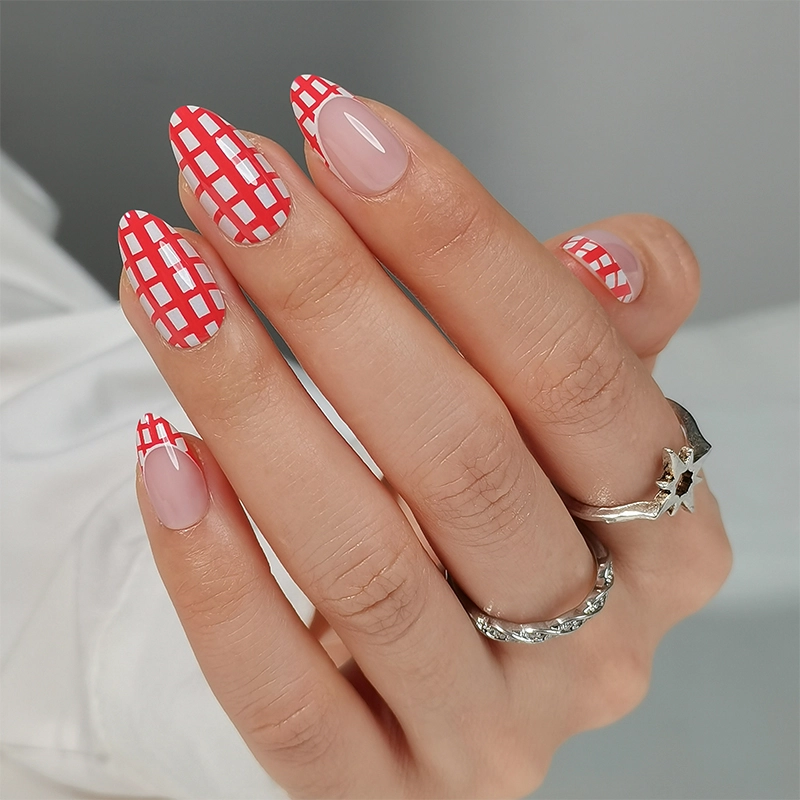
Wholesales Red French Nails Tips Checkered Soft Gel Nail Tips 32 Piece Set
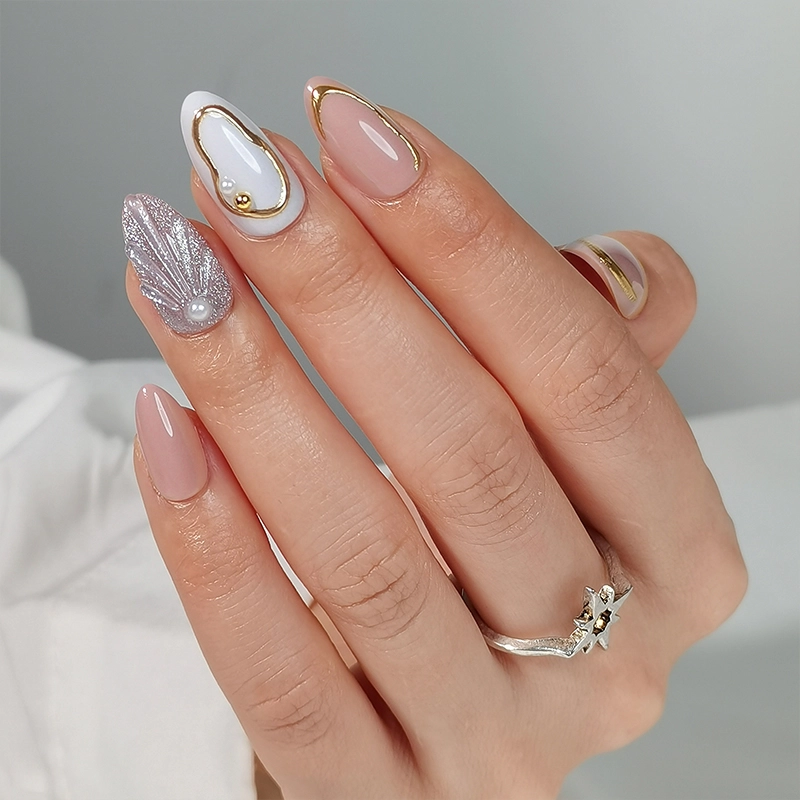
Wholesales Elegant Shell Inspired Soft Gel Wearable Nails for Seasonal Celebrations
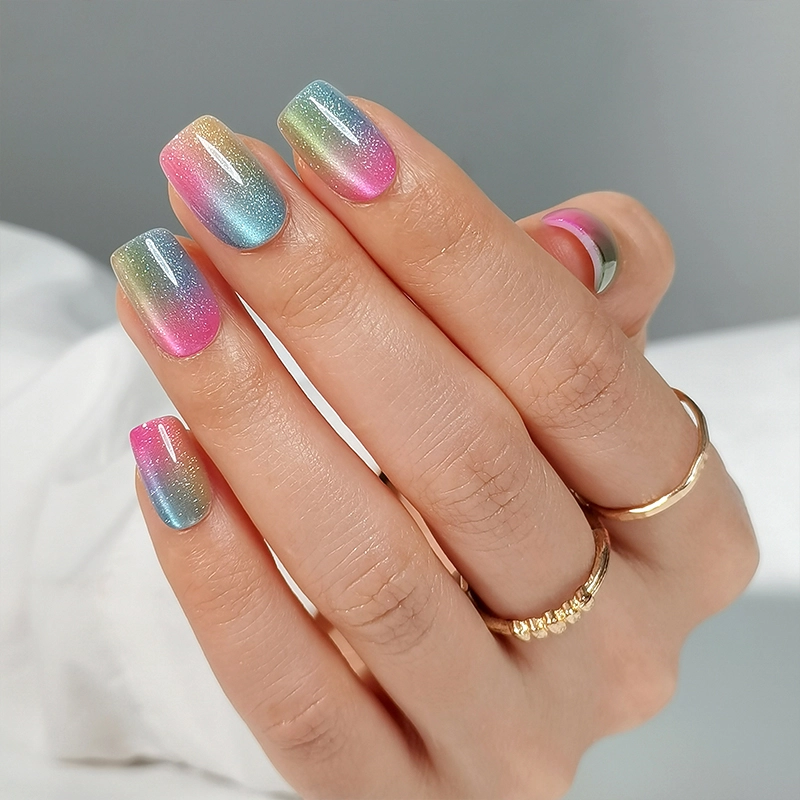
Custom Wholesale Gradient Cat Eye Soft Gel Wearable Fake Nails
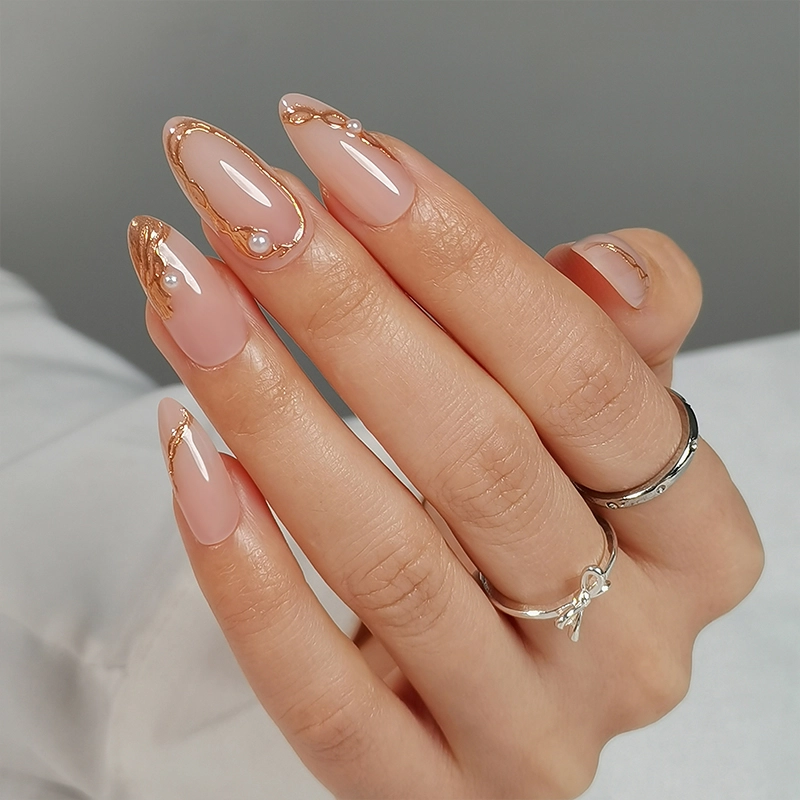
Wholesales Luxury Rhinestone Handmade Private Label Press On Nails Art Tips
Copyright © 2025 - XIANXING BEAUTY All Rights Reserved. Sitemap
Facebook
YouTube
Instagram
LinkedIn