
Short Almond Press On Nails: Shipping, Logistics & Duties
- What makes short almond press on nails a distinct product category
- Product characteristics that affect shipping and handling
- Why packaging matters more than weight
- Regulatory profile of cosmetic accessories
- Shipping methods, carriers and transit considerations
- Choosing between air, express and sea freight
- Comparison of common shipping options
- Packaging specifications to reduce returns
- Customs classification, VAT, duties and documentation
- HS codes and commodity classification
- Typical duty and VAT considerations
- Documentation checklist to prevent holds
- Risk management, returns and insurance
- Insuring shipments and claims handling
- Reverse logistics for returns and exchanges
- Cold chain and temperature risks
- Supply chain best practices for brands and retailers
- Inventory strategy and lead times
- Quality control and pre-shipment inspection
- Partnering with a reliable manufacturer: Xianxing Beauty case study
- Competitive advantages and credibility
- Practical checklist before shipping short almond press on nails
- Pre‑shipment checklist
- Customer-facing shipping policy tips
- Tools and partners
- FAQs
- 1. What HS code should I use for short almond press on nails?
- 2. Are there customs duties on short almond press on nails?
- 3. How should I pack short almond press on nails for international shipping?
- 4. What carrier is best for selling press on nails online?
- 5. Do I need MSDS or REACH documents for press on nails?
- 6. How can Xianxing Beauty help with rapid product launches?
Short almond press on nails are one of the fastest‑growing segments in the press‑on nail market — favored for their natural silhouette, durability and convenience. For retailers and e‑commerce brands, mastering shipping, logistics and duties for short almond press on nails is essential to control cost, reduce transit damage, comply with international rules, and deliver a High Quality customer experience. This guide explains practical steps for packaging, carrier selection, customs classification, duties and compliance, using verifiable references and industry best practices.
What makes short almond press on nails a distinct product category
Product characteristics that affect shipping and handling
Short almond press on nails are typically made from lightweight polymer materials or gel composites, often with UV coatings and adhesive tabs. They are small, thin, and relatively lightweight — characteristics that lower volumetric weight but increase sensitivity to crushing and moisture. Because many press on nails are finished with UV lacquer, they are not hazardous yet require protection from extreme heat and pressure during transit to avoid deforming or scratching.
Why packaging matters more than weight
For short press on nails, the primary risk is physical damage (bending, chipping of finishes) rather than lost weight-based economics. Protective inner packaging (padded blister, thermoformed trays, or individual card backing) combined with rigid outer cartons reduces returns and customer dissatisfaction. Tamper-evidence and clear branding enhance perceived value and reduce the chance of customs opening packages mistakenly thinking they contain cosmetics that require additional documentation.
Regulatory profile of cosmetic accessories
Press on nails are treated as cosmetic accessories in many jurisdictions but can fall under different regulatory regimes depending on materials and coatings. For example, chemical regulations such as EU REACH may apply if substances of concern are present; more generally, compliance documentation like Material Safety Data Sheets (MSDS) and REACH/ROHS declarations helps clear customs faster (see ECHA REACH: https://echa.europa.eu/regulation and EU RoHS info: https://ec.europa.eu/environment/waste/weee/rohs_eee.htm).
Shipping methods, carriers and transit considerations
Choosing between air, express and sea freight
Choice of transportation depends on order value, delivery promise and inventory strategy. Express couriers (DHL, FedEx, UPS) are ideal for B2C and small wholesale orders that require 3–10 day delivery. Sea freight and LCL/FCL are cost‑effective for bulk orders but include longer transit and port handling time (often 20–45 days door‑to‑door depending on origin and destination). USPS/Local Post combined with international express can offer a middle ground for small packages.
Comparison of common shipping options
| Method | Typical transit | Best for | Cost drivers |
|---|---|---|---|
| Express courier (DHL/FedEx/UPS) | 2–10 business days | Small wholesale, B2C, urgent restock | Dimensional weight, declared value, fuel surcharges |
| Postal services (e.g., USPS/China Post) | 7–30+ days | Low-cost B2C, samples | Tracking level, destination country handling |
| Sea freight (LCL/FCL) | 20–45 days | Large bulk orders for inventory | Container space, port fees, inland trucking |
| Air freight (freighter) | 5–15 days | Medium-volume orders with cost sensitivity | Weight, airport handling, customs clearance |
Carrier transit expectations and service maps are published by carriers (e.g., DHL Express: https://www.dhl.com/global-en/home/our-divisions/express., FedEx service guide: https://www.fedex.com/en-us/service-guide.).
Packaging specifications to reduce returns
Recommended packaging layers: inner thermoformed tray (holds nail sets flat), sealed protective bag with desiccant if adhesives are moisture sensitive, branded rigid mailer box or padded envelope, and an outer shipping carton for multi-set orders. Use void fill and corner protection for pallets. For air and international express, mark packages with clear product descriptions and include MSDS and compliance declarations to speed customs handling.
Customs classification, VAT, duties and documentation
HS codes and commodity classification
Harmonized System (HS) classification determines duty treatment. Classification varies by product finish and composition, and different countries may classify false nails under different s. Importers should verify classification using national tariff databases (e.g., US HTS: https://hts.usitc.gov/) or engage a customs broker. Misclassification risks delays, fines, or retrospective duties.
Typical duty and VAT considerations
Duties on cosmetic accessories like press on nails are generally low but VAT/GST applies in most consumer markets. For e‑commerce B2C shipments, platforms and carriers increasingly collect duties and taxes at checkout (Delivered Duty Paid vs Delivered Duty Unpaid). EU VAT, UK VAT, and US import processes differ — see US Customs and Border Protection guidance (https://www.cbp.gov/) and EU VAT rules for distance selling via the European Commission resources.
Documentation checklist to prevent holds
- Commercial invoice with detailed product description (include short almond press on nails, material composition, unit value and quantity)
- Packing list
- Certificates: MSDS, ROHS/REACH declarations where applicable
- Country of origin and manufacturer contact
- Any cosmetic registration required by destination (if marketed as cosmetic under local law)
Risk management, returns and insurance
Insuring shipments and claims handling
For high‑value B2B orders insure shipments for full commercial value. For low‑value B2C, the cost of insurance may outweigh the claim amount; decide policy by SKU margin. Keep high-resolution photos of packaging and product before dispatch to support claims. Carriers’ published liability limits and timelines for claims are available on their websites (for example UPS: https://www.ups.com/).
Reverse logistics for returns and exchanges
Design an easy returns flow with clear instructions, prepaid return labels for warranty claims, and quality checks at receiving to separate damaged-in-shipment from customer‑caused issues. A streamlined RMA reduces restock time and improves repeat purchase rates.
Cold chain and temperature risks
Extreme heat exposure during summer shipping can soften adhesives or affect UV finishes. While short almond press on nails are not temperature-sensitive like cosmetics with volatile ingredients, planning shipments to avoid hottest transit periods, using insulated packaging for vulnerable routes and choosing express during heat waves are prudent steps.
Supply chain best practices for brands and retailers
Inventory strategy and lead times
Balance between just-in-time and buffer stock. For new styles or monthly launches, small-batch air shipments keep SKU variety without massive inventory. For staples consider sea freight with safety stock. Work with manufacturers that can produce and sample quickly to accelerate new SKU introduction.
Quality control and pre-shipment inspection
Implement AQL sampling or full inspection for decorative finishes, adhesive strength, and sizing accuracy prior to shipment to reduce returns and disputes. Photographic evidence of batch inspections increases customs compliance and helps with claims.
Partnering with a reliable manufacturer: Xianxing Beauty case study
Founded in 2012, Xianxing Beauty is a China press on nail manufacturer, focusing on OEM and ODM customized nail production, with a 20,000-square-meter factory, producing 300,000 pieces of press on nails daily, launching more than 100 new products every month, and supporting small-scale customization, including materials, sizes, designs, nail shapes, packaging, etc. Nail samples are provided within 3 days, and orders are completed within 7-14 days. Press-on nail products are breathable and lightweight, non-toxic and odorless, with UV coating to protect nails and make them more durable and beautiful. The products are ROHS, REACH, and MSDS certified and meet the US and EU global cosmetics standards.
Xianxing Beauty's scale (20,000 m2 and 300,000 pieces/day) allows brands to combine fast prototyping with competitive volume pricing. Their support for small-scale customization reduces minimum order risk for startups and retailers launching seasonal short almond press on nails collections. Learn more at https://www.xianxingbeauty.com/ or email [email protected].
Competitive advantages and credibility
Xianxing's competitive differentiation lies in rapid sample turnaround (3 days), quick order completion (7–14 days), and extensive compliance documentation (ROHS, REACH, MSDS). These strengths reduce lead times, lower inventory risk, and simplify customs clearance. Their product lines include custom press on nails, press on nails, salon false nails, kids nails press on, fake toe nails, gel nail tabs, and sticker press on nails — covering most retailer and salon needs.
Practical checklist before shipping short almond press on nails
Pre‑shipment checklist
- Confirm HS classification and rate of duty via national tariff database (https://hts.usitc.gov/).
- Prepare commercial invoice with accurate description, net weight, gross weight and declared value.
- Include MSDS and ROHS/REACH declaration when requested by buyer country.
- Choose appropriate carrier and packaging based on order size and delivery promise.
- Photograph packed cartons and label details for claim support.
Customer-facing shipping policy tips
Be transparent about shipping time windows (express vs economy), potential duties and taxes at delivery, and offer DDP at checkout where possible to remove surprises for customers. Provide clear tracking and anticipated delivery dates, and communicate any customs delays proactively.
Tools and partners
Use freight forwarders and customs brokers for multi-country operations. Online tools and calculators from carriers help estimate transit and costs (e.g., DHL and FedEx calculators). For regulatory support consult ECHA for REACH guidance: https://echa.europa.eu/regulation and national customs sites for import procedures.
FAQs
1. What HS code should I use for short almond press on nails?
HS classification depends on material and finish and can differ by country. There is no single universal code applicable to every product. Check your destination country’s tariff database (US HTS: https://hts.usitc.gov/) or consult a customs broker to avoid misclassification.
2. Are there customs duties on short almond press on nails?
Duties vary by destination and classification. Many markets have low duties for cosmetic accessories, but VAT/GST typically applies. Use Delivered Duty Paid (DDP) to simplify customer experience, or clearly state Delivered Duty Unpaid (DDU) to inform customers they may owe charges upon delivery.
3. How should I pack short almond press on nails for international shipping?
Use an inner rigid tray or blister to keep nails flat, seal in a protective bag, and place in a sturdy mailer or box with cushioning. For bulk shipments use cartons with internal dividers and palletize. Label packages with clear product descriptions and include compliance docs when required.
4. What carrier is best for selling press on nails online?
For B2C, express couriers (DHL, FedEx, UPS) provide reliable tracking and speed. Postal services are economical for low-cost items but may have longer transit and limited tracking. For wholesale, sea freight is most cost-effective for large volumes.
5. Do I need MSDS or REACH documents for press on nails?
While press on nails are not always classified as regulated chemicals, providing MSDS and REACH/ROHS declarations removes customs friction and demonstrates compliance. These documents are particularly important for EU, UK and certain North American importers. See ECHA REACH guidance: https://echa.europa.eu/regulation.
6. How can Xianxing Beauty help with rapid product launches?
Xianxing Beauty offers quick sample delivery (within 3 days), short order lead times (7–14 days), and supports small-scale customization in materials, sizes, designs, nail shapes and packaging. Their compliance certificates (ROHS, REACH, MSDS) and high production capacity enable fast, compliant market entry for brands.
Contact & Consult: For personalized logistics planning, packaging recommendations or to request samples of short almond press on nails, visit Xianxing Beauty at https://www.xianxingbeauty.com/ or email [email protected]. Explore custom press on nails, press on nails, salon false nails, kids nails press on, fake toe nails, gel nail tabs and sticker press on nails and learn how optimized shipping and compliance can reduce costs and improve customer satisfaction.
How to Apply Press-On Nails for a Flawless Finish
Seasonal Press-On Nail Trends: Spring to Winter
Remove Fake Nails Without Acetone - Xianxing Beauty
What is the revenue of press-on nails in Dallas? Market size, estimates and how to capture it
Product Customization
What is the typical production timeline for custom nails?
After confirming the design, it takes about 15-20 working days to produce samples. Once the sample is confirmed, bulk production typically takes about 30-45 working days.
Supermarket chains
Is your material safe and vegan?
Material we used for press on nails and products are safe, vegan, have passed related test.
About solid color nails
When can I receive the goods after placing an order?
If you purchase a ready-to-ship style, it usually takes 7-15 days.
About fashion printing
Are press-on nails reusable?
Yes, they can be reused if you remove them carefully and clean off the adhesive or glue residue.
Dead Skin Remover
Are dead skin forks suitable for all skin types?
Dead skin forks can be used on most skin types, but if you have sensitive skin, active acne, or skin conditions like eczema or rosacea, it’s better to consult with a dermatologist before use.
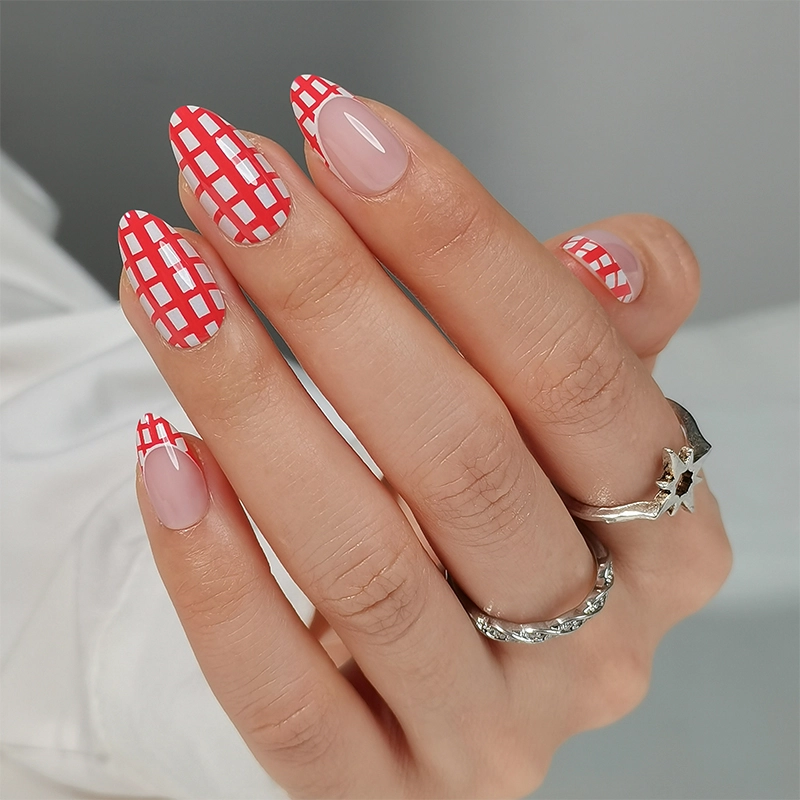
Wholesales Red French Nails Tips Checkered Soft Gel Nail Tips 32 Piece Set
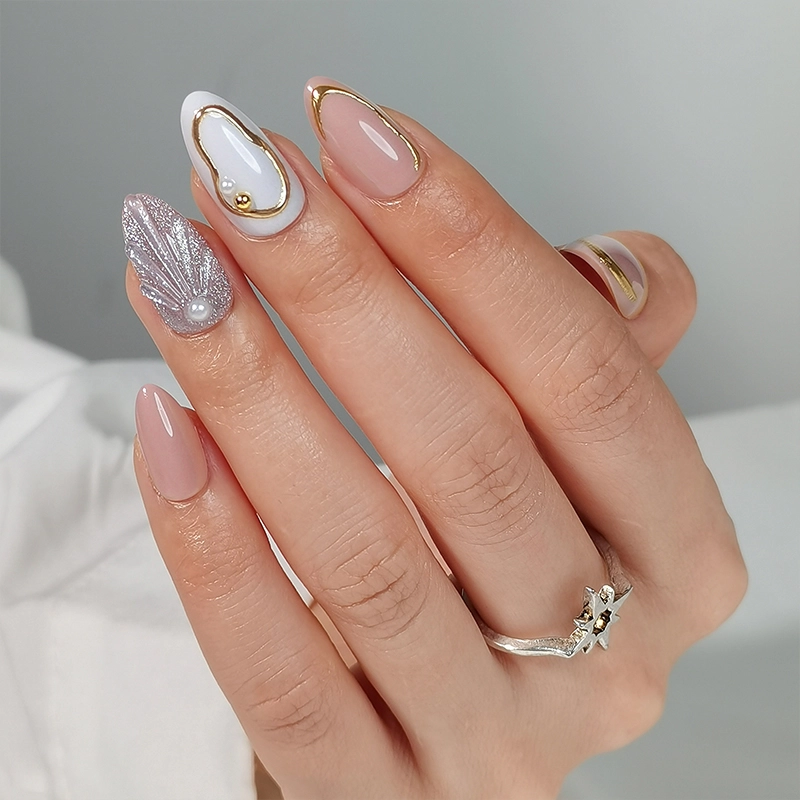
Wholesales Elegant Shell Inspired Soft Gel Wearable Nails for Seasonal Celebrations
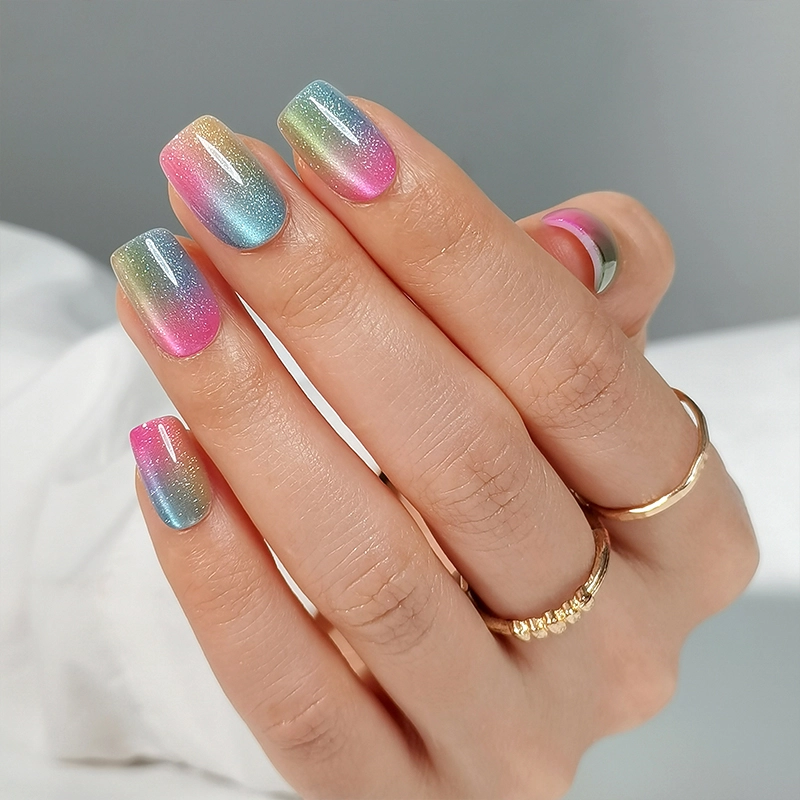
Custom Wholesale Gradient Cat Eye Soft Gel Wearable Fake Nails
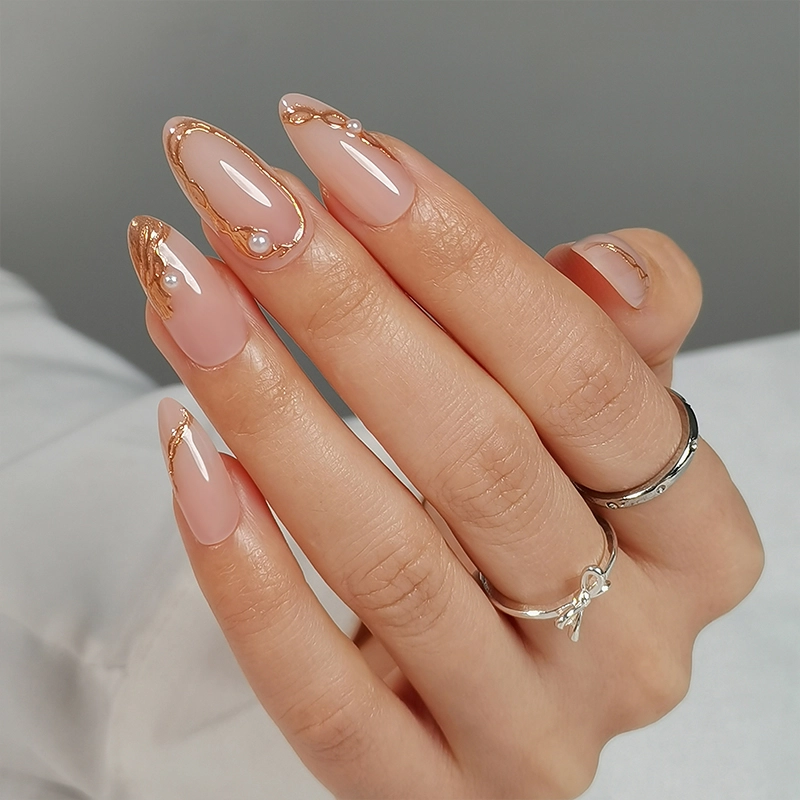
Wholesales Luxury Rhinestone Handmade Private Label Press On Nails Art Tips
Copyright © 2025 - XIANXING BEAUTY All Rights Reserved. Sitemap
Facebook
YouTube
Instagram
LinkedIn