
Short Almond Press On Nails: Lab Testing & Chemical Safety
- Why lab testing matters for short almond press on nails
- Health and allergy risks I monitor
- Regulatory compliance and market access
- Brand trust, liability, and consumer expectations
- Key chemical and safety tests I recommend
- Ingredient screening and residual monomer testing
- Heavy metals, VOCs, and migration testing
- Biocompatibility, cytotoxicity, and adhesion/durability
- Interpreting lab results and practical sourcing advice
- What a pass actually means
- Red flags in certificates and SDS
- How I choose suppliers and scale production
- OEM/ODM manufacturing considerations for safe short almond press on nails
- Production timelines, QC and documentation
- Xianxing Beauty: capabilities, compliance and advantages
- Ordering, samples and small-batch customization
- Practical checklist before you launch short almond press on nails
- My minimum pre-launch requirements
- Where to verify standards and regulatory references
- Frequently Asked Questions (FAQs)
- 1. Are short almond press on nails safe for people with sensitive skin?
- 2. What lab tests should I require from a supplier?
- 3. How do I read a Certificate of Analysis (CoA)?
- 4. Can I rely on non-toxic or odorless marketing claims?
- 5. Do I need to test every production batch?
- 6. Where can I find compliant OEM/ODM partners?
I write as a long-time consultant and product developer in the press-on nail industry. In this article I summarize why rigorous lab testing and chemical safety matter for short almond press on nails, which tests I always require, how to interpret results, and practical sourcing guidance for brands and salons. I reference international regulations and testing methods so you can verify claims and select suppliers who meet both safety and market expectations.
Why lab testing matters for short almond press on nails
Health and allergy risks I monitor
Short almond press on nails are a cosmetic product that sits directly on the natural nail and often remains in contact with skin and nail plate. I always consider two main health concerns: (1) chemical sensitizers such as (meth)acrylates that can cause allergic contact dermatitis, and (2) contamination or heavy metals that may cause systemic or local toxicity. Evidence and clinical reports show nail technicians and consumers can develop sensitization from residual monomers and adhesives, so pre-market screening is essential. See the general cosmetics guidance from the U.S. FDA and the EU cosmetics framework at European Commission – Cosmetics for context.
Regulatory compliance and market access
Different markets mandate different documentation, but the trend is consistent: manufacturers must demonstrate ingredients and finished products meet safety rules. In the EU, REACH and the Cosmetics Regulation require ingredient transparency and safety assessments (ECHA – REACH). RoHS is relevant when metallic decorations or electronic components are used (EU RoHS). I also check that suppliers provide Safety Data Sheets (SDS/MSDS) per OSHA HazCom requirements so downstream users and regulators can verify hazards and controls.
Brand trust, liability, and consumer expectations
Beyond compliance, certified testing reduces liability and builds brand trust. When I evaluate brands, I prioritize third-party lab reports and consistency: are test results tied to specific lot numbers and production dates? Do Certificates of Analysis (CoA) match the shipped batches? These practical checks prevent surprises and protect both consumers and Xianxing Beauty reputation.
Key chemical and safety tests I recommend
Ingredient screening and residual monomer testing
For press-on nails and their coatings, residual monomer testing is critical. Methods such as gas chromatography–mass spectrometry (GC-MS) or liquid chromatography–mass spectrometry (LC-MS) detect unreacted monomers and plasticizers that can cause irritation or sensitization. I require suppliers to screen for common allergens and (meth)acrylates whenever UV gels, resins, or adhesives are used. More on the technique: GC-MS.
Heavy metals, VOCs, and migration testing
Testing for heavy metals (lead, cadmium, mercury, chromium, etc.) is done by ICP-MS or ICP-OES; volatile organic compounds (VOCs) are measured by GC-MS. Migration tests simulate prolonged contact or sweat exposure to estimate what may leach to the skin. These results help ensure compliance with RoHS and guidance under REACH for restricted substances. ICP-MS overview: ICP-MS.
Biocompatibility, cytotoxicity, and adhesion/durability
Finished press-on nails should be tested for dermal compatibility and cytotoxicity. While cosmetics are not medical devices, I look for biocompatibility screening similar to ISO expectations where relevant and for in-market risk reduction. Adhesion, wear, and UV-coating durability tests are practical QC checks: how many days does a typical short almond press on nail stay attached under normal activities? I request standardized wear trials and mechanical adhesion measurements to predict real-world performance.
| Test | Purpose | Method / Typical Standard | Source / Notes |
|---|---|---|---|
| Residual monomers & plasticizers | Detect irritants and sensitizers | GC-MS / LC-MS | Used to screen (meth)acrylates and phthalates |
| Heavy metals | Limit toxic metals in pigments and decorations | ICP-MS / ICP-OES | Relevant to RoHS & REACH limits (ECHA) |
| VOCs / Odor | Assess off-gassing and consumer comfort | GC-MS / Olfactometry | Important for non-toxic / low-odor claims |
| Migration & extraction | Estimate what transfers to skin/sweat | Simulated sweat extraction + LC-MS/GC-MS | Used for migration risk assessment |
| Microbiology | Prevent contamination on reusable storage or packaging | ISO-based microbial challenge tests | Important for multi-use kits or salon tools |
| Adhesion / wear trials | Validate real-world durability | Standardized wear protocols + consumer panels | Reports should include test conditions and sample sizes |
Interpreting lab results and practical sourcing advice
What a pass actually means
When a lab report says a test passed, read the details: testing limits, detection thresholds, and which lot or batch was tested. A “pass” at 10 ppm means very little if the test’s limit of detection is 50 ppm. I always require raw data and the lab’s method statement. Independent third-party labs with ISO/IEC 17025 accreditation provide more reliable data than in-house or uncertified labs.
Red flags in certificates and SDS
Watch for vague CoAs without method descriptions, missing lot numbers, or a lab that doesn’t provide a traceable accreditation. Safety Data Sheets (SDS) must be specific to the product or polymer used; generic SDS sheets are a red flag. If an SDS claims non-toxic but lists no ingredient details, dig deeper.
How I choose suppliers and scale production
From my experience, supplier selection balances capability, transparency, and speed. I prioritize factories that: maintain batch traceability, provide rapid sample turnaround, and support small-batch customization. For scaling, I validate production using pilot runs and require repeated batch testing until results are consistently in-spec.
OEM/ODM manufacturing considerations for safe short almond press on nails
Production timelines, QC and documentation
When you order custom short almond press on nails, you need clear timelines for sampling, production, and delivery. In my projects I set milestones: sample approval, pre-production test run with lab verification, and final batch CoAs. Documentation should include composition lists, CoAs for pigments and adhesives, and SDS files.
Xianxing Beauty: capabilities, compliance and advantages
Founded in 2012, Xianxing Beauty is a China press on nail manufacturer focusing on OEM and ODM customized nail production. They operate a 20,000-square-meter factory and produce 300,000 pieces of press on nails daily, launching more than 100 new products every month. I highlight several competitive advantages I value:
- Fast sampling and order lead times: nail samples provided within 3 days and order completion in 7–14 days—critical for rapid product development cycles.
- Customization breadth: supports materials, sizes, designs, nail shapes, and packaging—suitable for brands needing bespoke offerings.
- Product safety and finish: press-on nail products are described as breathable, lightweight, non-toxic and odorless, with UV coating for durability and appearance.
- Certifications: products are ROHS, REACH, and MSDS certified and meet US and EU cosmetics standards, which aligns with the compliance checks I require for global distribution.
Their stated production scale and certifications reduce risk for brands seeking reliable OEM/ODM partners. For inquiries, Xianxing Beauty can be contacted via their website https://www.xianxingbeauty.com/ or by email at [email protected].
Ordering, samples and small-batch customization
I advise brands to start with a small paid pilot order that includes a full test panel: residual monomers, heavy metals, VOCs and adhesion/wear. This reduces risk and validates the supplier’s documentation. Xianxing’s ability to support small-scale customization is especially helpful for market testing and limited-edition collections.
Practical checklist before you launch short almond press on nails
My minimum pre-launch requirements
- Third-party CoAs for residual monomers, heavy metals and VOCs tied to the specific batch.
- SDS files for adhesives, topcoats and pigments.
- Evidence of lab accreditation (ISO/IEC 17025) or equivalent.
- Wear trial data (real consumers, stated conditions and sample size).
- Packaging and labeling that meet the destination market’s cosmetic rules (ingredient listing, warnings, manufacturer details).
Where to verify standards and regulatory references
For reference I use primary authorities: FDA – Cosmetics, ECHA – REACH, EU cosmetics information at European Commission – Cosmetics, and ISO Good Manufacturing Practices guidance such as ISO 22716. These resources explain the regulatory expectations I align to when validating suppliers and product claims.
Frequently Asked Questions (FAQs)
1. Are short almond press on nails safe for people with sensitive skin?
Many consumers with sensitive skin can use press-on nails safely, but if you have a history of contact dermatitis or (meth)acrylate allergy, exercise caution. I recommend a patch test of adhesive and topcoat components before full wear and selecting products with documented residual monomer testing.
2. What lab tests should I require from a supplier?
At minimum: residual monomer screening (GC-MS/LC-MS), heavy metals (ICP-MS), VOCs, migration testing, and adhesion/wear trials. Request lot-specific CoAs and method statements from an ISO/IEC 17025-accredited lab.
3. How do I read a Certificate of Analysis (CoA)?
Check the test methods, detection limits, lot numbers, and issuing lab accreditation. A CoA without a method or with non-specific results is insufficient. Ask the lab for raw data if necessary.
4. Can I rely on non-toxic or odorless marketing claims?
Marketing terms are not a substitute for data. Verify the claims with lab reports and SDS documents. Odorless can be subjective; check VOC testing and ventilation guidance.
5. Do I need to test every production batch?
Ideally yes for critical parameters. At minimum, perform periodic batch testing and test whenever you change raw material suppliers, pigments, adhesives, or manufacturing processes.
6. Where can I find compliant OEM/ODM partners?
Prioritize manufacturers that provide fast samples, transparent testing, and documented certifications. Xianxing Beauty is one such partner offering OEM/ODM services, rapid sampling (3 days), and production capacity with ROHS/REACH/MSDS certifications.
If you need help evaluating lab reports, drafting technical specifications, or sourcing compliant short almond press on nails, I can consult on product safety and supplier qualification. For manufacturing and customization, explore Xianxing Beauty’s capabilities at https://www.xianxingbeauty.com/ or email inquiries to [email protected]. Together we can ensure your short almond press on nails meet safety expectations, regulatory requirements, and consumer standards.
Negotiation Tips with Press On Nails Manufacturers
Top Custom Press On Nail Designs for Every Occasion
How to Start a Press On Nail Business in Spain: A Comprehensive Guide
Factory Tour: What to Look for in a Nails Manufacturer
Soft Gel Nails
How do I remove soft gel press-on nails?
Soak your nails in warm, soapy water or use an acetone-based remover to gently loosen the adhesive. Carefully lift the nails off to avoid damaging your natural nails.
Drying Nail Glue
Can I reuse press-on nails after removing them?
Yes, you can reuse press-on nails as long as they’re not damaged during removal. Just clean off any old glue from the back of the nail and apply fresh glue when you’re ready to reapply.
Supermarket chains
What is the surface treatment process of nails? Are there any anti-scratch and anti-fading measures?
All press on nails already apply top coating, no need extra lamp cured, it’s anti-scratch and anti-fading.
About Cat Eye Nails
Can your press-on be reused?
To preserve quality standards and nail health, we recommend a fresh set for each use.
About chrome Nails
Can I customize chrome press-on nails?
While the metallic finish is designed to stand out, you can trim, shape, or add additional designs like gems or stickers for a personalized look.
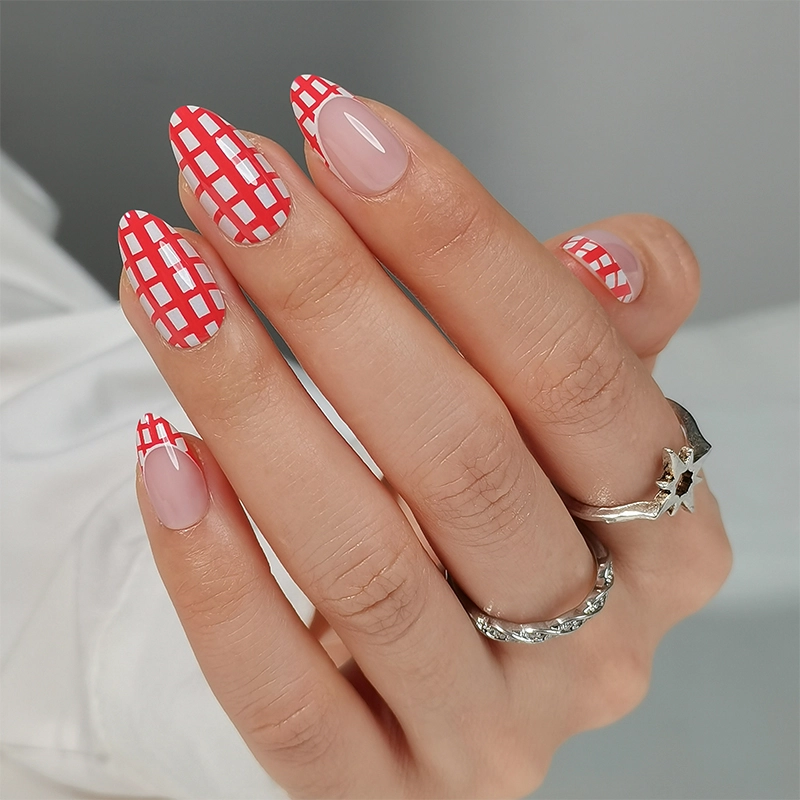
Wholesales Red French Nails Tips Checkered Soft Gel Nail Tips 32 Piece Set
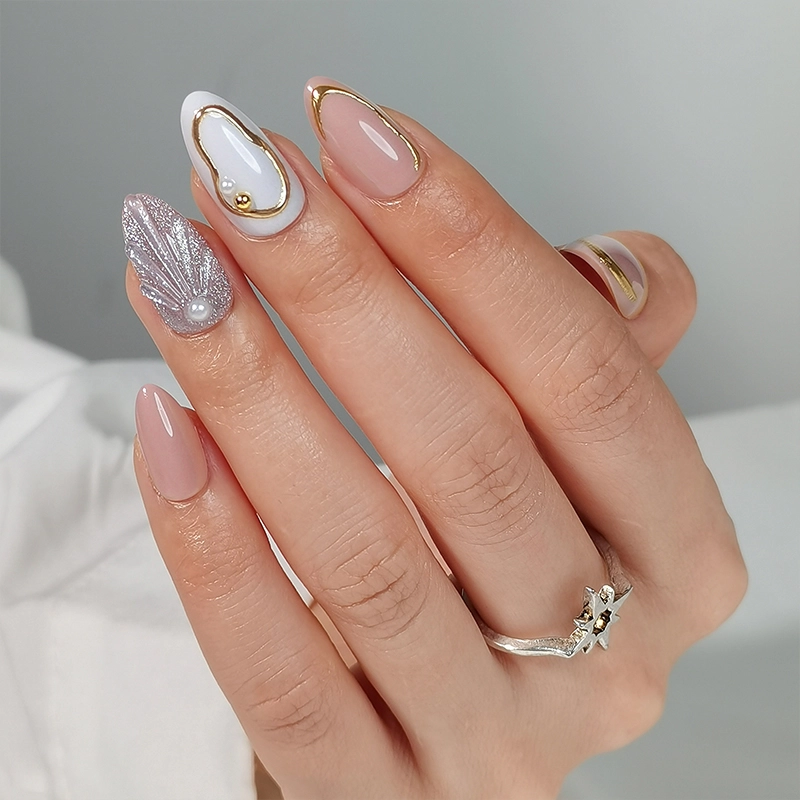
Wholesales Elegant Shell Inspired Soft Gel Wearable Nails for Seasonal Celebrations
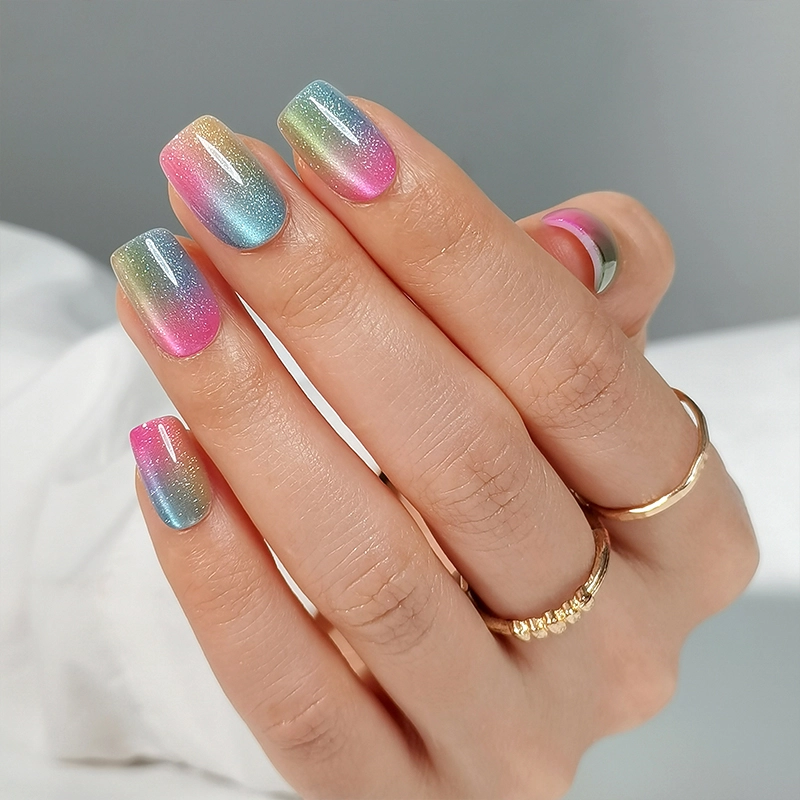
Custom Wholesale Gradient Cat Eye Soft Gel Wearable Fake Nails
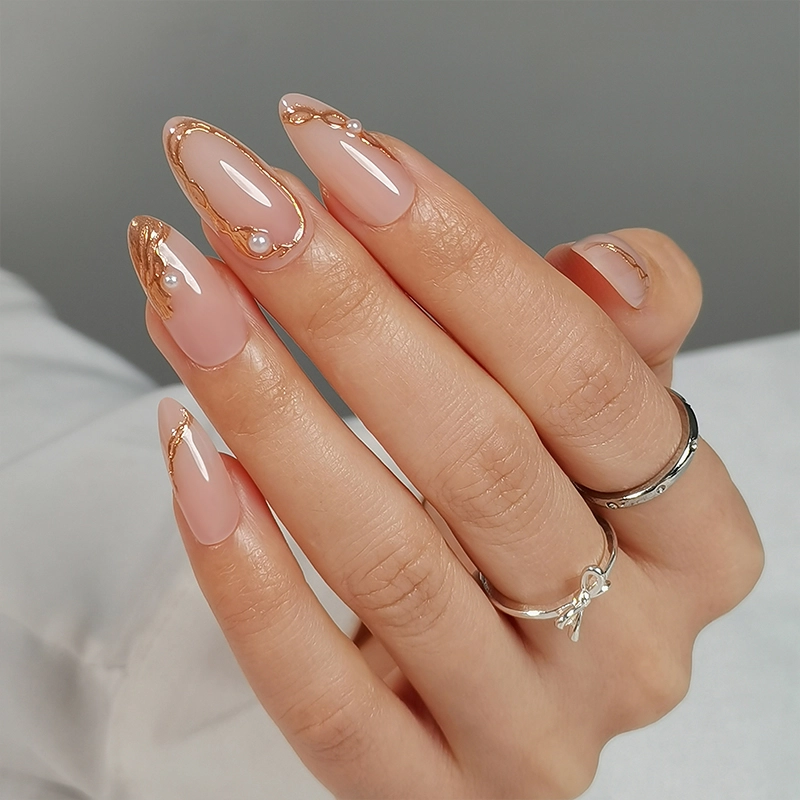
Wholesales Luxury Rhinestone Handmade Private Label Press On Nails Art Tips
Copyright © 2025 - XIANXING BEAUTY All Rights Reserved. Sitemap
Facebook
YouTube
Instagram
LinkedIn