
Short Almond Press On Nails: Wholesale Sourcing Checklist
- Wholesale sourcing essentials for short almond press on nails — quick overview
- 1. Define product and business requirements
- 1.1 Product specification: what to standardize
- 1.2 Business model considerations
- 2. Supplier types, pricing and minimum order quantities (MOQs)
- 2.1 Supplier types and pros/cons
- 2.2 Typical MOQs and price ranges (industry snapshot)
- 2.3 How to compare quotes
- 3. Quality, materials and testing
- 3.1 Materials comparison: durability and feel
- 3.2 Required safety and lab tests
- 4. Manufacturing, QC and packaging checklist
- 4.1 Production and inspection stages
- 4.2 Packaging, branding and sustainability options
- 5. Logistics, lead times and inventory strategy
- 5.1 Lead time expectations and buffer planning
- 5.2 Shipping modes and landed-cost tradeoffs
- 6. Contracts, IP protection and negotiation tips
- 6.1 Contracts and terms to include
- 6.2 Negotiation tactics for better pricing
- 7. Sales, assortment planning and margins
- 7.1 Pricing model and margin targets
- 7.2 Assortment and replenishment strategy
- FAQ — Short Almond Press On Nails Wholesale
- Q1: What is the minimum order quantity for private label short almond press on nails?
- Q2: Are press-on nails regulated as cosmetics in the US and EU?
- Q3: How do I test adhesive quality for longevity?
- Q4: What packaging and labeling must wholesalers provide?
- Q5: Can I negotiate lower MOQs for new designs?
- Q6: What are common red flags when vetting a supplier?
- References
Wholesale sourcing essentials for short almond press on nails — quick overview
Short almond press on nails are an increasingly popular category for salons, e-commerce beauty retailers, and private-label brands because they balance wearability and style. This checklist helps you evaluate suppliers, compare materials and manufacturing methods, estimate landed cost, verify compliance (US/EU), and set quality-control steps so you can buy short almond press on nails in bulk with confidence. The guidance below is tailored to buyers seeking wholesale relationships, private-label options, or dropship-ready assortments.
1. Define product and business requirements
1.1 Product specification: what to standardize
Before contacting suppliers, document precise specs for the short almond press on nails you want to purchase. Typical elements to define:
- Size range and sizing system (0–9 or mm length/width measurements)
- Length: short—specify in millimeters or relative to natural nail (e.g., 6–10 mm beyond cuticle)
- Almond shape profile (soft vs. tapered almond)
- Materials: ABS plastic, acrylic, gel overlay, or hybrid
- Finish: glossy, matte, gel-like, chrome, glitter, encapsulated
- Adhesive type: pre-glued (single-use adhesive layer) vs. tab + glue vs. reusable glue gel
- Packaging format: single set blister, multi-pack, retail box, sample cards
1.2 Business model considerations
Match supplier capabilities to your model:
- Stock wholesale: buy ready designs by the dozen for quick inventory turnover.
- Private label/OEM: request custom molds, artwork, and branding with higher MOQ.
- Dropshipping: supplier handles fulfillment; useful for low-risk assortment testing.
keywords to use when contacting suppliers: wholesale short almond press on nails, private label press-on nails, OEM/ODM nail tips, bulk short almond nails MOQ.
2. Supplier types, pricing and minimum order quantities (MOQs)
2.1 Supplier types and pros/cons
Three common supplier types:
- Factory/manufacturer: best for low unit costs, full customization, and control over materials. Often requires higher MOQ and longer lead times.
- Wholesaler/distributor: lower MOQ and faster shipping but limited customization and higher per-unit cost.
- Dropshipper/3PL-enabled supplier: minimal upfront inventory, valuable for market testing; margins and branding control are limited.
2.2 Typical MOQs and price ranges (industry snapshot)
Typical ranges as of 2024—use these as starting assumptions; validate with each supplier:
| Supplier Type | Typical MOQ | Estimated unit cost (USD) | Customization |
|---|---|---|---|
| Manufacturer (OEM) | 500–5,000 sets | $0.60–$3.50 per set | Full (shape, length, artwork, packaging) |
| Wholesaler | 24–500 sets | $1.50–$5.00 per set | Limited |
| Dropship | No MOQ (or 1 set) | $3.50–$8.00 per set (incl. fulfillment) | Minimal |
Note: unit cost varies by finish (hand-painted designs and 3D embellishments increase cost), adhesive option, and packaging. Always request a landed-cost estimate that includes freight, duties, and inspection fees.
2.3 How to compare quotes
When you receive quotes, normalize them to a per-set landed cost including:
- Product EXW price
- Packing and labeling cost per unit
- Sample fees
- Freight (LCL/air/express) to your warehouse
- Duties and VAT (if applicable)
- Inspection and testing fees
- Estimated returns/warranty reserve
3. Quality, materials and testing
3.1 Materials comparison: durability and feel
Short almond press on nails are commonly produced from:
| Material | Pros | Cons |
|---|---|---|
| ABS plastic | Lightweight, flexible, low cost, good snap-fit | Less High Quality finish; can feel plasticky |
| Acrylic | Stiffer, High Quality look, holds embellishments well | Heavier; slightly higher cost |
| Gel/UV-cured overlay | Gel-like finish, High Quality glossy look | Requires UV curing in production; higher cost |
3.2 Required safety and lab tests
To reduce risk of recalls, require suppliers to provide:
- Material certificates (e.g., RohS/REACH where applicable)
- MSDS for adhesives and coatings
- Heavy metals screening (lead, cadmium) for pigments and metallic finishes
- Allergen and phthalate testing for adhesives and any softeners
- Adhesive bond strength and wear simulation (48–72 hour wear tests are common)
Regulatory context: in the US, the FDA enforces cosmetics laws; press-on nails typically fall under cosmetics or consumer products and must not be adulterated or misbranded. In the EU, EC Regulation No 1223/2009 applies to cosmetics. Always confirm classification with legal counsel for new markets.
4. Manufacturing, QC and packaging checklist
4.1 Production and inspection stages
Recommended checkpoints to include in your contract and POs:
- Pre-production sample approval (physical sample—sign-off required)
- Initial production run inspection (IPQC) after 10–20% completion
- Pre-shipment inspection (PSI) by a third-party (AQL 2.5 common for consumer goods)
- Random batch testing for adhesive performance and durability
4.2 Packaging, branding and sustainability options
Specify packaging requirements early—these can affect MOQ and cost:
- Retail-ready boxes with UPC/barcode and printed artwork
- Eco options: recycled cardboard, compostable inserts, soy-based inks
- Labeling: include product claims, country of origin, ingredient/chemical disclosures as required
5. Logistics, lead times and inventory strategy
5.1 Lead time expectations and buffer planning
Typical lead times vary by supplier type and customization:
| Order type | Lead time (production) | Notes |
|---|---|---|
| Stock designs (wholesale) | 7–21 days | Fast replenishment; lower MOQ |
| Private label (first run) | 30–90 days | Molds, artwork, approvals increase time |
| Reorders after validation | 15–45 days | Shorter if supplier keeps tooling and stock |
5.2 Shipping modes and landed-cost tradeoffs
Air freight is fast but expensive—useful for samples and urgent replenishment. Sea freight is cost-effective for large bulk orders but add 2–8 weeks port-to-door. Include insurance and customs brokerage costs in your landed cost calculation. Ask suppliers for FOB, CIF, and DDP quotes to compare liabilities.
6. Contracts, IP protection and negotiation tips
6.1 Contracts and terms to include
Ensure contracts address:
- Exact product and packaging specifications and approved samples
- Quality standards and acceptable AQL levels
- Intellectual property clauses (artwork ownership, tooling ownership)
- Warranty and return policy for defective units
- Payment terms, sample fees, and production milestones
6.2 Negotiation tactics for better pricing
Practical negotiation points:
- Bundle multiple SKUs for volume discounts
- Offer a longer-term purchasing commitment in exchange for lower unit prices
- Request reduced MOQs for a design-tested pilot, with higher MOQ for full run
- Negotiate payment split: 30% deposit, 70% on B/L or after PSI
7. Sales, assortment planning and margins
7.1 Pricing model and margin targets
Typical retail pricing for short almond press on nails ranges from $8 to $30 per set depending on branding and finish. Retail margin targets should account for COGS, shipping, marketing, and returns. Example target margins:
| Business Type | Target Gross Margin |
|---|---|
| Marketplace/retailer | 40%–60% |
| Salon retail/private label | 50%–70% |
7.2 Assortment and replenishment strategy
Start with a core assortment: neutral colors, 2–3 seasonal prints, and 1–2 High Quality finishes. Track sell-through weekly initially; reorder best-sellers with safety stock and phase out low-velocity SKUs.
FAQ — Short Almond Press On Nails Wholesale
Q1: What is the minimum order quantity for private label short almond press on nails?
A1: MOQs vary by factory and complexity. For private label fully customized sets, expect 500–5,000 sets. Simple customizations (label/box artwork) may be possible at 300–500 sets. Always request sample runs to validate quality before full production.
Q2: Are press-on nails regulated as cosmetics in the US and EU?
A2: Generally, press-on nails are treated as consumer cosmetic or beauty accessory products. In the US, the FDA regulates cosmetics but does not pre-approve most products. In the EU, EC Regulation No 1223/2009 governs cosmetics. Adhesives and coatings can trigger additional compliance checks—always verify with legal counsel for your market.
Q3: How do I test adhesive quality for longevity?
A3: Request adhesive bond strength tests, wear simulation (48–72 hours), humidity and temperature cycling, and a peel-strength measure. Conduct blinded consumer wear tests on 50–100 participants for real-world feedback.
Q4: What packaging and labeling must wholesalers provide?
A4: Minimum requirements include product identification, country of origin, any mandatory warnings, ingredient or material disclosures (if applicable), and batch/lot numbers for traceability. For private-label retail, include UPC/Barcode and Xianxing Beauty labeling instructions.
Q5: Can I negotiate lower MOQs for new designs?
A5: Yes. Many manufacturers accept lower MOQs for color/finish variations of existing molds. Offer to pay a tooling or mold amortization fee, choose less complex finishes, or commit to a follow-up purchase to get MOQ concessions.
Q6: What are common red flags when vetting a supplier?
A6: Red flags include reluctance to provide references or factory photos, refusal to accept third-party inspections, no sample policy, inconsistent lead time estimates, or missing safety documentation (MSDS, material certificates).
If you'd like help vetting suppliers, getting sample evaluations, or calculating landed costs for your target market, contact our sourcing team to request a quote or view our curated wholesale short almond press on nails collections. Reach out via email or schedule a consultation to review MOQ options, private-label packages, and sample timelines.
References
- Grand View Research — Press-On Nails Market Analysis (accessed 2024-05)
- U.S. Food & Drug Administration — Cosmetics Laws & Regulations (accessed 2024-05)
- European Commission — Cosmetics Market and Regulation (accessed 2024-05)
- ISO 9001 — Quality Management Overview (accessed 2024-05)
- Statista — Beauty & Personal Care Market Data (accessed 2024-05)
How to Take Off Press On Nails Without Ruining Them
Sample Policy: How to Approve Custom Nail Designs Fast
Press On Nails Quality Standards & Material Certifications
Fake Nails Price Guide | Xianxing Beauty
Recycled ABS Nails
Will it affect the health of the nails?
If worn and used improperly, renewable ABS press-on nails may have a certain impact on the health of the nails. For example, wearing them for a long time may cause the nails to be unable to breathe normally, making them weak and brittle. If the glue quality is poor or the pasting method is improper, it may damage the nail surface. Therefore, when wearing press-on nails, you should pay attention to choosing high-quality products and follow the correct wearing and removing methods, and give the nails appropriate rest time.
About after-sale service
What type of after-sales support do you offer?
Our team is always available online to assist with new product inquiries and help maintain strong customer relationships, ensuring timely support whenever needed.
About Christmas Nails
Can I reuse Christmas press on nails?
Yes, absolutely! This is one of their biggest advantages.
If you used adhesive tabs, they are designed for easy removal and reuse.
If you used nail glue, you can still reuse them. Soak the press-ons in warm, soapy water to loosen the glue, then gently pop it off. Clean off any remaining glue from the back with a toothpick or orange stick. You may need to add a new layer of glue to the back for the next application.
Wholesaler Distributor
Do you provide technical support?
Yes. We will provide product usage guidance and technical support to help you better sell and promote our products.
Supermarket chains
Are the production equipment advanced and regularly maintained?
Yes, we have the most advanced equipment of the press on nails
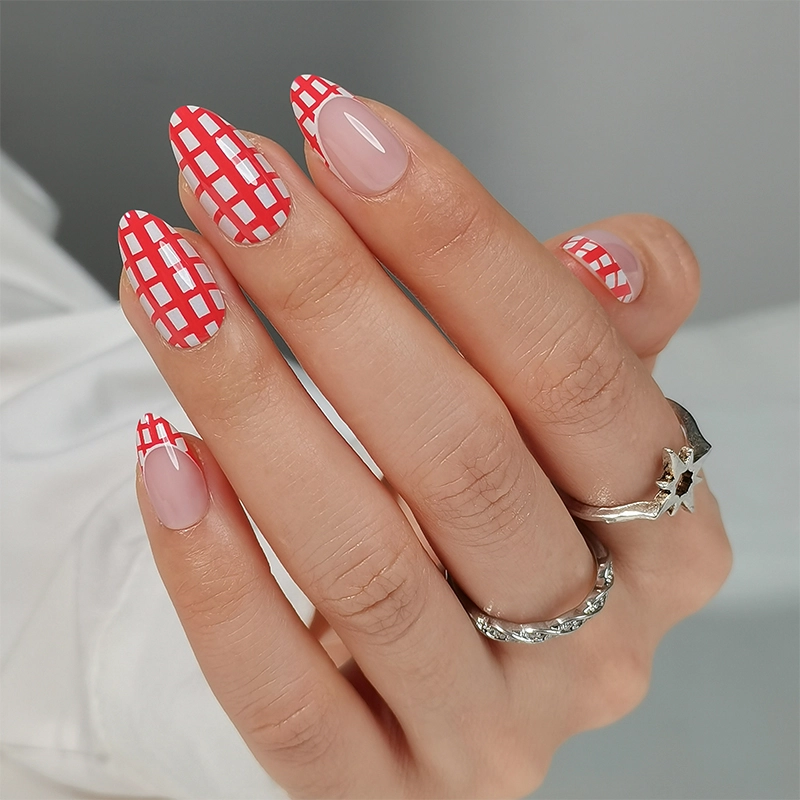
Wholesales Red French Nails Tips Checkered Soft Gel Nail Tips 32 Piece Set
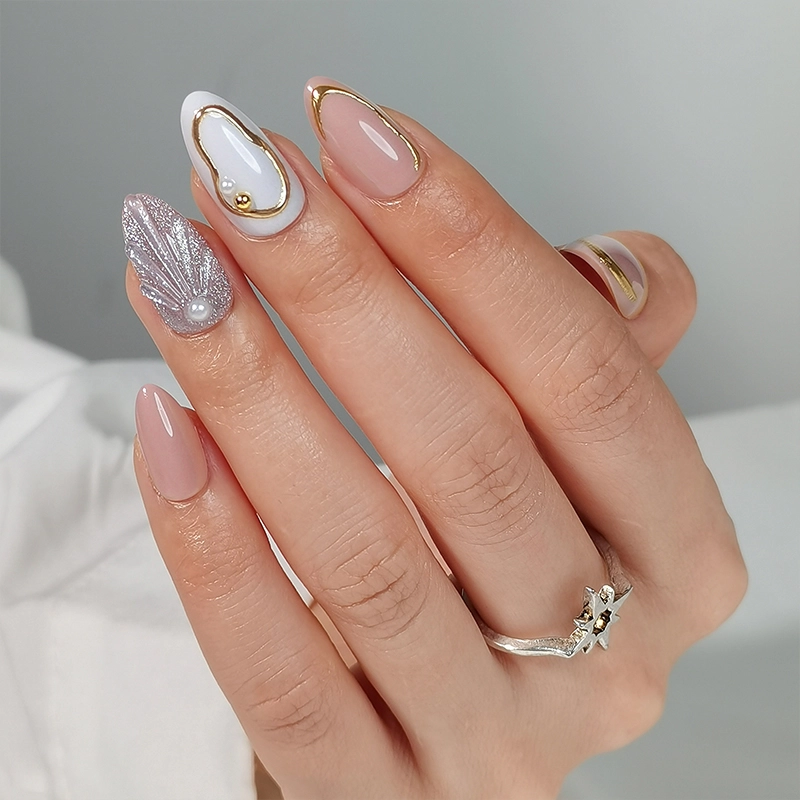
Wholesales Elegant Shell Inspired Soft Gel Wearable Nails for Seasonal Celebrations
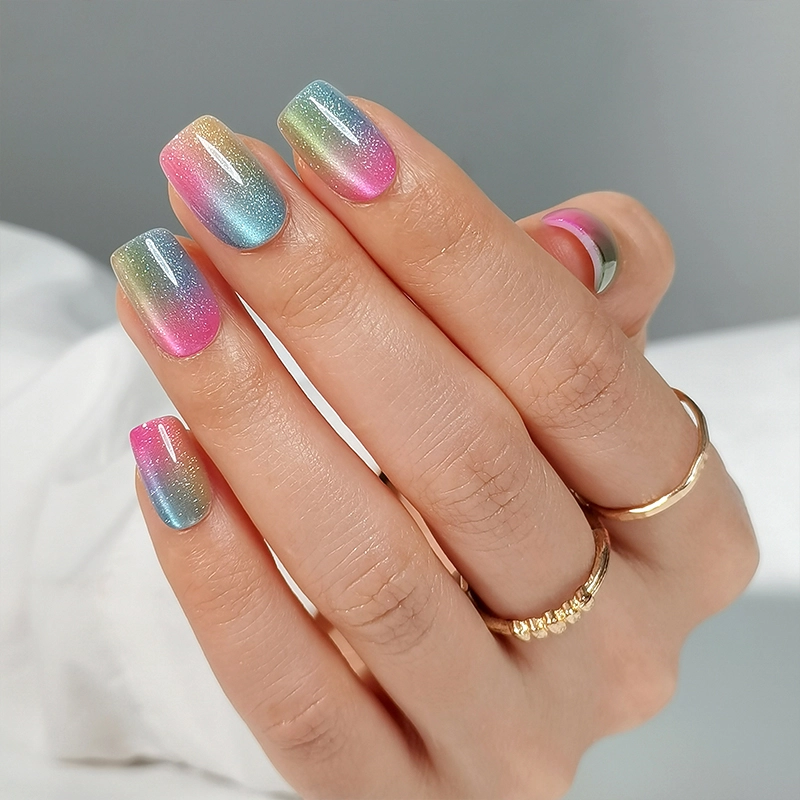
Custom Wholesale Gradient Cat Eye Soft Gel Wearable Fake Nails
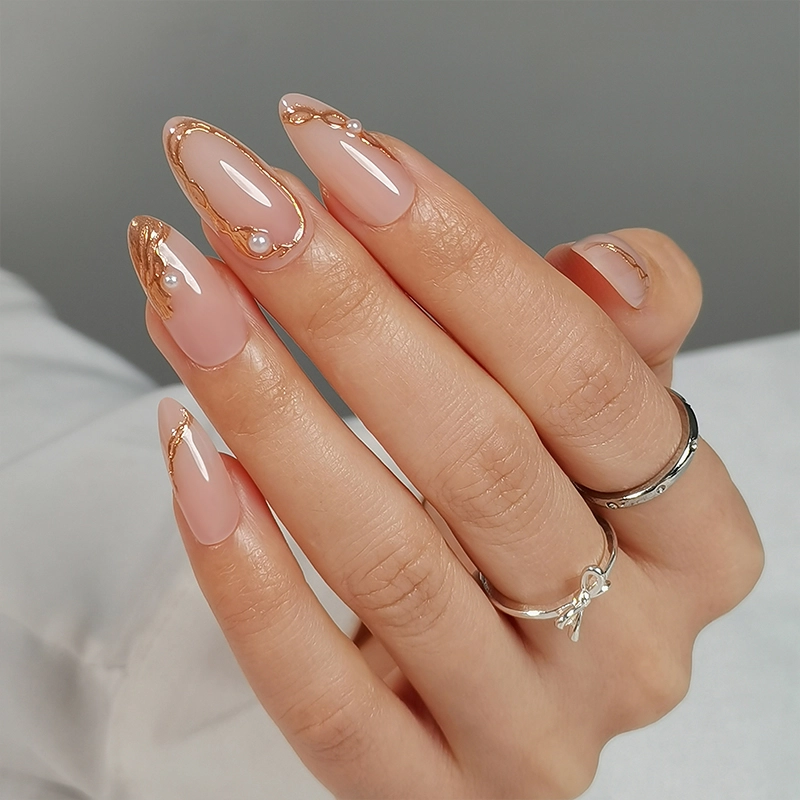
Wholesales Luxury Rhinestone Handmade Private Label Press On Nails Art Tips
Copyright © 2025 - XIANXING BEAUTY All Rights Reserved. Sitemap
Facebook
YouTube
Instagram
LinkedIn