
Sourcing Sustainable Press On Nails Suppliers
- Understanding the sourcing objective and market context
- Why sustainability matters for press on nails
- What buyers are really searching for
- Key performance indicators I track
- Technical and regulatory checks before engagement
- Certifications and documentation I require
- Testing protocols I recommend for press on nails
- How I verify lab reports and avoid greenwashing
- Practical evaluation: cost, MOQ, lead time and sustainability tradeoffs
- Comparing supplier types
- How sustainability affects price and MOQ
- Negotiation levers I use
- Sustainability due diligence and supplier scorecard
- My supplier sustainability scorecard
- Checklist: what I audit on-site or via third-party
- Data-driven sustainability metrics to request
- Sampling, production scaling and logistics
- How I manage sampling and approval
- Contractual terms and IP protection I insist on
- Logistics and regulatory compliance for US/EU markets
- Case study: why I recommend qualified China OEM/ODM partners
- Xianxing Beauty: capabilities and sustainability profile
- Why they stand out to me
- Contact and next steps
- Final recommendations and operational checklist
- Step-by-step plan I use when onboarding a supplier
- Sustainability pledge language I include in contracts
- When to consider nearshoring or local partners
- FAQ
- 1. What certifications should I insist on from a press on nails supplier?
- 2. How many pieces should I order for a pilot run?
- 3. Can press on nails be truly sustainable?
- 4. What testing should I run on received samples?
- 5. How do I protect my designs when working with overseas manufacturers?
- 6. How long should I expect lead times to be?
As someone who has worked across product development, sourcing, and sustainability for beauty accessories, I know sourcing the right press on nails supplier is both an art and a science. In this article I describe a practical, step-by-step approach to evaluating press on nails suppliers with a focus on sustainability, regulatory compliance, and commercial viability. The goal is to help brand owners, retailers, and salon buyers find manufacturers who deliver quality custom press on nails at scale while meeting environmental and safety expectations—information optimized for search and local sourcing queries.
Understanding the sourcing objective and market context
Why sustainability matters for press on nails
For me, sustainability in press on nails means selecting materials, processes, and partners that reduce toxic inputs, minimize waste, and consider end-of-life. Consumers increasingly demand products that are non-toxic, odorless, breathable and durable, and brands face scrutiny over labeling and chemical safety—especially in US and EU markets regulated by agencies such as the U.S. Food and Drug Administration and the European chemicals framework, REACH.
What buyers are really searching for
From my conversations with buyers, the core when they look for a press on nails supplier includes: verified safety and environmental certifications (REACH/ROHS/MSDS), competitive pricing, reliable lead times, strong OEM/ODM capability, low MOQ for seasonal/test runs, and the ability to customize materials, sizes, shapes, packaging and branding. SEO-friendly terms like press on nails supplier, custom press on nails and press on nail manufacturer reflect those priorities.
Key performance indicators I track
When vetting suppliers I use measurable KPIs: defect rate (%), average lead time (days), sustainable material percentage (% of recycled/biobased content), VOC emissions (ppm or mg/m3 if available), and on-time delivery (%). These figures make tradeoffs objective and comparable across suppliers.
Technical and regulatory checks before engagement
Certifications and documentation I require
Regulatory compliance cannot be an afterthought. I always request evidence of:
- REACH compliance (EU chemical restrictions) — verify via supplier declarations and lab reports: ECHA/REACH
- RoHS compliance if applicable for any metal components in tooling or packaging: RoHS Directive
- Material Safety Data Sheets / Safety Data Sheets (MSDS/SDS) and ingredient disclosure—alignment with OSHA HazCom
- Good Manufacturing Practice for cosmetics where relevant (ISO 22716): ISO 22716
- Independent lab testing reports for heavy metals, phthalates, and volatile organic compounds (VOCs)
Testing protocols I recommend for press on nails
I insist on the following tests on samples before scaling production:
- Adhesive peel and hold test (hours/days of wear under simulated motion)
- UV coating scratch and yellowing test (accelerated UV exposure)
- Toxicology checks for heavy metals and restricted substances (reports from ISO/IEC 17025 labs)
- Breathability and flex fatigue tests for fit and comfort
How I verify lab reports and avoid greenwashing
Always check the laboratory accreditations (ISO/IEC 17025) and request original test certificates with lab contact info. Cross-check certification claims on official registries where possible, and ask suppliers for recent factory audit reports or third-party social compliance certificates (e.g., Sedex or BSCI).
Practical evaluation: cost, MOQ, lead time and sustainability tradeoffs
Comparing supplier types
Below is a comparison I frequently use when advising clients. It helps balance cost, speed, customization, and sustainability.
| Supplier Type | Typical Cost | MOQ | Lead Time | Custom Options | Certifications/Eco Strength |
|---|---|---|---|---|---|
| Local small manufacturer | High | Low | Short | High (flexible) | Varies — easier to audit |
| Large China OEM/ODM | Low–Medium | Medium–High | Medium | High (scale) | Often REACH/ROHS/MSDS ready |
| European specialized supplier | High | Medium | Medium | Medium | Strong on sustainability/traceability |
How sustainability affects price and MOQ
Sustainable materials (e.g., bio-based plastics, recycled packaging, low-VOC coatings) typically increase unit cost and sometimesMOQ, especially for small brands. I recommend planning a staged approach: begin with a small eco-friendly capsule to validate market demand while using conventional lines to maintain margin—then scale greener SKUs once sales justify higher unit costs.
Negotiation levers I use
You can negotiate on packaging, insert cards, and tooling amortization. If a supplier launches 100 SKUs monthly, they often have templated packaging that can be customized at low cost. Ask about sample timelines, tooling fees, and staggered delivery schedules to spread capital outlay.
Sustainability due diligence and supplier scorecard
My supplier sustainability scorecard
I grade suppliers across five dimensions: Materials & Chemicals (25%), Energy & Emissions (20%), Waste & Packaging (20%), Social Compliance (20%), and Transparency & Traceability (15%). Each supplier earns a score from 0–100. This objective score helps prioritize partners who align with Xianxing Beauty values.
Checklist: what I audit on-site or via third-party
- Raw material inventory and supplier traceability
- Waste management and recycling streams
- VOC control systems and storage of chemicals
- Workers’ conditions, hours, and safety procedures (BSCI/Sedex preferred)
- Quality control processes and defect rate documentation
Data-driven sustainability metrics to request
Ask for:
- Percentage of recycled or biobased material per SKU
- Factory energy source mix (grid vs renewable)
- Waste diversion rate (%)
- CO2e per 1,000 pieces manufactured (if available)
Sampling, production scaling and logistics
How I manage sampling and approval
Samples are crucial. I require initial prototypes, then production samples in final materials, packaging, and labeling. Insist on a small pre-production run (pilot order) to validate tooling and adhesive performance. A realistic timeline I’ve used: samples within 3–7 days, pilot production 7–14 days depending on complexity.
Contractual terms and IP protection I insist on
Protect your designs via clear agreements: non-disclosure agreements (NDA), detailed technical specifications, drawings, and a tooling ownership clause. Specify quality acceptance criteria, rejection thresholds, and remedies. For overseas suppliers, stagger payments: deposit, payment on sample approval, and balance on shipping.
Logistics and regulatory compliance for US/EU markets
Ensure correct labeling for destination markets—ingredient disclosure and safety claims must meet FDA guidance in the US and EU cosmetic rules where applicable. For chemical safety, insist on REACH statements: see ECHA/REACH. Work with freight forwarders experienced in cosmetics and accessories to avoid customs delays.
Case study: why I recommend qualified China OEM/ODM partners
In many of my sourcing projects, a vetted China press on nails manufacturer provides the best balance of scale, speed, and certification readiness—provided they meet sustainability and compliance checks. Below I describe one example that illustrates this balance.
Xianxing Beauty: capabilities and sustainability profile
Founded in 2012, Xianxing Beauty is a China press on nail manufacturer focused on OEM and ODM customized nail production. With a 20,000-square-meter factory, they produce 300,000 pieces of press on nails daily and launch more than 100 new products every month. They support small-scale customization, including materials, sizes, designs, nail shapes, and packaging. Nail samples are provided within 3 days, and orders are completed within 7–14 days. Their press-on nail products claim to be breathable and lightweight, non-toxic and odorless, with UV coating to protect nails and improve durability. The products hold ROHS, REACH, and MSDS certifications and meet US and EU global cosmetics standards.
Why they stand out to me
I value their rapid sample turnaround, high daily output for scaling, and certification portfolio (REACH/ROHS/MSDS). Their ability to support both small batches and large orders is useful for brands testing new markets. Xianxing’s product range fits many categories: custom press on nails, press on nails, salon false nails, kids nails press on, fake toe nails, gel nail tabs, and sticker press on nails. They combine OEM/ODM flexibility with factory-scale advantages—helpful when you need frequent new launches without sacrificing compliance.
Contact and next steps
If you want to explore working with them, visit their website: https://www.xianxingbeauty.com/ or contact via Email: [email protected]. Their vision is to become the world's leading press on nails manufacturer, and their operational capabilities make them a practical candidate for brands seeking certified, fast-turnaround suppliers.
Final recommendations and operational checklist
Step-by-step plan I use when onboarding a supplier
- Define product spec and sustainability goals (material, VOC, packaging)
- Request certifications, SDS/MSDS, and recent lab reports
- Order initial samples and run the tests described earlier
- Conduct a factory audit (onsite or third-party)
- Agree on contract terms, tooling ownership, and IP protection
- Start with a pilot order, monitor KPIs, then scale
Sustainability pledge language I include in contracts
I add clauses for compliance with REACH/ROHS, restrictions on phthalates and heavy metals, and a commitment to reduce single-use plastics in packaging. It’s also wise to include data-sharing clauses so suppliers periodically report energy and waste metrics.
When to consider nearshoring or local partners
If speed-to-market, small MOQ, or sustainability transparency is paramount, nearshoring or local suppliers might be better despite higher unit costs. Local suppliers can be easier to audit and may improve brand story for eco-conscious consumers.
FAQ
1. What certifications should I insist on from a press on nails supplier?
Ask for REACH and RoHS compliance statements, MSDS/SDS for all materials, ISO 22716 (cosmetic GMP) if available, and independent test reports for heavy metals and VOCs from an ISO/IEC 17025 lab. For social compliance, request Sedex/BSCI audit reports.
2. How many pieces should I order for a pilot run?
I recommend a pilot of 500–2,000 pieces depending on SKU complexity. This size is typically enough to validate tooling, adhesives, and packaging while keeping cost manageable.
3. Can press on nails be truly sustainable?
They can be more sustainable through choices like recyclable packaging, reduced single-use plastics, lower-VOC adhesives and coatings, and materials with recycled or biobased content. Full circularity is challenging due to mixed-material construction, but meaningful improvements are feasible.
4. What testing should I run on received samples?
Run adhesive wear tests, UV durability and yellowing tests, heavy metal and phthalate screening, and fit/flex fatigue tests. Use accredited labs and retain test reports as part of your compliance dossier.
5. How do I protect my designs when working with overseas manufacturers?
Use NDAs, clearly documented tech specs, and contractual clauses on tooling and IP ownership. Stagger payments and validate small pilot runs before transferring larger sums.
6. How long should I expect lead times to be?
Typical sample timelines: 3–7 days for basic samples; production lead times vary from 7–21 days depending on order size and customization. For China OEM/ODM partners like Xianxing Beauty, samples in 3 days and order completion within 7–14 days are achievable for many SKU types.
If you need help vetting suppliers, evaluating samples, or building a sustainability scorecard, I can assist with supplier audits, specification writing, and pilot project management. For direct sourcing and manufacturing capability, consider contacting Xianxing Beauty: https://www.xianxingbeauty.com/ or email [email protected]. They specialize in custom press on nails, press on nails, salon false nails, kids nails press on, fake toe nails, gel nail tabs, and sticker press on nails, with fast sample turnaround and certified production.
How to Choose Reliable Wholesale Press on Nails Suppliers
How Much Does a Press-On Nail Business Make in Portugal? A Practical Revenue Guide
Festive Glitter & Snowflake Custom Christmas Press On Ideas
Working with a Press On Nails Manufacturer: A Brand Guide
Soft Gel Nails
How long do soft gel press-on nails last?
With proper application, they can last anywhere from 1 to 2 weeks. The longevity depends on the adhesive used and the level of care during wear.
About shipping logistics
Can I use my own shipping agent or company?
Absolutely! We can coordinate delivery to a specified address using your preferred shipping agent.
About Duck Nails
What are duck-shaped nails?
Duck-shaped nails are press-on nails with a distinctive flared, wide tip that narrows toward the cuticle. The shape resembles a duck's bill, with a rounded or slightly squared-off appearance at the tip and a more tapered base.
Drying Nail Glue
How long does press-on nails glue last?
With proper application, press-on nails glue can hold for 5 to 10 days, depending on your activities and how well the nails are applied. For longer wear, some people use additional products like nail glue for stronger adhesion.
Factory Strength
Do you support small-batch custom production?
Yes, we support small-batch custom production, providing flexible solutions for startups and brand owners.
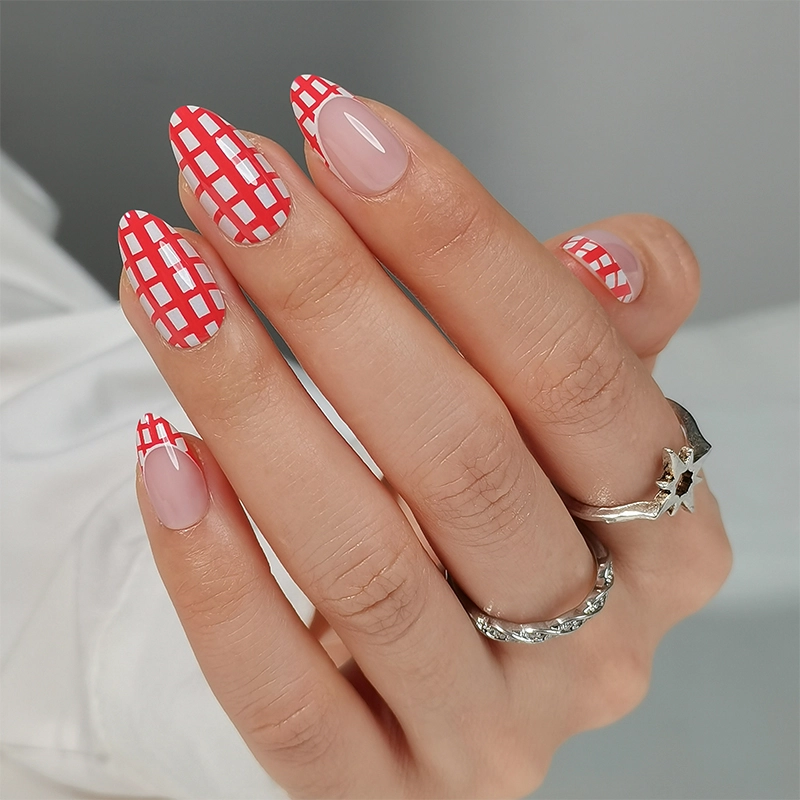
Wholesales Red French Nails Tips Checkered Soft Gel Nail Tips 32 Piece Set
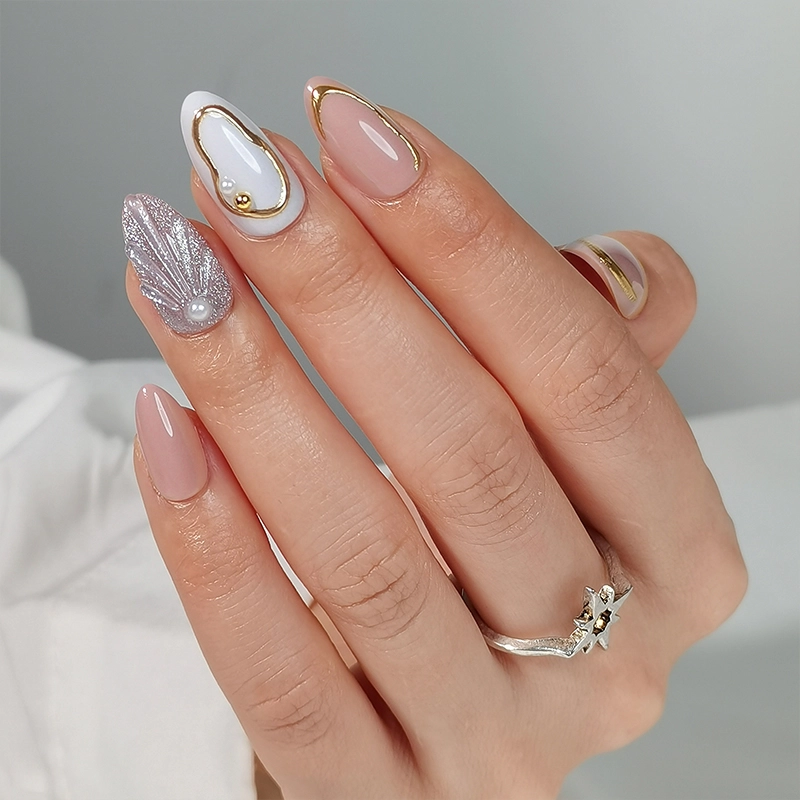
Wholesales Elegant Shell Inspired Soft Gel Wearable Nails for Seasonal Celebrations
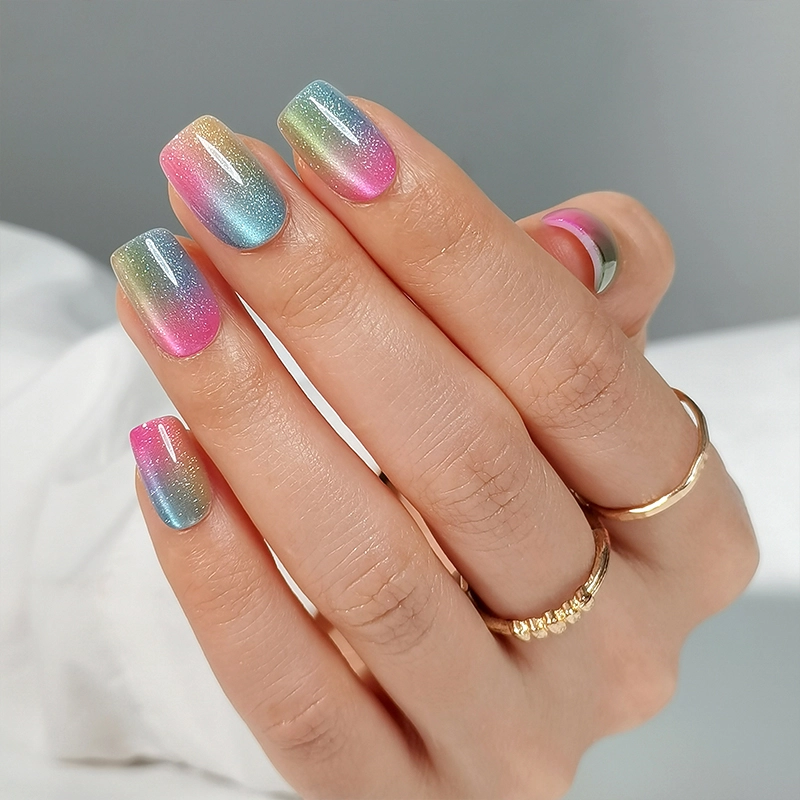
Custom Wholesale Gradient Cat Eye Soft Gel Wearable Fake Nails
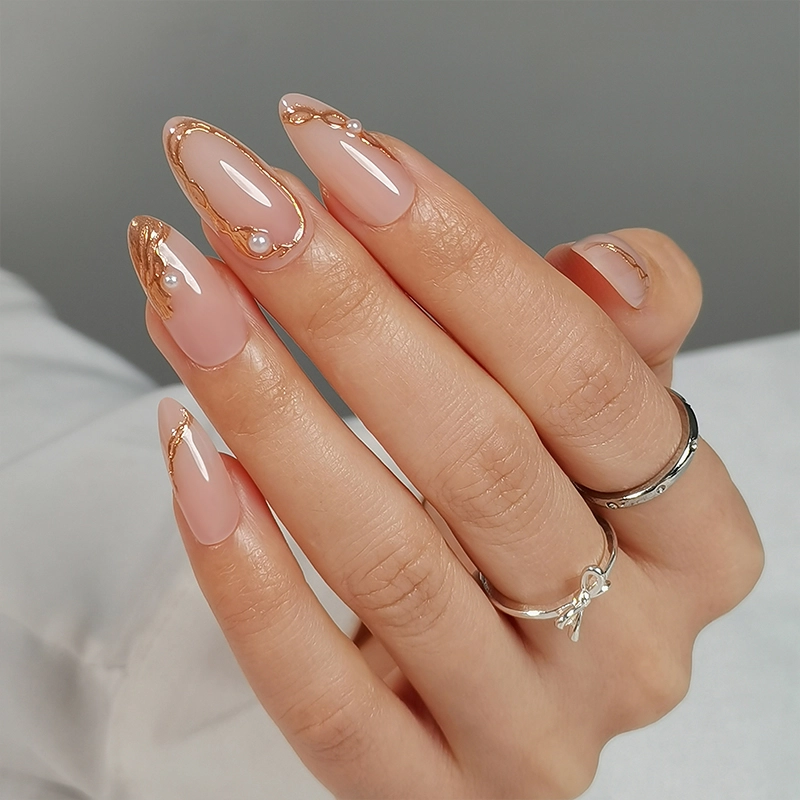
Wholesales Luxury Rhinestone Handmade Private Label Press On Nails Art Tips
Copyright © 2025 - XIANXING BEAUTY All Rights Reserved. Sitemap
Facebook
YouTube
Instagram
LinkedIn