
Sustainable Materials and Eco-Friendly Nail Options
- How sustainable materials are changing the custom press on nails market
- Why sustainability matters for press on nails
- and what readers want to know
- How this guide helps brands and consumers
- Material choices: comparing traditional plastics and sustainable alternatives
- Common materials used now
- Sustainable and lower-impact alternatives
- Material properties comparison
- Adhesives, coatings, and safety: reducing chemical impact
- Greener adhesive options
- Coatings and finish — choosing low-VOC, durable options
- Certifications and safety testing to prioritize
- Design, manufacturing, and lifecycle thinking for custom press on nails
- Design for longevity and reusability
- Manufacturing considerations for ECO custom press on nails
- End-of-life and circularity strategies
- Practical recommendations for brands and consumers
- For brands and private-label customers ordering custom press on nails
- For consumers choosing eco-friendly press on nails
- Cost vs benefit — realistic expectations
- How Xianxing Beauty supports sustainable, certified custom press on nails
- Company capabilities and sustainability credentials
- How Xianxing helps brands implement eco choices
- Product range and competitive advantages
- Making choices: checklist for ordering sustainable custom press on nails
- Quick supplier evaluation checklist
- User-facing claims to avoid without proof
- FAQ — Sustainable Materials and Eco-Friendly Nail Options
- 1. Are press on nails recyclable?
- 2. What is the most sustainable material for press on nails?
- 3. Can custom press on nails be non-toxic and odorless?
- 4. Are gel nail tabs a greener adhesive choice?
- 5. How should I dispose of used press on nails?
- 6. How can small brands get eco-certified press on nails through OEMs?
- References and authoritative sources
How sustainable materials are changing the custom press on nails market
Why sustainability matters for press on nails
Consumer demand for environmentally responsible beauty products is reshaping the nail industry. Press on nails—especially custom press on nails—combine convenience and design freedom, but they traditionally rely on petroleum-based plastics (e.g., ABS, PMMA). As brands and consumers prioritize lower-impact choices, manufacturers are exploring bio-based polymers, recycled materials, greener adhesives, and solvent-free coatings to reduce lifecycle impacts while maintaining durability and aesthetic quality.
and what readers want to know
Most readers searching for sustainable press on nails want practical guidance: which materials are greener, how performance compares, whether eco options are safe and durable, and how to custom-order sustainable press on nails for retail or personal use. This article answers those questions with technical context and actionable recommendations.
How this guide helps brands and consumers
Whether you're an independent nail brand looking to offer custom press on nails or a consumer deciding what to buy, this guide outlines material options, pros and cons, certification priorities, and manufacturing considerations to support informed decisions.
Material choices: comparing traditional plastics and sustainable alternatives
Common materials used now
Traditional press on nails are commonly made from acrylonitrile butadiene styrene (ABS), polymethyl methacrylate (PMMA, acrylic), or polystyrene. These deliver strength, glossy finish, and cost-efficiency but are derived from fossil fuels and have limited end-of-life options.
Sustainable and lower-impact alternatives
Key alternatives gaining traction include:
- Bio-based polymers (e.g., polylactic acid — PLA)
- Cellulose-based plastics (e.g., cellulose acetate)
- Post-consumer recycled plastics (rABS, rPMMA)
- Thin, reusable shell concepts and refillable systems
Material properties comparison
Below is a concise comparison of material properties relevant to press on nails: durability, finish, biodegradability, recyclability, and typical manufacturing considerations.
| Material | Durability / Strength | Finish / Aesthetics | End-of-life | Use considerations |
|---|---|---|---|---|
| ABS (conventional) | High | Glossy, smooth | Recyclable where facilities exist; not biodegradable | Cost-effective; common tooling and molding methods |
| PMMA (Acrylic) | High | Excellent clarity and polish | Recyclable in some streams; not biodegradable | Widely used for High Quality press on nails |
| Cellulose acetate | Moderate | Matte to semi-gloss; can be pigmented | Biobased; more biodegradable than fossil plastics under some conditions | Requires careful molding and finishing; good for branding as derived from plants |
| PLA (polylactic acid) | Moderate | Good finish; can be brittle if thin | Compostable in industrial facilities | Heat sensitivity and brittleness can be challenges; suitable for thicker or reinforced designs |
| Recycled plastics (rABS/rPMMA) | Comparable to virgin materials (varies) | Good, depends on recycling purity | Recyclable; reduces virgin feedstock use | Requires consistent supply of quality recyclate and color control |
Adhesives, coatings, and safety: reducing chemical impact
Greener adhesive options
Adhesives are a major factor for sustainability and user safety. Traditional cyanoacrylate glues are strong but may emit odors and produce skin sensitivity in some users. Lower-impact approaches include:
- Water-based/removable adhesives for daily wear (less VOCs)
- Double-sided gel tabs that are solvent-free and reusable
- Formulations designed for lower irritation and improved biodegradability
Coatings and finish — choosing low-VOC, durable options
UV-curable coatings are common for durability and glossy finish. While UV systems can reduce solvent VOCs compared with solvent-borne lacquers, manufacturers should prioritize formulations with low residual monomer content and full cure profiles. Many modern UV coatings can be formulated to meet safety and durability standards while minimizing environmental impact when compared with solvent-based alternatives.
Certifications and safety testing to prioritize
For custom press on nails aimed at conscious consumers, prioritize compliance with recognized standards:
- REACH (EU chemical safety regulations)
- RoHS where electrical components are present (rare for nails but relevant for LED-embedded designs)
- MSDS documentation for all materials and adhesives
- Cosmetics compliance where the product is regulated as a cosmetic in target markets (e.g., EU Cosmetics Regulation (EC) No 1223/2009)
Design, manufacturing, and lifecycle thinking for custom press on nails
Design for longevity and reusability
Design choices that extend product life reduce per-use impact. Options include thicker reusable nail shells, strong but removable adhesives, and repairable finishes. Offering refill sets (e.g., decorative overlays or sticker accents) allows users to refresh looks without discarding the entire nail.
Manufacturing considerations for ECO custom press on nails
When sourcing custom press on nails, brands should evaluate suppliers on:
- Material sourcing transparency (virgin vs recycled vs bio-based)
- Worker safety and factory environmental controls
- Energy and water use intensity and waste handling
- Lead times and small-batch capabilities to reduce overproduction
End-of-life and circularity strategies
Real circularity for press on nails is challenging due to small-item collection logistics. Practical strategies that brands can adopt include take-back programs, designing nails from a single polymer to simplify recycling, and using recyclable or compostable packaging to reduce overall footprint.
Practical recommendations for brands and consumers
For brands and private-label customers ordering custom press on nails
1) Specify material priorities early (e.g., rABS vs cellulose acetate). 2) Request MSDS, REACH compliance documentation, and sample performance data (flex, adhesion tests). 3) Choose adhesives and coatings with low VOCs and available safety data. 4) Use small-batch sampling to validate consumer acceptance of feel and durability before large runs.
For consumers choosing eco-friendly press on nails
Look for clear disclosure about materials and certifications, prefer reusable systems (or designs that can be worn multiple times), and examine adhesive type (gel tabs vs glue). Dispose of nails responsibly—separate packaging for recycling and check local guidance for hard plastics.
Cost vs benefit — realistic expectations
Eco materials or recycled content can add cost or require design adjustments (e.g., slightly thicker nails or different finishes). However, many consumers are willing to pay a High Quality for verified sustainable credentials and longer-lasting products. Prioritizing performance (comfort, fit, durability) along with sustainability delivers the most value.
How Xianxing Beauty supports sustainable, certified custom press on nails
Company capabilities and sustainability credentials
Founded in 2012, Xianxing Beauty is a China press on nail manufacturer specializing in OEM and ODM customized nail production. The company operates a 20,000-square-meter factory producing 300,000 pieces of press on nails daily and launches more than 100 new products every month. Xianxing supports small-scale customization across materials, sizes, designs, nail shapes, and packaging, with nail samples available within 3 days and orders completed in 7–14 days. Their press-on nail products are breathable, lightweight, non-toxic, odorless, and use a UV coating for protection and durability. Xianxing’s products hold ROHS, REACH, and MSDS documentation and meet US and EU cosmetics standards.
How Xianxing helps brands implement eco choices
Xianxing’s flexible OEM/ODM setup enables brands to trial recycled or bio-based substrates in small batches, validate adhesive options like gel tabs, and adjust coatings for lower-VOC formulations. Their rapid sample turnaround and monthly product development cadence support iterative improvement toward greener product lines.
Product range and competitive advantages
Xianxing Beauty’s main offerings include custom press on nails, press on nails, salon false nails, kids nails press on, fake toe nails, gel nail tabs, and sticker press on nails. Competitive differentiators include:
- High-volume capacity with quick lead times (sample within 3 days; orders 7–14 days)
- Certification alignment (RoHS, REACH, MSDS) for global markets
- Support for small-batch customization and rapid product iteration
- Experience in balancing durability (UV-coated finishes) with safety and aesthetic quality
Making choices: checklist for ordering sustainable custom press on nails
Quick supplier evaluation checklist
When evaluating a manufacturer or product line for eco credentials, request the following:
- Material specification and percentage of recycled or bio-based content
- MSDS for each component (base nail, adhesive, coatings)
- Certificates: REACH, RoHS where applicable, proof of cosmetic compliance for target markets
- Sample performance data: wear tests (days), adhesion testing, UV coating hardness
- Packaging options and recyclability/compostability claims
User-facing claims to avoid without proof
Be cautious of vague claims like “eco-friendly” or “biodegradable” without supporting documentation. Ask for third-party test reports or certifications and precise language about end-of-life conditions (e.g., industrial compostability vs home compostable).
FAQ — Sustainable Materials and Eco-Friendly Nail Options
1. Are press on nails recyclable?
Most conventional press on nails (ABS, PMMA) are technically recyclable where local facilities accept the specific plastic, but collection is a barrier. Recyclability depends on local infrastructure and whether the product is mono-material; to improve recyclability, choose nails made from a single polymer and minimize mixed-material components in packaging.
2. What is the most sustainable material for press on nails?
There is no single most sustainable material—trade-offs exist. Recycled ABS/PMMA reduces virgin plastic use and often has the best match for performance. Bio-based options like cellulose acetate or PLA reduce fossil carbon but can have limitations (brittleness, industrial composting needs). Evaluate based on the product’s goals: durability vs compostability vs recycled content.
3. Can custom press on nails be non-toxic and odorless?
Yes. Manufacturers can formulate adhesives and coatings to be low-odor and non-toxic, and reputable suppliers provide MSDS and toxicity screening. Look for products described as non-toxic, odorless, and compliant with REACH and regional cosmetic regulations.
4. Are gel nail tabs a greener adhesive choice?
Gel nail tabs are solvent-free and often reusable, which reduces single-use glue waste. They are a practical lower-impact adhesive option when formulated with safe, stable gel compounds and when users are encouraged to reuse them.
5. How should I dispose of used press on nails?
Check your local waste guidance. If nails are made from recyclable plastics and your local facility accepts them, place them in the appropriate recycling stream after removing adhesive residue. Otherwise, dispose in regular waste. Reduce impact by opting for reusable styles and minimizing packaging waste.
6. How can small brands get eco-certified press on nails through OEMs?
Work with manufacturers that can provide REACH and MSDS documentation and offer small-batch runs. Ask for certified materials, independent lab testing, and transparency about supply chains. Vendors like Xianxing Beauty explicitly support small-scale customization and provide documentation to help brands meet regulatory and marketing claims.
Ready to explore sustainable custom press on nails? Contact Xianxing Beauty to request eco-focused samples, certification documents, and small-batch quotes. Visit their site or reach out for product samples within 3 days and tailored OEM/ODM options: https://www.xianxingbeauty.com/
References and authoritative sources
- European Chemicals Agency — REACH: https://echa.europa.eu/ (accessed 2026-01-06)
- RoHS Directive information — European Commission: https://ec.europa.eu/environment/waste/rohs_eee/index_en.htm (accessed 2026-01-06)
- EU Cosmetics Regulation (EC) No 1223/2009: https://ec.europa.eu/growth/sectors/cosmetics/cosmetics-legislation_en (accessed 2026-01-06)
- Material pages and summaries: Polylactic acid (PLA) — Wikipedia: https://en.wikipedia.org/wiki/Polylactic_acid (accessed 2026-01-06)
- Cellulose acetate — Wikipedia: https://en.wikipedia.org/wiki/Cellulose_acetate (accessed 2026-01-06)
- Polymethyl methacrylate (PMMA) — Wikipedia: https://en.wikipedia.org/wiki/Polymethyl_methacrylate (accessed 2026-01-06)
- Cyanoacrylate — Wikipedia (on adhesives commonly used in nails): https://en.wikipedia.org/wiki/Cyanoacrylate (accessed 2026-01-06)
- UV-curable coatings — overview: https://en.wikipedia.org/wiki/Photopolymer (accessed 2026-01-06)
- Xianxing Beauty official site — company and product information: https://www.xianxingbeauty.com/ (accessed 2026-01-06)
Extend Press-On Nail Wear: Tips for Longer Lasting
How to Sell Press On Nails in Houston: A Complete Guide for Success
Top 10 Press-on nail Manufacturers and Supplier Brands in 2025
Packaging Solutions from Press On Nail Manufacturers
Nail file
What are the different types of nail files?
There are several types of nail files, including:
Emery boards: Made of paper or cardboard covered with abrasive material.
Glass files: Smooth and gentle, they are durable and easy to clean.
Metal files: Typically made from stainless steel, these are durable but can be harsh on nails.
Crystal files: Similar to glass files, but made from a harder, finer material.
Sapphire files: Made of synthetic sapphire crystals, these are effective for both shaping and smoothing nails.
Product Customization
Can you arrange global logistics and shipping?
Yes, we work with multiple logistics companies to support global delivery. If customers require assistance with customs clearance, we are happy to cooperate to ensure timely delivery to the specified location.
What is the typical production timeline for custom nails?
After confirming the design, it takes about 15-20 working days to produce samples. Once the sample is confirmed, bulk production typically takes about 30-45 working days.
Wholesaler Distributor
Can you provide product samples?
Yes. We will provide appropriate product samples according to your requirements so that you can evaluate the quality and applicability of the products.
About fashion printing
How long do they last?
With proper application, press-on nails can last:
Adhesive tabs: 1–3 days
Nail glue: Up to 7–10 days
Longevity depends on activities like water exposure and proper care.
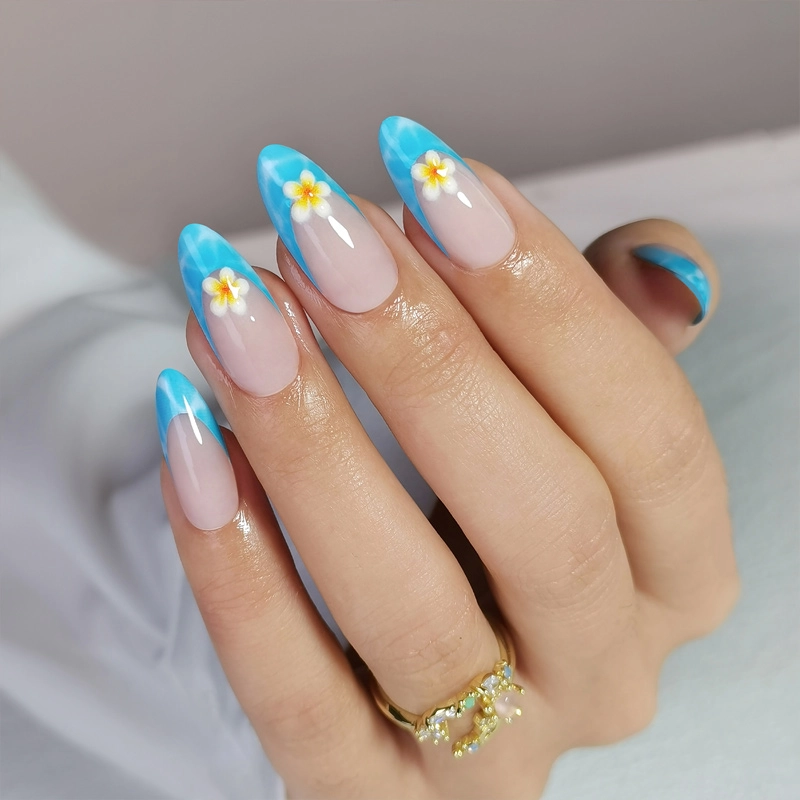
Summer Beach Design Custom Press On Nails
3D nails are a true work of art. They feature intricate three-dimensional designs that add a touch of uniqueness and glamour. Made from high-quality materials, they are durable and long-lasting. Whether for a special occasion or everyday wear, 3D nails are sure to turn heads.
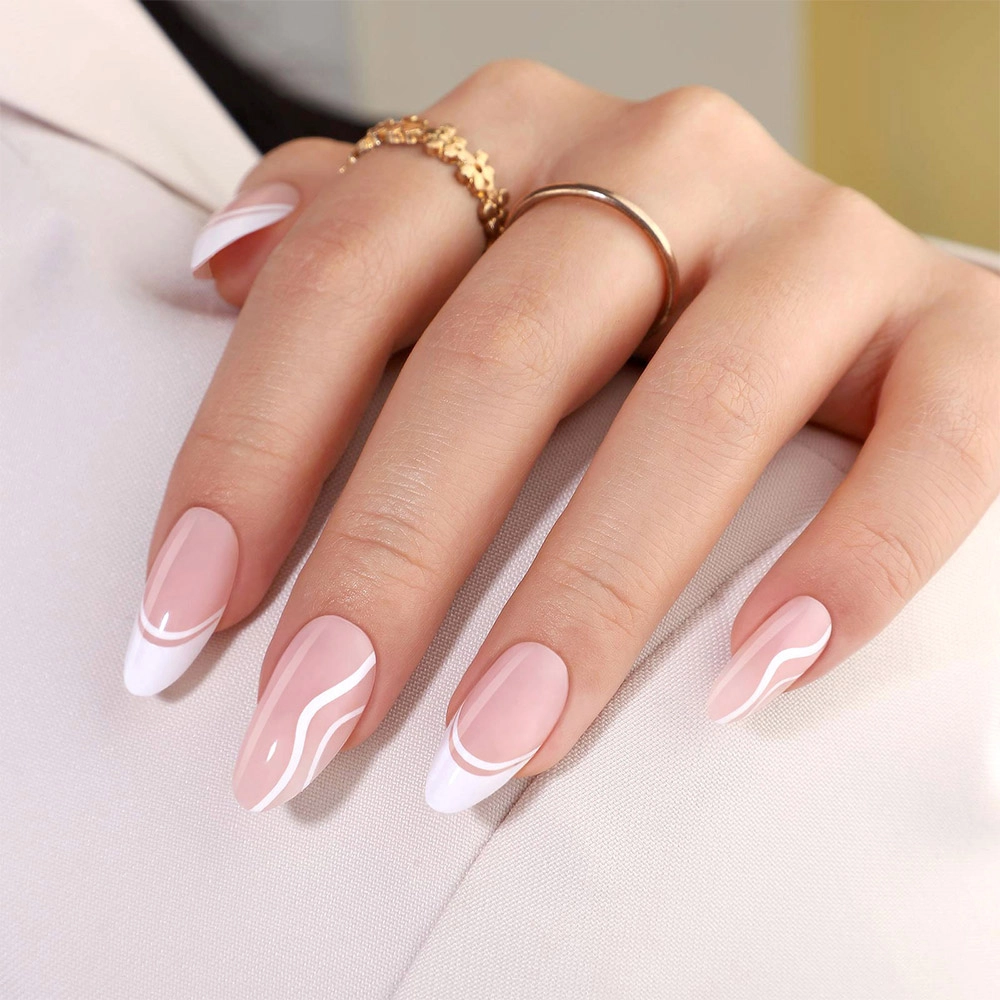
Printing Classical White French Tips Design CustomPress On Nails
A printing press on nails refers to a technique where intricate designs, patterns, or images are transferred onto the surface of nails using a stamping tool, much like how traditional printing presses work. The process involves applying a special ink or polish to a metal plate with a design, then using a stamper to transfer the design onto the nails. It's a quick and precise way to create detailed nail art.
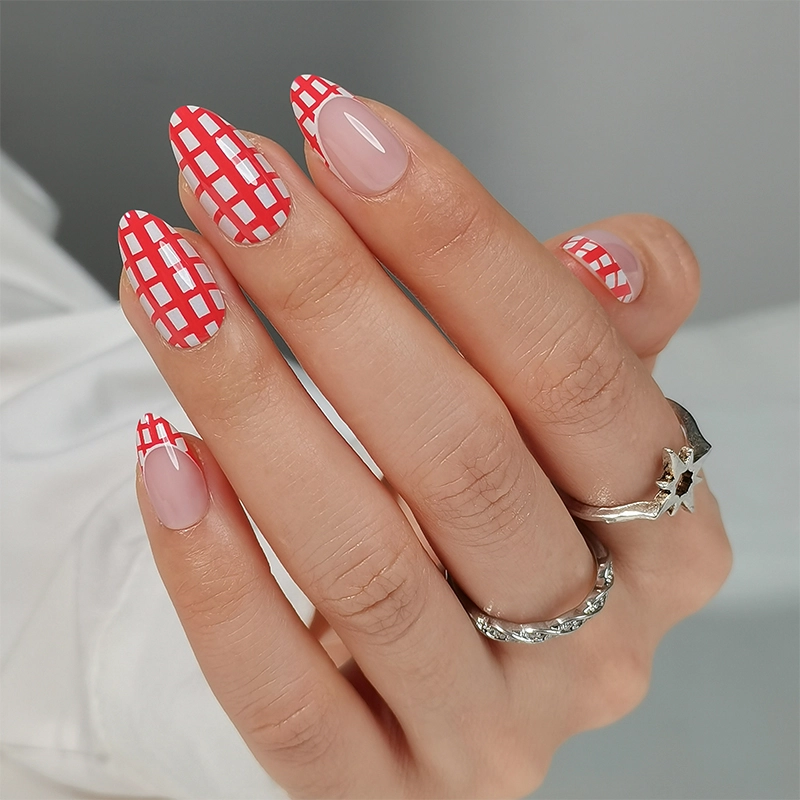
Wholesales Red French Nails Tips Checkered Soft Gel Nail Tips 32 Piece Set
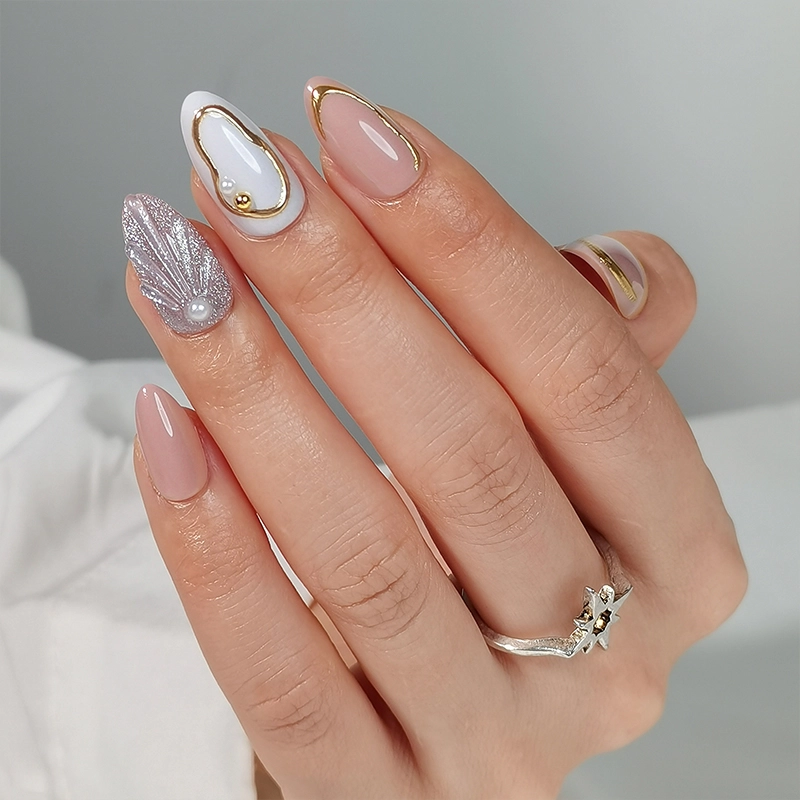
Wholesales Elegant Shell Inspired Soft Gel Wearable Nails for Seasonal Celebrations
Copyright © 2025 - XIANXING BEAUTY All Rights Reserved. Sitemap
Facebook
YouTube
Instagram
LinkedIn