
Sustainable Press-On Nails Manufacturer Sourcing: A Deep Dive into Biodegradable Materials & Ethical Production (2026 Guide)
- What Makes a Sustainable Press-On Nails Manufacturer?
- Key Takeaways: Sourcing Eco-Friendly Nail Production
- Material Science: Biodegradable vs. Traditional Plastics
- The Manufacturing Process: Ethical and Sustainable Production
- Sourcing Guide: How to Vet an OEM/ODM Partner
- Beyond the Nail: Adhesives and Recyclable Packaging
- Common Mistakes When Sourcing Sustainable Nails (Expert Tips)
- Future Trends: The 2026+ Landscape of Green Nail Technology
- Conclusion
- FAQ
- Are press-on nails bad for the environment?
- What are biodegradable press-on nails made of?
- Can I compost eco-friendly press-on nails at home?
- How do I find a private label manufacturer for sustainable nails?
- Is PLA better than ABS for press-on nails?
- What is the difference between OEM and ODM in nail manufacturing?
- Are the adhesives used for press-on nails eco-friendly?
- Why are sustainable press-on nails more expensive to manufacture?
The global beauty industry is undergoing a monumental shift, accelerating the phase-out of traditional petroleum-based plastics in favor of circular, green technology. For modern beauty brands, finding a reliable eco-friendly nail manufacturer OEM is no longer just a marketing advantage—it is a critical business necessity to survive in the 2026 market. Consumers demand transparency, and regulatory bodies are strictly monitoring plastic waste globally. Sourcing the right partner requires navigating complex material sciences, understanding bio-resin manufacturing processes, and auditing ethical production lines. This comprehensive guide provides everything you need to know to successfully transition your brand to a sustainable model, ensuring profitability without compromising our planet. We will explore the nuances of plant-based materials, detail exactly what to look for when touring overseas facilities, and outline the future landscape of the cosmetic supply chain.
What Makes a Sustainable Press-On Nails Manufacturer?
A sustainable press-on nails manufacturer is a production partner that prioritizes eco-friendly materials like PLA, bamboo, or agar over traditional petroleum-based ABS plastic. They enforce ethical labor practices, utilize energy-efficient injection molding, and offer circular lifecycle solutions.
This approach ensures beauty brands can scale production while significantly minimizing their carbon footprint and actively combating the beauty industry's severe plastic waste crisis. By partnering with dedicated plant-based PLA nail suppliers, brands can ensure their cosmetic products meet the rising global consumer demand for environmental responsibility and non-toxic alternatives. Traditional manufacturing relies on fossil fuels, but eco-conscious suppliers prioritize renewable resources.
Benefits of working with a sustainable manufacturer include:
- Reduced Carbon Footprint: Less reliance on environmentally damaging fossil fuels.
- Waste Reduction: Implementation of closed-loop systems and recycling initiatives.
- Enhanced Brand Trust: Consumers are actively seeking transparent, eco-conscious brands that align with their personal values.
Key Takeaways: Sourcing Eco-Friendly Nail Production
Sourcing eco-friendly nail production requires prioritizing bio-resins, ensuring high product reusability metrics, and demanding verifiable eco-certifications from your manufacturing partners to proactively prevent corporate greenwashing.
Transitioning to bio-resins like cornstarch and PLA drastically reduces a brand's reliance on synthetic, non-biodegradable polymers. Furthermore, product reusability is a vital sustainability metric. Durable, gel-based press-ons dramatically lower overall chemical waste and carbon emissions compared to traditional, single-use salon manicures.
When partnering with verified OEM/ODM manufacturers, brands must enforce strict protocols:
- Specify Materials: Mandate the exclusive use of certified bio-plastics and request documentation.
- Water-Based Adhesives: Request non-toxic glue alternatives to prevent chemical leaching.
- Eco-Packaging: Require packaging certified by global sustainability boards, such as those promoting responsible forestry, as reported by the Forest Stewardship Council.
Material Science: Biodegradable vs. Traditional Plastics
The material science behind press-on nails contrasts petroleum-heavy traditional plastics with innovative, plant-derived biodegradable alternatives that offer both comparable durability and robust environmental safety.
Understanding the chemical makeup of your products is critical when ordering biodegradable press-on nails wholesale. The market currently features three primary categories of materials, each with vastly different environmental impacts.
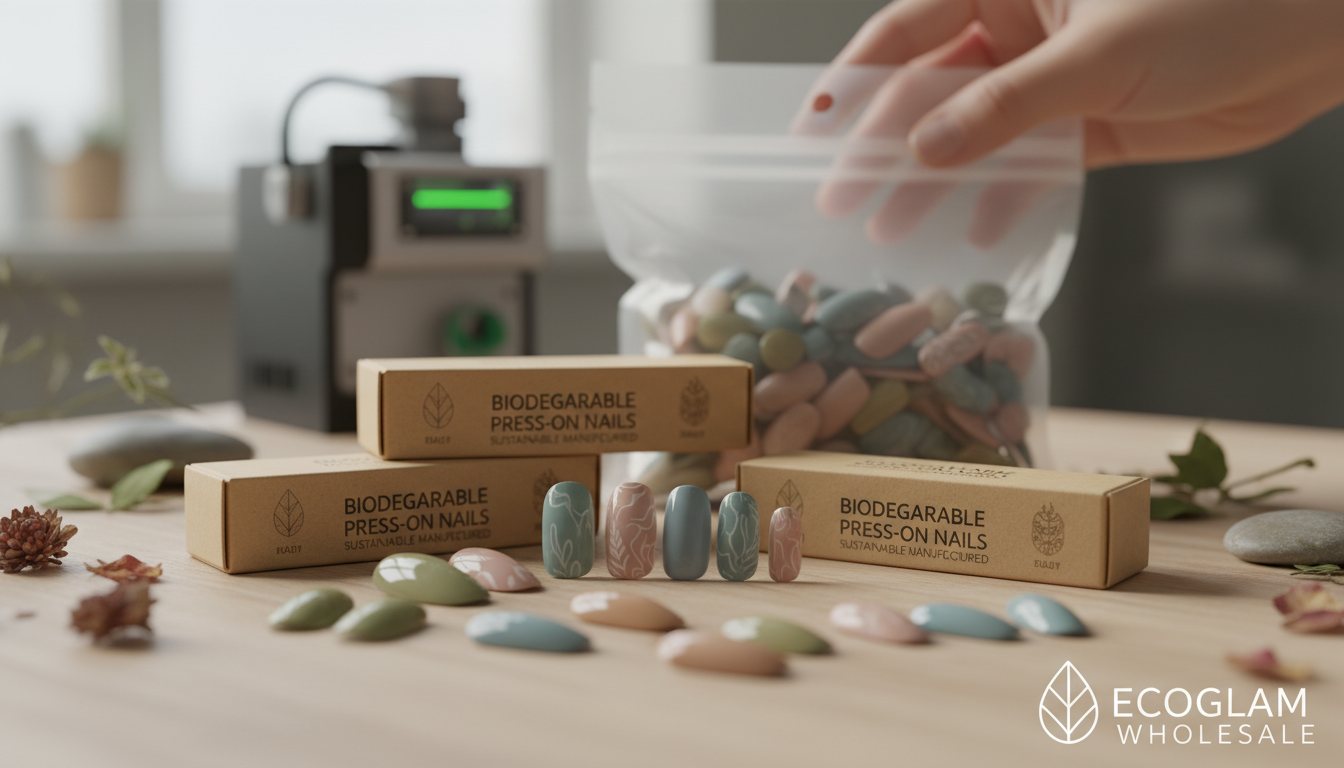
- Traditional ABS and PMMA: These standard plastics offer high physical durability and cheap production costs, but they are environmentally taxing. They are strictly non-biodegradable and contribute heavily to microplastic pollution in our oceans.
- Plant-Derived PLA (Polylactic Acid): Sourced directly from renewable resources like corn or sugarcane, PLA provides an excellent balance of nail durability and industrial compostability. In recent years, PLA had the highest consumption volume of any bioplastic worldwide, as reported by Wikipedia.
- Emerging Bio-e-Nails Innovations: Breakthrough scientific use of renewable agar (algae) and chitosan (seashells) is allowing for true environmental circularity, including full melt-down reusability without toxic byproduct emissions.
The Manufacturing Process: Ethical and Sustainable Production
Ethical and sustainable production involves optimizing factory processes to minimize energy use and resin waste, while strictly controlling the unique temperature variables required to cure plant-based materials.
Modern ethical nail product manufacturing relies on advanced engineering techniques to reduce environmental harm at the factory level. Traditional plastic injection molding is highly energy-intensive, but green factories are revolutionizing the space. By implementing strict quality assurance parameters, facilities can minimize defect rates and ensure that every batch meets the high standards required by premium beauty brands.
- Eco-Friendly Injection Molding: Modern production facilities are drastically reducing their daily energy consumption and minimizing raw resin waste during the initial mold creation phase.
- Metal Mold Design & Prototyping: Utilizing precise 3D-printed prototypes significantly reduces trial-and-error material waste before factories commit to full-scale metal mold cutting.
- Quality Control in Bio-Resins: Factory managers must strictly govern the unique temperature requirements, cooling times, and curing challenges inherent to plant-based materials to ensure consistent batch quality and avoid defective inventory.
Sourcing Guide: How to Vet an OEM/ODM Partner
Vetting an OEM/ODM partner requires analyzing their material safety data sheets (MSDS), confirming their global eco-certifications, defining strict quality tolerances, and thoroughly auditing their ethical labor compliance.
To successfully secure custom sustainable press on nails B2B, beauty brands must rigorously and objectively evaluate potential international factories before signing contracts. A robust vetting process protects your brand from public relations disasters associated with exploitative labor or environmental negligence. When establishing a relationship with an overseas or domestic factory, transparency must be the primary objective.
- Requesting Certifications: Always ask for verifiable material eco-certifications. This includes vegan/cruelty-free verification and universally recognized quality management systems, as reported by ISO9001.com.
- Defining Quality Tolerances: Establish clear, documented repeatability standards for bio-based production runs, which often behave differently and shrink more than standard petroleum plastics.
- Assessing Labor Practices: Evaluate the factory's working conditions, fair wage compliance, and worker safety protocols to ensure the sustainable label extends fully to human rights.
Beyond the Nail: Adhesives and Recyclable Packaging
A truly sustainable nail product must also include non-toxic, eco-friendly adhesives and utilize 100% recyclable or compostable retail packaging without relying on single-use plastic inner trays.
A green nail is only as sustainable as the chemical glue that adheres it and the retail box that holds it on the shelf. Ignoring these secondary components negates the benefits of a bio-resin nail.
- Addressing Glue Toxicity: Traditional solvent-based cyanoacrylate glues possess a highly negative environmental impact, emit strong fumes, and can be toxic to both human skin and aquatic life.
- Shifting to Non-Toxic Adhesives: The modern beauty industry is rapidly shifting toward water-based, non-toxic liquid adhesives and highly durable, reusable sticky tabs.
- Ensuring Recyclable Packaging: Utilizing natural soy-based inks and entirely eliminating single-use plastic inner trays ensures that the retail packaging is 100% recyclable or compostable for the end consumer.
Common Mistakes When Sourcing Sustainable Nails (Expert Tips)
Common sourcing mistakes include falling for corporate greenwashing, underestimating the premium costs of true bio-resins, and misaligning minimum order quantities (MOQ) before testing market fit.
Even experienced procurement managers can make critical errors when transitioning to green materials. Avoid these industry pitfalls:
- Falling for Greenwashing: Failing to verify if a supplier's biodegradable claim actually requires highly specific industrial composting facilities, which are often not available to the average home consumer.
- Cost Underestimation: Not adequately budgeting for the 15-30% price premium often associated with sourcing high-quality, certified bio-resins over cheap, mass-produced ABS plastic.
- Misaligned MOQ (Minimum Order Quantity): Over-ordering experimental, untested bio-materials before thoroughly testing consumer market fit and verifying the specific shelf-life of newly formulated bio-adhesives.
Future Trends: The 2026+ Landscape of Green Nail Technology
The future landscape of green nail technology focuses on scaling mass commercial availability of plant-based resins, integrating zero-waste factory systems, and adapting to strict circular economy regulations.
Staying ahead of the curve requires anticipating how the global supply chain will evolve over the next decade.
- Scaling Up: The industry is rapidly moving from small-batch, DIY bio-manufacturing into widespread mass commercial availability featuring highly standardized plant-based resins.
- Facility Integration: We are seeing the massive integration of zero-waste water recycling systems and independent solar power grids within global nail manufacturing facilities.
- Regulatory Shifts: Upcoming global regulatory shifts are proactively pushing for mandatory brand take-back programs and authentic circular economy models within the broader cosmetics supply chain.
Conclusion
Transitioning to a sustainable press-on nails manufacturer requires a deep understanding of material science, systematically vetting ethical OEM partners, and analyzing the full product lifecycle from factory to disposal. The future of the competitive nail industry relies heavily on bio-innovations like PLA, agar derivatives, and non-toxic adhesives to effectively combat plastic pollution while maintaining the high consumer quality expected in modern retail. Contact us today to discuss sourcing, custom molds, and sustainable production solutions tailored to your brand.
FAQ
Are press-on nails bad for the environment?
Traditional ABS plastic press-on nails contribute to microplastic pollution and take hundreds of years to decompose. However, reusable press-ons reduce the chemical waste and carbon emissions associated with regular salon visits. Switching to biodegradable or bio-resin options significantly mitigates this environmental impact.
What are biodegradable press-on nails made of?
Biodegradable press-ons are typically made from Polylactic Acid (PLA), which is derived from renewable resources like corn starch or sugarcane. Newer scientific innovations include Bio-e-Nails made from agar (algae) and chitosan (seashell derivatives). These plant-based materials can break down naturally without leaving toxic residues in the soil.
Can I compost eco-friendly press-on nails at home?
It heavily depends on the specific material and manufacturing process used. Many PLA-based nails require industrial composting facilities with high heat and specific microbes to break down properly. Always check with the manufacturer's disposal guidelines to avoid contaminating a home compost bin.
How do I find a private label manufacturer for sustainable nails?
Start by searching B2B directories for OEM/ODM suppliers explicitly specializing in bio-resins or PLA nail production. Request physical samples, verify their material certifications (like MSDS), and ask for documentation on their ethical labor standards. Ensure they have the capacity to scale production while maintaining strict sustainability criteria.
Is PLA better than ABS for press-on nails?
Yes, from an environmental standpoint. PLA is plant-based and biodegradable under the right conditions, whereas ABS is petroleum-based. PLA offers comparable durability, flexibility, and aesthetic appeal to standard ABS plastic. However, PLA manufacturing requires more precise temperature control during injection molding, which can increase production complexity.
What is the difference between OEM and ODM in nail manufacturing?
OEM (Original Equipment Manufacturer) produces nails based entirely on your unique custom designs, molds, and material specifications. ODM (Original Design Manufacturer) provides pre-designed, white-label sustainable nails that you can simply brand as your own. Choosing between them depends on your budget, launch timeline, and need for custom mold creation.
Are the adhesives used for press-on nails eco-friendly?
Traditional nail glues contain cyanoacrylate and chemical solvents that are not environmentally friendly and can be toxic. Sustainable manufacturers are now offering water-based liquid adhesives and non-toxic, reusable sticky tabs. Pairing biodegradable nails with eco-friendly adhesives is crucial to ensuring a fully green product lifecycle.
Why are sustainable press-on nails more expensive to manufacture?
Raw materials like bio-resins, agar, and PLA cost significantly more to source than cheap petroleum-based ABS plastic. The specialized injection molding processes and strict quality control required for bio-materials also add to overhead production costs. Additionally, enforcing ethical labor practices and utilizing certified eco-packaging contribute to the higher B2B price point.
How to Choose Reliable Wholesale Press on Nails Suppliers
Seasonal Trends: Nail Designs for Private Label Brands
How Much Does a Press-On Nail Business Make in the UK? Realistic Revenue Models & Growth Tactics
Artificial Fingernails Guide | Xianxing Beauty
Agent
How to ensure the quality of nail products?
Xianxing has a complete quality management system. All products have passed relevant international quality tests, and the quality can be guaranteed.
Drying Nail Glue
How do I remove press-on nails glued with glue?
1. Soak in warm, soapy water: Soak your hands in warm, soapy water for 10–15 minutes to soften the glue.
2. Gently pry off the nails: Use a wooden stick or cuticle pusher to gently lift the edges of the press-on nails. Avoid using excessive force.
3. Use an acetone soak (if needed): If the nails are still difficult to remove, soaking them in acetone or using an acetone-based nail polish remover can help dissolve the glue.
Remove armor
Can I use remover liquid to remove adhesive residue?
Yes, remover liquid, particularly those containing oils or solvents (like rubbing alcohol or specialized adhesive removers), can help dissolve sticky residue left by labels or tape.
About chrome Nails
How do I apply chrome press-on nails?
Clean and dry your nails.
Push back cuticles and lightly buff nails for better adhesion.
Select the right size for each nail.
Use adhesive tabs or nail glue to attach the press-ons.
Press firmly for 15–20 seconds to secure.
Supermarket chains
Are the production equipment advanced and regularly maintained?
Yes, we have the most advanced equipment of the press on nails
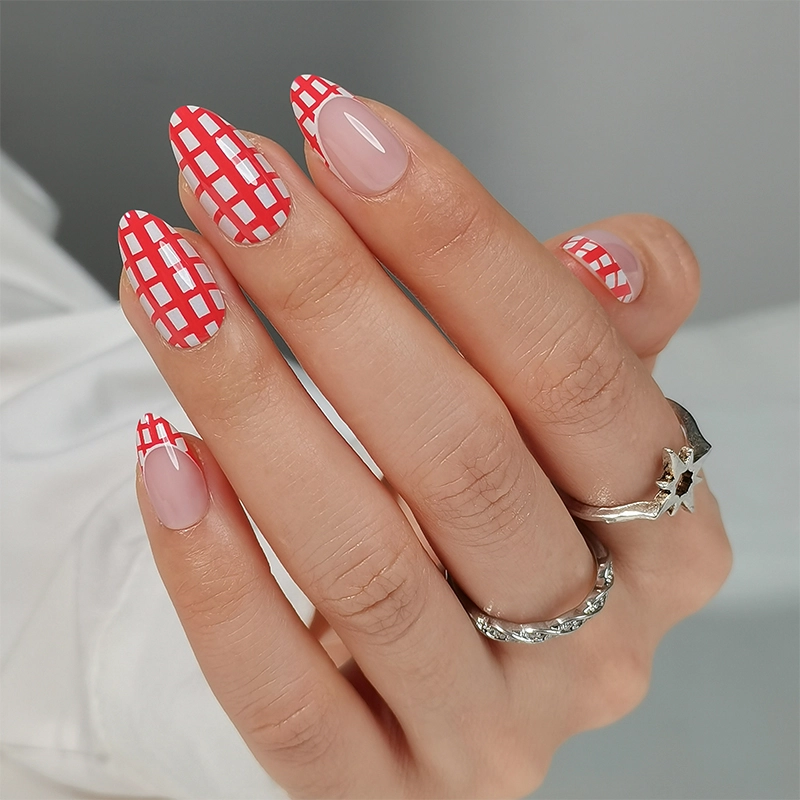
Wholesales Red French Nails Tips Checkered Soft Gel Nail Tips 32 Piece Set
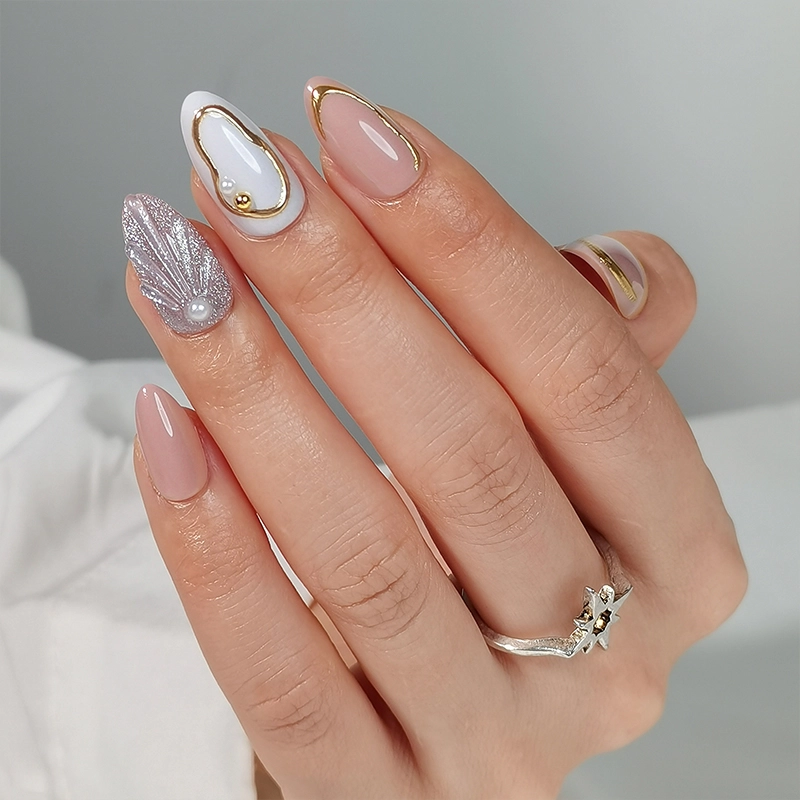
Wholesales Elegant Shell Inspired Soft Gel Wearable Nails for Seasonal Celebrations
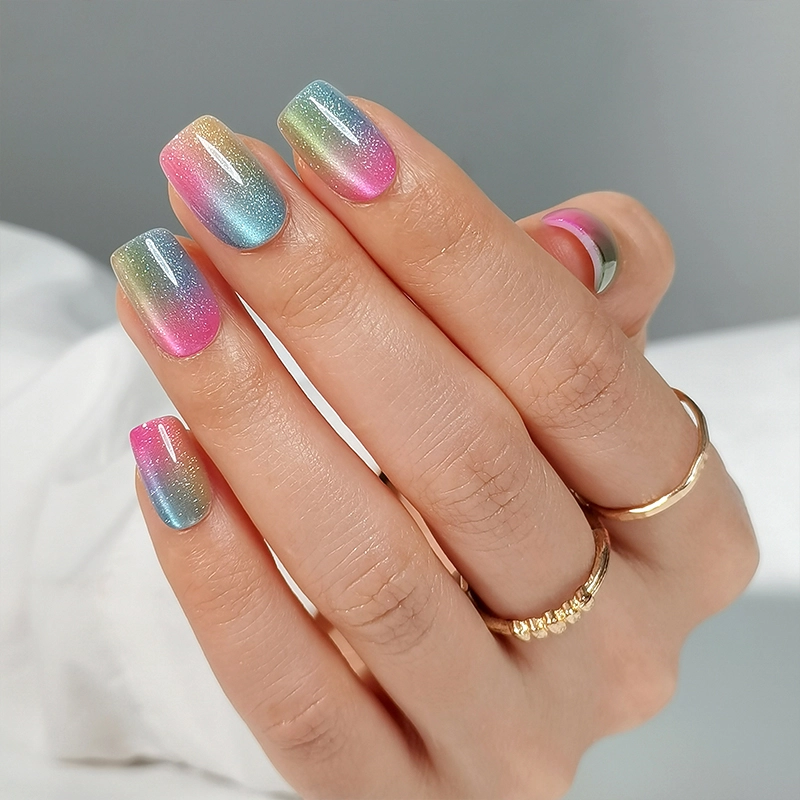
Custom Wholesale Gradient Cat Eye Soft Gel Wearable Fake Nails
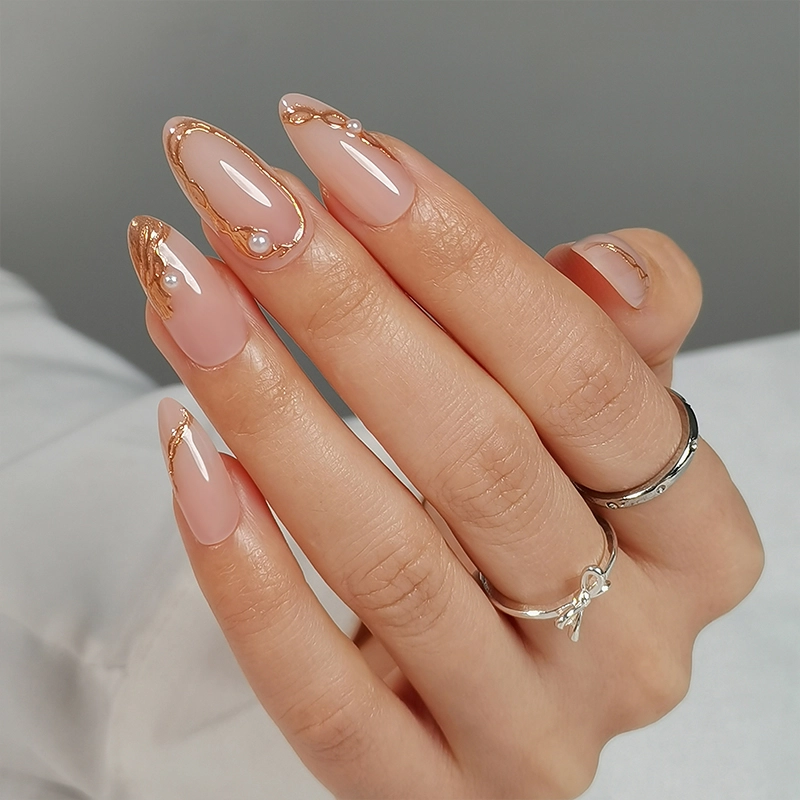
Wholesales Luxury Rhinestone Handmade Private Label Press On Nails Art Tips
Copyright © 2025 - XIANXING BEAUTY All Rights Reserved. Sitemap
Facebook
YouTube
Instagram
LinkedIn