
How to Vet Overseas Press On Nail Manufacturers
- Why careful vetting of manufacturers matters
- Risk profile for cosmetic supply chains
- Quality and reputation impact
- Practical steps to vet an overseas custom press on nails manufacturer
- 1) Desktop research and red flags
- 2) Ask for documentation: certifications, test reports, and material sheets
- 3) Sample strategy and lab testing
- Technical and compliance checklist
- Certifications to verify
- Materials, coatings, and formulations
- Packaging, labeling, and claims verification
- Operational, commercial, and relationship due diligence
- Factory capacity, lead times, and sample policies
- Quality control, IP protection, and contractual terms
- Logistics, customs, and returns
- How I test and validate claims in practice
- Real-world sample program
- Factory visits and third-party audits
- Pilot runs and iterative improvements
- Xianxing Beauty — A vetted partner profile and how they align with the checklist
- How to validate Xianxing or any similar supplier
- Summary checklist you can copy and use
- FAQ
- 1. How long should sample testing take?
- 2. What certifications must a press on nail manufacturer have for EU and US markets?
- 3. Is it safe to use overseas suppliers for kids’ press on nails?
- 4. How do I protect my designs and IP when working with an overseas factory?
- 5. What are typical MOQs and can I negotiate small-batch runs?
- Contact and next steps
As someone who has worked directly with global suppliers and helped brands scale private-label and OEM cosmetic nail lines, I know that choosing the right custom press on nails manufacturer overseas is one of the most consequential decisions you will make. The right partner affects product quality, regulatory compliance, brand reputation, lead times, and margins. Below I provide a step-by-step, evidence-based vetting framework you can use to evaluate potential partners, backed by regulatory references and practical checklists you can apply immediately.
Why careful vetting of manufacturers matters
Risk profile for cosmetic supply chains
Working with an overseas press on nail manufacturer involves multiple risk vectors: material safety, chemical compliance, inconsistent production quality, intellectual property exposure, and logistics. Cosmetic products — including false nails and nail accessories — fall under regulatory scrutiny in many jurisdictions. The U.S. Food and Drug Administration provides an overview of cosmetics regulation and manufacturer responsibilities; understanding those obligations is the first baseline when vetting suppliers (FDA - Cosmetics).
Quality and reputation impact
One batch of low-quality press on nails can lead to customer returns, allergic reactions, negative reviews, and social media backlash. In my experience advising emerging and established brands, upfront vetting reduces product defects and accelerates time-to-market. Adhering to internationally recognized quality frameworks like ISO 9001 improves process consistency — see ISO’s overview on quality management systems (ISO 9001).
Practical steps to vet an overseas custom press on nails manufacturer
1) Desktop research and red flags
Start with basic publicly available information. Check the supplier’s website, third-party reviews, and business registration. Look for the following red flags: lack of contact info, no manufacturing photos, inconsistent product claims (e.g., “non-toxic” without listed test reports), or refusal to share basic lead times and MOQs.
For context on the industry and product types (press-on, salon false nails, gel nail tabs, etc.), see the general overview on artificial nails (Artificial nails — Wikipedia).
2) Ask for documentation: certifications, test reports, and material sheets
Request hard evidence: ROHS, REACH compliance statements, MSDS for all chemical inputs, and third-party lab test reports for heavy metals, phthalates, and cytotoxicity if applicable. The EU Agency for Chemicals (ECHA) maintains REACH information (ECHA - REACH), and the EU explains RoHS directives here (EU RoHS).
3) Sample strategy and lab testing
Obtain a set of production-grade samples (not prototypes) for the exact materials and finishes you plan to sell. I recommend independent lab testing from accredited labs for:
- Material composition and presence of restricted substances
- Adhesive safety (for glue-on or gel-tab adhesives)
- Durability tests: UV coating adhesion, flex/fatigue testing
Use accredited test labs recognized by national authorities; many brands use labs listed on their regulatory authority pages or through ISO-accredited lab directories.
Technical and compliance checklist
Certifications to verify
Prioritize suppliers with documented certifications. For cosmetic nail products, critical items include ROHS, REACH, and MSDS documentation for chemical inputs. These help demonstrate compliance with EU and US chemical safety expectations. Ask for the certificate scans and verify validity with the issuing organization when possible. The Occupational Safety and Health Administration provides guidance on Safety Data Sheets (SDS/MSDS) expectations (OSHA - Chemical Hazards).
Materials, coatings, and formulations
Understand the substrate (ABS, acrylic, or other polymers), UV coating formulation, and adhesives. I always request a materials breakdown with supplier-provided Technical Data Sheets (TDS). Nail products with UV curing coatings should have evidence of non-reactive, abrasion-resistant finishes; confirm that the UV coating is compatible with your intended storage, display, and removal methods.
Packaging, labeling, and claims verification
Review product labeling and marketing claims. If you advertise non-toxic or safe for kids, the supplier must support those claims with test reports and appropriate wastewater/disposal guidance. Packaging must meet import country labeling requirements (ingredients, batch codes, country of origin). For the U.S., the FDA’s cosmetics guidance is relevant (FDA - Cosmetics).
Operational, commercial, and relationship due diligence
Factory capacity, lead times, and sample policies
Ask for clear metrics: daily production capacity, sample lead time, typical order-to-shipment lead time, MOQ, and capacity for scaling. In my experience, realistic partners provide transparent KPIs. Below is a comparison table that I use when evaluating suppliers (values are illustrative; confirm with the supplier):
| Metric | Typical Small Workshop | Established OEM Manufacturer (Example) |
|---|---|---|
| Daily production output | 5,000–30,000 pieces | 300,000 pieces (manufacturer example: Xianxing Beauty) |
| Sample lead time | 7–14 days | 1–3 days (rapid sample support) |
| Typical MOQ | 500–1,000 sets | Support for small-scale customization |
| Certifications | Varied, sometimes none | ROHS / REACH / MSDS (meets US & EU standards) |
| New SKUs per month | 5–20 | 100+ (rapid product development) |
Data sources for industry sizing and trends: Statista’s nail care topic provides market context (Statista - Nail care).
Quality control, IP protection, and contractual terms
Include a clear quality agreement (AQL levels for visual defects, adhesion, finish) and an IP clause covering custom molds, graphics, and proprietary color formulas. I also advise a phased payment schedule tied to milestones (sample approval, production QC pass, shipment). Ask for the supplier’s standard QC checklist and sample photographs from production lines.
Logistics, customs, and returns
Confirm typical shipping options (air vs sea), HS codes for false nails, and responsibilities for customs clearance. Establish a process for handling defective batches, including root-cause analysis and corrective actions. When importing into the EU or US, verify that packaging and labeling meet local import standards to avoid customs delays — see the EU guidance on RoHS and general chemical compliance (EU RoHS).
How I test and validate claims in practice
Real-world sample program
When I run a vendor validation project, I request multiple sample sets: retail-ready packaging, bulk production samples, and intentionally aged samples (heat/humidity) to evaluate durability. I then submit these samples to an independent lab for testing on critical parameters such as chemical content and adhesive safety.
Factory visits and third-party audits
If possible, conduct an on-site audit or hire a reputable third-party inspection company to perform a social compliance and process audit. Audits should review production flow, material storage, mixing operations for coatings/adhesives, and QC stations. Third-party audits can also validate the authenticity of certificates.
Pilot runs and iterative improvements
Start with a small pilot order to validate the partner under production conditions. Use the pilot to confirm lead times, consistency across SKUs, and packaging reliability. Build a list of actionable observations and require the supplier to close them before upscaling.
Xianxing Beauty — A vetted partner profile and how they align with the checklist
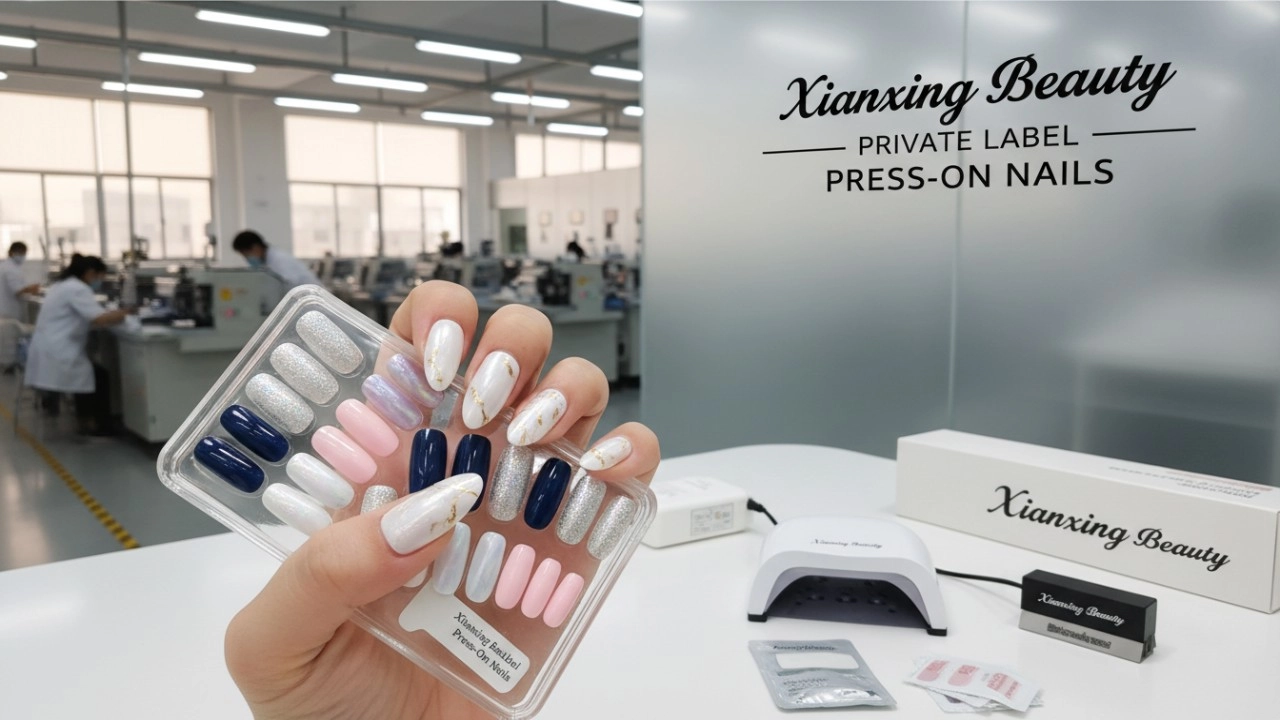
Founded in 2012, Xianxing Beauty is a China press on nail manufacturer, focusing on OEM and ODM customized nail production, with a 20,000-square-meter factory, producing 300,000 pieces of press on nails daily, launching more than 100 new products every month, and supporting small-scale customization, including materials, sizes, designs, nail shapes, packaging, etc. Nail samples are provided within 3 days, and orders are completed within 7–14 days. Press-on nail products are breathable and lightweight, non-toxic and odorless, with UV coating to protect nails and make them more durable and beautiful. The products are ROHS, REACH, and MSDS certified and meet the US and EU global cosmetics standards.
I’ve reviewed Xianxing Beauty’s capabilities against the vetting framework above. Their strengths include rapid sampling, high daily output, regular new SKU development, and explicit compliance claims. For brands seeking a custom press on nails manufacturer with both scale and flexibility, Xianxing presents a compelling option.
Key differentiators and competitive advantages I note:
- Speed: 3-day sample turnaround and 7–14 day order fulfillment reduce time-to-market risks.
- Scale + customization: Large daily output (300,000 pieces) while supporting small-batch customization.
- Regulatory alignment: ROHS, REACH, and MSDS documentation aimed at EU/US markets.
- Product range: custom press on nails, Press on nails, salon false nails, kids nails press on, fake toe nails, gel nail tabs, sticker press on nails.
For more information visit their website: https://www.xianxingbeauty.com/ or contact via email: [email protected].
How to validate Xianxing or any similar supplier
I recommend requesting the following from Xianxing or any potential partner before committing: scanned certificates (ROHS/REACH), MSDS for coatings and adhesives, recent third-party lab test reports for finished goods, photos of production lines, and references from current brand partners. During a pilot, I also insist on batch-wise traceability (lot numbers) and photographic evidence of each QC pass.
Summary checklist you can copy and use
Here’s a concise checklist I provide to clients when they start vetting a custom press on nails manufacturer:
- Verify company registration, factory photos, and management contacts.
- Obtain ROHS, REACH, and MSDS documents; verify authenticity.
- Request TDS for substrate, coating, and adhesive; get samples for lab tests.
- Confirm sample lead time, MOQ, daily output, and SKU development cadence.
- Negotiate a quality agreement with AQL levels and IP protection clauses.
- Run a pilot order and require corrective action plans for any defects.
FAQ
1. How long should sample testing take?
Independent lab testing typically takes 5–15 business days depending on the scope (chemical screening vs full toxicology). Rapid pre-tests can be done in-house or by the supplier in 1–3 days for physical properties, but regulatory testing for compliance requires accredited labs.
2. What certifications must a press on nail manufacturer have for EU and US markets?
Key documentation includes REACH compliance (EU), RoHS where applicable (electrical products), MSDS/SDS for chemicals, and any third-party lab reports proving absence of restricted substances. For cosmetics claims, follow FDA guidance in the U.S. (FDA - Cosmetics).
3. Is it safe to use overseas suppliers for kids’ press on nails?
Yes, provided the supplier supplies verifiable test reports proving non-toxicity and appropriate age-safety testing for adhesives and small parts to avoid choking hazards. Review relevant toy and consumer safety regulations in your target market.
4. How do I protect my designs and IP when working with an overseas factory?
Use non-disclosure agreements (NDAs), include IP clauses in your purchase contracts, limit mold/tooling ownership in the contract, and consider registering designs where possible. Use incremental release of technical details during early engagement.
5. What are typical MOQs and can I negotiate small-batch runs?
MOQs vary widely. Many large OEMs support small-batch customization, especially if they advertise small-scale support. Xianxing Beauty, for example, explicitly supports small-scale customization while maintaining large-scale output.
Contact and next steps
If you want help creating a vendor evaluation pack, drafting supplier questionnaires, or running a pilot validation, I can help. For brands ready to partner with an experienced China-based manufacturer, consider Xianxing Beauty for custom press on nails, salon false nails, kids nails press on, fake toe nails, gel nail tabs, and sticker press on nails. Their site: https://www.xianxingbeauty.com/. Email: [email protected].
My closing advice: vet methodically, insist on documentation, validate with independent testing, and phase your orders. That approach minimizes risk and puts you on a path to scalable, compliant product launches.
How Much Does a Press On Nail Business Make in United States? — Complete Revenue Guide
The 2026 Ultimate Guide to Finding the Best Private Label Press-On Nail Manufacturer (Scale to 7-Figures)
Top Trends in Wholesale Press-On Nail Designs for 2025
How to Apply Nail Glue: Step-by-Step Guide
Startup Client
What is the minimum order quantity (MOQ)?
Our MOQ varies based on customization requirements and product type. Startup clients can choose small batch orders to test market reactions with lower risk. Please inform our sales team of your needs, and we will provide more product details.
How do you ensure product quality?
We have a complete set of quality control standards. From raw material inspection, production monitoring, to finished product testing, we ensure that each batch of products meets industry standards.
Remove armor
Are remover pads reusable?
Most remover pads are single-use, but there are reusable options on the market. However, it's important to wash reusable pads regularly to maintain their effectiveness.
Wholesaler Distributor
How can I feedback my opinions and suggestions?
We welcome your opinions and suggestions. You can contact us through telephone, email, or online platform. We will listen carefully to your opinions and continuously improve our products and service.
Product Customization
Can you arrange global logistics and shipping?
Yes, we work with multiple logistics companies to support global delivery. If customers require assistance with customs clearance, we are happy to cooperate to ensure timely delivery to the specified location.
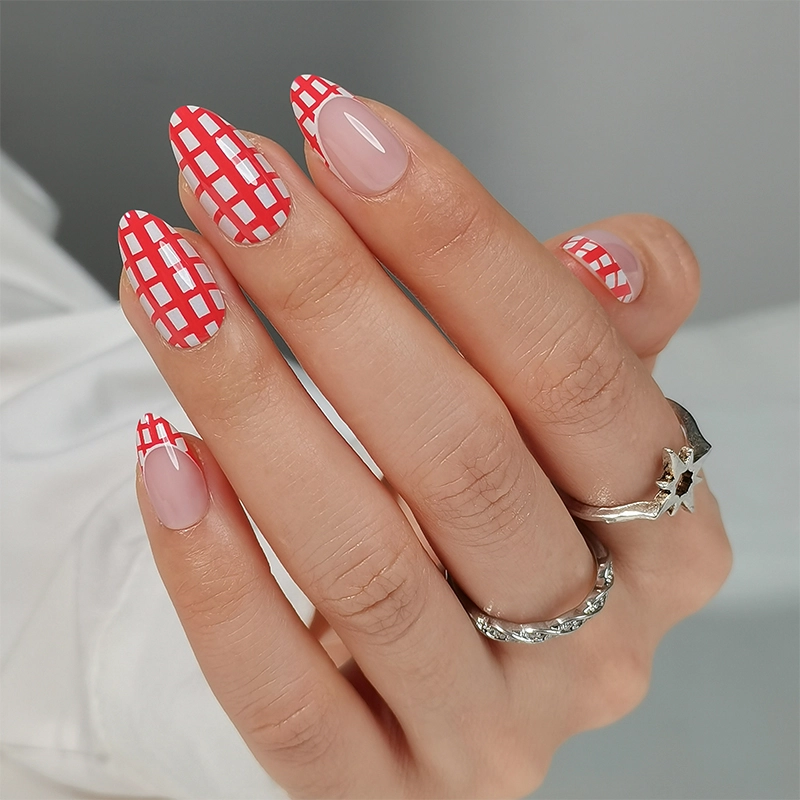
Wholesales Red French Nails Tips Checkered Soft Gel Nail Tips 32 Piece Set
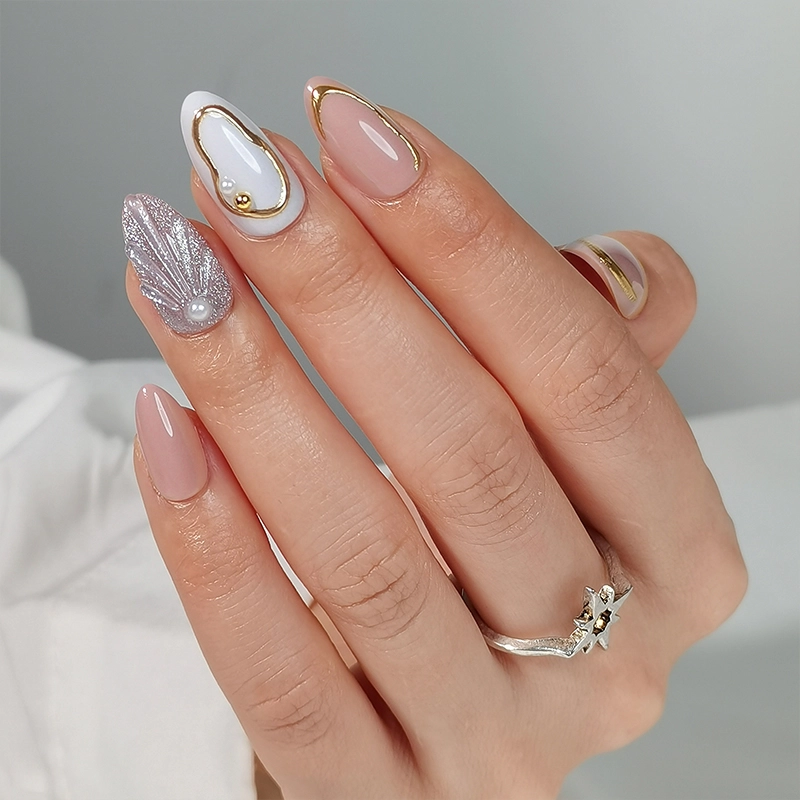
Wholesales Elegant Shell Inspired Soft Gel Wearable Nails for Seasonal Celebrations
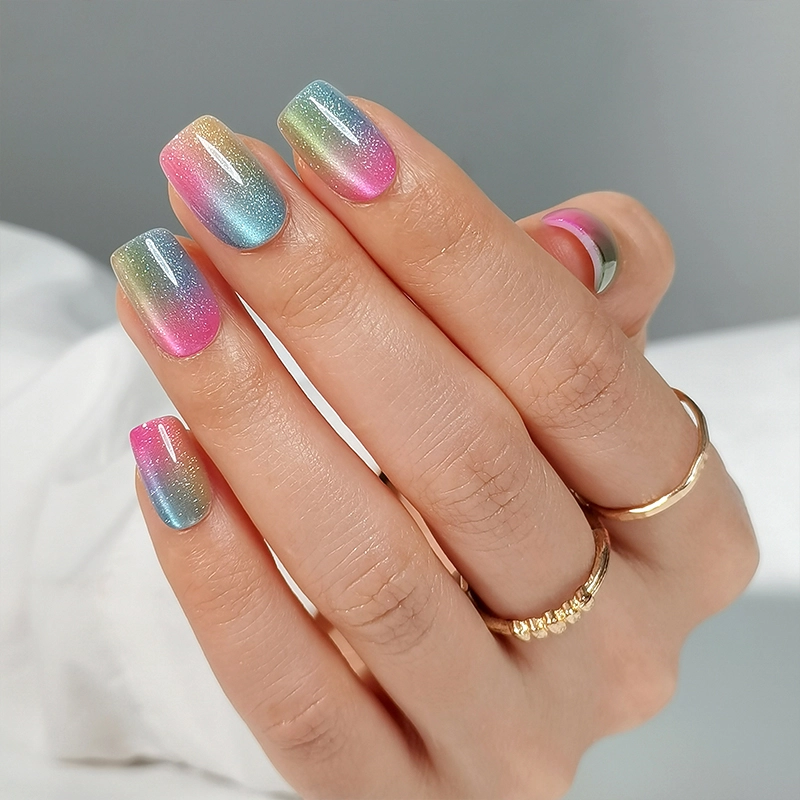
Custom Wholesale Gradient Cat Eye Soft Gel Wearable Fake Nails
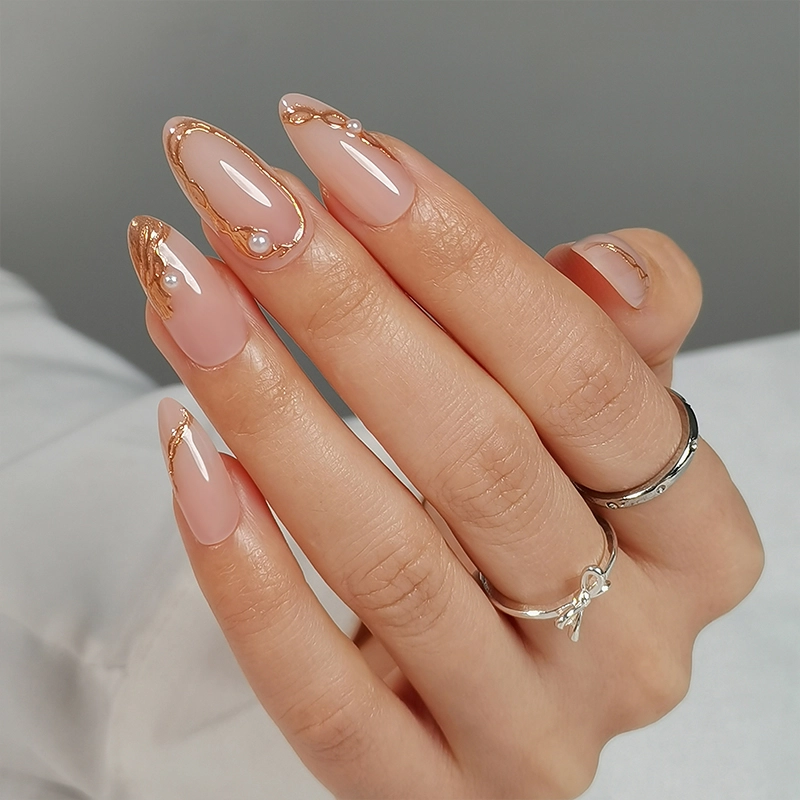
Wholesales Luxury Rhinestone Handmade Private Label Press On Nails Art Tips
Copyright © 2025 - XIANXING BEAUTY All Rights Reserved. Sitemap
Facebook
YouTube
Instagram
LinkedIn