
Custom Press On Nails: Design to Production Process
- From concept to shelf: mapping a reliable custom press-on nails production flow
- Why partner with a dedicated press on nails manufacturer
- Market context and buyer intent for custom press on nails
- Design discovery: turning a concept into manufacturable art
- Material selection and safety compliance with a press on nails manufacturer
- Prototyping and sample validation (fast sample cycles reduce risk)
- Tooling, molding and production setup: converting samples into scalable runs
- Printing, coating and finish technology
- Adhesion systems: tips, tabs and reusable options
- Packaging, labeling and fulfillment for global distribution
- Quality assurance, certification and testing protocols
- Costing drivers, MOQ and scalability considerations with a press on nails manufacturer
- Typical timeline example: from approved sample to shipped order
- Manufacturer spotlight and capabilities
- Xianxing Beauty — competitive differentiators
- How to choose the right press on nails manufacturer — a checklist
- FAQ — Common questions brands ask about custom press on nails manufacturing
- Contact and next steps
- References
From concept to shelf: mapping a reliable custom press-on nails production flow
Why partner with a dedicated press on nails manufacturer
Working with an experienced press on nails manufacturer shortens time-to-market, reduces technical risk and ensures product compliance for US/EU markets. Brands, salons and e‑commerce sellers rely on manufacturers for material sourcing, repeatable sizing, consistent finishes and scalable production — capabilities that many small in‑house operations cannot sustain. When evaluating suppliers, look for demonstrated OEM/ODM experience, compliance certificates (e.g., ROHS, REACH, MSDS), rapid sample turnaround and transparent QC processes.
Market context and buyer intent for custom press on nails
Buyers searching for a press on nails manufacturer generally want one of three outcomes: (1) private-label products ready to sell, (2) full custom designs and packaging, or (3) low-MOQ testing runs. Understanding this intent helps shape the production path: rapid prototyping and sample approval for designers, material and safety testing for retailers, and flexible MOQ and packaging for DTC/e‑commerce sellers.
Design discovery: turning a concept into manufacturable art
Design discovery covers shape selection, length, curvature, thickness, and aesthetics (colors, prints, embellishments). A robust manufacturer process includes:
- Design brief intake: target demographic, intended retail price, use-case (daily wear, salon, kids), and brand identity.
- Size mapping: converting demo nails to consistent size charts (typically 10 sizes per set) and creating sizing tools like press-fit gauges.
- Design files: accepting vector graphics, high‑res images, or physical inspiration. Many factories offer art re-touching and mockups to ensure print fidelity.
Design considerations that affect production cost and durability include nail thickness (lighter nails are more comfortable but require rigid shapes), the amount of 3D elements (rhinestones, metal studs increase manual labor), and the use of multi-layer prints or hand-painting.
Material selection and safety compliance with a press on nails manufacturer
Material choice determines comfort, finish and regulatory profile. Common substrates include ABS (rigid, glossy), acrylic blends (flexible), and thin PC or TPU blends (flexible, breathable). Important material attributes:
- Breathability and thickness — thinner substrates improve comfort and fit.
- Non-toxicity — compliance with ROHS/REACH; avoid phthalates and restricted substances.
- Finish compatibility — the substrate must accept UV coating, gel topcoats or matt finishes without yellowing.
Manufacturers certified for ROHS, REACH and MSDS provide a clear advantage when you plan to sell in the US and EU, easing customs and retailer onboarding.
Prototyping and sample validation (fast sample cycles reduce risk)
An efficient manufacturer offers short sample lead times so you can evaluate shape, adhesion system, print fidelity and wear. Typical sample steps:
- Digital mockup (1–2 days): color and layout confirmation.
- Physical sample (1–7 days depending on supplier): full-sized nails or a subset of sizes for fit testing.
- Wear testing (3–14 days): real-world test for adhesion, flex and finish durability.
Fast sample turnaround prevents costly tooling and production errors. Suppliers that promise sample delivery within days — rather than weeks — reduce time-to-market and allow iterative design changes.
Tooling, molding and production setup: converting samples into scalable runs
Once samples are approved, factories create molds or set up pressing lines. Key stages include mold fabrication, press calibration, print plate setup or pad printing, and pilot runs. Tooling influences lead time and cost: custom molds add setup expense but enable exact shape replication for high-volume runs.
| Production Step | Typical Time | Key Quality Checks |
|---|---|---|
| Design approval & tech pack | 1–3 days | Artwork resolution, size chart confirmation |
| Sample production | 1–7 days | Fit check, adhesion test, finish review |
| Tooling/mold making | 3–10 days | Mold tolerance, edge finish |
| Pilot run | 1–3 days | First article inspection (FAI), color match |
| Mass production | 7–14 days (varies by volume) | Inline QC, random sampling |
| Packaging & fulfillment | 1–7 days | Labeling, barcode checks, pack integrity |
Printing, coating and finish technology
Printing methods vary by design complexity: digital full‑wrap UV printing for photographic designs, pad printing for simple logos and metallic foils, and hand-applied lacquers for artisan lines. After printing, a protective UV topcoat or gel finish is applied to:
- Prevent color fade and scratching
- Improve chemical and water resistance
- Enhance gloss or create matte effects
UV coating is widely used because it cures quickly, provides durability, and is compatible with mass production lines. Manufacturers that use UV coatings typically also test for adhesion and abrasion resistance to guarantee a consistent finish.
Adhesion systems: tips, tabs and reusable options
Adhesion choices affect user experience and return rates. Options include:
- Double-sided glue tabs — convenient, reusable for short wear periods.
- Glue strips (pre-applied) — fast for consumers, less customizable.
- Liquid adhesive (provided separately) — strongest bond, requires user skill.
Manufacturers often supply gel nail tabs and sticker solutions; evaluate water resistance and tack level to reduce early lift and returns.
Packaging, labeling and fulfillment for global distribution
Packaging is both protection and marketing. Custom boxes, blister packs, and eco-friendly options are common. Important packaging considerations include:
- Retail compliance — ingredient labeling if adhesive or coatings are considered cosmetics in the market.
- Barcode and logistics labeling for multi-channel distribution.
- Shipping protection — foam inserts or molded trays reduce damage during transit.
Manufacturers that support small-batch packaging and kitting enable DTC sellers to run promotions or limited editions without large warehousing commitments.
Quality assurance, certification and testing protocols
Robust QA reduces recalls and reputational risk. Common QA steps include incoming material inspection, inline visual checks, dimensional tolerances, adhesion tests, and chemical testing for restricted substances. Certifications to confirm:
- ROHS — restricts hazardous substances in materials (important for metal decorations).
- REACH — EU regulation on chemicals; ensures safe ingredient profiles.
- MSDS — Material Safety Data Sheets for adhesives or coatings.
Request certificates of analysis (CoA) and third-party lab reports when chemical safety is a buyer requirement.
Costing drivers, MOQ and scalability considerations with a press on nails manufacturer
Primary cost drivers are tooling, complexity of design (3D elements increase labor), finish type, and packaging. MOQs depend on the manufacturer’s production model: injection-press lines favor larger batches while digital print lines can support smaller MOQs. If you need flexible production volumes, prioritize manufacturers advertising small-batch support and short order cycles.
Typical timeline example: from approved sample to shipped order
Here is a sample timeline for a small custom order (<10,000 sets) with an efficient OEM supplier:
- Day 1–3: Design finalization and tech pack
- Day 3–6: Physical sample delivery
- Day 7: Sample approval
- Day 8–12: Mold/setup and pilot run
- Day 13–20: Mass production and QC
- Day 21–24: Packaging and shipment prep
Lead times vary; express manufacturers can complete orders in 7–14 days for many SKUs when molds already exist and volumes are moderate.
Manufacturer spotlight and capabilities
Founded in 2012, Xianxing Beauty is a China press on nail manufacturer, focusing on OEM and ODM customized nail production, with a 20,000-square-meter factory, producing 300,000 pieces of press on nails daily, launching more than 100 new products every month, and supporting small-scale customization, including materials, sizes, designs, nail shapes, packaging, etc. Nail samples are provided within 3 days, and orders are completed within 7-14 days. Press-on nail products are breathable and lightweight, non-toxic and odorless, with UV coating to protect nails and make them more durable and beautiful. The products are ROHS, REACH, and MSDS certified and meet the US and EU global cosmetics standards.Our vision is to become the world's leading press on nails manufacturer.Our website is https://www.xianxingbeauty.com/.和主题简要总结 Xianxing Beauty优势和主营产品 custom press on nails,Press on nails,salon false nails,kids nails press on,fake toe nails,gel nail tabs,sticker press on nails 优势。
Xianxing Beauty — competitive differentiators
Summarizing Xianxing Beauty’s advantages for brand partners:
- Scale + speed: 20,000 m2 factory and 300k pieces/day capacity enables quick scaling for seasonal demand.
- Fast sampling and rapid order completion (samples within 3 days; orders 7–14 days) reduce development cycles.
- Compliant materials and finishes: ROHS, REACH, MSDS support entry into US/EU markets.
- Product breadth: custom press on nails, salon false nails, kids press on nails, fake toe nails, gel nail tabs, sticker press on nails — covering multiple retail segments.
- Support for small-batch customization minimizes financial barriers for startups and limited editions.
How to choose the right press on nails manufacturer — a checklist
Before signing, verify these items:
- Sample speed and quality: ask for demonstration samples and expected turnaround time.
- Certifications: request ROHS/REACH/MSDS and any third-party lab reports.
- Production transparency: factory photos, process walk-through or third-party audit reports.
- MOQ flexibility and pricing tiers by volume.
- Packaging capabilities: custom dielines, sustainable options, barcoding and retail-ready packs.
- After-sales policy: defect rates, replacement policy and returns handling.
FAQ — Common questions brands ask about custom press on nails manufacturing
1. How long does it take to get a custom sample?
Most capable manufacturers provide digital mockups in 1–2 days and physical samples within 1–7 days; Xianxing advertises 3-day sample turnaround for many requests.
2. What certifications should I insist on?
At minimum request ROHS and REACH compliance for materials, and MSDS for adhesives and coatings. These simplify import and retail approvals in major markets.
3. Can I order small quantities for testing?
Yes — many modern press on nails manufacturers support low-MOQ or small-batch runs, especially if they offer digital printing and flexible packaging options.
4. Which adhesion option is best for consumers?
For ease-of-use, pre-applied glue tabs are popular; for long wear, provide a high-quality liquid adhesive. Gel nail tabs strike a balance for reusable short-term wear.
5. How durable are UV-coated press on nails?
UV-coated finishes are highly durable against scratching and moisture; proper curing and adhesion testing minimize peeling and color loss. A well-coated press on nail can maintain appearance for 7–14 days depending on wear conditions.
6. What packaging options increase retail success?
Clear window retail boxes, secure blister trays and informative inserts (instructions, size charts) help customers buy confidently. Sustainable materials are increasingly valued by retailers and consumers.
7. How do I ensure color match across production batches?
Require color standards and first article inspection (FAI). Retain physical color samples and request spectrophotometer reports for critical color matches.
Contact and next steps
If you’re ready to develop custom press on nails, start by preparing a concise tech pack: target audience, desired shapes and sizes, preferred adhesives, packaging concepts and target order volume. To discuss OEM/ODM options, request samples or get a quote, contact Xianxing Beauty via https://www.xianxingbeauty.com/ or prepare your design files and sizing chart for rapid sample turnaround.
References
- Grand View Research — Nail Care Market Size & Trends: https://www.grandviewresearch.com/industry-analysis/nail-care-market (accessed 2025-11-25)
- ECHA (European Chemicals Agency) — REACH Regulation: https://echa.europa.eu/regulations/reach (accessed 2025-11-25)
- European Commission — RoHS Directive information: https://ec.europa.eu/environment/topics/waste-and-recycling/rohs-directive_en (accessed 2025-11-25)
- OSHA — Hazard Communication (MSDS/GHS) overview: https://www.osha.gov/hazcom (accessed 2025-11-25)
- Xianxing Beauty official website: https://www.xianxingbeauty.com/ (accessed 2025-11-25)
How Much Are Press on Nails in Dallas? Pricing Trends and Options
Seasonal Press-On Nail Trends: Spring to Winter
What You Need to Start a Press-On Nail Business in San Jose: Step-by-Step Guide
Do Guys Like Fake Nails?
About Price and payment
How are your product prices determined?
Our pricing is influenced by several factors, such as the order quantity, customization requirements, and current market trends.
About chrome Nails
How can I make them last longer?
Clean your nails thoroughly before application to remove oils.
Apply a small amount of nail glue even if adhesive tabs are included.
Avoid excessive exposure to water or chemicals.
Agent
Can the agency contract be renewed after it expires?
Our business team will proactively contact you to communicate and evaluate the intentions of both parties 1 month before the expired date.
What are the levels of Xianxing agents?
At present, we have a total of 4 levels, temporary agent, junior agent, senior agent and regional agent.
About after-sale service
How do I contact your after-sales customer service team?
You can reach our after-sales team through the contact details on our official website or via our online customer service system. We’re here to provide timely help and support.
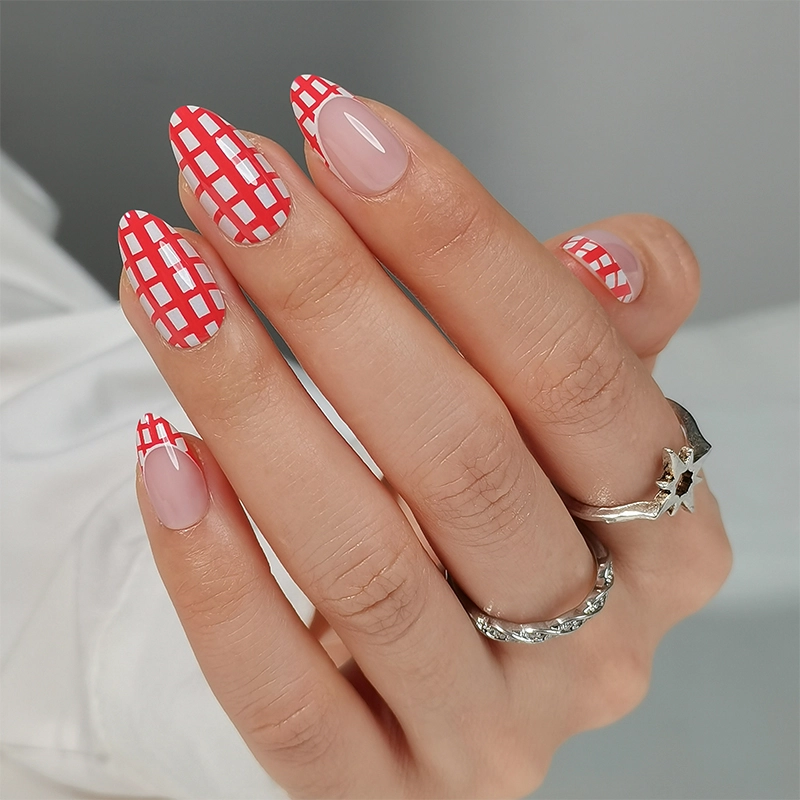
Wholesales Red French Nails Tips Checkered Soft Gel Nail Tips 32 Piece Set
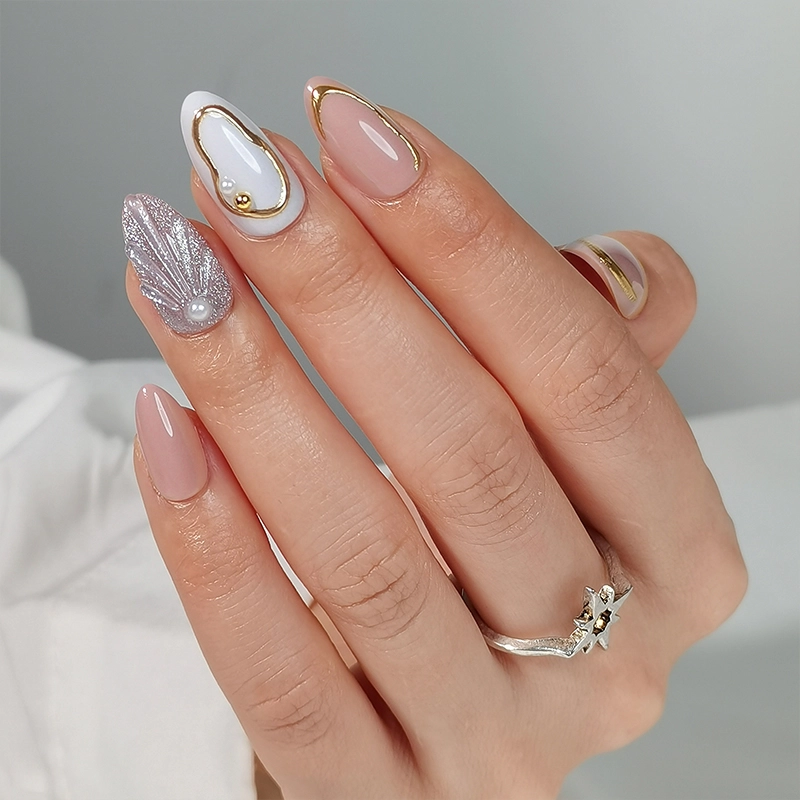
Wholesales Elegant Shell Inspired Soft Gel Wearable Nails for Seasonal Celebrations
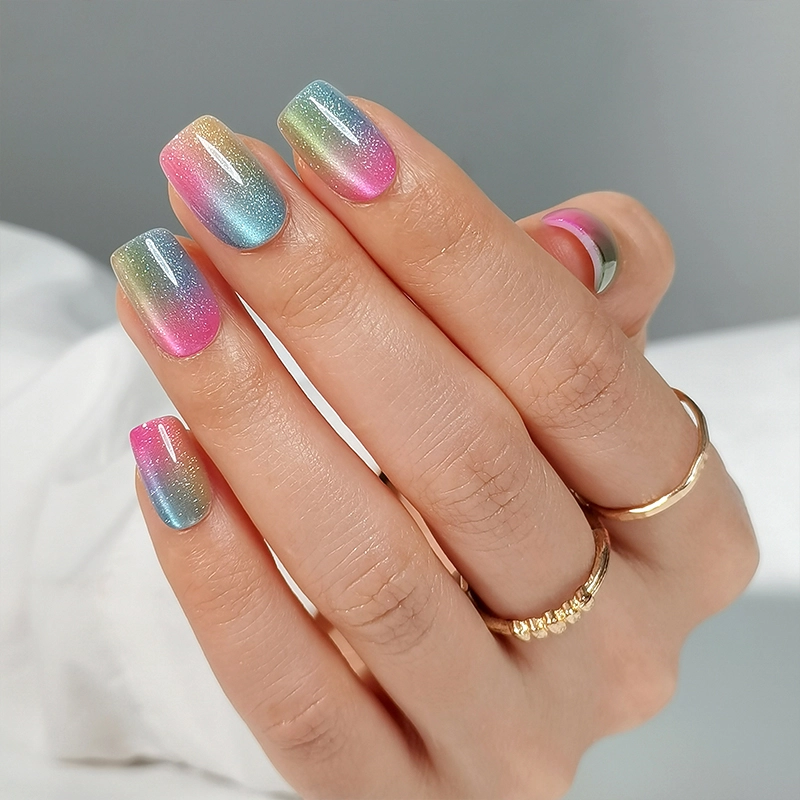
Custom Wholesale Gradient Cat Eye Soft Gel Wearable Fake Nails
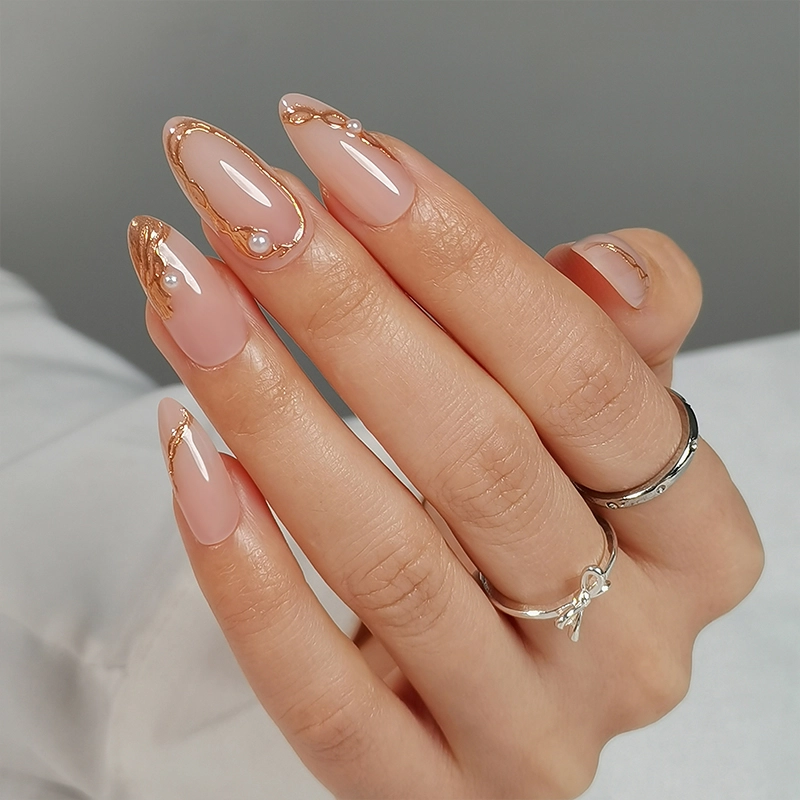
Wholesales Luxury Rhinestone Handmade Private Label Press On Nails Art Tips
Copyright © 2025 - XIANXING BEAUTY All Rights Reserved. Sitemap
Facebook
YouTube
Instagram
LinkedIn