
What are the best press on nails suppliers for wholesale buyers?
- 1) How can I verify a factory's bond/adhesive retention claims (7–14 days) before placing a 10,000-piece order?
- 2) Which press-on nail suppliers will provide full safety documentation (EU Cosmetic Regulation, SDS, biocompatibility reports) for nails and adhesives?
- 3) What are realistic MOQs and per-set costs for custom full-cover ABS press-on nails with foil stamping and private-label packaging?
- 4) How do I accurately calculate landed cost per set (unit cost + shipping + duties + returns) when importing press-on nails for US/EU retail?
- 5) How to ensure consistent sizing and reduce returns — what QC tolerances and sampling plans should I require?
- 6) Which adhesive chemistries actually reduce allergic reactions and how do I validate hypoallergenic or low-odor claims?
- Concluding summary: Advantages of sourcing press-on nails correctly
Best Press On Nails: 6 Deep Questions Wholesale Buyers Always Ask
Buying press-on nails wholesale requires more than price comparison. Below are six specific, practitioner-level questions beginners and small buyers frequently search for online but rarely find up-to-date, actionable answers to. Each question is answered with step-by-step checks, realistic numbers, test methods and compliance guidance so you can vet press-on nail suppliers, control quality, estimate landed costs, and protect end customers from allergic reactions.
1) How can I verify a factory's bond/adhesive retention claims (7–14 days) before placing a 10,000-piece order?
Why this matters: Factories often advertise 7–14 day retention using their preferred application; real-world retention varies with adhesive chemistry, nail prep and wear. To avoid costly returns or complaints on large orders, you need reproducible lab and field tests.
What to request and run:
- Sample program: Request 50–200 finished sets (mix of sizes) using the exact glue or tabs they will ship. If you plan private-label glue, insist samples use that formula.
- Controlled retention test: Use a 14-day wear trial on a panel of at least 30 volunteers with documented activity levels (desk worker, hairdresser, fitness) and standard prep (degrease with isopropyl alcohol; no primer vs primer). Track days until first lift and full loss.
- Laboratory adhesion testing: Ask for peel and shear tests. Acceptable metrics: use peel adhesion 90° (ASTM D3330) for pressure-sensitive tabs and shear test for cyanoacrylate bonds. Document average peel force (N/cm) and standard deviation. While specs vary by formula, request the supplier's test protocol and raw data.
- Environmental exposure: Run a 72-hour water/heat cycle (hand immersion cycles and 40°C humidity chamber) to simulate showers, pool use, and sweating. Record failures.
- Pass criteria you can enforce: For an advertised 10–14 day retention claim, require >=85% success at day 7 and >=60% at day 14 across your volunteer panel under standard prep. Make this a contractual quality gate.
Contract tips: Put retention acceptance criteria and remedies (rework, refund, or replacement) into the purchase contract. Insist on raw adhesive SDS/MSDS and production lot traceability for adhesives used during manufacture.
2) Which press-on nail suppliers will provide full safety documentation (EU Cosmetic Regulation, SDS, biocompatibility reports) for nails and adhesives?
Why this matters: Retailers in multiple markets need documentation to demonstrate compliance. Nails and adhesives may fall under cosmetics or consumer goods rules; manufacturers must supply safety paperwork for import, retail and marketplaces.
Documents to request from any legitimate supplier:
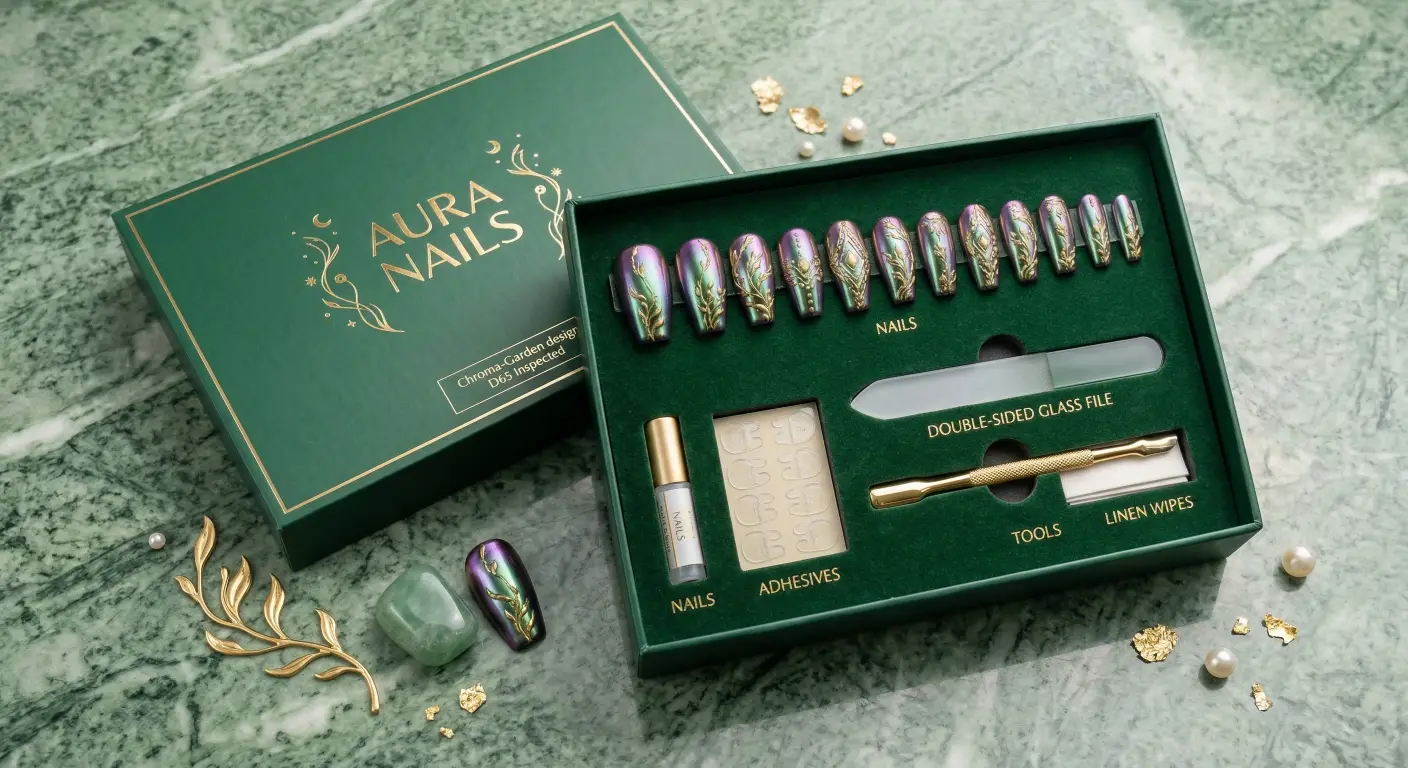
- Material Declaration for nail tips: base polymer (e.g., ABS, PMMA), plasticizers, pigments and coatings. ABS is common for full-cover press-on nails; PMMA (acrylic) or resin blends may also be used.
- Safety Data Sheets (SDS/MSDS) for: (a) nail glue/cyanoacrylate, (b) any nail varnish/topcoat included, and (c) adhesives tabs (if chemically treated).
- EU Cosmetic Product Safety Report (CPSR) if the product is marketed as a cosmetic in EU — this is the documented safety assessment performed by a qualified professional according to EC No 1223/2009.
- Patch test / skin irritation data or third-party biocompatibility test results for adhesives (ISO 10993-10 for irritation is common if claiming biocompatibility). If supplier claims hypoallergenic, require the specific test and lab report supporting this claim.
- Lead/Heavy metals and phthalate testing on decorated tips (especially metallic foils or chrome finishes). Request current test reports (within 12 months) from accredited labs (e.g., SGS, Intertek, Eurofins).
Where to look for suppliers that provide these documents: Reputable factories in Guangzhou/Shenzhen/Foshan and B2B marketplaces (Alibaba, Global Sources) will often provide them on request; prioritize suppliers that proactively include these documents in their product spec pack. If a supplier resists or cannot provide up-to-date third-party reports, treat that as a red flag.
3) What are realistic MOQs and per-set costs for custom full-cover ABS press-on nails with foil stamping and private-label packaging?
Why this matters: Many buyers expect large customization at consumer prices. Knowing realistic MOQs and costs helps plan inventory, cash flow and pricing strategy.
Typical ranges you will encounter (based on aggregated market data from Chinese manufacturers and B2B listings):
- Blank full-cover ABS pre-made nails (standard shapes, no print): MOQ 500–1,000 sets; unit cost roughly $0.20–$0.80 per set depending on thickness and finish.
- Custom printed or foil-stamped designs, private-label packaging: MOQ 1,000–5,000 sets per SKU is common. New tooling or stamping plates may add a one-time cost ($150–$1,000) depending on method and complexity.
- High Quality decorated sets (3D embellishments, chrome/metallic foil, rhinestones): unit cost often $1.00–$3.00 per set. MOQ typically 1,000–3,000 sets if decoration is hand-applied; for machine-applied designs MOQ might be higher but per-unit cost lower.
How to reduce MOQ or cost:
- Negotiate mixed-SKU MOQs (e.g., 2,000 total sets across 4 designs) to reduce inventory risk.
- Use standard size tabs and printing templates to avoid new tooling fees.
- Consolidate decoration in China (factory does decoration) rather than shipping blanks for decoration elsewhere; that reduces touch labor and costs.
4) How do I accurately calculate landed cost per set (unit cost + shipping + duties + returns) when importing press-on nails for US/EU retail?
Why this matters: Low FOB price can be eroded by freight, duties, inspection fees and returns. A robust landed cost model prevents margin surprises.
Step-by-step landed cost model:
- FOB unit price (factory invoice) — e.g., $1.00 per set.
- International freight + insurance — calculate per-unit by dividing total freight by units. Example: $500 freight for 5,000 sets = $0.10 per set.
- Import duties and VAT — HS code for artificial fingernails and art for nails often falls under cosmetic/accessory s; duty rates vary by country (0–4% for many beauty accessories; check local customs tariff). Example: 2% duty on CIF value = $0.02 per set.
- Customs clearance, brokerage, inland transport — estimate $0.05–$0.20 per set depending on volume and distance.
- Testing/certification amortized cost — if you pay for third-party testing $1,000 and import 10,000 sets, add $0.10 per set.
- Return reserve and quality rework — set aside 2–5% of revenue for returns (or estimate $0.05–$0.20 per set depending on historical return rates). For first shipments, budget 5–10% until QC is proven.
Example landed cost: $1.00 (FOB) + $0.10 freight + $0.02 duty + $0.10 testing amortization + $0.10 returns reserve + $0.10 clearance & transport = $1.42 per set. Use this to calculate MSRP and wholesale margins.
5) How to ensure consistent sizing and reduce returns — what QC tolerances and sampling plans should I require?
Why this matters: Size mismatch is a top cause for returns. Press-on nails must fit across natural nail size variation and remain consistent across production lots.
Actionable QC plan:
- Define size templates: Approve a physical size master for sizes 0–10 (or your chosen size system) including radius of curvature and base edge. Keep this on file for production checks.
- Dimensional tolerances: For width and length, require +/- 0.5 mm tolerance for consumer-grade press-ons; for High Quality/fitted sets you can tighten to +/- 0.3 mm. Specify profile curvature tolerance (e.g., curvature variance within +/- 0.5 mm radius).
- Sampling plan: Use AQL sampling for each shipment. For visual and dimensional defects, AQL 2.5 is common for major defects and AQL 4.0 for minor defects. For size-critical fits, consider AQL 1.5 for major defects on initial orders.
- Pre-shipment inspection (PSI): Require 100% measurement on a statistically significant subsample (e.g., 200 sets per SKU) and photos of measurement instruments. Randomly select 10 packages for full set inspection to check packaging and tab/glue presence.
- Labeling: Require clear size mapping on each box (e.g., set contains sizes 0–10 with sticker showing measurements) to reduce consumer confusion.
Contract clause: Define acceptable defect rates and remedies (discount, rework, or replacement) and require a third-party inspection agency (SGS/Intertek) for shipments above a threshold (e.g., >5,000 sets).
6) Which adhesive chemistries actually reduce allergic reactions and how do I validate hypoallergenic or low-odor claims?
Why this matters: Allergic contact dermatitis to cyanoacrylate (superglue) and certain accelerators/monomers occurs. Claims like hypoallergenic are useful marketing but must be backed by data to avoid regulatory or legal risk.
Chemistry primer and buyer checks:
- Adhesive types: (a) Cyanoacrylate glues (high bond strength, longer retention but potential for allergic sensitization), (b) Pressure-sensitive adhesive (PSA) tabs (lower bond strength but lower chemical exposure), (c) Medical-grade adhesives (specialty and more expensive; may have better biocompatibility data).
- Common allergy causes: cyanoacrylate monomers and residual initiators/accelerators. Low-odor formulas reduce volatile solvents but may still contain reactive monomers.
- Validating claims: Ask for third-party patch test results or human repeat insult patch test (HRIPT) data. For hypoallergenic, require a documented clinical patch test on a representative population performed by a certified lab showing low incidence of irritation/sensitization. If a supplier claims medical-grade adhesive, request ISO 10993 biocompatibility reports (cytotoxicity, sensitization, irritation).
- Labeling & instructions: Ensure suppliers include clear consumer guidance (patch test recommendation, removal instructions, contraindications for those with known cyanoacrylate allergies). That reduces consumer complaints and legal exposure.
Practical buyer approach: For initial launches, use adhesive tabs or provide both tabs and a small single-use glue sachet. Tabs minimize allergy risk and make returns/repurchase easier; High Quality lines can use labeled low-VOC cyanoacrylate with documented patch test results.
Concluding summary: Advantages of sourcing press-on nails correctly
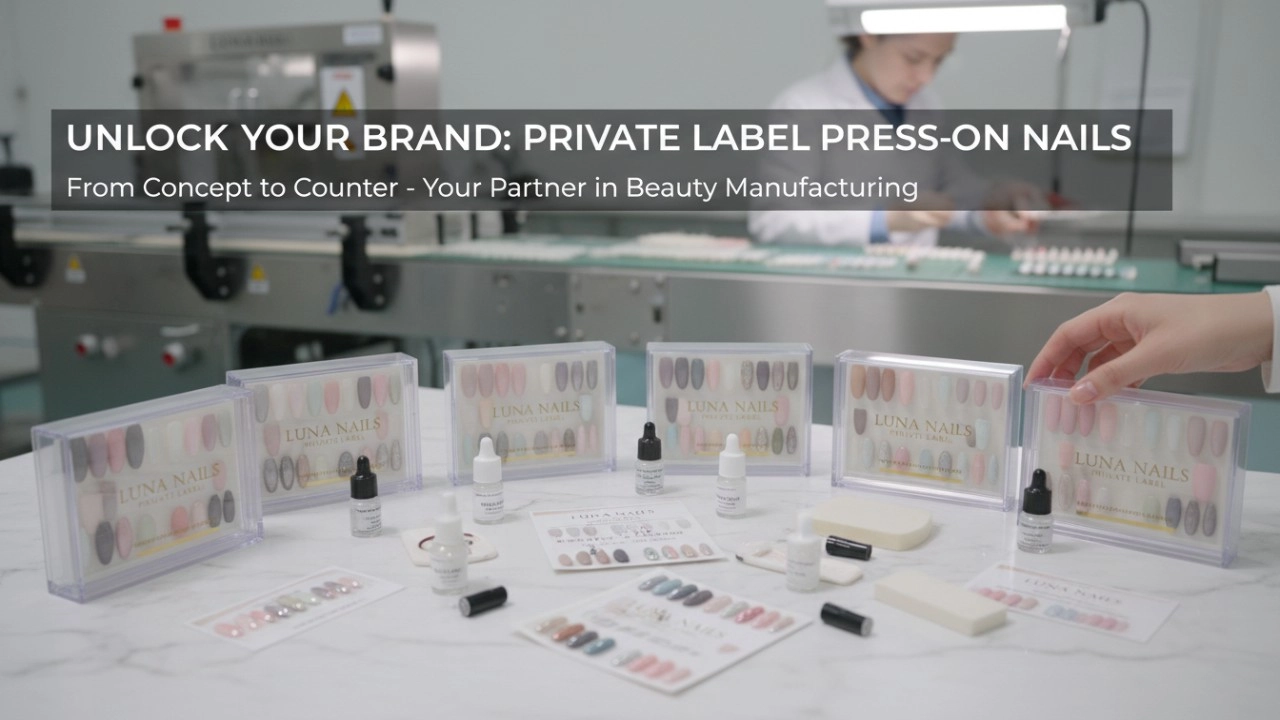
When you vet suppliers using objective criteria — documented adhesive tests, SDS/CPSR paperwork, realistic MOQ and pricing models, clear dimensional tolerances and verified hypoallergenic data — you reduce returns, protect customers and build a scalable private-label line. Proper landed-cost modeling and contractual quality gates let you price competitively while maintaining margin. For many retailers, starting with ABS full-cover sets plus adhesive tabs for mass-market SKUs and offering a High Quality glue-backed line with clinical patch tests is a balanced go-to-market strategy.
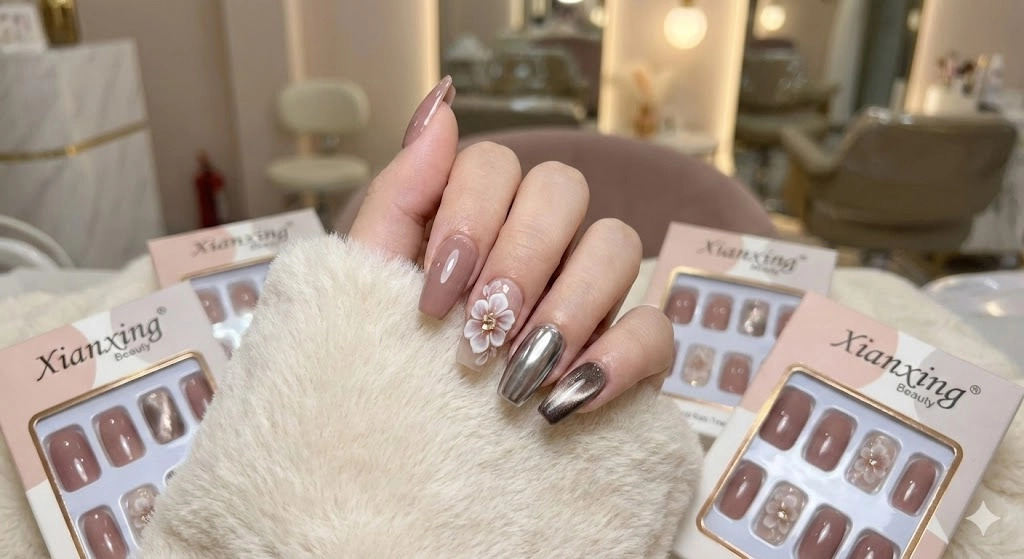
For a formal quote, pre-production sample program or to request supplier documentation (SDS, test reports, MOQ and private-label options), contact us at www.xianxingbeauty.com or email [email protected].
7 Red Flags to Avoid When Selecting a Wholesale Press On Nails Manufacturer
Quality Control: What to Expect from a Top-Tier Wholesale Press On Nails Manufacturer
The Ultimate Guide to Choosing the Best Wholesale Press On Nails Manufacturer in 2026
How to Scale Your Beauty Brand: Why Private Label Press On Nails Are the Highest-Margin Entry Point in 2026
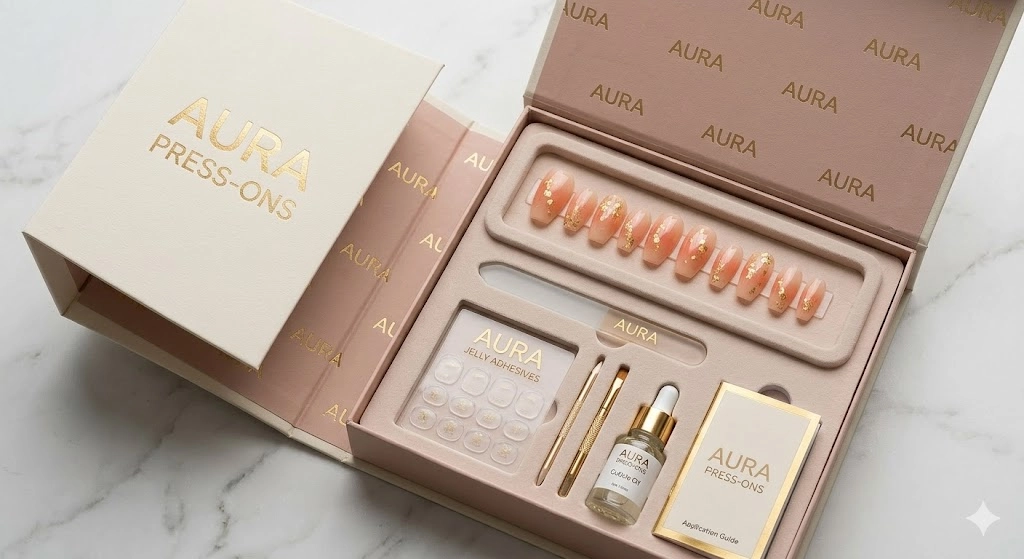
Why Partnering with Professional Press On Nails Manufacturers Boosts Your Brand Growth
Supermarket chains
What is the surface treatment process of nails? Are there any anti-scratch and anti-fading measures?
All press on nails already apply top coating, no need extra lamp cured, it’s anti-scratch and anti-fading.
Startup Client
Can I return or exchange products if there is a quality issue?
Yes, we offer comprehensive after-sales services. If there is a quality issue, you can apply for a return or exchange. For the specific process, please contact our customer service team.
Remove armor
How should I dispose of remover pads?
Since most remover pads are made of non-biodegradable material, dispose of them in the trash, not down the drain, to prevent clogging.
Crystal spike
How do I use a Wooden Stick?
Push back cuticles: Just like the crystal version, you can use the wooden stick to push back your cuticles, but be careful not to press too hard to avoid skin irritation.
Clean under nails: The flat end can be used to clean under the nails, removing any accumulated dirt or polish.
Apply nail treatments: The stick can be used to apply oils or creams to the cuticle area.
About Product
Do you provide product samples?
Yes, customers are welcome to apply for nails samples for testing and evaluation.
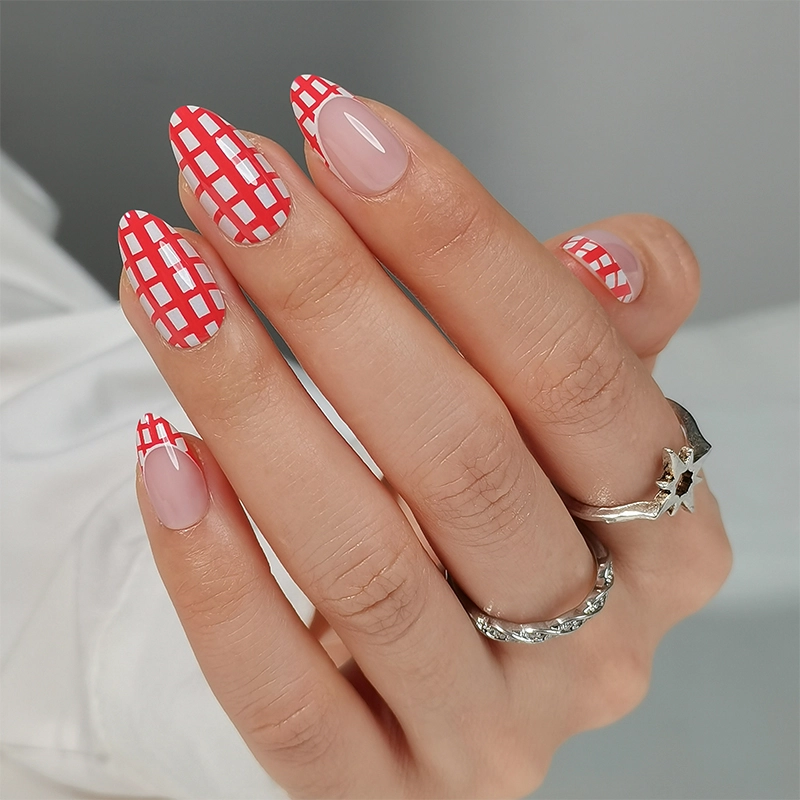
Wholesales Red French Nails Tips Checkered Soft Gel Nail Tips 32 Piece Set
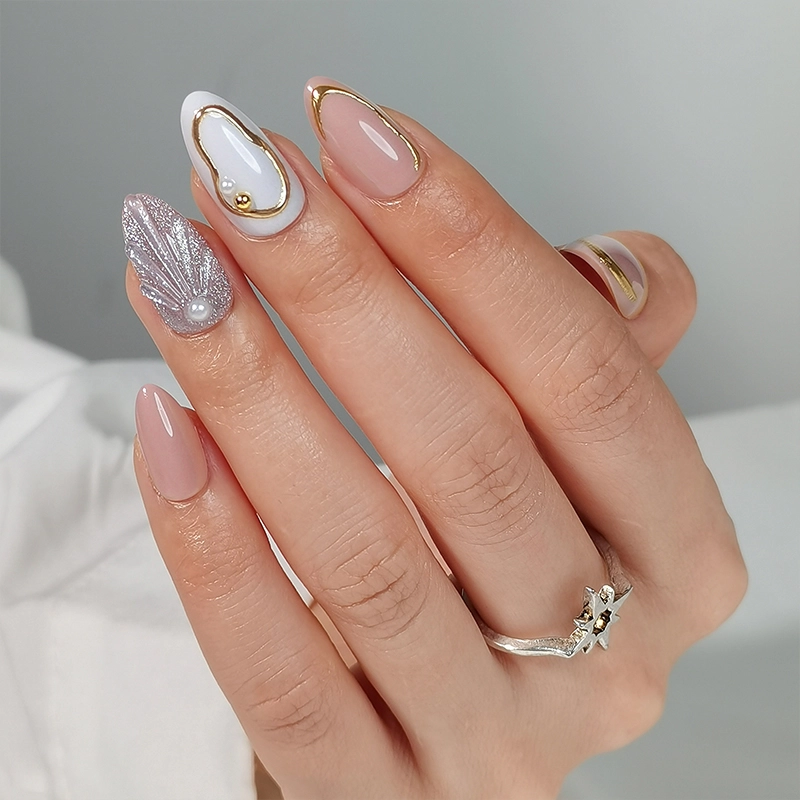
Wholesales Elegant Shell Inspired Soft Gel Wearable Nails for Seasonal Celebrations
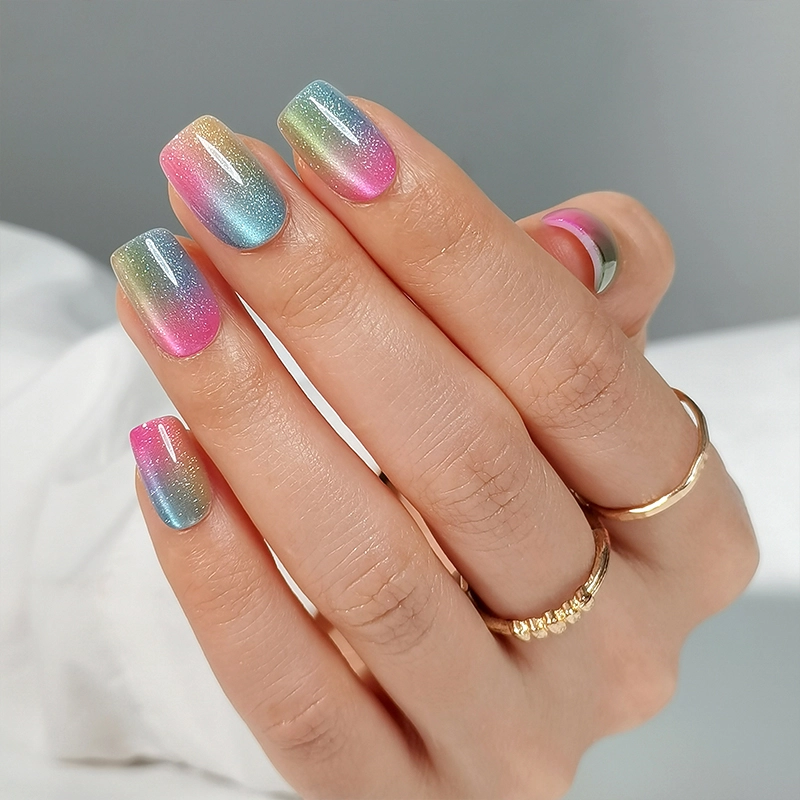
Custom Wholesale Gradient Cat Eye Soft Gel Wearable Fake Nails
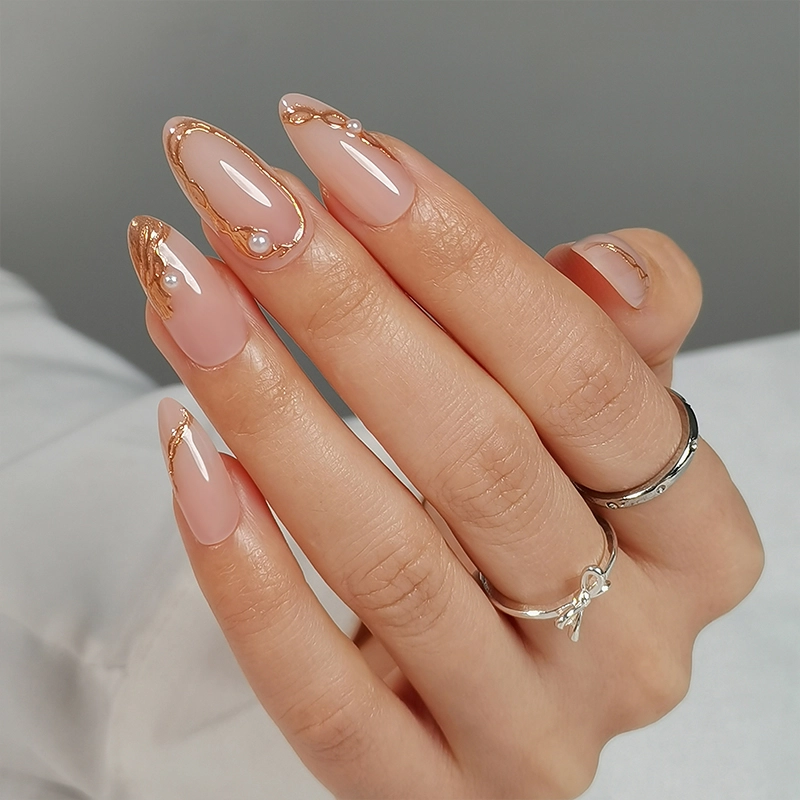
Wholesales Luxury Rhinestone Handmade Private Label Press On Nails Art Tips
Contact us
If you have press on nails products or customization needs, please feel free to contact from
below or via the contact information provided, we'll get back to you promptly within 24 hours.
By clicking 'Send Inquiry Now' I agree to XIANXING BEAUTY processing my personal data.
To see how to withdraw your consent, how to control your personal data and how we process it, please see our Privacy Policy and Terms of use.
Copyright © 2025 - XIANXING BEAUTY All Rights Reserved. Sitemap
Facebook
YouTube
Instagram
LinkedIn