
How to negotiate better terms with press on nails suppliers?
- 1. What is a realistic MOQ and full landed cost breakdown for a custom press-on nail set (including packaging and adhesives) for a small brand?
- 2. How can I validate a press-on nail supplier’s quality remotely before committing to a full production run?
- 3. How to set up nail sizing charts and ensure a high “right-fit” rate across diverse customers?
- 4. How to protect my nail art designs and brand assets when using overseas manufacturers?
- 5. How to negotiate better terms with press on nails suppliers?
- 6. How to ensure color, finish and batch-to-batch consistency for printed or gel press-on nails?
- Why Xianxing Beauty is the right partner for press-on nail brands
If you're asking How to start Custom Press on Nails and feel lost when sourcing overseas, this post answers six specific beginner pain points that are often under-explained online. The guidance below draws on real-world factory workflows and procurement best practices so you can buy with confidence.
1. What is a realistic MOQ and full landed cost breakdown for a custom press-on nail set (including packaging and adhesives) for a small brand?
Why this matters: New brands are often surprised by upfront costs — not just unit price but tooling, packaging, freight, and sample fees. Sellers focus on per-set price; buyers need total landed cost.
Step-by-step approach to calculate realistic landed cost:
- List cost components: design tooling/mold (if creating new 3D shapes), nail blanks (ABS or acrylic), printing or hand-art labor, topcoat/UV curing, adhesive (tabs or glue), individual packaging, master cartons, labeling/UPC, QC sampling, inland freight to port, ocean/air freight, customs duties, and local last-mile shipping.
- Get quotes per SKU for: unit manufacturing price, packaging price, and per-unit adhesive. Typical industry wholesale ranges (general guidance): basic printed ABS press-on set $1–$4 per set; complex gel/3D sets or luxury packaging $4–$12+ per set. Sample orders are usually priced higher per unit.
- Estimate fixed costs: tooling or mold amortization (if needed) is spread over first production run. Tooling can be $50–$800 depending on complexity; divide this by planned MOQ to add per-unit tooling cost.
- Add logistics and duty: inland pickup $0.05–$0.50 per set (depends on distance and volume); ocean freight per set varies with weight/volume — consolidate to a per-set figure with your freight forwarder. Customs duties depend on classification and country — check harmonized tariff schedule for your market.
- Sample calculation example (conservative illustration): manufacturer price $2.00 + packaging $0.60 + adhesive tabs $0.10 + tooling amortization $0.20 + domestic freight $0.10 + ocean freight & insurance $0.25 + customs & duties $0.15 = ≈ $3.40 landed (wholesale) before local fulfillment and marketing costs.
How to reduce costs as a beginner:
- Start with fewer SKUs and simpler packaging to lower MOQ and tooling cost.
- Use standard nail blanks/colors rather than full custom molds on first runs.
- Negotiate sample pricing and ask factories for a sample credit against first production run.
2. How can I validate a press-on nail supplier’s quality remotely before committing to a full production run?
Why this matters: Most buyers can’t visit factories. Weak due diligence leads to quality, IP, or shipping failures.
Remote validation checklist — actionable steps:
- Request full, recent photo/video evidence of production: raw materials, printing presses, curing stations, packing line, and finished cartons with lot codes and timestamps. Ask for unedited footage where employees show serial numbers or date stamps on machinery.
- Require third-party product/material testing reports (SGS/Intertek) for nail blanks and adhesives — look for material ID (ABS, polycarbonate), VOCs/release, and adhesion/safety where relevant. If the supplier cannot provide reputable test reports, order independent sample testing in your market.
- Ask for references with contact details of three current international clients and call/email them. Request photos of recent shipments and feedback on defects and lead times.
- Use a staged sample plan: digital mockups → single sample set → pre-production sample (PPS) of each SKU → final production sample (FPS) from actual production batch. Each stage should be signed off in writing with acceptance criteria.
- Contract a local inspection firm for pre-shipment inspection (PSI) using an AQL standard you define (e.g., AQL 2.5 for critical defects). Many buyers use third-party QA companies in the factory city to perform in-line and final inspections.
3. How to set up nail sizing charts and ensure a high “right-fit” rate across diverse customers?
Why this matters: Returns and negative reviews spike when sets don’t fit. Sizing that works in one market may not in another.
Practical sizing system to implement:
- Create a sizing matrix with measurements in millimeters for the 10 nail widths (thumb to pinky). Use two reference systems: numerical sizes (e.g., 0–9) and millimeter widths at the widest point.
- Include 3 universal curvature options: flat, medium, and deep cup to match nail bed curvature. Offer “sheets” with at least two of each size per set (e.g., 2x of sizes 2,4,6,7,8 = 10 nails) to increase match probability.
- Target a 75–85% immediate fit rate in first fit tests for a general consumer set. To improve fit: provide clear printable sizing guides for customers to measure at home; include quick-fit tips and a replacement policy for mis-sized nails.
- Run a sizing pilot: ship small batches to 100 testers across your target demographics; record which sizes are most/least used and revise size distribution before full launch.
4. How to protect my nail art designs and brand assets when using overseas manufacturers?
Why this matters: Design copying and trademark misuse are common pain points for small beauty brands working internationally.
Practical IP protection steps:
- Use an NDA and a work-for-hire clause in your contract. The NDA protects shared artwork and the contract should clearly state that all artwork, molds, and finished designs are your property and may not be sold or reproduced without permission.
- Register your trademark in your primary markets before a large launch — trademarks are the most practical tool to prevent knockoffs. For design protection, check whether design patents or registered designs exist and are practical in your manufacturing country and target markets.
- Provide artwork in layered, low-resolution files for sampling where possible and keep full-resolution masters under limited access. Watermark art sent to multiple factories during quote stages.
- Work with reputable suppliers that accept IP clauses; ask for a contractual penalty for unauthorized use. For large runs, consider escrow of key digital assets until payment milestones are met.
5. How to negotiate better terms with press on nails suppliers?
Why this matters: New brands face rigid MOQs, tight payment terms, and long lead times. Better terms materially improve cash flow and time-to-market.
Negotiation playbook (tactics you can use immediately):
- Lead with data: show realistic forecast, planned reorder frequency, and channel strategy. Suppliers prefer predictable reorder cadence over one-off large orders.
- Use staged commitments: offer a smaller initial order plus a committed reorder (e.g., 500 sample sets + commitment to place 2,000 in 90 days at X price). This reduces supplier risk and can lower per-unit price.
- Ask for price breaks with tiered MOQ (e.g., price A for 300–999, price B for 1,000+). Avoid taking the lowest price blindly — confirm quality is identical at each tier.
- Negotiate payment flexibility: common structures are 30% deposit / 70% before shipment. For better cash flow, propose 30/60/10 or net-30 on balance once you have trading history. Offer slightly higher price for better payment terms if needed.
- Secure lead time guarantees and include penalty clauses: agree on clear production start/end dates, and define remedies for late shipments (partial refund, expedited shipping at supplier cost, or discount). Suppliers often accept a limited liquidated damages clause or future priority allocation instead of cash penalties.
- Trade-offs to offer: longer contract term, forecasted volume, or exclusive SKUs in exchange for lower MOQ, extended payment terms, or reduced sample fees.
- Use a third-party escrow or letter of credit for new suppliers where trust is weak; L/Cs are expensive but reduce supplier risk and can improve bargaining leverage on price or lead time.
Sample negotiation script (email):
Hi ,We’re launching a new brand and plan to order 1,200 sets across 6 SKUs in Q2, with potential for 6,000 sets over 12 months. Could you provide: 1) price per set for 300/1,000/3,000 MOQ tiers; 2) sample price for 1 set and PPS lead time; 3) standard lead time and whether you can accept 30% deposit, 60% pre-shipment, and 10% post-delivery within 30 days? We can commit to a reorder schedule if initial run meets quality. Thanks,
6. How to ensure color, finish and batch-to-batch consistency for printed or gel press-on nails?
Why this matters: Customers expect the same look across reorders. Variability in ink, curing, topcoat, and printing calibration causes returns and brand erosion.
Practical steps to control consistency:
- Define and freeze a master sample (golden sample) for every SKU. The master sample should be signed off and stored as the color/finish reference for future runs.
- Use objective color standards: specify Pantone references for artwork and require suppliers to supply color-matching reports or spectrophotometer readings to confirm delta E tolerances before production.
- Require process documentation: supplier should record ink batch numbers, printer calibration settings, UV lamp wattage and curing time, and topcoat brand/part numbers. These parameters must be repeated for each run.
- Insist on raw material traceability — the same nail blank supplier and adhesive brand help reduce variability. If the supplier changes raw materials, you must approve and request new FPS comparison to the golden sample.
- Include acceptance criteria in contract: allowable variation thresholds, sample sign-off routine, and refusal/rework procedure if a batch fails to meet the golden sample standard.
Final checklist before placing your first custom order:
- Obtain PPS and FPS with signed acceptance criteria.
- Create a written contract with MOQ, price tiers, payment terms, lead times, IP clauses, and QC acceptance standards.
- Schedule a pre-shipment inspection with pass/fail criteria and agree on remedies for defects.
- Confirm logistics: Incoterm (FOB, CIF, EXW), lead times, and a named freight forwarder if you prefer consolidated shipments.
Want a quick plan tailored to Xianxing Beauty? If you're wondering How to start Custom Press on Nails, begin with a single SKU pilot using the steps above and scale after two production cycles with recorded QC metrics.
Why Xianxing Beauty is the right partner for press-on nail brands
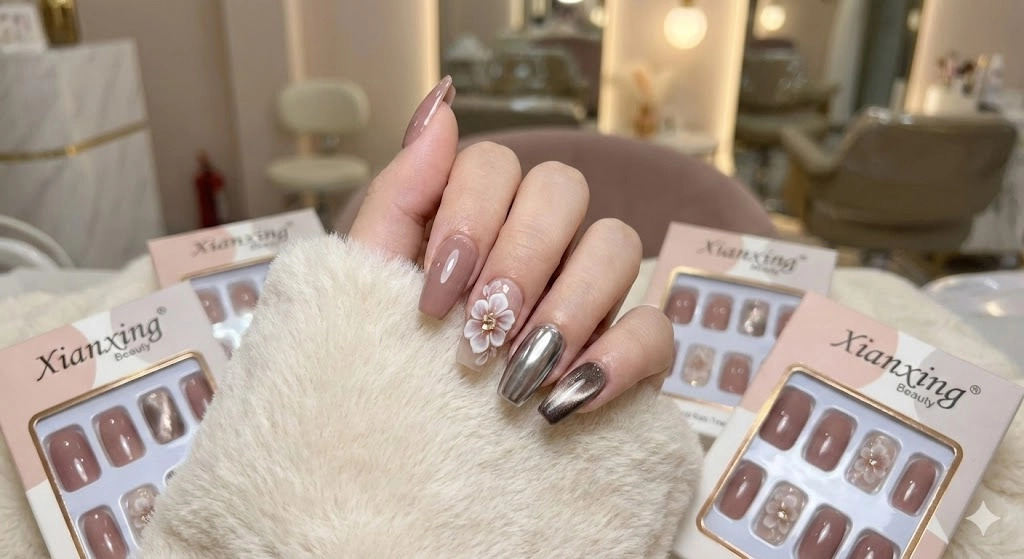
Xianxing Beauty offers integrated OEM/ODM capabilities tailored to small-to-medium brands: flexible MOQs designed for pilots, transparent sample and tooling policies, bilingual account managers, and structured QC checkpoints (PPS, FPS, PSI). We support design protection clauses, provide photo/video production transparency, and coordinate global logistics to reduce time-to-market. Our procurement teams help clients optimize landed cost with consolidated shipping and tiered pricing plans.
Contact us for a custom quote and production roadmap: www.xianxingbeauty.com — [email protected]. We’ll prepare a clear cost breakdown and negotiation plan for your first run.
7 Red Flags to Avoid When Selecting a Wholesale Press On Nails Manufacturer
Quality Control: What to Expect from a Top-Tier Wholesale Press On Nails Manufacturer
The Ultimate Guide to Choosing the Best Wholesale Press On Nails Manufacturer in 2026
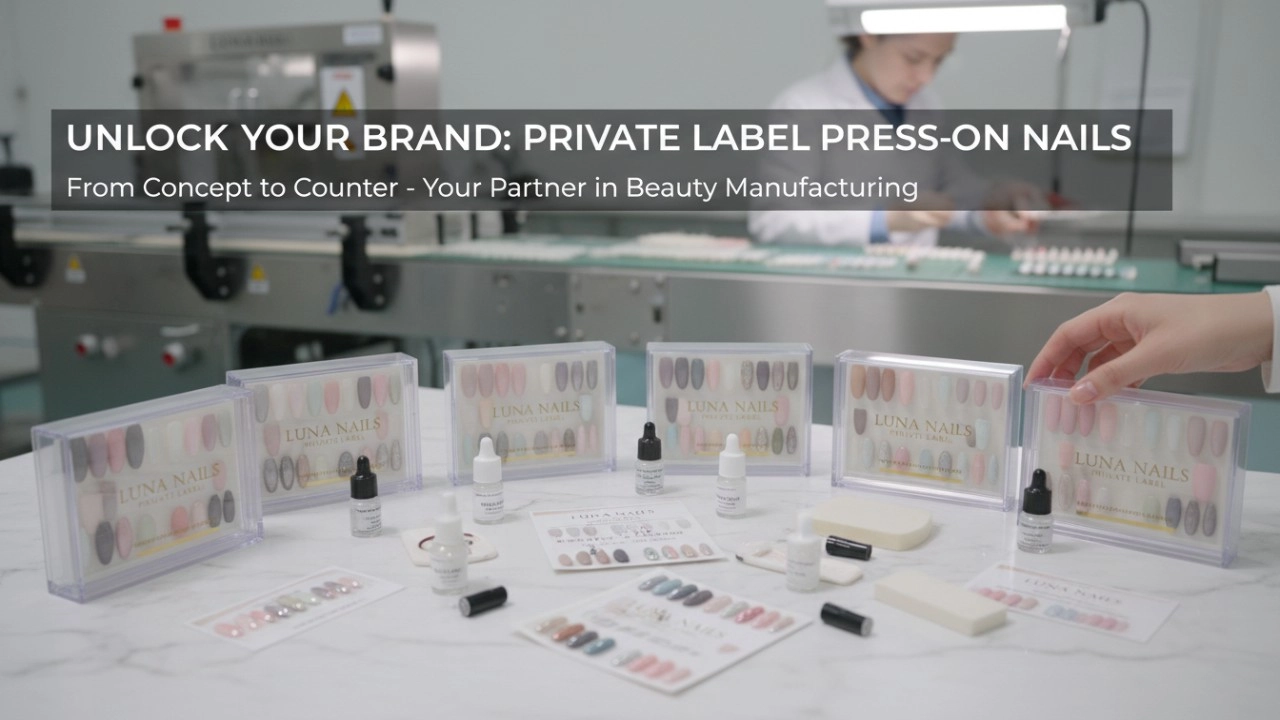
How to Scale Your Beauty Brand: Why Private Label Press On Nails Are the Highest-Margin Entry Point in 2026
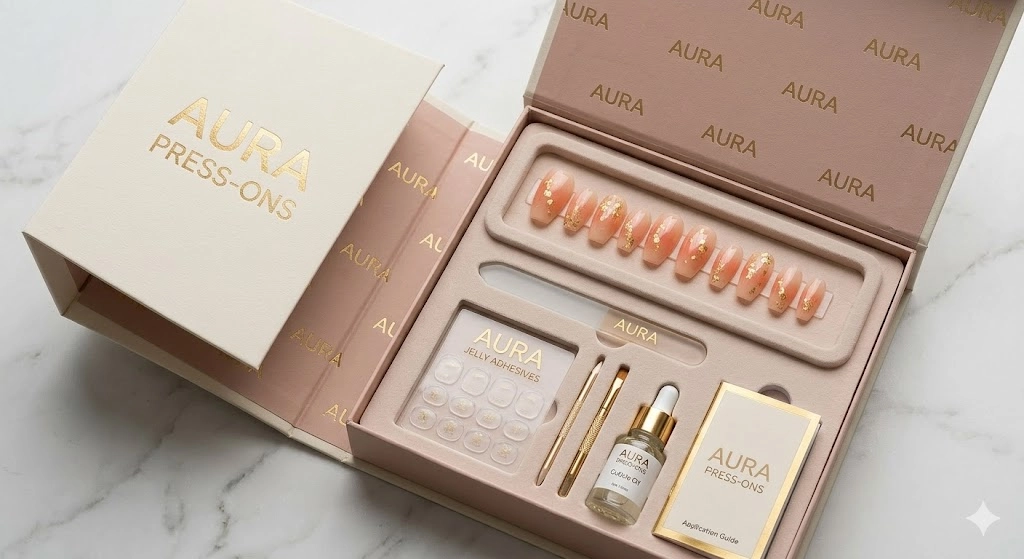
Why Partnering with Professional Press On Nails Manufacturers Boosts Your Brand Growth
About Kid Nails
What are press-on kid nails?
Press-on kid nails are pre-designed, artificial nails that can be easily applied to a child's natural nails using adhesive backing or safe nail glue.
About chrome Nails
How do I remove chrome press-on nails?
Soak your nails in warm soapy water or acetone for 10–15 minutes.
Gently lift the edges with a cuticle stick.
Avoid pulling or forcing them off to prevent damage.
About shipping logistics
How long does delivery take?
Shipping times vary based on your location and chosen shipping method. International delivery typically ranges from a few weeks to a few months.
Recycled ABS Nails
Are they easily broken?
Although the ABS material has a certain strength, if subjected to a large external force impact or excessive bending, the press-on nails may still break. In daily use, you should try to avoid colliding and squeezing the nail tips to prolong their service life.
About Toe Nails
How do I remove toe press-on nails?
Soak in warm water: Gently soak your feet in warm, soapy water for about 10-15 minutes to soften the adhesive.
Gently peel off the nails: After soaking, you can gently lift the press-on nails from the edges. Avoid pulling them too forcefully, as this can cause damage to your natural toenails.
Remove residual adhesive: Use a gentle nail polish remover or rubbing alcohol to remove any leftover glue from your toenails.
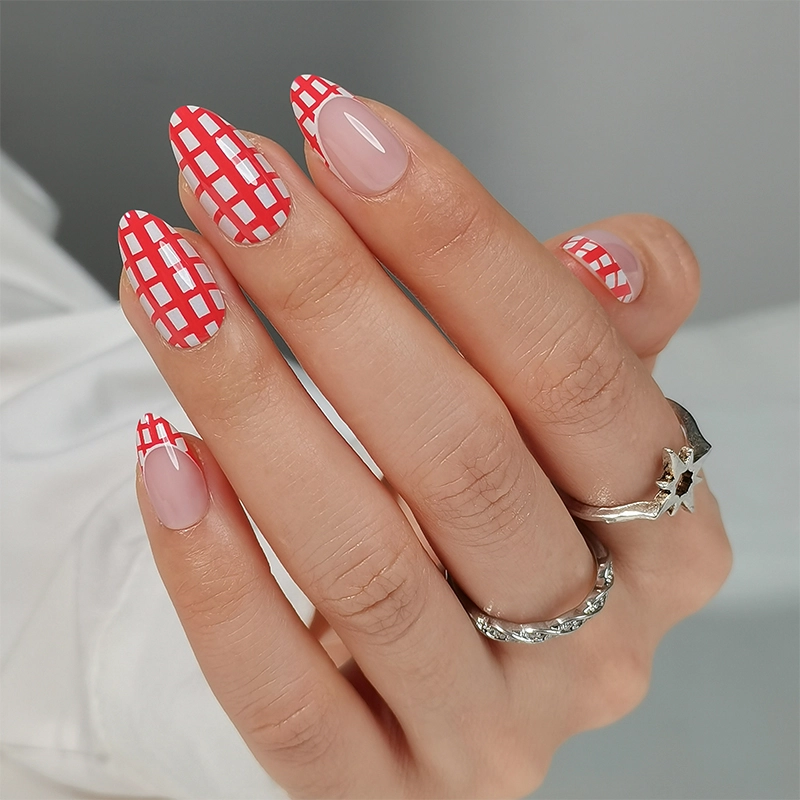
Wholesales Red French Nails Tips Checkered Soft Gel Nail Tips 32 Piece Set
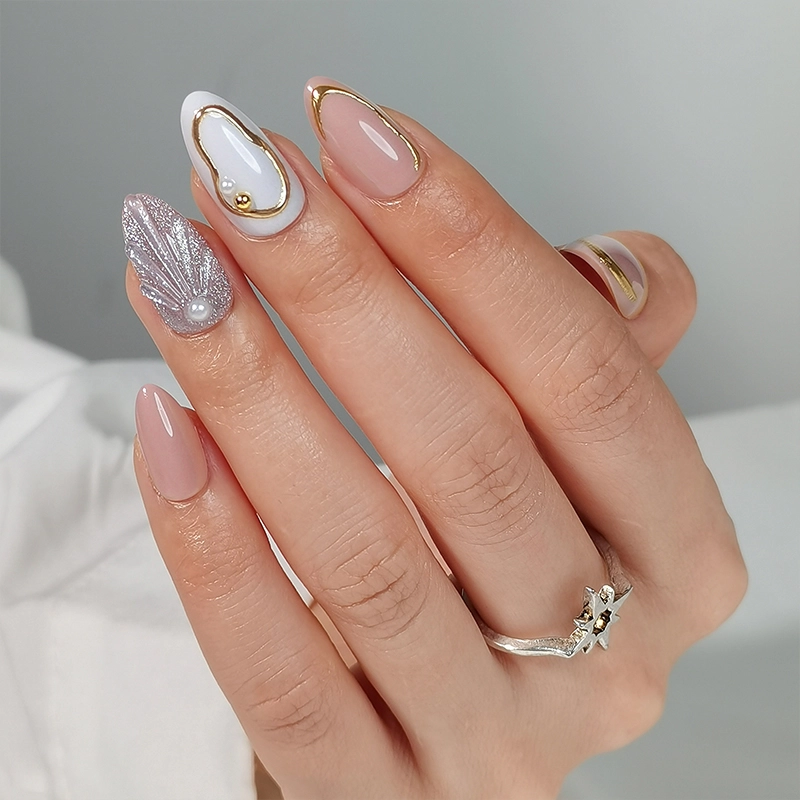
Wholesales Elegant Shell Inspired Soft Gel Wearable Nails for Seasonal Celebrations
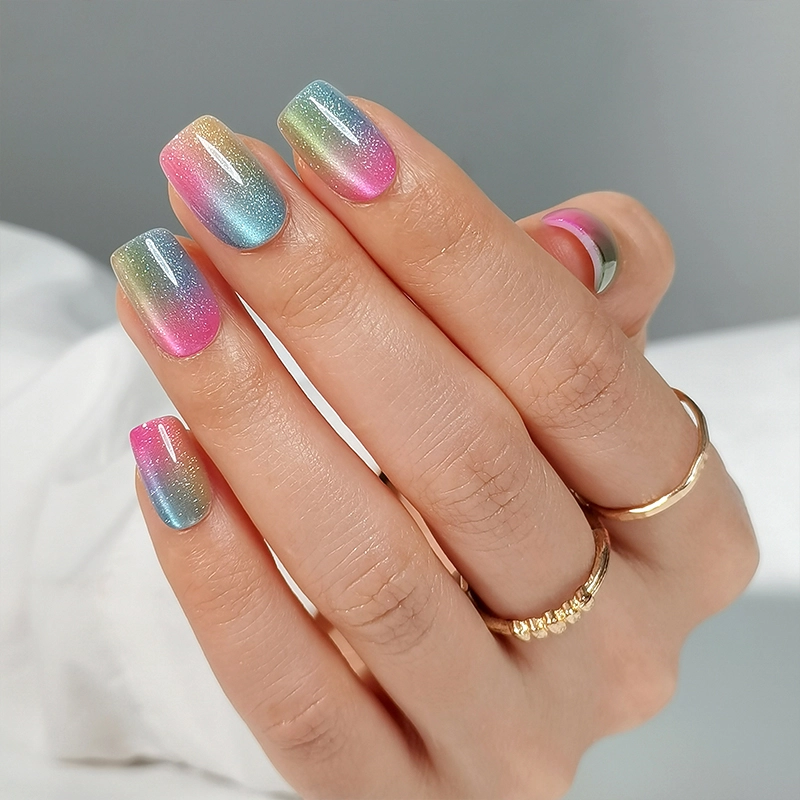
Custom Wholesale Gradient Cat Eye Soft Gel Wearable Fake Nails
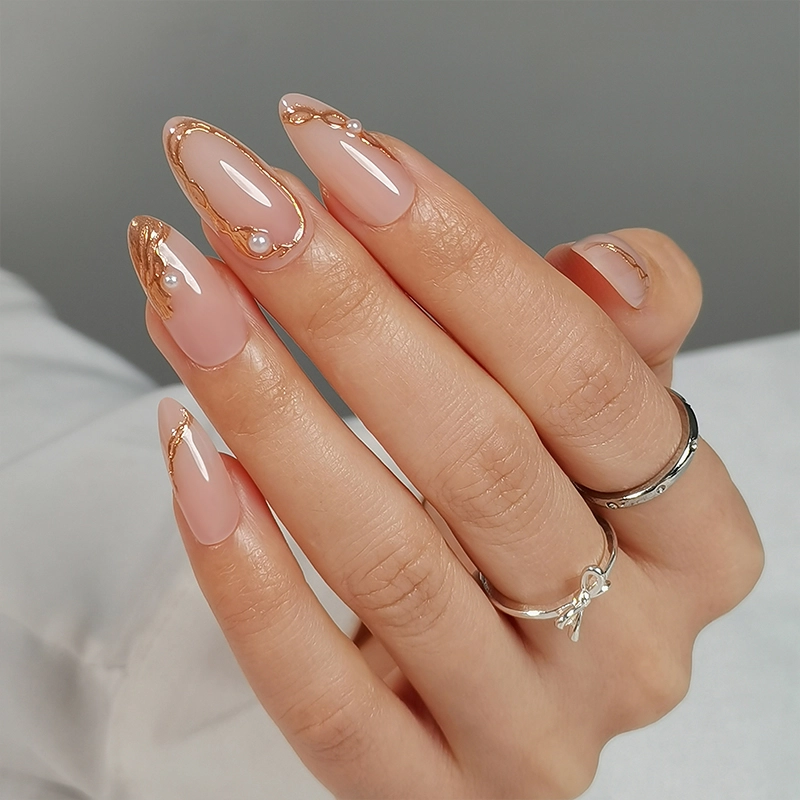
Wholesales Luxury Rhinestone Handmade Private Label Press On Nails Art Tips
Contact us
If you have press on nails products or customization needs, please feel free to contact from
below or via the contact information provided, we'll get back to you promptly within 24 hours.
By clicking 'Send Inquiry Now' I agree to XIANXING BEAUTY processing my personal data.
To see how to withdraw your consent, how to control your personal data and how we process it, please see our Privacy Policy and Terms of use.
Copyright © 2025 - XIANXING BEAUTY All Rights Reserved. Sitemap
Facebook
YouTube
Instagram
LinkedIn