
How to Manage Seasonal Demand for Wholesale Toe Nails?
- 1) What minimum order quantities and realistic lead times should I expect for wholesale custom press on toe nails to reliably meet summer spikes?
- 2) How can I forecast SKU-level seasonal demand for toe nails (sizes, designs, colors) to avoid deadstock?
- 3) Which packaging, labeling and export compliance items should I require when importing wholesale toe nails into the EU, US and Australia?
- 4) How to set safety stock and reorder points when production lead times vary between 2–8 weeks depending on capacity?
- 5) What adhesive types and material specifications should I require from wholesale custom press on toe nails to ensure long wear in humid climates and active wear?
- 6) How do I scale production cost-effectively for sudden bulk orders during holiday promotions without sacrificing quality?
Wholesale Custom Press On Toe Nails: Six Advanced Buyer Questions Answered
As a buyer, retailer or salon sourcing wholesale custom press on toe nails (custom press on toe nail sets / wholesale toe nail suppliers), you need precise, operational answers — not vague suggestions. Below are six specific beginner pain-point questions that often lack in-depth, up‑to‑date answers online, followed by practical, evidence-based solutions based on supplier norms, logistics benchmarks and product testing practices.
1) What minimum order quantities and realistic lead times should I expect for wholesale custom press on toe nails to reliably meet summer spikes?
Why this matters: Summer increases pedicure and sandal-season sales, but many buyers are surprised by manufacturer MOQs (minimum order quantities) and the combination of production plus transit time that creates long replenishment cycles.
Typical industry picture (observed across manufacturers in China and Vietnam): MOQs for fully custom toe nail sets are commonly 100–500 sets per design for branded or bespoke packaging; sample orders can be 10–50 sets. Customization (sizing variations, unique molds, foil/3D add-ons, private-label boxes) increases lead time and MOQ.
Realistic lead-time components to plan for:
- Design approval & tooling/samples: 3–10 days for minor design changes; 10–20+ days if new molds, 3D embellishments, or custom packaging are required.
- Production run: 7–21 days depending on factory scale, order size and finishing (hand-painted or airbrush work increases time).
- Quality inspection and packing: 2–5 days.
- International shipping: air freight 3–10 days; sea freight 20–45 days (port-to-port and door-to-door add time).
Plan using scenarios: for full custom designs with sea shipping, budget 6–12 weeks from final sign-off to your door; with air express and no complex tooling, 2–4 weeks is possible. For summer spikes, place replenishment orders 8–12 weeks ahead if using sea freight, or 3–6 weeks ahead if flying samples/express courier.
Actionable checklist:
- Negotiate reduced MOQ for repeat SKUs once you build a relationship (many factories lower MOQ after first 2–3 orders).
- Use air for critical restocks and sea for baseline inventory to optimize cost/time tradeoffs.
- Lock in design approvals and packaging proofs 10+ weeks before peak season start.
2) How can I forecast SKU-level seasonal demand for toe nails (sizes, designs, colors) to avoid deadstock?
Why this matters: Toe nails have size and style SKUs. Poor SKU-level forecasting causes stockouts for best-selling sizes and overstock of unpopular patterns, increasing carrying costs and returns.
Practical forecasting approach (applies to wholesalers and retailers):
- Segment SKUs: split by silhouette (short/long), size family (S/M/L or numeric), color/finish, and price tier. Track weekly sell-through per segment, not just aggregate sales.
- Use (at minimum) a 3–12 month moving average combined with a seasonal index: calculate average monthly demand per SKU, compute seasonal multipliers (e.g., May–Aug summer index >1.2 for pedicure-focused designs), and apply to baseline forecast.
- Add a demand-adaptation layer: for new SKUs with no history, use analog forecasting — match to a similar historical SKU (color, finish, target customer). For promotional events, apply uplift percentages from past campaigns (e.g., past 3 holiday promos averaged +40% for floral toe sets).
- Inventory policy: compute Reorder Point (ROP) = Lead Time Demand + Safety Stock. Lead Time Demand = average daily demand × lead time (days). Safety stock can be estimated using service level targets and demand variability (e.g., Safety Stock = Z × σLT, where Z corresponds to desired service level).
Quick example (illustrative): if average daily demand for a summer floral toe design is 5 sets/day, production + transit = 40 days, Lead Time Demand = 200 sets. If you want 95% service level and your historical LT demand standard deviation is 30 sets, approximate safety stock = 1.65 × 30 ≈ 50 sets; so ROP ≈ 250 sets. Use this process across size families — smaller sizes may have slower turnover and need different safety stock calculations.
Operational tips:
- Prioritize forecasting accuracy for your top 20% SKUs (Pareto) since they drive ~80% of revenue.
- Run weekly sell-through reports and adjust forecasts within a rolling 12-week window during peak season.
- Use pre-order campaigns in April–May to capture firm demand for summer runs and reduce forecast uncertainty.
3) Which packaging, labeling and export compliance items should I require when importing wholesale toe nails into the EU, US and Australia?
Why this matters: Non-compliant labeling or missing documentation stalls customs, causes rework and risks market removal.
General compliance checklist (apply locally):
- Material & safety documentation: Request Material Safety Data Sheets (MSDS) for plastics, adhesives and any coatings. Confirm no restricted substances per buyer-country lists (e.g., EU REACH restricted substances).
- Labeling: Include product name (e.g., Press-On Toe Nail Sets), net quantity (sets per pack), manufacturer and importer contact details, batch/lot number, production date or best-before if applicable, and care/usage instructions in the local language required for sale.
- Adhesive classification: Some adhesives may be classified differently (cosmetic adhesive vs. medical adhesive). If adhesive is included, ensure its labeling and MSDS meet importer requirements. For the EU, cosmetics rules can apply if the product releases substances intended for skin; otherwise follow general product safety rules (GPSD).
- Customs & HS codes: Confirm the correct tariff classification with your customs broker — misclassification leads to delays. Maintain commercial invoices, packing lists and CO (if preferential tariff treatment is claimed).
- Testing: For EU/Australia/US markets, consider requesting lab tests for heavy metals in coatings and phthalates in soft plastics if you use plasticized trims or decorative films. Many retailers require pre-shipment testing from accredited labs for peace of mind.
Practical steps:
- Ask suppliers for MSDS and a declaration of conformity (where applicable) before ordering.
- Engage your customs broker early to confirm HS code and documentation needs for destinations like the EU, US and Australia.
- Build a compliance checklist into your purchase order (PO) with hold points — e.g., release for shipment only after test certificates and labeling proofs are received.
4) How to set safety stock and reorder points when production lead times vary between 2–8 weeks depending on capacity?
Why this matters: Variable lead times increase risk; a fixed ROP can be insufficient if factories run behind or if shipping switches from air to sea.
Method to manage variable lead times:
- Calculate historical lead time distribution: track realized lead times for the last 6–12 orders for each supplier (days from PO finalization to delivery). Compute mean LT and standard deviation (σLT).
- Determine desired service level (e.g., 95%). Translate to Z-score (95% ≈ 1.65). Safety stock formula: Safety Stock = Z × σLT × average daily demand.
- Compute Reorder Point (ROP) = average daily demand × average LT + Safety Stock.
- Use tiered ROPs: set one ROP for normal operations and an elevated emergency ROP if your supplier signals capacity constraints or for promotional periods. This makes your trigger dynamic instead of static.
Example (illustrative): if average daily demand = 4 sets/day, mean LT = 21 days, σLT = 7 days, Safety Stock ≈ 1.65 × 7 × 4 ≈ 46 sets; ROP ≈ (4 × 21) + 46 = 130 sets.
Operational best practices:
- Maintain at least two approved suppliers for critical SKUs to reduce single-source risk during peak season.
- Use expedited air shipments for e.g., runway/toe sets that are projected to be short during a promotion, while keeping base inventory replenished by sea.
- Negotiate capacity reservations or guaranteed lead times in the PO for seasonal peaks — many factories will offer a High Quality to prioritize your runs.
5) What adhesive types and material specifications should I require from wholesale custom press on toe nails to ensure long wear in humid climates and active wear?
Why this matters: Toe nails face sweat, saltwater, and friction from sandals. Low-quality adhesives or brittle plastics lead to returns and bad reviews.
Material & adhesive recommendations (industry-proven guidance):
- Nail base materials: High-impact ABS or durable acrylic blends are commonly used for press-on nails. For higher-end UV gel press-on toe nails, cured gel substrates provide flexibility and better adhesion of finishes.
- Surface finish: Use water-resistant topcoats (2–3 coats of durable lacquer or UV topcoat) and ensure edges are sealed to resist moisture ingress.
- Adhesives: Two approaches work well:
- Pre-applied adhesive tabs: convenient but can underperform in wet conditions; choose high-quality double-sided adhesive tabs rated for pedicure use.
- Brush-on or bottle cyanoacrylate (superglue) variants formulated for nails: medical-grade or cosmetic-grade cyanoacrylates with acrylic modifiers offer stronger, longer-lasting bonds, but ensure the supplier provides MSDS and skin-safety data. Many salons prefer a hybrid approach: pre-applied tab + small dab of professional nail glue for long wear.
Testing protocol you should require from suppliers:
- Salt-sweat test: 72-hour exposure to simulated sweat (saline solution) followed by adhesion check.
- Friction test: 500 flex cycles in a mechanical test to simulate toe flex and walking motion; check for lift at edges.
- Wear trial: 7–14 day wear test on a small panel of volunteers in humid conditions (actual consumer wear) with photographic logs and adhesion scoring.
Ask suppliers to provide test results or run your own incoming QC on first shipments. Always require MSDS for adhesives and request a non-toxic, low-odor formulation if selling to markets that prioritize hypoallergenic claims.
6) How do I scale production cost-effectively for sudden bulk orders during holiday promotions without sacrificing quality?
Why this matters: Holiday campaigns often produce spikes where both speed and quality are demanded. Ramping up too fast without process control damages quality and brand reputation.
Scaling playbook:
- Advance capacity planning: forecast promotional demand and negotiate capacity slots with your manufacturer 8–16 weeks before promotions. Manufacturers often give priority and faster lead times for confirmed, prepaid orders.
- Standardize SKUs for the promo: reduce SKU complexity by selecting 2–3 hero styles and offering size funnels (e.g., S/M/L instead of 10 different numeric sizes) to maximize production efficiency and reduce changeover times.
- Use batch quality gates: implement inline inspection at pre-defined production milestones (e.g., after molding, after finish, after packaging). This prevents defects from traveling deep into the process and reduces rework costs.
- Leverage co-packing partners: for high-volume packaging/time-sensitive campaigns, split tasks — have the factory produce nails and a local co-packer apply branding, inserts or final QC to shorten lead time to market.
- Stagger shipments: plan partial shipments (e.g., 60/40) so you have inventory for launch and restock for tail sales; use air freight for the smaller, late shipments to avoid full expediting costs.
Cost optimization tactics:
- Bargain volume discounts for clear, committed order quantities while keeping clauses for limited changeability.
- Offer a core set of unbranded SKUs as backup stock that can be speed-labeled locally if customization delays occur.
- Track & reward supplier on-time and defect-rate KPIs — tie a small portion of payment or future order priority to these metrics.
Concluding summary: Wholesale custom press on toe nails offer strong margin opportunities and fast turn in seasonal windows when you align MOQ strategy, lead-time planning, SKU-level forecasting, packaging/compliance and material specifications. Advantages of sourcing wholesale custom press on toe nails include rapid product-market fit via customization, lower per-unit costs at scale, the ability to differentiate with private-label packaging and the flexibility to test seasonal designs quickly.
For a tailored quote, MOQ options, sample testing or help building a seasonal replenishment plan, contact us at www.xianxingbeauty.com or email [email protected] — we provide MOQ tiers, production timelines and compliance support for wholesale toe nail suppliers and retailers.
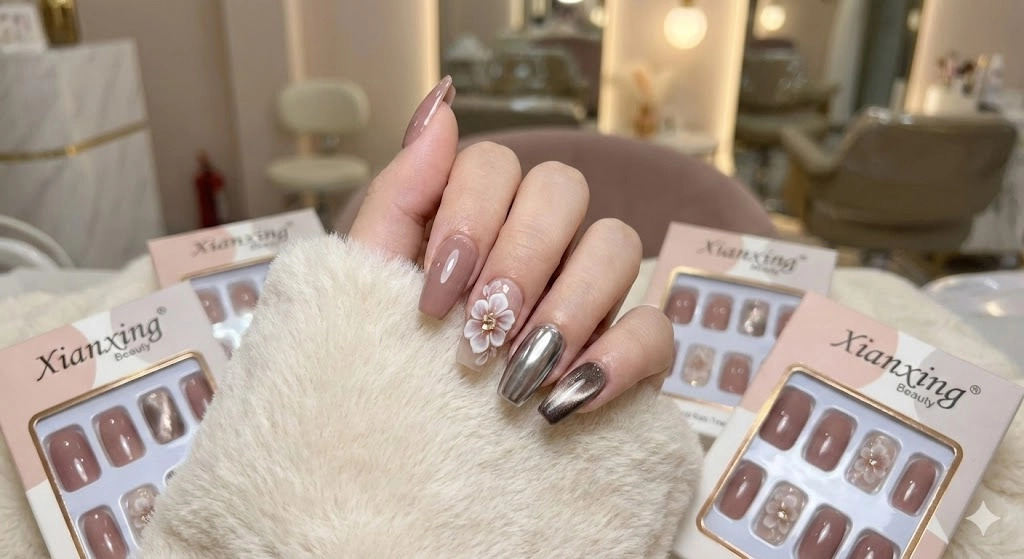
7 Red Flags to Avoid When Selecting a Wholesale Press On Nails Manufacturer

The Ultimate Guide to Choosing the Best Wholesale Press On Nails Manufacturer in 2026
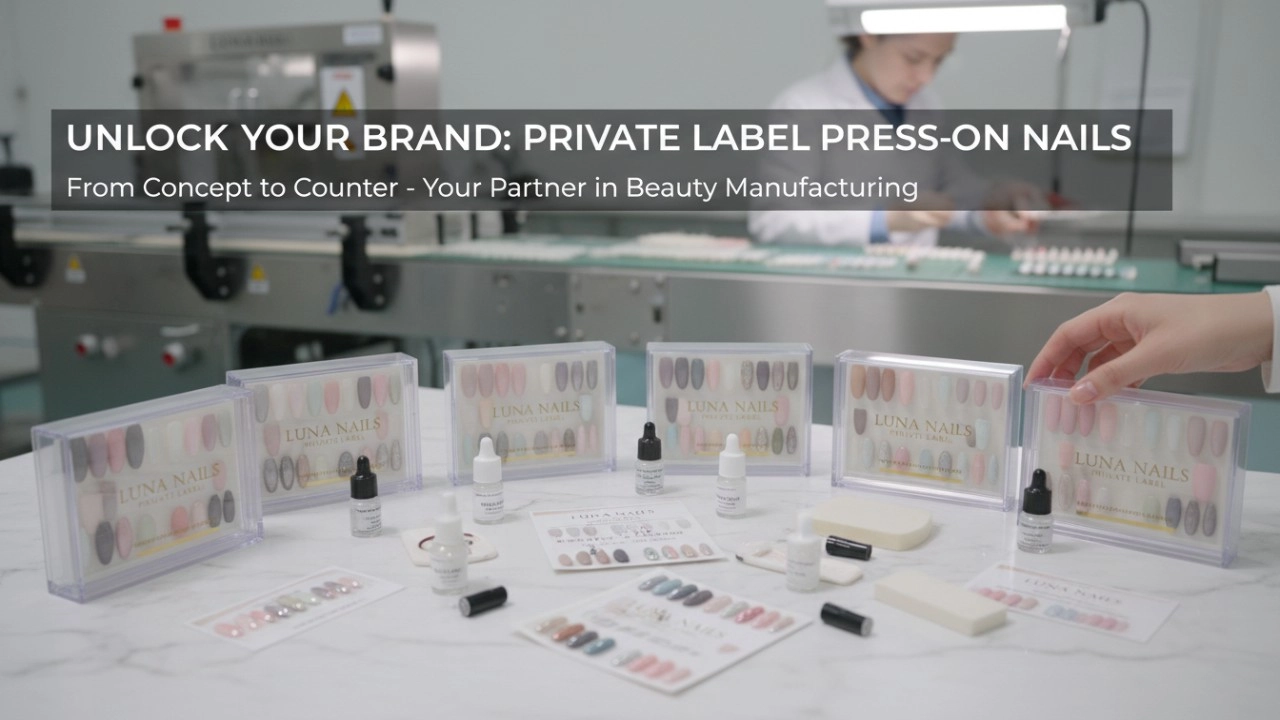
How to Scale Your Beauty Brand: Why Private Label Press On Nails Are the Highest-Margin Entry Point in 2026
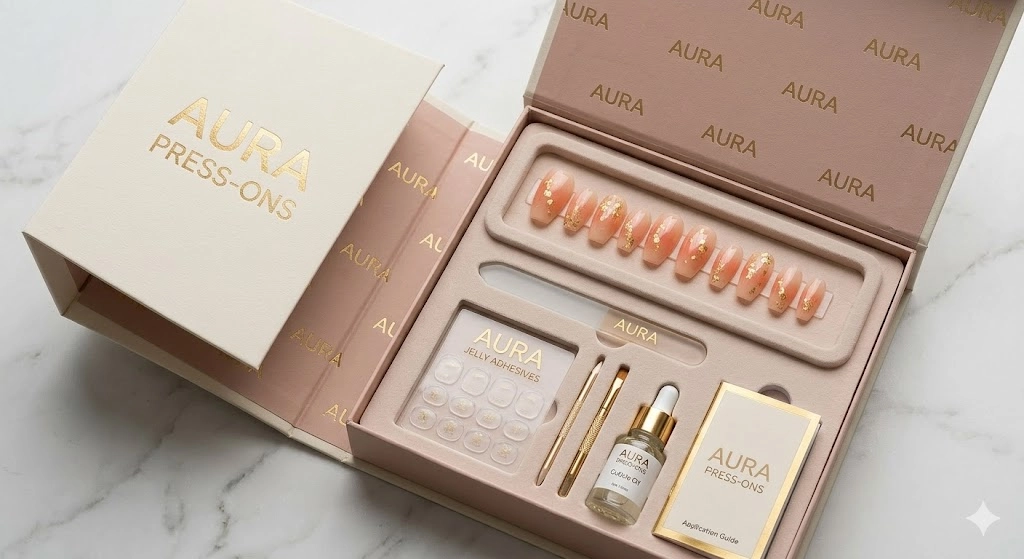
Why Partnering with Professional Press On Nails Manufacturers Boosts Your Brand Growth
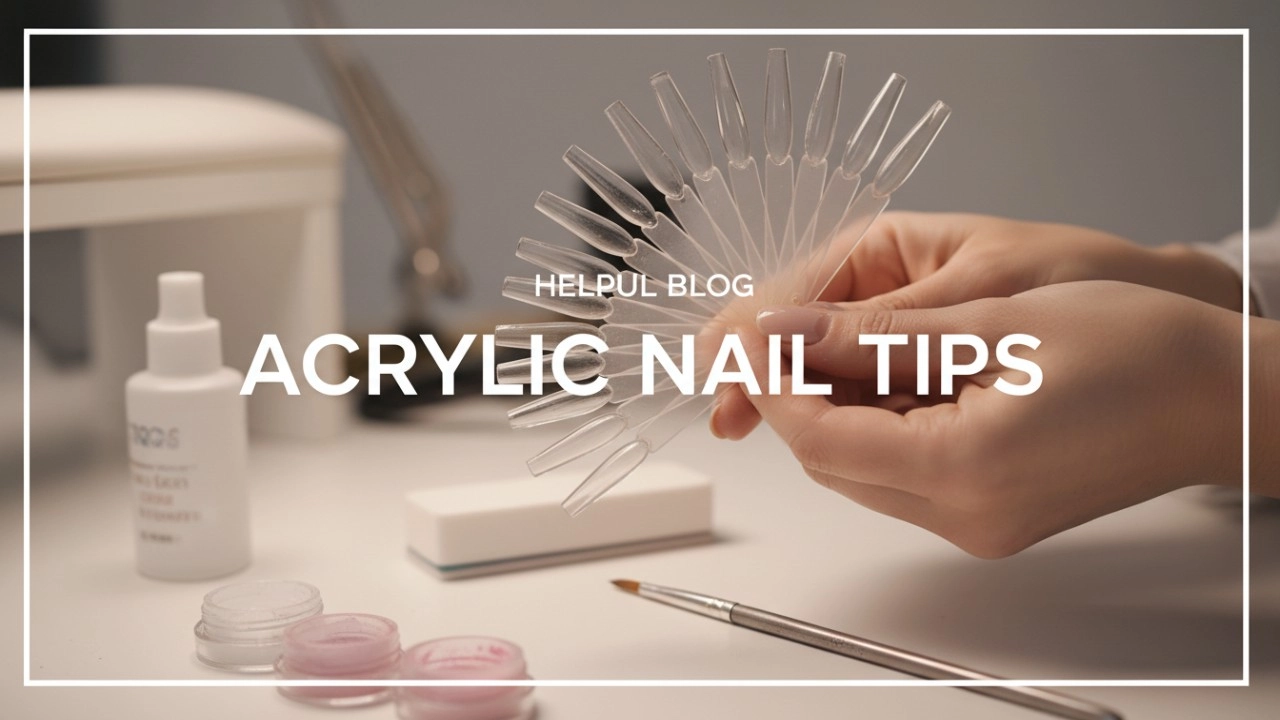
Acrylic Nail Tips vs. Soft Gel: Which is Best for Your Private Label Brand? (2026 Guide)
Remove armor
Is remover liquid safe for sensitive skin?
Some remover liquids, like those for makeup, are formulated to be gentle on sensitive skin. It's important to check for hypoallergenic or fragrance-free labels if you have sensitive skin. Nail polish removers with acetone can be drying, so those with dry skin should use them sparingly.
Drying Nail Glue
How do I use press-on nails glue?
1. Prep your nails: Clean and trim your nails, pushing back cuticles and removing any oils with an alcohol pad or nail prep wipe.
2. Apply glue: Apply a small amount of glue to your natural nail or the back of the press-on nail. Be careful not to use too much, as excess glue can spill over.
3. Press the nail on: Align the press-on nail with your natural nail and press it firmly for about 10–20 seconds to ensure a strong bond.
4. Repeat for all nails: Apply glue and press on each nail one by one, following the same process.
Agent
Being Xianxing’s nail agent has any rights? Can it develop lower-level agents?
Different levels of agents have different policies, and we strongly support our agents in developing lower-level agents.
About Toe Nails
Can I paint over toe press-on nails?
Yes! You can apply nail polish to press-on nails for a custom look. Just be aware that some brands of press-on nails might not take polish well or might start to peel off if the polish is too thick. If you're planning to paint them, try using a base coat to help the polish adhere better.
About Price and payment
How are your product prices determined?
Our pricing is influenced by several factors, such as the order quantity, customization requirements, and current market trends.
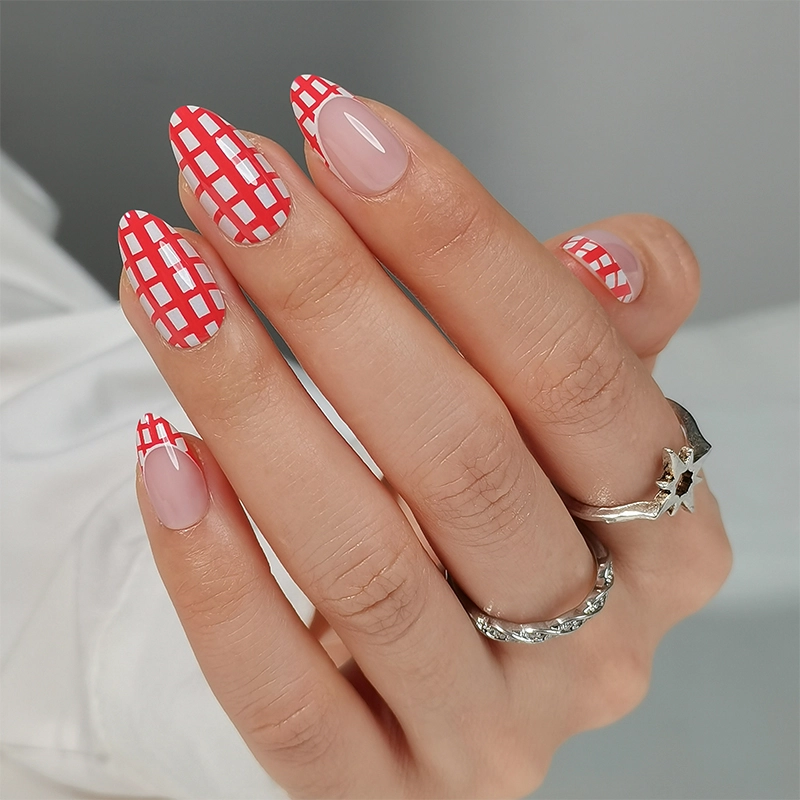
Wholesales Red French Nails Tips Checkered Soft Gel Nail Tips 32 Piece Set
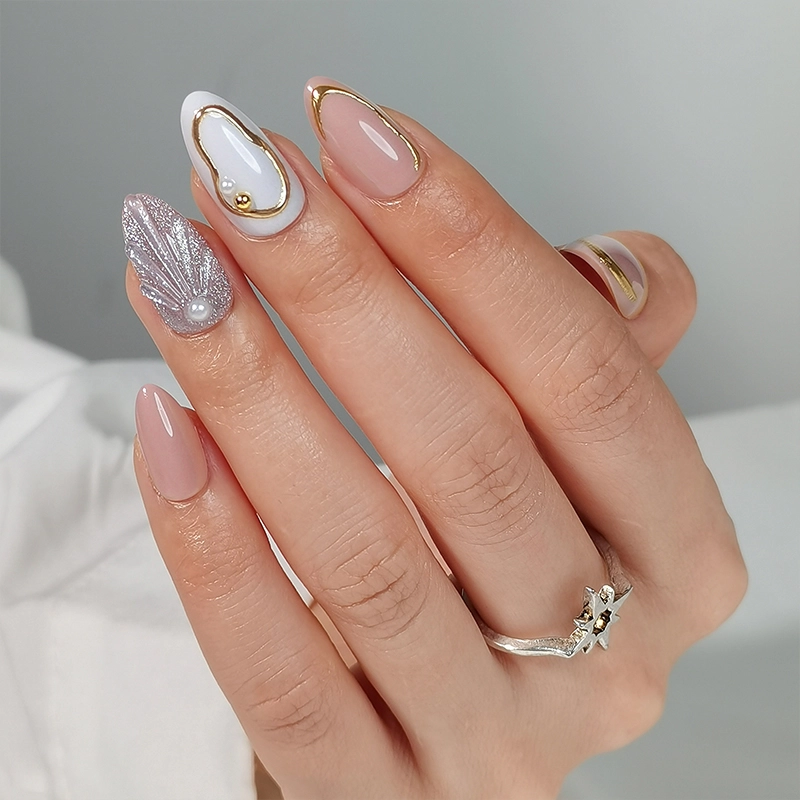
Wholesales Elegant Shell Inspired Soft Gel Wearable Nails for Seasonal Celebrations
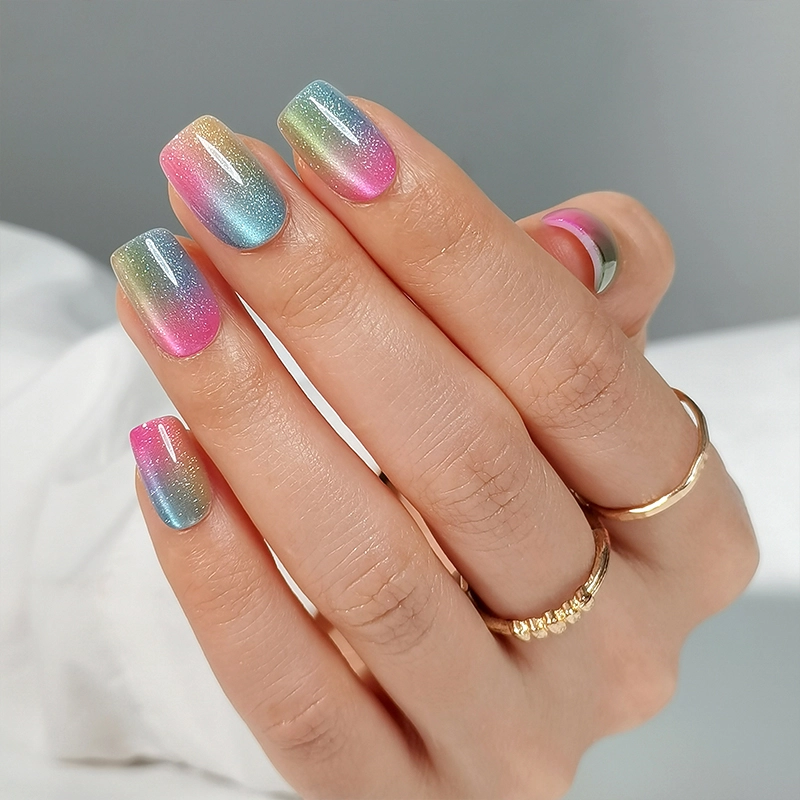
Custom Wholesale Gradient Cat Eye Soft Gel Wearable Fake Nails
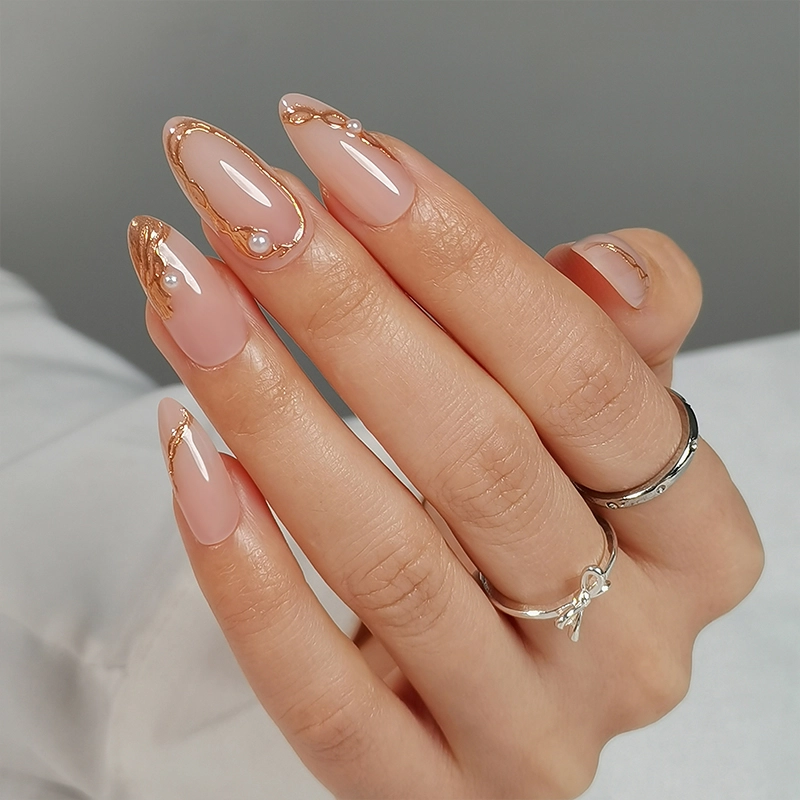
Wholesales Luxury Rhinestone Handmade Private Label Press On Nails Art Tips
Contact us
If you have press on nails products or customization needs, please feel free to contact from
below or via the contact information provided, we'll get back to you promptly within 24 hours.
By clicking 'Send Inquiry Now' I agree to XIANXING BEAUTY processing my personal data.
To see how to withdraw your consent, how to control your personal data and how we process it, please see our Privacy Policy and Terms of use.
Copyright © 2025 - XIANXING BEAUTY All Rights Reserved. Sitemap
Facebook
YouTube
Instagram
LinkedIn