
How to size custom press on nails? | Insights by Xianxing Beauty
- How to Size Custom Press-On Nails: A Practical Guide for Buyers
- 1. How should customers measure nails to get the correct press-on sizes?
- 2. How many sizes should a custom kit include and how many pieces per size?
- 3. What are acceptable fit tolerances and how to design for easy customization?
- 4. Which adhesives should be offered and how does choice affect sizing and retention?
- 5. What should buyers request from manufacturers when ordering custom press-on runs?
- Additional operational checklist for buyers
How to Size Custom Press-On Nails: A Practical Guide for Buyers
Accurate sizing is one of the top drivers of customer satisfaction for press-on nails. For retailers, private-label brands and manufacturers, understanding how to size custom press-on nails reduces returns, increases repeat purchases, and improves reviews. Below are five common buyer questions and professional answers that cover measurement methods, kit configuration, fit tolerances, adhesives, materials, QA and procurement tips.
1. How should customers measure nails to get the correct press-on sizes?
Give customers a simple, repeatable workflow and a printable sizing guide. Professional measurement steps:
- Measure each natural nail at the widest point (the sidewall to sidewall) using a clear ruler or printable sizing strip. Have customers measure in millimeters if possible for consistency.
- Do not measure at the cuticle. Measure where the artificial nail will sit on the natural nail bed—the widest usable area.
- Allow a small clearance at each sidewall (usually a hairline to 0.5 mm) so the press-on does not impinge on the skin or nail folds.
- Recommend customers select the nearest larger size if between sizes; an oversized tip is easier to file down than a tip that is too narrow.
- Offer a printable sizing chart or an on-site digital sizing tool (drag-and-drop nail overlays on a photo) to reduce measurement errors.
2. How many sizes should a custom kit include and how many pieces per size?
For most consumers and resellers, kits that balance coverage and inventory efficiency work best:
- Common kit format: 10 different sizes with 2 pieces per size = 20 nails (covers two hands). This is an industry-standard retail configuration because it matches most people’s left/right symmetry and allows for natural variation or replacement nails.
- For High Quality or pro sets, offer extended size arrays (12–24 sizes) to accommodate a wider range of nail widths and clients with atypical sizes.
- When supplying salons or professionals, provide bulk options with full size ranges and extra duplicates (e.g., 10 sizes with 6–10 pieces each) so technicians can select exact matches per client.
- Include at least two spare nails of common sizes (thumbs and index fingers) in retail kits; thumbs are most often needed as extras.
3. What are acceptable fit tolerances and how to design for easy customization?
Fit tolerance and ease-of-customization matter as much as raw measurements:
- Sidewall clearance: design tips to sit close to but not press the nail folds—usually a hairline to ~0.5 mm clearance per side is comfortable for most clients.
- Cuticle gap: leave a small gap (1–2 mm) from the cuticle so the press-on does not push against the cuticle or trap water. This gap also helps achieve a natural-looking grow-out.
- Length: offer lengths in short, medium and long within each shape. Many buyers prefer medium length for first-time users.
- Shapes: include a small selection of popular shapes (square/squared-oval, almond, coffin) because fit perception varies with curvature—some natural nails need slightly different widths depending on shape.
- Edge finishing: provide tips with a bit of overhang that can be trimmed and filed at home/trainers. An overhang of 1–2 mm at the free edge gives room for personal shaping.
4. Which adhesives should be offered and how does choice affect sizing and retention?
Adhesive selection impacts retention time, ease of removal and customer instructions:
- Glue (cyanoacrylate-based): provides the longest retention (many users get 7–14 days; high-quality application can extend to 2–3 weeks). Glue bonds work best when the press-on fits closely; a slightly oversized tip reduces glue squeeze-out but will need filing for a flush fit.
- Adhesive tabs: easier and cleaner to apply, ideal for repeat customers who swap designs frequently. Tabs generally give shorter retention (a few days up to a week, depending on activity and tab quality) but are lower-risk for nail damage.
- Hybrid systems: include a thin glue strip or primer combined with tabs for extended wear without full glue commitment.
- Label and include clear instructions for surface prep: gentle buff, degrease with alcohol wipe, and push back cuticles to improve adhesion and fit.
5. What should buyers request from manufacturers when ordering custom press-on runs?
When placing a custom manufacturing or private-label order, be specific about sizing, materials, QA and compliance:
- Size matrix and samples: request a physical sample set that includes all sizes and shapes. Verify fit on live nails when possible before large production runs.
- Materials: common materials are ABS plastic for injection-molded tips, acrylic systems (powder/liquid) for custom sculpted sets, and cured gel (UV/LED-cured) for designer press-ons. ABS is durable and cost-effective; gel and acrylic provide salon-grade finish and durability.
- Finish and print fidelity: ask for sample art on the same substrate and finish (gloss/matte/topcoats) to ensure color, opacity and pattern placement are accurate across sizes.
- Packaging and labeling: specify how many nails per kit, size labeling (e.g., S1–S10), instructions, safety/warning labels, adhesive included, and barcoding/UPC for retail. Provide dielines for custom boxes and inserts for sizing charts.
- Quality checks: define acceptance criteria for warpage, thickness uniformity, edge finishing, and color consistency. Ask for a small pre-shipment inspection sample batch and photos of production runs.
- Compliance and documentation: request material safety data sheets (MSDS/SDS) for adhesives and any chemicals used, and confirm compliance with destination-market labeling/regulatory requirements. For EU and UK buyers, check applicable cosmetic/product legislation; in the U.S., cosmetic products must comply with FDA regulations and truthful labeling rules.
- Lead times and MOQs: get written lead times for samples and production, and clarify minimum order quantities. For custom colors/prints, lead times are typically longer due to tooling and prepress steps.
Additional operational checklist for buyers
- Offer a conversion/return policy that accounts for sizing errors (e.g., include a replacement nail program or buyback on unopened kits).
- Provide clear how-to videos for measurement, application (tabs vs glue), and removal to reduce misuse and damage.
- Collect sizing data from customers (anonymized) to refine future kit size arrays based on actual demand.
- Consider a size-exchange program or single-size “mix-and-match” refills so customers can replace a single missing nail without buying a whole kit.
Conclusion: Accurate sizing is a mix of good measurement tools, the right kit configuration (size array and duplicates), thoughtful adhesive options, and rigorous supplier QA. For custom orders, always validate with physical samples, confirm materials and compliance documentation, and provide clear consumer instructions to maximize satisfaction and reduce returns.
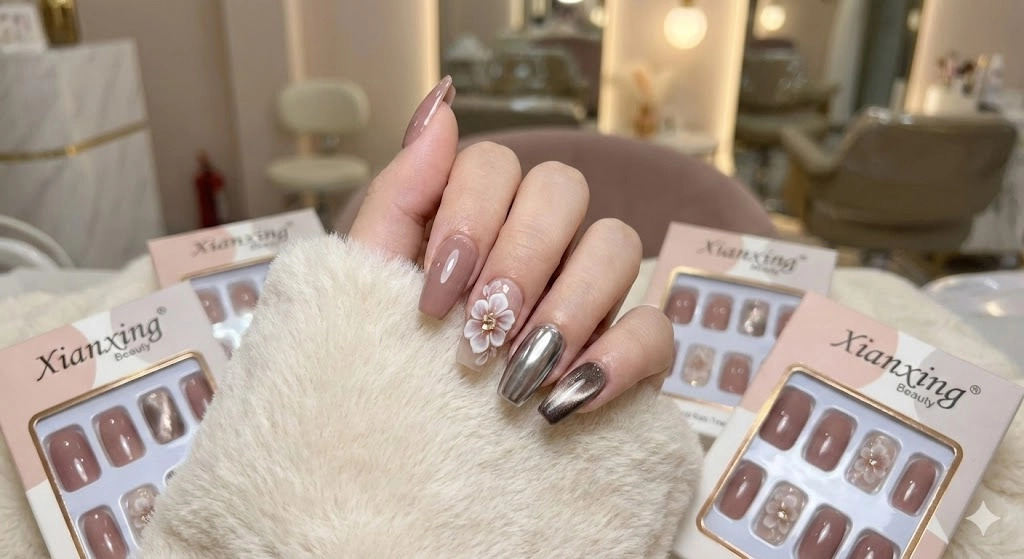
7 Red Flags to Avoid When Selecting a Wholesale Press On Nails Manufacturer
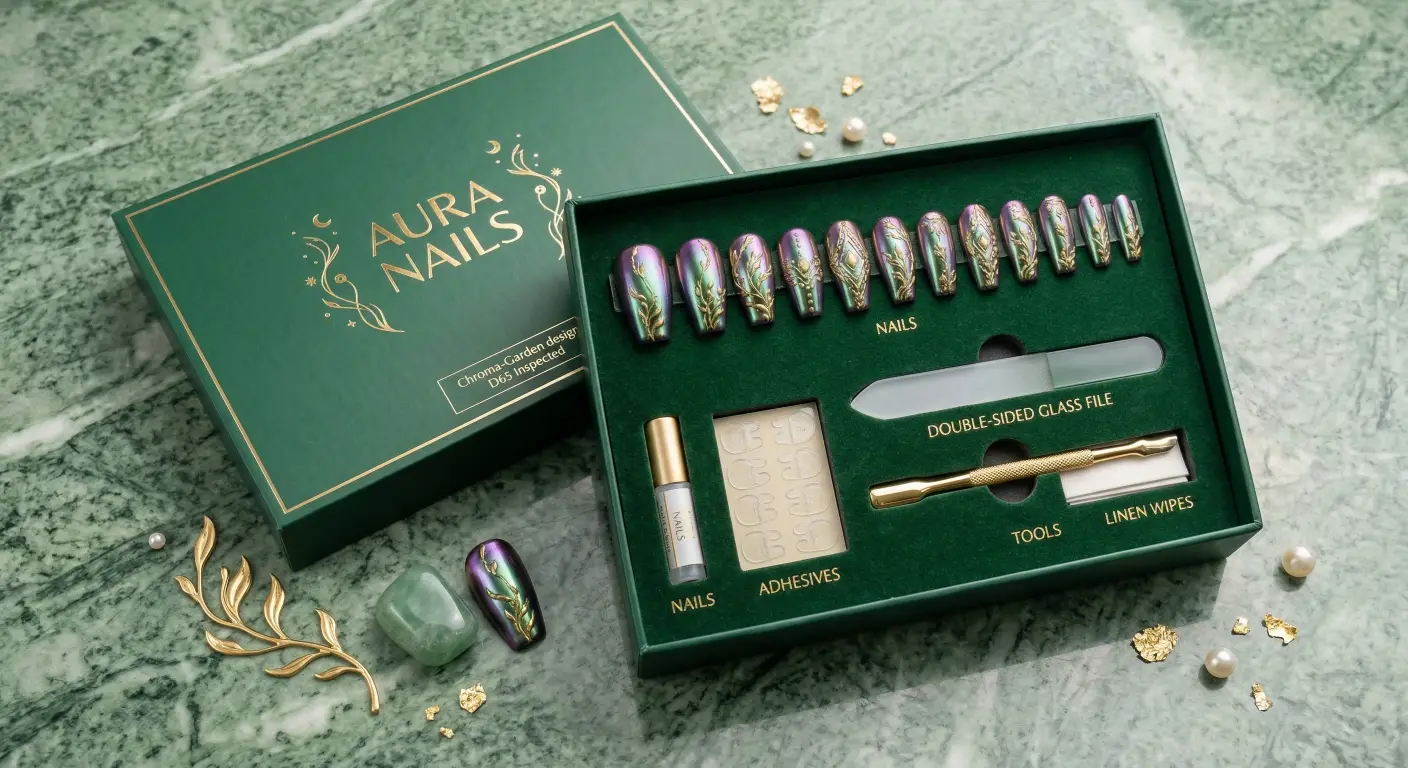
Quality Control: What to Expect from a Top-Tier Wholesale Press On Nails Manufacturer
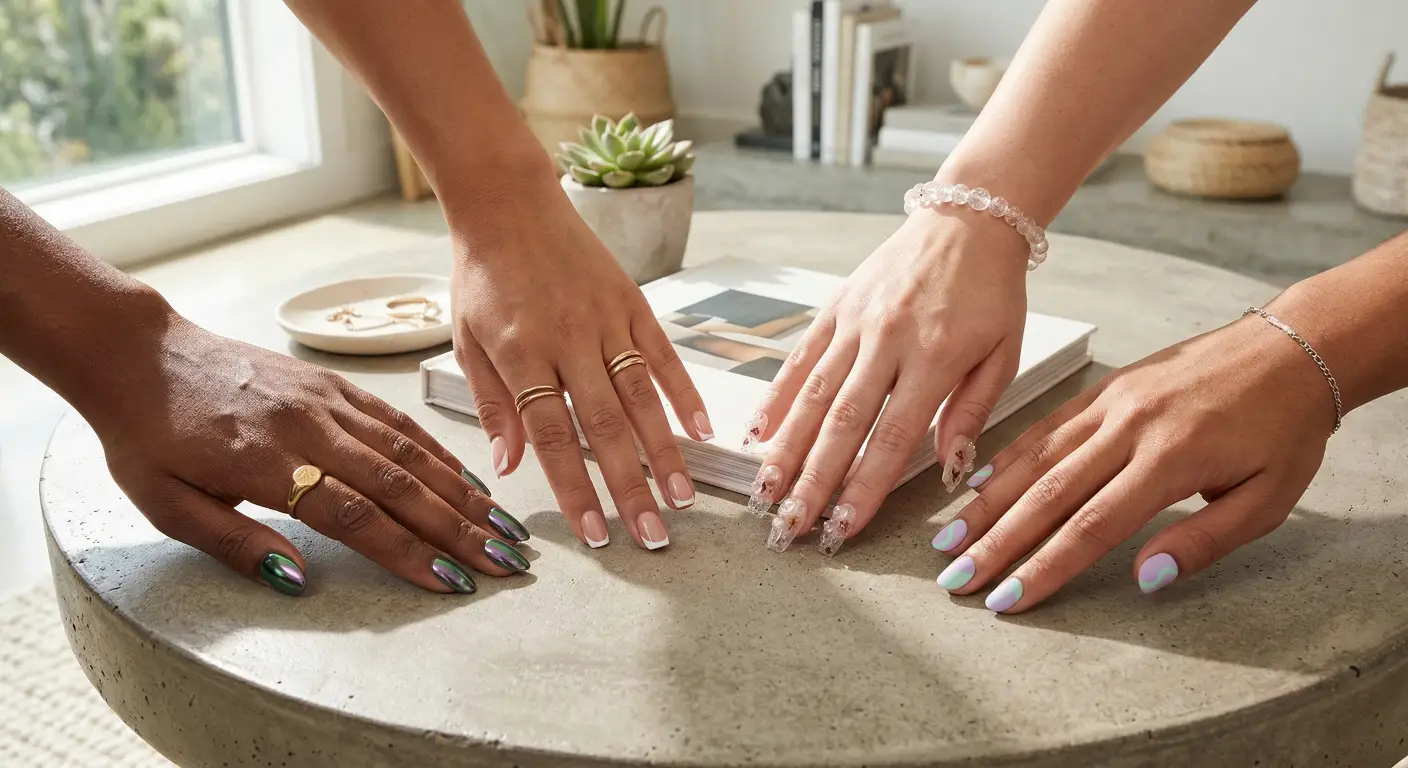
The Ultimate Guide to Choosing the Best Wholesale Press On Nails Manufacturer in 2026
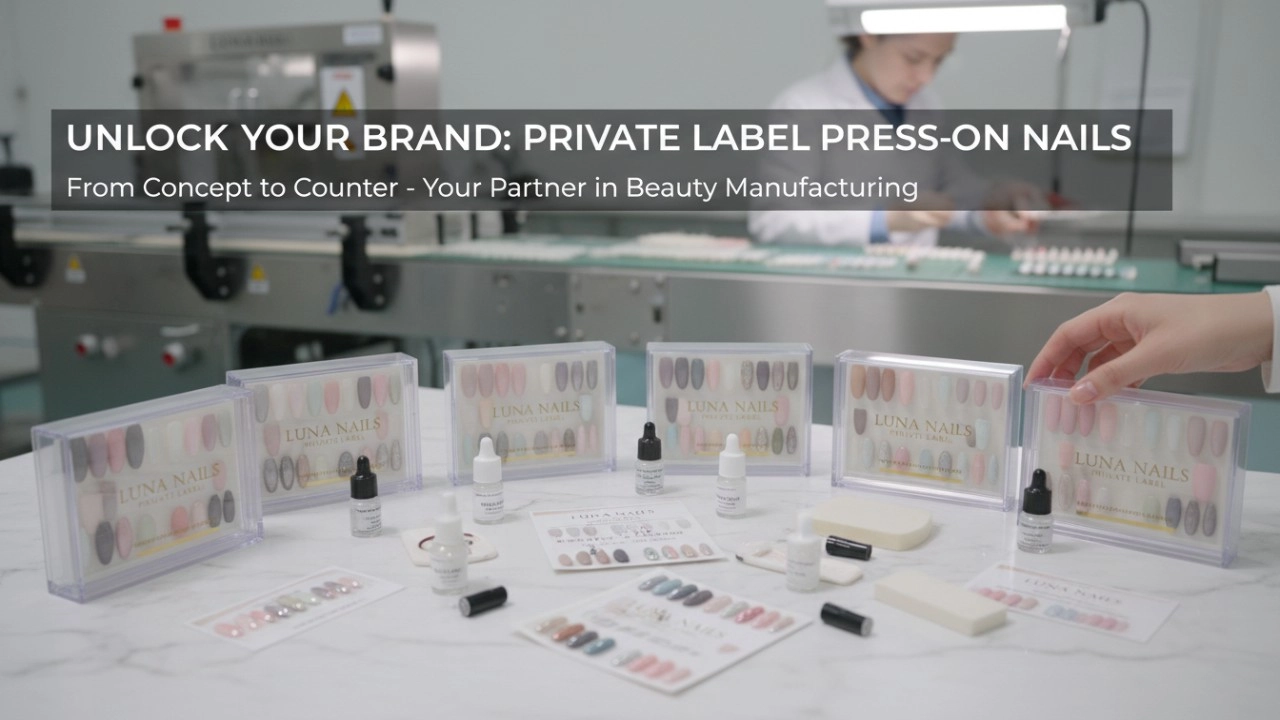
How to Scale Your Beauty Brand: Why Private Label Press On Nails Are the Highest-Margin Entry Point in 2026
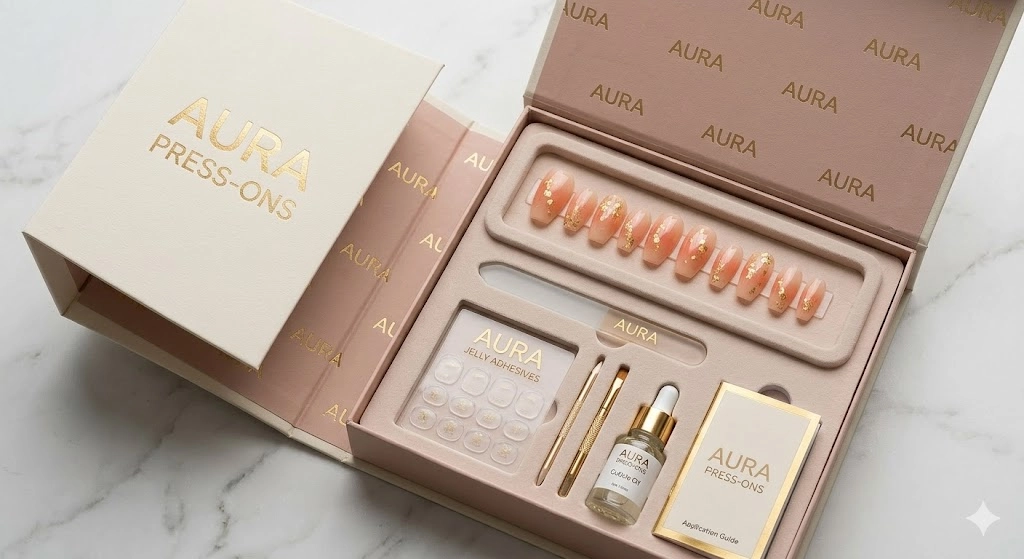
Why Partnering with Professional Press On Nails Manufacturers Boosts Your Brand Growth
Nail Dust Removal Brush
How do I clean a nail dust cleaning brush?
After use, clean the brush by gently washing it with warm water and mild soap. Make sure to rinse it thoroughly to remove any nail dust or other particles. Allow the brush to dry completely before using it again.
About shipping logistics
Can I use my own shipping agent or company?
Absolutely! We can coordinate delivery to a specified address using your preferred shipping agent.
About fashion printing
Do press-on nails damage natural nails?
When applied and removed properly, they should not damage your natural nails. Be sure to moisturize your nails and cuticles after removal.
Remove armor
Are remover pads better than liquid removers?
It depends on preference. Remover pads are convenient for quick, no-mess use, while liquid removers offer more control and can be customized (using a cotton ball or pad of choice).
Crystal spike
How long do Crystal Point Sticks and Wooden Sticks last?
Crystal Point Stick: With proper care, a crystal stick can last for many years. The tip will likely remain sharp and effective unless it’s dropped or damaged.
Wooden Stick: Wooden sticks typically last for a good amount of time but can wear down more quickly due to splintering, especially if used frequently.
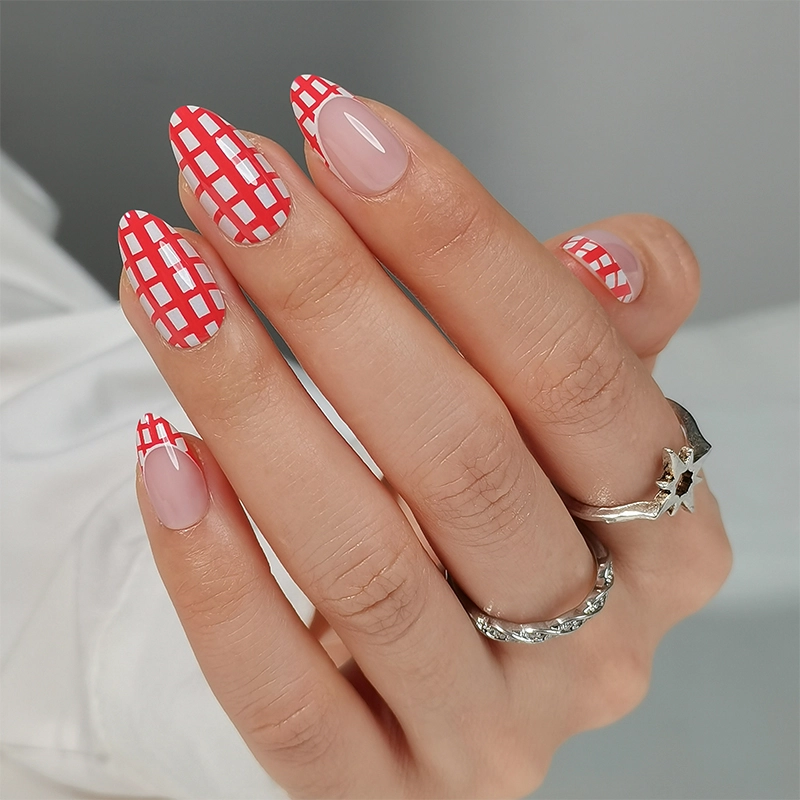
Wholesales Red French Nails Tips Checkered Soft Gel Nail Tips 32 Piece Set
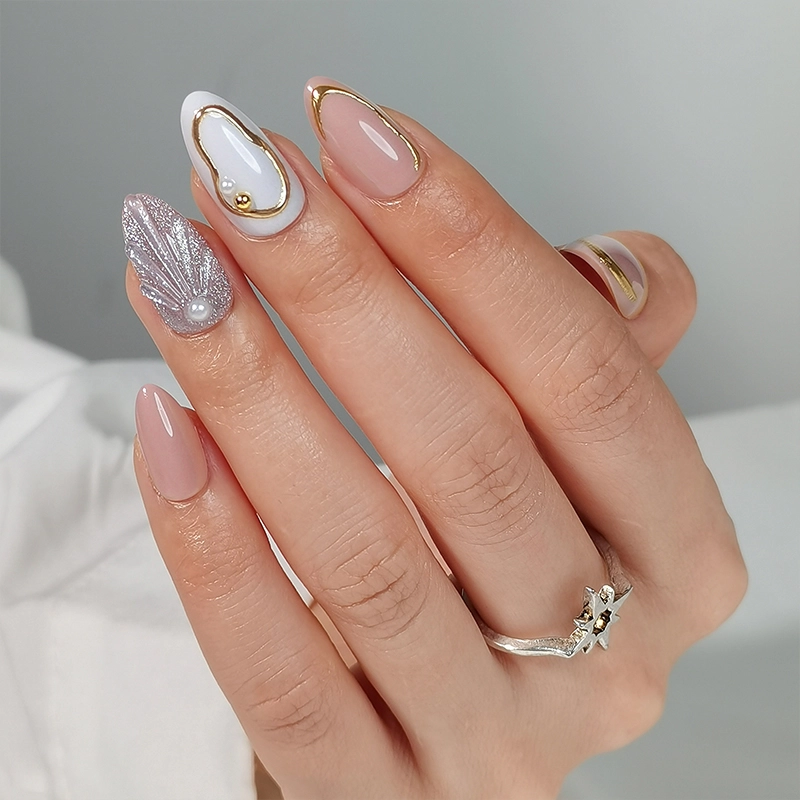
Wholesales Elegant Shell Inspired Soft Gel Wearable Nails for Seasonal Celebrations
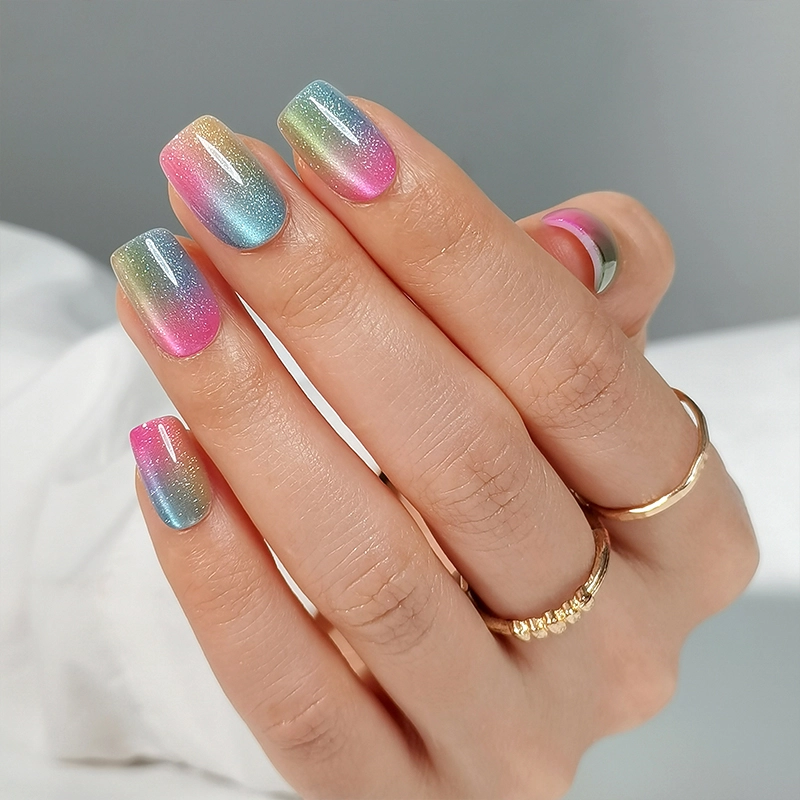
Custom Wholesale Gradient Cat Eye Soft Gel Wearable Fake Nails
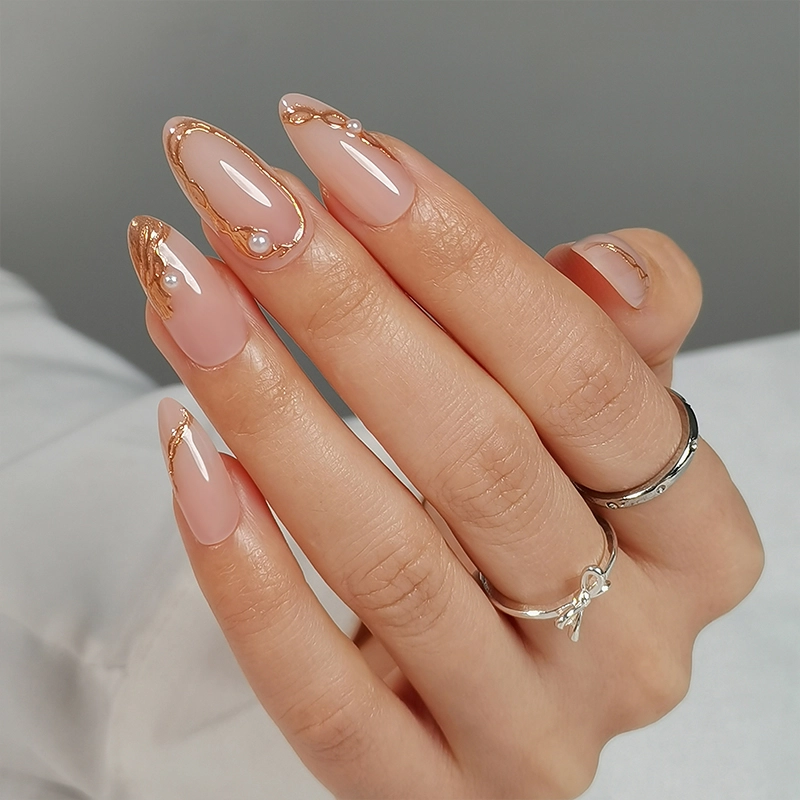
Wholesales Luxury Rhinestone Handmade Private Label Press On Nails Art Tips
Contact us
If you have press on nails products or customization needs, please feel free to contact from
below or via the contact information provided, we'll get back to you promptly within 24 hours.
By clicking 'Send Inquiry Now' I agree to XIANXING BEAUTY processing my personal data.
To see how to withdraw your consent, how to control your personal data and how we process it, please see our Privacy Policy and Terms of use.
Copyright © 2025 - XIANXING BEAUTY All Rights Reserved. Sitemap
Facebook
YouTube
Instagram
LinkedIn