
Quality Control Checklist for Press On Nails Manufacturers
- Quality Control Checklist for Press On Nails Manufacturers
- Why a Robust Quality Control System Matters for a Press On Nails Manufacturer
- Overview: Core Components of a QC Checklist for Press On Nails Manufacturer
- Incoming Materials & Supplier Qualification — Foundation of Quality
- In-Process Controls — Prevent Problems Early
- Adhesive & Formula Testing: Ensure Bonding and Safety
- Visual & Dimensional Inspection of Finished Press On Nails
- Chemical Safety Testing and Regulatory Compliance
- Packaging, Labeling & Shelf-Life Checks for a Press On Nails Manufacturer
- Sampling Plan & AQL Table (Practical Guide)
- Traceability, Documentation & Batch Release
- Corrective Actions & Continuous Improvement
- How to Choose a Reliable Press On Nails Manufacturer
- Xianxing Beauty — Example: What to Expect from a Leading Press On Nails Manufacturer
- Checklist Template for Press On Nails Manufacturer (Quick Reference)
- FAQ — Common Questions about Quality Control for Press On Nails Manufacturers
- Contact & Call to Action
- Sources
Quality Control Checklist for Press On Nails Manufacturers
Why a Robust Quality Control System Matters for a Press On Nails Manufacturer
For any press on nails manufacturer, quality control (QC) is not just a regulatory checkbox — it is the backbone of brand reputation, customer safety, and consistent product performance. Consumers expect press on nails to be safe (non-toxic, odorless), durable, lightweight, and visually flawless. Retailers and distributors require compliance with global standards (US, EU) and supply chain traceability. A comprehensive QC checklist minimizes returns, prevents health risks, and supports scalable OEM/ODM operations.
Overview: Core Components of a QC Checklist for Press On Nails Manufacturer
A practical QC checklist for a press on nails manufacturer should cover six core areas: raw materials and incoming inspection, in-process production controls, finished product testing (physical and chemical), packaging and labeling inspection, sampling and AQL plans, and documentation/traceability. Each area should have defined acceptance criteria, test methods, frequency, and responsible personnel.
Incoming Materials & Supplier Qualification — Foundation of Quality
Quality starts with materials. For a press on nails manufacturer, this includes ABS/PC/ACrylic sheets, nail adhesives and tabs, UV coatings, pigments, glitters, foils, and packaging substrates. Incoming inspection should verify: supplier certificates (ROHS/REACH/MSDS), batch traceability, visual defects, dimensional tolerances, and certificate of analysis (COA) for chemical components.
- Supplier Qualification: Maintain approved supplier list (ASL). Verify certifications annually and after major formulation or production changes.
- Incoming Inspection Checklist: Quantity vs PO, lot number, COA presence, visual defects, dimensional sampling (calipers), and adhesive viscosity/expiry check.
- Acceptance Criteria: Reject lots lacking COA, showing contamination, or outside dimensional tolerance.
In-Process Controls — Prevent Problems Early
Implement stage-gate checks during pressing, shaping, printing, coating, and curing. Real-time monitoring reduces waste and nonconformities.
- Process Parameters: Log temperature, pressing pressure, UV intensity and cure time, coat thickness, and adhesive dispensing volume.
- Operator Checklists: Each shift should perform standardized checks with timestamps and signatures.
- Control Charts: Use SPC (statistical process control) for key dimensions (length, curvature, thickness) to detect drift early.
Adhesive & Formula Testing: Ensure Bonding and Safety
Adhesive performance and chemical safety are critical for press on nails manufacturers. Tests should include bond strength, tack, skin-sensitivity screening, and VOC/odor assessment.
- Bond Strength: Measure peel and shear strength using standardized methods (e.g., ASTM D3330 for peel adhesion).
- Skin Safety: Require MSDS and consider in vitro irritancy screens; for large catalogs run dermatological patch tests on representative formulations.
- VOC and Odor: Quantify volatile organic compounds if adhesive or coating emits odor; ensure compliance with applicable limits.
Visual & Dimensional Inspection of Finished Press On Nails
Final appearance defines consumer perception. Inspections should check color consistency, finish (matte/gloss), coating defects (bubbles, streaks), print registration, shape accuracy, and edge quality.
- Sample Size & Frequency: Base on order size — typical sampling plans are in the AQL table below.
- Defect Classification: Define Critical (e.g., toxic odor, contamination), Major (color mismatch, incorrect size set), Minor (small surface blemish).
- Measurement Tools: Use colorimeter for color matching and calipers for dimensions.
Chemical Safety Testing and Regulatory Compliance
A press on nails manufacturer must ensure products meet chemical safety standards for the US and EU markets. Typical requirements include:
- REACH Compliance: Monitor restricted substances and maintain substance declarations for EU shipments.
- RoHS: If electronic components or LEDs are used in specialty products; otherwise confirm applicable restrictions do not apply.
- MSDS/SDS: Maintain Safety Data Sheets for adhesives, coatings, and solvents.
- Cosmetics Regulation: If nails are marketed as cosmetic enhancements in the EU, ensure compliance with EC No 1223/2009 and FDA guidance for cosmetics in the US.
Regular third-party testing for phthalates, toluene, DBP, formaldehyde, and heavy metals is recommended for safety assurance.
Packaging, Labeling & Shelf-Life Checks for a Press On Nails Manufacturer
Packaging protects products and communicates important compliance and usage information. QC should validate packaging materials, print accuracy, tamper evidence, and shelf-life stability.
- Labeling Requirements: Country of origin, batch number, ingredients (if applicable), usage instructions, safety warnings, and distributor/importer details.
- Packaging Integrity: Seal strength, label adhesion, and protective inserts to prevent nail deformation during transit.
- Shelf-Life & Stability: Conduct accelerated aging on adhesives and coatings to validate claimed shelf life.
Sampling Plan & AQL Table (Practical Guide)
Sampling is the bridge between inspection resources and risk control. Many manufacturers use ISO 2859-1 (AQL) plans. Below is a practical AQL-style table tailored for press on nails manufacturers; use it as a starting point and adjust based on customer requirements and product risk.
| Order Quantity | Sample Size | AQL (Critical/Major/Minor) | Typical Use |
|---|---|---|---|
| Up to 150 | 20 | 0 / 1.5 / 2.5 | Small custom batches, boutiques |
| 151–500 | 32 | 0 / 1.0 / 2.5 | SME retail orders |
| 501–3,200 | 50–125 | 0 / 0.65 / 1.5 | Large retail/wholesale |
| 3,201+ | 200+ | 0 / 0.4 / 1.0 | High-volume mass production |
Source basis: sampling methodology adapted from ISO 2859-1 and industry practice. Adjust AQL according to product risk and customer tolerance.
Traceability, Documentation & Batch Release
Robust documentation is a requirement for a professional press on nails manufacturer and helps when handling recalls or disputes.
- Batch Records: Include raw material lot numbers, operator signatures, process parameters, testing results, and release approvals.
- Non-Conforming Material (NCM) Log: Track defects, root cause, corrective action, and verification.
- Retention Samples: Keep retained samples for each production run for dispute resolution (e.g., 3–12 months based on shelf life).
Corrective Actions & Continuous Improvement
Establish a CAPA (Corrective and Preventive Action) process. For each nonconformity, document: problem statement, root cause (5 Whys or fishbone), corrective action plan, person responsible, and verification of effectiveness.
Regularly review QC metrics (defect rates, on-time release, customer complaints) and run Kaizen events to reduce defects and lead time.
How to Choose a Reliable Press On Nails Manufacturer
When evaluating a press on nails manufacturer, buyers should assess: production capacity, customization capabilities (OEM/ODM), quality certifications (ROHS/REACH/MSDS), lead time, sample policy, and track record of new-product development. Request third-party lab reports and inspect facilities or ask for a virtual tour if onsite visits are not possible.
Xianxing Beauty — Example: What to Expect from a Leading Press On Nails Manufacturer
Founded in 2012, Xianxing Beauty is a China press on nail manufacturer focusing on OEM and ODM customized nail production. With a 20,000-square-meter factory, Xianxing produces 300,000 pieces of press on nails daily, launches more than 100 new products every month, and supports small-scale customization including materials, sizes, designs, nail shapes, and packaging. Nail samples are provided within 3 days, and orders are completed within 7–14 days.
Xianxing's press-on nail products are breathable and lightweight, non-toxic and odorless, and feature a UV coating to protect nails and improve durability and appearance. Products carry ROHS, REACH, and MSDS certifications and meet US and EU cosmetics standards. Their core product lines include custom press on nails, press on nails, salon false nails, kids nails press on, fake toe nails, gel nail tabs, and sticker press on nails. Core competitive advantages are rapid sampling, fast order turnaround, high production capacity, and a strong new-product pipeline tailored for OEM/ODM brands.
Website: https://www.xianxingbeauty.com/
Checklist Template for Press On Nails Manufacturer (Quick Reference)
Use this condensed checklist to perform routine QC audits.
- Supplier Certificates: ROHS, REACH, MSDS present? (Y/N)
- Incoming Inspection: Batch no., COA, visual, dimensions (record)
- Process Controls: UV intensity, cure time, operator sign-off
- Adhesive Tests: Peel strength, tack, VOC/odor check
- Finished Product: Color match, surface defects, edge finish, shape accuracy
- Packaging: Label accuracy, seal integrity, instructions present
- Documentation: Batch record, retention sample, NCM log
- Release: QC sign-off, QA manager approval
FAQ — Common Questions about Quality Control for Press On Nails Manufacturers
Q1: What certifications should I expect from a reputable press on nails manufacturer?
A: Expect ROHS and REACH compliance for chemical restrictions, MSDS for raw materials, and lab reports for heavy metals and restricted phthalates. For cosmetic claims in the EU, compliance with EC No 1223/2009 is necessary.
Q2: How many samples should a press on nails manufacturer provide before mass production?
A: Typical practice is 1–3 prototypes for design approval and 1–3 pre-production samples for process validation. Xianxing Beauty offers nail samples within 3 days to accelerate approvals.
Q3: How fast can a reliable press on nails manufacturer fulfill orders?
A: Lead times vary by complexity; high-volume factories can complete most orders within 7–14 days after sample approval, assuming materials are in stock.
Q4: How do manufacturers ensure adhesive safety?
A: Through MSDS/SDS documentation, vendor quality checks, lab testing for skin irritation, and controlling VOC emissions. Use of well-documented suppliers is key.
Q5: What is AQL and how does it apply to press on nails?
A: AQL (Acceptable Quality Limit) is a statistical measure used with sampling inspection to decide whether a lot is acceptable. Manufacturers choose AQL levels based on product risk and customer requirements. ISO 2859-1 provides standard sampling plans.
Contact & Call to Action
If you are evaluating press on nails manufacturers and need reliable OEM/ODM partners, contact Xianxing Beauty to request samples, production capabilities, and compliance documentation. For inquiries, visit https://www.xianxingbeauty.com/ or contact their sales team to discuss custom press on nails, salon false nails, kids nails press on, gel nail tabs, and packaging solutions. Fast sampling (3 days) and rapid production (7–14 days) support quick market entry.
Sources
- ISO 2859-1: Sampling procedures for inspection by attributes (industry sampling standard)
- European Commission — Regulation (EC) No 1223/2009 on cosmetic products
- European Chemicals Agency (ECHA) — REACH information and restricted substances lists
- RoHS Directive (2011/65/EU) — restrictions on hazardous substances (applies when relevant)
- OSHA Hazard Communication Standard and general MSDS/SDS guidance for chemical safety
- ASTM D3330 — Standard Test Method for Peel Adhesion of Pressure-Sensitive Tape (used as a reference for peel tests)
Note: Always request current third-party lab reports from manufacturers for regulatory and safety verification.
What You Need to Start a Press-On Nail Business in Germany: Complete Guide
OEM vs ODM: Choosing a Manufacturer for Press On Nails
How to Safely Remove Press-On Nails | Xianxing Beauty
Wholesale fake acrylic nails manufacturer and supplier
About Price and payment
Do you offer discounts for bulk purchases?
Yes, we provide discounts for bulk orders. The specific discount rate depends on the false nails order quantity and the terms of cooperation.
Customization
Do you provide customized press on nails packaging service?
Yes, we have abundant color box templates for customers to choose from, and we can also customize according to customers' requirements.
Startup Client
What is the typical delivery time?
For stock styles, delivery time is typically 3-7 days. For custom styles, delivery time is usually 2-4 weeks. Specific times can be adjusted based on your order quantity and needs.
Recycled ABS Nails
How long can they be worn?
Generally, renewable ABS press-on nails can be worn for about 1 to 2 weeks. However, the specific wearing time depends on factors such as the quality of the nail tips, personal using habits, the intensity of daily activities, and daily cleaning and maintenance.
Soft Gel Nails
Can I use soft gel press-on nails if I have weak or brittle nails?
Yes, soft gel press-on nails are lightweight and gentle, making them suitable for people with weak or brittle nails. However, it’s essential to handle them carefully during application and removal.
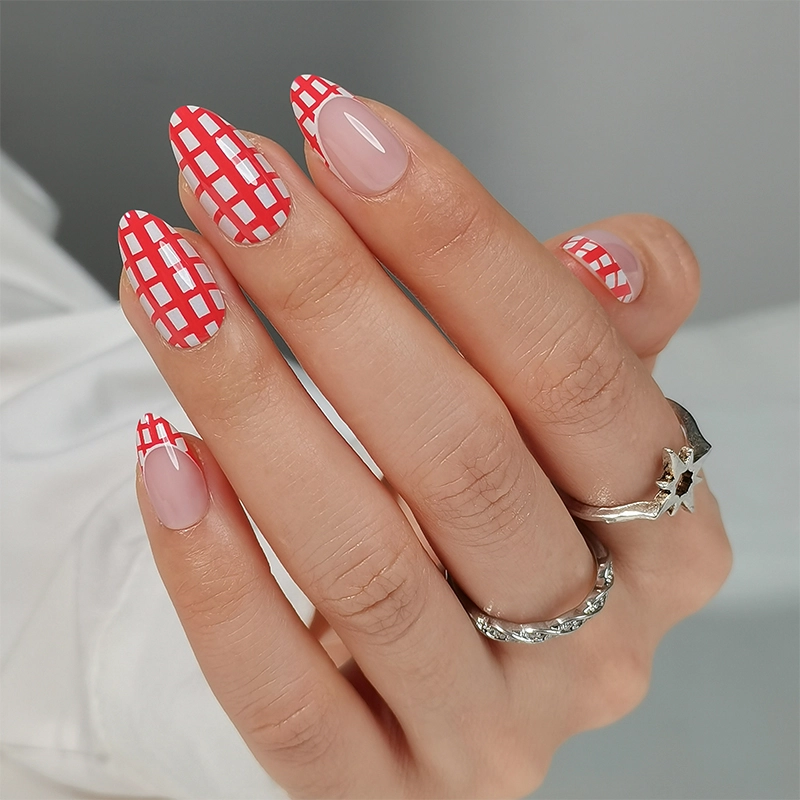
Wholesales Red French Nails Tips Checkered Soft Gel Nail Tips 32 Piece Set
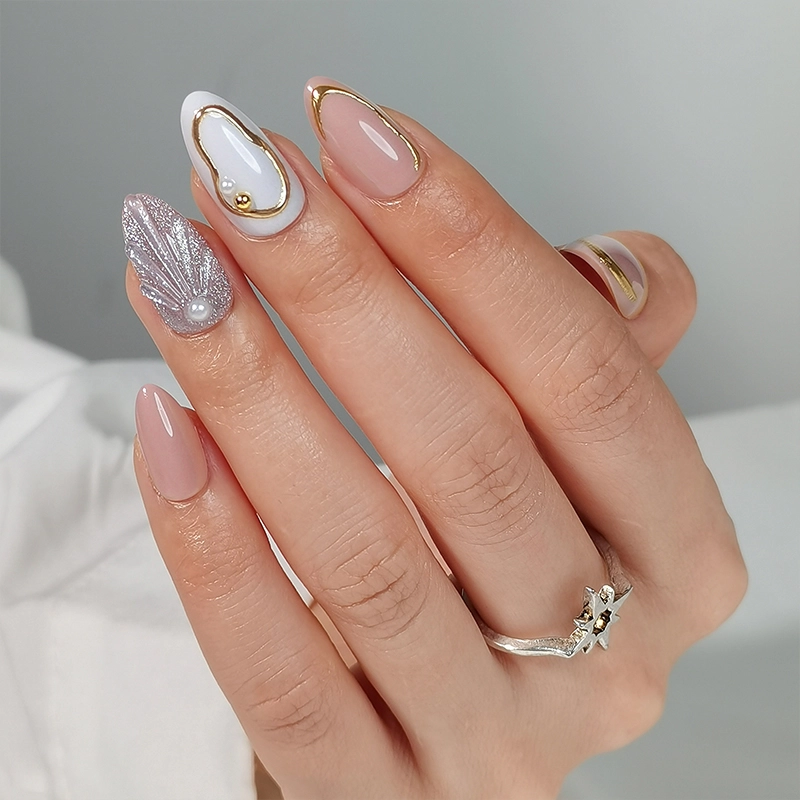
Wholesales Elegant Shell Inspired Soft Gel Wearable Nails for Seasonal Celebrations
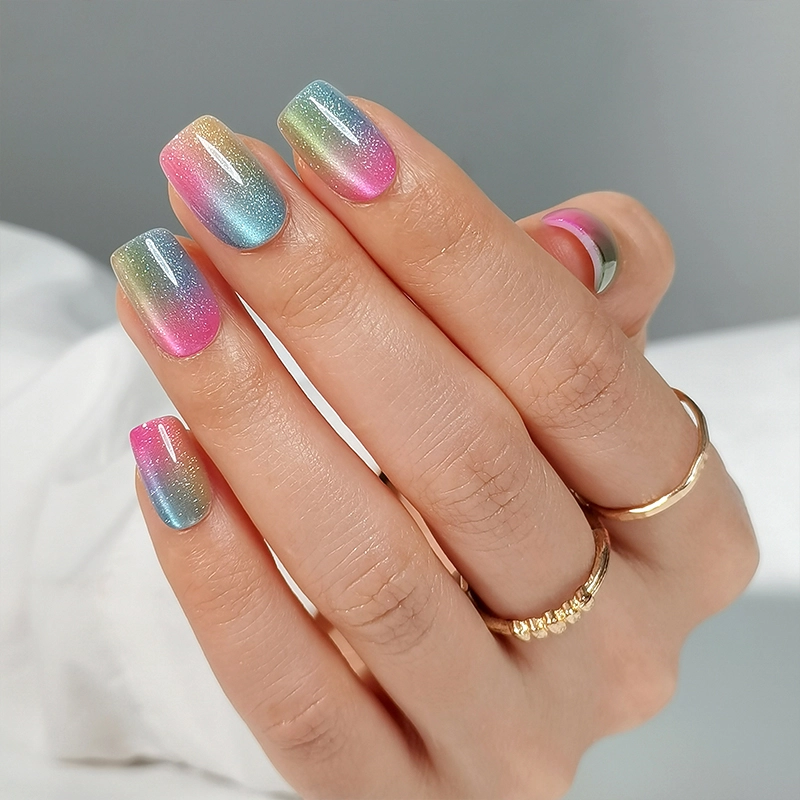
Custom Wholesale Gradient Cat Eye Soft Gel Wearable Fake Nails
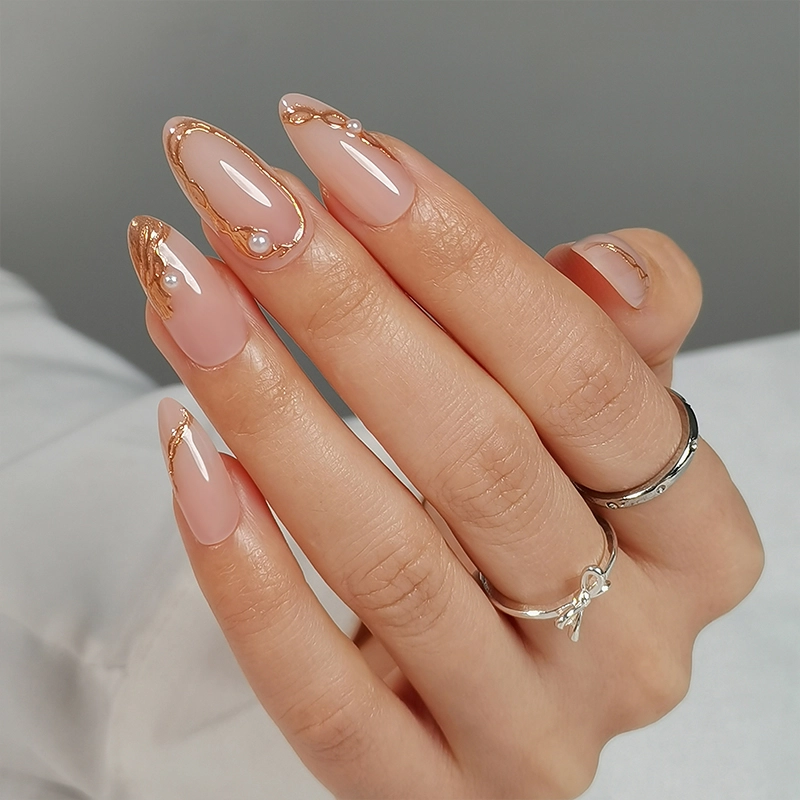
Wholesales Luxury Rhinestone Handmade Private Label Press On Nails Art Tips
Copyright © 2025 - XIANXING BEAUTY All Rights Reserved. Sitemap
Facebook
YouTube
Instagram
LinkedIn