
Sustainable Materials for Press On Nail Manufacturers
- Why material choice matters for press-on nail manufacturers
- Overview: sustainability drivers for a press on nails manufacturer
- Key sustainability considerations for a press on nails manufacturer
- Common materials used and sustainable alternatives for press on nails manufacturer
- Adhesives, tabs and coatings: options for a sustainable press on nails manufacturer
- Practical adhesive options
- Certifications, testing and regulatory requirements for a press on nails manufacturer
- Supply chain and lifecycle considerations for a press on nails manufacturer
- KPIs to track
- Packaging and circular design strategies for a press on nails manufacturer
- Cost-performance trade-offs: realistic choices for scalable OEM/ODM production by a press on nails manufacturer
- Implementation roadmap for a press on nails manufacturer
- Case highlight: Xianxing Beauty — sustainable scale in press on nails manufacturing
- Checklist: what a press on nails manufacturer needs to start
- Conclusion: balancing sustainability, performance and scale for press on nails manufacturer
- FAQ — Frequently Asked Questions for press on nails manufacturer
- 1. What materials are safest and most sustainable for press-on nails?
- 2. Can press-on nails be composted or recycled?
- 3. How can a press on nails manufacturer prove product safety to buyers?
- 4. Do sustainable materials increase production costs for a press on nails manufacturer?
- 5. What packaging improvements should a press on nails manufacturer prioritize?
- 6. How quickly can I test new sustainable materials with an OEM/ODM partner?
- References
Why material choice matters for press-on nail manufacturers
For any press on nails manufacturer, material selection is the single biggest determinant of product performance, regulatory compliance, cost structure, and environmental footprint. Consumers increasingly demand products that are lightweight, durable, non-toxic and environmentally responsible. This guide explains sustainable material options, trade-offs, certifications, and actionable steps manufacturers can take to balance quality, compliance and sustainability without compromising scale or profitability.
Overview: sustainability drivers for a press on nails manufacturer
Market and regulatory pressures push press on nails manufacturers to reduce hazardous substances, improve recyclability, and lower lifecycle emissions. Retailers and distributors also expect supplier transparency on certifications such as REACH, ROHS and MSDS documentation. Beyond compliance, using sustainable materials can reduce waste in factories, lower shipping weights, and open new channels with eco-conscious retailers and direct-to-consumer brands.
Key sustainability considerations for a press on nails manufacturer
- Material toxicity and chemical restrictions (REACH / ROHS / FDA visibility).
- End-of-life behavior (recyclable vs. biodegradable vs. persistent microplastics).
- Manufacturing energy intensity and VOC emissions during curing/painting.
- Supply chain traceability and availability for scaled OEM/ODM production.
- Packaging and single-use components (nail tabs, glue packets, inserts).
Common materials used and sustainable alternatives for press on nails manufacturer
Traditional press-on nails are made from polymers chosen for strength, formability and polishability. Below is a practical comparison of commonly used materials and greener alternatives so a press on nails manufacturer can make design and purchasing decisions.
| Material | Performance | Sustainability Pros | Limitations |
|---|---|---|---|
| ABS (Acrylonitrile Butadiene Styrene) | Good impact resistance, easily thermoformed | Widely recyclable in some streams; mature supply chain | Fossil-based; not biodegradable; additives may complicate recycling |
| PMMA / Acrylic (Polymethyl Methacrylate) | High gloss finish, excellent polish adhesion | Durable—longer product life can reduce replacement frequency | Not readily biodegradable; for some applications limited recyclability |
| Cellulose Acetate | Good finish; more bio-based (from cellulose) | Partially bio-based; better end-of-life profile than ABS in some conditions | Requires careful processing; sensitivity to moisture and heat |
| PLA / Other bioplastics (polylactic acid) | Can be formed and finished with coatings | Bio-based and industrially compostable under controlled conditions | Lower heat resistance; industrial composting only; sourcing variability |
| Recycled plastics (rABS, rPMMA) | Similar to virgin polymers when properly processed | Reduces fossil feedstock use and waste; circularity benefits | Quality consistency and color control challenges; supply limits |
| Water-based or low-VOC UV coatings | Protective finish, UV resistance | Lower VOC emissions during production and safer worker exposure | May have differing cure profiles; initial cost higher |
Sources for material properties: industry polymer guides and supplier datasheets are essential. For regulatory context, manufacturers should cross-check substance restrictions with ECHA (REACH) and regional ROHS/chemicals frameworks (see references).
Adhesives, tabs and coatings: options for a sustainable press on nails manufacturer
Beyond the nail blank, adhesives and coatings determine user experience and environmental impact. Traditional single-use cyanoacrylate glue packets create waste and may contain solvents. Alternatives include removable water-based adhesive tabs, reusable adhesive pads and lower-VOC glue formulations designed to meet MSDS safety standards. A press on nails manufacturer should test adhesive tack, shelf stability, and regulatory compliance (MSDS documentation) before wide deployment.
Practical adhesive options
- Gel nail tabs (silicone or hydrocolloid-based) — reusable or compostable options exist.
- Water-based adhesive strips — lower VOC and easier disposal.
- Reduced-solvent cyanoacrylates with clear MSDS and worker protections.
Certifications, testing and regulatory requirements for a press on nails manufacturer
To sell globally, a press on nails manufacturer must align materials and processes with major regulatory frameworks. Key documents and certifications include MSDS for chemical safety, REACH compliance for restricted substances in the EU, ROHS where electrical or electronic components are involved in packaging, and product safety testing aligned to EU and US cosmetics guidance.
Recommended actions:
- Maintain full MSDS for coatings, adhesives and additives and make them available to clients.
- Conduct restricted substance screening against REACH candidate lists and other regional lists.
- Use third-party labs for migration testing, allergen screens and VOC emissions where applicable.
Supply chain and lifecycle considerations for a press on nails manufacturer
Sustainability is more than material choice; it is about the total lifecycle. Manufacturers should map supplier footprints, assess transport emissions, reduce scrap rates and design for minimal packaging volume. For a press on nails manufacturer producing at scale, small improvements in scrap reduction, switching to lighter packaging, or optimizing pallet loads can significantly lower carbon intensity per piece.
KPIs to track
- Material yield vs. scrap rate (%)
- Average product weight and packaging weight per SKU
- Energy kWh per 1,000 nails produced
- Percentage of recycled/bio-based material content
Packaging and circular design strategies for a press on nails manufacturer
Packaging choices strongly influence perceived sustainability. Use minimal, recyclable paperboard, mono-material PET trays or compostable mailers where possible. Consider refill kits, reusable storage cases, or return schemes for bulk orders. A press on nails manufacturer can also label packaging with clear disposal instructions to increase proper end-of-life handling by consumers.
Cost-performance trade-offs: realistic choices for scalable OEM/ODM production by a press on nails manufacturer
Switching to bio-based or recycled polymers often increases unit material cost and may introduce color or consistency variability. However, these costs can be offset by value-added positioning (High Quality eco-lines), lower packaging costs, and marketing advantages. For OEM/ODM partners, offering tiered product lines—standard, recycled-content, and fully eco-friendly—lets a press on nails manufacturer serve diverse market segments without disrupting existing production for legacy clients.
Implementation roadmap for a press on nails manufacturer
Step-by-step approach to adopt sustainable materials at scale:
- Audit current material and chemical inventory and request MSDS for all inputs.
- Identify one-to-two pilot SKUs for material substitution (example: rABS or cellulose acetate).
- Run lab and consumer performance testing (fit, adhesion, durability, finish).
- Assess supply security and certify upstream suppliers where possible.
- Update packaging and labeling; publish sustainability claims with evidence.
- Scale production and track KPIs; iterate on materials or processes.
Case highlight: Xianxing Beauty — sustainable scale in press on nails manufacturing
Xianxing Beauty is a China press on nail manufacturer founded in 2012 that demonstrates how OEM/ODM businesses can combine scale with customization and product safety. With a 20,000-square-meter factory, Xianxing Beauty produces 300,000 pieces of press on nails daily and launches more than 100 new products every month. The company supports small-scale customization—including materials, sizes, designs, nail shapes, and packaging—making it practical for brands to pilot greener products quickly. Nail samples are provided within 3 days, and orders are completed within 7–14 days.
Product attributes and certifications: Xianxing Beauty’s press-on nail products are engineered to be breathable, lightweight, non-toxic and odorless, with UV coating to protect nails and extend product life. The products are ROHS, REACH and MSDS certified and meet US and EU global cosmetics standards—critical credentials for brands selling in regulated markets. Their core product lines include custom press on nails, Press on nails, salon false nails, kids nails press on, fake toe nails, gel nail tabs, and sticker press on nails.
Competitive advantages and differentiation:
- High production capacity and rapid sample turnaround: suitable for both mass and small-batch custom orders.
- Comprehensive customization across material, size, design and packaging—helpful for testing sustainable materials on limited SKUs.
- Quality and compliance focus with ROHS, REACH and MSDS alignment that supports international distribution.
- Experience with UV coatings and lightweight formulations that enhance durability—reducing replacement frequency and therefore lifecycle impact.
For more information and product inquiries, visit https://www.xianxingbeauty.com/.
Checklist: what a press on nails manufacturer needs to start
- MSDS and compliance documentation for all components.
- Sample program to validate new materials in < 7–14 days.
- Third-party lab relationships for REACH/ROHS screening and cosmetic testing.
- Packaging redesign plan focusing on recyclability and weight reduction.
- Supplier agreements for recycled or bio-based polymer sourcing.
Conclusion: balancing sustainability, performance and scale for press on nails manufacturer
Adopting sustainable materials does not require sacrificing product quality or manufacturing efficiency. By choosing the right mix of recycled content, bio-based polymers, lower-VOC coatings, and better adhesives—combined with robust supplier qualification and testing—press on nails manufacturers can reduce environmental impact, meet regulatory demands, and unlock growth with eco-aware retailers and consumers. Companies like Xianxing Beauty illustrate that with the right capabilities, fast sample cycles and compliance credentials, sustainable product innovation can be scaled in OEM/ODM settings.
FAQ — Frequently Asked Questions for press on nails manufacturer
1. What materials are safest and most sustainable for press-on nails?
Safer materials combine low-toxicity formulations, compliance with REACH/ROHS lists, and a reasonable end-of-life profile. Practical choices include recycled ABS (rABS), cellulose acetate and carefully selected bioplastics (e.g., PLA) where heat resistance is acceptable. Surface finishes like water-based or low-VOC UV coatings further improve safety.
2. Can press-on nails be composted or recycled?
Most conventional press-on nails are made from non-biodegradable polymers and are not suitable for standard home composting. Some bio-based materials (PLA) are industrially compostable, but composting infrastructure is limited. Recycling depends on local polymer stream acceptance—mono-material products and clearly labeled components improve recyclability.
3. How can a press on nails manufacturer prove product safety to buyers?
Maintain MSDS for all inputs, conduct third-party chemical and migration testing, confirm compliance with REACH/ROHS where applicable, and obtain certificates that align with target market regulations (EU, US). Transparent documentation and sample testing help buyers validate safety.
4. Do sustainable materials increase production costs for a press on nails manufacturer?
Often yes in the short term due to material High Qualitys and process adjustments. However, costs can be offset by High Quality pricing for eco-lines, reduced packaging weight, longer product life (less replacement), and access to new sales channels. Pilot programs and tiered product lines can mitigate risk.
5. What packaging improvements should a press on nails manufacturer prioritize?
Prioritize mono-material recyclable packaging, minimal inserts, recyclable trays (e.g., mono-PET), and clearly labeled disposal instructions. Offer refill or reusable cases for High Quality lines to reduce single-use waste.
6. How quickly can I test new sustainable materials with an OEM/ODM partner?
Timelines vary, but experienced partners offering rapid sampling and prototyping can deliver samples within days and small-batch orders within one to two weeks. For example, some manufacturers provide samples in 3 days and complete orders in 7–14 days—allowing quick market tests.
If you would like help evaluating materials, requesting samples or discussing OEM/ODM production with sustainable options, contact us or view product details and capabilities at https://www.xianxingbeauty.com/. Our team can provide technical datasheets, MSDS documentation, and production lead times tailored to your program.
References
- European Chemicals Agency (ECHA) — REACH Regulation overview. https://echa.europa.eu/regulations/reach (accessed 2025-11-01)
- U.S. Food & Drug Administration — Cosmetics Guidance and Safety. https://www.fda.gov/cosmetics (accessed 2025-11-01)
- European Commission — RoHS Directive information. https://ec.europa.eu/environment/waste/rohs_eee/index_en.htm (accessed 2025-11-01)
- United Nations Environment Programme — Plastic Pollution and lifecycle impacts. https://www.unep.org/resources (accessed 2024-12-15)
- Industry polymer guides and supplier technical datasheets (example sources: PlasticsEurope and material supplier catalogs). https://www.plasticseurope.org/ (accessed 2025-01-10)
Can You Trim Press On Nails? Complete Guide & Tips
Buying Wholesale Press on Nails: MOQ, Shipping & Lead Times
Estimating the Revenue of Press-On Nails in Los Angeles: Data, Methodology, and Market Opportunities
Short Almond Press On Nails: Seasonal Collections & Planning
Factory Strength
Can the packaging design be customized according to my brand’s needs?
Yes, we offer personalized packaging design services that align with your brand’s positioning and market needs, including high-end techniques such as hot stamping and UV coating.
Crystal spike
How do I clean Crystal Point Sticks and Wooden Sticks?
Crystal Point Stick: Clean it with a damp cloth or disinfect it with rubbing alcohol to keep it hygienic. Avoid getting it too wet to prevent any damage to the handle.
Wooden Stick: Clean it with a soft cloth, and disinfect it by wiping it with alcohol. Be careful not to soak the wooden part in water to avoid splintering.
Soft Gel Nails
Can I use soft gel press-on nails if I have weak or brittle nails?
Yes, soft gel press-on nails are lightweight and gentle, making them suitable for people with weak or brittle nails. However, it’s essential to handle them carefully during application and removal.
Biodegrable Nails
How can I safely and effectively remove biodegradable nails at home?
Our biodegradable nails can be removed at the same way as other press on nails,soak your nails in warm, soapy water or use an acetone-based remover to gently loosen the adhesive.
Brand Client
If the received product has a quality problem, can it be returned or exchanged?
Yes, we provide perfect after-sales service. If there is a quality problem, you can apply for return or exchange. The specific process can be consulted with the customer service team.
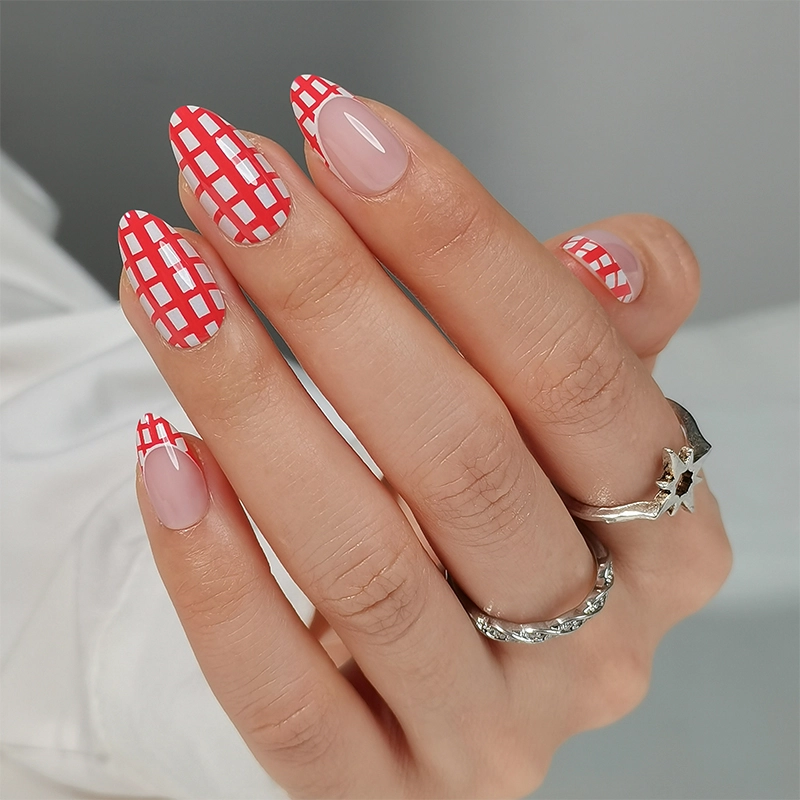
Wholesales Red French Nails Tips Checkered Soft Gel Nail Tips 32 Piece Set
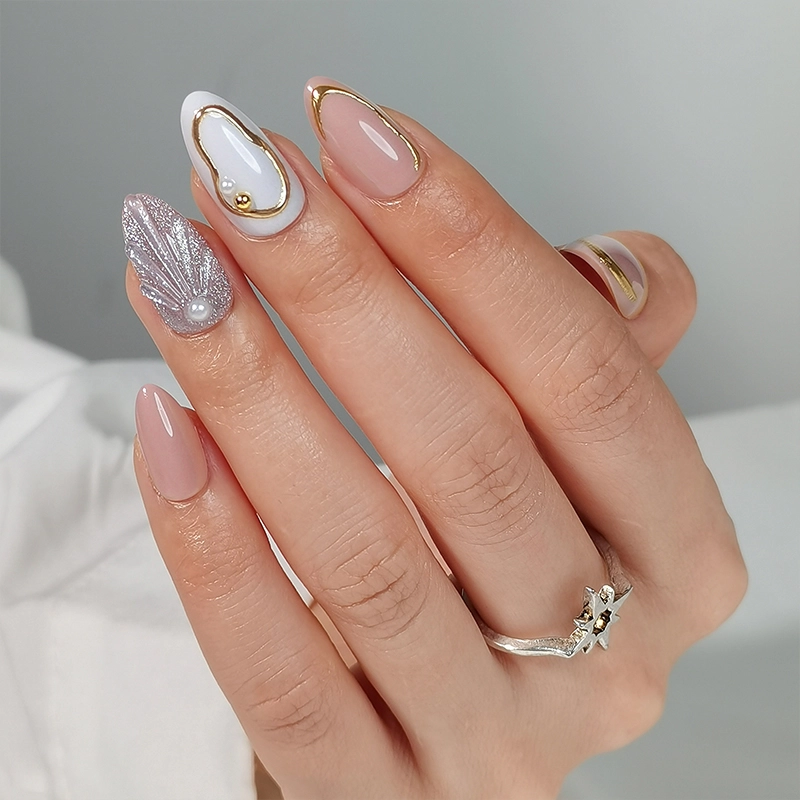
Wholesales Elegant Shell Inspired Soft Gel Wearable Nails for Seasonal Celebrations

Custom Wholesale Gradient Cat Eye Soft Gel Wearable Fake Nails
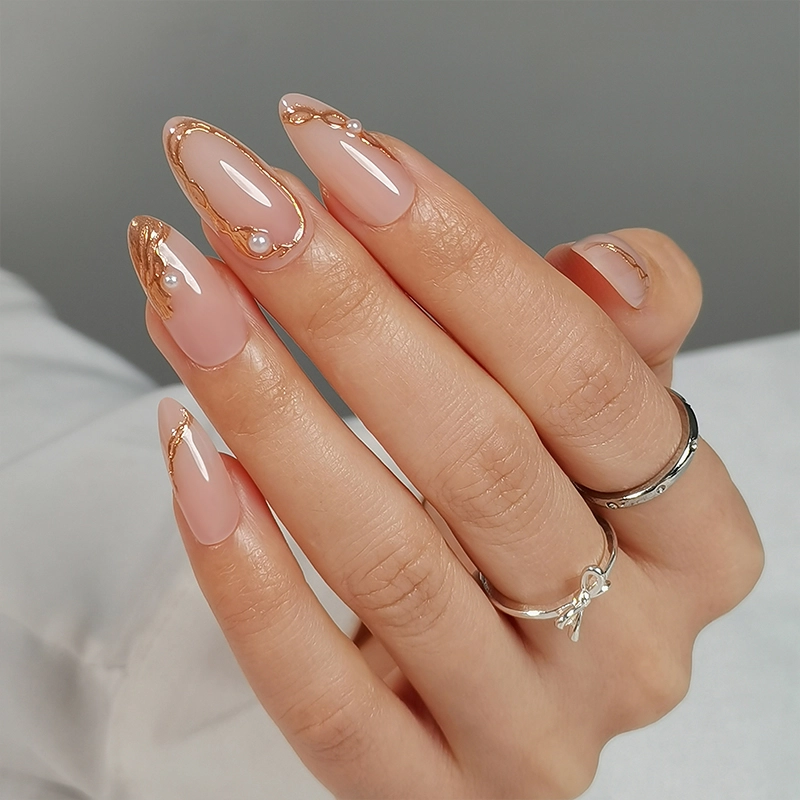
Wholesales Luxury Rhinestone Handmade Private Label Press On Nails Art Tips
Copyright © 2025 - XIANXING BEAUTY All Rights Reserved. Sitemap
Facebook
YouTube
Instagram
LinkedIn