
Cost Breakdown: Manufacturing vs Design for Press On Nails
- How costs shape your custom press on nails business
- Why separating manufacturing and design costs matters
- Typical buyer and decisions
- High-level cost categories
- Manufacturing cost breakdown: per-unit drivers
- Material costs and choices
- Production, coating, and finish
- Packaging, testing, and logistics
- Design and development costs: upfront investments
- Artwork, prototyping, and sample runs
- Tooling and setup amortization
- Design iteration and intellectual property
- Comparative examples and economies of scale
- Sample per-unit cost scenarios
- Design vs manufacturing share
- When to choose OEM vs ODM
- Quality, compliance and risk cost considerations
- Regulatory testing and certifications
- Warranty, returns and QC failures
- Time-to-market and speed High Quality
- Practical procurement checklist for custom press on nails
- Key questions to ask suppliers
- Cost-reduction strategies
- Profitability model (simple)
- Why partner with an experienced OEM like Xianxing Beauty
- Production scale, speed and customization
- Product quality, certification and materials
- What Xianxing offers brands
- FAQ — Common questions about costs and customization
- 1. How much does a custom press on nails design typically cost to develop?
- 2. What is a realistic MOQ for custom press on nails?
- 3. How quickly can I get samples and full production?
- 4. How does tooling affect per-unit cost?
- 5. Which certifications should I require from a supplier?
- 6. Can I mix-and-match designs to reduce costs?
- Final recommendations and next steps
- How to proceed
- Contact and product exploration
- Closing summary
- References
How costs shape your custom press on nails business
Why separating manufacturing and design costs matters
When launching or scaling a custom press on nails line, understanding where money goes is crucial. Manufacturing costs (materials, production labor, coating, packaging, shipping) are largely variable and scale with volume. Design costs (artwork, CAD, prototyping, tooling, creative development) are often fixed or semi-fixed and must be amortized across orders. Treating them separately helps you set accurate per-unit pricing, forecast margins, and choose the right supplier model (OEM vs ODM).
Typical buyer and decisions
Buyers searching for “custom press on nails” usually want practical answers: how much will a custom run cost, what are minimum orders, how fast can samples be produced, and are materials and coatings safe for global markets? This article addresses these concerns with concrete examples, ranges, and supplier selection criteria.
High-level cost categories
Costs fall into two groups: manufacturing (variable) and design & development (fixed/semi-fixed). Recognizing which category a cost belongs to determines how you price a launch collection versus a routine reorder.
Manufacturing cost breakdown: per-unit drivers
Material costs and choices
Materials for press on nails commonly include ABS plastic, acrylic, gel overlays, adhesives (tabs or glue), and surface treatments (pigments, glitter, decals). Material selection influences base cost, durability, and compliance requirements (ROHS/REACH). Typical material cost per finished set ranges widely depending on quality: budget ABS sets can cost $0.30–$0.80 per pair, while High Quality gel or layered art sets can be $1.00–$3.00+ per pair.
Production, coating, and finish
Production steps include molding/pressing, trimming, shaping, surface art application, UV curing (for UV-coated finishes), inspection, and final QC. UV coating adds durability and perceived value but also adds direct cost for materials and curing time. Labor and process complexity can add $0.10–$0.80 per pair depending on automation and region.
Packaging, testing, and logistics
Packaging choices (blister, box, hanger cards) add $0.05–$0.60 per set. Testing, labeling, and compliance documentation (MSDS, chemical testing for REACH/ROHS) add to upfront costs and sometimes per-batch costs. Freight (air vs sea), duties, and fulfillment fees must be included when calculating landed cost.
Design and development costs: upfront investments
Artwork, prototyping, and sample runs
Design comprises graphic artwork, color matching, nail shape templates, and prototype/sample production. Artwork and design work can be charged as hourly creative fees or fixed per design. Expect one-time design fees of $50–$500+ per unique design depending on complexity and designer rates. Rapid sample delivery usually costs more but is essential for validation.
Tooling and setup amortization
Tooling—custom molds or shape dies—can be a real upfront cost for unique nail shapes or stamped designs. Tooling costs range from $100–$2,000 depending on complexity; these are amortized across the first several production runs. For low MOQ orders, tooling amortization significantly raises per-unit cost.
Design iteration and intellectual property
Iterative changes generate hidden costs: multiple sample rounds, adjustments to decals/art alignment, and repro of molds. Protecting your designs (trade dress, trademarks) introduces legal costs if you want exclusivity. Budget for iterations—many brands allocate 10–20% of initial design budget for tweaks.
Comparative examples and economies of scale
Sample per-unit cost scenarios
Below are illustrative per-unit cost ranges for custom press on nails—these are realistic industry ranges compiled from supplier quotes and market reports (see references). Use them as starting points to model your margins.
| Cost component | Small order (100 sets) | Medium order (1,000 sets) | Large order (10,000 sets) |
|---|---|---|---|
| Materials per set | $1.50 | $0.90 | $0.60 |
| Labor & finishing | $1.00 | $0.50 | $0.30 |
| Packaging & label | $0.80 | $0.40 | $0.20 |
| Shipping & logistics (avg) | $2.50 | $0.80 | $0.30 |
| Tooling amortization | $5.00 | $0.50 | $0.05 |
| Estimated unit cost (total) | $10.80 | $3.10 | $1.45 |
Notes: These figures are illustrative examples to demonstrate scale effects. Shipping per-unit falls significantly with larger orders and sea freight. Tooling amortization is the biggest per-unit driver at small quantities.
Design vs manufacturing share
For a new SKU, design and tooling may represent 30–60% of the first-batch cost for low-MOQ runs, but only 1–5% for scaled reorders where tooling is already paid. Effective pricing separates the one-time design amortization from recurring manufacturing costs.
When to choose OEM vs ODM
OEM (you supply designs) is ideal when you have branding and IP and want lower design fees but higher manufacturing control. ODM (supplier provides designs or templates) reduces upfront creative cost and is faster to market, but may cost more per unit and reduce uniqueness. Choose based on whether design uniqueness or speed and lower development overhead are more important.
Quality, compliance and risk cost considerations
Regulatory testing and certifications
Selling globally means meeting standards: REACH (EU), RoHS (electrical/chemical restrictions applicable to components), and providing MSDS or SDS documents for chemical safety. Testing and certification can add to batch costs; working with a supplier who already provides compliant materials and certificates reduces this overhead.
Warranty, returns and QC failures
Quality failures (peeling, off-spec finishes, poor adhesion) impose costs: rework, returns, and brand damage. Allocate a QC reserve (1–3% of production) and select suppliers with strong QA processes and certifications to minimize these risks.
Time-to-market and speed High Quality
Faster lead times (samples in days, production in 7–14 days) often incur higher costs (express shipping, overtime). For trend-driven categories like nail art, faster replenishment can command higher retail prices and reduce markdowns — sometimes justifying the High Quality.
Practical procurement checklist for custom press on nails
Key questions to ask suppliers
- Do you support OEM and ODM? What are MOQs for each?
- What is your sample lead time and sample cost?
- Which certifications and tests do you provide (ROHS, REACH, MSDS)?
- How do you handle tooling costs and amortization for repeat orders?
- What warranties and QC processes are in place?
Cost-reduction strategies
To lower per-unit costs: consolidate SKUs, increase order volume, use simpler shapes or shared tooling, select standard coatings, and partner with manufacturers who accept small-scale customization and rapid sample turnarounds. Negotiate freight terms and consider regional warehousing to lower landed costs.
Profitability model (simple)
Retail price minus per-unit landed cost and allocated design amortization = gross margin. Use the earlier table to model scenarios. For example, with an estimated unit cost of $1.45 (large order) and a retail price of $12–$18 per set, gross margins are typically strong, but initial small-batch runs will require higher retail or an allocation of design fees to maintain margins.
Why partner with an experienced OEM like Xianxing Beauty
Production scale, speed and customization
Founded in 2012, Xianxing Beauty is a China press on nail manufacturer, focusing on OEM and ODM customized nail production, with a 20,000-square-meter factory, producing 300,000 pieces of press on nails daily, launching more than 100 new products every month, and supporting small-scale customization, including materials, sizes, designs, nail shapes, packaging, etc. Nail samples are provided within 3 days, and orders are completed within 7-14 days.
Product quality, certification and materials
Press-on nail products from Xianxing Beauty are breathable and lightweight, non-toxic and odorless, with UV coating to protect nails and make them more durable and beautiful. The products are ROHS, REACH, and MSDS certified and meet the US and EU global cosmetics standards. Working with a certified manufacturer reduces your compliance burden and helps enter regulated markets faster.
What Xianxing offers brands
Xianxing Beauty’s strengths include fast sample turnaround, flexible MOQ support (helpful for small brands and launches), a large in-house design and R&D team, and consistent production capacity which supports rapid scaling. Their stated vision is to become the world's leading press on nails manufacturer. For more details visit: https://www.xianxingbeauty.com/
FAQ — Common questions about costs and customization
1. How much does a custom press on nails design typically cost to develop?
Design and prototyping costs vary. Expect $50–$500+ for artwork and sample preparation per unique design, plus potential tooling costs ($100–$2,000) depending on shape complexity. These are one-time or amortized expenses.
2. What is a realistic MOQ for custom press on nails?
MOQs depend on supplier and whether you choose OEM or ODM. Many specialized manufacturers (like Xianxing Beauty) accept small-scale customization to accommodate launches; typical MOQs can be as low as a few hundred sets for custom designs if tooling is shared or already available.
3. How quickly can I get samples and full production?
Fast-turn suppliers can provide nail samples within 3 days and complete orders within 7–14 days for production, though timelines vary by complexity and seasonality. Expedited services faster than these windows usually cost more.
4. How does tooling affect per-unit cost?
Tooling is a fixed cost that becomes less significant as you scale. For very small runs, tooling amortization can dominate per-unit cost; for large runs the per-unit impact is minimal. Plan volumes before committing to expensive custom tooling.
5. Which certifications should I require from a supplier?
Require REACH (EU), ROHS (where applicable for restricted substances), and MSDS/SDS documentation for chemicals used in finishes/adhesives. If selling in the US, ensure compliance with relevant FDA guidelines for cosmetics. Suppliers that already provide these certifications save you testing time and expense.
6. Can I mix-and-match designs to reduce costs?
Yes. Using shared tooling or common base shapes with different surface art reduces total tooling and setup costs. Bundling multiple SKUs in one larger order also lowers per-unit freight and production costs.
Final recommendations and next steps
How to proceed
1) Define product tiers (budget, High Quality). 2) Estimate realistic order quantities for launch vs reorder. 3) Request sample policy, lead times, and certificates from shortlisted suppliers. 4) Model per-unit costs including allocated design amortization for your first order. 5) Negotiate freight and packaging to optimize landed cost.
Contact and product exploration
If you’re ready to explore manufacturing partners for custom press on nails, consider a supplier that combines speed, flexibility, and certifications. Xianxing Beauty provides OEM/ODM custom press on nails, press on nails, salon false nails, kids nails press on, fake toe nails, gel nail tabs, and sticker press on nails. They support small-scale customization and fast sample turnaround. Visit their website to view product ranges and request samples: https://www.xianxingbeauty.com/
Closing summary
Understanding the balance between manufacturing and design costs is fundamental to pricing, margin management, and scalability for a custom press on nails brand. Focus on reducing unnecessary design rework, selecting the right MOQ strategy, and partnering with certified manufacturers to accelerate time-to-market while maintaining compliance and quality.
References
- Xianxing Beauty — Company & product information. https://www.xianxingbeauty.com/ (accessed 2026-01-03)
- ECHA — REACH Regulation. European Chemicals Agency. https://echa.europa.eu/regulations/reach (accessed 2026-01-03)
- European Commission — RoHS Directive. https://ec.europa.eu/environment/topics/waste-and-recycling/rohs-directive_en (accessed 2026-01-03)
- U.S. FDA — Cosmetics. https://www.fda.gov/cosmetics (accessed 2026-01-03)
- OSHA — Safety Data Sheets (SDS). https://www.osha.gov/chemical-hazards/chemical-safety (accessed 2026-01-03)
- Grand View Research — Artificial Nails Market overview (industry growth patterns). https://www.grandviewresearch.com/industry-analysis/artificial-nails-market (accessed 2026-01-03)
- Statista — Nail care market insights and regional data. https://www.statista.com/search/?q=nail+care (accessed 2026-01-03)
Contact us for a customized cost model or to request samples and OEM/ODM quotations: https://www.xianxingbeauty.com/
Short Almond Press On Nails: Import Compliance & Certificates
How Much Does a Press On Nail Business Make in Houston? A Deep Dive into Profits and Industry Trends
Sustainable Materials for Custom Press On Nails
Best Press On Nails for Quality & Style
About chrome Nails
Are they suitable for all nail sizes?
Most sets include multiple sizes to fit different nail widths. You can also file the edges of the press-ons for a perfect fit.
How do I remove chrome press-on nails?
Soak your nails in warm soapy water or acetone for 10–15 minutes.
Gently lift the edges with a cuticle stick.
Avoid pulling or forcing them off to prevent damage.
Recycled ABS Nails
How to avoid allergic reactions?
Some people may be allergic to the glue or other materials used for press-on nails, resulting in symptoms such as redness, swelling, and itching of the skin around the nails. If you are an allergic person, it is recommended to conduct a local skin test before using, or choose to use anti-allergic glue.
About after-sale service
What are the working hours of your after-sales support team?
Our team will respond promptly to your inquiries during working hours, ensuring you receive solutions and assistance as quickly as possible.
About Cat Eye Nails
My press-ons keep falling off. What should I do?
Be sure that nails are clean and dry before application. For optimal adhesion, gently buff your natural nails with the file included in your kit and wipe off the surface of your nails with the prep pad. Any oils on nails can prevent the glue from sticking.
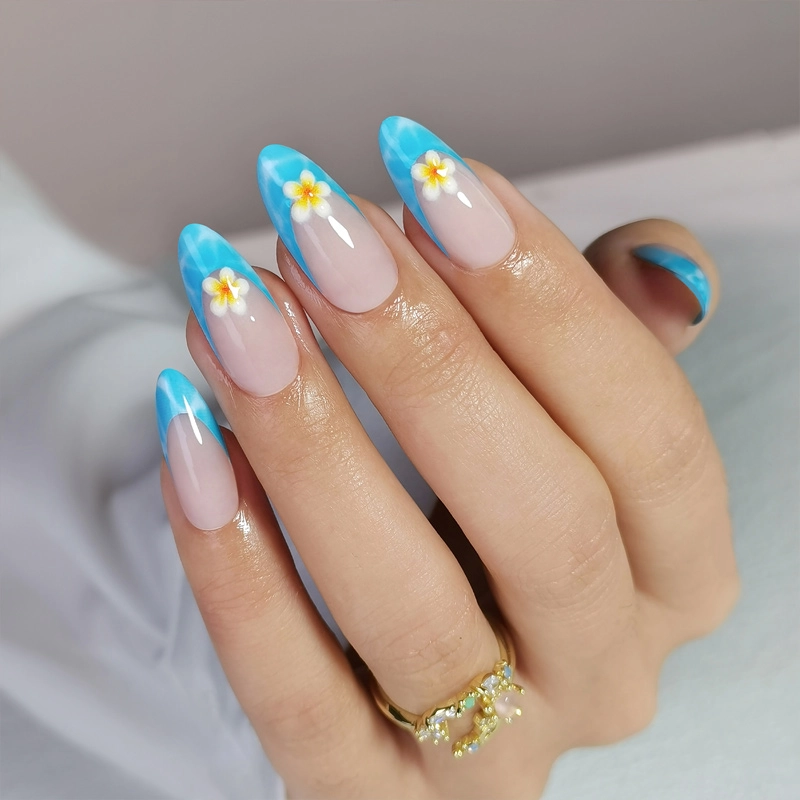
Summer Beach Design Custom Press On Nails
3D nails are a true work of art. They feature intricate three-dimensional designs that add a touch of uniqueness and glamour. Made from high-quality materials, they are durable and long-lasting. Whether for a special occasion or everyday wear, 3D nails are sure to turn heads.
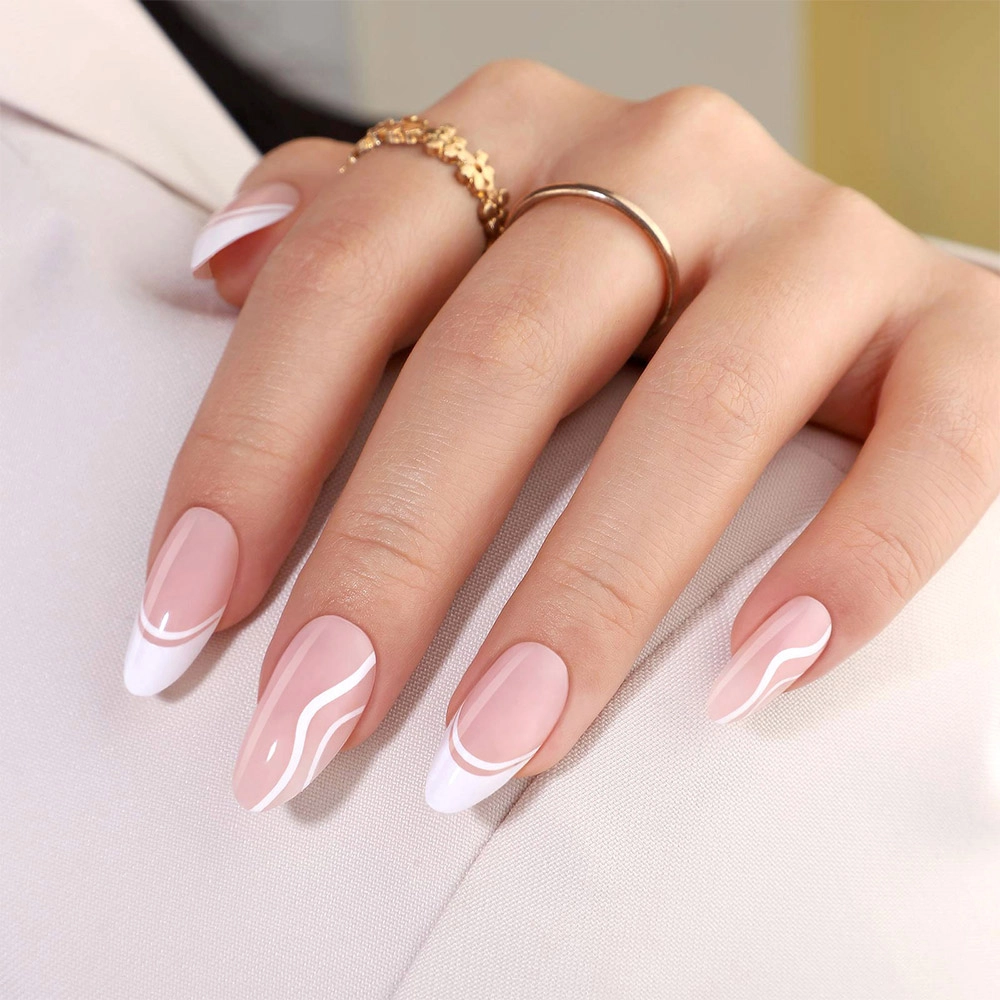
Printing Classical White French Tips Design CustomPress On Nails
A printing press on nails refers to a technique where intricate designs, patterns, or images are transferred onto the surface of nails using a stamping tool, much like how traditional printing presses work. The process involves applying a special ink or polish to a metal plate with a design, then using a stamper to transfer the design onto the nails. It's a quick and precise way to create detailed nail art.
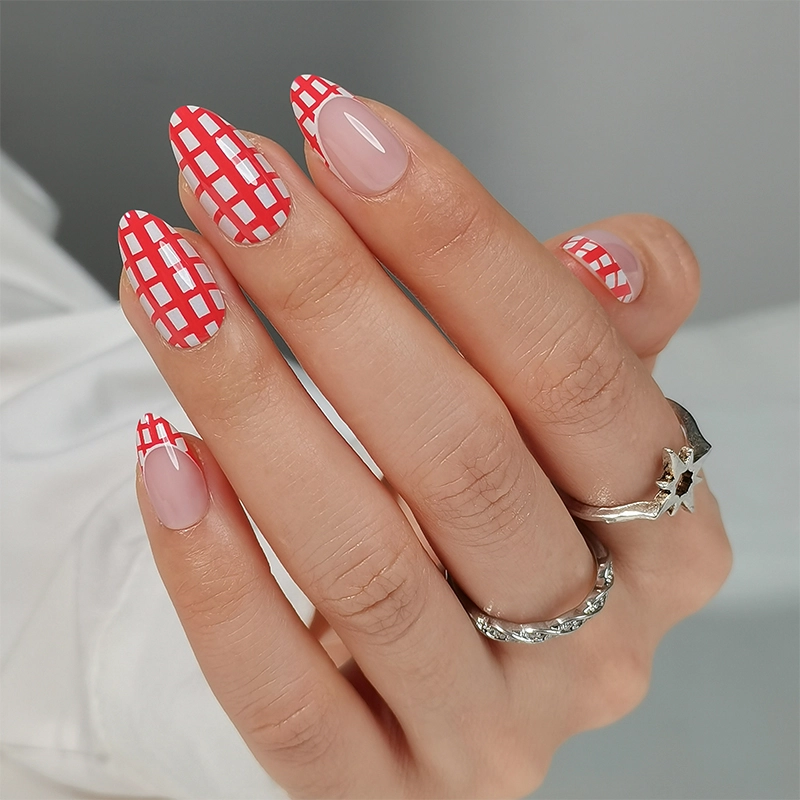
Wholesales Red French Nails Tips Checkered Soft Gel Nail Tips 32 Piece Set
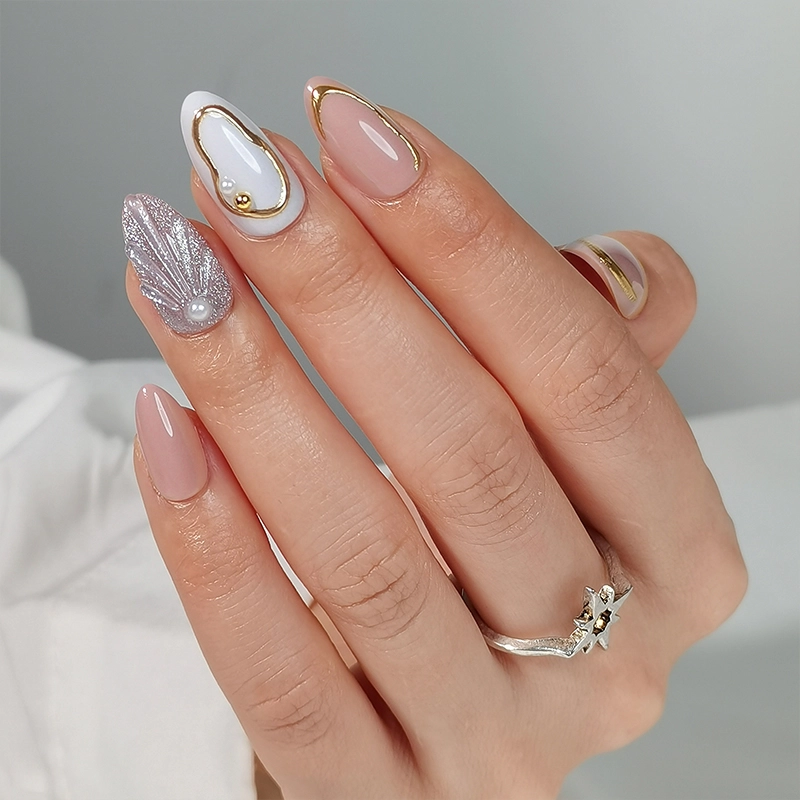
Wholesales Elegant Shell Inspired Soft Gel Wearable Nails for Seasonal Celebrations
Copyright © 2025 - XIANXING BEAUTY All Rights Reserved. Sitemap
Facebook
YouTube
Instagram
LinkedIn