
Custom Press-On Nail Pricing Calculator: MOQs, Shipping, and Hidden Costs Revealed
- What is the True Cost to Manufacture Custom Press-On Nails?
- Quick Summary: Key Takeaways for Pricing Your Nail Brand
- Understanding MOQs: Handmade vs. Machine-Made Benchmarks
- The Custom Press-On Nail Pricing Calculator Framework
- Exposing the Hidden Costs: Shipping, Duties, and Wastage
- Expert Tips: Common Mistakes New Nail Brands Make
- Conclusion
- What is the standard MOQ for custom press-on nails?
- How do you calculate the landed cost of press-on nails?
- Why is shipping so expensive for wholesale nails?
- What are the hidden costs of custom nail packaging?
- Can I negotiate MOQs with nail manufacturers?
- What is a good profit margin for press-on nails?
- How do duties and taxes affect imported nail supplies?
- Should I price my handmade nails differently than factory-made?
What is the True Cost to Manufacture Custom Press-On Nails?
The true cost to manufacture custom press-on nails ranges from $1.50 to $15.00 per unit, heavily depending on whether the production method is machine-made or handmade, and your specific Minimum Order Quantity (MOQ).
Determining your wholesale press on nails cost starts with looking far beyond the plastic nail itself. To find your exact unit economics, you must aggregate a variety of distinct expenses: the base material costs, the manufacturing labor, customized retail packaging, and complex international shipping fees. Failing to calculate these variables together comprehensively will invariably result in underpricing, cash flow bottlenecks, and lost profit margins. According to the broader industry of artificial enhancements, which includes press-ons, tips, and forms, as detailed by Wikipedia, these products serve as an extension of the natural nail and require various high-quality materials like flexible gel and ABS plastics.
- Base Material Costs: This foundational expense includes ABS plastic blanks, UV gel polish, rhinestones, charms, and top coats. High-grade, flexible plastics cost more upfront but prevent cracking, significantly reducing customer refund requests.
- Labor & Manufacturing: The human element of production varies drastically. Factory assembly lines optimize for speed and low cost, while manual application by skilled nail artists commands a luxury premium.
- Packaging & Toolkits: A bare nail cannot be sold at retail. You must meticulously account for custom-branded boxes, protective blister inserts, and the application prep kits (glue, tabs, files).
- Logistics: This encompasses the movement of goods from the factory floor to your warehouse, including international freight shipping, customs clearance, and mandatory import duties.
Quick Summary: Key Takeaways for Pricing Your Nail Brand
Pricing your nail brand accurately requires factoring in the complete toolkit, understanding how MOQs dictate leverage, buffering for hidden logistical fees, and applying a standard retail markup of 3x to 5x your landed cost.
Building a profitable, scalable beauty business goes beyond just designing beautiful, trendy nails. You must establish a rigid, data-driven financial framework. This means anticipating every single micro-expense before your manufacturer begins mass production. By maintaining a strict cost-plus pricing strategy, you can confidently scale your marketing efforts knowing your profit margins are fully protected.
- Unit Cost Completeness: Your unit cost isn't just the nail itself. Always include custom nail packaging hidden fees, adhesive tabs, wooden cuticle pushers, and alcohol prep pads in your base cost calculation. Missing a $0.50 prep kit across 2,000 units is an instant $1,000 hit to your bottom line.
- MOQ Leverage: Higher MOQs (e.g., 1,000+ units per design) drastically reduce your per-unit manufacturing costs but demand a substantially higher upfront capital investment to secure the inventory.
- Hidden Fees: Always create a financial buffer of 10-15%. This buffer acts as a safety net to absorb volatile shipping fluctuations, unexpected import duties at the border, and standard manufacturing wastage.
- Retail Markup: The standard retail markup for the press-on nail industry is typically 3x to 5x the total landed cost. If your landed cost is $4.00, your retail price should sit between $12.00 and $20.00 to ensure viability after marketing and operational expenses.
Understanding MOQs: Handmade vs. Machine-Made Benchmarks
The standard press on nail manufacturing MOQ ranges from 500 to 3,000 units per design for machine-made factory nails, whereas handmade press-ons usually have very low or zero MOQs ranging from 1 to 50 units.
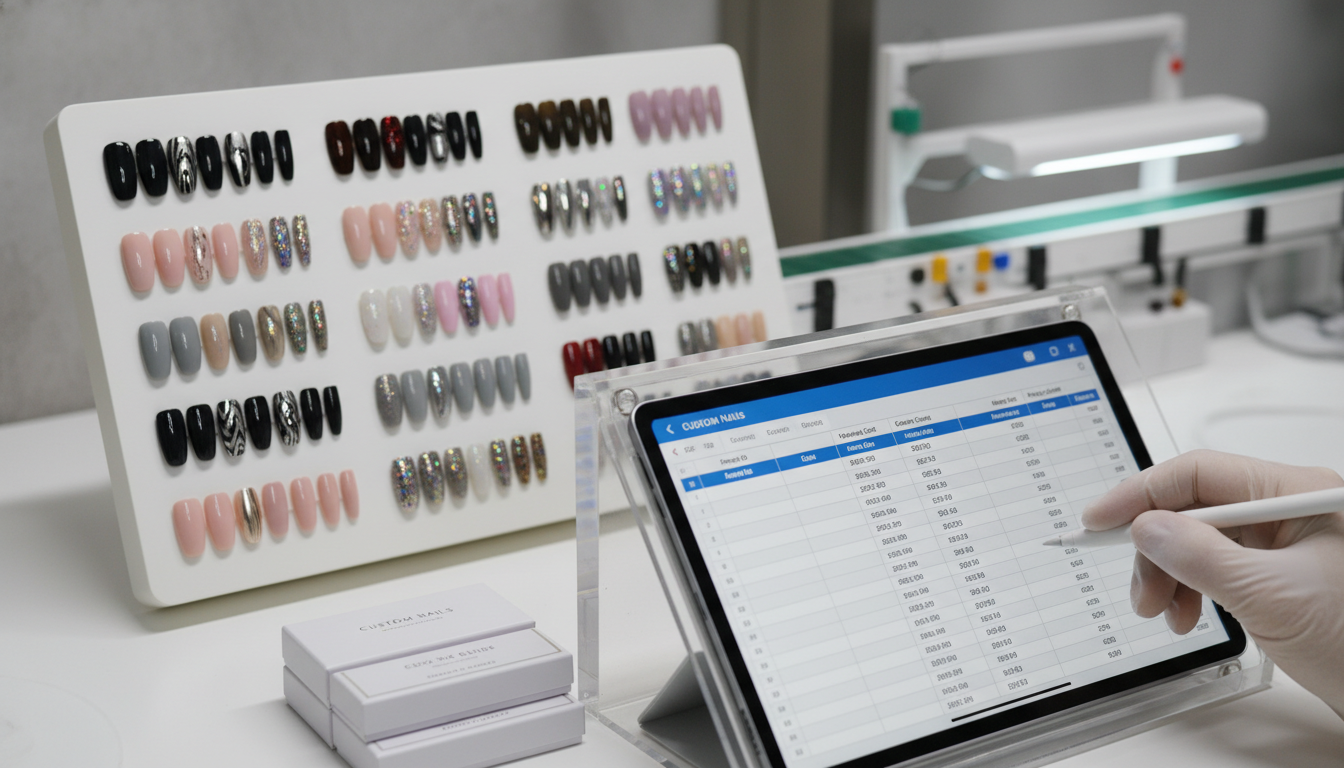
The production method you choose will completely alter your supply chain strategy, initial investment, and target audience. Understanding the benchmarks for different manufacturing styles is critical for inventory management and cash flow forecasting.
- Handmade Press-Ons: These premium options allow for high customization, intricate nail art, and exceptional attention to detail. However, the low MOQs result in premium unit costs and significantly longer lead times, making them ideal for boutique luxury brands.
- Machine-Made (Factory) Nails: Standard factory MOQs are higher, but they offer the massive benefit of economies of scale. Once the machines are calibrated, factories can produce tens of thousands of identical units rapidly, making them perfect for mass-market retail.
- Tooling Costs: If you require custom nail shapes, specific lengths, or unique C-curves that the factory does not currently produce, they may charge a one-time mold or tooling fee. This heavily increases initial startup costs and must be factored into your first-year budget.
- Tiered Pricing Strategies: It is highly recommended to negotiate sample batches or trial runs before committing to the maximum factory MOQs. This allows you to verify product quality, durability, and color accuracy without risking your entire capital reserve.
The Custom Press-On Nail Pricing Calculator Framework
The custom press-on nail pricing calculator framework is a five-step formula that aggregates base material costs, labor, toolkit additions, custom packaging, and landed shipping fees to reveal your true cost per unit.
To ensure you remain profitable in a highly competitive beauty market, apply this strict, sequential mathematical list to every new product launch. Skipping even one of these steps will give you a false sense of profitability and jeopardize your cash flow.
- Step 1: Calculate Base Material Cost: Tally the exact expenses for the core materials. This includes the unpainted ABS plastic bases, multiple layers of gel polish, top coats, rhinestones, and any decorative 3D charms.
- Step 2: Add Labor & Manufacturing Fees: Factor in the time spent for assembly and quality control. This step starkly highlights the distinct handmade vs factory nails margin differences, as factory labor is amortized across thousands of units, while handmade labor is billed hourly per set.
- Step 3: Factor in the Toolkit: Every retail-ready set needs an application kit. You must source and price out prep pads, a mini nail file, a buffer block, liquid nail glue, adhesive tabs, and a wooden cuticle pusher. This typically adds $0.30 to $0.80 per kit.
- Step 4: Include Packaging Costs: Account for the physical presentation. This includes custom rigid boxes, protective inner blister trays to prevent the nails from rattling, branded inserts, and marketing collateral like discount cards.
- Step 5: Apply the Landed Shipping Formula: Divide your total freight cost (including tariffs and insurance) by the total number of units ordered to find your final landed cost per item.
Exposing the Hidden Costs: Shipping, Duties, and Wastage
The most significant hidden costs in custom nail manufacturing primarily stem from expensive dimensional weight shipping charges, complex international import duties based on HS codes, and a mandatory 3-5% wastage buffer required for transit damages.
Logistics and supply chain variables can silently destroy your profit margins if you do not forecast them accurately. Many businesses forget that when calculating costs for importing nail supplies freight duties represent a major expense that must be meticulously researched before your finished goods ever leave the factory floor.
- Air Freight vs. Sea Freight: Air freight is exceptionally fast (typically taking 5-7 days) but incredibly expensive. Conversely, sea freight is highly cost-effective for large, heavy shipments but requires 30-45 days of transit time, demanding stricter inventory forecasting.
- Dimensional Weight: Shipping costs are frequently determined by the package's volume rather than its actual weight. As explained by Wikipedia, dimensional weight is a pricing technique for commercial freight transport that uses an estimated weight calculated from the length, width, and height of a package. Bulky custom nail boxes with excessive empty space will exponentially increase this cost.
- Import Duties and Customs: Tariff codes for beauty tools and plastics can unexpectedly add 5-10% to your total invoice upon arrival at the border. The Wikipedia entry for the Harmonized System notes that this standardized numerical method is used worldwide by over 200 countries to uniformly identify traded products and assess customs duties accurately.
- The Wastage Buffer: You must account for a 3-5% defect or damage rate during international transit. Boxes can be crushed, and delicate 3D charms can detach. Building this buffer ensures you have enough pristine, sellable stock to meet customer demand without taking a financial loss.
Expert Tips: Common Mistakes New Nail Brands Make
Common mistakes new nail brands make include failing to pay themselves an hourly wage, relying solely on FOB pricing without factoring in door-to-door shipping, and over-ordering custom packaging before verifying the final inner tray dimensions.
The beauty industry is incredibly saturated, and avoiding these fundamental logistical and financial pitfalls is the difference between building a thriving, scalable brand and running an exhausting, expensive hobby.
- Mistake 1: Undervaluing Labor: Forgetting to pay yourself an hourly wage when calculating the cost of handmade sets is a crucial error. Your time is a measurable, finite business expense that must be baked into the retail price.
- Mistake 2: Ignoring Landed Costs: Relying solely on the factory's "FOB" (Free on Board) price without calculating the full door-to-door shipping cost will lead to artificially inflated profit projections.
- Mistake 3: Premature Packaging Orders: Over-ordering custom packaging with logos before finalizing the inner nail tray dimensions often leads to thousands of unusable boxes that cannot hold the final product securely.
- Mistake 4: Racing to the Bottom: Trying to compete solely on price with global, venture-backed megabrands is a losing battle. Instead, independent brands should compete on unique artistic design, high-quality materials, and exceptional brand storytelling.
Conclusion
Successfully launching a profitable press-on nail brand requires a comprehensive, holistic understanding of your true unit cost, extending all the way from initial factory MOQs and raw material sourcing down to the final dimensional weight shipping tariffs. By utilizing a strict pricing calculator that accounts for hidden fees, dimensional weight, and comprehensive packaging toolkits, you can confidently set retail prices that ensure scalable, long-term profit margins. Navigating the complexities of international manufacturing and beauty product logistics does not have to be a guessing game if you follow structured, data-driven frameworks.
Contact us today to get a personalized quote for your custom press-on nail brand.
What is the standard MOQ for custom press-on nails?
For factory machine-made nails, standard MOQs typically range from 500 to 1,000 units per design. For handmade custom nails sourced from independent artists or specialized studios, MOQs can be as low as 10 to 50 sets.
How do you calculate the landed cost of press-on nails?
Landed cost is calculated by adding the unit cost of the nails, the cost of the toolkit and packaging, and the total shipping and customs fees divided by the number of units ordered.
Why is shipping so expensive for wholesale nails?
Shipping costs are largely based on dimensional weight (the volume of the boxes). Because custom nail packaging requires sturdy boxes and blister inserts, shipping large quantities takes up significant cargo space, driving up air freight costs.
What are the hidden costs of custom nail packaging?
Hidden packaging costs include tooling/die-cut fees for custom box shapes, the cost of inner blister trays to hold the nails securely, and added dimensional shipping weight caused by bulky box designs.
Can I negotiate MOQs with nail manufacturers?
Yes, many manufacturers will lower MOQs for first-time buyers as a trial run, though they will often charge a higher per-unit premium. You can also negotiate lower MOQs by using standard, pre-existing nail colors and shapes instead of custom molds.
What is a good profit margin for press-on nails?
A healthy gross profit margin for a press-on nail business is between 60% and 80%. This means your retail price should be roughly 3 to 5 times your total landed cost.
How do duties and taxes affect imported nail supplies?
When importing from overseas manufacturers, customs duties are applied based on the product classification (HS code). This can add anywhere from 3% to 15% to your total cost, depending on your country's trade agreements.
Should I price my handmade nails differently than factory-made?
Absolutely. Handmade nails require intense, skilled manual labor per set and higher quality gel materials. They should be priced as luxury items to ensure you are earning a profitable hourly wage, whereas factory nails rely on volume-based markup.
Sustainable Press-On Nails Manufacturer Sourcing: A Deep Dive into Biodegradable Materials & Ethical Production (2026 Guide)
How Much Does a Press On Nail Business Make in Miami? Realistic Revenue Estimates & Growth Strategies
What You Need to Start a Press On Nail Business in Chicago
Fake Nails During Pregnancy? Xianxing Beauty
Agent
Do I need a high budget to become an agent?
We have different plans for agents at different levels, but in principle they all help our agents purchase goods with the maximum amount of funds, so no need to worry about budget issues.
About Cooperation Process
What information is required to start the collaboration?
You’ll need to provide your company details, press on nails product requirements, customization preferences, and cooperation objectives to begin the process.
Soft Gel Nails
Are soft gel press-on nails reusable?
Yes, depending on how they are applied and removed, soft gel press-on nails can often be reused. Proper care during removal helps preserve their shape and quality for multiple uses.
About Duck Nails
Are duck nails suitable for all occasions?
While duck-shaped nails can be fashionable and fun, they may not always be appropriate for formal or conservative settings. They're better suited for casual events or occasions where a more daring, fashionable look is desired.
About French Nails Tips
Are they waterproof?
Press-on nails are water-resistant but may loosen with prolonged exposure to water. Use gloves when washing dishes or cleaning for longer wear.
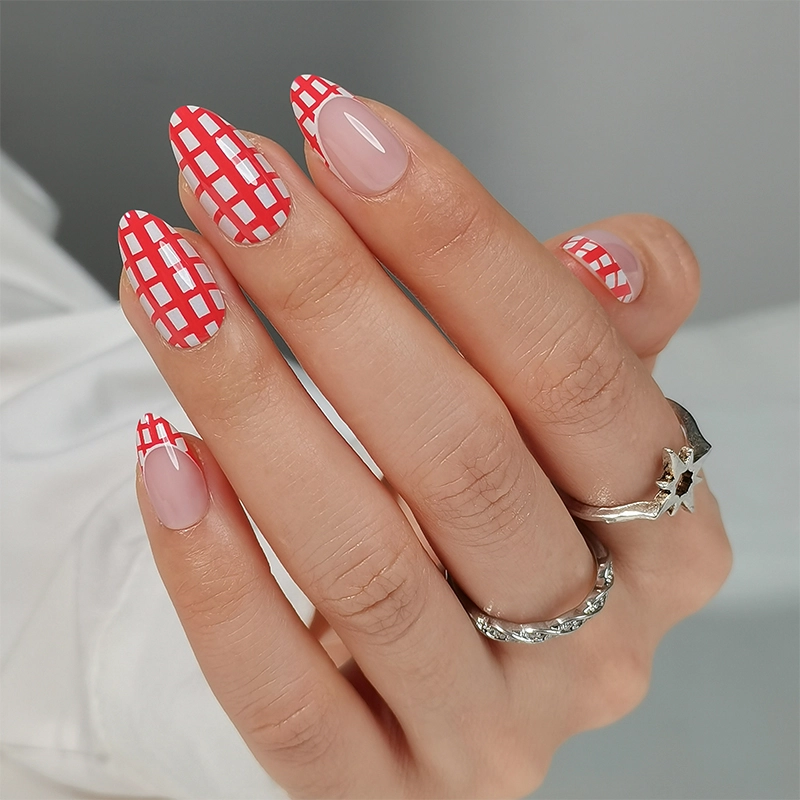
Wholesales Red French Nails Tips Checkered Soft Gel Nail Tips 32 Piece Set
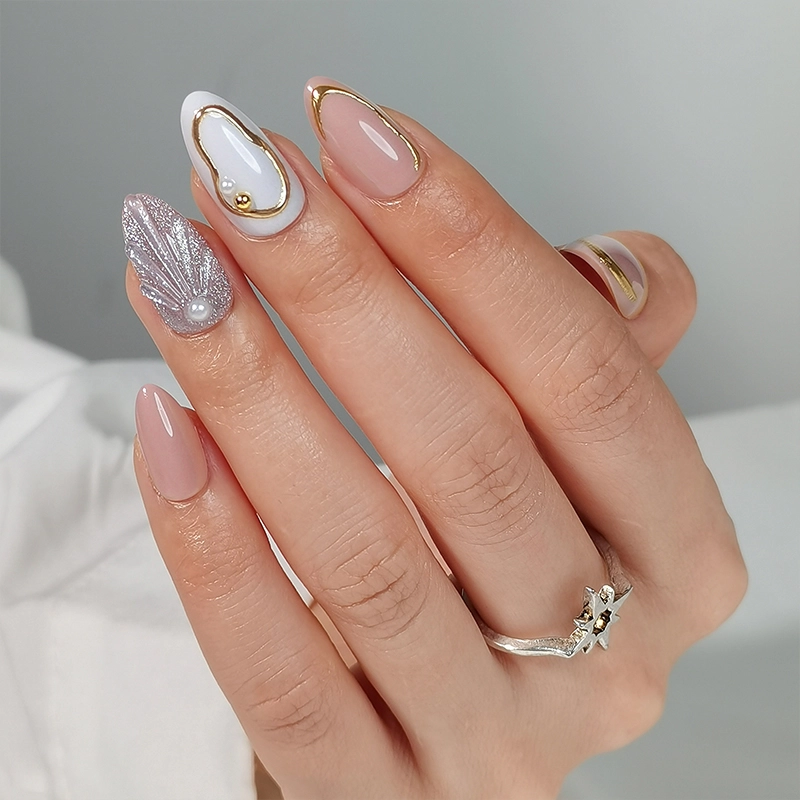
Wholesales Elegant Shell Inspired Soft Gel Wearable Nails for Seasonal Celebrations
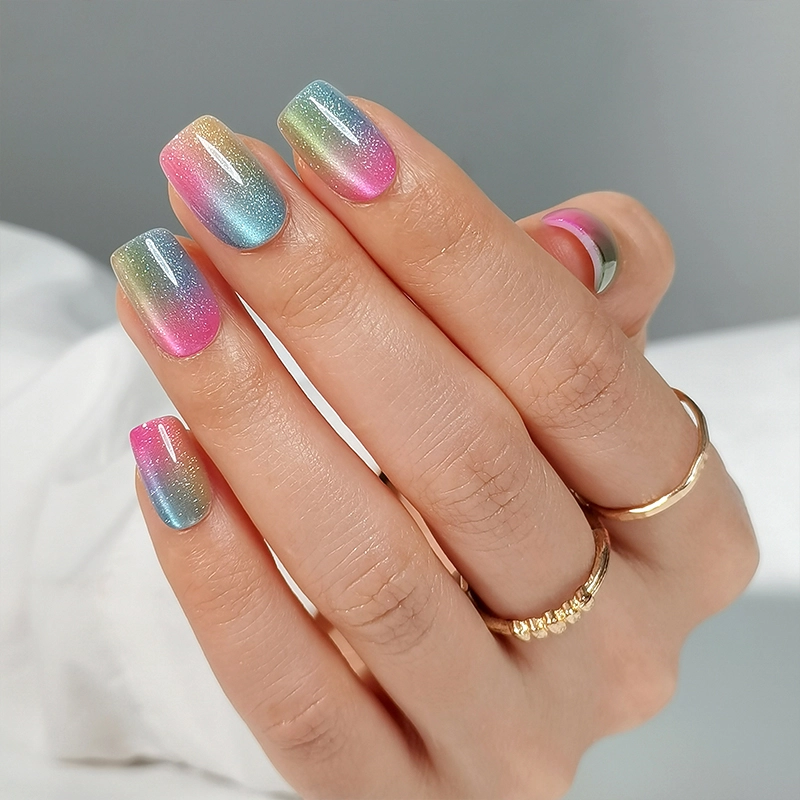
Custom Wholesale Gradient Cat Eye Soft Gel Wearable Fake Nails
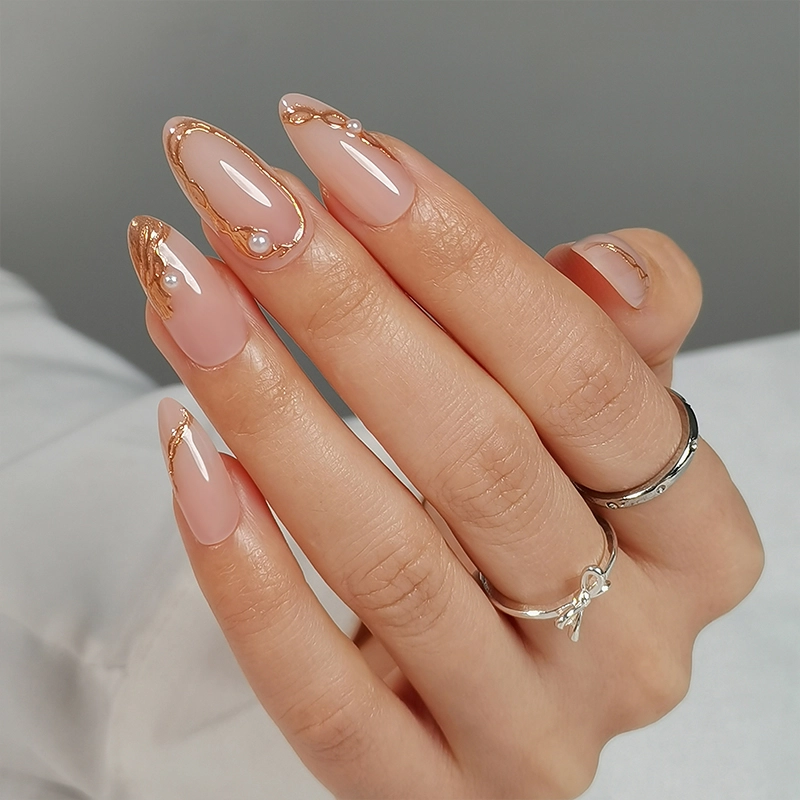
Wholesales Luxury Rhinestone Handmade Private Label Press On Nails Art Tips
Copyright © 2025 - XIANXING BEAUTY All Rights Reserved. Sitemap
Facebook
YouTube
Instagram
LinkedIn