How to Choose a Reliable Press On Nail Manufacturer
- Understanding the press-on nail market and production basics
- What constitutes a reliable manufacturer?
- Key product and material considerations
- Market and buyer intent alignment
- Evaluating quality, safety and compliance
- Essential certifications and documents
- Laboratory testing and sample validation
- Traceability and material sourcing
- Production capability, lead times and MOQ
- Assessing factory scale and capacity
- Lead times, sample policy and tooling
- Minimum order quantities (MOQs) and small-batch support
- Commercial terms, IP protection and supplier audits
- Pricing transparency and total landed cost
- IP protection, NDAs and proprietary designs
- Factory audits and quality control
- Comparison: How to score prospective manufacturers
- Working with an OEM/ODM partner: practical tips
- Clear tech pack and design files
- Prototype iteration and acceptance criteria
- After-sales and warranty
- Xianxing Beauty — an example of a competitive press on nail manufacturer
- Why Xianxing stands out (practical assessment)
- Questions to still ask them during vetting
- Practical checklist before signing with a manufacturer
- FAQ — Frequently asked questions
- 1. How do I verify a manufacturer's ROHS and REACH claims?
- 2. What should be included in a tech pack for custom press-on nails?
- 3. Is it necessary to order from the country where my brand is based?
- 4. How many samples should I request before approving mass production?
- 5. What are typical lead times for custom press-on nail orders?
- 6. How can I protect my design against being copied by the manufacturer?
- Closing and how to proceed
Summary (for and search engines): Choosing the right press on nail manufacturer affects product quality, regulatory compliance, time-to-market, and brand reputation. In this article I explain how to evaluate manufacturers by market fit, materials and process control, certifications, production capacity, lead times, and IP protections. I provide practical checklists, a comparison table, and reference authoritative sources such as Wikipedia and regulatory bodies to support best practices.
Understanding the press-on nail market and production basics
I start by clarifying buyer intent and what manufacturers actually do. When you search for a press on nail manufacturer, you’re deciding between suppliers who can provide off-the-shelf press-on nails and partners who can deliver OEM/ODM custom designs, packaging, and scalable production. Understanding basic product types—pre-designed salon press on nails, custom press on nails for brands, kids nails press on, gel nail tabs, and accessory products like sticker press on nails—helps you match capabilities to needs.
What constitutes a reliable manufacturer?
A reliable press on nail manufacturer demonstrates consistent quality control, traceable material sourcing, timely lead times, transparent pricing, and regulatory compliance (e.g., cosmetic safety standards). I look for documented processes for material selection, curing (if using UV coatings), surface finish, adhesive options (tabs or glue), and packaging.
Key product and material considerations
Materials and finishes matter: breathable and lightweight formulations, non-toxic bases, odorless adhesives, and UV coating durability are essential for user safety and satisfaction. I verify whether a supplier uses materials and coatings that meet global safety standards and whether they test adhesion, durability, and allergen risk.
Market and buyer intent alignment
Different buyers have different priorities—salon chains want bulk, consistent sizing and fast restock; indie brands need unique designs and small-batch flexibility; retailers want retail-ready packaging and barcoding. Matching a manufacturer’s strengths to your business model avoids misaligned expectations.
Evaluating quality, safety and compliance
Quality and regulatory compliance separate professional suppliers from hobbyist vendors. I always prioritize verifiable certifications and testing documentation when vetting a press on nail manufacturer.
Essential certifications and documents
Ask manufacturers for test reports and certificates such as MSDS (Material Safety Data Sheets) for chemicals used, ROHS and REACH compliance for restricted substances, and product safety documentation aligned with target markets. For cosmetics and beauty products sold in the US, review FDA guidance on cosmetics safety: FDA Cosmetics. For chemical restrictions in the EU, consult ECHA on REACH: ECHA (REACH), and for electronics/materials directives you might need to consider the EU RoHS guidance: RoHS Directive.
Laboratory testing and sample validation
Independent laboratory testing for lead, phthalates, and other regulated substances is not optional. I recommend asking for third-party test reports or commissioning new tests for your private-label product. For background reading on synthetic nail materials and safety considerations, the Artificial nails entry on Wikipedia provides a useful overview: Artificial nails — Wikipedia.
Traceability and material sourcing
Traceability—knowing where the polymer resins, pigments, and coatings come from—reduces recalls and reputational risk. I request supplier lists for critical inputs and check whether they maintain records for batch-level traceability and incoming quality control (IQC).
Production capability, lead times and MOQ
Manufacturing capability determines whether a supplier can scale with you and deliver consistent quality. I evaluate factories on capacity, flexibility (small-batch support), tooling ability, and sample turnaround.
Assessing factory scale and capacity
Key metrics I review include factory floor area, daily production capacity, number of production lines, and shift patterns. A factory that produces hundreds of thousands of pieces a day will handle peak seasons better but may have higher MOQs. Always verify these claims with a factory visit or third-party audit.
Lead times, sample policy and tooling
Sample turnaround (for prototypes and final samples) and order lead time are crucial. I expect prompt sample delivery (ideally within a few days for existing molds) and clear statements on tooling lead times for custom shapes. Confirm whether the supplier supports rapid sample shipping and whether they keep molds in-house for repeat orders.
Minimum order quantities (MOQs) and small-batch support
MOQs vary widely. If you’re launching a brand, small-batch customization matters. Ask explicitly whether the manufacturer supports low-volume orders for new SKUs and what the cost High Qualitys are. Flexibility with MOQ is often a proxy for whether a manufacturer is accustomed to working with smaller brands versus only large retailers.
Commercial terms, IP protection and supplier audits
Once technical fit is established, commercial terms and protections decide if a relationship is sustainable. I pay special attention to non-disclosure agreements (NDA), intellectual property (IP) ownership, payment terms, and after-sales support.
Pricing transparency and total landed cost
Unit price is only part of the story. Calculate the total landed cost including tooling, packaging, shipping, tariffs, and inspection fees. I request a price breakdown and ask for standard payment milestones (e.g., deposit, balance before shipment) that align with production milestones.
IP protection, NDAs and proprietary designs
If you create unique nail shapes or artwork, protect designs with NDAs and explicit IP clauses in your contract. I insist on written agreement that moulds and design files are returned or destroyed per contract terms and that the manufacturer cannot manufacture identical designs for competitors without permission.
Factory audits and quality control
A third-party audit (social compliance and quality management) or an in-person visit is the most reliable way to validate claims. Review the manufacturer’s quality control points (IQC, in-process QC, final QC) and inspection reports for prior customers. I also recommend pre-shipment inspections by reputable firms.
Comparison: How to score prospective manufacturers
Below is a practical comparison table I use during supplier selection. Score each supplier across these categories to make a data-driven choice.
| Criteria | What I look for | Why it matters |
|---|---|---|
| Certifications | ROHS, REACH compliance, MSDS, third-party lab reports | Ensures products meet regulatory and safety standards for target markets |
| Production capacity | Daily output, factory size, multiple production lines | Ability to fulfill large orders and scale during peak demand |
| Sample & tooling lead time | Fast sample turnaround; clear tooling timeline | Faster product validation and time-to-market |
| MOQ & flexibility | Supports small-batch customization | Important for startups and seasonal launches |
| IP & contract terms | NDAs, IP ownership clauses, non-compete options | Protects brand designs and market exclusivity |
| Quality control | Documented QC processes and pre-shipment inspection | Reduces defects, returns, and customer complaints |
| Lead times & logistics | Clear shipping options, FOB/CIF terms, delivery reliability | Critical for inventory planning and retailer commitments |
For each supplier I assign numeric scores (1-5) per row to generate an objective shortlist.
Working with an OEM/ODM partner: practical tips
When you decide to partner, the relationship is ongoing. Here are operational and contractual points I insist on to make production smooth and predictable.
Clear tech pack and design files
Provide a complete tech pack: accurate nail sizing charts, artwork files (vector where possible), color references (Pantone or CMYK), packaging dielines, and adhesive specifications. The more precise your inputs, the fewer iterations and less waste.
Prototype iteration and acceptance criteria
Define acceptance criteria for prototypes—dimensional tolerances, surface finish, bonding strength, and UV coating adhesion. Agree on the number of free revisions included with tooling and what constitutes approval for mass production.
After-sales and warranty
Agree on defect rates, remedies (rework, replacement, or credit), and the timeframe for reporting defects after delivery. A good manufacturer will have a standard warranty policy for manufacturing defects.
Xianxing Beauty — an example of a competitive press on nail manufacturer
In my experience evaluating suppliers, I often compare candidates against established OEM/ODM producers. One such company is Xianxing Beauty. Founded in 2012, Xianxing Beauty is a China press on nail manufacturer focusing on OEM and ODM customized nail production. They operate a 20,000-square-meter factory and report a production capacity of 300,000 pieces of press on nails daily. They launch more than 100 new products every month and support small-scale customization across materials, sizes, designs, nail shapes, and packaging. Nail samples are provided within 3 days, and orders are typically completed within 7–14 days.
Their press-on nail products are described as breathable and lightweight, non-toxic and odorless, with UV coating for durability. According to the supplied information, products are ROHS, REACH, and MSDS certified and meet US and EU cosmetics standards. This combination of production scale, fast sample turnaround, and compliance documentation is the kind of capability I look for in a reliable press on nail manufacturer.
Brand and product highlights: custom press on nails, Press on nails, salon false nails, kids nails press on, fake toe nails, gel nail tabs, sticker press on nails. Their vision is to become the world's leading press on nails manufacturer. Learn more at https://www.xianxingbeauty.com/ or contact them at [email protected].
Why Xianxing stands out (practical assessment)
From a buyer's perspective, I evaluate Xianxing’s strengths as follows:
- High production capacity for scalability;
- Rapid sample lead time (3 days) for fast product validation;
- Support for small-batch custom orders, which helps startups and seasonal SKU tests;
- Certifications (ROHS, REACH, MSDS) that align with major markets;
- Product features (breathable, lightweight, UV coating) that address end-user pain points like comfort, durability, and safety.
Questions to still ask them during vetting
Even with these claims, I recommend asking to see current certification documents, recent third-party lab reports, and a sample contract including IP clauses. Also request recent customer references and photos from the factory floor or a third-party audit report.
Practical checklist before signing with a manufacturer
Here is my condensed checklist to use during final negotiations:
- Obtain MSDS, ROHS, and REACH documentation and any lab test reports relevant to your market.
- Confirm sample lead time and receive a production sample with acceptance criteria signed off.
- Agree on MOQ, pricing tiers, tooling charges, and payment terms in writing.
- Include NDA and IP ownership in the contract; clarify mold ownership and exclusivity.
- Set QC criteria, acceptable defect rates, and post-delivery warranty terms.
- Plan logistics: FOB/CIF options, typical shipment times, and customs documentation.
- Schedule a factory visit or third-party audit where possible.
FAQ — Frequently asked questions
1. How do I verify a manufacturer's ROHS and REACH claims?
Request current certificates and third-party laboratory test reports that list the specific test methods and results. Verify the issuing lab is accredited (e.g., ISO/IEC 17025). You can cross-check REACH guidance at the European Chemicals Agency: https://echa.europa.eu/.
2. What should be included in a tech pack for custom press-on nails?
A tech pack should include nail size charts, exact artwork files (vector), color specifications, preferred adhesives (glue vs. tabs), surface finish instructions (matte, glossy, UV coating), packaging dielines, and labeling requirements including ingredient lists if required by market.
3. Is it necessary to order from the country where my brand is based?
Not necessarily. Many brands source from reputable China manufacturers with robust export experience, but you should account for shipping time, import duties, and ensure the supplier meets your market’s regulatory requirements.
4. How many samples should I request before approving mass production?
At minimum, request 3–5 samples covering different sizes, colors, and finishes. Include a final production sample (golden sample) that will be used as the reference for mass production quality control.
5. What are typical lead times for custom press-on nail orders?
Lead times depend on complexity and supplier capacity. For a supplier offering rapid service, prototypes may be provided in 3 days and orders completed in 7–14 days as a fast-track option. For large custom tooling or complex packaging, lead times can extend to several weeks.
6. How can I protect my design against being copied by the manufacturer?
Use NDAs, explicit IP clauses in your manufacturing agreement, and consider registering designs or trademarks in key markets. Make contractual ownership of molds and design files explicit and include penalties for unauthorized production.
Closing and how to proceed
If you’re evaluating suppliers now, use the checklist and scoring table above to make objective comparisons. Prioritize manufacturers that can prove compliance, offer fast and flexible sampling, and demonstrate transparent processes.
If you’d like to explore a pre-vetted manufacturing partner, consider Xianxing Beauty, a China press on nail manufacturer founded in 2012 that offers OEM and ODM services. Their core capabilities include a 20,000-square-meter factory, 300,000 pieces daily production capability, 3-day sample provision, and 7–14 day order turnaround. Their product lineup includes custom press on nails, salon false nails, kids nails press on, fake toe nails, gel nail tabs, and sticker press on nails. They emphasize breathable, lightweight, non-toxic, odorless products with UV coatings and hold ROHS, REACH, and MSDS documentation to meet US and EU cosmetics standards. Visit https://www.xianxingbeauty.com/ or email [email protected] for inquiries.
Contact me if you'd like a supplier vetting checklist customized to your SKU, or if you want assistance commissioning third-party testing and audits for prospective partners.
To request samples, discuss custom designs, or start a quote with Xianxing Beauty, visit https://www.xianxingbeauty.com/ or email [email protected]. For consultation on supplier selection and quality assurance, reply to this article or contact me directly.
Short Almond Press On Nails: Packaging Ideas for Retailers
How to Order Custom Press On Nails: Steps and Tips
Eco-Friendly Materials for Custom Christmas Press On Nails
Short Almond Press On Nails: Lab Testing & Chemical Safety
About Toe Nails
Are toe press-on nails safe for my natural toenails?
Generally yes, as long as you follow the instructions carefully and avoid using them too frequently. Overuse of press-on nails, especially with harsh adhesives, may cause damage to the natural toenail if removed improperly.
To prevent damage, be sure to properly remove them and allow your toenails to breathe between applications.
Customization
Are there any additional charges for customized services?
Customized services may be subject to appropriate customization fees based on your specific requirements, which can be negotiated with our sales team.
About chrome Nails
Will the chrome finish fade or chip?
High-quality chrome press-ons are designed to resist chipping and fading. However, avoid harsh chemicals and prolonged water exposure to maintain the metallic shine.
About French Nails Tips
Are they suitable for all nail sizes?
Most sets come with multiple sizes to fit a variety of nail widths. Check the package for sizing options.
Soft Gel Nails
How do I apply soft gel press-on nails?
Simply clean your nails, apply the provided adhesive (glue or adhesive tabs), and press the soft gel nails firmly for about 15-20 seconds. Ensure they are aligned correctly for a natural look.
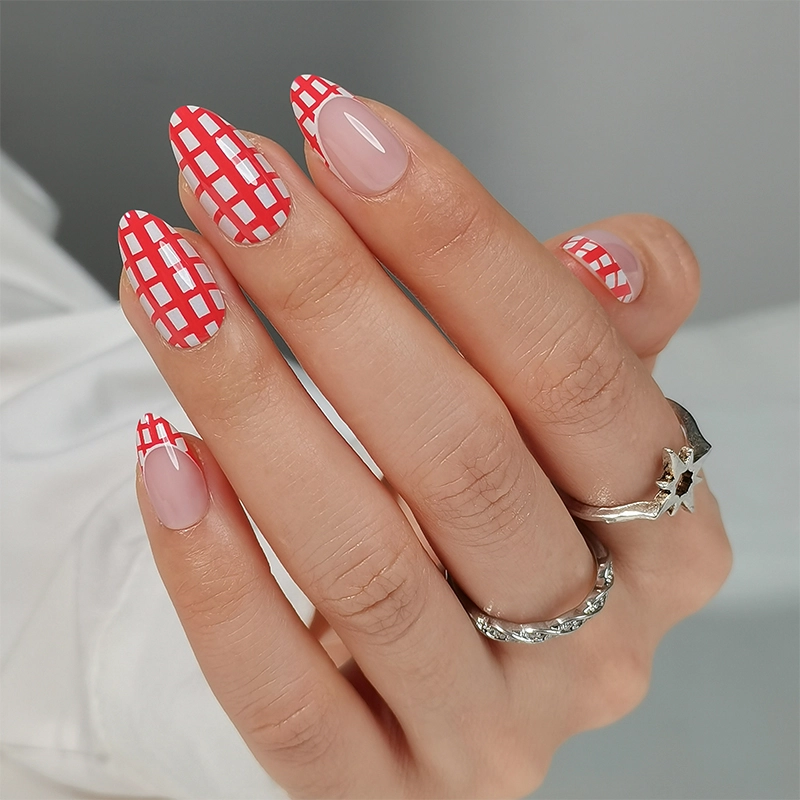
Wholesales Red French Nails Tips Checkered Soft Gel Nail Tips 32 Piece Set
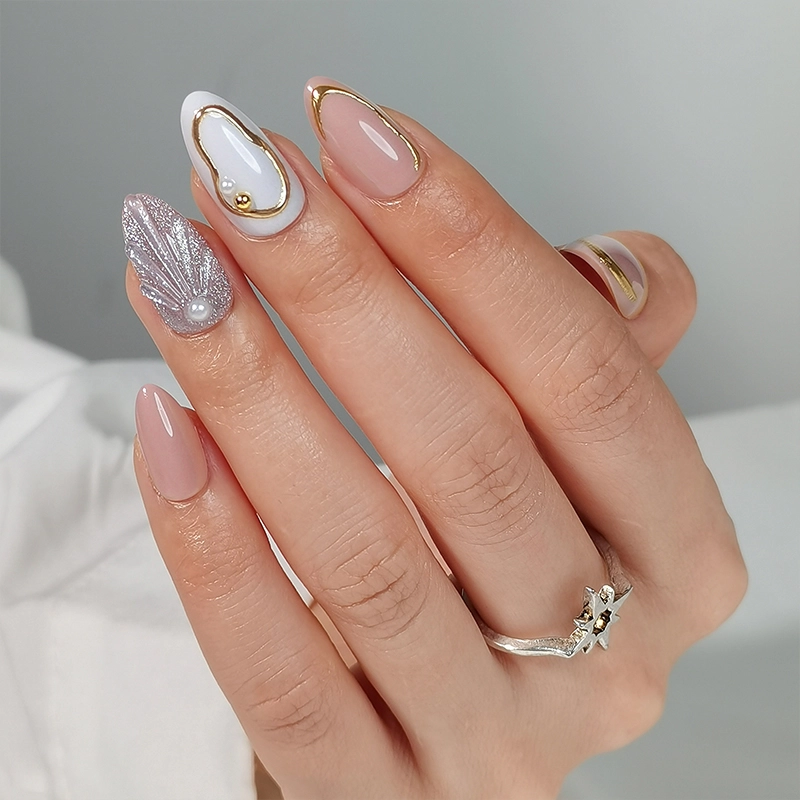
Wholesales Elegant Shell Inspired Soft Gel Wearable Nails for Seasonal Celebrations
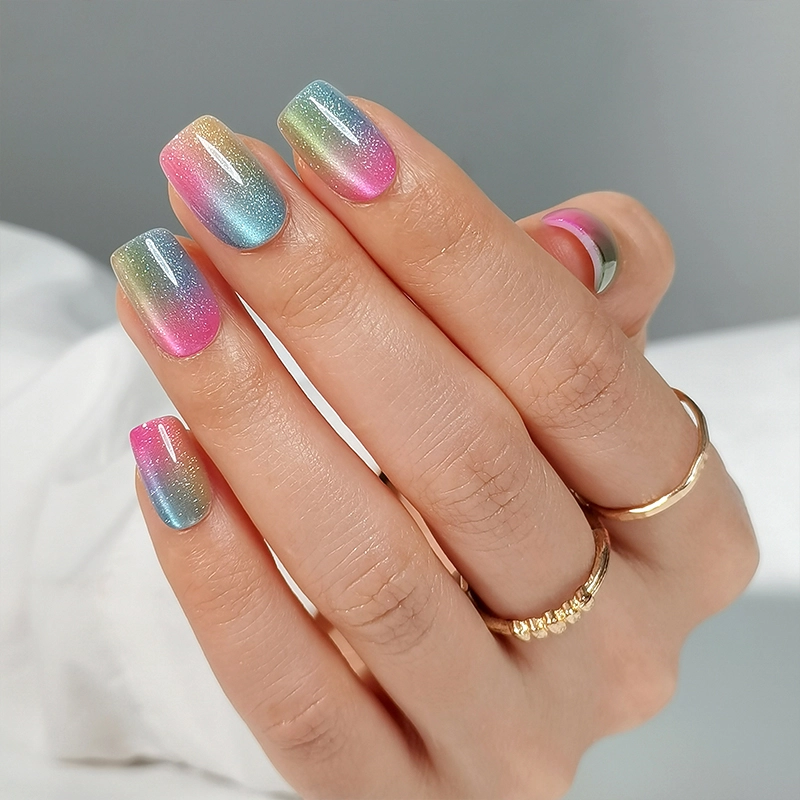
Custom Wholesale Gradient Cat Eye Soft Gel Wearable Fake Nails
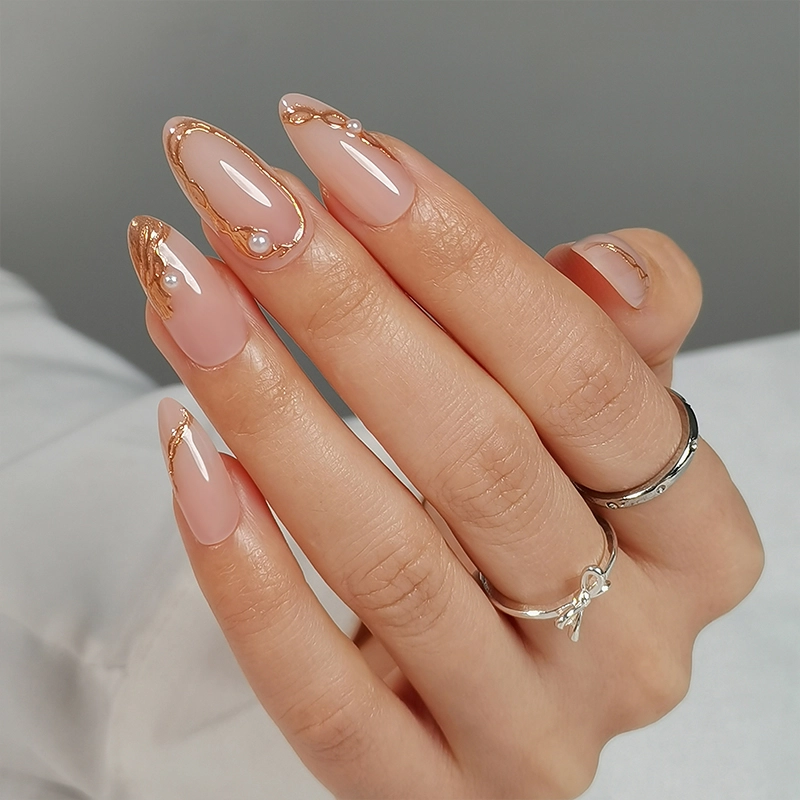
Wholesales Luxury Rhinestone Handmade Private Label Press On Nails Art Tips
Copyright © 2025 - XIANXING BEAUTY All Rights Reserved. Sitemap
Facebook
YouTube
Instagram
LinkedIn