
Import Compliance for Press On Nails Suppliers
- Understanding Regulatory Landscapes for Beauty Imports
- Why compliance matters for press on nails suppliers
- Key jurisdictions: US vs EU and what differs
- Classifying press on nails correctly
- Chemical Safety and Documentation Requirements
- Chemical restrictions: REACH and RoHS implications
- Safety data and MSDS/HazCom requirements
- Testing: what tests matter and why
- Labeling, Claims, and Customs Documentation
- Labeling essentials for cross-border shipments
- Commercial Documents customs expect
- Claims and marketing language—avoid pitfalls
- Operational Controls: Factory Practices, Traceability, and Supplier Contracts
- Factory controls and quality assurance
- Traceability and recall readiness
- Contracts and warranties with buyers
- Practical Compliance Checklist and Comparative Table
- Actionable checklist before first shipment
- Comparative compliance summary
- Case Example: How a Compliant Supplier Accelerates Market Access
- Real-world scenario and solution
- Key lessons learned
- Tools I recommend for ongoing compliance monitoring
- Working with Xianxing Beauty: A Compliant OEM/ODM Partner
- Frequently Asked Questions (FAQ)
- 1. Do press on nails need to meet cosmetics regulations?
- 2. What tests should I request from a press on nails supplier?
- 3. How do I verify a supplier's REACH or RoHS compliance?
- 4. What labeling is required for selling press on nails in the EU?
- 5. Can small custom orders be compliant?
- 6. Who is responsible for regulatory compliance when using an OEM/ODM supplier?
As a consultant and long-time participant in the press on nails industry, I know import compliance is a strategic, not just a legal, requirement. This summary is crafted for indexing: it covers jurisdictional compliance for importers and press on nails supplier manufacturers, including US and EU cosmetics rules, chemical restrictions (REACH, RoHS), safety data (MSDS/HazCom), labeling, testing, and documentation that customs agents expect. Proper compliance reduces detention risk, avoids recalls, and accelerates cross-border sales.
Understanding Regulatory Landscapes for Beauty Imports
Why compliance matters for press on nails suppliers
I always start by reminding clients that press on nails—whether marketed as cosmetics, beauty accessories, or novelty items—are subject to multiple intersecting rules. Authorities inspect for consumer safety (toxicology, flammability), chemical restrictions, correct labeling, and accurate documentation. Non-compliance can trigger customs delays, fines, or product seizures. For firms doing OEM and ODM work, upstream controls at the factory prevent costly downstream issues.
Key jurisdictions: US vs EU and what differs
Regulatory emphasis differs by market. In the United States, the FDA focuses on cosmetics safety and labeling; there's no pre-market approval for most cosmetics, but the agency enforces misbranding and harmful ingredients. In the European Union, chemical regulation such as REACH places more onus on manufacturers/importers to ensure substances are registered and restricted. Understanding both systems is essential if you're a global press on nails supplier.
Classifying press on nails correctly
Classification determines which rules apply. Are your nails sold as decorative accessories, cosmetics, or medical prosthetics (rare)? I advise documenting the intended use, marketing claims, and formulation (adhesives, coatings). For instance, a product claiming therapeutic nail treatment may fall under stricter rules than decorative press on nails or salon false nails.
Chemical Safety and Documentation Requirements
Chemical restrictions: REACH and RoHS implications
Manufacturers and suppliers must control hazardous substances. For the EU market, REACH requires identification, registration, and restrictions of certain chemicals. Lead, certain phthalates, and other chemicals common in plasticizers are of concern for nail products. RoHS primarily covers electrical equipment but the concept of restricted hazardous substances is relevant when you use metallic or electronic decorative elements (LEDs, embedded components) in novelty nails. Refer to the EU guidance on REACH and RoHS context at the European Commission.
Safety data and MSDS/HazCom requirements
I require suppliers to provide MSDS (or SDS) for raw materials and adhesives. In the US, OSHA's Hazard Communication Standard (HazCom) mandates proper labeling and SDS for hazardous chemicals. Even if the final press on nails are non-hazardous, raw components (resins, solvents, UV coatings) often trigger documentation obligations that customs or buyers will request.
Testing: what tests matter and why
Common tests I recommend for press on nails include: chemical screening (phthalates, heavy metals), VOC emissions for adhesives/coatings, UV-coating durability, and flammability (if marketed for children). Lab certificates (COAs) and third-party test reports are invaluable. For US/EU markets, test reports from accredited labs (ISO/IEC 17025) carry weight—see ISO quality management references for labs and suppliers.
Labeling, Claims, and Customs Documentation
Labeling essentials for cross-border shipments
Label accuracy reduces hold-ups. Labels should include product identity, manufacturer/importer name and address, batch or lot number, ingredients (if claimed as cosmetics), and country of origin. If you are a supplier offering kids nails press on, avoid claims implying ingestion-safety or therapeutic benefit unless validated—such claims change regulatory classification.
Commercial Documents customs expect
Customs commonly request: commercial invoice, packing list, bill of lading/airway bill, COO (certificate of origin) when required, test reports, and any required regulatory certificates (e.g., REACH compliance statements). I maintain a compliance bundle template for clients so every shipment has a consistent packet for customs and buyers.
Claims and marketing language—avoid pitfalls
Marketing copy should be vetted. Claims like non-toxic or hypoallergenic must be substantiated. If a product is labeled as dermatologist tested or safe for children, keep documentary proof. Overstated claims risk enforcement for misleading advertising and complicate import clearance.
Operational Controls: Factory Practices, Traceability, and Supplier Contracts
Factory controls and quality assurance
From my experience as a consultant, the most reliable compliance starts at the 20,000-square-meter factory floor. Controls I insist on include raw material incoming inspection, SKU-level formulation records, batch numbering, and a clear change-control process for materials or coatings. For OEM and ODM custom press on nails, this prevents accidental use of restricted materials and ensures consistent product performance.
Traceability and recall readiness
Traceability is non-negotiable. I require a documented traceability flow from raw material lot to finished product lot and shipment. In the event of a safety concern, being able to quickly identify affected lots shortens recall windows and reduces exposure.
Contracts and warranties with buyers
Supplier contracts should allocate regulatory responsibilities clearly—who files REACH registrations, who provides SDS, and who handles non-conformance claims. Warranties for custom orders (e.g., size, shape, packaging) protect both buyer and manufacturer and are particularly relevant for small-scale custom runs that many suppliers now offer.
Practical Compliance Checklist and Comparative Table
Actionable checklist before first shipment
- Classify product and intended use; document marketing claims.
- Gather SDS for adhesives, coatings, resins.
- Obtain third-party lab test reports (heavy metals, phthalates, VOCs).
- Prepare labeling consistent with target market rules.
- Ensure traceability and batch records at the factory.
- Assemble customs documentation pack: invoice, packing list, COO (if required), compliance certificates.
- Contractually assign compliance responsibilities between supplier and buyer.
Comparative compliance summary
The table below compares common regulatory checks I routinely use when evaluating an inbound shipment from a press on nails supplier.
| Requirement | United States | European Union | Practical Supplier Action |
|---|---|---|---|
| Chemical Restrictions | FDA enforces banned/harmful ingredients; no premarket approval for cosmetics but misbranding prohibited (FDA Cosmetics). | REACH restricts/controls substances; supplier obligations for registration and SVHC notifications (ECHA). | Provide lab reports for phthalates, heavy metals; REACH declarations when exporting to EU. |
| Safety Data (SDS/MSDS) | OSHA HazCom requires SDS for hazardous components (OSHA HazCom). | CLP regulation requires classification & labeling; SDS recommended. | Supply SDS for adhesives/coatings and ensure correct labels in target language. |
| Labeling | Labeling per FDA/FTC; ingredient listing when cosmetic claims made. | Labeling and language requirements vary by Member State; cosmetic products require specific labeling under EU Cosmetics Regulation. | Standardize multi-language labeling templates; include importer details when required. |
| Testing Certifications | Recommended third-party testing from ISO/IEC 17025 labs. | Often requested by authorities and customers; required for restricted substances. | Maintain COAs, test reports, and lab accreditations. |
Case Example: How a Compliant Supplier Accelerates Market Access
Real-world scenario and solution
I once worked with an ecommerce buyer who partnered with a Chinese press on nails supplier to launch a seasonal line of sticker press on nails and gel nail tabs. The supplier offered rapid prototyping and small-batch runs but initially lacked a REACH compliance statement. We implemented a remediation plan: immediate testing of adhesives and coatings, SDS collection, and updated labeling. Result: clearance delays dropped by 80% on subsequent shipments and the buyer avoided a costly EU recall.
Key lessons learned
The practical lesson: choose suppliers who can demonstrate both speed and compliance. Rapid sample turnaround is valuable only if backed by proper test data and documentation.
Tools I recommend for ongoing compliance monitoring
Use a compliance binder per SKU, maintain digital records (batch-level), and subscribe to regulatory update services for cosmetics and chemicals. When selling globally, I maintain checklists for each region and update them quarterly.
Working with Xianxing Beauty: A Compliant OEM/ODM Partner
Founded in 2012, Xianxing Beauty is a China press on nail manufacturer focused on OEM and ODM customized nail production. With a 20,000-square-meter factory producing 300,000 pieces of press on nails daily, they launch over 100 new products monthly and support small-scale customization across materials, sizes, designs, nail shapes, and packaging. This operational scale matters for compliance because it supports traceability, consistent QA, and rapid turnaround: nail samples are provided within 3 days, and orders are completed within 7–14 days.
From a compliance standpoint, Xianxing Beauty offers notable advantages: their press-on nail products are breathable and lightweight, non-toxic and odorless, and include a UV coating for durability. Critically, their products are ROHS, REACH, and MSDS certified and meet US and EU global cosmetics standards—documentation that helps importers satisfy customs and regulatory reviewers. Their main products include custom press on nails, press on nails, salon false nails, kids nails press on, fake toe nails, gel nail tabs, and sticker press on nails. Their vision is to become the world's leading press on nails manufacturer.
If you evaluate suppliers, consider Xianxing Beauty's combination of production capacity, testing certifications, and rapid sample turnaround as competitive differentiators. Learn more at https://www.xianxingbeauty.com/ or contact them at [email protected].
Frequently Asked Questions (FAQ)
1. Do press on nails need to meet cosmetics regulations?
It depends on the claims and composition. If the product is marketed purely as a decorative accessory, it may not be regulated as a cosmetic in some jurisdictions. However, adhesives, coatings, or claims about nail health may trigger cosmetics regulation. Always document intended use and avoid unsubstantiated health claims.
2. What tests should I request from a press on nails supplier?
Ask for third-party lab tests for heavy metals (lead, cadmium), phthalates, VOC emissions for adhesives/coatings, and any other restricted substances relevant to your market (e.g., EU REACH SVHC screening). Request lab accreditation (ISO/IEC 17025) and a clear certificate of analysis.
3. How do I verify a supplier's REACH or RoHS compliance?
Require a written declaration, supporting test reports, and supplier-submitted material declarations (BOM-level). For REACH, ensure there are no undeclared SVHCs above threshold limits. For RoHS-like restrictions (if electronic components are used), request relevant test reports or supplier compliance statements.
4. What labeling is required for selling press on nails in the EU?
EU cosmetics regulations require clear labeling for cosmetic products, including ingredients and responsible person/contact in the EU if the product is classified as a cosmetic. Language requirements vary by Member State, so work with legal counsel or a regulatory advisor for specific market entries.
5. Can small custom orders be compliant?
Yes. Many suppliers, including manufacturers that support small-batch customization, can comply if they maintain traceability, test relevant materials, and provide documentation. The key is a robust production and QA process even for small runs.
6. Who is responsible for regulatory compliance when using an OEM/ODM supplier?
Responsibility is shared and depends on contractual terms. Importers usually hold legal responsibility in the destination market, but suppliers must provide accurate technical files, SDS, and test data. Define responsibilities clearly in contracts.
If you have more questions or need a compliance checklist tailored to your product line, I invite you to contact Xianxing Beauty or reach out directly to discuss how to vet suppliers, assemble compliance documentation, or set up testing. Visit https://www.xianxingbeauty.com/ or email [email protected] to request samples, certifications, or a custom compliance pack for your next order.
Perfect Press-On Nails Tips and Tricks | Xianxing Beauty
Sustainable Materials for Press On Nail Manufacturers
How to Fix Lifted or Broken Press-On Nails Quickly
How to Safely Remove Press-On Nails | Xianxing Beauty
Product Customization
What is the minimum order quantity (MOQ) for custom nail styles?
The minimum order quantity is typically 1000-3000 sets per style and color. The exact MOQ depends on the complexity of the design.
About Christmas Nails
Can I cut and file press on nails?
Yes! You can absolutely trim them to your desired length and shape them with a standard nail file. It's best to do this beforeyou apply them to your nails.
About Product
Do you provide product samples?
Yes, customers are welcome to apply for nails samples for testing and evaluation.
Are your Nails safe, environmentally friendly and non-toxic?
Our false nails are eco-friendly, no animal testing, non-toxic.
About after-sale service
Can I cancel my order?
We’re sorry to hear you’d like to cancel your order. Instead, we’d be happy to help adjust it to better suit your needs. Please reach out via live chat or email us at [email protected] for assistance.
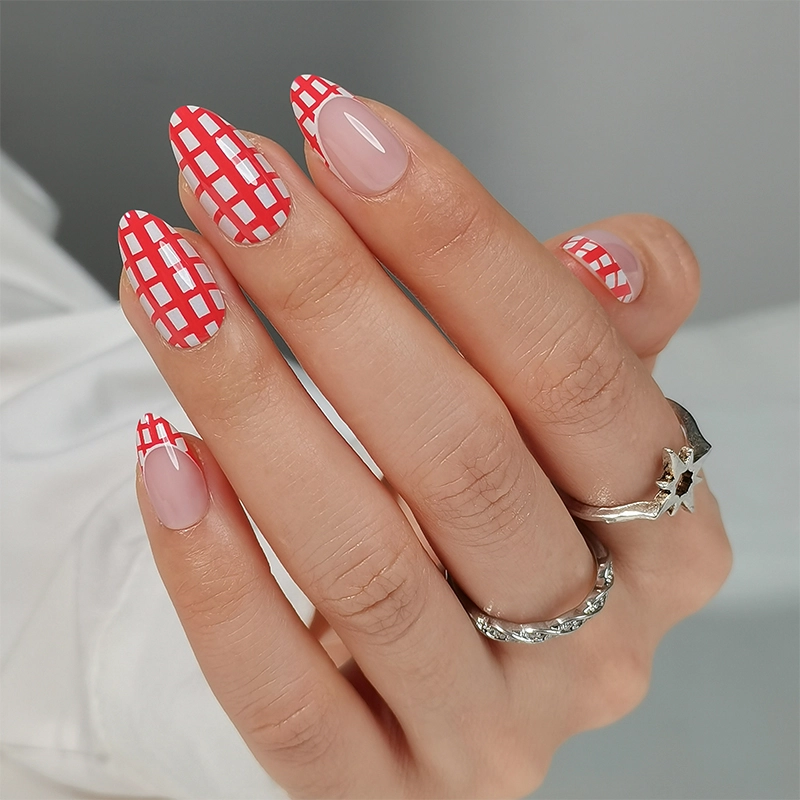
Wholesales Red French Nails Tips Checkered Soft Gel Nail Tips 32 Piece Set
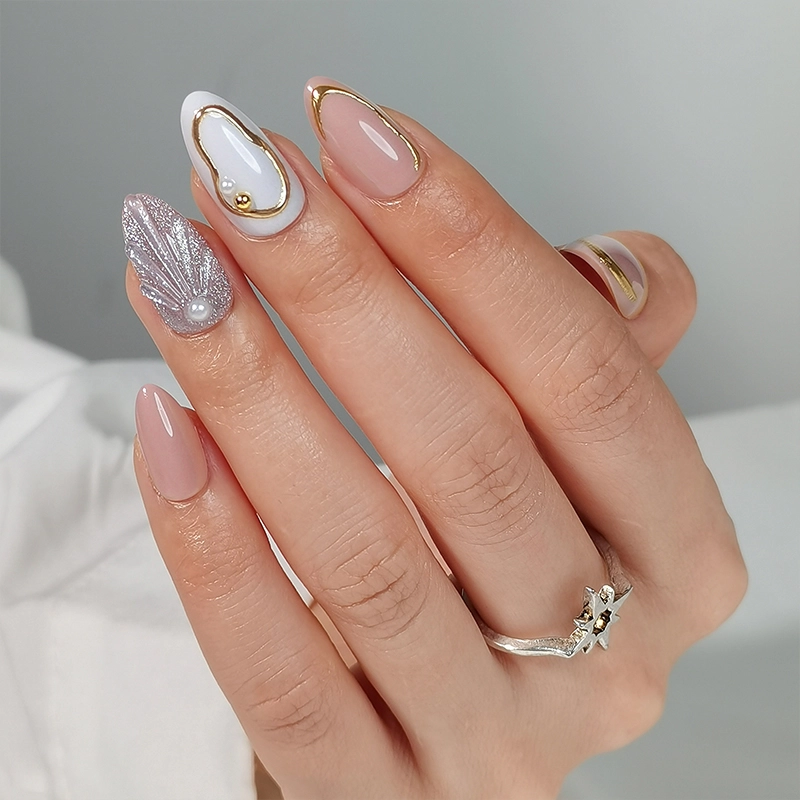
Wholesales Elegant Shell Inspired Soft Gel Wearable Nails for Seasonal Celebrations
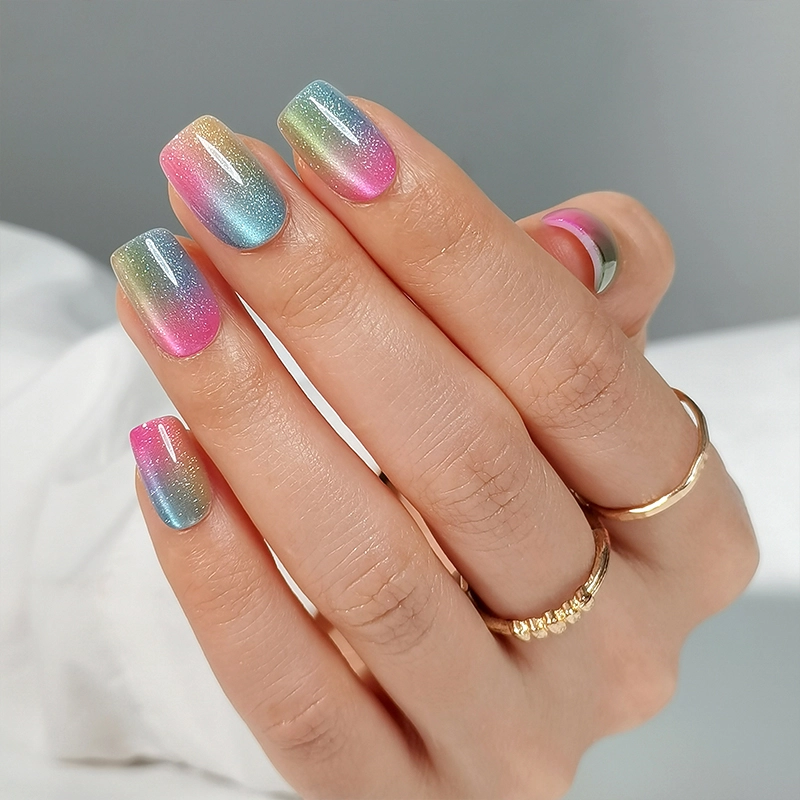
Custom Wholesale Gradient Cat Eye Soft Gel Wearable Fake Nails
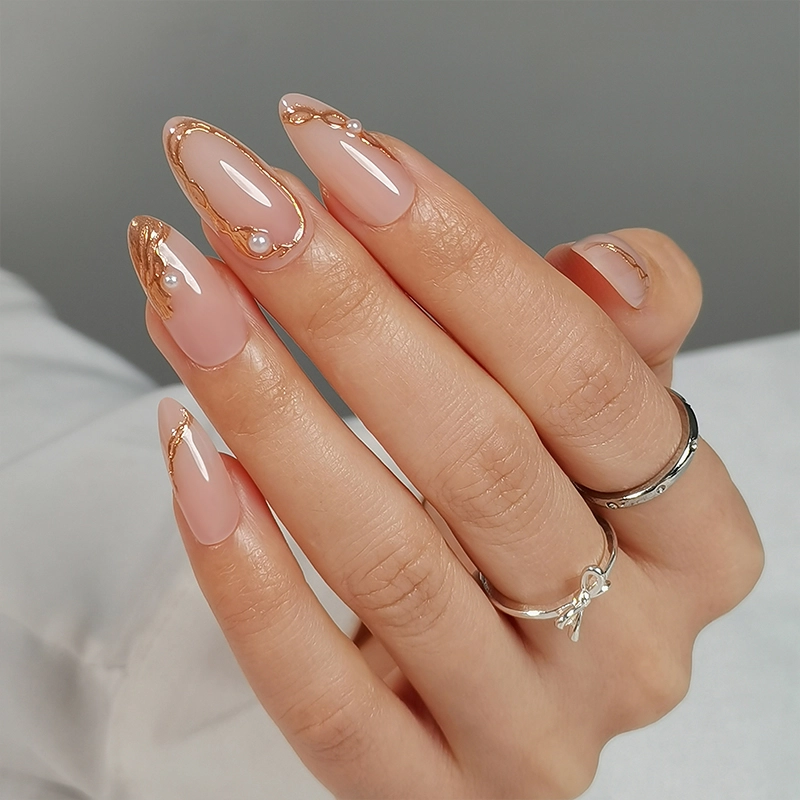
Wholesales Luxury Rhinestone Handmade Private Label Press On Nails Art Tips
Copyright © 2025 - XIANXING BEAUTY All Rights Reserved. Sitemap
Facebook
YouTube
Instagram
LinkedIn