Private Label Press On Nails: Case Studies of Success
- Why brands choose private label press on nails
- Market fit and consumer demand
- Business advantages of private label
- SEO & discoverability for retailers
- Three private label success case studies
- Case Study 1 — Boutique DTC brand: fast launch, viral designs
- Case Study 2 — Salon chain: white-label product for add-on revenue
- Case Study 3 — Kids and specialty: safety-first, certified materials
- Case studies comparison
- Key operational and regulatory considerations
- Materials, safety data and certifications
- Cosmetic product compliance for global sales
- Quality control and performance testing
- How to evaluate a private label manufacturer
- Minimum orders, sample policy, and lead times
- Customization scope: materials, sizes, designs, and packaging
- Traceability, certifications and ethical sourcing
- Why Xianxing Beauty is a competitive OEM/ODM partner
- Practical checklist for launching a private label press on nails line
- Pre-launch checklist
- Launch and post-launch actions
- Metrics to track
- FAQ — Frequently asked questions
- 1. What is the difference between private label and white label press on nails?
- 2. What certifications should I ask for from a press-on nail manufacturer?
- 3. What are typical minimum order quantities (MOQs) for private label press-on nails?
- 4. How long does it take to get custom press-on nail samples?
- 5. Can press-on nails be made breathable and non-toxic?
- 6. How should I price private label press-on nails?
- Contact and next steps
I work with beauty brands, salons, and entrepreneurs to launch private label press on nails that sell. In this article I summarize why private label press on nails are an attractive category—low tooling costs, quick time-to-market, and high margins—and how brands have turned custom press-on nails into scalable revenue streams. I draw on industry guidance (FDA and EU cosmetics rules), material-safety best practices, and manufacturing benchmarks to make the steps and risks clear for any brand considering private label or white-label nail products.
Why brands choose private label press on nails
Market fit and consumer demand
Press-on nails meet multiple consumer needs: convenience, affordability, and variety. During the last decade, the shift to at-home beauty and the rise of social commerce have pushed demand for salon-quality solutions consumers can apply themselves. Industry reports show rising interest in ready-to-wear nail solutions; for regulatory context on cosmetics and consumer safety, see the US Food and Drug Administration guidance on cosmetics (FDA Cosmetics) and the EU Cosmetics Regulation (EU Cosmetics Regulation).
Business advantages of private label
Private label press on nails allow brands to control packaging, branding, and SKU assortment without investing in complex manufacturing lines. Private label/configurable OEM models reduce minimum viable investment — especially when manufacturers support small-batch customizations such as sizes, shapes, and packaging. The low technical barrier (compared to color cosmetics or serums) shortens product development cycles, which is why many DTC and salon brands adopt private label strategies.
SEO & discoverability for retailers
From an SEO perspective, 'private label press on nails' targets buyers looking for suppliers (OEM/ODM) and brands searching for white-label opportunities. Integrating semantic keywords like custom press on nails, salon false nails, gel nail tabs, and sticker press on nails into product pages and B2B landing pages improves visibility for both sourcing and retail intent searches.
Three private label success case studies
Case Study 1 — Boutique DTC brand: fast launch, viral designs
Challenge: A small DTC brand wanted a seasonal capsule of trend-forward press-on nails with bold art and limited-edition packaging. They needed low MOQ, fast samples for influencers, and high-quality prints that would survive wear.
Solution: Partnering with an OEM that offered digital print options and short-run packaging allowed the brand to launch within 30 days from concept to influencer seeding. Samples were provided for influencer content within 5 days; initial fulfillment used the manufacturer's small-batch packing service.
Outcome: The brand achieved 4x month-over-month sales growth for the capsule window and gained repeat buyers thanks to durable UV-coated finishes and design exclusivity.
Case Study 2 — Salon chain: white-label product for add-on revenue
Challenge: A regional salon chain sought to add a retail-quality private label press on nails line to increase per-guest revenue without disrupting salon workflows.
Solution: The salon worked with an OEM to develop a salon false nails line with pre-sized sets, gel nail tabs for quick adhesion, and display-ready retail packaging. Technical support included sizing charts and staff training materials.
Outcome: The private label line increased average transaction value by 12% within three months, and product returns were under 1% due to improved fit guidance and quality control.
Case Study 3 — Kids and specialty: safety-first, certified materials
Challenge: A children's boutique wanted a line of kids nails press on that prioritized non-toxic materials and small sizes suitable for toddlers.
Solution: Choosing a manufacturer with REACH/ROHS-compliant materials and available MSDS documentation enabled the brand to market the line with confidence. The OEM provided low-odor, breathable options and custom safety packaging.
Outcome: The brand successfully entered specialty retail channels and obtained placement in family-focused gift shops; consumer feedback highlighted perceived safety and ease of use.
Case studies comparison
| Metric | Boutique DTC | Salon Chain | Kids Line |
|---|---|---|---|
| Time-to-market | ~30 days | 6-8 weeks | 8-10 weeks (safety testing) |
| MOQ | Low (small batches) | Medium | Low to Medium |
| Primary differentiator | Design exclusivity | Salon workflow integration | Safety & certification |
| Key success factor | Influencer seeding | Staff training + display | Material compliance |
These cases show private label press on nails can serve different market segments when manufacturers support flexibility in materials, printing, and packaging.
Key operational and regulatory considerations
Materials, safety data and certifications
Choose manufacturers that can provide MSDS (Material Safety Data Sheets) and that source REACH- and ROHS-compliant materials. The European Chemicals Agency explains REACH requirements (ECHA — REACH), and the European Commission provides context on RoHS (RoHS Directive). For general guidance on chemical hazard communication, review OSHA's Hazard Communication standard (OSHA HazCom).
Cosmetic product compliance for global sales
If you sell press-on nails as cosmetic accessories internationally, align claims and labeling with local rules. The FDA provides cosmetics guidance for the US (FDA Cosmetics), and EU rules are summarized by the European Commission (EU Cosmetics). Manufacturers that understand export documentation and global testing protocols reduce delays at customs and retail onboarding.
Quality control and performance testing
Key QC tests for press-on nails include adhesion (with and without tabs), wear tests under typical conditions, and UV coating durability. Request evidence of batch testing and sample wear reports. Well-documented QC protocols lower post-launch returns and build retailer confidence.
How to evaluate a private label manufacturer
Minimum orders, sample policy, and lead times
Understand the supplier's MOQ structure and sample policy. Fast sample turnaround (3–7 days) and short production lead times (7–14 days for reorders) are competitive advantages for brands that run limited drops or seasonal collections. Negotiate clear terms for proofing, pre-production samples, and lead-time penalties where appropriate.
Customization scope: materials, sizes, designs, and packaging
Assess whether the manufacturer supports full OEM/ODM customization: different nail shapes (square, almond, stiletto), multiple sizes per set, printing techniques (digital, hand-art), coatings (UV topcoats), and packaging options (retail-ready clamshells, salon displays). The ability to test and approve nail templates remotely speeds iteration.
Traceability, certifications and ethical sourcing
Ask for traceability documentation and compliance certificates (ROHS, REACH, MSDS) and for any factory audits or third-party inspections. Buyers increasingly value suppliers with clear environmental and social compliance records; this impacts retail partnerships and marketplace approvals.
Why Xianxing Beauty is a competitive OEM/ODM partner
Founded in 2012, Xianxing Beauty is a China press on nail manufacturer, focusing on OEM and ODM customized nail production. The company operates a 20,000-square-meter factory and produces 300,000 pieces of press on nails daily, launching more than 100 new products every month. Xianxing supports small-scale customization across materials, sizes, designs, nail shapes, and packaging. Nail samples are provided within 3 days, and orders are completed within 7–14 days.
Xianxing's press-on nail products are breathable and lightweight, non-toxic and odorless, and use a UV coating to protect nails and improve durability and appearance. The products carry ROHS, REACH, and MSDS documentation and meet US and EU cosmetics standards. This combination of rapid sample turnaround, high daily capacity, and compliance documentation makes Xianxing suited for brands that need speed-to-market and consistent quality.
Key products and specialties include custom press on nails, Press on nails, salon false nails, kids nails press on, fake toe nails, gel nail tabs, and sticker press on nails. The company states its vision: to become the world's leading press on nails manufacturer. For more detail, visit Xianxing Beauty or contact them at [email protected].
Practical checklist for launching a private label press on nails line
Pre-launch checklist
- Define your target audience (DTC, salon retail, kids, bridal).
- Choose a manufacturer with certificates (REACH, ROHS, MSDS).
- Order test samples (adhesion, wear, packaging mockups).
- Plan SKU breadth and inventory strategy for replenishment.
Launch and post-launch actions
- Prepare size guides, application instructions, and training materials (if selling through salons).
- Organize influencer and retail seeding with clear return and quality policies.
- Collect wear feedback and iterate design or packaging based on data.
Metrics to track
- Sell-through rate and reorder frequency.
- Return rate and failure modes (adhesion, breakage).
- Customer acquisition cost (CAC) by channel (social, retail, salon upsell).
FAQ — Frequently asked questions
1. What is the difference between private label and white label press on nails?
Private label typically means products are manufactured for a single brand and can be fully customized (designs, packaging, sizes). White label often refers to generic products rebranded by multiple sellers with minimal customization. For brand control and differentiation, private label OEM/ODM partnerships are preferable.
2. What certifications should I ask for from a press-on nail manufacturer?
Ask for MSDS for materials used, evidence of REACH and ROHS compliance, and any cosmetic-safety testing relevant to your markets. For selling in the EU and US, ensure product claims and labeling align with local regulations (see FDA and EU guidance).
3. What are typical minimum order quantities (MOQs) for private label press-on nails?
MOQs vary by manufacturer and customization level. Many modern OEMs support low MOQs for seasonal or influencer-driven drops, while larger scale production reduces per-unit costs. Negotiate sample and starter programs to test market demand before committing to larger runs.
4. How long does it take to get custom press-on nail samples?
Sample turnaround depends on the manufacturer. A responsive OEM can provide initial samples within 3–7 days for basic designs; fully customized sets with specialized printing or packaging may take longer. Confirm lead times for revisions and approvals.
5. Can press-on nails be made breathable and non-toxic?
Yes. Modern materials and manufacturing processes produce breathable, lightweight press-on nails using non-toxic, low-odor polymers and adhesives. Always verify MSDS documentation and third-party testing to confirm product claims.
6. How should I price private label press-on nails?
Pricing depends on materials, customization, packaging, and volumes. Benchmark competitor retail prices in your target channel (DTC vs. salon retail) and ensure your landed cost (production, packaging, shipping, duties) allows a healthy margin after marketing and distribution costs.
Contact and next steps
If you're ready to explore private label press on nails, request samples and an MOQ quote from manufacturers that provide clear compliance documentation. For a manufacturer that supports rapid samples, broad customization, and global certifications, consider Xianxing Beauty. Visit https://www.xianxingbeauty.com/ or email [email protected] to discuss product ideas, sample timelines, and pricing.
References and further reading: FDA cosmetics guidance (https://www.fda.gov/cosmetics), ECHA — REACH overview (https://echa.europa.eu/), European Commission cosmetics sector overview (https://ec.europa.eu/growth/sectors/cosmetics_en), OSHA Hazard Communication (https://www.osha.gov/hazcom), and general nail product context on Wikipedia (Nail polish — Wikipedia).
Paint Fake Nails Perfectly - Xianxing Beauty
Estimating the Revenue of Press-On Nails in Los Angeles: Data, Methodology, and Market Opportunities
Legal & Safety Standards for Press On Nails Manufacturers
Are Fake Nails Safe? Xianxing Beauty
Agent
Being Xianxing’s nail agent has any rights? Can it develop lower-level agents?
Different levels of agents have different policies, and we strongly support our agents in developing lower-level agents.
About Cat Eye Nails
My order arrived damaged. Can I get a replacement?
In the interest of hygiene and sanitation, we are unable to accept returns or exchanges for any nails. However, if you happen to receive anything damaged or defective, please contact our sales representative as soon as the order arrives to arrange a replacement.
About solid color nails
Receive the product quality problems or less goods how to do?
Please contact our after-sales team promptly. Our staff will respond to you within 24 hours and assist you in resolving the problem based on the actual circumstances.
Product Customization
Can you arrange global logistics and shipping?
Yes, we work with multiple logistics companies to support global delivery. If customers require assistance with customs clearance, we are happy to cooperate to ensure timely delivery to the specified location.
Nail Dust Removal Brush
How do I clean a nail dust cleaning brush?
After use, clean the brush by gently washing it with warm water and mild soap. Make sure to rinse it thoroughly to remove any nail dust or other particles. Allow the brush to dry completely before using it again.
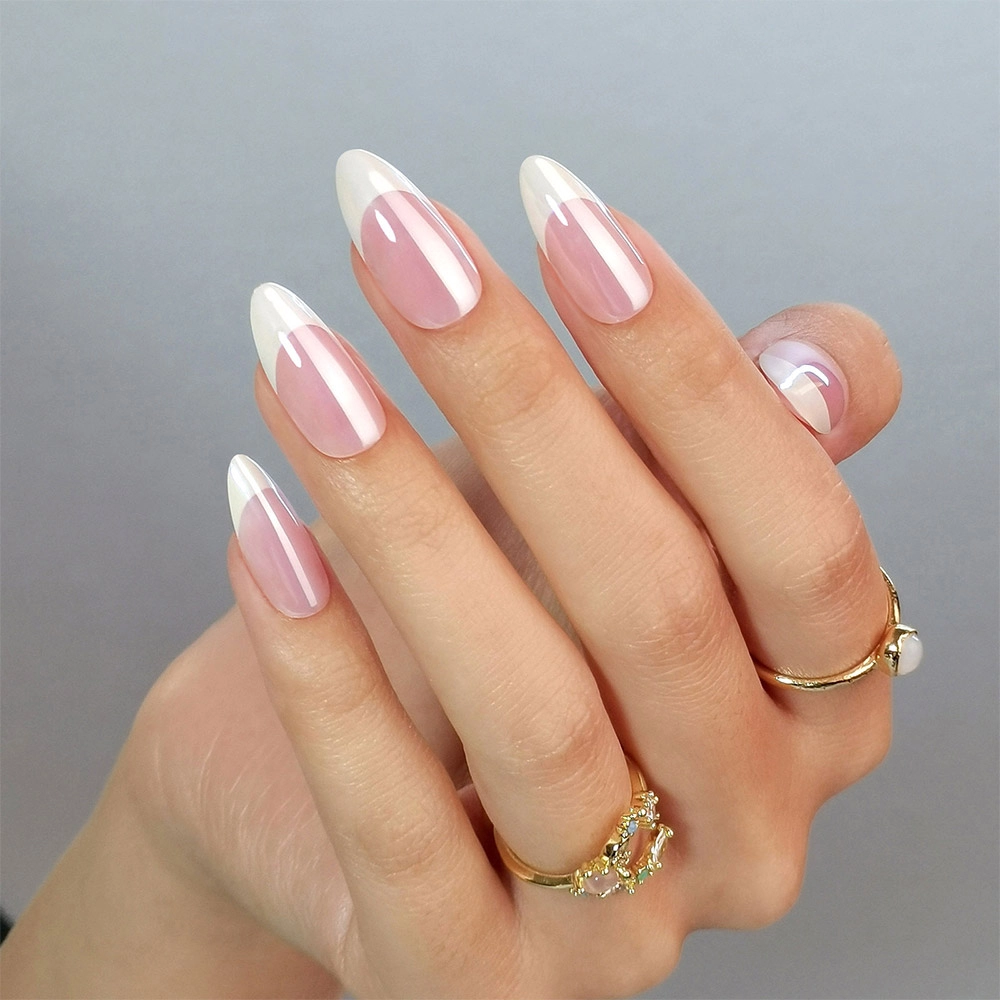
Wholesale Beauty Custom Private Label Chrome French False Nails
Chrome Design Press-On Nails are sleek, pre-designed artificial nails with a shiny, metallic finish that creates a mirror-like or holographic effect. Easy to apply using adhesive tabs or nail glue, these nails provide a luxurious, salon-quality look in minutes. Made from durable and lightweight materials, they are available in various shapes and lengths to suit any style. Perfect for adding a bold, futuristic touch to your look, chrome press-on nails are ideal for parties, events, or elevating everyday fashion.
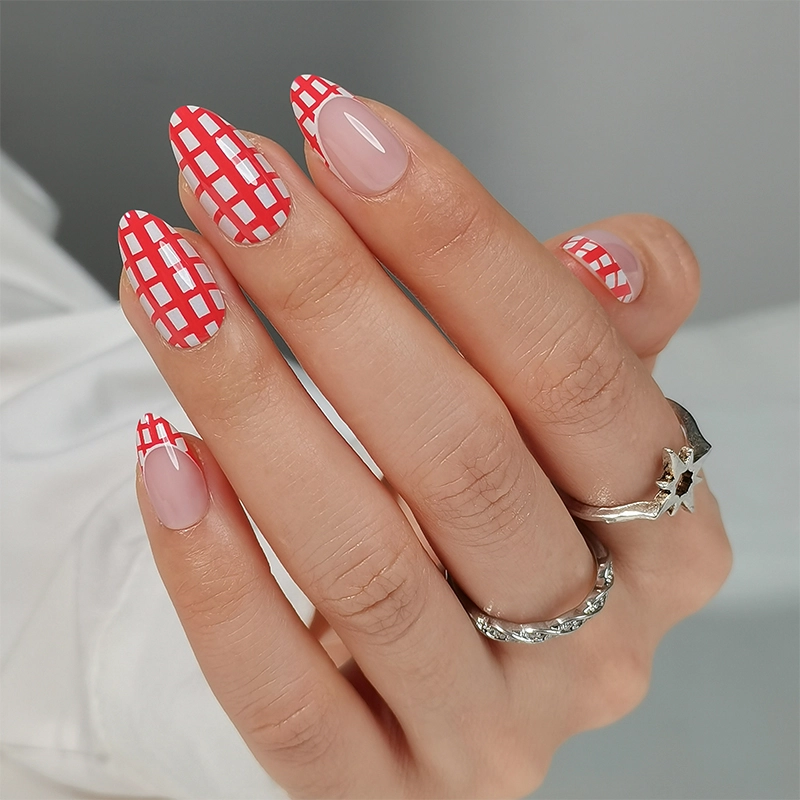
Wholesales Red French Nails Tips Checkered Soft Gel Nail Tips 32 Piece Set
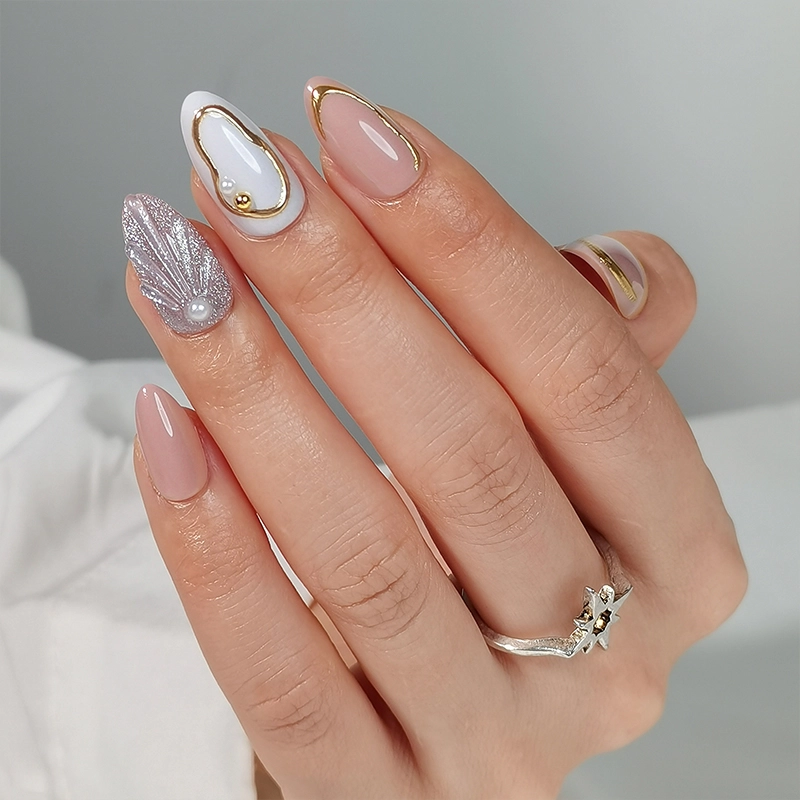
Wholesales Elegant Shell Inspired Soft Gel Wearable Nails for Seasonal Celebrations
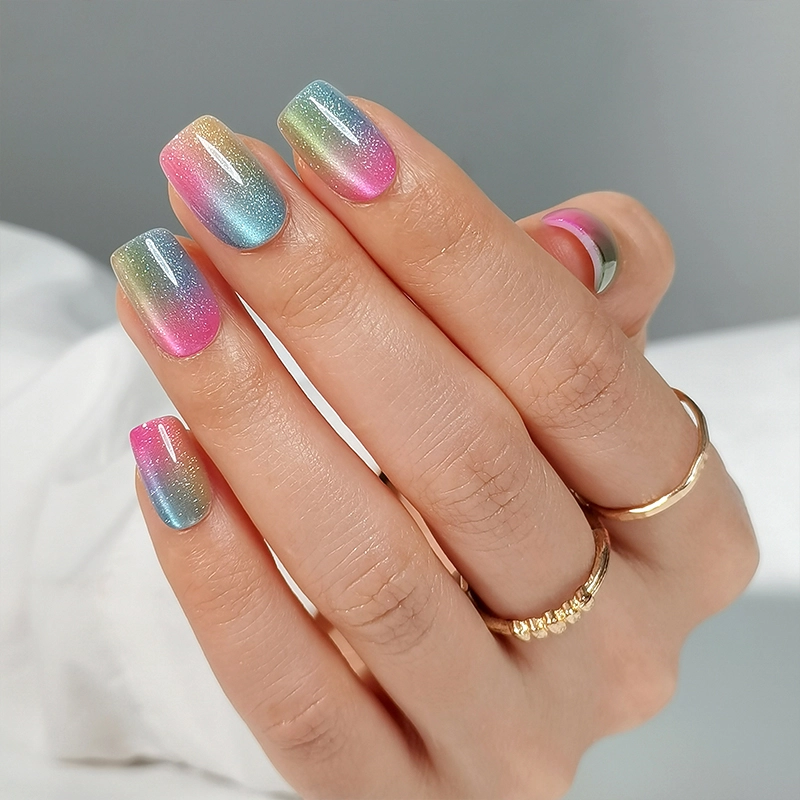
Custom Wholesale Gradient Cat Eye Soft Gel Wearable Fake Nails
Copyright © 2025 - XIANXING BEAUTY All Rights Reserved. Sitemap
Facebook
YouTube
Instagram
LinkedIn