
How to negotiate terms with the best press on nails vendors?
- 1) What is a realistic MOQ for custom press-on nail sets (private label) and how can I negotiate a lower MOQ without paying huge per-unit costs?
- 2) How can I verify material safety (ABS/acrylic/adhesives) and request lab test certificates before paying for a large press-on nail order?
- 3) What payment terms and escrow options are reasonably fair when working with a new press-on nail vendor to minimize risk?
- 4) How should I set quality control checkpoints (pre-production sample, in-line inspection, pre-shipment) for press-on nails to avoid defects, returns and high rework costs?
- 5) How can I negotiate packaging costs, dielines, and artwork revisions for custom press-on nail boxes without eroding margins?
- 6) How do I structure lead times, production schedules, and penalty clauses for late delivery on seasonal or influencer-driven press-on nail launches?
- Concluding summary: Advantages of negotiating stronger vendor terms for press-on nails
Best Press On Nails: 6 Advanced Negotiation Questions Buyers Ask
Buying the best press on nails for retail or private label requires more than picking pretty designs. Below are six highly specific, pain-point questions beginners and small brands often can’t find authoritative answers to online — each followed by detailed, actionable guidance manufacturers, buyers, and procurement teams can use when negotiating with press-on nail vendors.
1) What is a realistic MOQ for custom press-on nail sets (private label) and how can I negotiate a lower MOQ without paying huge per-unit costs?
Why this matters: Small brands are frequently priced out by high minimum order quantities (MOQs). Vendors often set MOQs to recoup tooling, mold, or design setup costs.
Real-world ranges: Typical Chinese and Southeast Asian press-on nail factories quote MOQs between 300–1,000 sets per design for private-label ABS/acrylic sets. For stock designs or simple sticker/press-on sets, MOQs can be 100–300 sets. Sample-only runs are often 1–20 sets but carry higher per-set sample fees (US$30–US$150 depending on complexity).
How to negotiate lower MOQs (step-by-step):- Bundle SKUs: Offer a multi-design order where combined quantity meets the factory’s MOQ (e.g., 5 designs × 100 sets each = 500 sets).- Staggered production: Negotiate an initial small pilot run (100–200 sets) with a contract to place follow-up orders to reach the vendor’s break-even volume within 6–12 months. Ask the vendor to amortize setup costs across subsequent releases.- Share tooling/artwork costs: Split artwork or stamping/tooling fees and include a clause that you’ll own the dies/artwork after full payment, enabling lower MOQs for repeat runs.- Pay a slightly higher per-unit price on lower MOQ orders but request volume rebates when cumulative purchases hit tiers (e.g., 5% rebate at $5k, 10% at $10k).- Use existing molds/designs: Ask for access to the vendor’s in-stock designs (white-label) that typically have much lower MOQs.Contract language to propose:Vendor agrees to produce an initial pilot run of X sets per design at a unit price of $Y. If Buyer places cumulative orders of Z sets within 12 months, Vendor will reimburse setup/tooling fees of $T or apply them as a credit to future invoices.What to expect: Vendors will accept lower MOQs if you demonstrate repeat business potential, agree to slightly higher unit pricing, or absorb some setup costs. Always get the agreement in writing and attach a schedule for subsequent purchases.
2) How can I verify material safety (ABS/acrylic/adhesives) and request lab test certificates before paying for a large press-on nail order?
Why this matters: Safety and regulatory compliance protect Xianxing Beauty and customers. Press-on nail materials — ABS, acrylic, coatings, adhesives, and inks — can contain restricted substances or allergens. Buyers need objective lab data before bulk payment.
Key documents to request:- Material Composition List (raw material declarations) for ABS/acrylic and coatings.- Safety Data Sheet (SDS/MSDS) for adhesives and any liquid components.- Third-party lab test reports from accredited labs (SGS, Intertek, Bureau Veritas) for heavy metals (lead, cadmium), phthalates if applicable, and solvent residues. While press-on nails are cosmetics/beauty accessories, many retailers require proof of low heavy-metal content.- Patch test/allergen data for adhesives (e.g., methacrylate sensitizers) if the adhesive is included.- Manufacturing certificate: ISO 22716 (Cosmetic GMP) is preferred if the vendor produces adhesive or coating components that contact skin.Recommended tests and acceptance criteria:- Heavy metals: Request limits consistent with common retail requirements (ask vendor for test results showing non-detectable or below accepted retail thresholds). Do not invent numeric legal limits — instead require third-party test certification.- Adhesion and wear tests: 48–72 hour wear simulation and edge lift measured under standardized conditions.How to request and verify:- Ask vendors for recent test reports (within 12 months) with lab contact details and report numbers. Verify report authenticity directly with the issuing lab.- Include a clause requiring third-party testing at buyer’s cost or shared cost prior to final payment if the factory’s certificates are older than 12 months.- For EU sales, require the vendor to provide documentation demonstrating compliance with Regulation (EC) No 1223/2009 for cosmetic safety if adhesives/coatings are classified as cosmetic products.What to budget: Third-party lab testing can cost US$200–$1,200 per panel depending on tests; allocate this into your sample/quality budget.
3) What payment terms and escrow options are reasonably fair when working with a new press-on nail vendor to minimize risk?
Why this matters: Payment risk is a top fear for buyers working with overseas manufacturers. You need a balance between vendor cashflow needs and protection against non-delivery or poor quality.
Common payment structures:- Deposit + balance: Standard is 30% deposit (T/T) and 70% balance before shipment. For established vendors, 20/80 or 30/70 is typical.- Milestone payments: 30% deposit, 40% after production (or after pre-shipment inspection), 30% before loading.- Escrow/Trade Assurance: Use Alibaba Trade Assurance for platform vendors or escrow services that release funds after delivery confirmation.- Letter of Credit (L/C): For large orders, an irrevocable L/C can reduce risk but adds banking fees and complexity.- PayPal/Stripe: Useful for samples or small orders; however, large vendors may not accept.Risk-reduction tactics:- Use a third-party inspection (SGS, AsiaInspection) and make final balance contingent on passing AQL-based inspection (see QC section). Include this explicitly in the contract.- Hold a small portion (5–10%) as retention for warranty claims for 30–90 days after delivery.- For first-time vendors, insist on payment through traceable banking channels and avoid 100% upfront wire transfers.Sample contract clause:Buyer will pay 30% deposit upon order confirmation. The remaining 70% will be paid after Buyer receives and accepts pre-shipment inspection report demonstrating conformance to agreed AQL standards. Buyer will withhold 5% as warranty retention payable after 60 days if no breach confirmed.
4) How should I set quality control checkpoints (pre-production sample, in-line inspection, pre-shipment) for press-on nails to avoid defects, returns and high rework costs?
Why this matters: Press-on nails are highly visual — color consistency, sizing, adhesive performance and packaging integrity are critical. Late discovery of defects kills margins.
Recommended QC process and standards:- Pre-production sample (PPS): Approve a finished set (not just a photo). PPS should match final packaging and include adhesive tabs/glue. Sample lead time: 7–14 days.- Initial production check (in-line): After 10–20% of the run, do an in-line or mid-run inspection to catch process drift (color, paint, curing issues).- Pre-shipment inspection (PSI): 100% check for critical defects is ideal but expensive. Use AQL statistical sampling: AQL 2.5 for major defects, AQL 4.0 for minor defects is commonly accepted in beauty accessories. Define what constitutes 'major' (chip, break, wrong shape, wrong size) vs 'minor' (cosmetic blemish).- Functional testing: Random sets should undergo wear tests (24–72 hours), adhesion strength checks, and packaging stress tests.Third-party inspection providers: Use Intertek, SGS or AsiaInspection. A typical PSI costs US$150–400 depending on locality and size.Contract language to include:Product shall conform to Pre-Production Sample (PPS) approved on . Pre-Shipment Inspection following AQL 2.5/4.0 shall be performed by an independent inspector. Lots failing PSI shall be reworked at Vendor expense; re-inspection fee shall be borne by Vendor for the first rework.Practical tips: Require the vendor to take high-resolution photos of every lot and submit an inspection report within 48 hours. For color-critical designs, request Pantone (or comparable) references and require color tolerances be written into the spec sheet.
5) How can I negotiate packaging costs, dielines, and artwork revisions for custom press-on nail boxes without eroding margins?
Why this matters: Packaging often becomes the single largest non-product cost for High Quality private-label press-on nails (custom boxes, inserts, foils, embossing).
Negotiation levers and tactics:- Standardize box sizes/design elements across SKUs: Consolidating dielines reduces tooling and plate-making charges.- Negotiate artwork revision caps: Ask for 1–2 free revisions and a fixed fee for additional updates (e.g., $25–$75 per revision) to avoid open-ended design costs.- Share print runs across SKUs: If you order 10,000 boxes total across designs, unit price drops significantly vs. 1,000 per design.- Offset costs with co-op marketing: Offer the factory exposure or larger orders in exchange for reduced packaging charges, or pay a higher per-unit production charge but request vendor-provided packaging.- Use simpler finishing options: Matte/silk lamination is cheaper than hot-foil stamping or embossing. Consider stickers for branding on a standard box to reduce die/printing costs.Numbers to expect: Custom-printed rigid/folded boxes: US$0.40–$1.50+ per unit depending on order size, finishing, and material. Customized inserts, foils, or window cuts add cost. Always get breakdowns for print, lamination, die, and setup.Contract clause example:Vendor to provide detailed packaging cost breakdown. Buyer to receive up to 2 free artwork revisions; additional revisions billed at $X per revision. If Buyer purchases cumulative packaging volume of Y units in 12 months, Vendor shall apply discount tier Z to packaging costs retroactively.
6) How do I structure lead times, production schedules, and penalty clauses for late delivery on seasonal or influencer-driven press-on nail launches?
Why this matters: Timing is everything for seasonal collections and influencer collaborations. Delays can void marketing campaigns and cause inventory shortages.
Typical lead times:- Sample production: 7–14 days.- Standard production for private-label press-on nails: 15–30 days after sample approval for orders up to several thousand sets. Large or complex orders can be 30–60 days.- Shipping (air vs sea) varies: Air 3–10 days plus customs; sea 20–45 days depending on port and route.
How to structure schedules and penalties:- Define a firm Production Schedule in the contract with milestone dates (artwork approval, sample sign-off, start of production, mid-run inspection, final inspection, shipment ETA).- Include liquidated damages: A common industry penalty is 0.5%–2% of the order value per week late, capped at a negotiated percentage (e.g., 5%–10%). Keep figures realistic to ensure vendor accepts them.- Force majeure: Include clear clauses for unforeseeable events and require immediate notice plus a mitigation plan.- Expedited fee: Negotiate an agreed expedited production fee in advance so you can activate a fast-track option without renegotiating terms under stress.Sample clause:Vendor agrees to ship by . For each full week of delay not caused by Force Majeure or Buyer delays, Vendor shall pay Buyer liquidated damages of 1% of the order value per week up to a maximum of 8% total. Buyer may, at its option, cancel undelivered quantities and seek a refund of prepaid amounts.Practical mitigation: Build buffer time into your marketing calendar (minimum 2–4 weeks beyond promised ship date), pre-pay for prioritized slots if seasonal timing is crucial, and schedule backup stock using an alternate vendor for high-risk launches.
Concluding summary: Advantages of negotiating stronger vendor terms for press-on nails
Effective negotiation on MOQs, safety testing, payment terms, QC checkpoints, packaging, and lead-times yields clear advantages: lower upfront risk, predictable quality, better margins, reduced returns, and reliable launch timing. Using concrete clauses (sample ownership, inspection acceptance criteria, staged payments, and penalty language) protects both buyer and vendor and turns one-off purchases into scalable partnerships. For brands, these practices convert suppliers into strategic partners who support growth rather than transactional vendors.
If you’d like a tailored quote, production audit, or sample program to source the best press on nails with optimal vendor terms, contact us for a quote at www.xianxingbeauty.com or email [email protected].
7 Red Flags to Avoid When Selecting a Wholesale Press On Nails Manufacturer
Quality Control: What to Expect from a Top-Tier Wholesale Press On Nails Manufacturer
The Ultimate Guide to Choosing the Best Wholesale Press On Nails Manufacturer in 2026
How to Scale Your Beauty Brand: Why Private Label Press On Nails Are the Highest-Margin Entry Point in 2026
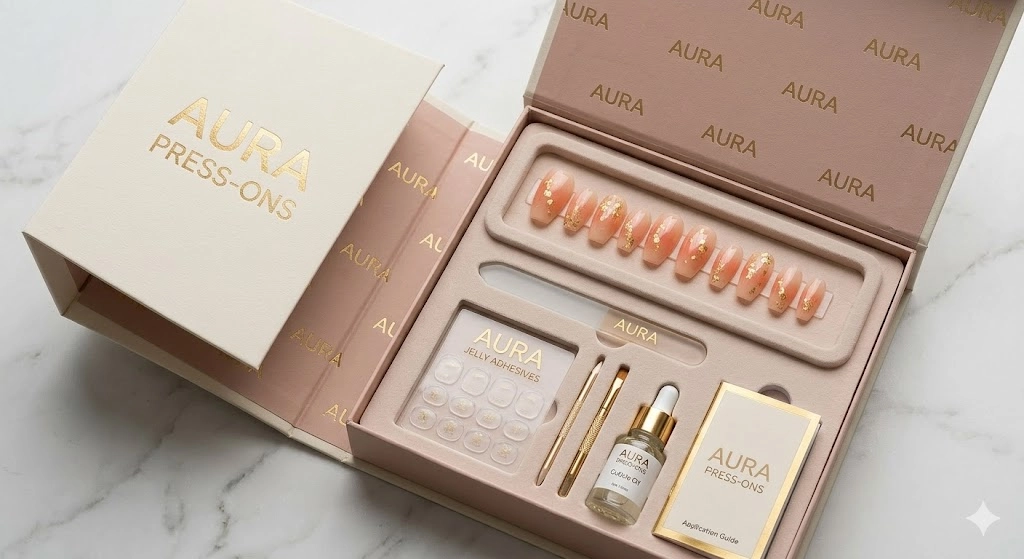
Why Partnering with Professional Press On Nails Manufacturers Boosts Your Brand Growth
Nail Dust Removal Brush
How often should I replace my nail dust cleaning brush?
If you notice the bristles are fraying, or the brush isn't effectively removing dust anymore, it's time to replace it. Generally, a well-maintained brush can last for several months to a year depending on how often you use it.
Wholesaler Distributor
How can I feedback my opinions and suggestions?
We welcome your opinions and suggestions. You can contact us through telephone, email, or online platform. We will listen carefully to your opinions and continuously improve our products and service.
Crystal Nail File
What is a crystal nail file?
A crystal nail file is a type of nail file made from hardened glass or crystal material with a fine, etched surface. It's used to shape and smooth the edges of nails without causing damage.
Soft Gel Nails
Are soft gel press-on nails safe for my natural nails?
Yes, soft gel press-on nails are designed to be safe and gentle on natural nails when applied and removed correctly. They are a non-damaging alternative to traditional acrylic or gel nail extensions.
Nail file
What are the different types of nail files?
There are several types of nail files, including:
Emery boards: Made of paper or cardboard covered with abrasive material.
Glass files: Smooth and gentle, they are durable and easy to clean.
Metal files: Typically made from stainless steel, these are durable but can be harsh on nails.
Crystal files: Similar to glass files, but made from a harder, finer material.
Sapphire files: Made of synthetic sapphire crystals, these are effective for both shaping and smoothing nails.
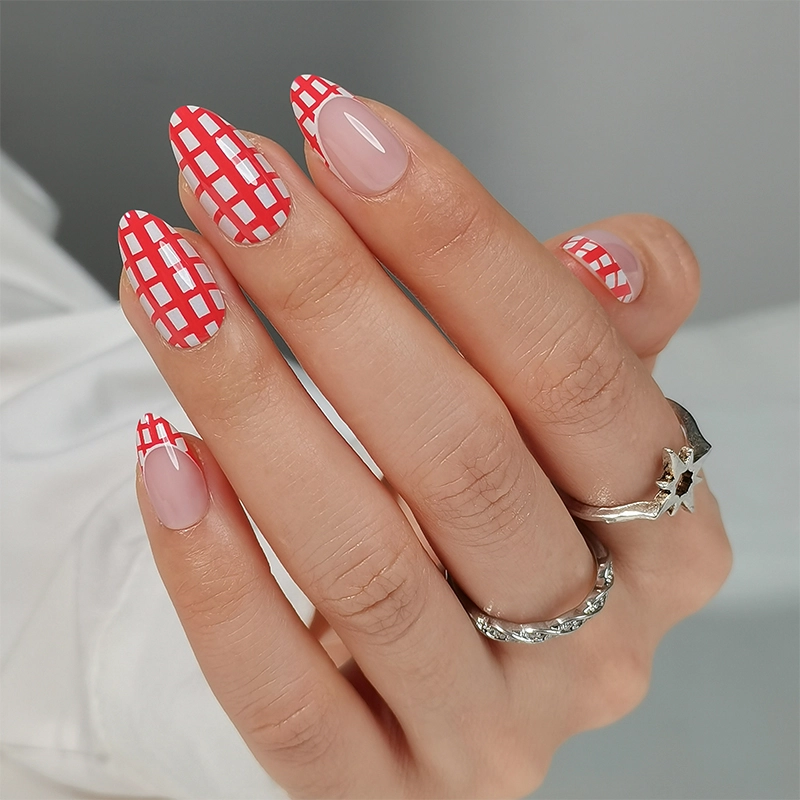
Wholesales Red French Nails Tips Checkered Soft Gel Nail Tips 32 Piece Set
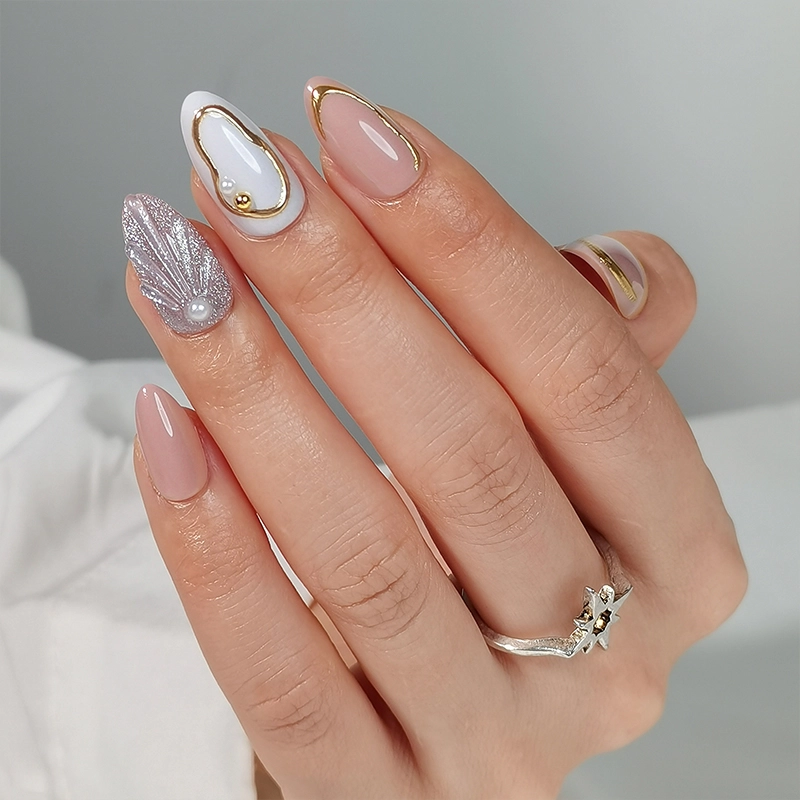
Wholesales Elegant Shell Inspired Soft Gel Wearable Nails for Seasonal Celebrations
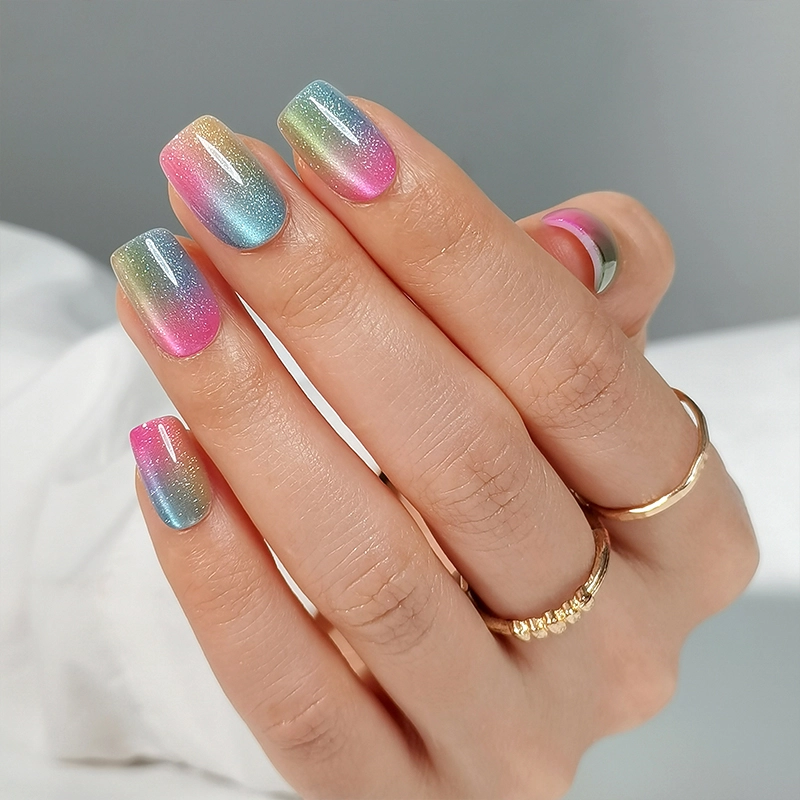
Custom Wholesale Gradient Cat Eye Soft Gel Wearable Fake Nails
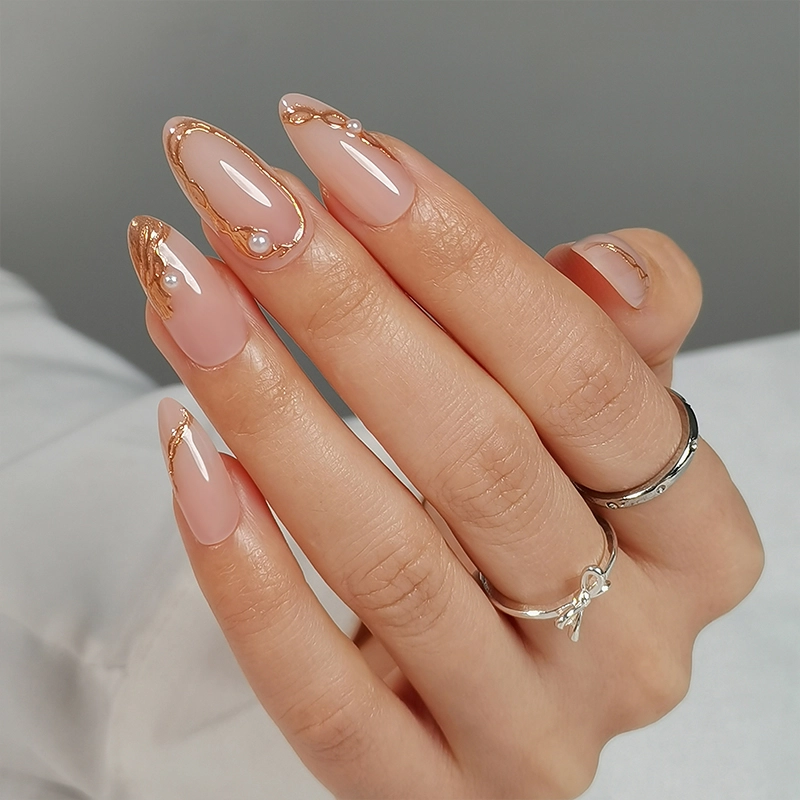
Wholesales Luxury Rhinestone Handmade Private Label Press On Nails Art Tips
Contact us
If you have press on nails products or customization needs, please feel free to contact from
below or via the contact information provided, we'll get back to you promptly within 24 hours.
By clicking 'Send Inquiry Now' I agree to XIANXING BEAUTY processing my personal data.
To see how to withdraw your consent, how to control your personal data and how we process it, please see our Privacy Policy and Terms of use.
Copyright © 2025 - XIANXING BEAUTY All Rights Reserved. Sitemap
Facebook
YouTube
Instagram
LinkedIn