
Which manufacturers offer the best press on nails OEM services?
- 1. What exact nail material and thickness (mm) should I specify for durable yet natural-feeling press on nails in my OEM order?
- 2. How can I ensure an OEM can meet a 7–14+ day real-world wear rate—what tests and acceptance criteria should I require?
- 3. Which manufacturers offer the best press on nails OEM services?
- 4. How should I set realistic MOQ, tooling fees, and sample policies when negotiating private-label press on nails?
- 5. What regulatory testing and documentation should I require from a press on nails OEM to sell in the US, EU and Australia?
- 6. What packaging, sizing charts, and branding options should I require from an OEM to maximize e-commerce conversions?
- Bonus: Practical application and removal checklist to reduce returns
- Conclusion: Advantages of press on nails and choosing the right OEM
Best Press On Nails: 6 Advanced Buyer Questions Answered (OEM & Quality Guide)
As an industry-savvy content specialist with hands-on OEM experience, this guide answers six high-value, long-tail questions beginners and early-stage brands repeatedly ask when sourcing the best press on nails. Each section gives practical, verifiable actions you can request from manufacturers, test protocols to mandate, and negotiation benchmarks to get reliable, private‑label press on nail products and packaging that convert online.
1. What exact nail material and thickness (mm) should I specify for durable yet natural-feeling press on nails in my OEM order?
Why this matters: Material and thickness determine flexibility, break-resistance, and wearer comfort. The wrong spec yields premature lifting, snapping, or a bulky look that hurts repeat purchases.
Recommended specs and rationale:
- Material: ABS resin (acrylonitrile butadiene styrene) is the industry standard for reusable press on nails due to its toughness, consistent finish, and ease of printing/embossing. For higher-end finishes with slightly more flexibility, some manufacturers offer modified ABS blends or thermoplastic olefins (TPO). Ask for a Material Safety Data Sheet (MSDS) for the exact polymer grade.
- Thickness: Choose between ~0.6 mm and 1.2 mm depending on product positioning:
- Lightweight/featherfeel (0.6–0.8 mm): Feels more natural, best-sellers for first-time consumers and fashion-forward short lengths. Slightly less impact-resistant—good if you emphasize comfort and reusability.
- Balanced durability (0.8–1.0 mm): The sweet spot for mainstream long-wear press on nail kits—good rigidity, reasonable flex, and better longevity during household tasks.
- Heavy-duty/reusable (1.0–1.2 mm+): Recommended for longer sculpted lengths and salon-grade sets designed to be reused multiple times. More rigid; can feel thick for some wearers.
- Edge profile and curvature: Specify the radius and curvature (C-curve) so the set fits flat and glues evenly. Ask the OEM to provide a digital CAD profile or scanned sample for your top three target sizes.
- Finish: Gloss, matte, satin, and gel-look options are achievable on ABS. If you require a gel-like finish, request a UV coating or soft-touch laminate specification. Ask for test photos under daylight and fluorescent light to confirm the finish reads correctly in e-commerce photos.
What to request from your OEM:
- MSDS and raw-material certificate for the ABS or polymer grade.
- Sample sets in two thicknesses (e.g., 0.7 mm and 0.95 mm) so you can validate feel and break-resistance.
- Technical drawings (C-curve, length, width per size) and a physical pre-production sample before mass production.
2. How can I ensure an OEM can meet a 7–14+ day real-world wear rate—what tests and acceptance criteria should I require?
Why this matters: Marketing “14‑day wear” without validated tests invites returns and negative reviews. Define objective criteria so suppliers cannot make unsupported claims.
Tests to request and how to interpret results:
- Simulated wear test (household activity cycle): Provide a protocol your OEM must run on a batch sample (e.g., 30 volunteers or standardized mannequin hands). Test schedule: normal hand washing (20–30 times/day), light dishwashing, typing, and five short immersion periods per day for 7–14 days. Report % of nails retained without lifting or detachment.
- Adhesion retention metric: Require quantified retention (e.g., ≥85% retention at day 7, ≥60% at day 14) as part of acceptance criteria. These are industry benchmarks for consumer-grade press on nails—adjust to your positioning.
- Pull/peel strength testing: Request lab results showing adhesive bond strength (for glue systems) in units used by testing labs (e.g., Newtons or peel strength N/25 mm). While absolute numbers vary by glue chemistry, insist on a lab report from an accredited facility for the specific adhesive you plan to use.
- Water immersion & thermal cycling: Nails and adhesive should pass repeated immersion and mild thermal cycles (e.g., 10–40°C) without lifting or surface craze.
- Reusability test (if claimed): For reusable sets, require at least 3 full application/removal cycles with ≥75% retention of original surface finish and sizing integrity.
Documentation to demand:
- Signed test protocol, raw data, and photos/video from the test runs.
- Third-party lab reports for peel/pull strength and material composition if the supplier cannot produce in-house accredited results.
3. Which manufacturers offer the best press on nails OEM services?
Why this matters: Beginners often want vendor names. Rather than a short list that may become outdated, use an objective evaluation framework to identify the right manufacturer for your needs—then shortlist candidates and validate them.
How to evaluate and shortlist OEMs:
- Core capabilities: Confirm the manufacturer molds and finishes ABS press-on nails in-house, can print/emboss custom art, and offers multiple adhesives (tabs, single-use glue sachets, or branded tubes).
- Customization options: Ability to modify nail lengths, C‑curves, thickness, and finishes (gloss/matte/gel). Ask for existing SKUs that match your desired look—this is faster and lower cost than full tooling.
- Quality systems: Request ISO 9001 or equivalent quality management documentation, AQL sampling plans, and evidence they run pre-shipment QC with photographic records.
- Regulatory support: They should provide MSDS for materials/adhesives, heavy metals or SVHC testing, and ability to supply certificates needed for target markets (e.g., REACH statements for EU shipping).
- Minimum order terms and lead times: Transparent MOQs, sample policy, and realistic production lead times (typical sample lead time 7–14 days; production 15–45 days depending on MOQ and complexity).
- Communication and tooling: Responsive account manager, CAD/profile sharing, and clear tooling fee structure. Good OEMs offer pre-production samples and mockups for e-commerce photography.
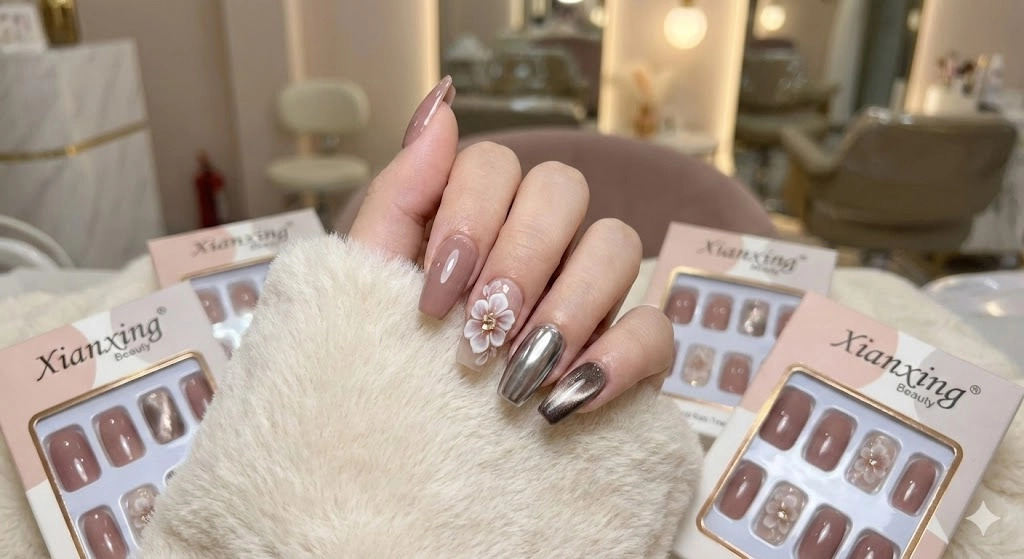
Example: Xianxing Beauty (www.xianxingbeauty.com) – contact [email protected]. When evaluating them or other manufacturers, run the checklist above: ask for MSDS, pre-production samples, wear test data, and references from other brands they’ve supplied.
4. How should I set realistic MOQ, tooling fees, and sample policies when negotiating private-label press on nails?
Why this matters: Many startups overpay upfront or accept unfavorable terms. Typical price/range benchmarks help you negotiate smarter.
Typical ranges and negotiation tips:
- MOQ per design/set: 500–2,000 sets is common for printed or standard-shape SKUs. If you want many SKUs (colors/patterns), negotiate lower per-SKU MOQs by consolidating packaging and colors where possible.
- Sample costs: Expect $30–$150 per sample set depending on complexity (basic printed sample is cheaper; full custom packaging plus adhesive sachets costs more). Ask for sample fees to be credited to the first production order.
- Tooling/mold fees: For unique shape tooling, one-time fees typically range $50–$300 per mold profile depending on complexity. Laser-cut stainless dies for packaging/artwork are additional. Seek amortization: request the tooling fee be spread over the first X orders or refunded if you reorder within a set timeframe.
- Packaging minimums: Custom boxes with artwork often have separate MOQs. If you need eco or High Quality packaging, prepare to meet a higher MOQ or accept neutral packaging for the first run.
- Payment terms: Typical terms are 30% deposit, 70% at shipment or against B/L. Negotiate staged payments tied to milestones (design approval, pre-production sample, and final QC sign-off).
Negotiation checklist:
- Get written confirmation that sample fees can be credited to production orders.
- Ask for a price break schedule by quantity and confirm lead times at each pricing tier.
- Require pre-production samples and photos of the production-run first pieces before full batch release.
5. What regulatory testing and documentation should I require from a press on nails OEM to sell in the US, EU and Australia?
Why this matters: Noncompliant products risk delisting, fines, or consumer complaints. Different territories have overlapping but distinct requirements.
Core documentation to request for cross-market sales:
- MSDS/SDS for raw materials (ABS resin, adhesives) and any coatings used.
- Chemical compliance reports: Heavy metals (lead, cadmium, mercury, arsenic) testing on pigments/inks if printed. For EU focus on REACH SVHC compliance; ask for a formal statement if restricted substances are tested.
- Adhesive safety: Adhesives may be regulated as cosmetic adjuncts or consumer adhesives depending on composition. Request adhesive MSDS and an allergen declaration if cyanoacrylate or other known irritants are used.
- Product safety and labeling: Provide recommended ingredient/contents labeling, warnings (e.g., not for children under X years, avoid contact with eyes), and instructions for safe application and removal. EU cosmetics regulation (EC No 1223/2009) governs marketed cosmetics—consult a regulatory specialist if your product contains active cosmetic ingredients.
- Testing labs and certificates: Ask for third-party test reports from accredited labs (ISO/IEC 17025) for critical tests (heavy metals, peel strength, adhesion tests). Internal QA is OK for minor tests, but importers commonly require accredited lab documentation for customs or retailer compliance.
- Traceability documents: Batch numbers, production dates, and a certificate of conformity (COC) for each shipment help with recalls or complaints handling.
Practical steps:
- Clarify which market(s) you’ll sell to before production so the OEM can run the correct tests and labeling.
- Budget for independent testing if you plan to sell through major retailers—buyers typically request accredited lab reports.
6. What packaging, sizing charts, and branding options should I require from an OEM to maximize e-commerce conversions?
Why this matters: Packaging and clear sizing materially affect conversion rate and returns. Good packaging improves perceived value and helps with unboxing-driven social posts.
Packaging and branding features to insist on:
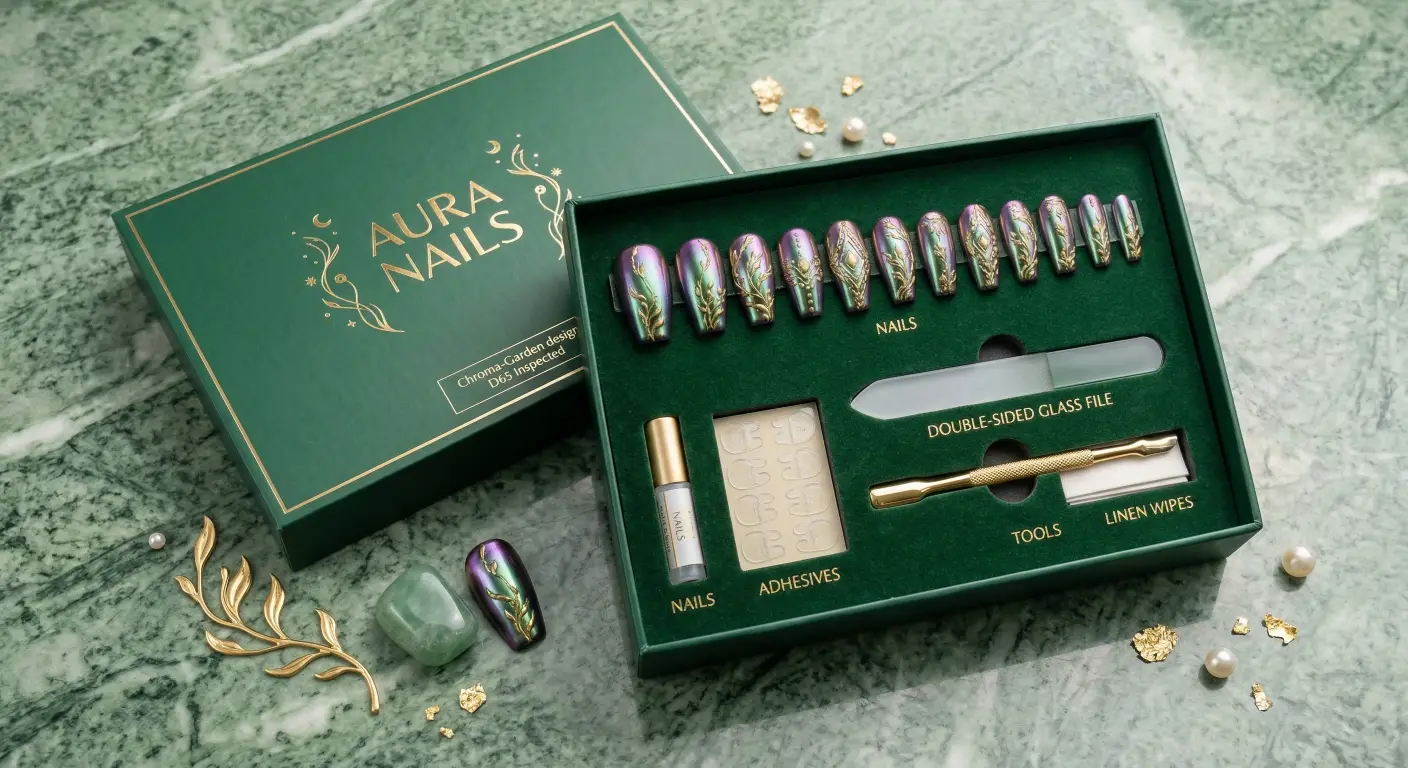
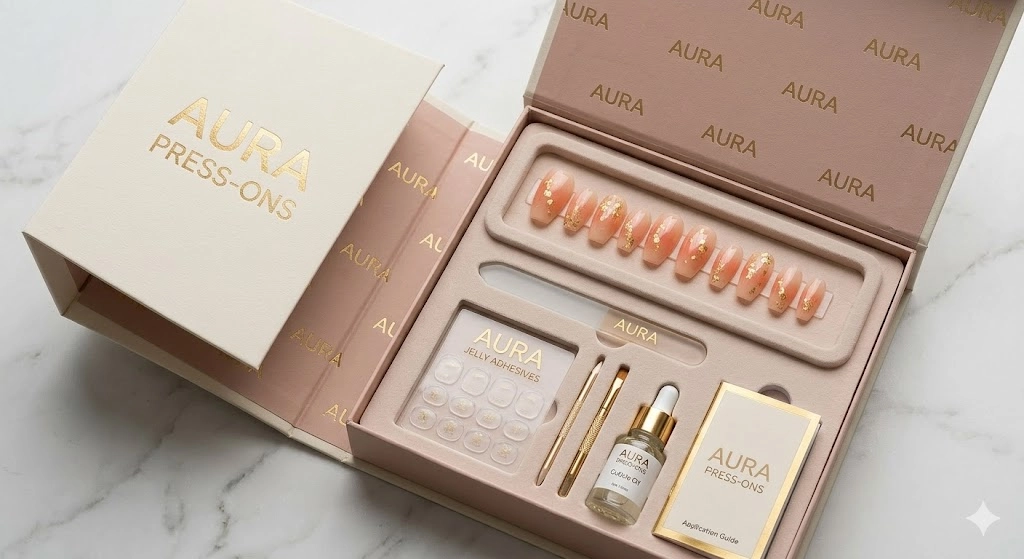
- Clear sizing chart and sample guide card: Include a 10-size sizing chart printed inside the box plus a small felt-tip sizing strip for customers to quickly check fit before application. Offer both metric (mm) and visual finger illustrations.
- Instruction/aftercare insert: Step-by-step application and removal instructions, recommended glue vs. tabs info, estimated wear time, and aftercare tips (acetone removal time, cuticle oil recommendation). This reduces misuse and returns.
- Packaging types: Compact retail box (custom-printed folding carton) for DTC, blister card for retail shelves, and High Quality magnetic boxes for high-ticket sets. For sustainability, offer recycled kraft or FSC-certified paper and clearly print recyclability instructions.
- Tamper evidence & hygiene: Sealed inner tray or shrink-wrap and single-use glue sachets if claimed sterile. For salon/professional sets, consider individually wrapped nail tips for hygiene compliance.
- Branding: High-res dielines and printable templates (CMYK and Pantone calls), barcode/UPC/GS1 implementation if you plan retail distribution, and packaging artwork approval workflows.
Conversion-driven extras:
- Include a QR code linking to an online application video tailored to your set (boosts success rate and reviews).
- Offer a low-friction refill program and clear SKU for replacement adhesive tabs or glue packs—recurring revenue opportunity.
Bonus: Practical application and removal checklist to reduce returns
Application tips to include with every kit:
- Prep nails by trimming and pushing back cuticles, lightly buffing the natural nail surface, and wiping with 70% isopropyl alcohol.
- Choose the correct size for each nail. Slight overlap is OK if between sizes; never curve the edges inward.
- Apply a thin, even line of cyanoacrylate nail glue or correctly place an adhesive tab. Press and hold for 10–30 seconds. Avoid overuse of glue to prevent overflow and skin adhesion.
Safe removal protocol (to include in the instruction insert):
- Clip free edge short if needed and file top surface gently to remove topcoat and reduce bond.
- Soak nails in 100% acetone for 10–20 minutes (time varies by adhesive). Use foil-wrap method for home users and a soak tray in a salon setting.
- Gently work nails off with an orange stick; avoid forcing. Finish with cuticle oil and a nail-strengthening treatment.
Include these steps in your packaging/instruction card and link to a hosted video (QR code) to minimize incorrect application and post-sale support requests.
Conclusion: Advantages of press on nails and choosing the right OEM
Press on nails offer immediate style, lower salon cost, and high margins for brands when produced correctly. The advantages of specifying the right material (ABS), testing for realistic wear, negotiating smart MOQs, and requiring comprehensive regulatory and packaging documentation are: higher customer satisfaction, fewer returns, faster time-to-market, and stronger brand credibility. By using the evaluation checklist in this guide—material certificates, wear-test data, sample policies, and packaging requirements—you can partner with an OEM that consistently produces durable, photo-ready press on nail kits designed for e-commerce success.
For a custom OEM quote, pre-production sample support, and technical documentation (MSDS, wear-test reports), contact us at [email protected] or visit www.xianxingbeauty.com.
7 Red Flags to Avoid When Selecting a Wholesale Press On Nails Manufacturer
Quality Control: What to Expect from a Top-Tier Wholesale Press On Nails Manufacturer
The Ultimate Guide to Choosing the Best Wholesale Press On Nails Manufacturer in 2026
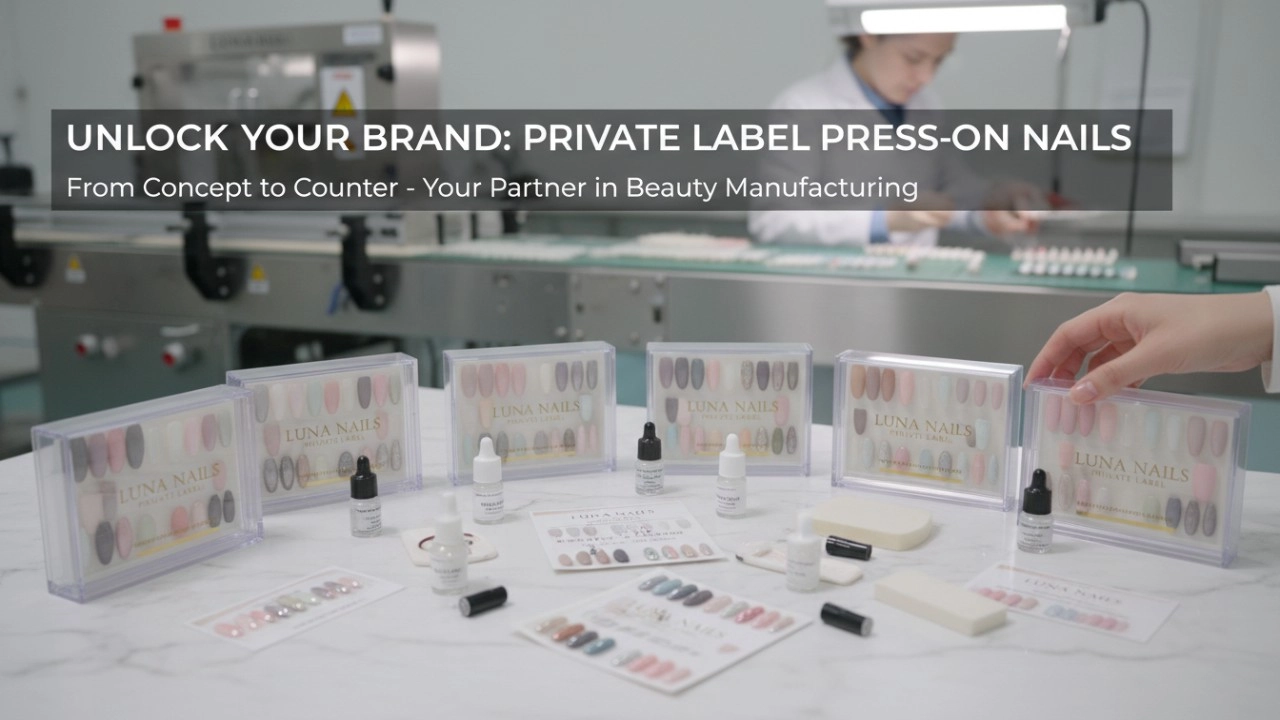
How to Scale Your Beauty Brand: Why Private Label Press On Nails Are the Highest-Margin Entry Point in 2026
Why Partnering with Professional Press On Nails Manufacturers Boosts Your Brand Growth
About shipping logistics
Do your products support global logistics?
Yes, our press-on nails are available for global shipping, ensuring you can receive them no matter where you are.
About Toe Nails
How do I remove toe press-on nails?
Soak in warm water: Gently soak your feet in warm, soapy water for about 10-15 minutes to soften the adhesive.
Gently peel off the nails: After soaking, you can gently lift the press-on nails from the edges. Avoid pulling them too forcefully, as this can cause damage to your natural toenails.
Remove residual adhesive: Use a gentle nail polish remover or rubbing alcohol to remove any leftover glue from your toenails.
75% Alcohol Pad
Can alcohol pads damage my nails?
No, alcohol pads are safe to use on nails when used properly. They help remove oils and dirt but shouldn’t cause harm. However, avoid overuse, as excessive alcohol can dry out your nails and skin over time.
About Duck Nails
Can I get duck-shaped nails with press-ons?
Yes! Duck-shaped press-on nails are available in various styles, colors, and lengths. You can find pre-shaped press-on nails with a duck-like flare that you can apply at home for a quick and easy manicure.
About Price and payment
Do you offer discounts for bulk purchases?
Yes, we provide discounts for bulk orders. The specific discount rate depends on the false nails order quantity and the terms of cooperation.
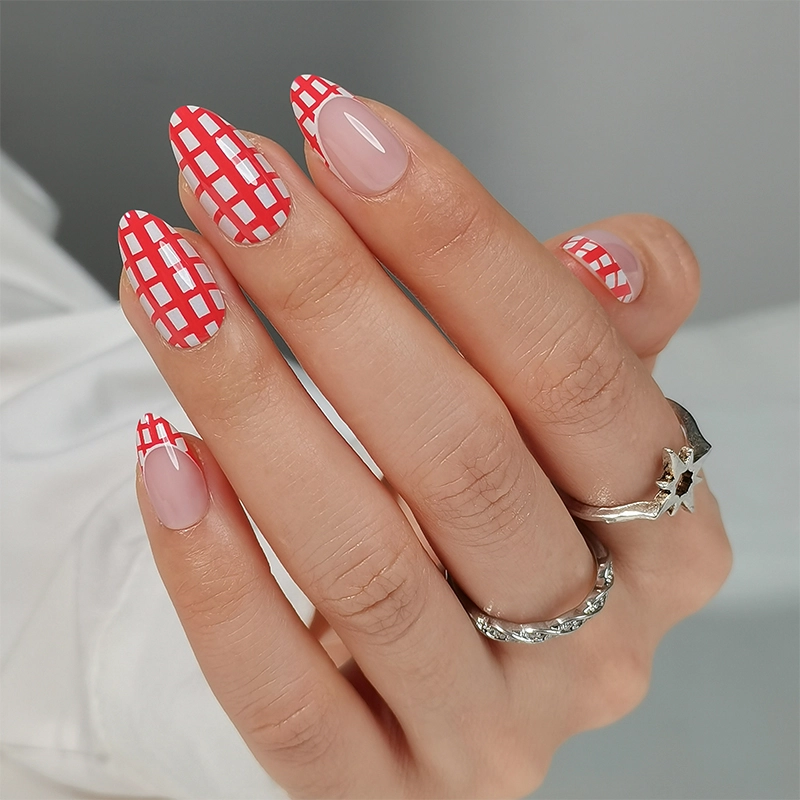
Wholesales Red French Nails Tips Checkered Soft Gel Nail Tips 32 Piece Set
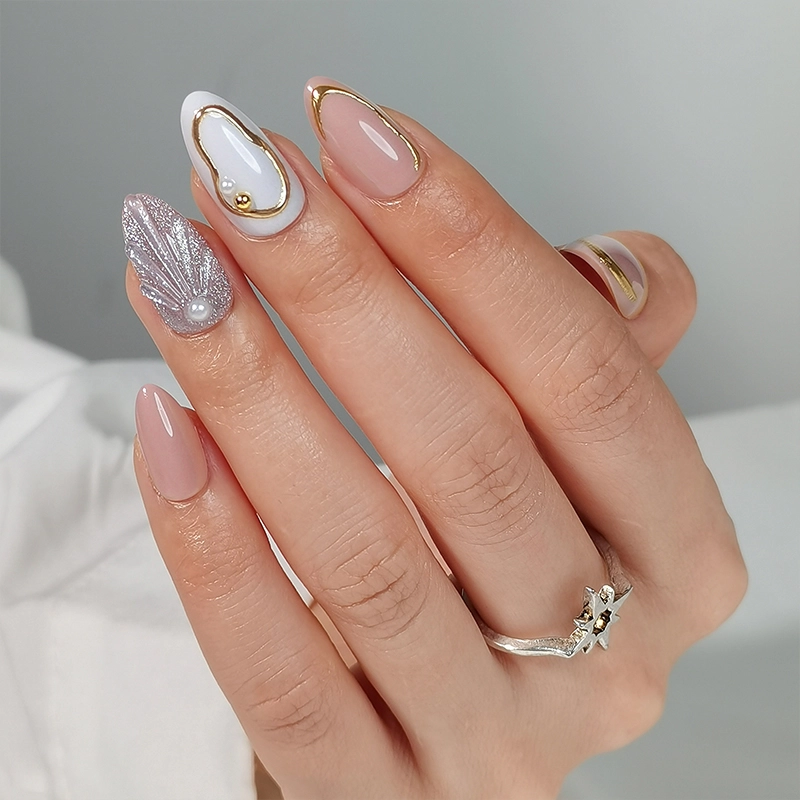
Wholesales Elegant Shell Inspired Soft Gel Wearable Nails for Seasonal Celebrations
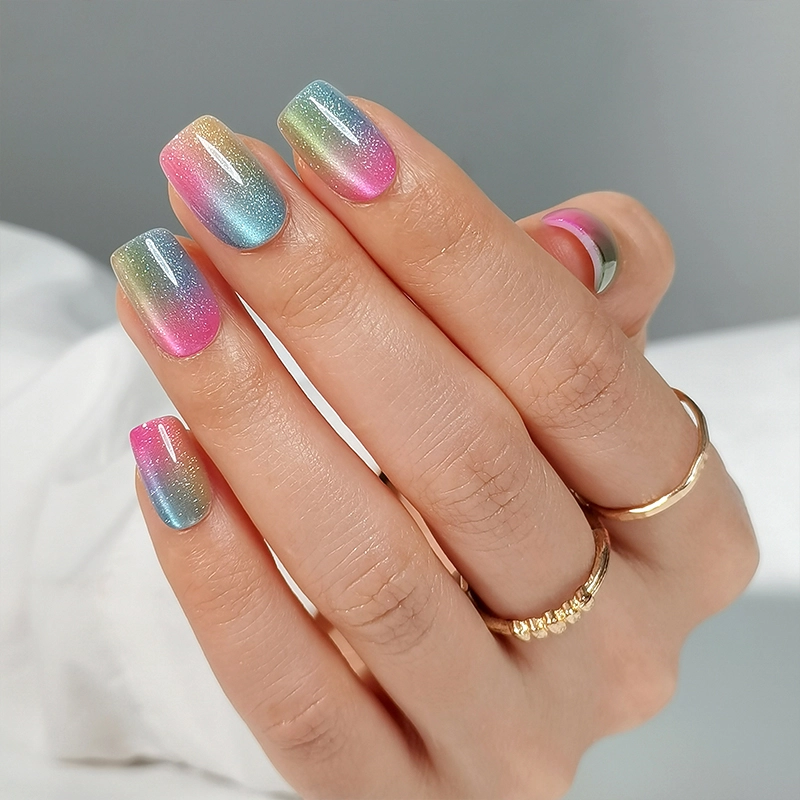
Custom Wholesale Gradient Cat Eye Soft Gel Wearable Fake Nails
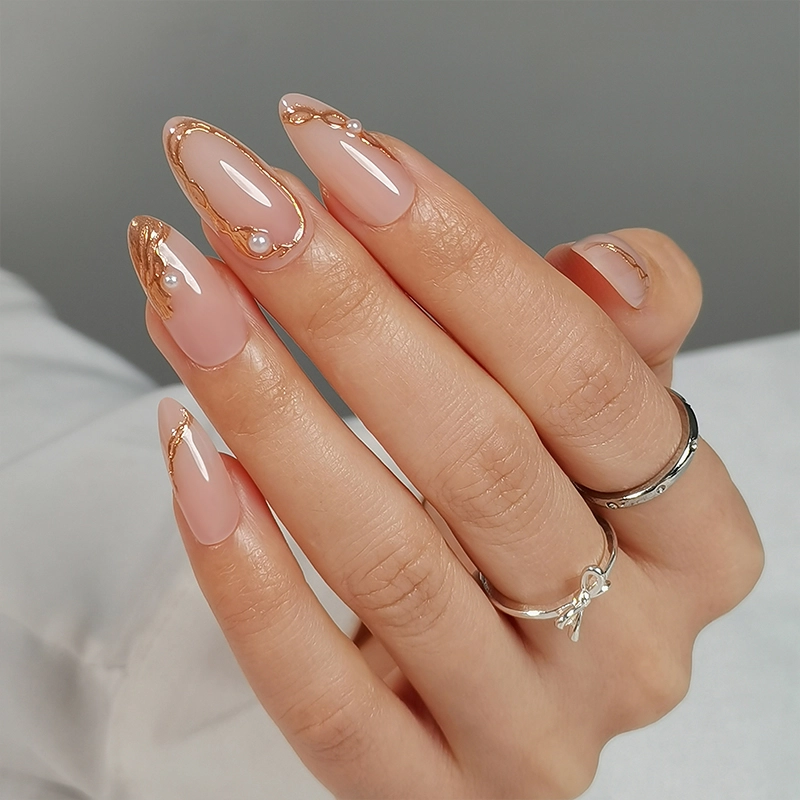
Wholesales Luxury Rhinestone Handmade Private Label Press On Nails Art Tips
Contact us
If you have press on nails products or customization needs, please feel free to contact from
below or via the contact information provided, we'll get back to you promptly within 24 hours.
By clicking 'Send Inquiry Now' I agree to XIANXING BEAUTY processing my personal data.
To see how to withdraw your consent, how to control your personal data and how we process it, please see our Privacy Policy and Terms of use.
Copyright © 2025 - XIANXING BEAUTY All Rights Reserved. Sitemap
Facebook
YouTube
Instagram
LinkedIn