
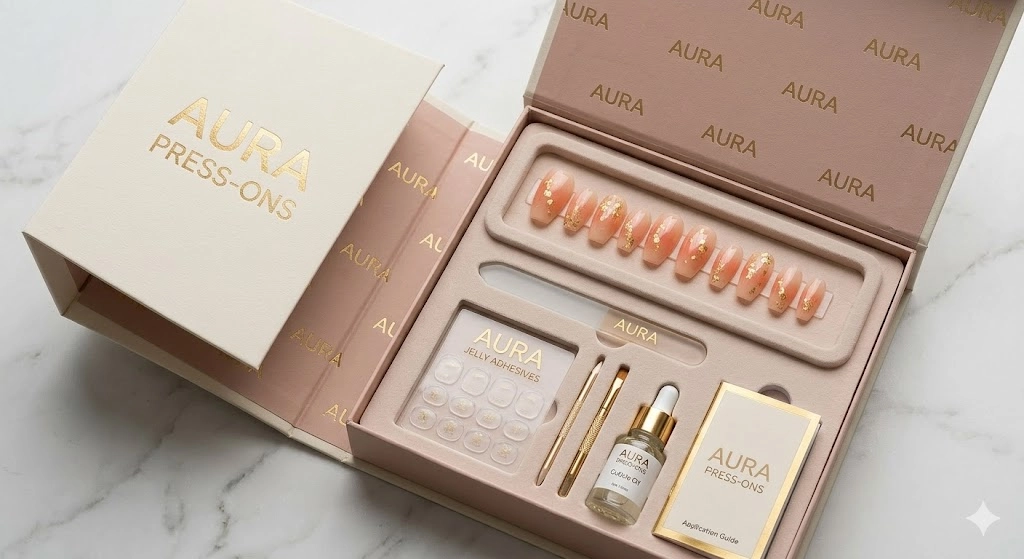
What packaging options do the best press on nails suppliers offer?
- What tamper-evident and anti-counterfeit packaging options can the best press on nails suppliers provide that meet Amazon and retail store standards?
- What are realistic MOQs, tooling costs and lead times for custom-printed rigid boxes, molded trays and clamshells from reputable press on nails manufacturers?
- Which eco-friendly packaging materials actually work for press-on nail sets without reacting with nail glue or deforming in transit?
- How should I design internal trays and inserts to prevent nail shifting during shipping and minimize breakage and returns?
- What packaging tests should suppliers run (drop, vibration, compression, humidity) and what pass/fail criteria reduce e-commerce returns?
- What labeling, barcode and regulatory information must be included on packaging for selling press-on nails across the US, EU and Amazon?
- Conclusion: Advantages of choosing the right packaging for press-on nails
What tamper-evident and anti-counterfeit packaging options can the best press on nails suppliers provide that meet Amazon and retail store standards?
Top suppliers combine physical security with trackable authentication. Common, effective options include:
- Shrink-sleeve seals or heat-shrink wrap around the outer box — low cost, highly visible tamper evidence for e-commerce parcels.
- Perforated tear-strips on gift boxes or rigid cartons for single-use, tamper-evident opening.
- Frangible tabs on clamshells: thin plastic tabs that break on first opening, common for retail blisters.
- Serialized QR/holographic labels or tamper-proof security stickers that link to a supplier database for authenticity checks — useful for High Quality or private-label press-on nail sets to combat counterfeits.
- Tamper-evident secondary seals for glue sachets or single-use adhesive packets (important where adhesives are included).
How this meets standards: Amazon requires products to arrive undamaged and not appear used; visible tamper evidence reduces customer claims of “used” product. Brick-and-mortar buyers expect hang-ready and sealed units to pass retailer acceptance. For compliance, suppliers should offer options that don’t obscure UPC/GTIN barcodes or mandatory labeling.
Implementation tips: choose seals that don’t leave adhesive residue or deform decorative finishes; test shrink temperatures on windowed boxes; and for serialized authentication select a supplier who can integrate QR codes into packaging without raising MOQ excessively.
What are realistic MOQs, tooling costs and lead times for custom-printed rigid boxes, molded trays and clamshells from reputable press on nails manufacturers?
Expect variations depending on the supplier location, printing complexity and material. Typical ranges observed across the industry:
- Stock packaging (poly bags, simple kraft boxes, blister cards): MOQs often start at 100–300 units; lead times 3–10 business days.
- Custom-printed foldable cartons (paperboard with window): MOQs commonly 500–2,000 units; lead times 2–6 weeks inclusive of dieline approval and printing.
- Rigid gift boxes with magnetic closures or drawer boxes: MOQs usually 500–1,500; lead times 4–8 weeks because of box construction and finishing.
- Thermoformed clamshells and PET/PVC blisters: MOQs can range from 500–2,000 depending on whether suppliers use pre-existing molds or require custom tooling; lead times 3–6 weeks.
- Molded pulp or custom plastic trays: initial tooling (mold) can increase upfront cost; some suppliers amortize tooling over MOQ. Expect higher MOQs (1,000+) or higher per-unit cost for low runs.
Tooling costs vary widely: custom plastic molds or complex rigid box die lines can add hundreds to several thousand dollars to initial orders. Many factories offer shared tooling or digital mockups to reduce upfront expense for first-time private-label brands. Always request a detailed quote that separates unit cost, tooling, sample charges and shipping.
Which eco-friendly packaging materials actually work for press-on nail sets without reacting with nail glue or deforming in transit?
Sustainable options are popular, but not all are appropriate for cosmetics accessories that include adhesives. Practical, tested materials include:
- FSC-certified paperboard (folding cartons): durable for retail and accepts windows, foil, embossing and water-based inks. It does not react with nails or glue if glue sachets are sealed.
- Molded pulp (recyclable/compostable): great for internal trays and cushioning. Avoid direct contact between uncured adhesives and pulp because strong solvents can wick into pulp over time.
- Recycled PET (rPET) clamshells or clear trays: recyclable and dimensionally stable in transit; does not deform under typical parcel temperature ranges.
- PLA windows (compostable bioplastic): visually similar to PET but sensitive to high temperatures—avoid where products will be exposed to heat or stored in hot warehouses/vehicles.
- Kraft mailers (recyclable) with recyclable insert trays: cost-efficient and sustainable for direct-to-consumer sales.
Best practices: keep adhesives in separate sealed sachets or pre-applied but sealed cavities; perform shipping climate tests (temperature and humidity cycles) before committing to large runs; choose coated or laminated paperboard if you need moisture resistance (use water-based coatings to preserve recyclability). Always request material certificates (e.g., FSC, rPET content) from suppliers.
How should I design internal trays and inserts to prevent nail shifting during shipping and minimize breakage and returns?
Designing the correct internal geometry is one of the most under-documented areas. Key principles:
- Custom-fit cavities: measure the maximum width, length and curvature of your largest press-on tip and design pockets with a 1–2 mm clearance for easy insertion without slop.
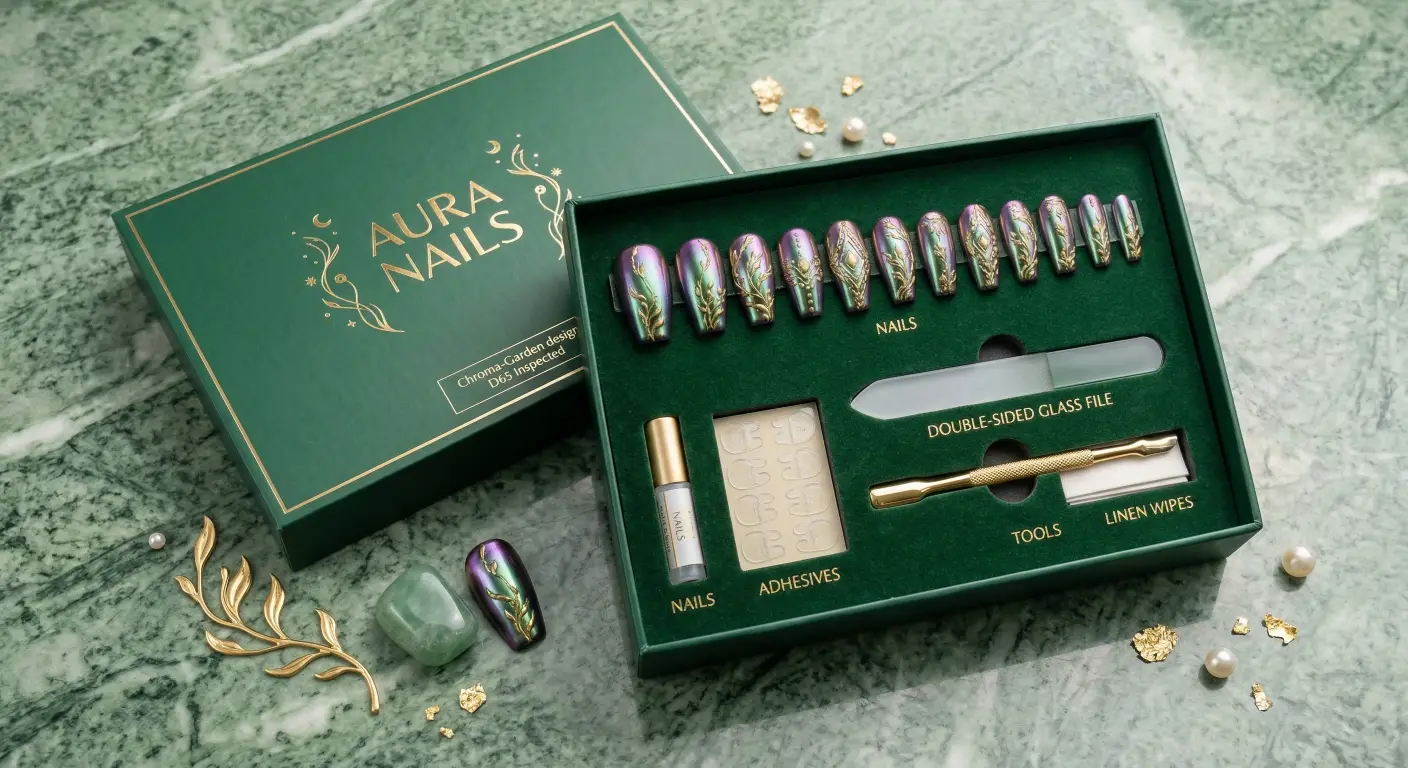
- Vertical support and separation: use two-layer trays (nails face-to-face with interleaving paper or film) or single-layer trays with individual cells sized to hold each nail flat—this prevents rotation and chipping.
- Friction-fit vs adhesive hold: shallow friction-fit cavities are easiest for customers; if using adhesive tabs inside the cavity, ensure the adhesive is compatible and won’t migrate to the nail face. Use microfoam inserts (EVA or EPE) cut to exact cell shapes for cushioning without chemical interaction.
- Anti-shift ridges and raised lips: add small ridges at the cavity entrance to retain nails under vibration.
- Anti-scratch liners: a thin PET film or soft-touch lamination inside cell tops prevents surface scuffs on glossy nail designs during transit.
Prototyping: order small-run prototypes (50–200 units) to test fit and run a sample e-commerce transit simulation before mass production. Metrics to track during trials: number of displaced nails per 100 shipments and rate of cosmetic surface damage.
What packaging tests should suppliers run (drop, vibration, compression, humidity) and what pass/fail criteria reduce e-commerce returns?
The tests that materially reduce returns focus on transit and climate stresses. Recommended tests and acceptance criteria:
- Parcel drop test (single or multiple drops at 1.2 m): replicate courier handling. Acceptance: less than 1% of samples show cosmetic surface damage or dislodged nails after standard drop sequence.
- Vibration test (random vibration for 10–30 minutes at distribution frequencies): checks internal shifting. Acceptance: nails must remain in intended pockets with no abrasion marks.
- Compression test (stacking load at 5–10 kg for 24–48 hours depending on SKU weight): ensures boxes do not collapse under warehouse stacking. Acceptance: no permanent deformation or window cracking.
- Temperature and humidity cycling (ambient to 40–50°C and 85% RH cycles): detects glue migration, warping of windows (PLA), and printing finish failures. Acceptance: adhesives remain sealed, no blistering or warpage.
- Integrated transit simulation (ISTA protocols): many brands use ISTA 3A for individual parcel shipments or ISTA 2C/3B for different distribution environments. ISTA 3A is commonly used for e-commerce fulfillment simulation.
Work with a third-party lab or a competent supplier lab to run at least a representative sample size (10–30 units per SKU). Use the results to refine tray fit, cushioning, and outer packaging. Keeping a documented test report helps when negotiating chargebacks with retailers or resolving Amazon A-to-z claims.
What labeling, barcode and regulatory information must be included on packaging for selling press-on nails across the US, EU and Amazon?
Labeling and regulatory needs vary by region and by product contents (e.g., if you include adhesives or solvent-based finishes). Practical checklist:
- UPC/GTIN/Barcode: Required by most retailers and by Amazon for individual retail units. Place barcode on a flat, unobstructed area with a quiet zone for scanning.
- Product identity and net quantity: Common retail practice and often required—describe the product (e.g., 14-piece press-on nail set) and include count.
- Manufacturer/importer contact and country of origin: Required or expected by many jurisdictions and retailers.
- Warnings and use instructions: Provide clear application and removal instructions and any safety warnings about adhesive misuse or allergies. For adhesives with hazardous ingredients, include hazard statements and indicate availability of an SDS.
- Batch/lot number and production date: Important for quality control, recalls and Amazon brand registry/traceability.
- Ingredient listing: If you sell press-on nails that include applied coatings (e.g., pre-cured gel, polish or adhesive with active chemicals), ingredient disclosure rules may apply. In the EU, cosmetics must be registered in the Cosmetic Products Notification Portal (CPNP) and have a Responsible Person if the product is classified as a cosmetic. In the US, cosmetics must follow FDA labeling rules; consult a regulatory expert to confirm if your specific product formulation requires ingredient labels.
- Amazon-specific: Follow Amazon’s Packaging and Prep Requirements and ensure barcodes, FNSKU labels and suffocation warnings (if using poly bags over a certain size) are applied as required.
Because legal classifications can change depending on formulation (e.g., adhesives, medicated nail products), consult local regulatory counsel for definitive obligations. Suppliers can typically add batch codes and barcode printing during production but will need precise label artwork and verified GTINs from the brand owner.
Conclusion: Advantages of choosing the right packaging for press-on nails
Investing in purpose-built packaging—correct internal trays, tamper-evident seals, e-commerce-rated outer cartons and compliant labeling—reduces returns, protects intricate nail art, strengthens retail acceptance and enhances brand perception. Sustainable material choices and serialized authentication further lower long-term costs by reducing waste, counterfeits and customer disputes.
For a bespoke packaging quote and sample plan tailored to private-label or bulk press-on nail needs, contact us for a detailed estimate. Visit www.xianxingbeauty.com or email [email protected].
7 Red Flags to Avoid When Selecting a Wholesale Press On Nails Manufacturer
Quality Control: What to Expect from a Top-Tier Wholesale Press On Nails Manufacturer
The Ultimate Guide to Choosing the Best Wholesale Press On Nails Manufacturer in 2026
How to Scale Your Beauty Brand: Why Private Label Press On Nails Are the Highest-Margin Entry Point in 2026
Why Partnering with Professional Press On Nails Manufacturers Boosts Your Brand Growth
Product Customization
Can you provide samples?
Yes, we offer a sample service for customers to confirm customization details. The sample fee will be calculated based on the product and customization requirements.
Supermarket chains
Are the production equipment advanced and regularly maintained?
Yes, we have the most advanced equipment of the press on nails
About chrome Nails
Do chrome press-on nails come in different shapes and sizes?
Yes, they are available in various shapes (coffin, almond, square, stiletto) and lengths (short, medium, long) to suit different preferences.
About Product
Can I reuse the wearable nails?
To preserve quality standards and nail health, we recommend a fresh set for each use.
About solid color nails
How long can it last after wearing?
Under the correct use of the general can be lasted for 2 weeks.
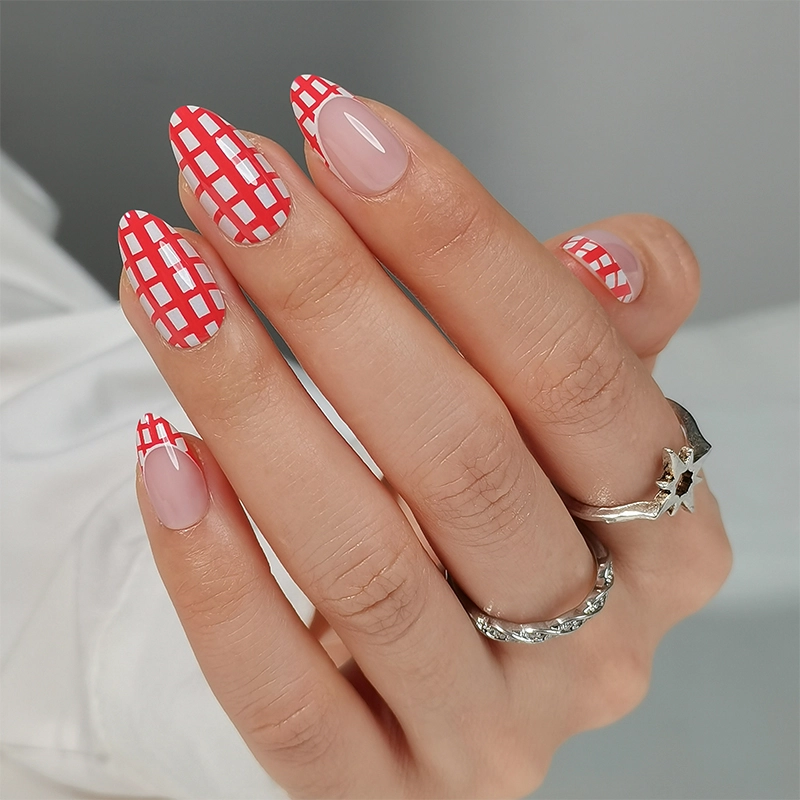
Wholesales Red French Nails Tips Checkered Soft Gel Nail Tips 32 Piece Set
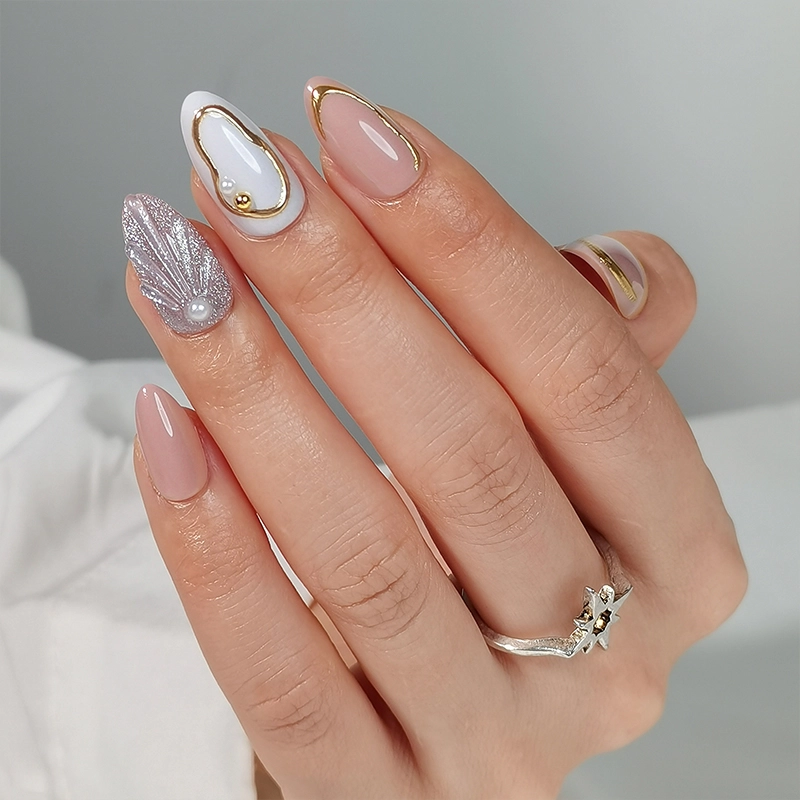
Wholesales Elegant Shell Inspired Soft Gel Wearable Nails for Seasonal Celebrations
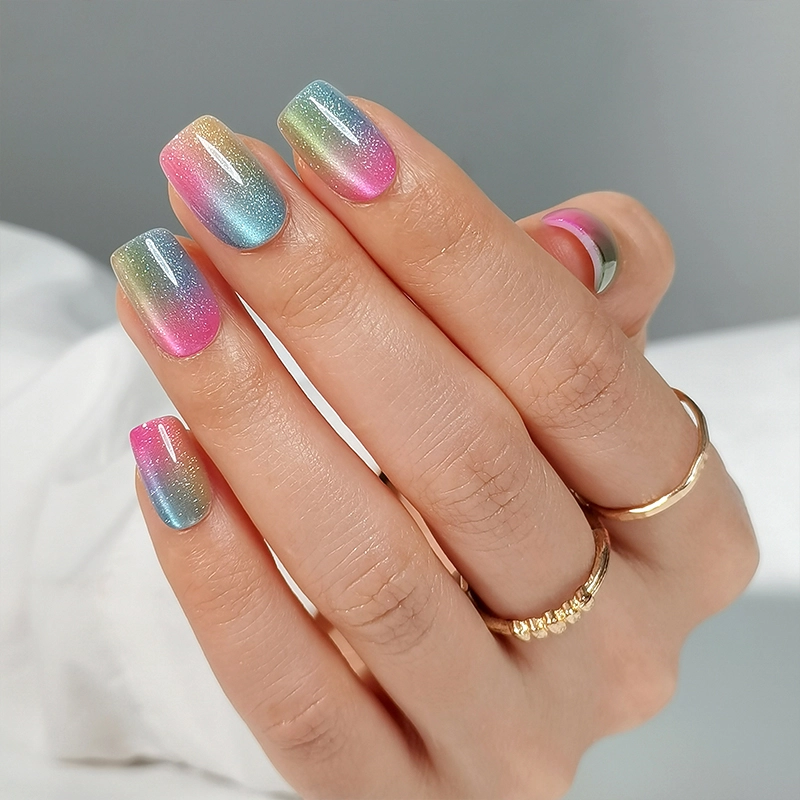
Custom Wholesale Gradient Cat Eye Soft Gel Wearable Fake Nails
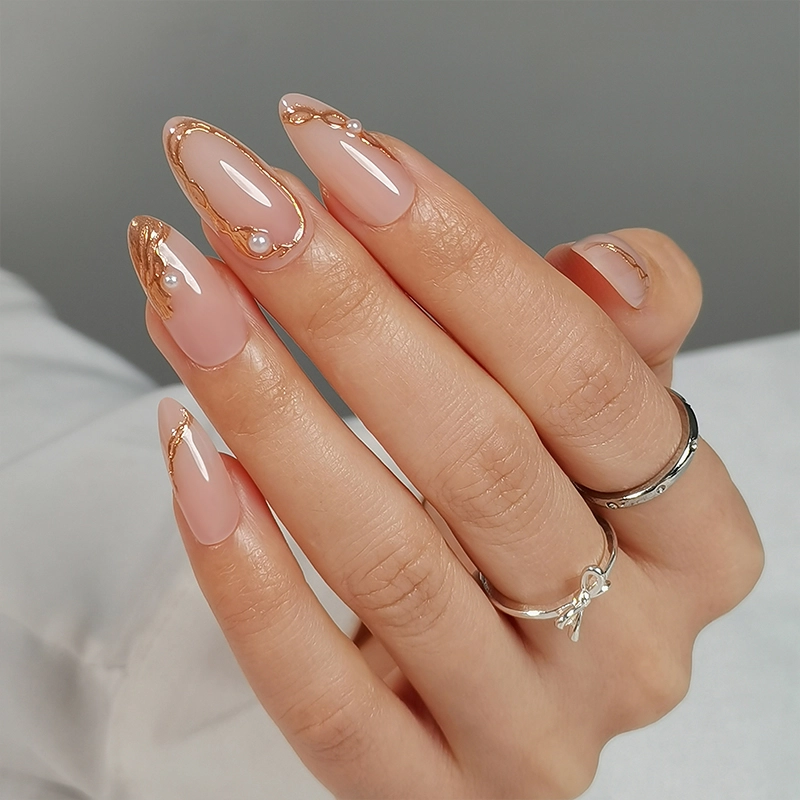
Wholesales Luxury Rhinestone Handmade Private Label Press On Nails Art Tips
Contact us
If you have press on nails products or customization needs, please feel free to contact from
below or via the contact information provided, we'll get back to you promptly within 24 hours.
By clicking 'Send Inquiry Now' I agree to XIANXING BEAUTY processing my personal data.
To see how to withdraw your consent, how to control your personal data and how we process it, please see our Privacy Policy and Terms of use.
Copyright © 2025 - XIANXING BEAUTY All Rights Reserved. Sitemap
Facebook
YouTube
Instagram
LinkedIn