
What artwork files do suppliers need for custom press on nails?
- 1) What exact artwork file types, resolution, color profiles and bleed do suppliers need for custom press on nails?
- 2) How should I prepare designs for curved nail shapes and multiple sizes to avoid distortion during printing on 3D press-on nails?
- 3) What size breakdowns, numbering systems and nail counts do suppliers expect for accurate fit across 10–24 piece press-on nail sets?
- 4) Which color specification method should I use to guarantee color consistency between proofs and mass-produced custom press on nails?
- 5) What are realistic minimum order quantities (MOQs), lead times, and primary cost drivers for fully custom press on nails (including custom packaging and 3D embellishments)?
- 6) How should I prepare print-ready files for specialty finishes (glitter encapsulation, chrome, holographic, and hand-placed crystals) and what extra production steps will suppliers ask for?
- Practical checklist to hand to any supplier
- Conclusion: Advantages of preparing supplier-ready artwork for custom press on nails
What artwork files do suppliers need for custom press on nails? — In-depth answers for buyers
Buying or producing custom press on nails requires precise art, templating and production knowledge. Below are six detailed, practical questions beginners (and even experienced brand buyers) ask—each answered with supplier-ready specs and production tips to reduce rework, color surprises, and costly delays. This advice reflects current industry practice for custom press-on nail sets produced with UV flatbed printing, decal transfer, or hand-applied finishes.
1) What exact artwork file types, resolution, color profiles and bleed do suppliers need for custom press on nails?
Suppliers typically require print-ready artwork that meets both digital-print and manufacturing constraints. Provide these items to avoid delays:
- Primary file types: Vector files (.ai, .eps, editable .pdf) for logos, linework and scalable elements; high-res raster files (.png with transparent background, .tif, .jpg) for photographic elements. Outline fonts in vector files.
- Resolution: Deliver raster content at 300–600 DPI at 1:1 artwork size. Small elements (fine lines, micro-text) should be 600 DPI to avoid pixelation once printed on curved surfaces.
- Color profile: Supply CMYK (preferably coated ISO Coated v2 or US Web Coated SWOP depending on supplier region) and include Pantone spot references for brand-critical colors. Many UV flatbed printers work in CMYK but accept Pantone to guide the conversion—expect small differences.
- Bleed and safe zone: Ask your supplier for their nail template. Typical bleed recommended is 1–2 mm beyond the cut/trim line; safe zone 1–2 mm inside the cut line so key details aren’t trimmed off when the nail tip is shaped/curved.
- Transparency & layers: For overlays (chrome, glitter masks, decals) deliver separate layered files: base color layer, design/graphic layer, and a transparent PNG proof for placement. Name layers for production: e.g., SKU123_base, SKU123_design, SKU123_overlay.
- File preparation checklist: fonts outlined, images embedded, files saved as print-ready PDFs or native AI with a flattened print layer, 300–600 DPI, CMYK profile, 1–2 mm bleed, clear layer naming and version control.
- Use supplier templates per shape and size: Get the supplier’s SVG/AI templates for each shape (square, coffin, almond, stiletto) and for each size within the set (many suppliers provide 10–24 templates). Templates show cut lines, contour and orientation. Do not rely on a single flat art file scaled across sizes.
- Design at 1:1 for the largest size, then adapt: Create your main artwork at the largest nail dimension and create scaled versions that follow the template contours. For wrap-around prints, adjust artwork slightly toward the edges to account for curvature.
- Use distortion guides: If your supplier offers a mapping/grid that shows how a flat print wraps, apply that grid to your artwork and subtly warp complex patterns so they read correctly on the curved surface.
- Separate left/right designs: For asymmetrical artworks (French tips, gradients, diagonal lines), deliver distinct left/right nail files or clearly mark mirror versions. Don’t assume suppliers will mirror art automatically.
- Check negative space and focal points: Place focal elements toward the center of templates and avoid critical text or micro-logos within 1–2 mm of the cut line or edge.
- Request a digital mockup and a physical sample: Digital mockups help but a physical sample can reveal distortion and color shifts. Expect an iterative proof stage—allow for at least one revision round for curved-surface adjustments.
- Numbering system: Suppliers use fixed size numbers (often 0–9 for 10-piece sets, 1–24 for larger assortments). Always map your artwork to the supplier’s exact size numbers and name files accordingly (e.g., SKU123_size01_AI.ai).
- Set types & counts: Common set sizes are 10, 12, 14, 20 and 24 nails. A popular commercial option is a 24-piece set (12 distinct sizes with duplicates) to cover most natural nail widths — suppliers will provide the exact counts per set. Don’t guess counts; use their spec sheet.
- Typical width range: Nail widths across sets generally span roughly 8–22 mm (smallest to largest) depending on supplier. Length and curvature vary by shape option (short/medium/long). Obtain the numeric widths in mm for each size from the supplier template.
- Duplicate allocation: Decide which sizes you want duplicated in the pack and specify left/right pairing if needed. Suppliers will follow your packing list exactly, so supply a clear “packing map.”
- Fit validation: For private label launches, order a sizing sample run (sample set) to check fit across the target demographics before mass production.
- Use Pantone for brand colors: Provide exact Pantone spot references for brand-critical colors and ask the supplier for the CMYK conversion they will use. Because UV-curable inks and different plastic substrates reflect color differently, expect slight shifts.
- Provide physical swatches: If exact color match is critical, send a printed Pantone swatch or a real physical nail/paint chip to the supplier for a direct visual match—digital-only color specs are often insufficient.
- Ask for a pre-production color proof: Request either a physical printed plate on the actual nail material or a short sample production run for color approval. Many suppliers offer a “sample set” service with additional proof fees.
- Account for substrate & finish: Matte, gloss, chrome and glitter finishes will change how color looks. Communicate final finish (matte topcoat, gloss gel topcoat, chrome powder) up front and ask for a proof with the final finish applied.
- Document tolerances: Agree on acceptable delta E tolerances in advance (e.g., DE00 ≤ 2–3 for tight brand control is common in packaging/print—discuss what’s possible on ABS/plastic surfaces with your supplier).
- MOQs: For basic printed designs, many suppliers accept MOQs from 50–200 sets per SKU. Full customization (custom molds, bespoke 3D shapes or specialized tooling) often pushes MOQs to 300–1000+ sets. If custom packaging/printing is required, packaging suppliers may have separate MOQs (commonly 500–1000 units).
- Lead times: Common timelines: samples and proofs: 7–14 business days; production for straightforward printed sets: 15–30 business days; complex jobs (encapsulated glitter, hand-applied crystals, custom molds): 30–60+ business days. Add 7–14 days for custom packaging production and shipping time depending on logistics.
- Primary cost drivers: material (ABS vs acrylic or resin), printing method (UV flatbed vs decal transfer vs hydrographic), finishing (gel topcoat, matte finish, chrome powder), manual embellishment (hand-placed crystals or pearls), and custom packaging/UPC/labels. Manual labor (e.g., hand-gluing crystals) is charged per-piece or per-set and can be the most variable cost.
- Estimate add-ons: Hand-placed crystals and intricate 3D work commonly add between $0.5–$4+ per set depending on complexity and labor region; custom molded shapes and tooling amortization can add substantially to per-unit cost unless volumes are high.
- Layered artwork: Deliver separate files for the base color, artwork pattern, glitter/encapsulation mask, and crystal placement. Name files clearly (e.g., SKU123_base.ai, SKU123_glitter_mask.png, SKU123_crystal_map.pdf).
- Glitter & encapsulation: For encapsulated glitter, provide a mask (vector or PNG) that shows where glitter should appear and whether it should be full-coverage or partial. Note glitter particle size and color. Suppliers will often require a description of particle type (fine vs chunky) because it changes opacity and topcoat behavior.
- Chrome & powders: Chrome and mirror finishes often need a solid black underlayer or specific opaque base color—ask the supplier for their recommended base and provide a separate layer indicating where powder/foil should be applied.
- Holographic decals and foils: Supply vector cutlines for foils/decals and designate transfer orientation. Many suppliers prefer dielines in vector format for laser cutting or foil stamping.
- Crystal placement maps: Provide a PDF with 1:1 scale diagrams showing exact crystal sizes (e.g., SS8, SS12), counts and xy coordinates relative to the nail template. If you can, include a short video or annotated photo for complex arrangements—this reduces hand-applied errors and rework.
- Production notes & QA checks: State tolerances for placement, maximum lift for encapsulation layers, and acceptable ranges for shimmer/opacity. Request a pre-production photo or a single proof set for visual approval before mass runs.
- Supplier template for shape & size (requested first)
- Print-ready AI/EPS/PDF files with fonts outlined
- Raster assets 300–600 DPI PNG/TIF in CMYK with 1–2 mm bleed
- Separate layers for base, artwork, overlays, glitter, chrome and crystals
- Clear file naming and size-to-SKU mapping
- Color specs: Pantone + CMYK + physical swatch if required
- Packing map and duplicate allocation per set
- Approval workflow: digital mockup → physical sample → mass production
Always request the supplier’s exact template and sample PDF export settings—suppliers may prefer specific PDF presets or ICC profiles.
2) How should I prepare designs for curved nail shapes and multiple sizes to avoid distortion during printing on 3D press-on nails?
Curvature and variable width/length across sizes cause apparent distortions if a flat artwork is blindly scaled. Use these steps to ensure accurate results:
3) What size breakdowns, numbering systems and nail counts do suppliers expect for accurate fit across 10–24 piece press-on nail sets?
Fit and repeatability depend on using the supplier’s sizing system. Key supplier expectations:
4) Which color specification method should I use to guarantee color consistency between proofs and mass-produced custom press on nails?
Color consistency is one of the top pain points. Follow a structured approach:
5) What are realistic minimum order quantities (MOQs), lead times, and primary cost drivers for fully custom press on nails (including custom packaging and 3D embellishments)?
MOQs, lead times and costs vary by supplier region, complexity and finish. Typical industry ranges and what affects price:
6) How should I prepare print-ready files for specialty finishes (glitter encapsulation, chrome, holographic, and hand-placed crystals) and what extra production steps will suppliers ask for?
Specialty finishes require extra file layers, clear instructions, and sometimes physical samples. Provide these elements:
Practical checklist to hand to any supplier
Use this short checklist to speed up onboarding and reduce back-and-forth:
Following these steps will significantly lower the chance of surprises during production of press-on nail sets, especially when using flatbed UV printing, decal transfers, or hand-applied finishes.
Conclusion: Advantages of preparing supplier-ready artwork for custom press on nails
Well-prepared, supplier-ready artwork and a clear spec sheet reduce cost, shorten lead times and protect brand consistency. Proper files (vector + high-res raster), supplier templates, layered specialty files, and agreed color/proof workflows minimize revisions, reduce waste from misprints, and improve the first-sample approval rate—helping you scale private label press-on nail lines faster while controlling quality across finishes, sizes and packaging.
If you’d like help converting designs to supplier-ready nail templates or need a production quote, contact us for a custom quote at www.xianxingbeauty.com or [email protected].
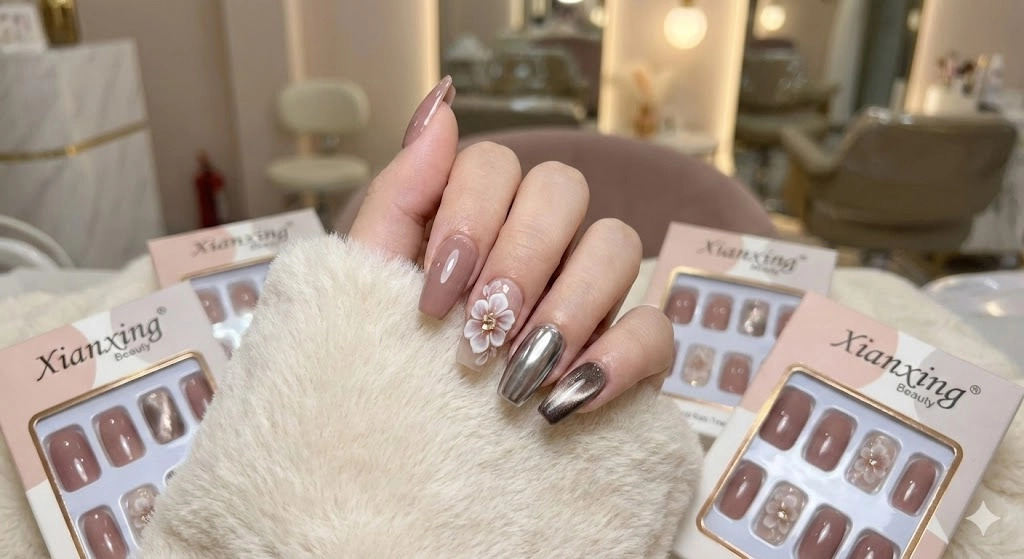
7 Red Flags to Avoid When Selecting a Wholesale Press On Nails Manufacturer
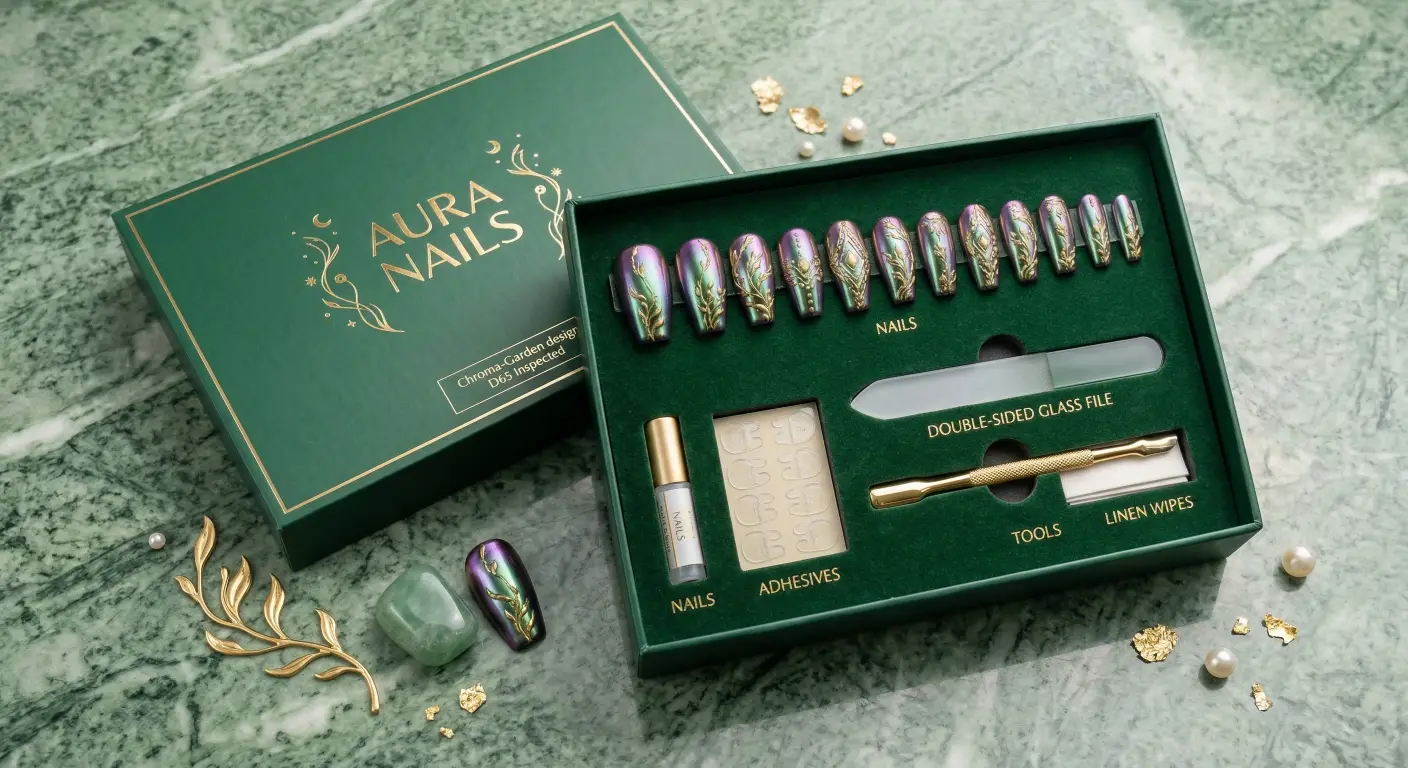
Quality Control: What to Expect from a Top-Tier Wholesale Press On Nails Manufacturer
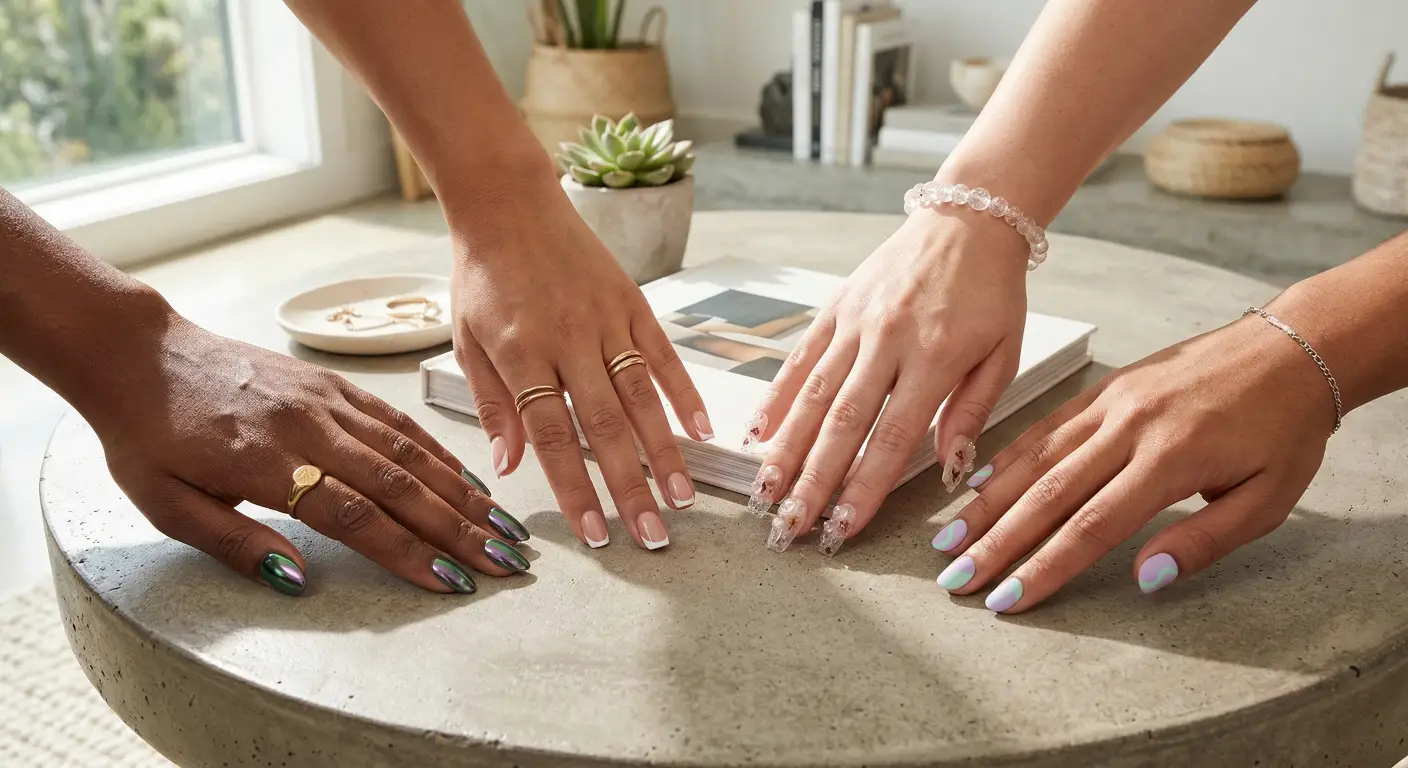
The Ultimate Guide to Choosing the Best Wholesale Press On Nails Manufacturer in 2026
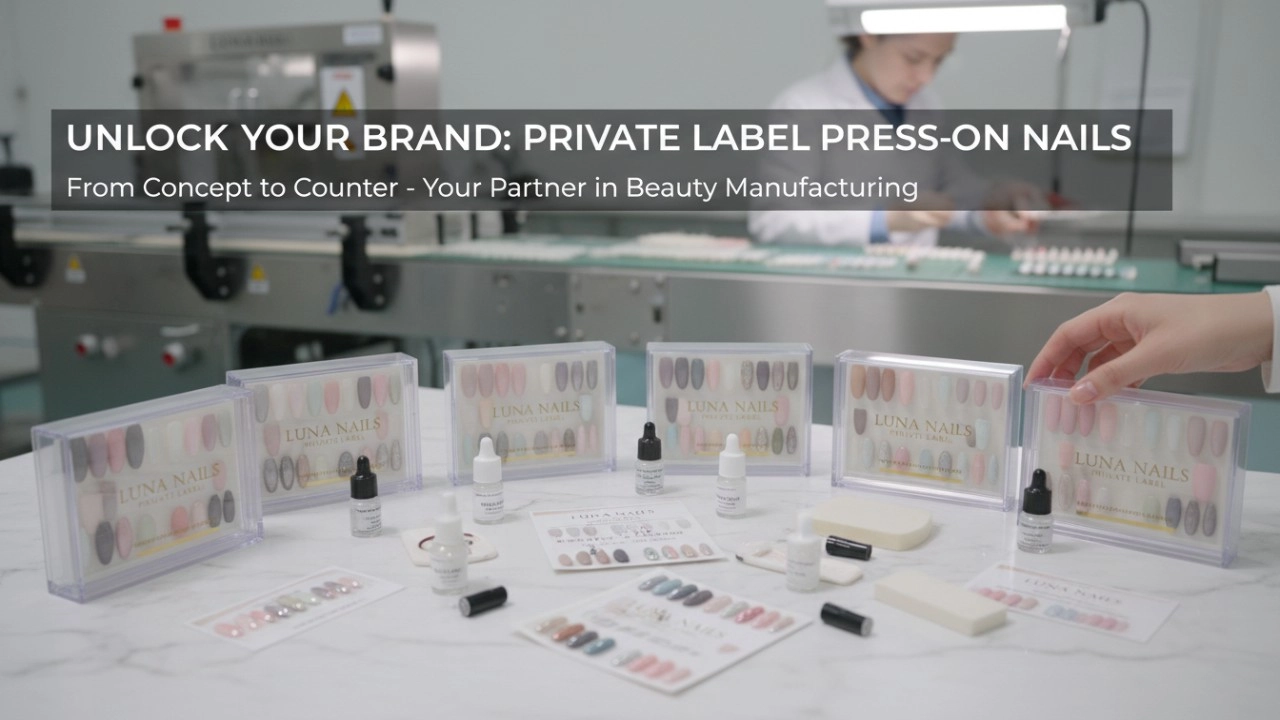
How to Scale Your Beauty Brand: Why Private Label Press On Nails Are the Highest-Margin Entry Point in 2026
Why Partnering with Professional Press On Nails Manufacturers Boosts Your Brand Growth
About Kid Nails
Are they suitable for all ages?
They are usually recommended for kids aged 3 and up, but always check the product packaging for age guidelines.
Remove armor
Can remover pads be used for sensitive skin?
Yes, many remover pads are designed for sensitive skin, such as makeup wipes with soothing ingredients like aloe or micellar water. However, if you have allergies, always read the ingredient list.
Agent
How long is the agency contract?
Generally, it is 1 year. Specific plans need to be given based on the actual situation.
Nail Dust Removal Brush
Are there different types of nail dust cleaning brushes?
Yes, there are various types of brushes, including:
Small handheld brushes: for personal use.
Larger brushes: used in professional nail salons for bigger surfaces.
Airbrush systems: which are automated, though these are more specialized.
About Cooperation Process
What support will I receive during the collaboration?
We offer professional technical support, marketing guidance, and responsive after-sales services to ensure a smooth and successful partnership.
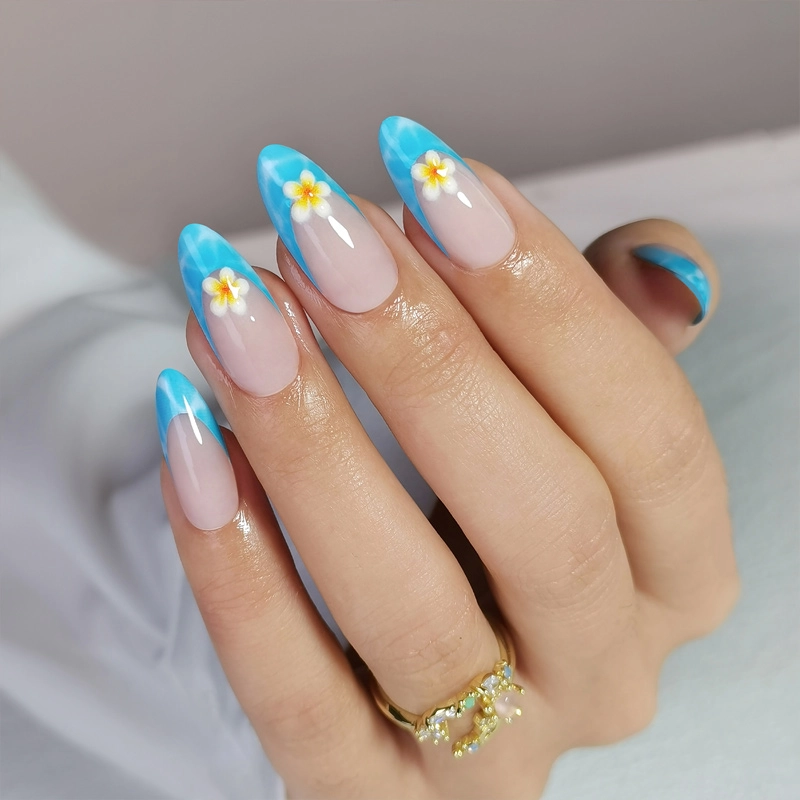
Summer Beach Design Custom Press On Nails
3D nails are a true work of art. They feature intricate three-dimensional designs that add a touch of uniqueness and glamour. Made from high-quality materials, they are durable and long-lasting. Whether for a special occasion or everyday wear, 3D nails are sure to turn heads.
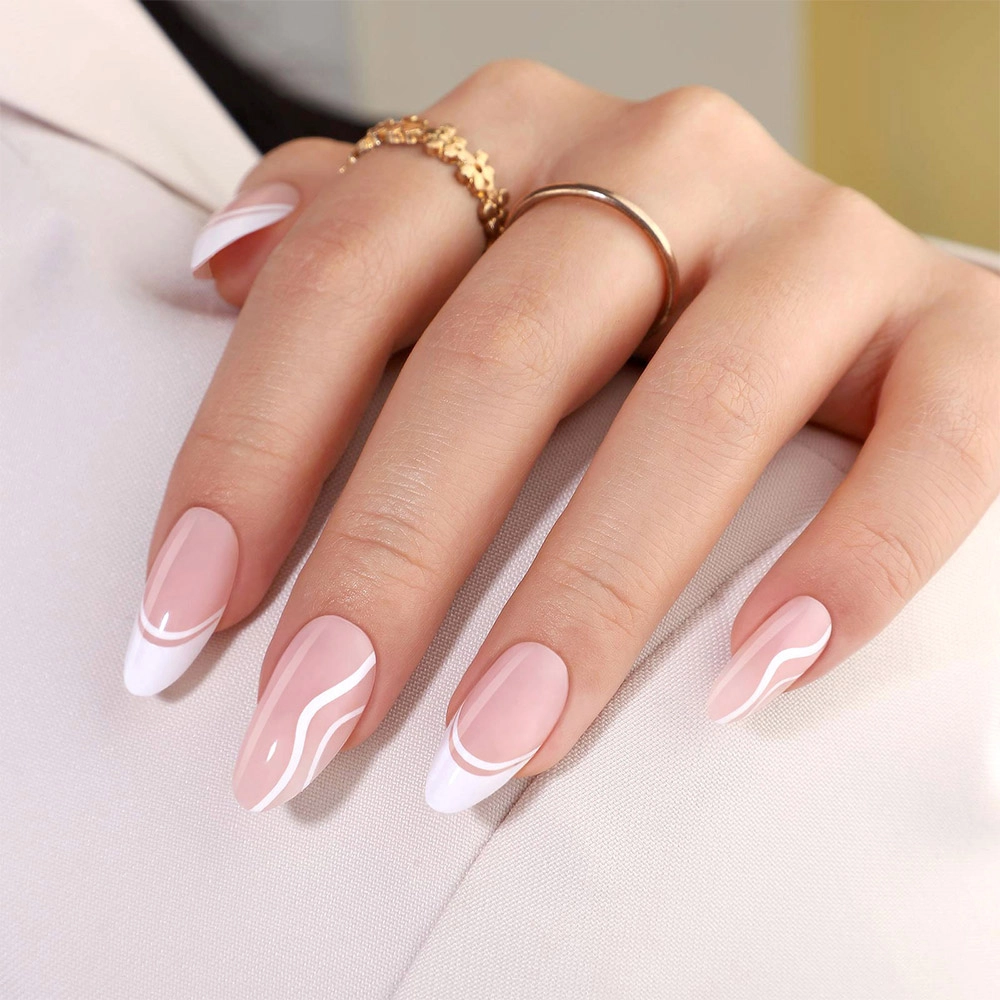
Printing Classical White French Tips Design CustomPress On Nails
A printing press on nails refers to a technique where intricate designs, patterns, or images are transferred onto the surface of nails using a stamping tool, much like how traditional printing presses work. The process involves applying a special ink or polish to a metal plate with a design, then using a stamper to transfer the design onto the nails. It's a quick and precise way to create detailed nail art.
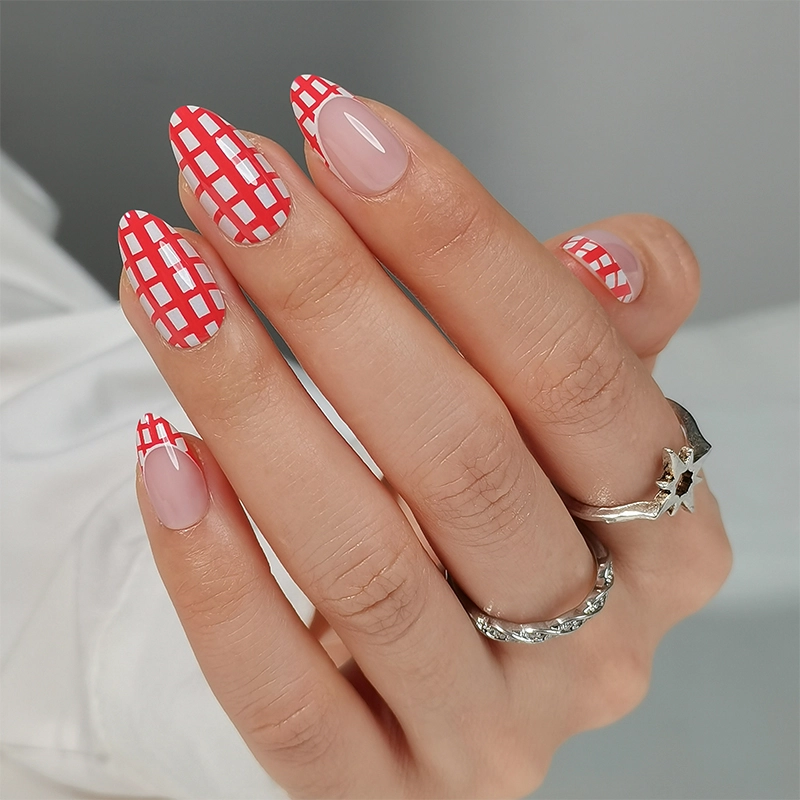
Wholesales Red French Nails Tips Checkered Soft Gel Nail Tips 32 Piece Set
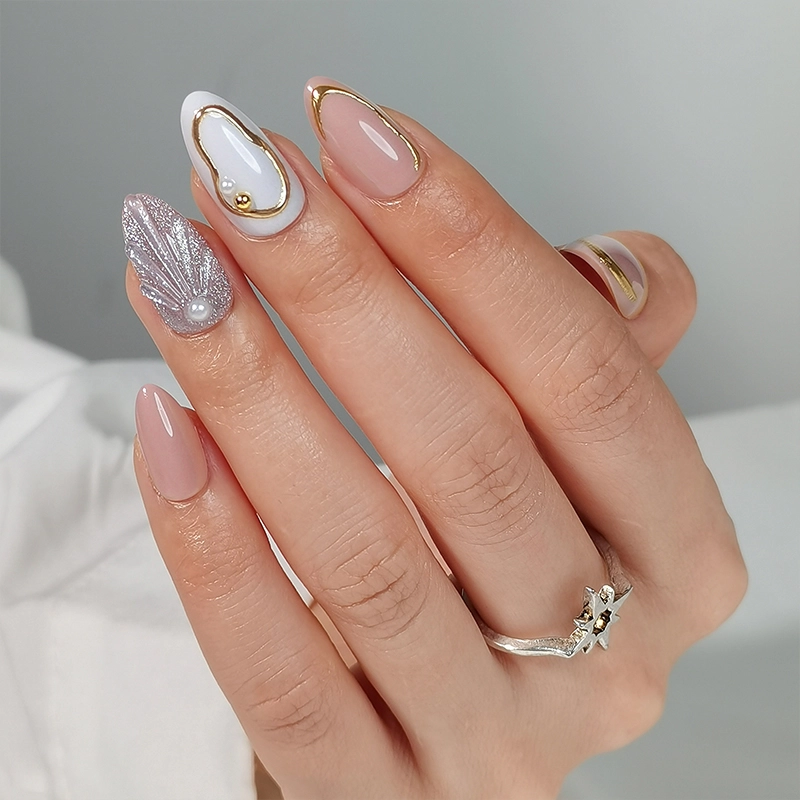
Wholesales Elegant Shell Inspired Soft Gel Wearable Nails for Seasonal Celebrations
Contact us
If you have press on nails products or customization needs, please feel free to contact from
below or via the contact information provided, we'll get back to you promptly within 24 hours.
By clicking 'Send Inquiry Now' I agree to XIANXING BEAUTY processing my personal data.
To see how to withdraw your consent, how to control your personal data and how we process it, please see our Privacy Policy and Terms of use.
Copyright © 2025 - XIANXING BEAUTY All Rights Reserved. Sitemap
Facebook
YouTube
Instagram
LinkedIn